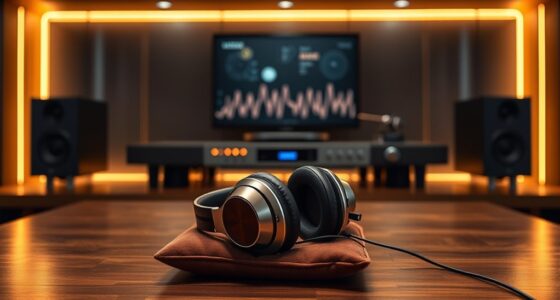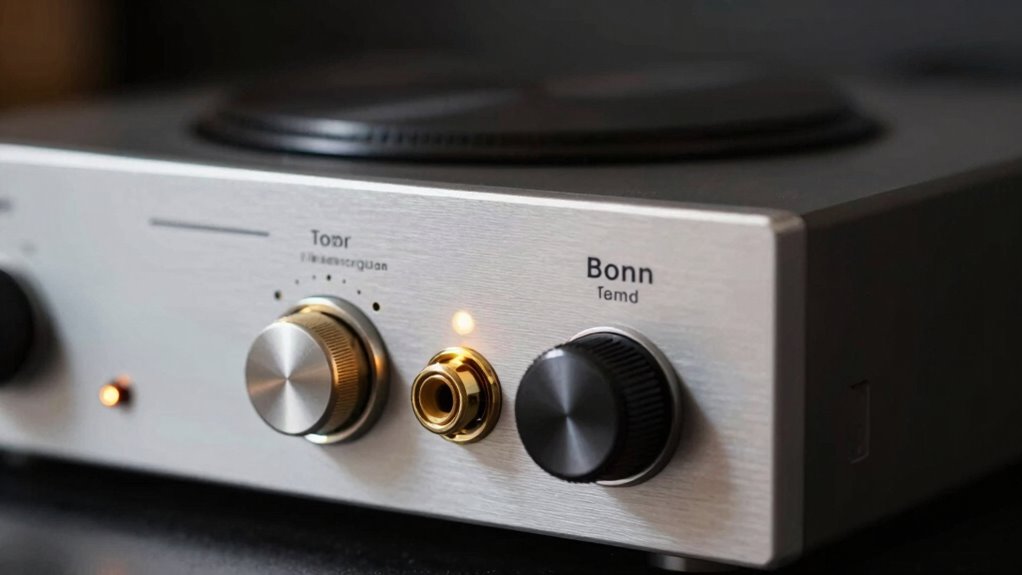

Understanding key features of a phono preamp helps you get the best sound from your records. Look for compatibility with your cartridge type, like MM or MC, to prevent distortion. A high signal-to-noise ratio guarantees clear audio without unwanted noise. Accurate RIAA equalization preserves tonal balance, while solid build quality and versatile inputs make your setup more durable and flexible. By knowing these features, you’ll know what to prioritize for an immersive vinyl experience—continue exploring to learn more.

Get home appliances delivered free with Prime
- Fast, free delivery on millions of items
- Prime Video, Amazon Music and more included
- Member-only deals all year
Key Takeaways
- Compatibility with cartridge types (MM vs. MC) ensures optimal vinyl and cartridge matching for clear sound.
- A high signal-to-noise ratio minimizes electronic noise, enhancing playback clarity.
- Accurate RIAA equalization preserves the original tonal balance of records.
- Build quality and flexible connectivity options improve durability and ease of integration with audio systems.
- Overall features like noise reduction and precise equalization contribute to a superior listening experience.
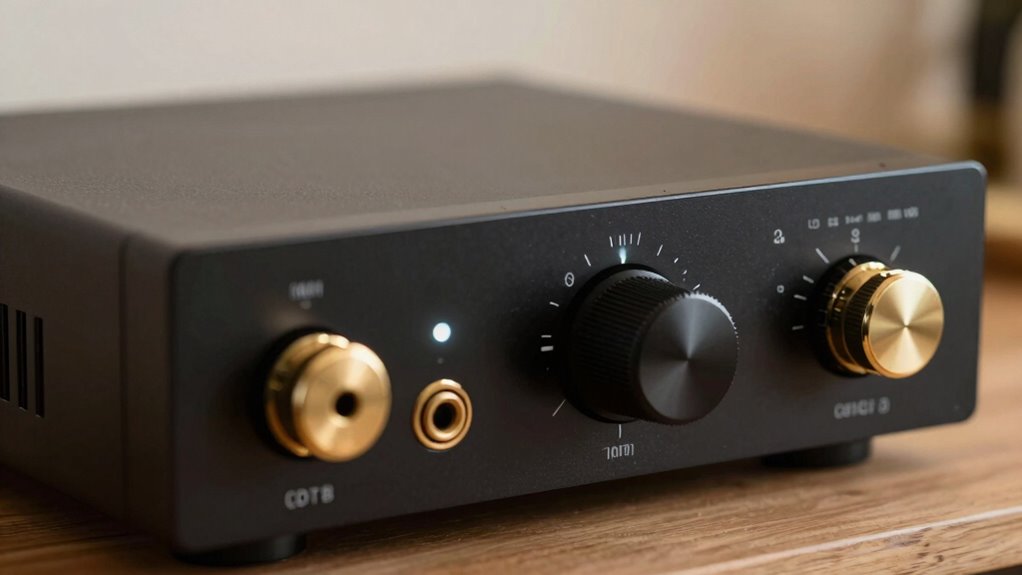
Ever wondered what makes a good phono preamp stand out? It all begins with understanding its core features and how they influence your listening experience. One of the most important aspects to regard is vinyl record compatibility. Not all preamps are designed to handle the different types of cartridges or record formats you might own. Some are optimized specifically for moving magnet (MM) cartridges, while others support moving coil (MC) cartridges, which often require more precise circuitry and higher gain. Choosing a preamp that matches your records and cartridge type guarantees you get the best sound quality without distortion or loss of detail. Compatibility also extends to the input impedance and capacitance, which need to align with your cartridge specifications to preserve the fidelity of your vinyl collection.
Matching your preamp to your cartridge ensures optimal sound quality and preserves vinyl fidelity.
Next, you want a phono preamp that offers a high signal to noise ratio. This metric tells you how well the preamp can amplify your vinyl’s signal without introducing unwanted background noise. The higher the ratio, the clearer and purer your sound will be. A good preamp minimizes hum, hiss, and other electronic noise that can muddy your listening experience. When shopping, look for models with a reputation for maintaining a strong signal to noise ratio, especially if you’re playing records with soft passages or quiet backgrounds. It’s the difference between hearing crisp, detailed music and struggling with distracting hiss or crackle. Additionally, a high-quality circuit design can significantly impact the overall performance and durability of the preamp, ensuring consistent sound quality over time. Proper grounding and shielding are also critical for reducing interference and maintaining audio clarity.
Another feature to keep in mind is the equalization curve, specifically RIAA equalization, which is standard for vinyl playback. A reliable phono preamp accurately applies this curve to restore the original recording’s frequency response. If this isn’t done correctly, your music can sound oddly muffled or overly bright. Precision in the RIAA equalization impacts overall sound quality, clarity, and tonal balance. Some preamps come with adjustable settings, giving you the flexibility to fine-tune the sound to your liking, especially if you own records from different eras or genres. Proper RIAA equalization is essential for authenticity, and understanding this can help you select a preamp that preserves your records’ true sound.
Additionally, build quality and input/output options matter. A sturdy, well-made preamp resists electrical interference, which can cause noise issues. Multiple inputs allow you to connect various turntables or other audio sources, making your setup more versatile. Outputs should be compatible with your amplifier or receiver, whether through RCA connections or balanced outputs for higher fidelity. When considering these features, think about the technology used in the circuitry, as it directly influences noise levels, fidelity, and overall durability of the device. Investing in a preamp with robust construction can lead to longer-lasting performance and fewer maintenance issues. In essence, understanding these features—vinyl record compatibility, signal to noise ratio, precise equalization, and build quality—helps you select a phono preamp that elevates your vinyl listening experience. It’s about capturing the richness and warmth of your records without compromise, ensuring every spin sounds as good as it can be.
best phono preamp for vinyl records
As an affiliate, we earn on qualifying purchases.
As an affiliate, we earn on qualifying purchases.
Frequently Asked Questions
How Does a Phono Preamp Affect Sound Quality?
A phono preamp profoundly impacts sound quality by enhancing your recording fidelity and reducing noise. It boosts the weak signal from your turntable to a usable level, ensuring clearer sound. A good preamp minimizes background noise and distortions, so you hear more detail and warmth in your recordings. This results in a richer listening experience, making your vinyl sound as true to the original as possible.
Can I Upgrade My Existing Phono Preamp?
Yes, you can upgrade your existing phono preamp. If you have vintage models, consider replacing internal components or adding external modules to boost performance. DIY upgrades are also an option; you can modify or upgrade parts like capacitors or resistors to improve sound quality. Just make certain your modifications are compatible with your preamp’s design and specifications, and always test carefully to avoid damaging your equipment.
What Is the Difference Between MM and MC Preamps?
Did you know that about 80% of vinyl enthusiasts prefer MM cartridges for their affordability and ease? MM preamps are designed for moving magnet cartridges, offering higher gain and simpler impedance matching. MC preamps suit moving coil cartridges, which need lower gain and precise impedance matching for ideal sound. Your choice depends on your cartridge type, as MC preamps handle the delicate signals better, providing richer, more detailed audio.
How Do I Match a Preamp With My Turntable?
To match a preamp with your turntable, first check your cartridge compatibility—make sure your preamp supports your cartridge type (MM or MC). Then, focus on impedance matching; select a preamp with input impedance suited for your cartridge. This guarantees the best sound quality and prevents distortion. Always verify the preamp’s specifications against your turntable’s cartridge details for the best audio experience.
What Maintenance Is Required for a Phono Preamp?
Imagine your phono preamp as a delicate garden needing regular care. You should follow a cleaning routine, gently dusting and inspecting for dust buildup or corrosion, especially around connections. Additionally, consider power supply considerations—ensure it’s plugged into a stable, clean power source to prevent hum or noise. Regular checks and proper maintenance keep your preamp functioning smoothly, preserving your vinyl enjoyment without unwanted interruptions.
moving magnet vs moving coil preamp
As an affiliate, we earn on qualifying purchases.
As an affiliate, we earn on qualifying purchases.
Conclusion
Curious if investing in a quality phono preamp truly makes a difference? The truth is, it can profoundly enhance your listening experience by revealing details you didn’t know were there. A good preamp isn’t just about volume; it’s about fidelity and clarity. Don’t believe every myth—you’ll hear the proof when your favorite records come alive with richer sound. So, trust your ears and choose wisely; the difference could be astonishing.
high signal-to-noise ratio phono preamp
As an affiliate, we earn on qualifying purchases.
As an affiliate, we earn on qualifying purchases.
As an affiliate, we earn on qualifying purchases.
NFL season / tailgating Picks
team gear
As an affiliate, we earn on qualifying purchases.