
To start in high-end art sales, familiarize yourself with market trends, key players like galleries and auction houses, and the importance of verifying authenticity and provenance. Build relationships with trusted experts, set clear collecting goals, and understand what influences artwork values, such as rarity and condition. Practice proper gallery etiquette and develop a strategic approach to acquiring pieces that resonate personally and financially. If you keep exploring, you’ll gain the insights needed to navigate this sophisticated world confidently.
Key Takeaways
- Understand market trends, valuation factors, and emerging artists to make informed high-end art investment decisions.
- Build relationships with reputable galleries, dealers, and auction houses to access authentic, valuable artworks.
- Verify authenticity and provenance through expert certificates and documentation to ensure legal and ethical purchases.
- Develop clear goals, set budgets, and research artists and styles to curate a meaningful, personalized collection.
- Stay aware of market fluctuations, and leverage auction trends and industry insights for strategic buying opportunities.
Understanding the Art Market Landscape
Understanding the art market landscape is essential for making informed collecting decisions. You need to stay aware of emerging trends that influence both the value and desirability of artworks. These trends can shift quickly, so tracking shifts in styles, genres, or artists helps you identify promising investments before they peak. Be mindful of market volatility, which can cause prices to fluctuate unexpectedly. During uncertain times, art prices may drop, but this can also present buying opportunities. By understanding these dynamics, you can better gauge when to buy or sell, avoiding impulsive decisions driven by hype or panic. Staying informed about the evolving art scene and market conditions ensures your collecting journey remains strategic and resilient. Awareness of market disruptions and their impact on pricing can help you navigate periods of instability more effectively. Recognizing how economic principles influence art prices can also provide a competitive edge in your collecting strategy. Additionally, understanding payment solutions used in art transactions can streamline your purchasing process and enhance security. Keeping abreast of auction trends and their influence on pricing can further refine your buying and selling timing. Furthermore, cultivating a solid understanding of market analysis techniques can enhance your ability to forecast future shifts and make more confident investment decisions.
Key Players in High-End Art Sales
In high-end art sales, a few key players substantially influence transaction outcomes and market trends. Art dealer networks connect collectors, galleries, and institutions, shaping what’s available and driving demand. These networks often hold exclusive access to private collectors, who purchase art as an investment or status symbol. Dealers and collectors work together, often through private negotiations or major auction houses, to move high-value artworks. Their influence extends beyond individual sales, impacting market confidence and trends. Understanding these key players helps you grasp how the high-end art world operates, where relationships and reputation often matter as much as the art itself. Additionally, automation in business and technological advancements increasingly influence how art transactions are conducted and documented, ensuring efficiency and security in high-value deals. Recognizing the role of art market infrastructure, including secure transaction methods and record-keeping, is essential in navigating this complex environment. Furthermore, the network of contacts among industry insiders plays a crucial role in facilitating high-stakes sales and maintaining market stability. The integration of predictive modeling can also assist stakeholders in forecasting market shifts and pricing trends, further shaping strategic decisions in high-end art sales. Moreover, understanding the role of specialized professionals such as appraisers, art advisors, and auction house specialists is vital for successfully navigating high-end art transactions.
Recognizing Authenticity and Provenance
When evaluating an artwork’s authenticity and provenance, you need to scrutinize its history carefully, as these factors determine its value and legitimacy. Authenticity verification involves examining expert reports, certificates, and scientific tests to confirm the piece’s origin. Provenance documentation records the artwork’s ownership history, helping you trace its journey over time. Look for clear, detailed records that establish a consistent chain of custody, reducing the risk of forgery or misattribution. Be cautious of gaps or inconsistencies in the provenance, as these can signal issues. Rely on reputable sources and specialists to verify authenticity and provenance, ensuring your investment is genuine. Recognizing authentic works with solid provenance safeguards your purchase and enhances its long-term value. Additionally, understanding the signs of a checked-out partner or traits of covert narcissists can help you navigate the social context of art collecting, especially when dealing with partners or associates who may influence your decision-making. Being aware of forgery detection techniques can further protect your investment by helping you identify counterfeit pieces before purchase.
Navigating Galleries and Auction Houses

Exploring galleries and auction houses requires a strategic approach to guarantee you make informed decisions. When visiting galleries, follow proper gallery etiquette by being respectful, asking thoughtful questions, and respecting the displayed artwork. Observe how staff and other visitors behave to understand the environment. In auction houses, understand the bidding process and set your limits beforehand. During auction bidding, stay attentive and act confidently, but avoid showing too much emotion. Familiarize yourself with the auction house’s rules and procedures to avoid mishaps. Whether browsing or bidding, preparation is key. Keep track of lots you’re interested in, and don’t hesitate to ask for additional information. Being aware of auction house procedures can help you navigate the process more smoothly. Navigating these spaces with confidence and respect will help you make smarter, more successful art purchases.
Factors Influencing Art Valuation
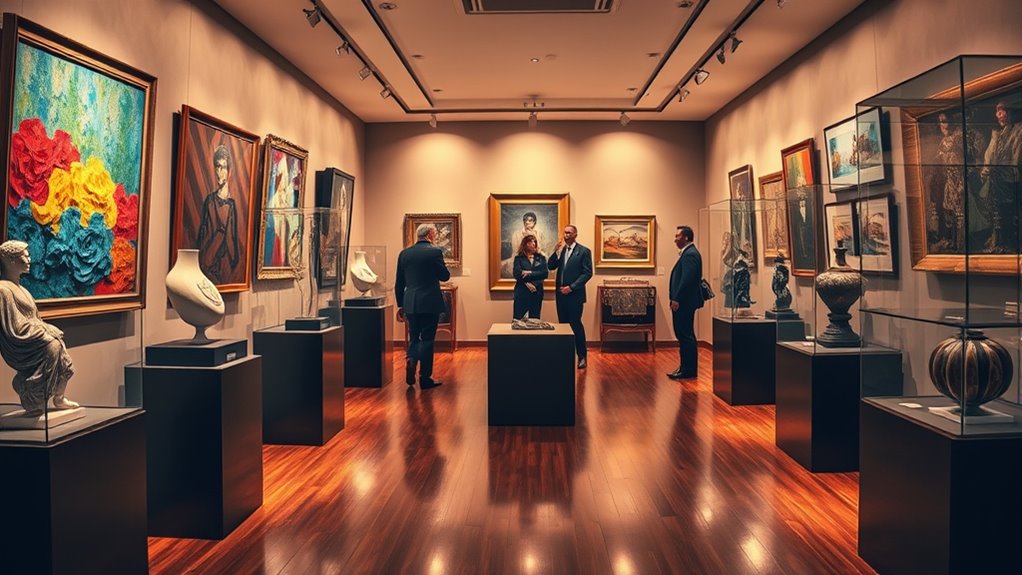
Several key factors directly influence the value of a piece of art, and understanding them can help you assess its worth more accurately. Material appraisal plays a crucial role; the quality, rarity, and provenance of the materials used can substantially impact an artwork’s price. Recognizing the importance of material quality can also guide collectors in identifying authentic and well-preserved pieces. Additionally, factors like the artist’s reputation, condition, and provenance contribute to the overall valuation. Recognizing these elements enables you to make informed decisions when buying or investing. For example, incorporating natural materials like wood or stone can enhance a piece’s historical appeal and market value. The spiritual energy associated with certain materials can also influence a piece’s resonance and desirability in the market. Understanding the relationship between materials and symbolism can deepen your appreciation and strategic approach to collecting art. By considering both material appraisal and cultural significance, you’ll better understand what drives an artwork’s market worth. Incorporating the Law of Attraction principles such as positive visualization can also influence your confidence and decision-making in art collecting.
Building Your Art Collection Strategically
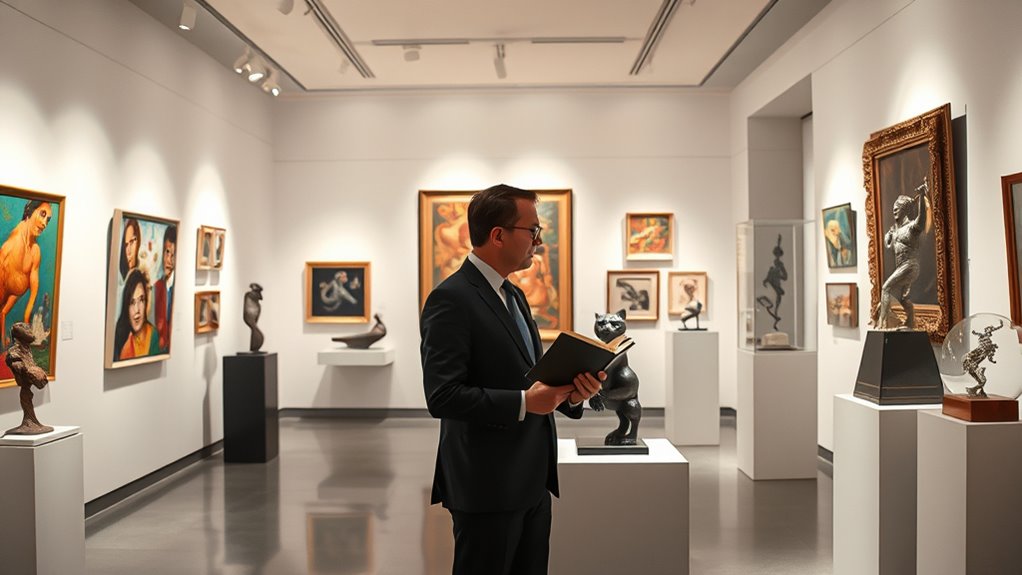
Building your art collection strategically requires clear goals and a thoughtful approach. Begin by defining what excites you—whether it’s emerging artists, specific styles, or periods. Regular studio visits help you discover new talent and understand the artist’s process, enriching your appreciation and investment. Prioritize quality over quantity, focusing on pieces that resonate with your vision and can appreciate over time. Consider your art investment carefully; diversify your collection to balance risk and growth. Keep detailed records of each piece’s provenance and provenance. Stay informed about market trends, but avoid impulsive purchases. Developing a curated collection that reflects both personal passion and market awareness ensures your collection remains meaningful and valuable. A strategic approach ensures your collection reflects your passions while also serving as a sound investment for the future. Incorporating market trends can help you identify high-potential pieces that align with your collection goals. Understanding the value appreciation of artworks over time can guide your acquisitions toward pieces with strong long-term growth potential. Additionally, engaging with art market research can provide insights into emerging opportunities and help you make informed decisions.
Legal and Ethical Considerations

As you develop your art collection, it’s important to contemplate the legal and ethical responsibilities that come with acquiring and owning artwork. Respecting intellectual property rights ensures you’re not unknowingly supporting forgeries or stolen works. Always verify the provenance and authenticity of pieces to avoid legal complications. Ethical sourcing is equally crucial; seek artworks obtained through transparent, fair practices that support artists and communities. Be cautious of provenance gaps or suspicious origins, as these can lead to legal disputes and damage your reputation. Understanding these considerations safeguards your investments and aligns your collection with integrity. Staying informed about laws and ethical standards helps you build a responsible collection that respects artists’ rights and maintains high moral standards in the art world.
Tips for First-Time Art Buyers

As a first-time art buyer, you should start by setting a clear budget to guide your choices. It’s also important to research artists thoroughly so you understand their work and reputation, and attending art fairs can help you find pieces that truly resonate with you. These steps will help you make informed decisions and build a meaningful collection.
Set a Budget
Setting a clear budget is a crucial first step when you’re new to art collecting. Knowing your financial limits helps you avoid impulsive purchases driven by emotional investment. To establish your budget effectively, consider these steps:
- Research pricing strategies to understand market values and avoid overpaying.
- Determine how much you’re willing to invest emotionally versus financially, ensuring you’re comfortable with your choices.
- Set a maximum spending limit, including additional costs like commissions or framing.
Sticking to this budget keeps your collecting sustainable and enjoyable. Remember, art’s value isn’t just monetary; it’s about what resonates with you without risking financial strain. A clear budget helps you focus on pieces that truly fit your goals and resources.
Research Artists Carefully
How can you guarantee you’re investing in authentic and meaningful artwork? The key is thorough research. Start by reviewing artist biographies to understand their background, influences, and career trajectory. This insight reveals their reputation and the significance of their work. Additionally, study their artistic techniques—how they create, what materials they use, and their signature styles. This helps you assess the originality and craftsmanship behind each piece. Authenticity can often be verified through provenance records or gallery certifications, but understanding the artist’s history and methods provides deeper confidence. By researching artists carefully, you ensure your investment aligns with your taste and values, making your collection more meaningful and valuable over time.
Attend Art Fairs
Attending art fairs offers a dynamic way to see a wide range of artworks and connect directly with artists and gallery representatives. To make the most of your experience, keep these tips in mind:
- Follow art fair etiquette by being respectful, attentive, and engaging without being intrusive.
- Use your observations to aid exhibitor selection, focusing on booths that align with your interests and budget.
- Ask thoughtful questions about the artwork’s provenance, artist background, and pricing to deepen your understanding.
Frequently Asked Questions
How Can I Start Investing in High-End Art With a Limited Budget?
You can start investing in high-end art on a limited budget by exploring art crowdfunding platforms, which allow you to buy shares in artworks with smaller amounts. Focus on emerging artists, whose works often appreciate faster and cost less initially. Research upcoming exhibitions and online galleries, and join art communities to stay informed. This approach makes high-end art more accessible while building your collection gradually.
What Are the Risks Involved in Buying High-Value Art Pieces?
Think of buying high-value art as sailing through unpredictable waters. You face risks like art theft, where stolen pieces reappear, and provenance verification challenges, which can hide fakes or misattributions. Without thorough research, you risk losing money or acquiring counterfeit works. Always verify provenance and guarantee proper security measures. Being cautious helps you navigate safely through the art world’s hidden dangers, protecting your investment and passion alike.
How Do I Insure My Art Collection Properly?
To guarantee your art collection properly, start by obtaining a professional valuation using trusted valuation methods like appraisals or market comparisons. Then, find an art insurance provider that specializes in high-value items, ensuring your policy covers theft, damage, and loss. Keep your appraisals up-to-date, document your collection thoroughly, and review your coverage regularly to ensure it matches your collection’s current value.
What Are the Best Ways to Store and Display Valuable Artworks?
You want your valuable artworks to look stunning, not turn into ruined relics? Start with proper display lighting—avoid harsh, direct lights that cause art conservation issues. Use UV-filtering glass or acrylic for framing, and keep humidity and temperature steady. Store pieces in climate-controlled environments and rotate displays to minimize light exposure. Your art deserves better than a dusty basement; give it a smart, safe showcase.
How Can I Verify the Current Market Value of an Artwork?
To verify an artwork’s current market value, you should start with appraisal techniques like comparing similar pieces’ recent sales. Check auction results, gallery prices, and online marketplaces for the latest trends. Stay updated on market trends through art publications and industry reports. This approach guarantees you get an accurate, real-time estimate, helping you make informed decisions whether buying or selling.
Conclusion
Stepping into the world of high-end art is like entering a grand gallery filled with endless possibilities. With knowledge as your compass and intuition as your guide, you’ll navigate this vibrant landscape confidently. Remember, every masterpiece holds a story—your journey is just beginning, and each piece you acquire adds a new chapter. Embrace the adventure, and soon you’ll find yourself crafting a collection as timeless as the art itself.