You can craft your own luxury skincare products at home, but it requires understanding ingredients, formulation techniques, and safety practices. While DIY offers cost savings and customization, matching the quality of high-end brands is challenging without expertise. Professional formulas undergo rigorous testing, ensuring efficacy and safety. If you want to learn how to navigate ingredient choices, proper techniques, and safety measures, there’s more to discover that can help you achieve professional results yourself.
Key Takeaways
- DIY skincare allows customization and cost savings but requires knowledge of ingredient compatibility and safety precautions.
- High-end skincare offers scientifically formulated, consistent, and professionally tested products with advanced ingredients.
- Both options demand understanding of formulation techniques, proper storage, and ingredient sourcing for safety and efficacy.
- DIY formulations can be effective if carefully researched, tested, and prepared with quality ingredients.
- Choosing between DIY and high-end skincare depends on your skin needs, budget, and willingness to learn formulation basics.
Understanding the Foundations of Skincare Formulation

To truly understand skincare formulation, you need to grasp the basic ingredients that make up every product. Natural ingredients, like plant extracts, oils, and botanicals, are often favored for their purity and benefits. These ingredients serve as active components or base carriers in formulations. Equally important are formulation techniques, which involve combining ingredients in specific ways to enhance stability, texture, and absorption. Understanding pH balance, emulsification, and preservation methods helps you create effective skincare. High-quality formulations rely on precise measurements and thoughtful ingredient interactions. Whether you’re crafting a serum or moisturizer, knowing how natural ingredients work together and applying solid formulation techniques allows you to develop products that are both safe and effective. Mastering these basics is essential before moving to more advanced DIY or professional formulations. Additionally, considering vetted ingredient sources ensures that your formulations are safe, reliable, and effective. A solid grasp of formulation techniques can also help you troubleshoot issues like separation or instability in your products. Moreover, understanding the safety and stability of essential oils and other botanical ingredients can prevent potential formulation failures and enhance product longevity. Incorporating sound scientific principles into your approach can further improve formulation success and consumer trust. Recognizing market trends can also guide you in selecting ingredients that meet consumer preferences and demands.
Benefits and Drawbacks of DIY Skincare Creations
DIY skincare can save you money and make products more accessible, but it might not always deliver the same results. While creating your own formulas seems cost-effective, safety and effectiveness can vary depending on ingredients and techniques. You need to weigh the benefits of customization against potential risks to make sure your skincare routine is both safe and effective. Additionally, understanding skincare formulations and proper ingredient usage is crucial to achieving desirable outcomes. Being aware of fatherhood and the importance of guidance can remind you to approach your skincare with patience and care. Incorporating knowledge about essential oils can help you select natural ingredients that enhance your formulations and overall skin health. Familiarizing yourself with brewing guides can also inspire patience and precision in your DIY skincare process, ensuring better results.
Cost and Accessibility
While DIY skincare can be appealing because of its low cost and easy accessibility, it also comes with some limitations. You may find that ingredient diversity is limited, making it harder to customize formulas for specific skin needs. Additionally, sourcing quality ingredients at affordable prices isn’t always straightforward, which can impact the final product’s effectiveness. Unlike high-end brands that invest in branding strategies to create a perceived luxury, DIY creations often lack professional packaging and marketing, which may affect your confidence in the product’s quality. Accessibility is generally high—you can find ingredients online or at local stores—but the time and effort to research and assemble your own products might outweigh the savings. Overall, DIY skincare offers affordability but can be constrained by limited options and perceived credibility. Understanding the importance of ingredient quality and formulation techniques can help you make more informed choices. Furthermore, certain ingredients used in Kia Tuning, like performance-enhancing parts, require precise handling and expertise, similar to formulating skincare where knowledge of ingredients is crucial to ensure safety and efficacy. Additionally, proper formulation techniques are essential to achieve the desired results and avoid potential skin reactions. Developing a solid understanding of ingredient stability can also help prevent product spoilage and ensure long-lasting results. Recognizing the significance of storage conditions is also vital for maintaining ingredient potency and product safety over time.
Effectiveness and Safety
Creating your own skincare can be effective when you use proper ingredients and techniques, but it also comes with safety considerations. Natural ingredients can offer beneficial properties, but they may also pose allergy risks if not tested properly. Without standardized formulations, you might not achieve consistent results, and some DIY recipes could irritate your skin or cause adverse reactions. It’s essential to research ingredients thoroughly and perform patch tests before applying new mixtures broadly. While DIY skincare allows customization, its safety depends on your knowledge and careful handling. Additionally, understanding skin compatibility is crucial to avoid adverse effects. Using proper storage and handling techniques can help maintain ingredient stability and efficacy, reducing the risk of contamination. Conversely, high-end products often undergo rigorous testing for safety and efficacy. Ultimately, balancing the benefits of natural ingredients with awareness of allergy risks is key to creating effective, safe skincare routines.
Advantages and Limitations of High-End Products
High-end skincare products often promise superior results thanks to their carefully formulated ingredients and advanced technology. Their benefits include luxurious textures, innovative ingredients, and effective branding strategies that build trust and allure. However, they come with limitations. High costs can restrict access, and sometimes, ingredients sourcing isn’t transparent, making it hard to evaluate quality. Additionally, the emphasis on branding strategies may prioritize image over proven efficacy. Moreover, the ingredients sourcing process can sometimes lack transparency, making it difficult to assess the true quality of the ingredients used. The regulatory standards governing these products can further complicate the evaluation process. Furthermore, the quality control measures in place may vary widely between brands, impacting consistency and safety for consumers. To ensure safety, some consumers turn to independent testing and third-party reviews to verify product claims.
The Science Behind Effective and Safe Formulations
Effective and safe skincare formulations rely on a solid understanding of skin biology and rigorous scientific testing. To achieve this, you must guarantee formulation stability and ingredient compatibility, preventing issues like separation or reduced efficacy. Proper pH balance is vital, as it affects skin absorption and product safety. You also need to contemplate preservative efficacy to prevent microbial growth without irritating your skin. Additionally, understanding ingredient interactions helps avoid unwanted reactions that can compromise safety or performance. Considering divorce laws in your jurisdiction can inform your knowledge of legal processes that might impact personal circumstances, similar to how understanding skin compatibility guides formulation success. Incorporating pimple patch technology can enhance targeted treatment efficacy and ensure ingredient delivery to affected areas.
- Select ingredients that complement each other to enhance effectiveness
- Test stability over time under different conditions
- Use appropriate preservatives for microbial safety
- Monitor pH levels to maintain skin compatibility and product integrity
Cost Effectiveness: Is DIY More Budget-Friendly?
You might think DIY skincare saves you money upfront, but ingredient costs can add up over time. High-end products often have a higher initial price but may last longer and be more concentrated. Consider whether homemade recipes truly offer long-term savings compared to investing in quality, ready-made options.
Ingredient Costs Comparison
When comparing the ingredient costs of DIY skincare to high-end products, it’s clear that budget considerations play a significant role. DIY formulations often rely on affordable raw material pricing and direct ingredient sourcing, which can lower costs. However, larger quantities may be needed to match product potency, potentially increasing expenses. High-end skincare, on the other hand, invests heavily in premium ingredients, often at higher raw material prices, which raises their overall costs.
Consider these points:
- DIY ingredients can be sourced cheaply in bulk.
- High-end products use rare, expensive extracts.
- Raw material pricing varies widely depending on quality.
- Ingredient sourcing influences overall formulation costs.
Balancing quality and cost is key when comparing these options.
Long-Term Savings Potential
DIY skincare can offer significant long-term savings because you can continuously replenish ingredients at a fraction of the cost of high-end products. By sourcing affordable ingredients and making your own personal care items, you reduce recurring expenses. Over time, this approach can be more budget-friendly, especially if you buy in bulk. Here’s a quick comparison:
| Aspect | DIY Skincare | High-End Skincare |
|---|---|---|
| Ingredient Costs | Lower, bulk sourcing, reusable | Higher, brand premiums |
| Replenishment | Frequent, affordable | Less frequent, costly |
| Long-Term Savings | Significant over time | Limited, often more expensive |
With strategic ingredient sourcing, you maximize savings, making DIY a more cost-effective choice for your personal care routine.
Safety Considerations When Making Your Own Skincare

Making your own skincare can be rewarding, but it’s essential to prioritize safety at every step. You need to be mindful of ingredient stability to prevent spoilage and ensure the product remains effective. Contamination risks are also a major concern; improper handling or unclean tools can introduce bacteria or fungi. Always sanitize your equipment and workspace thoroughly. Use fresh ingredients and store your formulations properly to maintain safety. Be cautious with preservatives—skipping or using the wrong ones can lead to microbial growth. Test your products in small batches first to check for adverse reactions or stability issues. Remember, even natural ingredients can cause sensitivities if not prepared correctly. Prioritize safety to enjoy your DIY skincare without risking irritation or contamination.
How to Achieve Professional-Quality Results at Home
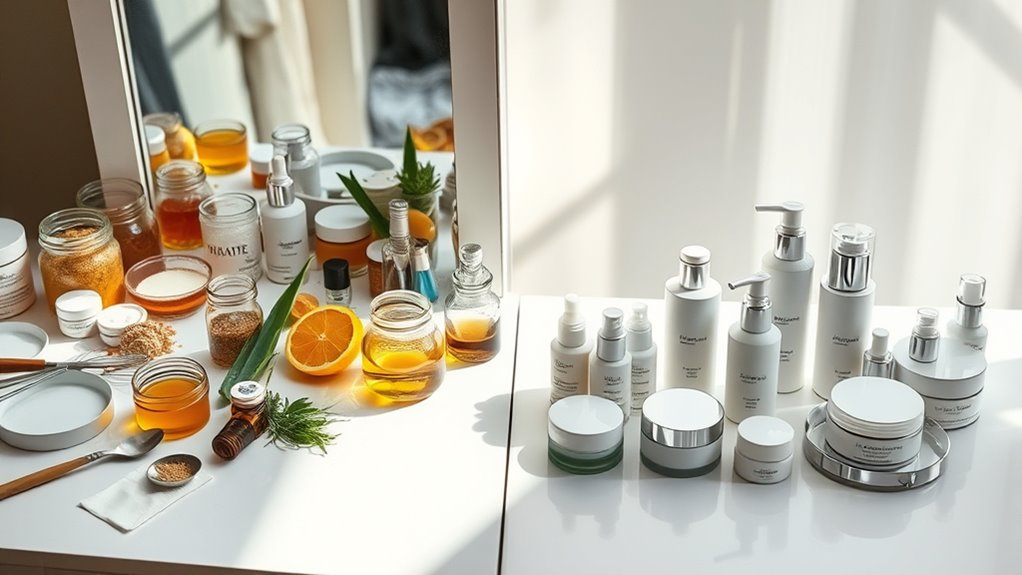
Achieving professional-quality skincare results at home is entirely possible with the right techniques and attention to detail. Start by selecting high-quality natural ingredients known for their efficacy, like plant extracts, essential oils, and antioxidants. Precision in measurements and cleanliness are vital to guarantee safety and potency. Use proper tools and follow tested formulations or reputable recipes to maintain consistency. Incorporate branding strategies by creating a clean, professional presentation for your products, such as labeled jars or elegant packaging, which can boost your confidence and motivation. Keep detailed records of your formulations to refine your process over time. Remember, patience and practice are fundamental—your skills will improve as you experiment and learn, bringing salon-quality results within your reach.
Making an Informed Choice: Which Path Suits Your Skin and Lifestyle?
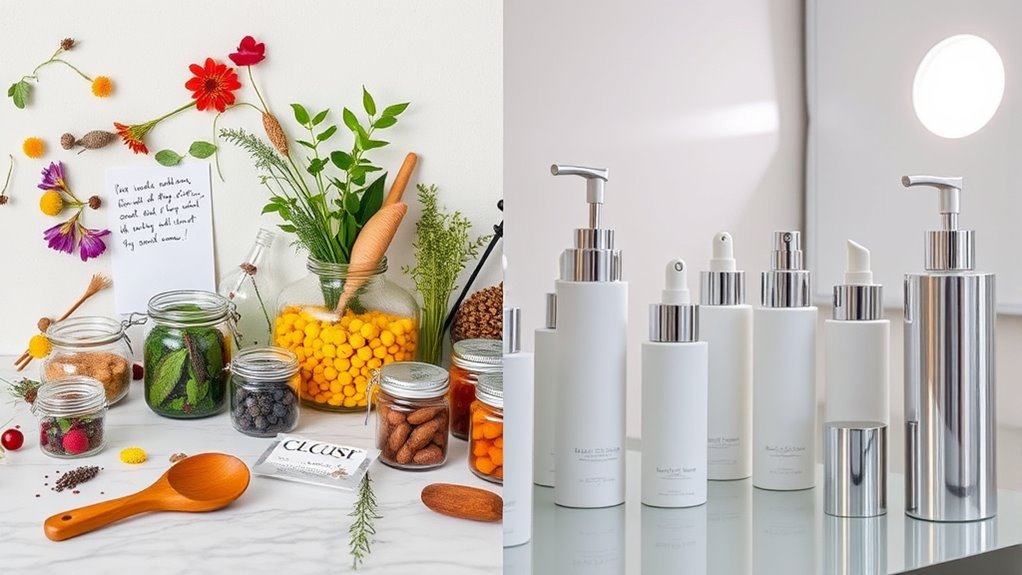
Choosing between DIY and high-end skincare depends on your skin type, lifestyle, and personal preferences. Consider how much time you’re willing to invest, your knowledge of ingredient sourcing, and your comfort with creating products. DIY options offer control over ingredients and customization, but require research and proper sourcing. High-end brands often rely on branding strategies that emphasize luxury and proven formulations, saving you time and effort. Think about whether you prefer experimenting in your kitchen or trusting established brands. Your skin’s sensitivities and goals also matter—some ingredients are better sourced carefully, whether you make them yourself or buy premium. Ultimately, your choice should align with your routines, values, and how much effort you’re willing to dedicate.
Frequently Asked Questions
How Do I Ensure My Homemade Skincare Is Properly Preserved?
To guarantee your homemade skincare is properly preserved, you should use effective preservation techniques, like adding natural or synthetic preservatives, depending on your ingredients. Natural preservatives include certain essential oils or vitamin E, but synthetic preservatives offer longer shelf life and broader antimicrobial protection. Always sterilize your tools, keep containers airtight, and store products in cool, dark places. Regularly check for changes to avoid contamination and guarantee your skincare stays safe and effective.
Can DIY Skincare Match the Efficacy of Professional Products?
Think of your skincare journey as a quest for treasure. While DIY skincare with natural ingredients can be powerful, it often lacks the precise ingredient sourcing and clinical testing that professional products have. This means your homemade formulas may not match the efficacy of high-end skincare. However, with careful research, quality sourcing, and patience, you can create effective skincare, but it might not always reach the same level of potency.
What Ingredients Should I Avoid in DIY Formulations?
You should avoid ingredients that may trigger skin sensitivities, like harsh fragrances or synthetic preservatives. Instead, opt for natural preservatives to keep your formulations safe and effective. Steer clear of potent acids or allergens that could cause irritation. Always patch-test new ingredients and research their safety. Remember, using ingredients you understand well minimizes risks and helps you create skincare that’s both gentle and effective for your skin type.
How Long Can I Safely Store Homemade Skincare Products?
You can usually store homemade skincare for about 1 to 3 months if you don’t use preservatives. To extend shelf life and guarantee safety, consider preservative options like natural extracts or commercial preservatives suitable for DIY. Always store your products in airtight containers, keep them in a cool, dark place, and watch for changes in smell, color, or texture. When in doubt, make smaller batches to prevent waste and ensure freshness.
Do High-End Products Contain Ingredients Unavailable to Consumers?
High-end products often contain luxury ingredient exclusivity, meaning some ingredients aren’t available to consumers or are limited to professional formulations. Manufacturers keep certain formulations secret to protect their proprietary blends, making it difficult to replicate the same luxury experience at home. While some high-end ingredients are accessible, the most exclusive ones are usually reserved for professional use or only available through specialized channels, maintaining their premium status.
Conclusion
Ultimately, whether you craft your own skincare masterpiece or indulge in luxurious high-end products, remember you hold the power to transform your skin’s destiny. Imagine turning your bathroom into a high-tech lab or a lavish spa—each drop of your creation or purchase shaping a radiant, glowing future. So, choose wisely, and let your skincare routine become the ultimate act of self-love—because your skin deserves nothing less than a revolution of beauty!