Luxury beauty rituals have always showcased wealth and cultural values. From ancient Egypt’s use of honey, malachite, and perfumes to European aristocracy’s elegant powders and jewelry, each era highlights opulence and social status. During the Renaissance, pale skin and vibrant lips signified wealth, while Imperial China emphasized harmony through jade rollers and herbal serums. In the 19th century, glamour soared with skincare innovations. Explore these timeless secrets to uncover the true meaning of beauty through the ages.
Key Takeaways
- Ancient elites used natural ingredients like honey, herbs, and minerals, incorporating spiritual rituals to symbolize social status and fertility.
- Renaissance and Victorian beauty prioritized pale skin, vibrant lips, and elaborate grooming to showcase wealth and social hierarchy.
- Imperial Chinese and European aristocratic rituals emphasized harmony, refinement, and exotic ingredients to reflect cultural values and prestige.
- The 19th and 20th centuries introduced luxury skincare innovations, blending heritage rituals with scientific advancements for personalized routines.
- Modern luxury beauty integrates wellness, self-care, and individual expression, drawing inspiration from historical practices and technological progress.
The Glittering Secrets of Ancient Egypt
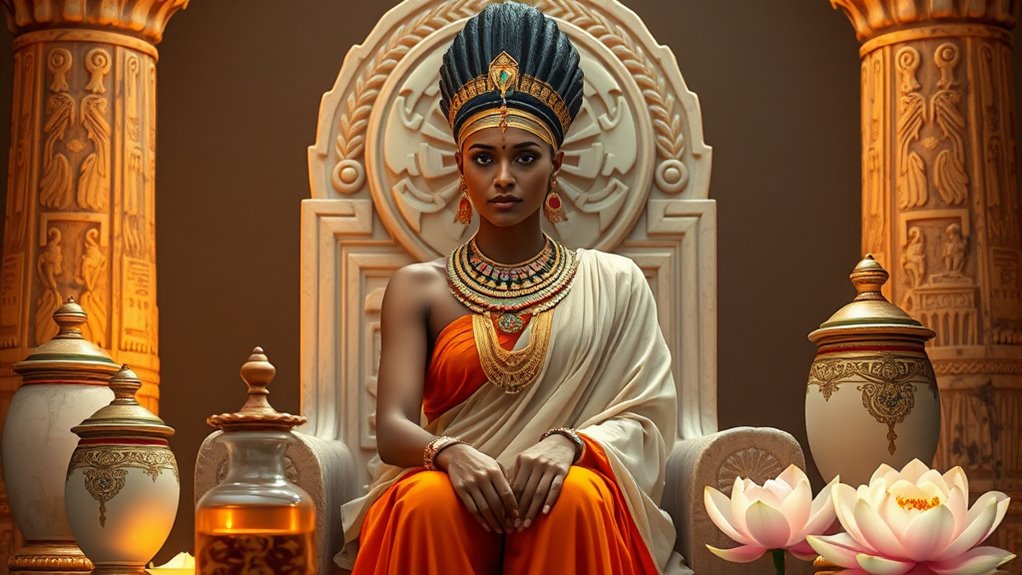
Ancient Egypt’s beauty rituals reveal a fascination with glamour that still enthralls us today. You’ll discover that they used unique ancient cosmetic ingredients, like malachite and kohl, to craft striking looks. These ingredients weren’t just for beauty—they held symbolic meaning and were considered protective charms. For example, green malachite symbolized fertility and rebirth, while black kohl defined the eyes, making them appear larger and more mesmerizing. These practices weren’t merely cosmetic; they were intertwined with royal beauty symbols, reflecting status and divine power. Pharaohs and nobility often wore elaborate makeup to showcase their divine connection and social standing. Understanding the significance of aura colors and their spiritual meanings can deepen our appreciation for these ancient practices. The use of cosmetic ingredients was also believed to have protective and healing properties, adding a layer of spiritual significance to their beauty rituals. Additionally, the application of beauty tools like mirrors and applicators played an essential role in their ritualistic approach to grooming. The Egyptians also believed that certain color symbolism could influence their health and fate, which made their beauty rituals deeply rooted in spiritual beliefs. Exploring the cultural symbolism behind these rituals can further enrich our understanding of their societal importance. By embracing these ancient secrets, you connect with a tradition that celebrated beauty as a reflection of spiritual and royal authority.
Royal Rituals of the European Aristocracy

Have you ever wondered how European aristocrats elevated their beauty routines to regal rituals? They meticulously curated courtly makeup, emphasizing subtle elegance and refined gestures. Women used delicate powders and muted hues to highlight their features, often applying makeup in private ceremonies that reinforced status and sophistication. Fragrances played a crucial role, with aristocratic fragrances crafted from rare, exotic ingredients, creating signature scents that symbolized wealth and power. These fragrances weren’t just personal; they served as social markers, announcing your place in the court. Rituals surrounding beauty became a display of aristocratic prestige, blending art, scent, and presentation. Every detail, from makeup to fragrance, reflected the grandeur of the noble lifestyle, elevating personal grooming into an intricate and regal tradition. Additionally, beauty rituals were carefully choreographed to demonstrate refinement and social standing, with specific timings and sequences to emphasize discipline and elegance in daily routines. The rituals often involved specific timings and sequences, emphasizing discipline and elegance in daily routines. This meticulous attention to detail underscored the importance of social hierarchy in maintaining aristocratic stature, and incorporating ritualistic practices further distinguished their personal grooming from common customs.
The Opulence of Renaissance Beauty Practices
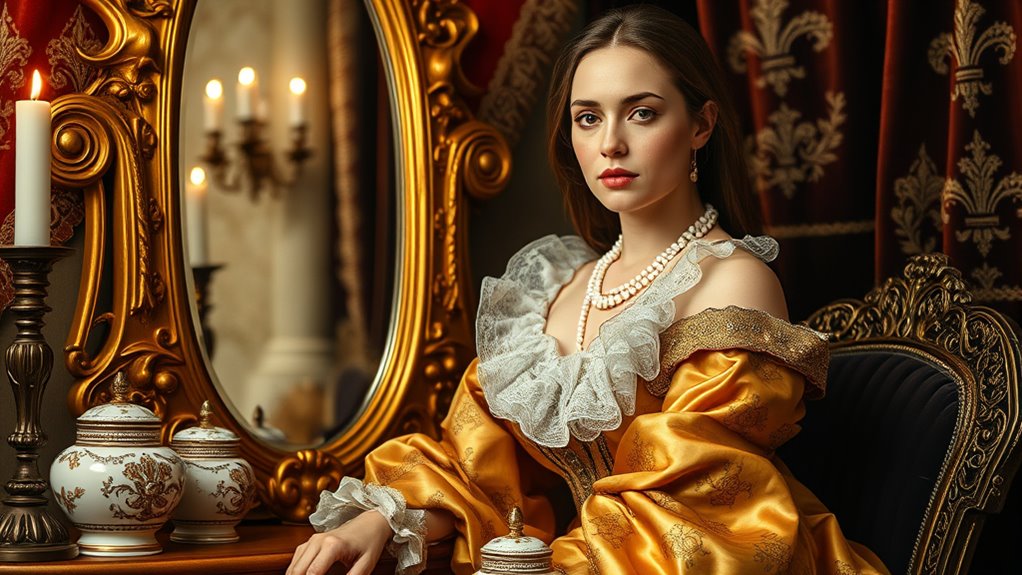
Renaissance beauty practices built upon the refined rituals of European aristocracy, transforming personal grooming into an expression of wealth and cultural sophistication. During this era, medieval makeup evolved into elaborate techniques, emphasizing pale skin and vibrant lips to showcase status. Baroque hairstyles became intricate, featuring towering curls and ornate accessories that demonstrated opulence. To achieve this look, you might have used:
- Rich, gilded powders to mimic medieval makeup’s pale complexion
- Perfumed oils and creams to maintain luminous skin
- Elaborate wigs or styled natural hair with feathers and jewels
- Intricate updos inspired by baroque hairstyles, emphasizing height and grandeur
Additionally, the use of high-quality beauty products was essential to attain the luxurious finishes characteristic of the period. These practices elevated beauty into an art form, reflecting both personal wealth and the era’s artistic flair. The importance of luxurious grooming items further underscored the social status of those who could afford such indulgences. Moreover, these beauty rituals often incorporated cultural symbolism, reinforcing social hierarchies and cultural identity of the aristocracy. Incorporating innovative techniques in application methods also helped achieve the dramatic effects favored during this time. The meticulous attention to detail and craftsmanship in beauty routines highlighted the importance of personal presentation as an extension of aristocratic identity and power.
Lavish Skincare in Imperial China

Did imperial Chinese women truly believe that their skincare rituals could enhance both beauty and longevity? They invested heavily in luxurious treatments, like silk infused serums that nourished the skin deeply. These serums, often blended with herbs and minerals, aimed to preserve a youthful glow and promote health. Jade facial rollers became essential tools, used to massage the face and boost circulation, which helped reduce puffiness and improve complexion. Such rituals reflected their reverence for harmony and balance, emphasizing inner wellness as much as outer beauty. The use of natural ingredients and traditional techniques demonstrated a sophisticated understanding of personal care rooted in cultural values. These practices weren’t just about appearance; they symbolized status and refined taste. Every step, from applying silk serums to using jade rollers, connected them to centuries-old traditions of ethical hacking preserving youth and elegance.
19th-Century Glamour and the Rise of Modern Luxury Beauty
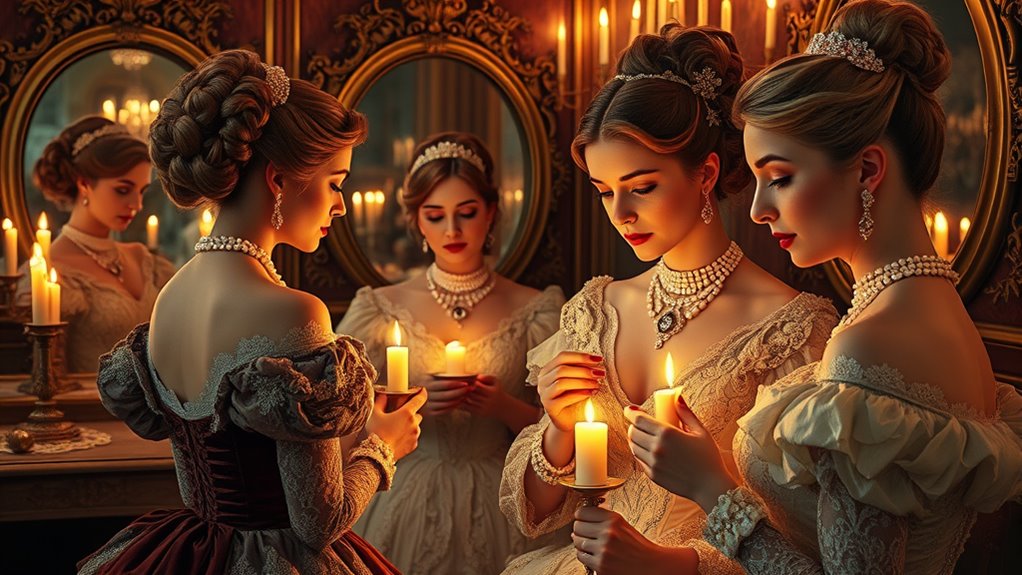
As the 20th century unfolded, beauty standards shifted dramatically, blending innovation with a desire for glamour rooted in earlier traditions. This era saw a surge in cosmetic innovations that transformed how you approach beauty, emphasizing modern luxury. The beauty philosophy evolved to focus on individual expression, combining technology with timeless elegance. You experienced:
- The rise of iconic Hollywood glamour influencing makeup and skincare.
- Advancements in skincare formulas, making luxury products more effective.
- The emergence of high-end brands prioritizing exclusivity and craftsmanship, often drawing inspiration from heritage beauty rituals.
- A shift toward personalized beauty routines blending tradition with modern science, supported by technological advancements that enhanced formulation precision.
- Increased awareness of emotional support and self-care practices as integral to overall beauty and well-being. Additionally, the integration of attention in practice helped consumers develop more mindful and effective beauty routines that fostered both confidence and well-being. This period also saw a focus on skin health as a foundation for lasting beauty, emphasizing preventative care and nourishment.
Frequently Asked Questions
How Did Ancient Beauty Rituals Influence Modern Luxury Skincare Products?
Ancient beauty rituals greatly influence modern luxury skincare by incorporating ancient herbal remedies and ritualistic facial massages. You now enjoy products infused with herbal ingredients once used by royalty, aiming to nourish and rejuvenate. Ritualistic facial massage techniques, rooted in history, are integrated into today’s treatments to promote circulation and relaxation. These traditions emphasize self-care and natural ingredients, connecting you to centuries of luxurious beauty practices.
Were There Any Secret Ingredients Used Exclusively by Royalty for Beauty Enhancement?
Yes, royal recipes often featured secret ingredients that were exclusive to royalty. These secret ingredients included rare herbs, precious oils, and exotic extracts, all believed to enhance beauty and preserve youth. You might imagine these secret ingredients as hidden treasures, reserved for kings and queens. Royal recipes used these secret ingredients to create luxurious treatments, making their beauty rituals truly unique and unattainable for common folk, preserving their air of mystique.
How Did Cultural Exchanges Impact Luxury Beauty Practices Across Different Eras?
Cultural exchange fueled beauty fusion, transforming luxury beauty practices across eras. You see, when different cultures interacted, they shared ingredients, techniques, and ideals, creating innovative rituals. For example, Eastern beauty secrets like rice powder and jasmine became popular in the West, while Western skincare methods influenced Asian routines. This cross-pollination enriched beauty standards, allowing the wealthy to access diverse, luxurious treatments that reflected a global appreciation for unique, refined beauty.
What Role Did Jewelry and Adornments Play in Historical Beauty Rituals?
Jewelry and adornments played a essential role in your historical beauty rituals by showcasing your status and wealth through luxurious accessories and decorative ornaments. You used precious stones, intricate metalwork, and symbolic charms to enhance your appearance, emphasizing your social standing and personal style. These adornments weren’t just decorative; they conveyed power, spirituality, and identity, making them integral to the beauty rituals of the wealthy across different eras.
How Did Societal Norms Shape the Standards of Beauty Among the Elite?
Societal norms act as the invisible hand guiding your beauty standards, shaping what’s considered desirable among the elite. You’re caught in a web spun by social hierarchy and gender expectations, dictating how you should look to reflect status and femininity or masculinity. These norms turn beauty into a symbol of power, often making you conform to ideals that reinforce societal divisions and uphold the privilege of the upper class.
Conclusion
As you explore these timeless beauty rituals, imagine stepping into a grand palace where each secret is a shimmering jewel, centuries old yet eternally radiant. These practices are like threads woven into a rich tapestry of luxury, shining brighter with history’s glow. Embrace this legacy, and let it inspire your own journey toward beauty that’s as enduring and enchanting as the stories of the past. In this mosaic, your radiant future begins.