
Luxury watches showcase exceptional craftsmanship through complex features called complications, such as moon phases, chronographs, and power reserves, each blending artistry with engineering. Tourbillons stand out as precise mechanisms that counteract gravity’s effects, highlighting mastery in horology. Skeleton and open-heart designs reveal intricate inner workings, emphasizing aesthetic beauty and technical skill. Material choices also influence performance and look. To discover how these elements come together in high-end timepieces, explore further—they reveal the true art of watchmaking.
Key Takeaways
- Watch complications add functional and artistic complexity, transforming basic timekeeping into intricate horological masterpieces.
- Tourbillons counteract gravitational errors through rotating escapements, showcasing advanced mechanical ingenuity.
- Aesthetic integration of complications enhances both the visual appeal and technical mastery of luxury watches.
- Material choices and craftsmanship elevate durability, precision, and artistic finish in high-end watchmaking.
- Proper maintenance preserves the intricate mechanisms and value of luxury watches over time.
Understanding Watch Movements and Calibers
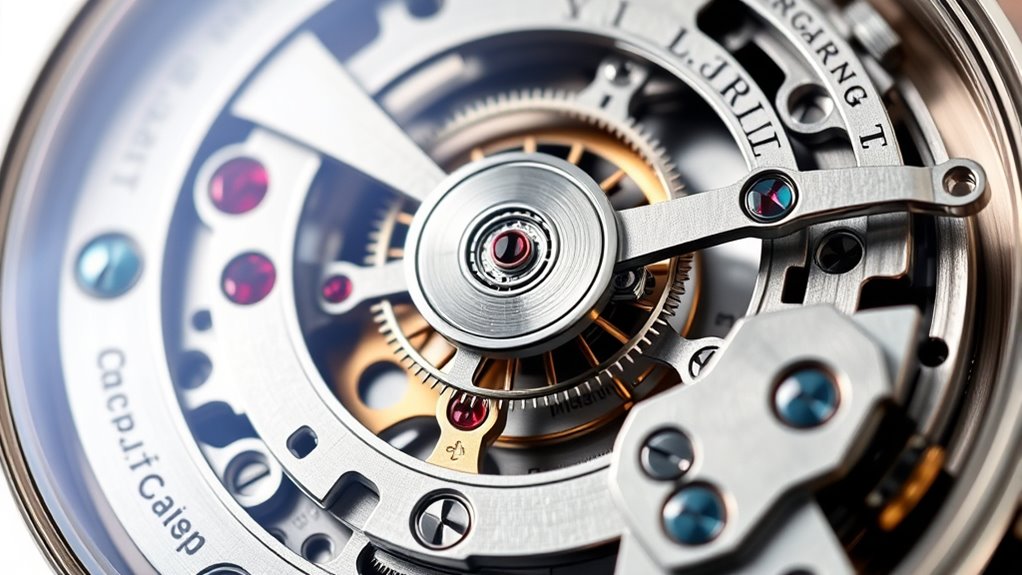
Understanding watch movements and calibers is essential to appreciating the craftsmanship behind luxury watches. The movement, or caliber, is the engine that drives the watch’s functions. You’ll find watches with automatic winding, which harnesses your wrist’s motion to power the movement, eliminating the need for manual winding. This seamless energy transfer showcases the intricate engineering involved. On the other hand, quartz technology relies on a tiny battery and a quartz crystal to keep accurate time, making it highly precise and low-maintenance. Both types have unique appeals: automatic watches emphasize traditional craftsmanship, while quartz watches highlight modern innovation. Knowing how these movements work helps you appreciate the skill and precision engineering that go into creating high-end timepieces, elevating your understanding of watch mechanics.
The Significance of Complications in High-End Watches

Complications are what elevate a high-end watch from simply keeping time to showcasing exceptional craftsmanship and ingenuity. They add functionality that transforms a basic timepiece into a work of art. For example, moon phases display the lunar cycle, blending beauty and technical skill, and are often appreciated for their poetic elegance. Power reserves indicate how much energy remains before the watch needs winding or a new battery, providing practical value and demonstrating precision engineering. These complications reflect the watchmaker’s mastery and dedication to creating something more than just a timekeeper. They enhance the watch’s uniqueness and desirability, making it not only a tool but also a symbol of sophistication and technical prowess. In this way, complications deepen your connection to the craft of watchmaking, much like educational toys foster learning and development in children. Furthermore, complication design requires meticulous attention to detail, showcasing the watchmaker’s artistry and innovation. Additionally, the development of these features often involves complex mechanical engineering, highlighting the intricate craftsmanship behind each masterpiece. Building on that, the integration of technological advancements continues to push the boundaries of what mechanical watches can achieve, blending tradition with innovation. A fundamental understanding of watchmaking history can also enhance appreciation for these intricate features.
Exploring Tourbillons: A Marvel of Precision

Among the most breathtaking innovations in high-end watchmaking is the tourbillon, a marvel of engineering designed to enhance precision. By rotating the entire escapement mechanism and balance spring, it counters gravitational effects that can cause timing errors. To understand its brilliance, consider:
- How the tourbillon’s rotation stabilizes escapement mechanisms against gravity’s influence.
- The role of ultra-precise balance springs within the rotating cage for consistent oscillation.
- The meticulous craftsmanship required to assemble and regulate these intricate components, which demands exceptional skill and attention to detail.
- The integration of complication features that showcase horological mastery and elevate the watch’s value. Additionally, the development of advanced manufacturing techniques has allowed for even more intricate and reliable tourbillon designs. Innovations in micro-mechanics have further refined the durability and precision of these complex mechanisms.
This complex mechanism ensures that positional errors are averaged out, resulting in unmatched accuracy. The tourbillon exemplifies how horologists push the limits of precision, combining innovative engineering with aesthetic mastery in high-end watches.
The Role of Chronographs and Other Timing Features

You’ll find that chronographs and other timing features enhance both the functionality and precision of luxury watches. These complexities are carefully integrated into the design, blending utility with aesthetic appeal. By understanding their role, you gain a deeper appreciation for how craftsmanship elevates timekeeping to an art form. Incorporating complex watch mechanisms requires meticulous skill, reflecting a high level of dedication from watchmakers, and making each timepiece a unique masterpiece. Supporting emotional well-being can also be important for those who collect or wear luxury watches, as appreciating intricate designs can foster a sense of pride and emotional connection. Furthermore, the complexity of watch mechanisms reflects a high level of skill and dedication from watchmakers, making each timepiece a unique masterpiece. Additionally, the integration of advanced watch complications demonstrates a blend of technological innovation and traditional craftsmanship, further elevating the artistry involved. The use of intricate tourbillon mechanisms exemplifies the mastery involved in high-end watchmaking, showcasing both technical prowess and aesthetic finesse.
Functionality and Precision
The functionality and precision of luxury watches are what distinguish them as true masterpieces of craftsmanship. Your choice reflects a brand’s heritage and commitment to innovation. Key features include:
- Chronographs – precise stopwatch functions rooted in centuries of horological tradition.
- Calendar Complications – automatic adjustments for date, day, or moon phase, blending tradition with modern tech.
- Innovative Materials – high-tech ceramics, forged carbon, and other advanced materials enhance durability and accuracy.
These elements ensure your watch not only keeps perfect time but also showcases cutting-edge engineering. The integration of brand heritage and innovative materials elevates functionality, making your timepiece a testimony to both tradition and progress. Every component is crafted to deliver unmatched precision, reflecting the artistry behind luxury watchmaking.
Aesthetic Integration
Luxury watches seamlessly blend functionality with striking aesthetics, turning practical features into visual statements. When you examine chronographs and timing features, you’re witnessing horological artistry at its finest. These complications are more than just tools; they’re carefully integrated elements that enhance aesthetic harmony. The placement of subdials, the design of pushers, and the balance of dial layouts reflect a meticulous attention to detail. This seamless integration ensures that technical functions do not disrupt the watch’s visual flow but instead elevate its overall beauty. By harmonizing form and function, watchmakers create pieces that are both precise instruments and works of art. Ultimately, aesthetic integration transforms a functional complication into a mesmerizing centerpiece, showcasing the craftsmanship behind every luxury watch. Additionally, aesthetic integration involves considering how visual elements complement each other to create a cohesive design that appeals to the eye while maintaining technical excellence. Recognizing these design principles highlights the importance of design harmony in elevating a watch’s overall appeal. For example, the thoughtful arrangement of components can also reflect the watch’s mechanical complexity, adding to its visual intrigue. Moreover, the use of contrasting materials and finishes further enhances this visual balance, making each element stand out harmoniously. A well-executed aesthetic balance ensures that the watch remains both functional and visually captivating, attracting enthusiasts and collectors alike.
The Craftsmanship Behind Skeleton and Open-Heart Designs

Because skeleton and open-heart watch designs reveal the intricate inner workings, their craftsmanship demands exceptional skill and precision. You’ll notice that creating a skeleton watch involves meticulous cutting and finishing to expose the movement’s beauty without compromising strength. For an open heart design, the focus is on balancing aesthetic appeal with structural integrity. Key craftsmanship elements include:
Skeleton and open-heart watches showcase intricate craftsmanship requiring exceptional skill, precision, and artistic finishing.
- Hand-engraving to enhance visual appeal and showcase artisanship.
- Precise component finishing for smooth, reflective surfaces and durability.
- Secure assembly to ensure the exposed parts work seamlessly under daily wear.
- Mastery of techniques for incorporating mixed media elements to add depth and texture to the design. Additionally, attention to material selection is crucial for achieving both durability and visual harmony in these complex watches. Skilled watchmakers often employ specialized tools and methods to achieve the delicate balance required for these intricate designs. This attention to detail ensures that each piece combines both beauty and functionality seamlessly.
These techniques demand mastery in watchmaking, transforming complex mechanisms into wearable art that highlights technical prowess and artistic flair. Your appreciation deepens when understanding the skill involved in crafting these transparent, revealing watch designs.
Material Choices and Their Impact on Performance and Aesthetics
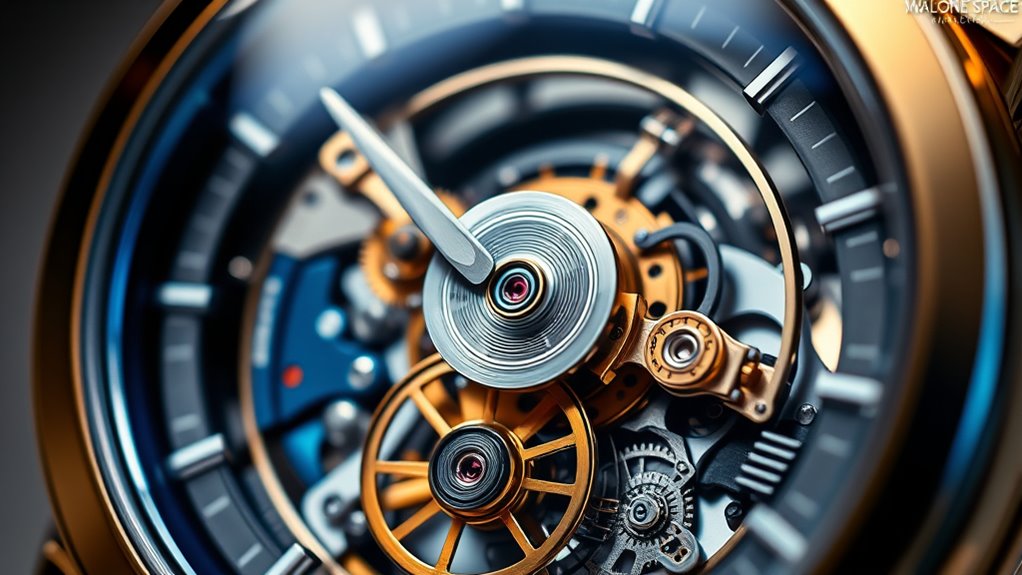
The materials used in a luxury watch considerably influence both its look and longevity. Metal choices affect durability and weight, while dial and strap materials shape comfort and style. Considering these factors helps you select a watch that balances performance with aesthetic appeal.
Metal Types and Durability
Choosing the right metal for your watch considerably influences both its durability and appearance. Different metals offer unique qualities that can enhance your watch’s performance and style. For example:
- Stainless steel provides excellent corrosion resistance, making it highly durable and low-maintenance.
- Precious metals like gold and platinum bring luxury and beauty, but vary in hardness and scratch resistance.
- Titanium is lightweight, strong, and offers superior corrosion resistance, perfect for active wearers.
Your choice affects not just aesthetics but also longevity. Precious metals lend an elegant look but may require more care. Stainless steel and titanium excel in resisting corrosion, ensuring your watch remains pristine over time. Selecting the right metal balances durability with your personal style.
Dial and Strap Materials
Your selection of dial and strap materials considerably influences both the look and function of your watch. The dial’s textures, from smooth, sunburst, to guilloché, create visual depth and reflect light differently, enhancing aesthetic appeal. Strap materials, including leather, rubber, and metal, come in various bracelet styles that impact comfort and durability. Leather straps offer elegance, while rubber provides sporty resilience. Metal bracelets range from sleek links to intricate mesh styles, affecting both style and wearability. The choice of materials also impacts resistance to elements like water and sweat, influencing long-term performance. Ultimately, your material choices define your watch’s character, balancing visual sophistication with practical functionality to suit your lifestyle and personal taste.
Weight and Wearability
Material choices directly influence a watch’s weight and how comfortably it wears throughout the day. Lighter materials like titanium or ceramic improve wrist comfort and reduce fatigue, while heavier metals such as gold or platinum offer a luxurious feel but may impact wearability. Consider these key points:
- Weight distribution: Properly balanced watches prevent uneven pressure, enhancing comfort during extended wear.
- Wrist comfort: Lightweight materials minimize strain and improve daily wearability.
- Aesthetic impact: Material choice affects the watch’s look and feel, balancing luxury with practicality.
Collecting and Caring for Luxury Timepieces

Caring for luxury timepieces requires more than just occasional cleaning; it involves understanding how to properly store, maintain, and handle these intricate instruments. Using watch winders can keep automatic watches running smoothly when you’re not wearing them, preventing unnecessary wear and tear. Proper storage in a dedicated watch box or safe guarantees they’re protected from dust, moisture, and impacts. If you own vintage pieces, consider professional vintage restoration to preserve their value and functionality over time. Handle your watches with clean hands and avoid exposing them to extreme temperatures or magnetic fields. Regular servicing by a qualified watchmaker keeps mechanisms in top condition. By staying attentive to these details, you’ll ensure your collection remains pristine and functional for years to come.
Frequently Asked Questions
How Do Complications Affect a Watch’s Overall Value?
Complications considerably boost a watch’s overall value by showcasing advanced craftsmanship and technical mastery. They enhance value through distinct features that appeal to collectors seeking unique, intricate pieces. When you own a watch with complications like chronographs or tourbillons, it’s not just a timekeeper but a statement of sophistication. This combination of artistry and innovation elevates collector appeal and creates a compelling case for value enhancement in your luxury watch collection.
What Are the Latest Innovations in Tourbillon Technology?
Your eyes are witnessing the pinnacle of horological mastery. Recent innovations in tourbillon technology, like multi-axis and spherical designs, push the boundaries of precision engineering. These advancements incorporate innovative escapements that enhance accuracy and stability, making the tourbillon more than just a complication—it’s a marvel of craftsmanship. By integrating cutting-edge materials and complex mechanisms, watchmakers are creating tourbillons that defy time itself, elevating luxury watchmaking to an art form.
How Do Materials Influence a Watch’s Durability and Appearance?
You’ll notice that watch case materials like titanium, ceramic, and stainless steel greatly influence durability and appearance. Titanium offers strength and lightness, while ceramic resists scratches and maintains shine. Dial finishes, such as sunburst or matte, enhance visual appeal and reduce glare. These choices guarantee your watch withstands daily wear, keeps looking pristine, and reflects your style, making material selection essential for both longevity and aesthetic impact.
Can Complications Like Moon Phases Be Manually Adjusted?
Of course you can manually adjust moon phases—if you enjoy the thrill of moon phase calibration, that is. Just use the designated pusher or crown to perform a manual adjustment, aligning the moon with the current phase. It’s a delicate dance of patience and precision, turning a watch into a tiny celestial map. So, yes, you can tweak it yourself, but don’t expect it to stay perfect without occasional calibration.
What Are the Rarest Materials Used in High-End Watchmaking?
You’ll find that rare metals like tantalum, ruthenium, and pink gold are prized in high-end watchmaking, offering unique colors and properties. Exotic materials such as meteorite fragments, forged carbon, and Damascus steel make watches truly one-of-a-kind. These rare metals and exotic materials aren’t just for aesthetics—they also enhance durability and exclusivity, making your luxury watch a standout piece that combines artistry with innovation.
Conclusion
Just like Da Vinci’s masterpieces, your luxury watch embodies artistry and innovation. By understanding its complications, tourbillons, and craftsmanship, you elevate your appreciation beyond mere timekeeping. Each intricate detail whispers stories of mastery and passion—reminding you that owning such a piece is not just about telling time, but cherishing a legacy. Embrace the art, and let your watch be a tribute to timeless elegance and precision, much like the eternal beauty of a Van Gogh sky.