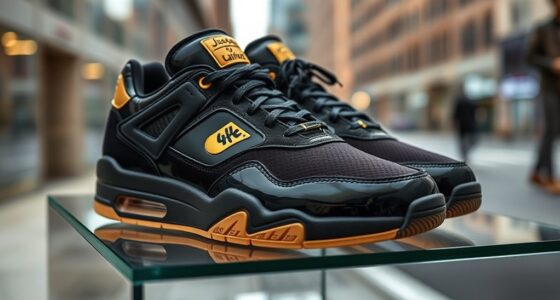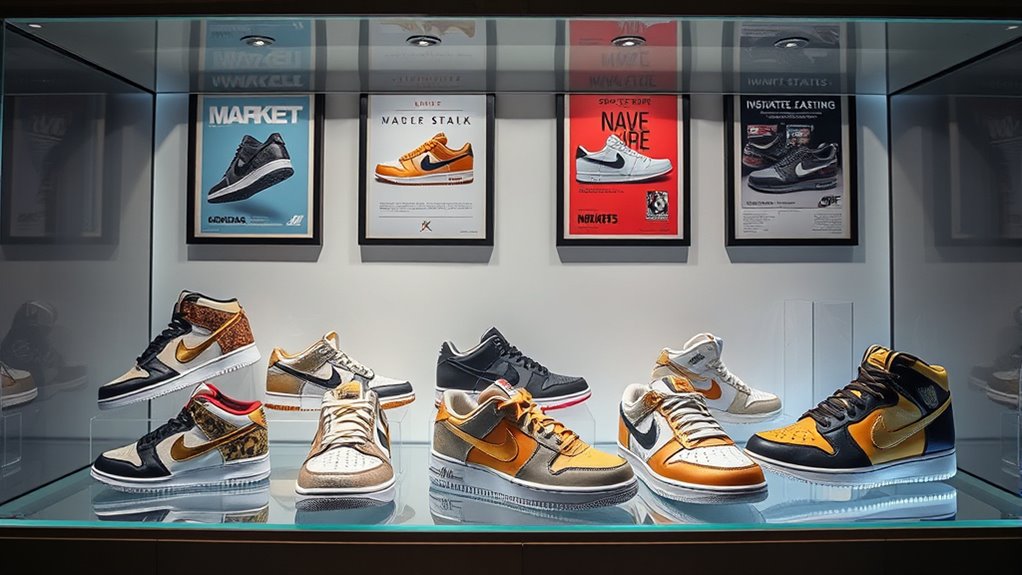

The sneakerhead movement evolved from practical athletic wear to luxury icons through limited editions, high-profile collaborations, and brand storytelling. As demand grew, rare sneakers became symbols of status and identity, fueling a thriving resale market where sneakers can fetch millions. Social media and influencers boosted visibility, turning sneakers into statements of style and community. If you keep exploring, you’ll discover how streetwear, fashion, and culture intertwine to shape this dynamic industry.
Key Takeaways
- Sneaker culture transitioned from utilitarian footwear to fashion statements through collaborations and limited editions.
- High-profile partnerships and celebrity endorsements elevated sneakers to luxury status.
- Limited releases and exclusivity created a sense of rarity, increasing desirability among collectors and enthusiasts.
- Resale markets and investment potential transformed sneakers into high-value assets and symbols of prestige.
- The blending of streetwear and high fashion cemented sneakers as essential luxury items for modern sneakerheads.
The Roots of Sneaker Culture and Practical Origins

Sneaker culture has deep roots that trace back to practical needs rather than fashion statements. Originally, sneakers were designed to serve athletes and workers, emphasizing comfort and durability. Over time, this practical focus fostered a sense of heritage preservation, as brands refined their craftsmanship and maintained traditional manufacturing techniques. Innovations in manufacturing, like rubber soles and lightweight materials, transformed sneakers from simple tools into essential gear. These advances made shoes more reliable and accessible, laying the groundwork for sneaker culture to evolve. As functionality remained paramount, early sneaker enthusiasts appreciated the blend of practicality and emerging craftsmanship. This foundation of heritage preservation and manufacturing innovation helped shape the cultural significance sneakers hold today, moving beyond utility to become symbols of identity and community. Additionally, material innovations played a crucial role in elevating sneakers from utilitarian objects to fashion-forward icons. Furthermore, the adoption of technological advancements in design and production continues to influence modern sneaker aesthetics and performance features.
The Rise of Limited Editions and Collaborations

When limited editions and collaborations hit the market, they instantly create buzz and drive up demand among sneaker enthusiasts. High-profile partners and exclusive drops make these releases highly sought after, often selling out in minutes. This trend reshapes the sneaker landscape, turning ordinary releases into must-have collectibles.
Exclusive Drops Spark Demand
The rise of limited editions and collaborations has fundamentally transformed sneaker culture by creating a sense of urgency and exclusivity. When you see a new drop, it’s more than just a sneaker—it’s a story. Brands craft compelling storytelling around these releases, connecting emotional narratives with their designs. Limited editions often highlight sustainability initiatives, appealing to your desire to support eco-friendly practices while staying stylish. These drops generate buzz, making you feel part of an elite community that values rarity and innovation. The anticipation fuels demand, pushing you to act quickly before the opportunity slips away. This strategy keeps sneaker culture dynamic, blending brand storytelling with social responsibility to elevate sneakers from everyday wear to coveted luxury items. Incorporating merchandise and branding into these releases further enhances brand visibility and fosters customer loyalty, transforming sneakers into collectible fashion statements. Additionally, limited-edition releases often leverage scarcity marketing to deepen consumer engagement and increase perceived value. Recognizing the importance of brand storytelling, companies craft narratives that resonate emotionally, further boosting desirability and brand affinity. Moreover, the integration of home-based marketing strategies helps brands connect with their audiences in authentic ways, fostering long-term loyalty beyond just the product.
High-Profile Collaboration Impact
High-profile collaborations have taken sneaker culture to new heights by merging the visions of popular brands, designers, and influencers. These limited editions often feature luxury branding, elevating sneakers beyond athletic wear to status symbols. Celebrity endorsements amplify their desirability, as fans and collectors seek exclusive pieces associated with their favorite stars. Such collaborations generate hype and drive demand, making sneakers more than just footwear—they become luxury items. The combination of high-profile partnerships and limited releases fuels a sense of rarity, boosting resale value and solidifying sneakers as a form of luxury branding. By aligning with influential figures and luxury aesthetics, these collaborations reshape sneaker culture into a sophisticated market, attracting a broader audience and reinforcing the idea that sneakers can embody both style and prestige. Furthermore, these partnerships often incorporate high-end materials and innovative designs, enhancing their appeal to discerning consumers. Additionally, limited edition releases contribute significantly to the exclusivity and desirability of these sneakers, creating a sense of urgency among buyers. This trend also underscores the importance of brand collaborations in elevating sneakers from everyday footwear to coveted luxury collectibles.
The Resale Market and the Value of Rare Sneakers

As the demand for rare sneakers continues to grow, the resale market has become an essential part of the sneakerhead ecosystem. You’ll notice how market valuation skyrockets for limited editions, making them highly sought after. This surge in value turns sneaker collecting into a form of collector investment, where sneakers are viewed as assets rather than just footwear. Resale platforms allow you to buy and sell at prices driven by rarity and hype, often exceeding retail costs markedly. The market’s transparency and liquidity give you opportunities to profit from your sneaker collection. As a result, the resale market fuels the perception of sneakers as luxury items, transforming them into high-value commodities that reflect both cultural significance and financial opportunity. market valuation continues to influence how sneakers are perceived and valued in today’s fashion landscape.
Sneakers as Symbols of Status and Identity
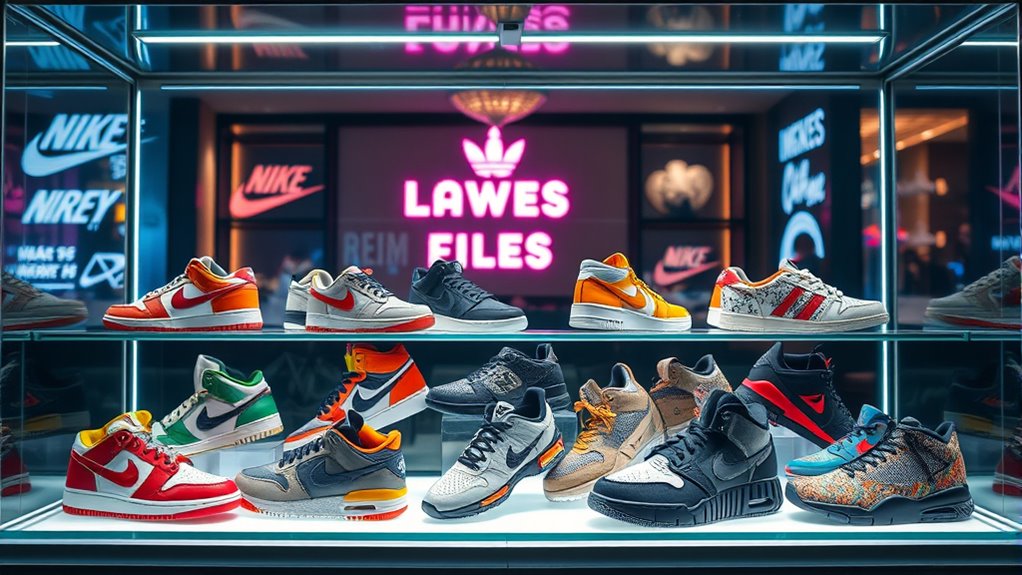
Your sneakers often serve as social markers that reveal your status and personality. They communicate more than just style—they express who you are. By choosing certain kicks, you make a statement about your identity to the world. Additionally, limited-edition and designer sneakers have become highly sought after, turning them into luxury items that symbolize wealth and exclusivity. The rise of Nike Tech and collaborations with influencers have further elevated sneakers to the status of high-end fashion, solidifying their role as symbols of luxury.
Sneakers as Social Markers
Sneakers have become powerful symbols of status and identity, often signaling your social standing and personal style. When you engage in sneaker collecting, you’re not just amassing footwear—you’re showcasing dedication and exclusivity. Limited editions and rare releases mark your commitment to the culture, making your collection a social statement. Brand loyalty plays a vital role, as some brands signify particular values or community ties. Wearing high-end or limited sneakers can elevate your status within social circles, serving as a visual cue of your tastes and affiliations. These choices communicate more than fashion; they act as social markers, defining your place in the sneakerhead hierarchy. Sneakers, thus, transcend utility, becoming a language that conveys your identity and status to others. Additionally, the rise of luxury sneaker brands reflects the growing intersection between high fashion and streetwear, further elevating sneakers’ role as symbols of prestige. The increasing popularity of exclusive collaborations also emphasizes how limited access can enhance perceived value and social cachet. Recognizing the influence of sneaker culture helps explain how these items become more than just footwear—they embody social signals and cultural identity. Furthermore, advancements in predictive analytics are increasingly used by brands to identify emerging trends and tailor limited releases to specific consumer segments, enhancing exclusivity and desirability.
Expressing Personal Style
Because sneakers serve as more than just footwear, they become a powerful tool for expressing your personal style. You can customize your sneakers to reflect your unique identity through sneaker customization, adding personal touches that make each pair one-of-a-kind. Beyond individual flair, sneakers also carry cultural symbolism, representing your connection to specific communities, trends, or values. Choosing certain brands, colors, or designs signals your taste and aligns you with particular social groups. As your style evolves, so do your sneaker choices, allowing you to communicate your personality and beliefs without words. Additionally, sneaker culture has deep historical roots that influence modern fashion and personal expression, connecting current trends to a rich legacy. By blending customization and cultural symbolism, sneakers become not just fashion statements but powerful symbols of who you are and what you stand for. Understanding the history of sneaker culture helps deepen your appreciation for these evolving symbols of identity.
The Blurring Lines Between Sportswear and High Fashion

In recent years, the boundaries between sportswear and high fashion have become increasingly indistinct, with designers and brands blending elements from both worlds to create versatile, statement-making pieces. This fashion crossover is driven by luxury branding’s desire to appeal to a broader audience, elevating athletic-inspired designs to high-end status. Sneakers are no longer just functional; they’re now symbols of style and exclusivity. High fashion labels collaborate with sportswear brands, merging technical performance with luxury aesthetics. As a result, you see runway collections featuring sneaker-inspired footwear alongside traditional couture. This fusion shifts perceptions, transforming athletic gear into must-have luxury items, and blurs the lines between everyday comfort and high fashion sophistication. It’s a movement that redefines what it means to be stylish today.
The Impact of Social Media and Influencers on the Movement

Have social media and influencers truly revolutionized the sneakerhead movement? Absolutely. Platforms like Instagram and TikTok have skyrocketed sneaker culture, making luxury branding more accessible and desirable. Influencer marketing plays a pivotal role, as influential figures showcase rare releases and high-end collaborations, fueling demand and exclusivity. You can now see limited-edition sneakers amplified by influencers, creating hype and driving up resale values. Social media creates a direct connection between brands and consumers, fostering a sense of community and immediacy. This digital landscape transforms sneaker collecting from a niche hobby into a global phenomenon, where status and luxury are amplified through online visibility. Influencers shape trends, elevate the perception of sneakers as luxury items, and keep the movement thriving in the modern age.
Frequently Asked Questions
How Did Sneaker Culture Transition From Practicality to Luxury Status?
You see, sneaker culture shifted from practicality to luxury through savvy sneaker branding and a collector mentality. Brands like Nike and Adidas introduced limited editions, making sneakers exclusive and desirable. As collectors sought rare releases, sneakers became status symbols, blending fashion with investment. The rarity and prestige transformed them into luxury items, appealing not just for their utility but for their cultural and monetary value, turning everyday footwear into high-end collectibles.
What Role Do Cultural and Regional Factors Play in Sneaker Evolution?
Think of sneaker evolution as a tapestry woven with regional influences and cultural symbolism. In Japan, limited-edition collaborations emphasize craftsmanship, while in the U.S., sneakers symbolize freedom and rebellion. These regional factors shape designs, brands, and status symbols, making sneakers more than just footwear. They reflect local identities, values, and histories, turning each pair into a cultural artifact that connects you to a broader social narrative.
Are There Ethical Concerns Surrounding the Sneaker Resale Market?
You should be aware that ethical concerns surround the sneaker resale market, especially regarding sustainability and counterfeit issues. Reselling can contribute to environmental waste through excessive production, and the counterfeit market fuels illegal activities, harming brands and consumers. By supporting authentic releases and buying responsibly, you can help reduce sustainability concerns and fight against counterfeit sneakers, ensuring a more ethical and sustainable sneaker culture.
How Do Sneaker Collaborations Influence Mainstream Fashion Trends?
Sneaker collaborations substantially influence mainstream fashion trends by blending streetwear with high-end style. When brands partner with celebrities or designers, they create buzz that attracts diverse audiences. Your style gets a boost from these brand partnerships and celebrity endorsements, making sneakers more than just footwear—they become statement pieces. This crossover encourages trendsetting and inspires designers across industries, shaping broader fashion movements and pushing sneakers into the luxury spotlight.
What Future Trends Are Predicted for Sneaker Luxury and Exclusivity?
While exclusivity often means limited editions, future sneaker luxury will balance rarity with sustainability. You’ll see brands using sustainable materials and digital authentication to guarantee authenticity and eco-friendliness. This shift will make luxury sneakers more accessible yet still exclusive, blending high-end craftsmanship with eco-conscious practices. As technology advances, expect even more personalized, digitally verified sneakers that emphasize both luxury and sustainability, redefining what exclusivity truly means.
Conclusion
Just like Pandora’s box opened a world of possibilities, the sneaker evolution has transformed from simple footwear to symbols of status and art. You now stand at the crossroads of history and culture, where every sneaker tells a story—of innovation, collaboration, and identity. As you navigate this world, remember that behind every rare pair lies a deeper narrative, reminding you that sometimes, the greatest value is found in what’s beyond the surface.