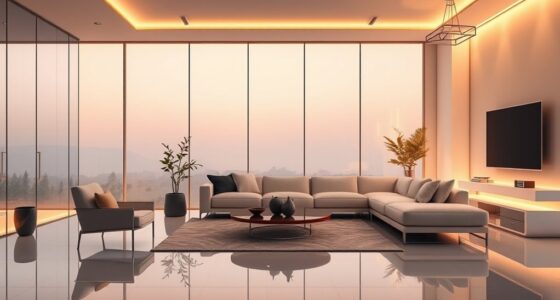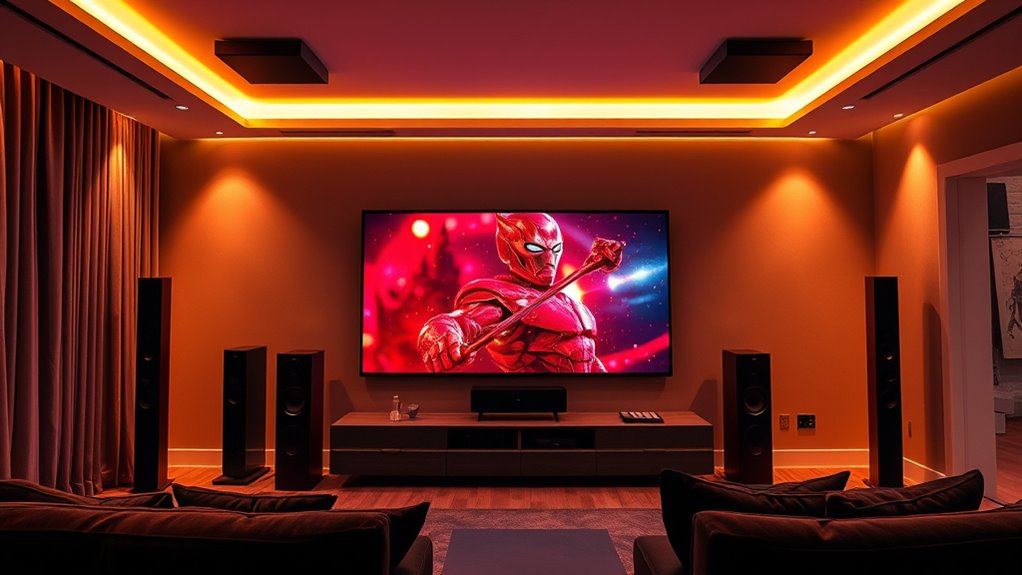

Transforming your home into a theater involves understanding both surround sound and Dolby Atmos technology. Traditional surround sound uses fixed channels around you, while Dolby Atmos adds a third dimension, placing sounds above you for a more immersive experience. Proper speaker placement, calibration, and acoustic treatments are key to achieving the best quality. If you want to learn more about creating a stunning home theater setup, you’ll find helpful tips and insights here.
Key Takeaways
- Dolby Atmos adds a 3D sound dimension, placing audio above and around the listener for immersive experiences.
- Proper speaker placement and calibration are essential for optimal surround sound and Atmos effects.
- Height or upward-firing speakers create overhead sound effects, enhancing realism.
- Acoustic treatments and room calibration improve clarity and balance in home theater sound systems.
- Traditional surround sound uses fixed channels, while Atmos offers dynamic, object-based audio for richer spatial effects.
Understanding Surround Sound Systems

Understanding surround sound systems can seem complex at first, but grasping the basics makes setting up your home theater much easier. The key is proper speaker calibration, which guarantees each speaker produces balanced sound levels and accurate audio placement. Take the time to run calibration tools or manually adjust speaker distances, volumes, and equalization. Additionally, acoustic treatments play a crucial role in enhancing sound quality. Using rugs, curtains, or foam panels can reduce echoes and improve clarity by controlling sound reflections. When you combine precise speaker calibration with effective acoustic treatments, you’ll experience a more immersive and balanced audio environment. This foundation helps your system deliver clear dialogue, rich music, and immersive effects, bringing your home theater closer to a professional cinema experience. Furthermore, understanding creative practice can enhance your ability to experiment with different sound setups and optimize your listening environment. Exploring sound reflection techniques can also help fine-tune the acoustics further, ensuring optimal sound clarity and spatial accuracy. Incorporating proper placement of speakers is essential for achieving the best surround sound experience, as it directly impacts how sound is perceived in the space. For example, considering speaker height and angle can significantly improve overall audio immersion. Additionally, being aware of individual responses to sound can help tailor the setup to suit specific room characteristics and listener preferences.
How Dolby Atmos Creates Immersive Audio
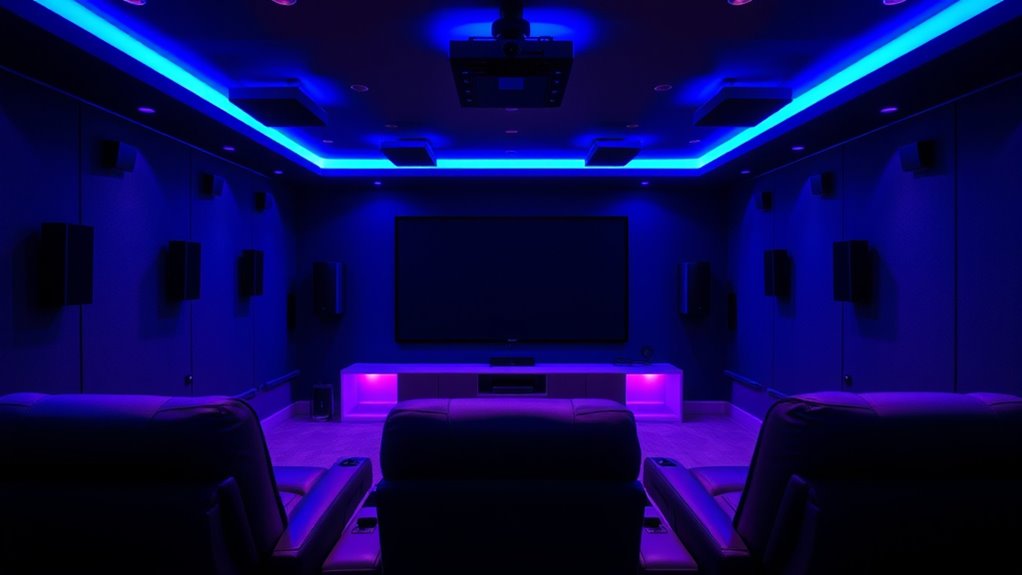
Dolby Atmos transforms your home theater by adding a new dimension to sound, making it feel as if audio moves around and above you. This is achieved through object-based audio, which allows sound elements to be precisely placed anywhere in a three-dimensional space. Unlike traditional surround sound, Atmos treats sounds as individual objects rather than fixed channels. Height speakers play a vital role by projecting sound upward, creating the sensation of movement in the vertical plane. When combined with ceiling or upward-firing speakers, Atmos can produce effects like a helicopter flying overhead or rain falling around you. This technology immerses you deeper into the scene, making every moment feel more real and engaging, as if you’re right there in the environment. Additionally, understanding the sound field and how speakers are arranged can help optimize your setup for the best immersive experience. Proper placement of speakers and understanding speaker configuration can significantly enhance the overall audio immersion. Moreover, awareness of ongoing advancements in AI security can help maintain the safety and reliability of your home entertainment setup. Staying informed about audio technology innovations can also help you choose the best equipment for your needs. Learning about room acoustics can further improve how sound interacts within your space, ensuring a richer listening experience.
Key Components of a Home Theater Setup
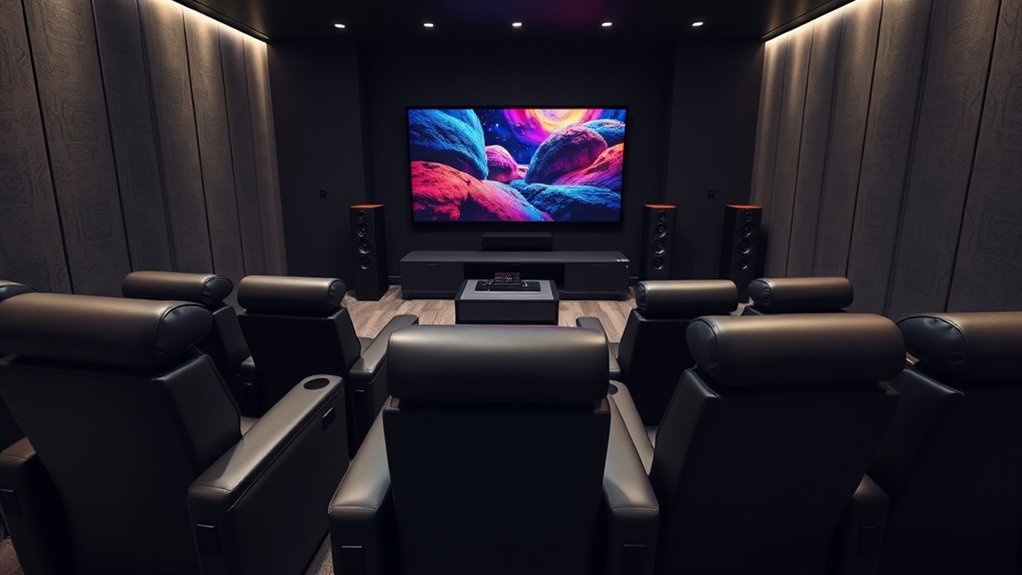
Creating an effective home theater setup involves selecting the right key components to deliver high-quality sound and visuals. Start with your display, then focus on audio. Choosing the right audio cable types ensures your components connect reliably and transmit high-fidelity sound without interference. Speaker calibration is essential; it balances audio levels and adjusts speaker placement for ideal surround sound. Proper calibration improves clarity, ensuring each speaker produces the intended effect, whether you’re watching a movie or listening to music. Investing in quality speakers and a good receiver to handle multiple audio channels, especially for immersive formats like Dolby Atmos, is crucial for a truly cinematic experience. Keep in mind that neat wiring and correct calibration make a significant difference in your overall experience, providing crisp, balanced sound that complements your high-definition visuals seamlessly. Additionally, understanding home theater setup components and their functions can help you optimize your system for the best possible audio experience. Moreover, utilizing advanced sound design techniques, such as spatial audio, can further enhance immersion and realism in your home theater environment. Paying attention to audio calibration ensures consistent sound quality across all speakers, leading to a more immersive experience, especially when combined with eye patch benefits for relaxation during long viewing sessions.
Comparing Dolby Atmos and Traditional Surround Sound
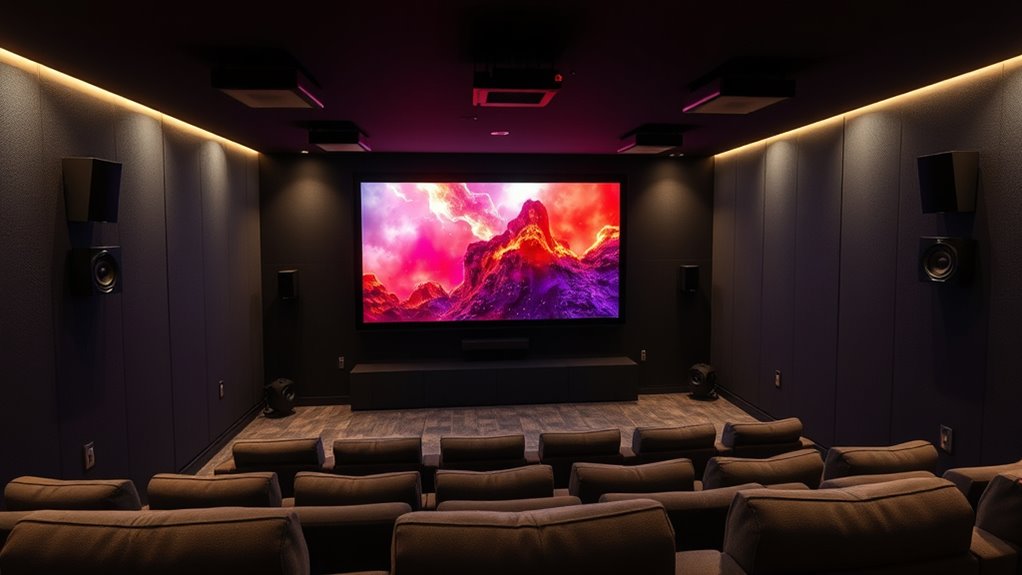
When choosing between Dolby Atmos and traditional surround sound, you’ll notice Atmos offers more precise spatial audio, making sounds seem to come from above and around you. However, Atmos systems are typically more complex to set up and cost more than standard surround sound setups. Consider your space and budget to decide which system best enhances your home theater experience.
Spatial Audio Precision
Have you ever wondered how different audio systems deliver such precise sound placement? With spatial audio, sound localization becomes remarkably accurate, creating a more immersive experience. Dolby Atmos excels here by using object-based sound, allowing each audio element to be placed anywhere in a three-dimensional space, including overhead. This means you can pinpoint sounds from above or around you, enhancing realism. Traditional surround sound, on the other hand, relies on fixed speaker channels, which limits its ability to accurately position sounds in 3D space. While surround sound provides good localization behind and around you, it doesn’t match the pinpoint precision of Dolby Atmos’s spatial audio. Placement of patches technology dramatically improves how you perceive and localize sounds, making your home theater experience more lifelike. Additionally, advancements in speaker configuration and calibration help optimize the sound field for a more accurate and immersive experience. Moreover, understanding asset division principles can be useful when planning for future financial stability after creating such immersive environments. Furthermore, innovations in spatial audio processing continue to push the boundaries of home theater sound accuracy and realism.
System Complexity and Cost
Implementing Dolby Atmos typically involves higher costs and greater system complexity compared to traditional surround sound setups. Setting up an Atmos system requires additional speakers, such as ceiling or upward-firing modules, and more precise calibration. This increases the complexity of the system setup, demanding careful placement and adjustment to achieve ideal sound quality. Budget considerations also come into play, as Atmos components tend to be more expensive than standard surround sound equipment. You may need to invest in a compatible AV receiver with Atmos support and extra speakers, which can considerably raise the overall cost. While traditional surround sound offers a simpler, more affordable solution, Atmos provides a more immersive experience but requires a larger investment and a more involved installation process. Vendor reliability is also an important factor to consider when selecting equipment to ensure long-term performance. Additionally, understanding system compatibility can help prevent costly mistakes during setup and ensure optimal audio performance.
Best Devices and Equipment for Your Home Theater
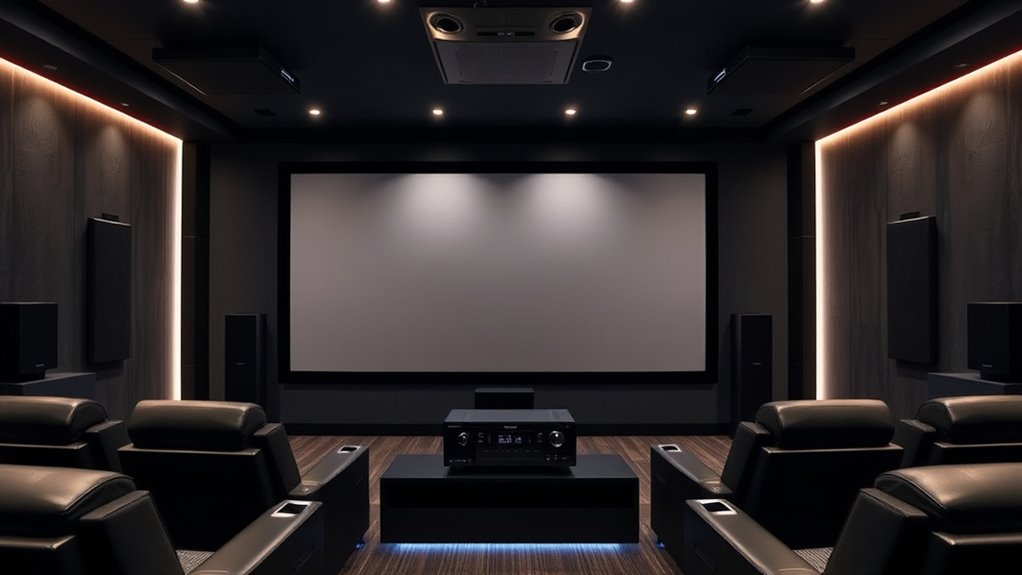
To create an immersive home theater experience, choosing the right devices and equipment is essential. Start with soundbar options that support Dolby Atmos for a rich, surround sound feel without cluttering your space. Look for models with multiple channels and upward-firing speakers to deliver height effects. Wireless speakers are also a great choice for flexible placement and easy setup, allowing you to expand your sound system effortlessly. They eliminate messy wires and can be positioned around your room to enhance your listening experience. Additionally, verify your receiver or amp is compatible with your chosen devices and supports the latest audio formats. Ensuring your system is compatible with latest audio formats can significantly improve overall sound quality and immersion. Properly managing audio device placement can further optimize sound distribution for a truly cinematic experience. Combining quality soundbars and wireless speakers gives you a versatile, high-performance setup that elevates your home theater to professional levels.
Tips for Proper Speaker Placement

Proper speaker placement is crucial for achieving balanced sound and an immersive experience in your home theater. To optimize speaker placement, position your front speakers at ear level, equidistant from the listening area, forming an equilateral triangle. Surround speakers should be placed slightly behind and to the sides, angling toward your seating. For Dolby Atmos, place ceiling or upward-firing speakers above or near the listening position for a vertical sound layer. Consider your room acoustics—avoid placing speakers against reflective surfaces or in corners, which can cause sound distortion. Use stands or mounts to ensure speakers are stable and correctly aligned. Adjust placement as needed, listening for clarity and balance, and remember that small tweaks can considerably improve your overall audio experience.
Enhancing Your Audio Experience With Calibration

Calibrating your system is key to getting the best sound quality at home. You can start by adjusting speaker levels so every voice and instrument sounds balanced. Additionally, optimizing your room’s acoustics helps reduce echoes and improve overall clarity.
Adjust Speaker Levels
Adjusting your speaker levels is a crucial step in achieving balanced and immersive sound. Proper speaker calibration ensures each speaker complements the others, creating a seamless audio environment. Start by setting your receiver’s initial volume levels, then use a calibration microphone to measure sound output. Focus on volume balancing so that dialogue, effects, and music are clear and evenly distributed. Avoid over-boosting certain channels, which can distort the soundscape. Keep in mind that small adjustments can considerably improve your listening experience. Many modern receivers offer automatic calibration features, but manual fine-tuning may still be necessary for perfection. Regularly revisiting speaker calibration helps maintain ideal sound, ensuring your home theater remains immersive and true to the director’s intent.
Optimize Room Acoustics
Optimizing your room acoustics is essential for getting the most out of your home theater setup. Proper calibration guarantees clear, balanced sound. Start with these steps:
- Soundproofing: Reduce external noise and prevent sound leakage by sealing gaps and adding insulation.
- Acoustic Treatments: Use panels, bass traps, and diffusers to absorb or scatter sound waves, minimizing echo and dead spots.
- Furniture Placement: Arrange furniture to break up sound reflections, improving clarity and immersion.
Troubleshooting Common Sound System Issues

When your home theater sound isn’t coming through as it should, troubleshooting can help identify and resolve common issues quickly. Start by checking your speaker wiring to guarantee all cables are securely connected and in the correct order. Loose or damaged wires often cause sound dropout or distortion. Next, look at your remote control issues—make sure your remote has fresh batteries and is properly aimed at your receiver or sound system. Sometimes, a simple reset or reprogramming of the remote fixes problems with volume control or sound settings. Also, verify that your sound system is set to the correct input source and audio mode. Addressing these basic issues can restore your immersive sound experience without the need for complex repairs.
Frequently Asked Questions
Can I Upgrade My Existing Surround Sound System to Dolby Atmos?
Yes, you can upgrade your existing surround sound system to Dolby Atmos. To do this effectively, you’ll need to update your speakers, adding height or upward-firing modules. Proper sound calibration and strategic speaker placement are vital to achieve immersive audio. Make sure your receiver supports Dolby Atmos, and follow calibration steps to optimize sound quality. This way, you’ll enjoy a more dynamic and cinematic experience at home.
Is Dolby Atmos Compatible With All Streaming Services?
You’re in the driver’s seat when it comes to Dolby Atmos and streaming services, but keep in mind that not all platforms support Atmos content. While many popular streaming services like Netflix, Disney+, and Apple TV+ now offer Atmos-compatible content, compatibility varies. To get the full experience, check each service’s streaming service compatibility and Atmos content availability beforehand, so you’re not left in the dark about what’s actually accessible.
How Does Room Size Affect Home Theater Sound Quality?
Room size critically impacts your home theater sound quality. Larger rooms can create better acoustics, allowing sound to fill the space more naturally, but may require more speakers or higher power. Smaller rooms might cause sound reflections or muddiness, so strategic speaker placement becomes essential. Properly considering room acoustics and adjusting speaker placement ensures you get ideal sound, regardless of your room size.
What Is the Average Cost of Installing a Dolby Atmos System?
Installing a Dolby Atmos system typically costs between $2,000 and $5,000, depending on your setup. You’ll want to budget for speaker calibration to optimize sound, and acoustic treatment to reduce echoes and improve clarity. High-end models or extensive calibration can raise costs, but proper setup guarantees immersive, balanced sound. Keep in mind, investing in quality speakers and professional calibration makes a noticeable difference in your home theater experience.
Are There Wireless Options for Dolby Atmos Speakers?
Yes, there are wireless options for Dolby Atmos speakers that make speaker placement easier. You can find wireless upward-firing or ceiling speakers that connect via Wi-Fi or Bluetooth, eliminating the need for extensive wiring. These options give you flexibility in positioning, allowing you to optimize sound for your space. Just make certain your wireless speakers are compatible with your existing system to enjoy immersive Atmos sound without hassle.
Conclusion
Transforming your home into a cinematic haven isn’t just about gadgets; it’s about immersing yourself in sound that surrounds you like a story unfolding. Dolby Atmos and surround sound are your portals to that world, turning ordinary rooms into extraordinary theaters. With the right setup and calibration, you hold the power to elevate every movie night and music session. After all, isn’t life itself a grand performance waiting to be experienced in full surround?