Understanding porcelain, bone china, and stoneware helps you choose the right fine china for your needs. Porcelain is durable and elegant, ideal for formal settings, while bone china offers a delicate, translucent look perfect for special occasions. Stoneware is heavy and rustic, great for everyday use. Each type varies in appearance, durability, and price. Discover how their unique qualities can enhance your table and what fits your lifestyle as you explore further.
Key Takeaways
- Porcelain, bone china, and stoneware differ in composition, appearance, and durability, influencing their ideal uses and care.
- Porcelain is known for translucency and strength, while bone china offers a delicate look with high durability, and stoneware is heavy and rustic.
- Recognizing quality involves examining markings, craftsmanship, and provenance to ensure authenticity and value.
- Material characteristics determine suitability for daily use or special occasions, with each type offering unique aesthetic and practical benefits.
- Proper handling, cleaning, and storage extend the lifespan of fine china, maintaining its beauty and functionality over time.

Oneida Dinnerware Set, Botanica 12-Piece Dinnerware Set, Service For 4, Porcelain Material, Dishwasher And Microwave Safe, Bowls, Plates And Bowls, Dinner Dishes, Plates, Home (Green, 12 Piece)
- Collection: Oneida Entertain 365
- Style: Botanica
- Material: Porcelain
As an affiliate, we earn on qualifying purchases.
As an affiliate, we earn on qualifying purchases.
The Origins and History of Porcelain, Bone China, and Stoneware
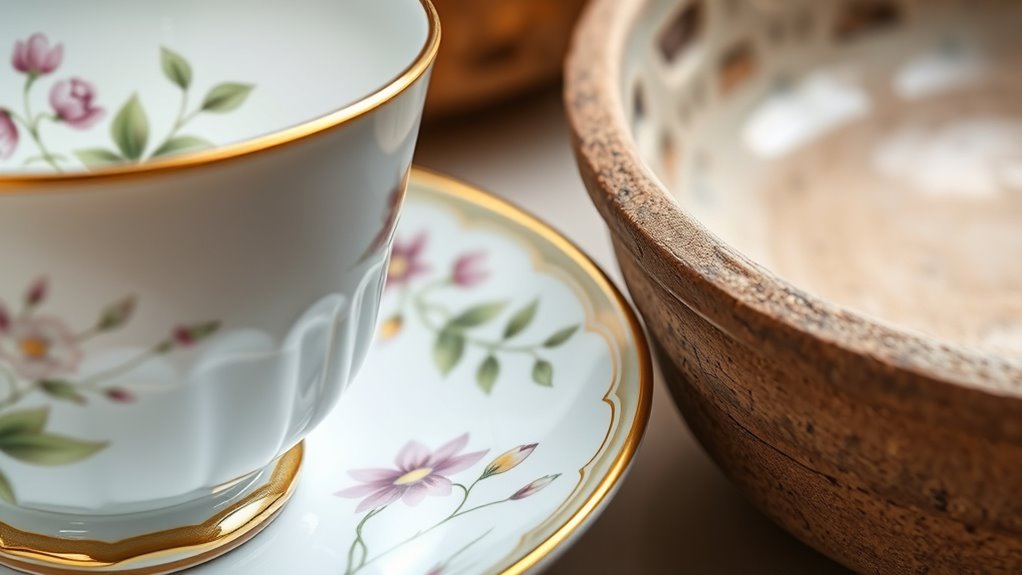
Porcelain, bone china, and stoneware each have unique origins that reflect centuries of craftsmanship and cultural exchange. Their history evolution showcases how different regions developed distinctive techniques to create durable, beautiful ceramics. Porcelain, originating in China during the Tang Dynasty, was highly prized for its translucence and strength, symbolizing status and technological achievement. Techniques in ceramic manufacturing played a crucial role in advancing these early innovations and spreading them across regions. The development of fire kiln technologies significantly contributed to the durability and quality of these ceramics. Additionally, innovations like glazing and decorating methods enhanced the aesthetic appeal and practicality of porcelain. Bone china emerged in England in the 18th century, blending Chinese porcelain techniques with local clay, and quickly gained cultural significance as a refined alternative. The creation of specialized clay bodies allowed for the distinctive translucency and whiteness associated with bone china. Stoneware, with roots in ancient civilizations like Mesopotamia and East Asia, gained popularity for its practicality and resilience. Each material’s cultural importance grew as societies valued their craftsmanship, leading to a rich heritage that continues to influence modern ceramics. Furthermore, understanding ceramic manufacturing techniques can deepen appreciation for the artistry involved.

TATSUMI Country Roses Bone China Tea Cup and Saucer Set, 3 Pieces, Vintage Style, For Women and Tea Parties(QH,1 Set)
- Material: Bone China with smooth surface
- Design: Vintage style with soft lines
- Decorative Use: Ideal for table and kitchen decor
As an affiliate, we earn on qualifying purchases.
As an affiliate, we earn on qualifying purchases.
Key Characteristics and Composition of Each Material

Building on their rich histories, these ceramics each have distinctive key characteristics and compositions that set them apart. Porcelain is known for its high purity and translucency, made from kaolin, feldspar, and quartz, often featuring delicate decorative motifs. Bone china contains bone ash, which gives it strength and a warm tone, allowing for thinner, more refined pieces. Stoneware is dense and durable, composed mainly of clay and silica, and often exhibits a rustic appearance. Manufacturing techniques influence their final look: porcelain is fired at high temperatures for a smooth, glass-like surface; bone china is similarly fired but with added strength; stoneware is fired at slightly lower temperatures, resulting in a more textured finish. Each material’s composition and techniques define its unique aesthetic and functional qualities. Additionally, the firing temperature plays a crucial role in determining the final texture and durability of each ceramic type.
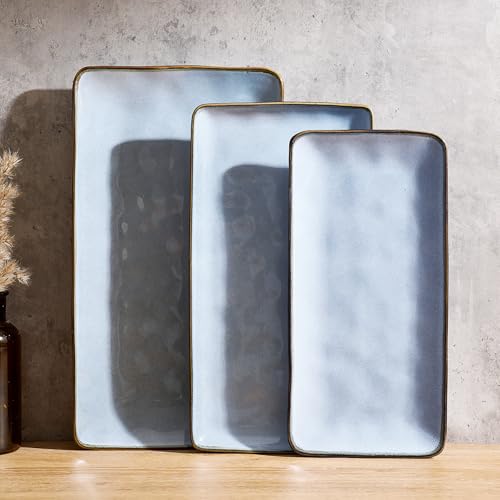
Famiware Serving Platters Set of 3 Sizes – Rectangular, Blue
- Set Includes Three Sizes: Large, Medium, Small platters
- Generous Serving Capacity: Suitable for various foods and occasions
- Unique Double Reactive Glaze: Creates vibrant, one-of-a-kind colors
As an affiliate, we earn on qualifying purchases.
As an affiliate, we earn on qualifying purchases.
Differences in Appearance and Design Options

Have you ever noticed how the appearance and design options vary considerably among fine china materials? Porcelain often features delicate, intricate decorative patterns with a classic, elegant look, often in subtle color palettes like soft pastels or monochrome schemes. Bone china, on the other hand, tends to showcase more refined, translucent qualities, with designs that range from minimalist to highly detailed, using a broader spectrum of colors. Stoneware generally offers a more rustic, earthy aesthetic, with bold decorative patterns and warm color palettes that emphasize natural textures. Each material provides distinct design options, allowing you to choose based on your style preferences—whether you want timeless elegance, refined simplicity, or a cozy, rustic vibe. Additionally, different materials may incorporate decorative techniques that further influence their appearance and appeal, such as embossing, painting, or glazing, which can add texture and visual interest. Understanding the material properties can also help in selecting pieces that are more durable and suitable for everyday use or special occasions. For example, bone china’s translucency not only enhances its aesthetic appeal but also indicates its strength and delicacy. Furthermore, manufacturing processes can significantly impact the final look and feel of the china, influencing how well the design options translate into the finished product.

Dazzle Dry Mini Kit – Fine China – 4 Step System (5 Piece Kit)
- Complete 4-Step Nail System: Includes Nail Prep, Base, Lacquer, Top Coat
- Fast Drying in 5 Minutes: Air dries quickly for salon-quality nails
- Long-Lasting Manicure: 7+ days chip-free wear
As an affiliate, we earn on qualifying purchases.
As an affiliate, we earn on qualifying purchases.
Durability and Suitable Uses for Each Type

While each type of fine china offers unique beauty, their durability and best uses vary considerably. Porcelain is strong and chip-resistant, making it suitable for everyday dinnerware and dinnerware customization, allowing you to add personal touches. Bone china is slightly more delicate but still durable enough for regular use; its elegant appearance also gives it collectible significance, especially among enthusiasts. Stoneware is the most rugged of the three, ideal for casual settings and outdoor dining, thanks to its resilience. Additionally, understanding the divorce process can be important for individuals navigating personal transitions, just as selecting the appropriate china requires consideration of durability and occasion. Recognizing the emotional support needs associated with significant life changes can help in making more informed choices. It is also helpful to consider regional legal resources when dealing with legal matters, which can influence how you approach your situation. Knowing about material properties can guide you in selecting the most appropriate type for your needs, ensuring longevity and suitability. For example, considering the manufacturing techniques can provide insight into the quality and craftsmanship of each piece, helping to inform your selection. Keep in mind that your selection should reflect how often and in what context you’ll use the pieces, balancing durability with aesthetic appeal.
Care and Maintenance Tips for Longevity
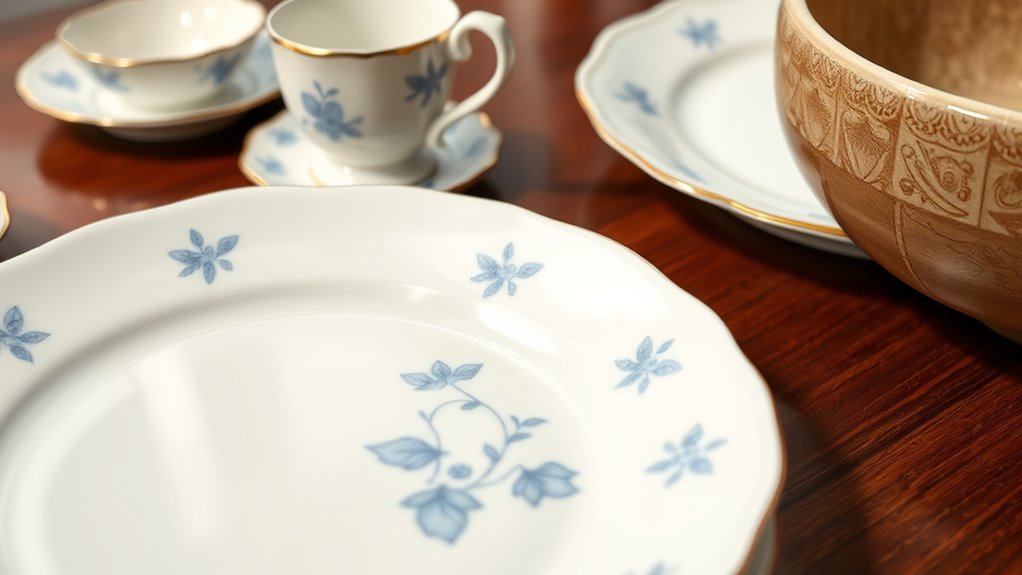
Proper care and maintenance are key to preserving the beauty and integrity of your fine china. Always check dishwasher safety before loading delicate items; many porcelain and bone china pieces should be hand-washed to prevent damage. When using a dishwasher, place items securely to avoid knocking or chipping during the cycle. To keep your china in pristine condition, store it properly with padded storage solutions, such as felt-lined cabinets or individual padded sleeves, to prevent scratches and breakage. Avoid stacking heavily or placing items directly on top of each other. Handle each piece carefully, especially when cleaning or moving, to maintain their delicate finish. Regularly inspect and replace storage padding as needed to ensure ongoing protection for your cherished pieces. Additionally, understanding material durability can help you choose appropriate cleaning and handling techniques to extend the life of your fine china, especially considering the different firing techniques used in porcelain, bone china, and stoneware. Being aware of proper cleaning methods tailored to each material can further enhance their longevity and appearance. For example, avoiding abrasive cleaning tools can prevent surface damage and preserve the glaze over time. Moreover, consulting manufacturer care instructions can provide specific guidance tailored to each piece’s unique composition.
Recognizing Authenticity and Quality Indicators
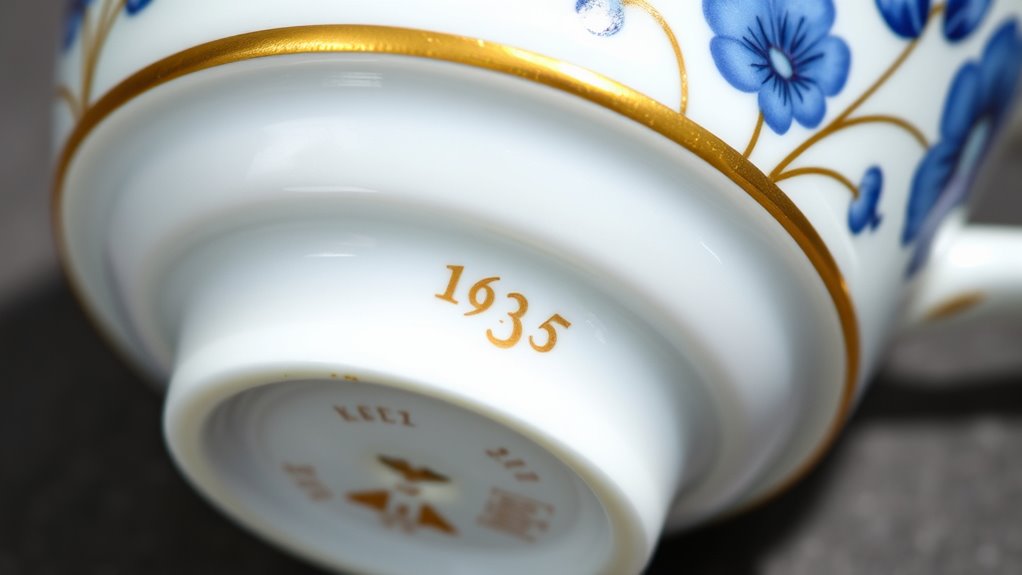
To verify that your fine china is authentic and of high quality, start by examining the markings on the bottom of each piece. These antique markings can reveal the maker’s identity, production era, and authenticity. Look for clear, well-defined stamps or signatures that indicate genuine craftsmanship. Pay attention to manufacturing techniques, such as hand-painted details or specific glazing patterns, which often signify higher quality. Authentic pieces typically feature consistent markings, with no signs of forgery or irregularities. Recognizing these indicators helps ensure you’re investing in true porcelain, bone china, or stoneware. By understanding antique markings and manufacturing methods, you can better assess a piece’s provenance and value. This knowledge safeguards your collection and enhances your appreciation for fine craftsmanship.
Cost and Investment Value Considerations
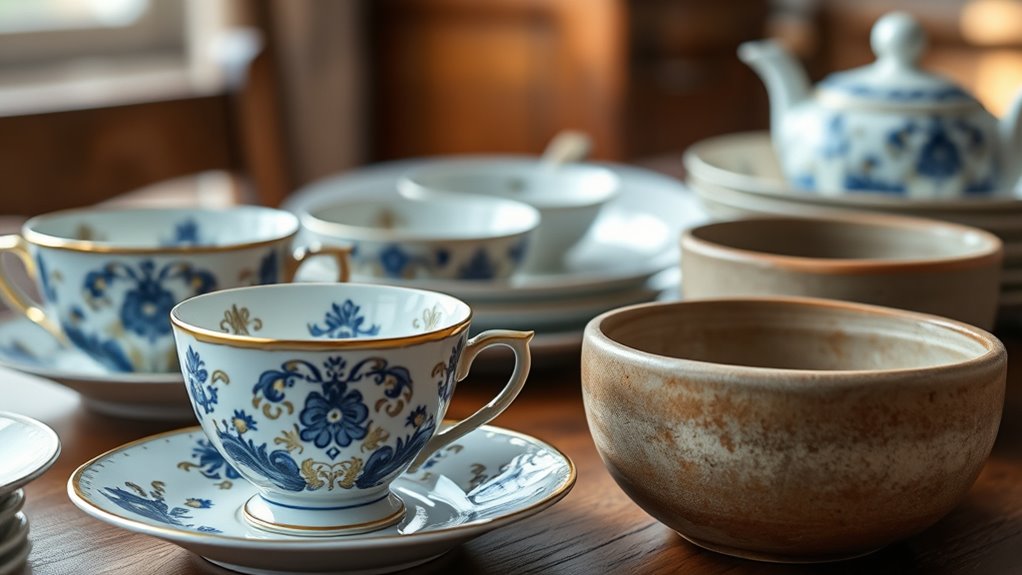
When considering fine china, you should think about how the purchase price aligns with your budget and the quality offered. Long-term durability affects how well your pieces will last and retain their beauty over time. Additionally, understanding the resale market value helps you gauge the potential return if you decide to sell someday.
Purchase Price Range
Ever wondered how much you should expect to pay for fine china, whether you’re collecting or simply investing? The purchase price range varies widely depending on factors like brand, age, and craftsmanship. Typically, market pricing for quality porcelain and bone china can start around $20 per piece and go up to several hundred dollars for rare or antique items. Understanding the affordability range helps you make smarter decisions without overspending. Keep in mind:
- Higher-end pieces often hold their value better over time
- Limited editions or vintage items can fetch premium prices
- Mass-produced sets are generally more budget-friendly
- Authenticity and condition heavily influence the price
Knowing these aspects helps you navigate your options confidently and make informed investments in fine china.
Long-term Durability
Investing in fine china means considering not just the initial purchase price but also how well it will withstand the test of time. Durability depends on factors like material strength and resistance to chipping or cracking. Porcelain and bone china are generally durable if handled carefully, but stoneware can be more resistant to impact. Check if your china is dishwasher safe, as frequent use can cause wear over time, especially if it’s not dishwasher friendly. Microwave compatibility is also important; some china may crack or discolor when microwaved. Choosing pieces with good durability ensures they remain beautiful and functional for years. By considering these aspects, you’re making a smarter investment that balances cost, longevity, and practicality.
Resale Market Value
Considering the resale market value of your fine china can considerably impact your overall investment. Factors like antique value and collector interest play essential roles in determining worth. Well-preserved pieces with historical significance tend to appreciate over time, making them valuable assets. To maximize resale value, focus on items with authentic markings and minimal damage. Keep in mind that rarity often boosts collector interest and potential profit. Understanding market trends helps you identify when to sell for ideal returns. Building a collection with provenance and high-quality craftsmanship enhances long-term value. Remember, the more desirable your china is among collectors, the higher its resale potential. Ultimately, thoughtful investment in fine china can turn a beautiful collection into a lucrative asset.
Popular Styles and Trends in Fine China

Popular styles and trends in fine china are constantly evolving, reflecting both timeless elegance and modern innovation. Vintage patterns remain popular, often featuring intricate florals, gold accents, and nostalgic motifs that evoke a sense of history. These classic designs appeal to collectors and those who appreciate tradition. On the other hand, contemporary designs are gaining popularity, emphasizing sleek lines, minimalist aesthetics, and bold geometric patterns. These modern styles often incorporate vibrant colors or metallic finishes, making them perfect for everyday use or stylish entertaining. Whether you prefer vintage patterns or contemporary designs, staying current means balancing timeless appeal with fresh, innovative touches. Trends suggest that mixing styles and experimenting with unique patterns can help you create a personalized and stylish table setting.
How to Incorporate Different Types Into Your Table Setting

Wondering how to blend different types of fine china into a cohesive table setting? The key is to focus on decorative motifs and pattern variations. Mix porcelain, bone china, and stoneware by selecting pieces that share a common theme or color palette. Keep in mind that contrasting pattern variations can add visual interest, but should complement each other. To achieve harmony:
- Use a unifying decorative motif across different types
- Balance bold patterns with subtle, solid-colored pieces
- Vary the pattern scale to create depth
- Incorporate neutral or coordinating accents to tie everything together
This approach allows each piece to shine while maintaining a cohesive look. Play with pattern variations and motifs to reflect your style without overwhelming the table’s overall aesthetic.
Choosing the Right China for Your Lifestyle and Occasion
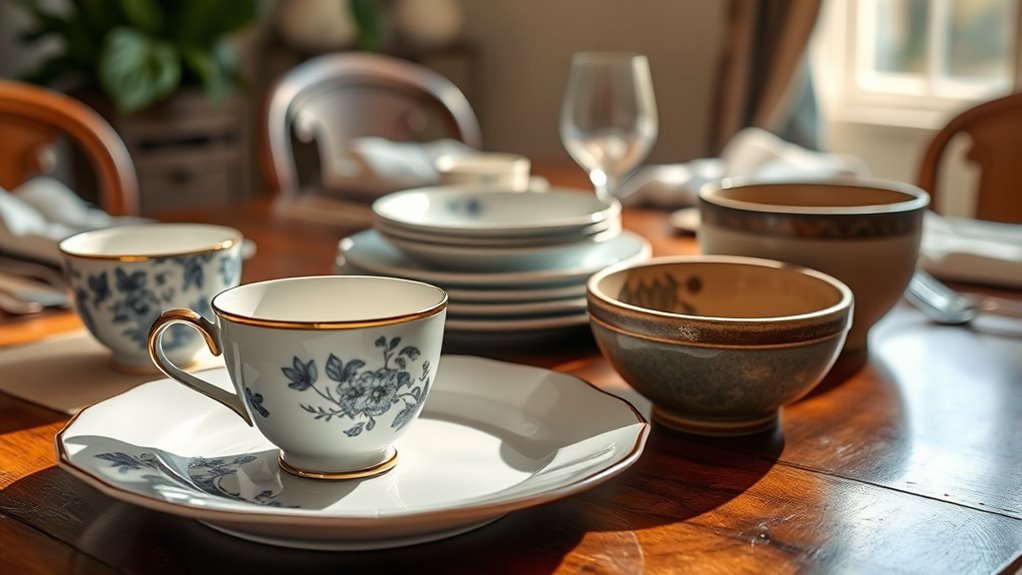
When selecting china, think about whether you’ll use it daily or mainly for special occasions, as this impacts your choice. Consider the material’s durability—some options hold up better to frequent use, while others are better suited for occasional use. Making the right choice means balancing your lifestyle needs with the type of events you want to host.
Everyday vs. Formal Use
Choosing the right china depends largely on your lifestyle and how you plan to use it. For everyday use, opt for durable materials like stoneware or bone china with simple, functional designs. If you enjoy showcasing artistic patterns or cultural influences, consider pieces that highlight these details, even in casual settings. Formal occasions call for finer china, often with delicate patterns and intricate designs that elevate the experience. Keep in mind that some patterns are versatile enough for both settings, while others are best reserved for special moments. Using the right china enhances your dining experience and reflects your personal style, whether for daily meals or special celebrations.
- Artistic patterns add personality and cultural richness
- Durability matters more for everyday use
- Formal china often features intricate, elegant designs
- Choosing versatile pieces offers flexibility for any occasion
Material Durability Factors
Selecting the right china involves considering how durable the material is, especially if you plan to use it frequently or in various settings. Durability depends on factors like kiln firing, which affects the strength of the piece. Higher temperatures during firing create a denser, more resilient product. Additionally, glaze composition plays a role; a well-formulated glaze protects the surface and prevents chipping. Bone china, for example, is lightweight yet durable because of its high-quality firing process and specific glaze mix. Porcelain usually withstands more handling due to its dense structure. Stoneware is naturally more resistant to cracks and scratches, thanks to its thick, rugged glaze. Understanding these durability factors helps you choose china that matches your lifestyle, whether for daily use or special occasions.
Frequently Asked Questions
How Can I Tell if My China Is Authentic or a Replica?
To tell if your china is authentic, start by examining the markings on the bottom; genuine pieces often have clear, well-printed or stamped logos from the manufacturer. Look closely at the craftsmanship details, like smooth edges and intricate patterns, which indicate quality. Authentic china also feels substantial and has a fine, glossy finish. If the markings are blurry or the craftsmanship appears rough, it might be a replica.
Are There Eco-Friendly or Sustainable Options for Fine China?
You can find eco-friendly fine china options that blend beauty with sustainability. Look for brands committed to recycling programs and eco-friendly manufacturing processes, where materials are responsibly sourced, and waste is minimized. These pieces are like a gust of fresh air in your dining experience, making every meal feel more meaningful. By choosing sustainable fine china, you support a greener planet while enjoying elegant tableware that’s as kind to the Earth as it is beautiful.
Can I Safely Microwave or Dishwasher My Porcelain or Bone China?
You can generally microwave and dishwasher your porcelain or bone china, but always check care instructions first. Most modern pieces are microwave-safe, but delicate or gold-rimmed items may not be. For cleaning tips, use gentle dish soap and avoid abrasive scrubbing to prevent damage. Hand washing is safest for intricate or antique pieces. When in doubt, follow manufacturer recommendations to keep your fine china in perfect condition.
What Are the Best Storage Practices to Prevent Damage?
Did you know that improper storage can crack or chip up to 40% of fine china? To prevent damage, always handle your pieces carefully and use proper handling techniques. Store your porcelain and bone china in secure, padded cabinets or shelves, placing a soft cloth between items to avoid scratches. Keep them upright and avoid stacking heavy pieces on top, ensuring they’re stable and protected for years to come.
How Do I Choose China That Matches My Existing Dinnerware?
To select china that matches your existing dinnerware, start by examining your current set’s patterns and colors. Look for pieces with coordinating colors that complement your dinnerware, whether they match exactly or subtly contrast. Consider matching patterns for a uniform look or mixing patterns for a more eclectic style. Bring your existing dinnerware when shopping to compare and make sure the new pieces blend seamlessly with what you already own.
Conclusion
So, now that you’re armed with all the fine china secrets, go ahead—splurge on that delicate porcelain or rugged stoneware. After all, who wouldn’t want to risk a crack or chip just for the perfect dinner setting? Remember, whether you’re a casual diner or a fancy collector, your choice of china says a lot about you—so choose wisely, and maybe keep a sense of humor handy when accidents happen!