

Elite schools like the Ivy League are seen as luxury because their rising tuition costs, extensive privileges, and exclusive social networks create barriers that only the privileged can afford. Their reputation, history, and powerful alumni foster a sense of status that’s hard to match. Wealth and privilege often give certain applicants an unfair edge, reinforcing social divides. To discover how these factors shape their high costs and societal impact, explore the deeper reasons behind the cost of prestige.
Key Takeaways
- The high tuition and hidden costs make elite schools financially inaccessible to many, creating a luxury barrier.
- Legacy admissions and social capital favor wealthy applicants, reinforcing exclusivity and socioeconomic privilege.
- Attending prestigious institutions confers long-term social, cultural, and professional advantages, akin to luxury status.
- Elite schools cultivate exclusive networks that provide ongoing career and social benefits, reinforcing their luxurious appeal.
- The longstanding reputation, cultural legacy, and influence of these schools elevate their status to that of societal luxury brands.
The Rising Price Tag of Elite Education

As the cost of attending elite schools continues to climb, students and families are facing increasingly formidable financial burdens. Tuition inflation has outpaced many other expenses, making it harder to afford top-tier education without significant financial aid. While these schools often highlight generous aid programs, the sticker price remains steep, discouraging many qualified applicants. You might find that even with financial aid, hidden costs like housing, books, and fees add up quickly. These rising expenses create barriers for students from diverse backgrounds, perpetuating a cycle where only the wealthy can comfortably afford the prestige. Additionally, understanding the cost of prestige and the role of financial aid becomes essential in steering through the true cost of elite education.
Historical Significance and Perceived Value

The history and reputation of Ivy League and elite schools greatly influence how they’re perceived today. Their longstanding alumni influence and cultural legacy create an aura of exclusivity and prestige. These institutions have shaped leaders, innovators, and thinkers, reinforcing their perceived value over generations. This historical significance adds depth to their reputation, making attendance a symbol of achievement and social standing. These factors contribute to their long-lasting prestige, which is reinforced by their ability to adapt and maintain relevance in changing societal contexts. The table below highlights key aspects shaping their perceived value:
| Aspect | Impact | Example |
|---|---|---|
| Alumni Influence | Networks open doors | Political leaders |
| Cultural Legacy | Tradition and identity | Historic campus traditions |
| Historic Achievements | Recognition and respect | Nobel laureates |
| Societal Contributions | Shaping societal progress | Civil rights movements |
| Enduring Reputation | Long-lasting prestige | Brand recognition |
The Social and Cultural Implications of Ivy League Status

Attending an Ivy League or elite school often elevates your social standing and shapes your cultural identity. It grants you access to a network of influential alumni who influence industries and societal norms. This alumni influence extends beyond connections; it reinforces prestige and power, shaping perceptions of success. Additionally, your cultural capital—such as refined tastes, shared language, and social norms—becomes amplified, helping you navigate exclusive circles. These schools serve as cultural hubs, reinforcing elite values and traditions that persist across generations. The importance of affiliate disclosures and transparency in marketing practices reflects the broader emphasis on maintaining credibility and reputation within these prestigious institutions. Moreover, the prestige associated with elite education often influences career opportunities, social mobility, and societal perceptions long after graduation. Recognizing the role of angel number wisdom can also provide personal insights into navigating the social complexities tied to such elite environments. Furthermore, the consistent cultivation of a social hierarchy within these institutions sustains their exclusivity and societal influence.
Accessibility and Social Mobility Challenges
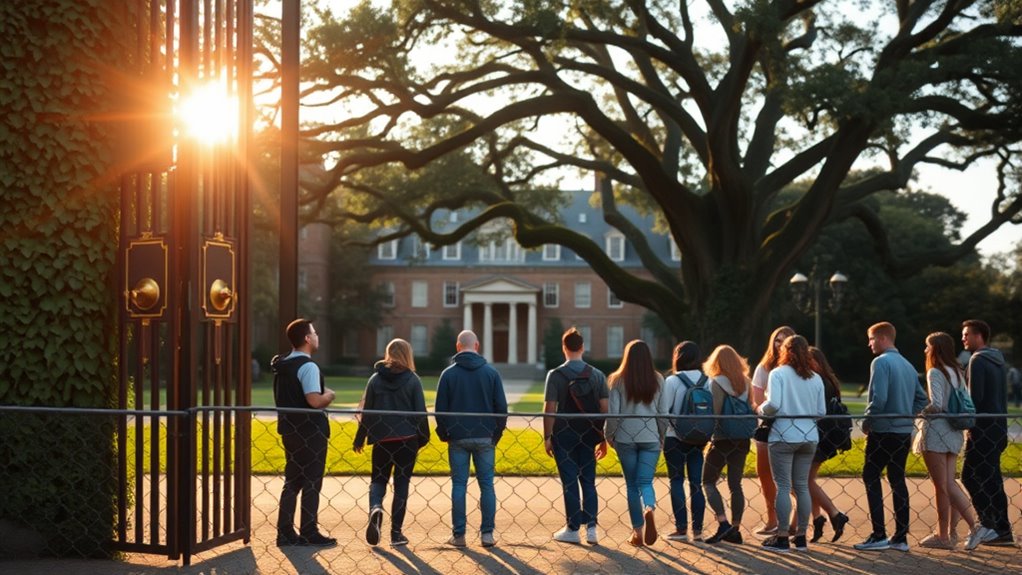
Despite the prestige associated with Ivy League and elite schools, significant barriers hinder many talented students from gaining access. Merit-based admissions often favor applicants with resources that bolster their applications, while socioeconomic barriers limit opportunities for low-income students. These challenges restrict social mobility and reinforce exclusivity. Many capable students face obstacles such as limited access to quality prep schools, extracurriculars, and guidance, which are vital for competitive applications. Furthermore, the admissions process can sometimes be influenced by biases related to privileged backgrounds, making it harder for underrepresented students to succeed. Additionally, the lack of diverse support networks can impede the ability of underprivileged students to navigate the complex admissions landscape successfully. Recognizing these barriers is essential for understanding the broader issues of accessibility and equity in higher education. It is also crucial to address systemic educational inequities that perpetuate these disparities. Addressing these issues requires a comprehensive understanding of educational inequities and targeted efforts to promote inclusion.
The Role of Wealth and Privilege in Admissions

Wealth and privilege play a significant role in shaping admissions outcomes at Ivy League and elite schools. You might not realize how factors like legacy admissions and social capital give certain applicants an edge. Legacy admissions favor applicants with family ties, often bypassing merit-based criteria, while social capital provides access to influential networks that can boost your chances. These advantages perpetuate an exclusive environment that favors the wealthy. Additionally, the availability of vetted resources such as specialized tutors and exclusive extracurricular opportunities further enhances the prospects of wealthy applicants. Recognizing these factors helps explain why admissions often favor privilege, reinforcing the notion that these schools are more about maintaining an elite status than offering equal opportunities. Furthermore, the access to influential networks enjoyed by affluent applicants can open doors that are otherwise difficult to reach, creating a cycle of privilege that sustains the school’s elite status. This interconnected web of advantages underscores how wealth accumulation influences educational opportunities and outcomes. Moreover, the presence of elite social capital within these institutions amplifies the advantages for already privileged students, reinforcing the cycle of exclusivity.
Rethinking the True Cost of Prestige

The perceived prestige of Ivy League and elite schools often masks the real costs beyond tuition and fees. Tuition inflation has made these institutions increasingly expensive, stretching families’ finances and limiting access for many talented students. But the true cost extends further—alumni networks, for example, offer lifelong connections, job opportunities, and social capital that can shape your career and social standing for decades. These networks, while valuable, also reinforce exclusivity, making the pursuit of prestige feel like an investment in lifelong privilege. Research indicates that the social signals associated with these institutions can influence perceptions of belonging and confidence, impacting long-term success and social integration. The ability to leverage networking opportunities can significantly enhance career prospects and social mobility over time. Recognizing the importance of drivetrain components, such as alumni networks, can help illuminate the broader scope of benefits and drawbacks tied to elite education. Understanding how these psychological benefits influence motivation and self-perception is crucial in assessing the true value of such credentials.
Frequently Asked Questions
How Do Elite Schools Impact Local Economies and Communities?
You see how elite schools boost local economies by attracting students, staff, and visitors who spend money at local businesses. They also strengthen community identity, drawing pride and recognition to the area. However, this can lead to increased living costs and gentrification, which might challenge long-term residents. Overall, your community benefits from economic activity and cultural vibrancy, but needs to balance growth with preserving its local character.
What Are Alternative Pathways to Prestigious Higher Education?
You can explore alternative pathways to prestigious higher education through community outreach programs that offer mentorship and support, helping you access top schools. Additionally, online degrees from accredited universities provide flexible, affordable options to earn recognized credentials. By engaging in these pathways, you expand your opportunities, build networks, and demonstrate your commitment, making you a strong candidate for prestigious institutions without relying solely on traditional routes.
How Do Scholarship Programs Influence Diversity at Ivy League Schools?
Scholarship programs profoundly boost diversity at Ivy League schools by providing essential financial aid, making top-tier education accessible to students from varied backgrounds. These diversity initiatives help break down socioeconomic barriers, encouraging students who might not afford such institutions otherwise. When you support or participate in these programs, you contribute to a more inclusive academic environment, ensuring talented individuals from all walks of life have the opportunity to excel at prestigious universities.
What Long-Term Societal Effects Stem From Elite Educational Disparities?
Social stratification solidifies as elite educational disparities create divides, diminishing social mobility. You might notice how privilege persists, preventing talented individuals from less privileged backgrounds from rising. This perpetuation of inequality can lead to societal stagnation, where opportunities remain unevenly distributed. Over time, such disparities can foster frustration and division, making social cohesion harder to achieve and reinforcing the cycle of privilege and poverty.
Are There Ethical Concerns Surrounding the Commodification of Higher Education?
You might see tuition ethics and admission fairness as major ethical concerns in higher education. When schools prioritize wealth or status over merit, it undermines fairness and perpetuates inequality. This commodification turns education into a luxury accessible mainly to the privileged, raising questions about equal opportunity. By focusing on ethics, you can advocate for more transparent and equitable admission practices that promote genuine merit and broaden access for all students.
Conclusion
As you picture the gleaming ivy-covered walls and polished marble halls, it’s clear that elite schools symbolize more than just education—they’re a luxury reserved for the privileged. The cost isn’t just tuition; it’s access, opportunity, and social mobility slipping through your fingers. To truly break the cycle, you must see beyond the prestige, recognizing that education’s real value lies in opening doors, not just closing them behind a shiny facade.