
A $2000 lens offers top-tier optical quality with premium glass, coatings, and precise construction to guarantee sharp images and minimal distortions. It features advanced autofocus, image stabilization, and robust weather sealing for durability and performance in various conditions. Specialized elements and larger apertures improve low-light shots and depth of field. The high cost reflects cutting-edge technology, brand reputation, and limited production, all designed to meet professional standards. Discover the details that make these lenses worth the investment.
Key Takeaways
- Premium optical elements and coatings improve image sharpness, contrast, and color fidelity, justifying higher manufacturing costs.
- Advanced autofocus and stabilization technologies ensure quick, precise focusing and steady shots in demanding shooting conditions.
- Durable, weather-sealed construction with high-quality materials enhances longevity and reliability in professional environments.
- Limited editions and specialized components increase exclusivity, rarity, and overall value of the lens.
- Leading brand investment in R&D and innovative features elevate performance, justifying the premium price point.
Optical Quality and Precision

Optical quality and precision are the main factors that influence a camera lens’s performance, and they often justify higher costs. High-quality lenses feature advanced coatings and finely tuned elements that enhance sensor sensitivity, allowing you to capture clearer images in various lighting conditions. Precision engineering ensures that each element aligns perfectly, reducing distortions and aberrations. Image stabilization is also vital, especially in premium lenses, as it minimizes camera shake, letting you shoot at slower shutter speeds without sacrificing sharpness. These features work together to deliver sharp, vibrant images with accurate color reproduction. When you invest in such a lens, you’re paying for meticulous craftsmanship that guarantees consistent performance and superior image quality, making your photography experience more reliable and professional.
Lens Material and Construction

Your lens’s material and construction considerably impact its cost. Premium glass, advanced coatings, and sturdy mechanical design all contribute to better image quality and durability. Understanding these elements helps you see why some lenses come with a higher price tag.
Premium Glass Composition
Premium glass composition is a key factor that influences the cost of camera lenses, as high-quality materials require precise manufacturing and advanced techniques. When you have a lens made from superior glass, it reduces distortions and aberrations, which is essential for capturing sharp images, especially with high sensor resolution. This guarantees your photos retain clarity even when enlarged. Additionally, premium glass plays a critical role in supporting image stabilization systems, allowing smoother, more accurate corrections. The high-grade materials often involve complex manufacturing processes, such as selecting specific types of optical glass and carefully shaping each element. These meticulous steps increase both the complexity and the cost of producing the lens, ultimately delivering better image quality and stability for your photography needs. Optical glass quality is also crucial in determining the overall performance of the lens, as it directly impacts light transmission and color accuracy. Diversification strategy in lens design can also help improve overall performance and value.
Advanced Coating Technologies
Advanced coating technologies are essential for enhancing lens performance by reducing reflections, glare, and ghosting. These coatings improve image clarity, especially with high sensor resolution cameras where even minor imperfections can impact detail. Multi-layer coatings minimize flare and ghosting, ensuring sharper, contrast-rich images. They also enhance color accuracy by preventing unwanted light artifacts. In lenses with built-in image stabilization, coatings help maintain clarity by reducing internal reflections that could interfere with stabilization effectiveness. High-quality coatings also make lenses easier to clean and more resistant to smudges, preserving image quality over time. Additionally, filter compatibility is improved with advanced coatings, allowing for better use of accessory filters without compromising image quality. Moreover, these coatings can help reduce lens flare in challenging lighting conditions, further improving image quality. The development of advanced coating technologies continues to evolve, offering new ways to improve durability and performance. Implementing these innovations often involves sophisticated manufacturing processes, which contribute to the higher price of professional lenses. Overall, these advanced coatings are a vital element that justifies a higher price tag, delivering superior image quality and reliable performance for professional photography.
Durable Mechanical Build
A lens’s durability heavily depends on the quality of its materials and construction, ensuring it withstands daily use and harsh conditions. High-quality metals and reinforced plastics form the core of a sturdy mechanical build, preventing damage from impacts or long-term wear. An ergonomic grip enhances handling, making adjustments smooth and reducing fatigue during shoots. The aesthetic design isn’t just for looks; it often includes precise machining that guarantees alignment and smooth focusing. Consider these features:
- Robust metal mount for secure attachment
- Sealed weather-resistant construction
- Precision-machined focus and zoom rings
- Ergonomic grip for comfortable handling
- Sleek aesthetic design that balances form and function
- Attention to rustic materials and craftsmanship further enhances the lens’s durability and character. Additionally, employing high-quality manufacturing techniques ensures consistency and resilience across production batches. These techniques often incorporate advanced machining processes that improve the precision and durability of critical components.
- Incorporating quality control measures during manufacturing can significantly improve the lens’s long-term reliability and performance. Regular testing for material integrity helps identify potential weaknesses before the lens reaches consumers.
All these elements work together to justify a higher price, providing reliability and longevity in demanding environments.
Advanced Focusing Technologies

Modern lenses come equipped with advanced focusing features that can ensure your photography. Fast autofocus systems allow you to capture moments instantly, while eye and subject tracking keep your focus sharp even in motion. A precise focus motor ensures smooth adjustments, making your shots consistently clear and accurate. Additionally, incorporating digital sound synthesis techniques can optimize autofocus performance for various shooting conditions. Some high-end lenses also feature internal focusing mechanisms, which help maintain optical quality and reduce lens breathing during focus adjustments.
Fast Autofocus Systems
Fast autofocus systems have revolutionized how photographers capture sharp images, especially in dynamic or unpredictable situations. They enable quick, precise focusing, even in low-light conditions where sensor sensitivity is vital. Advanced autofocus relies on sophisticated algorithms and hardware, reducing hunting and lag. Features like image stabilization complement autofocus by minimizing blur from camera shake, ensuring your subjects stay crisp. With these systems, you can confidently shoot moving subjects or in challenging environments without missing critical moments.
- Rapid focusing speeds for action shots
- Improved performance in low-light settings
- Reduced hunting with intelligent algorithms
- Seamless integration with image stabilization
- Enhanced tracking of fast-moving subjects
Eye and Subject Tracking
Have you ever wondered how some cameras lock focus on a subject’s eye or track fast-moving objects seamlessly? It all comes down to advanced eye and subject tracking technology. Modern sensors are highly sensitive, allowing the camera to detect even subtle movements and keep the focus sharp. This sensor sensitivity works hand-in-hand with intelligent algorithms that anticipate where the subject is headed, maintaining focus even during rapid motion. Additionally, image stabilization ensures your shots stay clear and steady, especially when tracking moving subjects or shooting handheld. These features work together to deliver precise focus lock and smooth tracking, so you don’t miss vital moments. The integration of cybersecurity principles in camera security systems has also contributed to safeguarding high-end gear from cyber threats. This combination of sensor sensitivity and stabilization adds to the overall cost of high-end lenses, making them indispensable tools for professional photographers. Furthermore, advanced autofocus systems in premium lenses often incorporate multiple focus points and faster processing speeds, which increase both functionality and price. As AI continues to evolve, future models may incorporate even more sophisticated security measures to protect against digital vulnerabilities. Moreover, these high-precision components are manufactured with meticulous quality control, further elevating production costs and the final retail price.
Precise Focus Motor
Advanced focusing technologies have revolutionized how cameras achieve pinpoint accuracy. With a precise focus motor, you can switch effortlessly between autofocus and manual focus, giving you control when needed. These motors enable quick, silent focusing, essential for capturing fleeting moments without disturbance. They also support focus stacking, allowing you to combine multiple images for extreme depth of field. Features include:
- Fast, accurate autofocus even in low light
- Smooth manual focus adjustments
- Silent operation for quiet environments
- Compatibility with focus stacking techniques
- Enhanced control for professional photography
- Hackathon techniques and innovative solutions are often employed to develop and refine these advanced focusing systems. The integration of advanced motor technology ensures consistent performance across various lens models, further elevating your photography capabilities.
A high-quality focus motor ensures your lens responds instantly, making manual focus adjustments precise and reliable. This technology is vital for achieving sharp images, especially in challenging conditions, and elevates your overall photography experience.
Build Durability and Weather Sealing

When choosing a camera lens, durability and weather sealing are essential factors to contemplate, especially if you plan to shoot outdoors or in challenging conditions. A well-built lens with robust weather sealing helps protect against dust, moisture, and temperature extremes, ensuring your gear lasts longer. Heavier camera weight often correlates with stronger construction materials, adding to toughness but also affecting portability. The aesthetic design isn’t just about looks—it reflects the lens’s quality and construction standards, which can influence its resilience. Investing in a lens with solid build quality means fewer worries about accidental bumps or exposure to harsh weather. Moreover, material composition plays a crucial role in the lens’s overall durability and resistance to environmental stressors. Additionally, weather sealing technology can provide an extra layer of protection, further enhancing the lens’s longevity. Using high-quality construction materials not only improves durability but also contributes to long-term reliability, making your investment worthwhile. Furthermore, incorporating advanced sealing techniques can significantly reduce the risk of damage from water or dust ingress. Ultimately, a durable, weather-sealed lens offers peace of mind and consistent performance, making it worth the higher cost for serious photographers.
Specialized Lens Elements and Coatings

Specialized lens elements and coatings markedly enhance image quality by reducing aberrations, glare, and reflections. These advanced features optimize how light interacts with your sensor size, resulting in sharper, clearer images. Coatings like multi-layer anti-reflective layers minimize lens flare, especially when shooting in challenging lighting conditions. Elements such as low-dispersion glass correct chromatic aberration, ensuring color accuracy. Additionally, coatings can improve contrast and color fidelity, making your photos pop. Incorporating image stabilization directly into lens design helps counteract camera shake, especially in low-light or telephoto situations. This combination of technology justifies the higher cost, as it guarantees consistent, high-quality results in various shooting environments.
- Corrects optical distortions for sharper images
- Reduces reflections and lens flare
- Enhances contrast and color accuracy
- Works seamlessly with sensor size variations
- Supports better image stabilization performance
Aperture Size and Performance

Aperture size plays a vital role in a lens’s performance because it directly controls the amount of light entering the camera. A wider aperture allows more light, which benefits shooting in low-light conditions and creates a shallow depth of field. Larger apertures are especially important when working with smaller sensor sizes, as they help optimize image quality and detail. Keep in mind, a bigger aperture can also improve your ability to use faster shutter speeds, reducing motion blur. Additionally, high-end lenses often incorporate advanced image stabilization to counteract hand-shake, which becomes more essential with wider apertures and larger sensor sizes. Together, these features help you achieve sharper images with better clarity and smooth focus transitions, justifying the premium cost of professional lenses.
Brand Reputation and R&D Investment
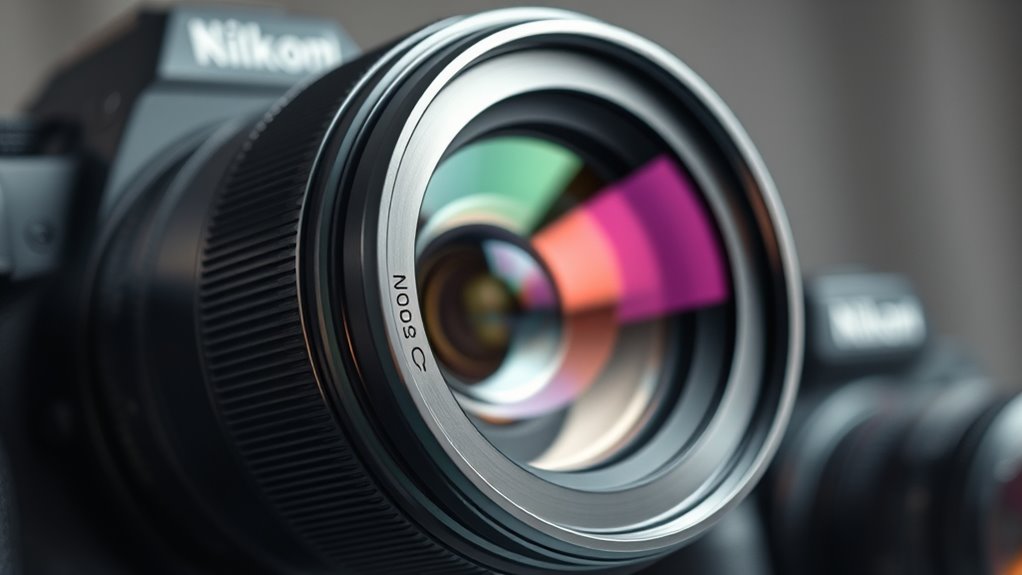
Brand reputation and R&D investment considerably influence the cost of camera lenses because trusted brands that invest heavily in research and development tend to produce higher-quality, innovative products. Your choice of brand prestige can signal reliability and performance, often justifying higher prices. These brands allocate significant resources to develop cutting-edge technology, ensuring their lenses stand out. Their marketing strategies also reinforce their premium status, making their lenses more desirable. When evaluating lenses, consider these factors:
Trusted brands invest in R&D and marketing, making their lenses higher quality and more desirable.
- Heavy R&D spending leads to advanced optical designs
- Strong brand prestige signals quality and trust
- Innovative features justify premium pricing
- Marketing strategies elevate brand perception
- Investment in research results in better performance
Understanding these elements helps you see why some lenses command a higher price tag.
Limited Production and Exclusive Features

Limited production runs and exclusive features markedly drive up the cost of camera lenses. Manufacturers often produce limited quantities of high-end lenses, making them rare and more desirable. These lenses may include unique elements, specialized coatings, or custom engineering that aren’t available elsewhere. Additionally, exclusive features like advanced camera ergonomics and refined user interface design enhance your shooting experience but add to the cost. Better ergonomics ensure comfort during prolonged shoots, while an intuitive user interface simplifies adjustments, saving you time and frustration. Such premium features appeal to professional photographers who demand precision and reliability. However, developing these specialized components and features requires significant investment, which is reflected in the higher price point of these limited-edition or exclusive lenses.
Frequently Asked Questions
How Does Lens Resale Value Impact Overall Cost?
Lens resale value considerably impacts your overall cost because durable lenses with high resale value let you recoup more when upgrading. If your lens is built to last and maintains quality, you can sell it later for a good price, offsetting the initial expense. Investing in a lens with better durability and resale value makes your overall gear investment smarter, ensuring you get the most value out of your equipment.
What Role Does User Customization Play in High-End Lenses?
You get to tailor high-end lenses to your style through user customization, making them truly your own. Your preferences shape features like focus rings, coatings, and even aesthetic elements, allowing you to craft a lens that fits your workflow and vision. This personalization guarantees you’re not just using a tool but creating a piece of art that aligns with your creative goals, proving that sometimes, the devil is in the details.
Are There Legal or Patent Restrictions Affecting Lens Manufacturing?
Yes, patent limitations and licensing restrictions markedly impact lens manufacturing. You might find that certain lens designs or technologies are protected by patents, preventing other manufacturers from copying them without permission. These restrictions can increase production costs, as companies invest in licensing fees or develop alternative solutions. Consequently, patent laws and licensing restrictions help explain why high-end lenses often cost more, reflecting the innovation and legal protections involved.
How Do Professional Endorsements Influence Lens Pricing?
Professional endorsements boost lens pricing because they enhance brand reputation, making the product seem more desirable. When top photographers endorse a lens, it signals high material quality and reliability, justifying a higher cost. You’re more likely to pay a premium for a lens associated with trusted professionals, as it suggests superior performance. Ultimately, endorsements serve as a marketing tool that elevates perceived value, impacting how much you’re willing to invest in high-end gear.
What Future Technologies Could Make Lenses More Affordable?
Imagine accidentally stumbling upon cheaper lenses thanks to innovative optical materials and manufacturing automation. These advancements could substantially lower production costs, making high-quality lenses more affordable. As technology evolves, expect materials that improve image quality and durability while automation streamlines manufacturing processes. This synergy will likely reduce prices, allowing more photographers to access professional-grade gear without sacrificing performance. So, future tech might just make premium lenses more accessible for everyone.
Conclusion
So, when you see a $2000 lens, you’re looking at a symphony of precision, craftsmanship, and innovation. It’s like holding a finely-tuned instrument that captures every nuance of light and detail. This isn’t just a piece of gear; it’s a gateway to your creative universe, crafted with care and exclusivity. Investing in such a lens means accessing a world where every shot becomes a masterpiece waiting to unfold.