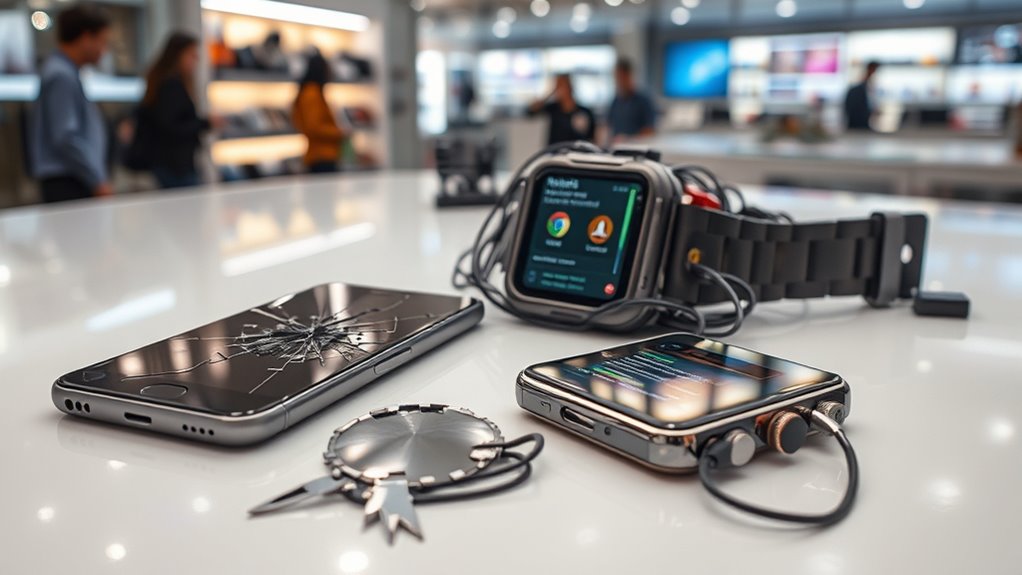
Many high-priced gadgets, like the Samsung Galaxy Fold, Google Glass, and the Apple Newton, flopped despite their innovative ideas. Design flaws, durability issues, and limited ecosystems made them fail to live up to their steep prices. Devices such as the Microsoft Zune and Juicero also suffered from poor user experience and lack of content, proving that costly doesn’t always mean successful. If you want to uncover more about these costly tech misses, keep exploring.
Key Takeaways
- Many high-priced gadgets, like Google Glass and Juicero, failed due to design flaws, limited ecosystems, and poor user experience.
- High costs often deterred mainstream adoption, turning devices into luxury items with niche appeal.
- Limited app ecosystems and content support hindered engagement and contributed to the failure of products like Microsoft Zune and Apple Newton.
- Design flaws and hardware issues, such as the fragile Samsung Galaxy Fold and HTC Touch Diamond, led to durability problems despite premium prices.
- Competition from established brands like Apple provided superior experiences at lower prices, undermining the market success of expensive gadgets.
The Samsung Galaxy Fold: A Fragile Revolution

The Samsung Galaxy Fold promised to revolutionize smartphones with its foldable design, but it quickly revealed a critical flaw: fragility. You soon discover that durability challenges plague the device, making it prone to damage with everyday use. Design flaws, such as a delicate hinge and thin screen layers, compromise its robustness. These issues lead to screens cracking or folding mechanisms failing after just a few uses. Despite the high price, you find that the device isn’t built to withstand regular handling, causing frustration and disappointment. Samsung’s attempt at innovation fell short because of these inherent weaknesses. The fragile construction highlights how rushing a complex design to market can result in a product that’s more about novelty than longevity. Proper storage and careful handling could help mitigate some risks associated with delicate components. Additionally, understanding product durability can help consumers make more informed choices about such advanced gadgets. Moreover, the limited durability has led to warranty issues and increased repair costs for early adopters. This situation underscores the importance of product testing before mass production to ensure consumer satisfaction.
Google Glass: The Future That Never Arrived
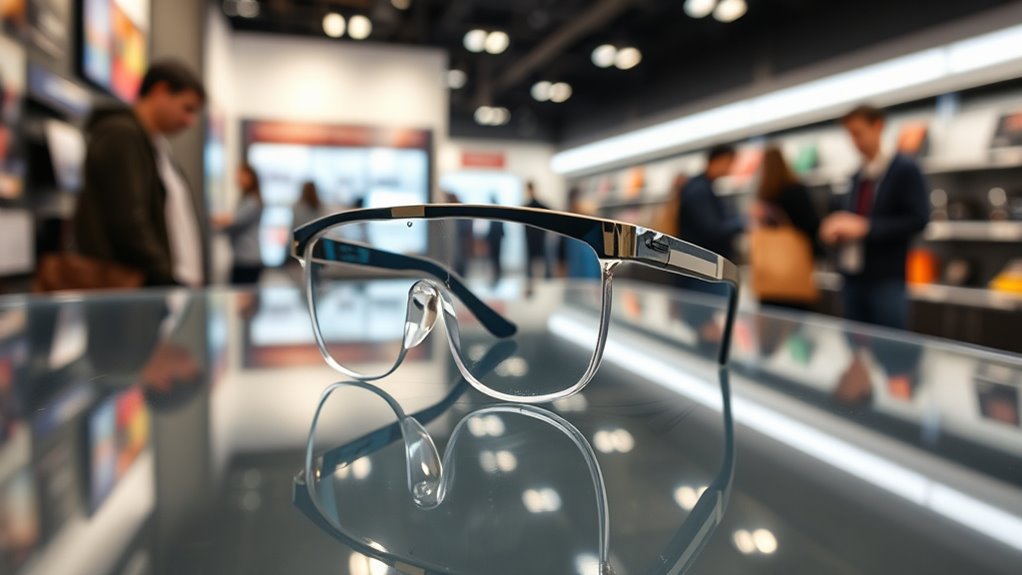
You probably remember Google Glass as a promising tech gadget that failed to take off, partly because of privacy worries and limited app support. Its high price kept many potential users at bay, making it hard to justify the investment. These issues caused Google Glass to become a cautionary tale about overestimating consumer demand for pricey, underdeveloped wearables. Additionally, the lack of accessible and inspiring resources about sustainable living may have contributed to consumers’ hesitance to invest in cutting-edge technology. Promoting awareness of how technology can support biodiversity conservation might have helped foster greater interest and acceptance among environmentally conscious consumers.
Privacy Concerns Mount
As Google Glass hit the market, privacy concerns quickly mounted, casting doubt on the device’s future acceptance. People worried about data security, fearing that the camera could record conversations or capture images without consent. This raised questions about user anonymity, as wearers could potentially track or identify individuals without their knowledge. The fear wasn’t unwarranted—surveillance capabilities threatened personal privacy and public comfort. Developers struggled to address these issues, but the backlash persisted. Privacy advocates argued that such devices could be misused, leading to a loss of trust. Ultimately, these concerns contributed to the product’s decline, highlighting how privacy fears can derail even the most innovative gadgets. Without clear protections, users remained hesitant to embrace Google Glass fully. Privacy Risks remain a critical obstacle for wearable technology adoption. Furthermore, the rapid evolution of data security measures is essential to rebuild public confidence in these devices. Additionally, the emergence of regulatory frameworks like Kenya’s new crypto laws underscores the importance of establishing clear guidelines to address privacy and security concerns in digital innovations. The lack of comprehensive privacy safeguards can significantly hinder consumer trust and market growth. Enhanced understanding of privacy protection methods is vital for the successful integration of future wearable tech.
Limited App Ecosystem
Privacy concerns surrounding Google Glass made many wary of adopting the device, but even beyond that, its limited app ecosystem hindered widespread acceptance. The App Store for Google Glass was sparse, offering few compelling applications to justify its high price. Without a diverse selection of apps, users found little reason to invest in the device beyond curiosity. Developer support was minimal, making it difficult for third-party creators to produce innovative or useful content. This lack of apps created a vicious cycle: fewer apps meant fewer users, which discouraged developers from investing time and resources. As a result, Google Glass struggled to gain traction, and its limited app ecosystem became a significant barrier to mainstream adoption, ultimately contributing to its failure as a groundbreaking wearable device. limited app ecosystem was a critical flaw that prevented the device from reaching its full potential.
High Price Barrier
One of the most significant hurdles Google Glass faced was its hefty price tag, which put it out of reach for most potential users. The company’s pricing strategy aimed to position it as a premium device, but this created substantial cost barriers. At $1,500, many consumers and developers saw it as too expensive for a product still in its infancy. This high price limited adoption and made it difficult to build a broad user base. The steep cost also fueled perceptions that Google Glass was a luxury gadget rather than a practical tool. Ultimately, the pricing strategy backfired, preventing widespread use and contributing to its failure to gain mainstream acceptance. The high price barrier proved too great for most, sealing its fate as a costly flop. Additionally, Gold IRA Rollovers demonstrate how proper financial planning and strategic investments can secure long-term stability, contrasting sharply with the short-lived hype of expensive gadgets. Furthermore, the market perception of value for such devices was skewed by their high costs, which hindered mass adoption and acceptance. This situation highlights the importance of considering cost-benefit analysis when developing new technologies to ensure they are accessible and appealing to a broad audience. An understanding of consumer affordability thresholds could have helped in designing a more successful pricing strategy.
Microsoft Zune: The Music Player That Missed the Beat
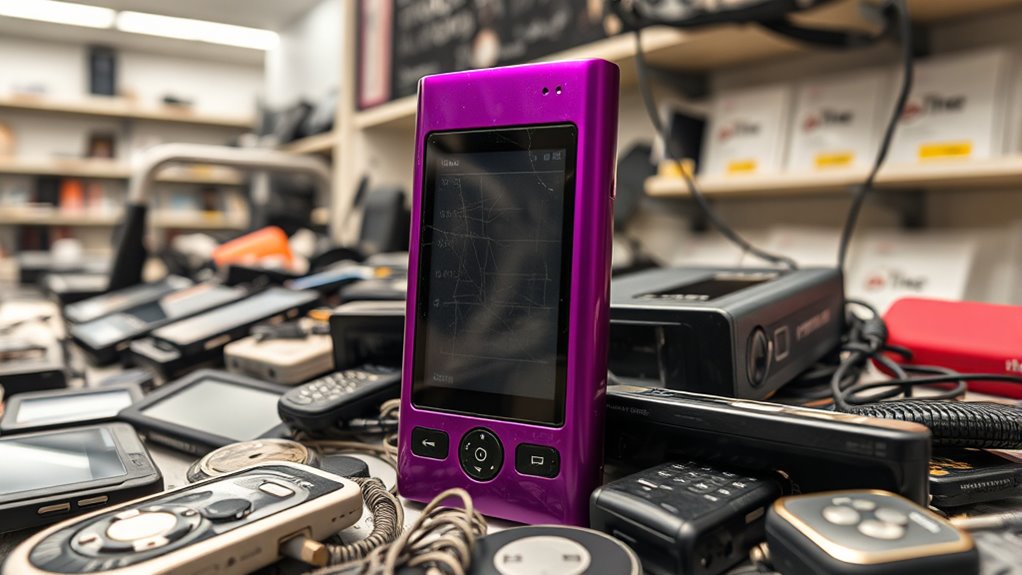
You might have noticed that the Zune’s limited music selection left many users wanting more options. Its poor user interface made navigation frustrating, turning people away quickly. Meanwhile, Apple’s iPod dominated the market, leaving Zune struggling to find its place.
Limited Music Selection
Why did the Microsoft Zune struggle to compete in a crowded market? One main issue was its limited music selection. Unlike its competitors, the Zune didn’t have broad access to music licensing, restricting the variety of songs available. Microsoft also lacked streaming exclusivity deals that other platforms secured, which meant users couldn’t enjoy a vast, dynamic library. This limited catalog made the device less appealing, especially when people expected seamless access to the latest hits. You might have found yourself frustrated trying to find specific tracks or genres, which diminished its appeal. Without a rich, constantly updated music library, the Zune couldn’t keep up with the more versatile services that offered larger selections and better licensing deals, ultimately hurting its chances in the crowded digital music scene. Additionally, the device’s lack of a diverse range of breeds in its marketing and product features may have limited its appeal among different user preferences. Furthermore, the absence of broad device compatibility prevented it from reaching a wider audience, which was another significant setback. Integrating mindfulness techniques into user experience design could have helped in creating a more engaging and calming interface that might have appealed to a broader demographic.
Poor User Interface
The Zune’s poor user interface played a significant role in its struggle to gain traction. You find voice control frustratingly unreliable, making navigation cumbersome. The touchscreen sensitivity often responds too slowly or too quickly, disrupting your experience. Clunky menus force you to spend extra time finding songs or settings. The interface lacks smooth progressions, making interactions feel awkward and outdated.
Here are key issues:
- Unresponsive voice control commands
- Inconsistent touchscreen sensitivity
- Cluttered, unintuitive menus
- Slow, jerky navigation
These flaws make it hard to quickly access your music or customize settings, leaving you frustrated. The interface’s shortcomings contributed heavily to the Zune’s failure to compete with more user-friendly devices.
Competition From Apple
Apple’s iPod quickly outpaced the Zune by offering a sleek design and an intuitive user experience that consumers could easily adopt. With market saturation already high, Apple’s strong brand loyalty gave it a decisive edge. You found that many consumers stuck with Apple because they trusted its ecosystem and perceived quality, making it hard for Microsoft’s Zune to gain traction. Despite the Zune’s features, it couldn’t break into a crowded market dominated by Apple’s established presence. The high price point further limited appeal, especially when consumers were loyal to Apple’s brand and already comfortable with its offerings. Without a compelling reason to switch, and facing fierce brand loyalty, the Zune struggled to compete, ultimately missing its chance to carve out a significant share of the portable music player market.
Apple Newton: The PDA That Was Ahead of Its Time, But Too Expensive
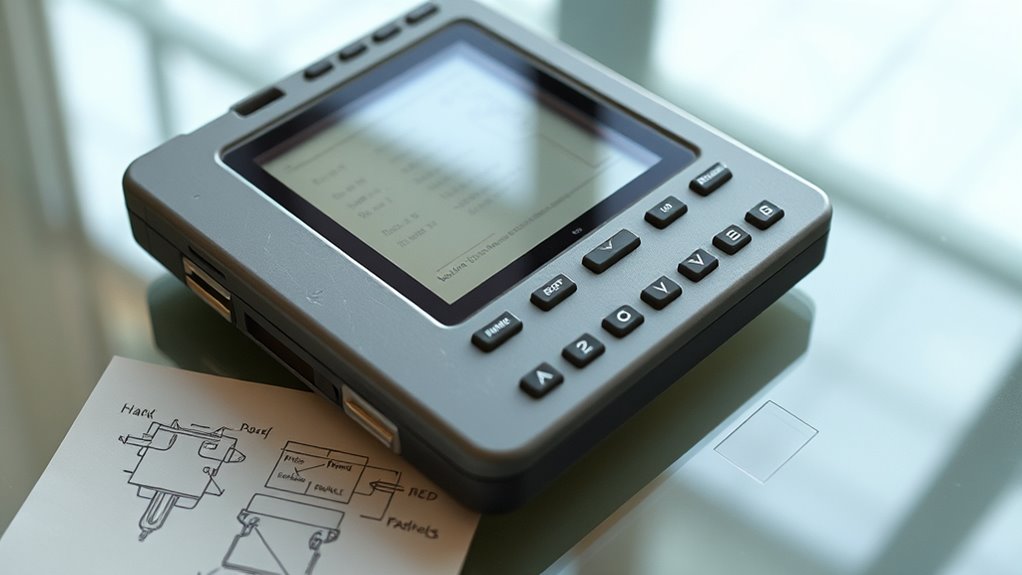
Although the Apple Newton was revolutionary for its time, its high price tag kept many potential users on the sidelines. You see, it was a costly innovation that aimed to transform personal organization, but its steep price limited its widespread appeal. The Newton’s niche appeal meant only early adopters and tech enthusiasts could justify the expense. Here are some key points:
The Newton’s high price limited its appeal, making it a niche product for early adopters and tech enthusiasts.
- Premium pricing made it inaccessible to the average consumer.
- The device’s high cost overshadowed its innovative features.
- Limited market reach led to slow sales and eventual decline.
- Its expensive nature contributed to the perception of it being a luxury gadget rather than a practical tool.
Ultimately, the Newton’s costly innovation couldn’t overcome its niche appeal, sealing its fate as a tech flop.
Juicero: The “Smart” Juicer That Nobody Needed
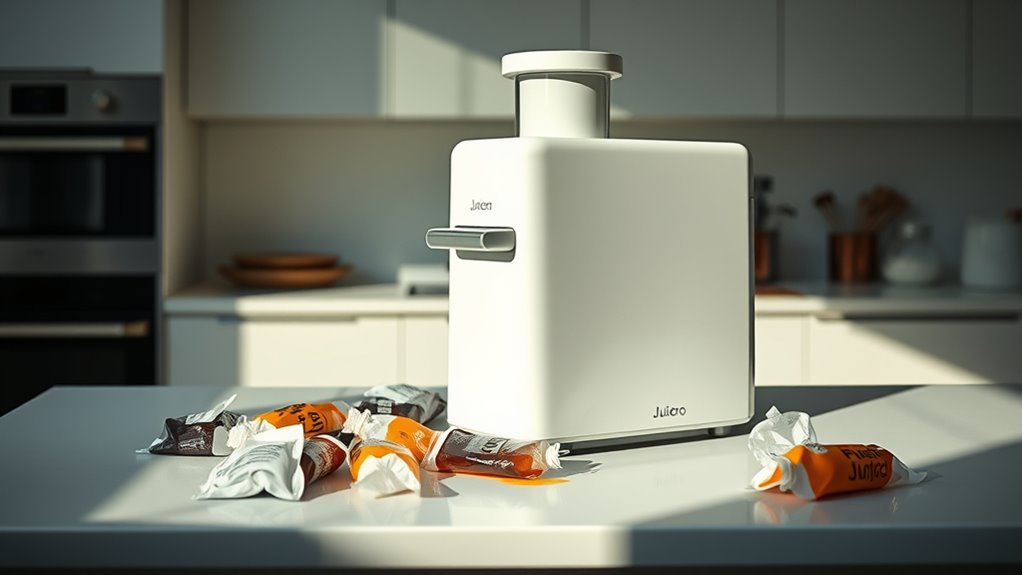
Despite its high-tech claims, Juicero failed to justify its hefty price tag, leaving many consumers questioning the point of a “smart” juicer that seemed to do little more than make juice. The product design was overly complex, with sensors and Wi-Fi features that added cost without adding real value. Its marketing failures became obvious when people discovered they could squeeze the juice packs by hand, rendering the expensive machine unnecessary. Instead of emphasizing convenience, the company’s messaging focused on tech innovation, which backfired. Consumers saw the product as a luxury gadget with no practical advantage over traditional juicers. Ultimately, Juicero’s high price, flawed product design, and ineffective marketing doomed it, proving that even the most high-tech devices need genuine utility to succeed. Product design flaws significantly contributed to its downfall, demonstrating that innovation alone cannot guarantee success. Clear consumer needs should always guide product development to avoid costly failures.
HTC Touch Diamond: Overhyped Tech That Fell Short
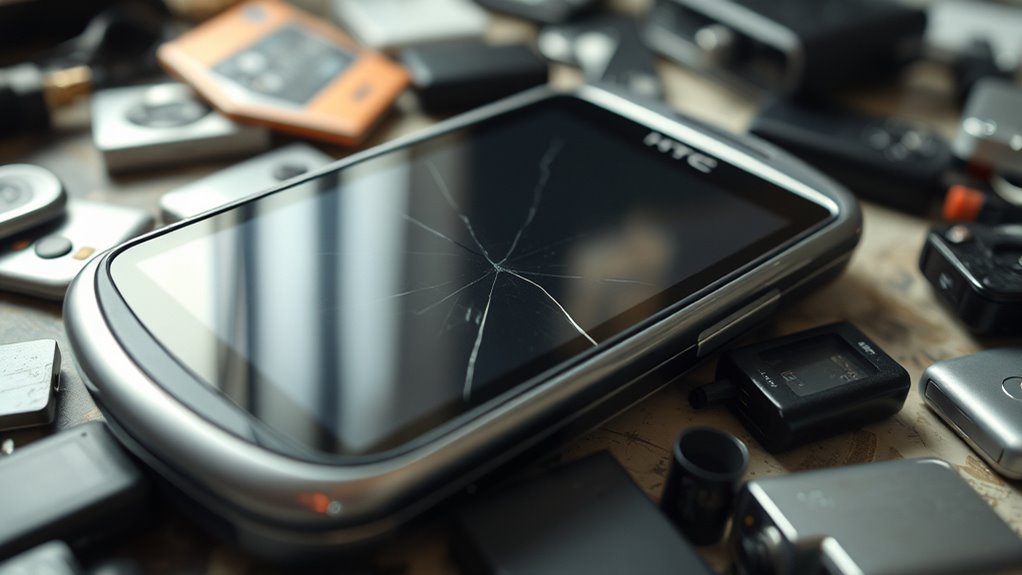
The HTC Touch Diamond was marketed as a revolutionary smartphone, promising sleek design and cutting-edge features. However, the marketing hype didn’t match reality. Instead of delivering on expectations, it fell short due to technical shortcomings. You might have expected a smooth user experience, but issues like slow responsiveness and limited battery life hampered its performance. Its high price only amplified disappointment. Here are some key reasons it underperformed:
- Overhyped marketing claims that didn’t match real-world use
- Slow user interface response and lagging performance
- Short battery life that limited daily use
- Hardware limitations that couldn’t support advanced features
Ultimately, the Touch Diamond proved that flashy marketing can’t mask technical flaws or justify high costs.
Frequently Asked Questions
Which of These Gadgets Had the Shortest Market Lifespan?
You’ll find that the gadget with the shortest lifespan was the Google Glass Explorer Edition. It experienced a quick cancellation after just a year on the market due to privacy concerns and limited appeal. You might be surprised how fast it disappeared, highlighting how a short lifespan can result from poor market fit or technical issues. This quick cancellation underscores the risks of launching expensive tech without strong consumer demand or clear value.
Were Any of These Failures Due to Poor Marketing Strategies?
You might say some of these tech flops fell flat because of marketing missteps, like branding blunders that left consumers confused or uninterested. Poor marketing strategies often act as the final nail in the coffin, preventing innovative gadgets from gaining traction. When companies fail to connect with their audience or misjudge the market’s appetite, even the most advanced tech can become a forgotten relic, lost in the noise.
Did Any of These Products Eventually Make a Comeback?
Some of these products did make a comeback, thanks to clever rebranding strategies and product revival efforts. You might see companies revisiting their failed gadgets, tweaking features, and repositioning them in the market. By embracing a new image and addressing previous issues, they manage to regain consumer interest. This approach often turns a flop into a success story, showing that with the right strategy, even high-priced failures can find their audience again.
How Did Consumer Expectations Influence These Gadgets’ Failures?
Consumer perception played a big role in these gadgets’ failures, as many expected innovation overreach to deliver real value. When products didn’t meet these high expectations or seemed overpriced, you felt disappointed and skeptical. This mismatch between what was promised and what was delivered led to backlash, making it harder for these gadgets to succeed. Your expectations for cutting-edge, affordable tech set the bar too high for these expensive, underwhelming devices.
What Lessons Can Tech Companies Learn From These Expensive Flops?
You should learn that avoiding pricing pitfalls is vital; setting prices too high can alienate consumers and lead to failure. Also, prioritize innovation over hype, as innovation oversights often cause products to fall short despite high costs. Focus on understanding your audience’s needs and delivering real value, rather than relying solely on expensive features. This approach helps prevent costly mistakes and fosters successful, consumer-loved gadgets.
Conclusion
Ultimately, these gadgets remind you that innovation isn’t just about high prices or hype. Sometimes, pushing too far too fast can make progress fragile, like a delicate glass that shatters under pressure. The lesson? True value lies in solving real problems, not just chasing the next big thing. Don’t let the allure of luxury blind you—sometimes, the most meaningful ideas are the ones that stand the test of time, not the price tag.