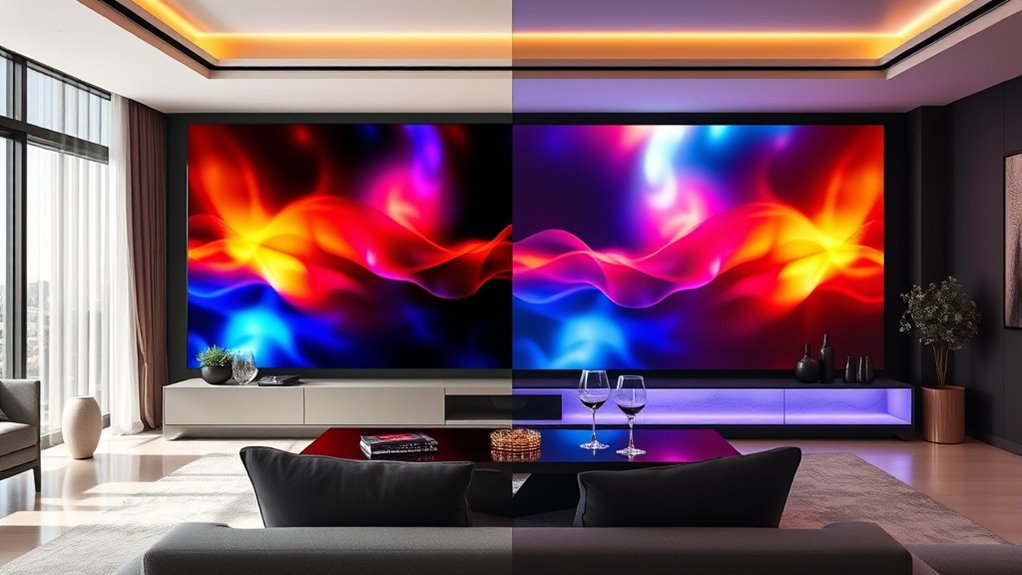

Both OLED and MicroLED are revolutionizing luxury TVs with stunning image quality and sleek designs. OLED offers perfect blacks, wide viewing angles, and vibrant colors, making it a proven favorite. MicroLED outshines in brightness, contrast, durability, and can be tailored to fit your space with flexible, bezel-less setups. If you want the latest in display tech, continuing will reveal how these innovations can elevate your viewing experience to the next level.
Key Takeaways
- MicroLED offers superior brightness, contrast, and longevity, making it ideal for high-end, immersive viewing experiences.
- OLED excels in perfect blacks, wide viewing angles, and proven reliability, maintaining its status in luxury markets.
- MicroLED’s modular, customizable design provides greater aesthetic flexibility and future-proof integration options.
- OLED is more affordable and widely available, making it the current preferred choice for luxury consumers.
- Advances in manufacturing and eco-friendly materials are positioning both technologies as the next big innovations in luxury TVs.
Understanding the Basics of OLED and MicroLED Technologies
Have you ever wondered how OLED and MicroLED screens produce such vibrant images? Both technologies use tiny light-emitting elements to create stunning visuals, but they do it differently. MicroLED panels incorporate quantum dots to enhance color accuracy and brightness, making images pop with vivid detail. These displays are also known for their ultra-thin panel thickness, allowing sleek, minimal designs that fit seamlessly into modern setups. OLED screens, on the other hand, rely on organic compounds that emit light when powered, eliminating the need for backlighting and enabling incredibly thin profiles. While OLEDs excel in contrast and viewing angles, MicroLEDs leverage quantum dots for superior brightness and longevity. Understanding these foundational differences helps you appreciate how each technology pushes the boundaries of display innovation.
Visual Performance and Image Quality Comparison
When comparing OLED and MicroLED, you’ll notice differences in brightness, contrast, and color accuracy that impact your viewing experience. MicroLED often delivers higher brightness and more precise colors, while OLED excels in black levels and depth. Understanding these factors helps you choose the display that best matches your visual preferences. Additionally, color accuracy plays a vital role in ensuring the true-to-life reproduction of images, which can be optimized through calibration. The manufacturing processes involved in each technology also influence their longevity and consistency over time. Moreover, offering scalable sizes, MicroLED displays are becoming more adaptable for various luxury TV applications, expanding their market potential. As AI advancements continue to improve display calibration and image processing, the overall quality and user experience are expected to further enhance. Considering the cost of ownership and maintenance needs can further inform your decision-making process.
Brightness and Contrast
How do OLED and MicroLED displays compare regarding brightness and contrast? MicroLEDs generally outperform OLEDs in peak brightness, which enhances HDR performance by delivering brighter highlights and richer details in high-contrast scenes. This makes MicroLEDs ideal for viewing in well-lit environments. Additionally, the display technology used in MicroLEDs contributes to their superior brightness and contrast capabilities. MicroLEDs also utilize self-emitting pixels, allowing for precise control over light emission and further improving contrast ratios. OLEDs, however, excel in contrast ratios due to their ability to turn off individual pixels completely, producing perfect blacks. This results in impressive contrast and deep shadows, even if their peak brightness isn’t as high. Moreover, MicroLEDs are more energy efficient at higher brightness levels, saving power during bright scenes. While OLEDs offer excellent contrast, their energy efficiency decreases as brightness increases. The underlying pixel technology in MicroLEDs plays a crucial role in their enhanced visual performance, enabling brighter images with better contrast. Overall, the visual performance of MicroLEDs surpasses that of OLEDs, providing superior brightness and contrast, making them a compelling option for premium TV enthusiasts seeking top-tier visual performance.
Color Accuracy and Range
MicroLED displays typically deliver more accurate and wider color gamuts than OLEDs, resulting in richer and more vibrant images. This means you’ll notice better color accuracy and a broader spectrum of hues. For example:
- You get a larger color gamut, making colors pop with vivid realism.
- Saturation accuracy ensures that reds are deep, blues are rich, and greens look true to life.
- Overall, images appear more lifelike because of precise color reproduction.
With MicroLED, you’ll experience a more immersive viewing experience, where colors remain consistent across different scenes and brightness levels. This advancement enhances the visual quality, especially for high-dynamic-range content. If color fidelity matters to you, MicroLED outperforms OLED in color range and saturation accuracy.
Black Levels and Depth
While MicroLED displays excel in delivering vibrant colors and broad color ranges, their ability to produce true blacks and deep contrast also plays a pivotal role in overall image quality. MicroLEDs typically achieve higher contrast ratios thanks to their self-emitting pixels, which can turn off completely for perfect black levels. OLEDs also excel here, offering near-perfect black levels due to their self-emitting nature. The table below compares their black level and contrast ratios:
| Feature | OLED | MicroLED |
|---|---|---|
| Black Level | Near-perfect | Perfect, true black |
| Contrast Ratios | Very high | Extremely high |
| Brightness | Good but limited | Higher, more versatile |
| Depth | Deep, immersive | Exceptionally rich |
Both excel, but MicroLED’s superior contrast ratios lead to more profound image depth. Additionally, MicroLEDs tend to have better brightness capabilities, making them suited for a wider range of lighting conditions. Moreover, MicroLED technology offers longevity advantages over OLEDs, reducing concerns about burn-in and image retention over time. MicroLEDs also feature a more uniform display surface, which enhances overall image consistency. The self-emitting nature of both display types contributes significantly to their ability to render black levels with exceptional accuracy, although MicroLEDs’ higher brightness also enhances viewing in bright environments. As the technology continues to evolve, cost efficiency is expected to improve, making MicroLEDs more accessible for consumers in the future.
Durability and Longevity Factors

When considering durability, you should look at how resistant each display type is to screen burn-in and image retention. You’ll also want to compare their overall lifespan and how much maintenance they require over time. Understanding these factors helps you choose a display that stays reliable and vibrant longer. For example, screen burn-in resistance varies significantly between OLED and MicroLED technologies, impacting their long-term performance. Additionally, the longevity of each display depends on the quality of the materials used and the manufacturing process, which can influence how well they withstand continuous use over many years. The power consumption of these displays can affect their operational lifespan and overall efficiency, further influencing durability. It’s also important to consider how environmental factors like temperature and humidity can affect their performance and lifespan over time.
Screen Burn-in Resistance
Screen burn-in resistance is a critical factor to contemplate when evaluating the durability of display technologies. With longevity concerns at the forefront, understanding how each tech handles screen burn-in is essential. OLED screens are more prone to screen burn-in due to organic materials, which can cause ghost images over time. MicroLED displays considerably reduce this risk thanks to inorganic LEDs, making them more resistant to burn-in. To minimize longevity concerns, you can enable pixel-shifting features or avoid static images for extended periods, especially on OLEDs. Additionally, display longevity factors play a significant role in determining overall durability. While OLEDs offer stunning contrast, their screen burn-in vulnerability can impact long-term use. MicroLEDs, with their superior resistance, promise better durability, making them a strong contender for those prioritizing longevity.
Lifespan and Maintenance
Lifespan and maintenance are crucial factors in determining a display’s overall durability and long-term performance. With proper maintenance tips, you can extend the lifespan expectations of both OLED and MicroLED TVs. For OLEDs, avoid static images and use screen savers to prevent burn-in, which can reduce longevity. MicroLEDs generally offer longer lifespans and are less prone to burn-in, but keeping them clean and avoiding excessive brightness can help maintain their quality. Regularly dust and clean your TV with a soft cloth to prevent dust buildup and overheating. Additionally, ensuring proper display calibration can optimize performance and prolong the lifespan of your TV. Proper screen care practices, such as minimizing exposure to direct sunlight and avoiding physical impacts, further contribute to the longevity of these displays. Adjust picture settings to avoid pushing the display to its limits. My dog’s names can even serve as a reminder to personalize your space and keep your devices, including your TV, aligned with your style. By following these maintenance tips, you ensure your investment remains vibrant and functional for years, maximizing both lifespan and performance.
Cost and Availability in the Market

Although both OLED and MicroLED technology are advancing rapidly, their costs and availability in the market differ markedly. You’ll notice that market pricing for MicroLEDs remains considerably higher than OLEDs, mainly due to manufacturing complexities. Additionally, product availability is limited for MicroLEDs, often confined to luxury brands and specialized retailers.
MicroLEDs cost more and are less available than OLEDs due to manufacturing challenges.
Here’s what you should keep in mind:
- MicroLEDs are still rare and come with a premium price tag, making them less accessible.
- OLED TVs are more widely available, with a broader range of prices suited for different budgets.
- As MicroLED production scales up, expect prices to drop, but current market pricing still favors OLEDs for most consumers.
This gap reflects current manufacturing challenges and market demand.
Design Flexibility and Installation Options
When it comes to design flexibility and installation options, MicroLEDs offer significant advantages over OLEDs due to their modular nature. With MicroLED screens, you can customize the size and shape to fit your space perfectly, creating a seamless look with minimal bezels. Wall mounting becomes easier because you can assemble smaller modules into larger displays or unique configurations, adapting to your room’s layout. Additionally, MicroLEDs allow for custom frames, giving you the freedom to choose or design frames that complement your interior decor. This flexibility means you’re not limited by standard sizes or shapes, making it ideal for luxury settings. Overall, MicroLED’s modular design enhances creative freedom, simplifies installation, and elevates your space’s aesthetic appeal.
Future Trends and Technological Advancements
Emerging technological advancements are set to revolutionize the future of display technologies, making OLED and MicroLED screens more immersive, efficient, and versatile. You can expect the market adoption of these innovations to accelerate as manufacturers improve lifespan and brightness. Key trends include:
- Enhanced manufacturing processes that reduce costs and boost scalability, encouraging wider adoption.
- Innovative materials aimed at lowering environmental impact, like eco-friendly substrates and recyclable components.
- Integration of AI and smart calibration to optimize picture quality and energy efficiency. These advancements will make future displays more sustainable and accessible, balancing luxury with environmental responsibility. As the technology matures, you’ll see broader market acceptance and a shift toward greener production methods, shaping the next generation of premium TV experiences.
Which Technology Holds the Edge for Luxury Consumers?
As display technology continues to evolve with innovations in manufacturing and eco-friendly materials, luxury consumers are increasingly drawn to the most advanced options that offer superior image quality and exclusivity. MicroLEDs hold an edge with their exceptional brightness, perfect black levels, and longevity, enhancing premium aesthetics and delivering a truly immersive experience. OLEDs, however, remain highly valued for their perfect blacks and vibrant colors, reinforcing brand prestige through their proven performance. For luxury buyers, the choice often hinges on the balance between cutting-edge innovation and established reputation. MicroLED’s emerging technology offers a future-proof appeal, while OLED’s proven track record sustains its desirability. Ultimately, the technology that best elevates the brand’s prestige and meets your standards for exclusivity will dictate the winner.
Frequently Asked Questions
How Do OLED and Microled Compare in Energy Efficiency?
You’ll find that microLEDs generally offer better energy savings than OLEDs due to lower power consumption, especially when displaying bright images. MicroLEDs produce brighter images with less energy, making them more efficient overall. OLEDs, while impressive in picture quality, tend to use more power for bright scenes because of their organic materials. So, if energy efficiency matters most, microLEDs are the smarter choice for reducing energy consumption.
What Environmental Factors Affect the Lifespan of Each Technology?
Environmental factors like humidity, temperature fluctuations, and exposure to sunlight impact each technology’s lifespan differently. You should know that OLEDs are sensitive to display degradation from moisture, while MicroLEDs boast better environmental durability but can still suffer from thermal stress. High humidity accelerates OLED degradation, reducing lifespan, whereas MicroLEDs are more resilient but may still be affected by extreme heat. Proper environmental control guarantees longer, high-quality performance for both.
Are There Any Health Concerns Related to OLED or Microled Displays?
You might wonder if OLED or MicroLED displays pose health concerns. Both emit blue light, which can cause eye strain if viewed for long periods. However, modern screens often include blue light filters or night modes to reduce this risk. To safeguard your eyes, take regular breaks, adjust brightness levels, and use settings that minimize blue light emissions. These steps help ensure a comfortable, healthier viewing experience.
How Do Repair and Maintenance Costs Differ Between the Two?
You’ll find that OLED TVs generally have higher repair complexity and warranty costs because their panels are delicate and expensive to replace. MicroLEDs, on the other hand, tend to be more durable, leading to lower repair costs and simpler maintenance. However, due to their newer technology, warranties may be shorter or more limited. You should consider these factors when budgeting for upkeep and repairs over the TV’s lifespan.
Can Microled Be Integrated Into Existing Smart Home Systems?
Yes, microLEDs can be integrated into existing smart home systems, but smart home compatibility varies by manufacturer. You might need retrofit options like compatible controllers or hubs to connect microLED displays seamlessly. Make certain your system supports the necessary protocols, such as Zigbee or Z-Wave. Consulting with a professional can help you navigate retrofit options and maximize integration, so your microLED TV works smoothly with your smart home setup.
Conclusion
As you stand at the crossroads of innovation, imagine your luxury TV as a window to a world where brightness and color leap to life like a vivid cityscape at dusk. OLED offers breathtaking contrast and elegance, while MicroLED promises a future of unmatched durability and brilliance. The choice is yours—embrace the shimmering glow of today’s marvels or gaze into the horizon of tomorrow’s dazzling spectacle. Your perfect viewing experience awaits, just beyond the horizon’s glow.