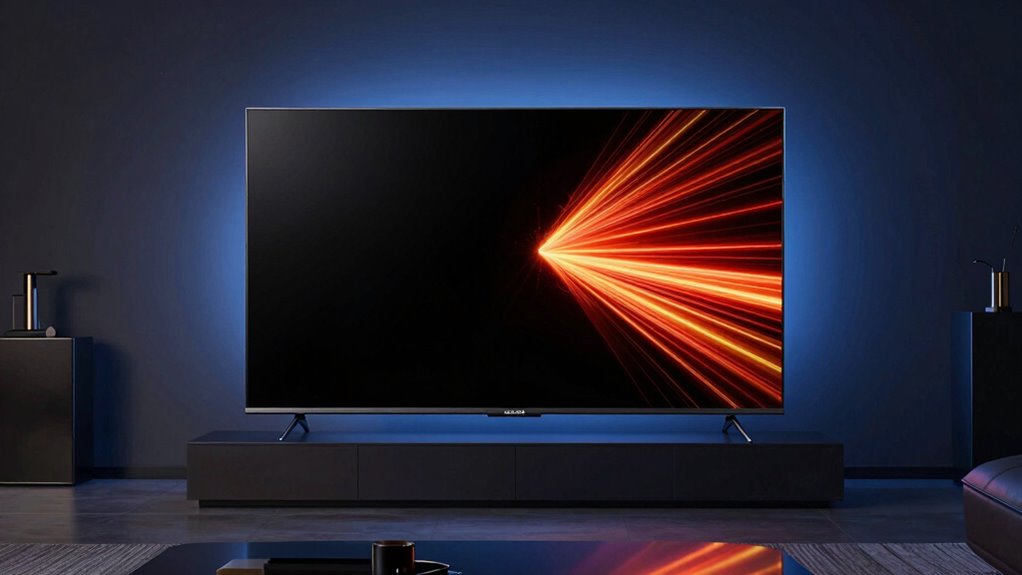

OLED panels still reign supreme in the premium TV world because they offer unmatched picture quality, with deeper blacks, vibrant colors, and stunning contrast. Their self-emissive pixels emit their own light, providing perfect black levels without light bleed, creating a more immersive experience. While concerns about durability exist, advancements have made OLEDs more resilient. If you want the best visual experience, OLEDs remain the top choice—there’s much more to discover about their strengths and innovations.
Key Takeaways
- OLED panels deliver superior picture quality with perfect blacks, vibrant colors, and exceptional contrast unmatched by other technologies.
- Their self-emissive pixels enable deeper blacks and better contrast, enhancing immersion during movies and sports.
- OLED technology provides wider viewing angles and more accurate color reproduction, especially in dark viewing environments.
- Advances in manufacturing and protective features have improved OLED durability, reducing concerns about burn-in and fragility.
- Despite brightness limitations, OLED’s unparalleled visual experience keeps it the preferred choice for premium TVs.
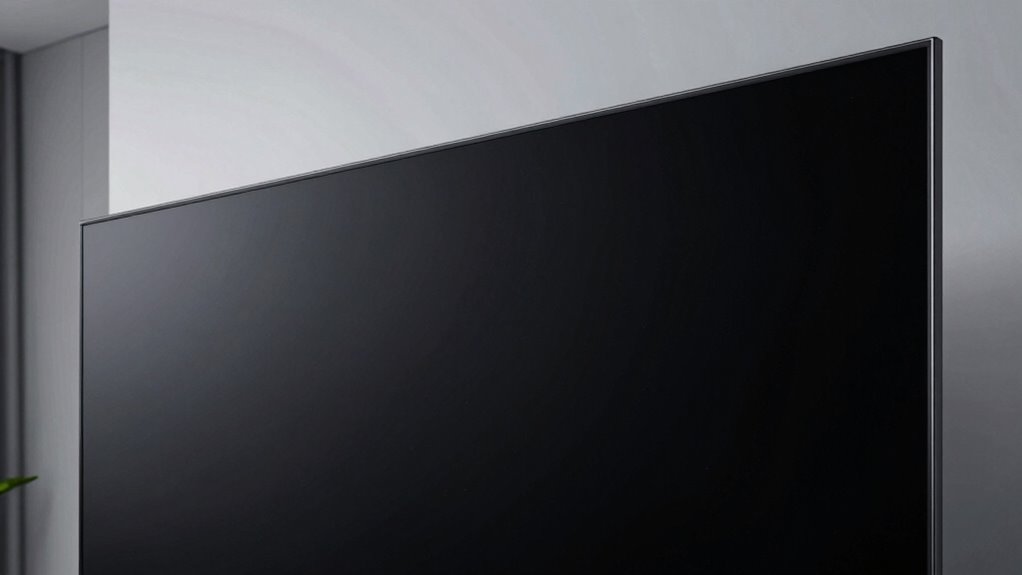
Despite the rise of other display technologies, OLED panels continue to dominate the premium TV market because they deliver unmatched picture quality. You’ll notice that OLED screens provide deeper blacks, vibrant colors, and exceptional contrast, making every image look stunning and lifelike. Unlike traditional LCDs, which rely on backlighting, OLED pixels emit their own light. This self-emissive nature means you get perfect black levels without any light bleed, giving you a more immersive viewing experience. When watching movies or sports, the difference in picture depth and clarity becomes immediately apparent.
However, some might consider quantum dot technology as a competitor, especially since it enhances LCD screens with brighter displays and wider color gamuts. While quantum dot panels can produce impressive visuals, they often fall short of OLED’s perfect blacks and infinite contrast ratios. Plus, quantum dot panels are more prone to issues like screen burn-in over time, especially if static images are left on the screen for extended periods. Screen burn is a concern with OLEDs as well, but manufacturers have developed strategies like pixel shifting and screen savers to mitigate this risk. If you’re cautious about static images, OLEDs now come with built-in protections that significantly reduce burn-in chances, making them a reliable choice for everyday use. Additionally, advancements in display technology continue to improve the durability and performance of OLED panels, addressing concerns about their fragility. Moreover, ongoing research into materials used in OLEDs is helping to extend their lifespan and resilience.
You might also hear that OLED panels are more fragile or susceptible to damage, but modern manufacturing has improved their durability. The real advantage remains in their ability to deliver picture quality that’s hard to match with other technologies. The contrast ratio, color accuracy, and viewing angles are superior, especially in dark-room settings. You won’t get that same level of detail and depth from quantum dot-enhanced LCDs, which often struggle with uniformity and viewing angle issues. Moreover, ongoing research and development are focused on making OLED panels more resistant to damage, further extending their lifespan and reliability.
In the end, your choice boils down to what matters most to you: picture quality, longevity, or brightness. OLED panels still hold the crown because they offer the most visually compelling experience, despite some challenges like screen burn. Manufacturers continue refining OLED technology, making it more resilient and enhancing its appeal. If pristine picture quality, perfect blacks, and rich colors are your priorities, OLED remains the top contender in the premium TV world.

LG 48-Inch Class OLED evo AI Super Upscaling 4K C5 Series Smart TV w/Dolby Atmos & Vision, HDR10, Filmmaker Mode, Wow Orchestra, Alexa Built-in (OLED48C5PUA, 2025)
Alpha 9 AI Processor Gen8. This processor is the brains behind a truly unforgettable TV experience. You'll get…
As an affiliate, we earn on qualifying purchases.
As an affiliate, we earn on qualifying purchases.
Frequently Asked Questions
How Do OLED Panels Compare to Microled in the Long Term?
In the long term, OLED panels excel in color accuracy and offer impressive contrast, making visuals pop with vibrancy. MicroLEDs, however, promise better energy efficiency and potentially longer lifespan, reducing burn-in risks. You’ll notice OLEDs deliver stunning picture quality now, but MicroLEDs could surpass them later by combining energy savings with resilient displays. Ultimately, your choice depends on prioritizing superior color and contrast versus durability and efficiency.
Are OLED Panels More Environmentally Friendly Than Other Display Technologies?
Yes, OLED panels are more eco-friendly than some other display technologies. They benefit from eco-friendly manufacturing processes that reduce the use of harmful chemicals. Plus, OLEDs are more recyclable and easier to dispose of safely, thanks to their organic materials. This minimizes environmental impact over their lifecycle, making them a greener choice. While not perfect, OLEDs generally promote sustainability compared to traditional LCDs or microLEDs.
What Is the Cost Difference Between OLED and QLED TVS?
Think of cost as a bridge—you pay more for the longer, more durable span. OLED TVs generally cost more than QLEDs because of their superior color accuracy and panel durability, with prices often 30-50% higher. While QLEDs offer a budget-friendly option, OLEDs promise richer blacks and better longevity, making the investment worthwhile if you prioritize picture quality and panel resilience in your viewing experience.
Can OLED Panels Be Repaired if Damaged?
OLED panels can be repaired if damaged, but screen durability varies depending on the issue. For minor scratches or dead pixels, repair techniques like professional cleaning or pixel correction might help. However, severe damage like cracks usually requires panel replacement, which can be costly. You should consult a specialist to assess the damage and determine if repair techniques are feasible, as OLED screens are delicate and need careful handling.
How Do OLED Panels Perform in Bright Sunlight Conditions?
OLED panels struggle in bright sunlight because sunlight visibility can be limited, making it harder to see the screen clearly. However, they excel at glare reduction, which helps reduce reflections and improves picture contrast indoors. For outdoor viewing, you might want to evaluate a high-brightness display or anti-glare screen protector, but overall, OLEDs perform best in controlled lighting conditions where their deep blacks and vibrant colors shine.

Samsung 65-Inch Class OLED S90F 4K Smart TV (2025 Model) NQ4 AI Gen3 Processor Upscaling Pro HDR +, Motion Xcelerator 144Hz, Vision Alexa Built-in
OUR MOST ADVANCED 4K AI PROCESSOR: Powered by 128 neural networks to deliver AI-enhanced picture and optimized sound,…
As an affiliate, we earn on qualifying purchases.
As an affiliate, we earn on qualifying purchases.
Conclusion
So, if you’re eyeing a top-tier TV, OLED remains the best choice thanks to its unbeatable contrast and vibrant colors. Imagine binge-watching your favorite series on an OLED, where dark scenes are truly dark, and bright scenes pop vividly. Like a friend of mine who upgraded to an OLED and now feels like he’s in the movie itself. Trust me, once you experience OLED’s magic, you’ll never want to go back to anything else.

LG 77-Inch Class OLED evo AI 4K C5 Series Smart TV w/Dolby Atmos, Dolby Vision, HDR10, AI Super Upscaling 4K, Filmmaker Mode, Wow Orchestra, Alexa Built-in (OLED77C5PUA, 2025)
OLED: Celebrating 12 years of perfecting award-winning OLED TV technology.
As an affiliate, we earn on qualifying purchases.
As an affiliate, we earn on qualifying purchases.

LG 65-Inch Class OLED evo AI 4K C5 Series Smart TV w/Dolby Atmos, Dolby Vision, HDR10, AI Super Upscaling 4K, Filmmaker Mode, Wow Orchestra, Alexa Built-in (OLED65C5PUA, 2025)
OLED: Celebrating 12 years of perfecting award-winning OLED TV technology.
As an affiliate, we earn on qualifying purchases.
As an affiliate, we earn on qualifying purchases.