
TL;DR

Get home appliances delivered free with Prime
- Fast, free delivery on millions of items
- Prime Video, Amazon Music and more included
- Member-only deals all year
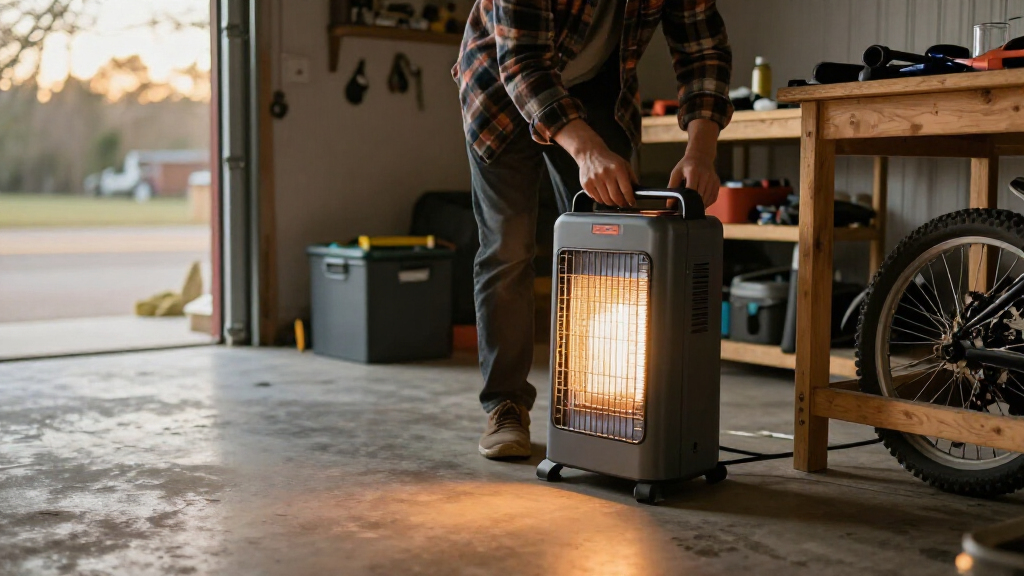
A Hunker report points to the Cadet 4,000-watt portable electric garage heater, sold through Lowe’s, as a compact heating option for garage work in cold weather. The unit produces more than 13,500 BTUs, but requires a 240-volt, 20-amp outlet, and its actual performance depends on the space and its insulation.
A Hunker report has highlighted the Cadet 4,000-watt portable electric garage heater, available through Lowe’s, as a compact option for heating a garage workspace during winter. The unit is rated to produce more than 13,500 BTUs and comes with a bracket for wall or ceiling mounting, but it requires a 240-volt, 20-amp outlet that many garages may not have.
The heater draws 4,000 watts, or about 16.7 amps, according to the Hunker report. It has a fan-delay feature that keeps the fan off until the heating element reaches temperature and continues running after the element switches off, until it cools. The report also describes a corrosion-resistant powder coating and an automatic temperature safety shutoff with a red over-temperature indicator.
The included mounting bracket allows the unit to be installed on a wall or ceiling, keeping it off the floor. Because it is not designed as a floor-standing heater, it does not have the anti-tip feature found on some portable models. Hunker says the listed output is suitable for 400 to 600 square feet of insulated space, while cautioning that typical garages can lose heat through air leaks and limited insulation.
The electrical requirement is a key practical constraint. Hunker says the heater needs a 240-volt outlet rated at 20 amps; a standard household outlet is not sufficient. A suitable circuit may already be available in some homes, but the report says many buyers will need new wiring. It does not provide a current Lowe’s price, stock status or installation cost.
Heating Capacity Comes With Electrical Costs
The heater could let people continue projects or other work in a garage during cold weather, without placing a portable heater on the floor. Its mounting format may also leave more room for tools and vehicles. But the 4,000-watt draw means it is not automatically a low-cost way to heat the space: electricity use and local rates affect operating costs, and the outlet and circuit may add upfront expense.
Rated coverage is not a guarantee of comfort in every garage. As Hunker notes, heat loss from poor insulation and air leaks can reduce performance. Readers should treat the 400-to-600-square-foot figure as the report’s estimate for insulated space, not a promise that the heater will warm an uninsulated garage equally well.
Products Worth Considering

Levoit Core 600S-P Smart Air Purifier for Large Rooms

iRobot Roomba Max 715 Pet Robot Vacuum with AutoEmpty Dock

Bose TV Speaker (2nd Gen) Compact Soundbar with Bluetooth and HDMI Connectivity
As an affiliate, we earn on qualifying purchases.
A Garage Heater Needs Dedicated Power
The report frames the Cadet as an alternative to larger forced-air or fuel-burning heaters often used in garages and work areas. Its compact, mounted design is a different fit from floor-standing models, but the trade-off is a fixed installation and the need for high-voltage power. The source does not compare the heater’s price or running costs with those alternatives.
Hunker notes that some homes may have an unused 240-volt circuit, such as one left over after a major appliance or heating-system change. That possibility is home-specific; buyers should not assume a spare circuit is available or suitable. A qualified electrician can determine whether existing wiring meets the heater’s requirements or whether a new circuit is needed.
“The Cadet produces over 13,500 BTUs”
— Hunker report
Price, Stock and Garage Performance
The source does not state the heater’s current Lowe’s price or availability, and it gives no information about discounts, warranty terms or customer reviews. It is also unclear how the unit performs in a particular garage, since ceiling height, insulation, air leakage, climate and how the space is used all affect heating needs. The report’s coverage estimate should not be read as a guarantee for every setting.
Installation requirements also depend on the home’s electrical system and local rules. The source does not specify installation costs or whether a buyer’s existing panel can support the required circuit. Those questions need to be checked for the individual property before purchase.
Check the Outlet Before Buying
Anyone considering the heater should verify its current specifications, price and stock with Lowe’s, then assess the garage’s size and insulation against the stated coverage estimate. Before installation, a licensed electrician should confirm whether a suitable 240-volt, 20-amp circuit is available or install one as needed, following applicable electrical codes and permit rules. The supplied information does not identify a later product announcement or scheduled update.
Key Questions
How much power does the Cadet garage heater use?
Hunker lists it at 4,000 watts, drawing about 16.7 amps. It requires a 240-volt outlet rated for 20 amps.
How large a space is it rated to heat?
The report gives a range of 400 to 600 square feet for insulated space. Results may differ in a drafty or poorly insulated garage.
Can it plug into a regular household outlet?
No. The report says the heater requires a 240-volt, 20-amp outlet, rather than a standard household outlet. Have a licensed electrician check the circuit and installation requirements.
Does the heater include safety features?
Hunker describes an automatic temperature shutoff, a red over-temperature light and a fan-delay feature. The wall- or ceiling-mounted model does not have an anti-tip feature, which is common on some floor-standing heaters.
Source: rss