TL;DR

Get home appliances delivered free with Prime
- Fast, free delivery on millions of items
- Prime Video, Amazon Music and more included
- Member-only deals all year
Amazon has launched the Echo Time, an Alexa-powered alarm clock with optional sleep monitoring, sunrise lighting and an alarm that can shift within a 10-to-60-minute window. The device uses room sensors and ultrasound rather than a wearable, but Amazon’s sleep estimates and whether they make waking easier have not been independently established in the source report.
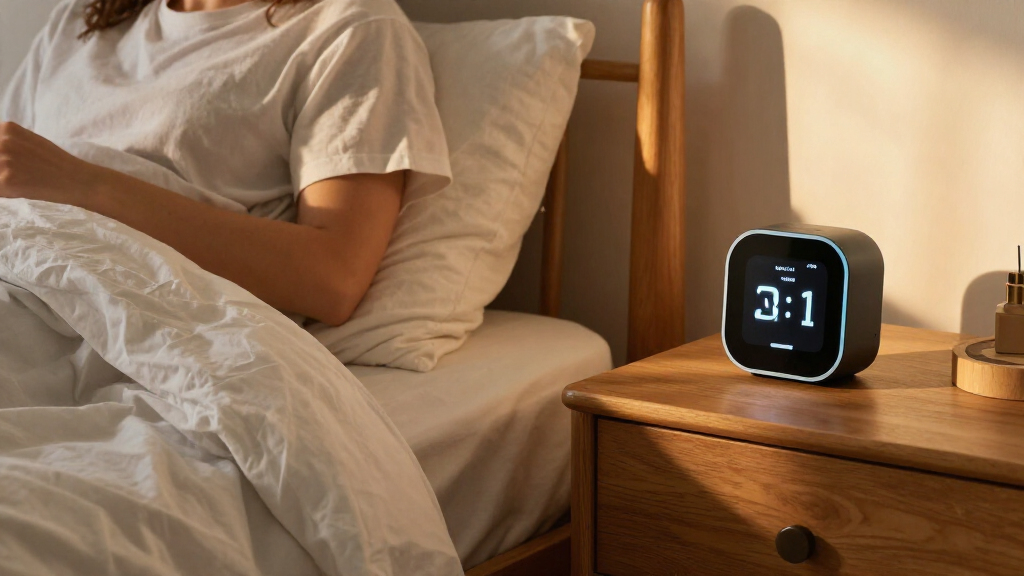
Amazon has launched the Echo Time, a $200 Alexa-powered alarm clock with optional sleep monitoring and an alarm that can sound during an estimated lighter-sleep period rather than at one fixed minute. The device uses room-based sensors and ultrasound to estimate sleep patterns, so users do not need a smartwatch or other wearable, according to The Ambient’s report.
The Echo Time has a spherical design and a 3.2-inch circular touchscreen with hundreds of customisable clock faces. The designs include analogue styles, seasonal themes and characters from DC Universe franchises. Users can change faces with Alexa voice commands, while the display dims at night and brightens gradually in the morning to simulate a sunrise.
Its smart alarm is optional. According to The Ambient, Echo Time uses room temperature sensors, presence detection and ultrasound-based breathing monitoring to estimate sleep patterns. The alarm may then sound during a period it identifies as lighter sleep, with the aim of making waking feel less disruptive. That description is the product’s intended function, not evidence in the report that the approach improves sleep or morning alertness.
The alarm can vary from the set time by 10 to 60 minutes, a window that could conflict with a fixed commute, school start or other commitment. Users can turn the feature off and use the device as a conventional alarm. The standard model comes in Graphite, Glacier White and Coral Pink; an adjustable stand is sold separately for $40. The Echo Time Kids costs $210 and comes in Galactic Grape and Cosmic Lime, with a one-year Amazon Kids+ subscription.
A Flexible Wake-Up Window
The Echo Time puts sleep sensing into an alarm clock that does not require a wearable. For people who prefer not to sleep with a watch or buy a separate tracker, the room-based monitoring approach offers a different way to try a sleep-aware wake-up feature. It also brings the monitoring and alarm functions into an Alexa device intended for the bedroom.
The trade-off is practical as well as technical. A wake-up that shifts by as much as 60 minutes may be unsuitable when a user must be up by a firm deadline. Turning off the smart alarm preserves a fixed-time option, but then the device is no longer using its main sleep-based feature to decide when to sound. The Kids model adds another consideration for households: parents retain control over children’s sleep schedules, while the device also offers alarms and Alexa access.
Products Worth Considering

Philips Hue Bridge Pro Smart Lighting Hub

Philips Hue Festavia 130-Foot Indoor/Outdoor Smart String Lights, 500 LEDs

Samsung 42-Inch S90H OLED 4K Smart TV Bundle
As an affiliate, we earn on qualifying purchases.
Beyond the Echo Spot
The Ambient describes Echo Time as a new addition to Amazon’s alarm and display devices, distinguishing it from earlier Echo Spot models through sleep monitoring, gradual sunrise lighting and the flexible alarm. Its touchscreen and Alexa controls also place it among the company’s connected home devices rather than a basic clock.
Amazon has included features aimed at bedroom privacy, according to the report: no camera, visual indicators when Alexa is listening and a dedicated microphone-off button. Those controls may matter to people considering a voice-enabled device for a private room. They do not, by themselves, establish how sleep-related sensor information is stored or used; the source report does not detail those policies.
“The smart alarm can wake users anywhere between 10 and 60 minutes around their chosen alarm time.”
— The Ambient
Sleep Accuracy Still Unclear
The source report does not provide independent testing or performance data showing how accurately Echo Time estimates sleep stages or lighter-sleep periods. It also does not establish whether waking at the selected moment reliably improves how users feel. The product’s stated purpose should not be read as a verified health benefit.
Other details are absent from the report, including how sleep data is handled, whether monitoring requires particular room conditions, and whether the alarm’s timing can be narrowed beyond the stated 10-to-60-minute range. The report also gives no launch date or information about availability outside the listed US prices and colours.
Availability and Testing Ahead
The next practical test is whether the Echo Time’s sensors can provide useful sleep estimates in ordinary bedrooms and whether users find its shifting alarm acceptable. Buyers who need a precise wake-up time can disable smart alarm mode, while those trying it should account for the possibility that it sounds up to an hour from the chosen time.
Further information from Amazon about availability, sensor performance and sleep-data handling would help clarify how the feature works and what users can expect. Until such details or independent evaluations are available, the Echo Time is best described as an alarm clock with an optional sleep-sensing feature—not a demonstrated way to improve sleep.
Key Questions
What is the Amazon Echo Time?
It is a $200 Alexa-powered alarm clock with a circular touchscreen, sunrise-style lighting and optional sleep monitoring, according to The Ambient.
How does its smart alarm work?
The device uses room temperature sensors, presence detection and ultrasound-based breathing monitoring to estimate sleep patterns. It may sound during an estimated lighter-sleep period rather than exactly at the set time.
How much can the alarm time shift?
The report says the smart alarm can sound 10 to 60 minutes around the chosen time. Users can switch it off to use a conventional fixed-time alarm.
Does Echo Time have a camera?
No. The Ambient reports that Echo Time has no camera, visual indicators when Alexa is listening and a microphone-off button.
Has the sleep-monitoring benefit been proven?
The source report provides no independent accuracy or outcome data. Whether its sleep estimates make waking easier remains unconfirmed.
Source: the-ambient.com