
TL;DR

Get home appliances delivered free with Prime
- Fast, free delivery on millions of items
- Prime Video, Amazon Music and more included
- Member-only deals all year
An Ideal Home report recommends six habits for drying laundry indoors while limiting moisture buildup: run an extra spin, space garments out, consider a heated airer and dehumidifier, choose a well-ventilated spot, and ventilate the room. The advice is practical guidance, not evidence that any one method will prevent damp or mould in every home.
Ideal Home has published six recommendations for drying laundry indoors in cold or wet weather, focusing on reducing the water left in clothes and managing moisture released into the home. The advice matters because wet washing can add humidity to a room, but the report does not claim that these steps can prevent damp or mould in every household.
The first two recommendations address how washing is handled on the airer. The report advises running an additional spin cycle before hanging clothes, if the machine’s settings are suitable for the items. It says removing more water can shorten drying time and reduce moisture released indoors, with towels, jeans and bedding singled out as heavier items that may retain water.
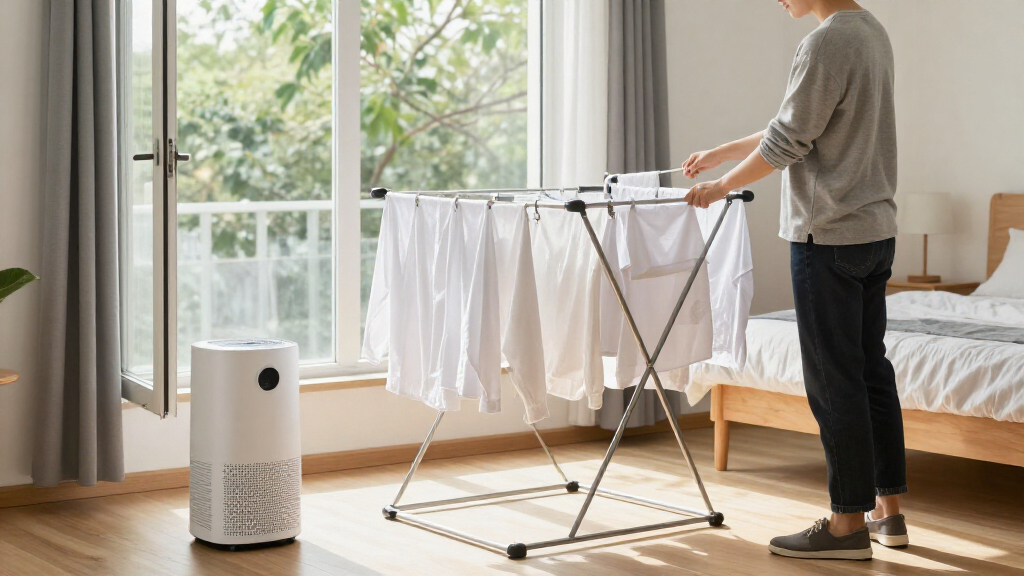
It also recommends leaving space between garments so air can circulate, opening up shirts and spreading sleeves rather than folding clothes over one another. Lauren Roelofs, identified in the report as a laundry expert at Brabantia, says avoiding an overcrowded rack can help clothes dry more evenly. For heavier garments, she recommends turning them during drying to reduce damp patches.
The remaining suggestions involve equipment and placement: use a heated clothes airer if appropriate, pair an airer with a dehumidifier, keep the rack away from walls, and ventilate the room. Lakeland buying lead Catrin Parry says a dehumidifier can remove excess moisture from the air and may be particularly useful in older homes. The report also notes that a heated airer warms clothes but does not itself remove moisture from the room.
Managing Moisture From Indoor Laundry
Indoor drying is a routine option when outdoor lines are impractical, but water from wet clothes evaporates into the surrounding air. Air circulation and moisture removal address different parts of the problem: spacing garments and selecting a suitable location can help airflow, while ventilation or a dehumidifier can help manage humidity. A heated airer may assist drying, but it is not a substitute for dealing with the moisture released into the room.
The recommendations may help households make better use of limited space and reduce the chance of prolonged damp conditions. The article does not provide controlled comparisons, measured humidity results or a guarantee against mould. Outcomes can vary with the room, weather, load size and ventilation, so readers should treat the list as household guidance rather than a universal fix.
Products Worth Considering

Philips Hue Festavia 130-Foot Indoor/Outdoor Smart String Lights, 500 LEDs

eufy Security E30 4K Indoor Camera, 2-Pack

Shark Clean & Empty Cordless Stick Vacuum with Auto-Empty System, BU3521
As an affiliate, we earn on qualifying purchases.
Why Indoor Drying Needs Planning
The report frames its advice around colder, wetter weather, when outdoor drying may be less practical. It notes that some households use a clothes airer because they do not have a tumble dryer or want to avoid its running costs. The article presents an extra spin and careful rack loading as simple habits, alongside optional purchases such as heated airers and dehumidifiers.
Its equipment examples include specific products and capacity details, but those are presented as shopping recommendations rather than independent evidence that a particular model prevents damp. The broader advice is to consider how much water remains in the load, whether air can move around clothing, and where moisture can go once it leaves the fabric.
“One of the simplest ways to speed things up is to avoid overcrowding your drying rack. Leaving space between garments allows air to circulate, helping clothes dry more evenly.”
— Lauren Roelofs, laundry expert at Brabantia, as quoted by Ideal Home
Results Depend on Home Conditions
The source does not give a publication date, measured humidity changes or a study comparing the six practices. It does not establish how much each measure changes drying time or mould risk, and it does not say that following the list will prevent condensation. The effectiveness of ventilation, an extra spin or a dehumidifier can depend on room conditions, appliance settings and the amount of laundry.
The source text ends partway through its ventilation advice and does not spell out a precise window-opening schedule or guidance for every home. It also does not address situations where damp or mould is already present. Readers should not interpret these household tips as a diagnosis or a complete remedy for a persistent moisture problem.
Apply the Advice to Your Room
For now, the report’s practical next step is to combine basic habits: remove excess water with a suitable spin, avoid overcrowding, and place the airer where air can circulate. Households considering a heated airer or dehumidifier can compare capacity, running requirements and space before buying. The source gives no follow-up date or further reporting milestone.
Readers can also observe whether the room remains humid or develops condensation while laundry dries and adjust ventilation accordingly. If damp or mould persists, the article does not supply a remediation plan; further advice specific to the home may be needed.
Key Questions
What are the six indoor laundry-drying recommendations?
Ideal Home recommends an extra spin cycle, leaving space between clothes, using a heated clothes airer, pairing an airer with a dehumidifier, choosing a suitable spot for the airer, and ventilating the room.
Does a heated airer remove moisture from the room?
No. The report says a heated airer helps dry clothes but does not remove moisture released into the room. It recommends considering ventilation or a dehumidifier for that moisture.
Why leave gaps between clothes on the rack?
According to Brabantia laundry expert Lauren Roelofs, spacing garments allows air to circulate and can help clothes dry more evenly. The report also advises spreading out sleeves and turning heavier items during drying.
Will these steps guarantee that mould will not develop?
No such guarantee is provided. The article offers household tips to help manage drying and indoor moisture, but says nothing about measured mould-risk reductions, and results can vary by home and conditions.
Source: idealhome.co.uk