
TL;DR

Get home appliances delivered free with Prime
- Fast, free delivery on millions of items
- Prime Video, Amazon Music and more included
- Member-only deals all year
A dehumidifier size calculator estimates the capacity needed based on room size, moisture level, and other factors. Proper sizing prevents wasted energy and ineffective moisture control.
Choosing the right dehumidifier isn’t just about picking the biggest or cheapest model. It’s about matching capacity to your space’s moisture load. Think of it like tuning a guitar — too small, and it won’t keep up; too big, and it’ll waste energy.
A good size calculator takes the guesswork out of this. It considers your room’s size, humidity, temperature, and water sources to recommend a unit that works efficiently and quietly. This isn’t just about comfort — it’s about avoiding mold, dampness, and wasted cash on oversized equipment.
Use a dehumidifier size calculator to factor in humidity, room size, and water sources — not just square footage.
Modern ratings are based on 65°F and 60% humidity; compare units accordingly, especially if upgrading from older models.
Oversizing slightly can improve moisture control; undersizing leads to inefficient operation and persistent dampness.
Address moisture sources directly; a dehumidifier manages air moisture but won’t fix leaks or poor drainage.
Choose a model with features suited to your environment, like automatic defrost for cool spaces or high energy efficiency for long-term savings.
What Exactly Does a Dehumidifier Size Calculator Do?
A dehumidifier size calculator estimates the moisture-removal capacity you need, measured in pints per 24 hours. It factors in your room’s size, humidity level, and other conditions to give you a range of suitable units.
Imagine you have a damp basement of 500 square feet, with high humidity and a low temperature. The calculator adjusts for these factors, helping you avoid choosing a unit too small to handle the moisture or one so large it wastes energy.
For example, if your space is 400 sq ft with moderate dampness, the calculator might recommend a 30-pint model. But if it’s a large, damp basement, a 50-pint unit could be more appropriate.
Understanding what the calculator does is crucial because it accounts for variables that simple square footage estimates ignore. Humidity, temperature, and water sources can dramatically change the capacity needed. Ignoring these factors can lead to choosing a unit that either underperforms or wastes energy, which affects your comfort and costs in the long run.
As an affiliate, we earn on qualifying purchases.
How to Use a Dehumidifier Size Calculator in 4 Simple Steps
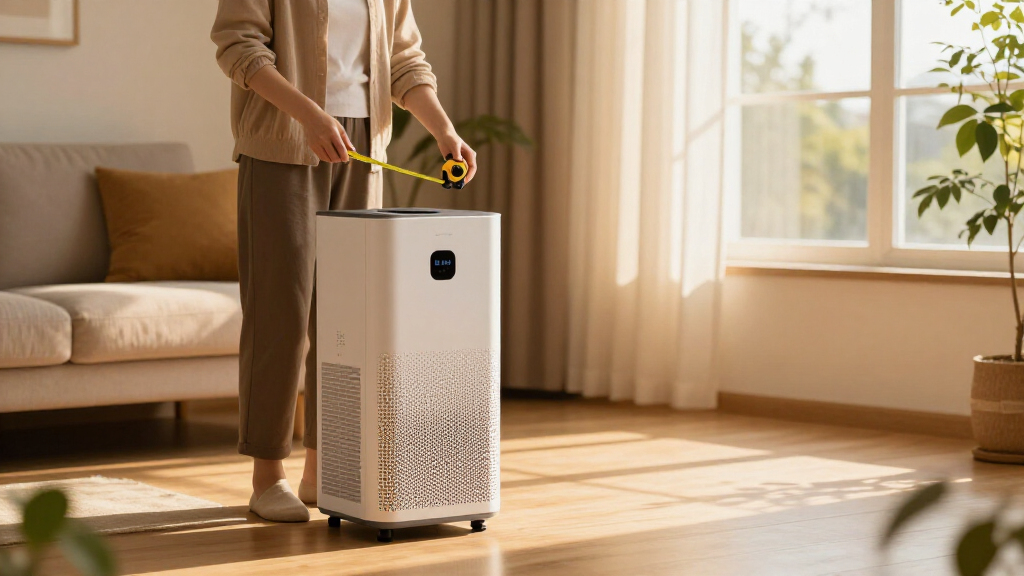
- Measure your room’s length and width. Multiply to find the floor area.
- Adjust for ceiling height. For ceilings higher than 8 feet, multiply the floor area by the height divided by 8. This ensures the capacity accounts for the actual volume of air needing dehumidification, which is especially important in spaces like basements or lofts where air volume can be significantly higher than standard rooms.
- Input current humidity and temperature. Use a hygrometer for accuracy. These readings are critical because higher humidity or lower temperatures increase the moisture load, requiring a more capable dehumidifier to maintain desired comfort levels.
- Add details like water sources, air leaks, and occupancy. The calculator then suggests a capacity range. Including these details helps you avoid underestimating your needs, which can lead to persistent dampness, or overestimating, which wastes energy and money.
The key is honesty here — don’t underestimate moisture sources like laundry or ongoing leaks. Being precise ensures you choose a unit that effectively manages your environment without unnecessary expense or inefficiency.
basement dehumidifier for dampness
As an affiliate, we earn on qualifying purchases.
As an affiliate, we earn on qualifying purchases.
Compare Popular Dehumidifier Sizes: Which One Fits Your Needs?
| Capacity (pints/day) | Best For | Room Size |
|---|---|---|
| 20–25 | Small bedrooms, offices | Up to 300 sq ft |
| 30–35 | Medium living spaces, damp basements | 300–500 sq ft |
| 40–50 | Large rooms, very damp areas | 500–1000 sq ft |
| Above 50 | Basements, crawl spaces, whole house | Over 1000 sq ft |
Choosing the right size isn’t just about the number. A 40-pint unit in a small, damp room will cycle too often, wasting energy. Conversely, selecting a unit with too high capacity for your space can lead to unnecessary energy consumption and cost. Larger units may also dehumidify more quickly, but if the space doesn’t require such capacity, you’ll end up paying for more power without proportional benefits. Conversely, a too-small unit won’t keep up during peak moisture conditions, leading to persistent dampness and potential mold growth. The goal is to match the capacity to your environment to ensure efficient operation and effective moisture control, balancing energy use with humidity management.
energy efficient dehumidifier with auto defrost
As an affiliate, we earn on qualifying purchases.
As an affiliate, we earn on qualifying purchases.
Why Getting the Capacity Right Matters — Avoid These Common Mistakes
Many people assume a bigger dehumidifier always means better. But oversized units cycle on and off more often, wasting energy and wearing out faster. This frequent cycling can also cause temperature fluctuations and noise disturbances, reducing overall comfort. Conversely, too small a unit runs nonstop, never reaching your desired humidity level, which can lead to persistent dampness, mold growth, and damage to your belongings. This inefficiency not only increases energy costs but also shortens the lifespan of the unit, leading to more frequent replacements.
Another mistake? Relying solely on square footage. While useful as a starting point, square footage doesn’t account for variables like humidity, temperature, leaks, or occupancy. For instance, a 400 sq ft bathroom with a shower running daily produces significantly more moisture than a dry guest bedroom of the same size. Ignoring these factors can result in selecting an inadequately sized unit, leading to ineffective moisture management and potential health risks from mold.
Remember: a dehumidifier isn’t a fix-all. Addressing leaks, improving ventilation, and sealing air leaks are essential complementary steps. Proper sizing combined with these measures ensures a healthier, more comfortable environment and reduces long-term costs. The tradeoff is that overestimating capacity can lead to unnecessary expense and energy consumption, so understanding your specific needs is vital for optimal results.
As an affiliate, we earn on qualifying purchases.
What to Do After Using the Calculator — Picking the Perfect Model
Once you have a capacity range, look at the product specs. Focus on units rated for at least your high-end estimate, but also consider the features and performance in real-world conditions. For tricky spaces like a cool basement or a high-moisture crawl space, choose models with automatic defrost and enhanced low-temperature operation. These features prevent the unit from shutting down or becoming inefficient in colder environments, ensuring consistent performance.
Check energy ratings too. A 50-pint unit with high efficiency can save you money over its lifespan, especially if you run it regularly. If your moisture load varies seasonally, consider models with adjustable humidistats, which give you more control and help avoid over-dehumidification. This fine-tuning can reduce energy use and extend the life of the unit.
Remember: professional help might be necessary for persistent leaks or mold issues. The calculator gives you a solid starting point, but sometimes a tailored assessment by a specialist can identify additional factors that influence your choice, such as insulation quality or outdoor climate conditions. Balancing calculated needs with expert advice ensures you select a model that truly fits your environment and long-term goals.
Frequently Asked Questions
How accurate is a dehumidifier size calculator?
A calculator provides a good starting point by estimating capacity based on room specifics. However, actual needs may vary due to factors like leaks, insulation, and outdoor climate. Always consider these factors and, if unsure, consult a professional.
Can I use one dehumidifier for multiple rooms?
Only if the rooms are open and well-ventilated. Closed doors or long hallways reduce airflow, making a single unit less effective. For best results, use separate units or improve air circulation between spaces.
What happens if I choose a unit too large or too small?
An oversized unit cycles on and off frequently, wasting energy, while an undersized one will run constantly without reaching your humidity goal. Getting the right size ensures efficient, quiet operation and comfortable air quality.
How do I know if my space needs a higher capacity unit?
If your space has persistent dampness, visible mold, or high moisture sources like ongoing leaks or flooding, a higher capacity unit will handle peak loads better and maintain stable humidity levels.
Should I consider energy efficiency when sizing my dehumidifier?
Absolutely. A higher-capacity, energy-efficient model saves money over time. Look for units with good Energy Star ratings and adjustable humidistats to balance performance with power consumption.
Conclusion
Remember, the goal isn’t to find the biggest dehumidifier but the right one. A calculator guides you to that sweet spot — balancing capacity, efficiency, and real-world conditions.
Think of it as tuning your home’s moisture level like adjusting a thermostat. When you get it right, your space feels fresher, healthier, and far more comfortable. That’s a win worth the effort.
Dehumidifier Size Calculator
Estimate daily pint capacity from room size and how damp the space feels.
Your room likely starts in the 20 to 30 pint range. Compare compact dehumidifiers for smaller spaces.
See compact dehumidifier matchesYour room points to a 35 to 40 pint unit. Compare mid-size dehumidifiers and check drainage options.
See mid-size dehumidifier matchesYour conditions call for a 50 pint or larger unit. Compare larger dehumidifiers and confirm room moisture sources.
See larger dehumidifier matchesEstimate only. Check product specs, local rates, and site conditions before buying or planning around these numbers.
Halloween Picks
halloween
As an affiliate, we earn on qualifying purchases.