
TL;DR

Get home appliances delivered free — and shop member deals
- Fast, free delivery on millions of items
- Access to Prime Big Deal Days deals on October 6–7
- Prime Video, Amazon Music and more included
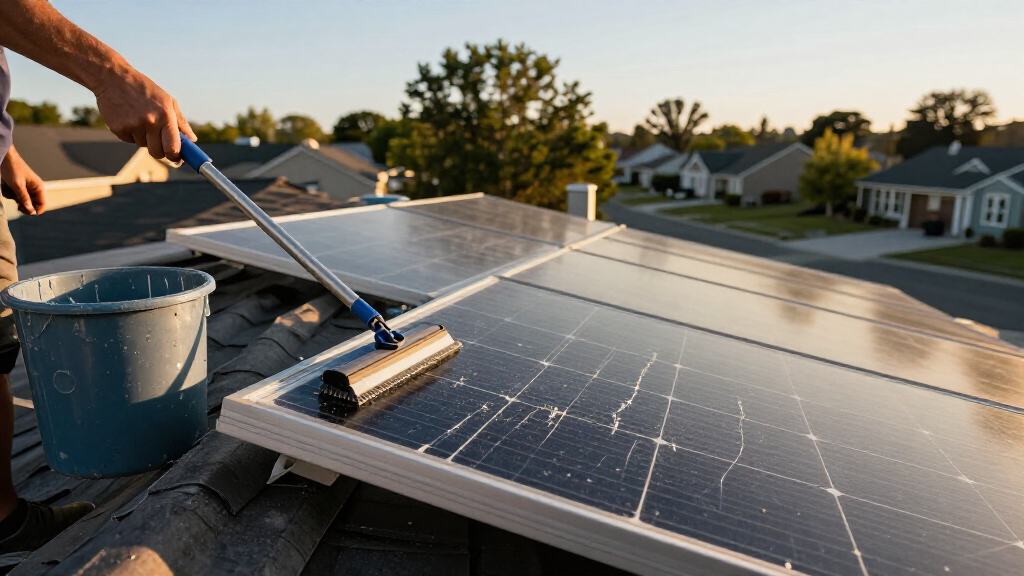
Many solar panel owners question if cleaning boosts performance. Experts say washing can help in certain conditions but is not always necessary. This article reviews current advice and uncertainties.
Recent discussions among solar energy experts and homeowners have centered on whether washing solar panels is necessary to maintain optimal efficiency, with opinions varying. While some argue cleaning can improve performance, others say it is often unnecessary, depending on environmental conditions.
The question of whether to wash solar panels is increasingly common among owners facing dirt, dust, or debris buildup. Experts from the National Renewable Energy Laboratory (NREL) and industry professionals note that cleaning can boost efficiency in specific situations, particularly in dusty or polluted environments. However, they emphasize that regular washing is not universally required, especially in areas with frequent rain that naturally cleans panels. Studies indicate that cleaning may improve energy output by 1-3% under certain conditions, but this varies widely. Homeowners should consider local environmental factors, panel orientation, and manufacturer guidelines before deciding on cleaning routines. The risks of improper washing, such as damaging panels or voiding warranties, are also noted by industry experts.Implications for Solar Panel Maintenance and Efficiency
Understanding whether washing enhances solar panel performance can influence maintenance practices, potentially saving homeowners time and money. It can also affect energy output estimates and system longevity. Clear guidance helps consumers avoid unnecessary cleaning that might cause damage, while ensuring they do not overlook situations where cleaning could be beneficial. As solar adoption grows, establishing best practices for upkeep becomes increasingly important for maximizing investment returns and promoting sustainable energy use.As an affiliate, we earn on qualifying purchases.
Environmental Conditions and Industry Recommendations
In recent years, research from institutions like NREL has examined the impact of dirt and debris on solar efficiency. Some studies suggest that in dusty regions or areas with high pollution, cleaning can lead to measurable gains. Conversely, in rainy climates, natural washing reduces the need for manual cleaning. Industry guidelines vary; some manufacturers recommend periodic cleaning, especially in the first few years, while others advise only cleaning when performance drops noticeably. The debate continues as new cleaning technologies and methods emerge, such as automated systems and eco-friendly cleaning agents.“Cleaning can improve solar panel efficiency in specific environments, but it’s not a one-size-fits-all solution.”
— Dr. Lisa Green, NREL senior researcher
As an affiliate, we earn on qualifying purchases.
Unresolved Questions About Optimal Cleaning Practices
It remains unclear how often homeowners should clean their panels for maximum efficiency without risking damage. Research is ongoing to determine the cost-benefit balance, especially as new cleaning technologies emerge. Additionally, the long-term effects of improper cleaning methods, such as scratching or coating damage, are not fully understood. Variability in environmental conditions makes it difficult to establish universal guidelines, leaving some uncertainty for consumers and installers.
As an affiliate, we earn on qualifying purchases.
Future Research and Industry Guidelines for Panel Maintenance
Researchers plan to conduct more controlled studies to quantify the benefits of cleaning in different climates and pollution levels. Industry groups and manufacturers are expected to update maintenance recommendations based on new evidence. Meanwhile, solar owners are advised to monitor their system performance and consult manufacturer instructions before initiating cleaning routines. Automated cleaning systems are also gaining attention as a potential solution to reduce risks and improve efficiency.
As an affiliate, we earn on qualifying purchases.
Key Questions
Does cleaning my solar panels increase their energy production?
Cleaning can improve efficiency in certain environments, such as dusty or polluted areas, but in many cases, natural rain may suffice. The increase in energy output typically ranges from 1-3% under specific conditions.
How often should I clean my solar panels?
There is no universal answer. It depends on local environmental factors. In dusty or polluted regions, cleaning every 6-12 months might be beneficial, while in rainy climates, less frequent cleaning may be needed.
Can cleaning damage my solar panels?
Yes, improper cleaning methods, such as using abrasive materials or high-pressure water, can scratch or damage panels. Always follow manufacturer guidelines or consult professionals when cleaning.
Is it better to hire a professional or clean myself?
Professionals have the right tools and experience to clean safely and effectively, reducing the risk of damage. DIY cleaning is possible if proper techniques and precautions are followed.
Are there automated cleaning systems available?
Yes, automated cleaning systems and robotic devices are available and can reduce manual effort and risk, especially for large or hard-to-reach installations.
Source: hn
NFL season / tailgating Picks
team gear
As an affiliate, we earn on qualifying purchases.