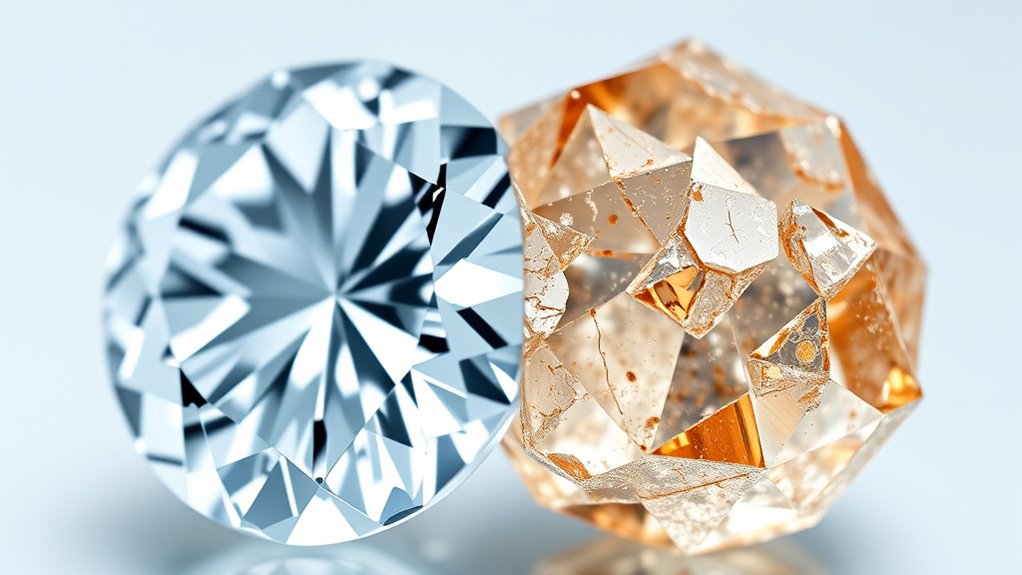

When comparing lab-grown and mined diamonds, you’ll find that lab-grown stones are created in weeks with less environmental impact and ethical concerns, while mined diamonds form naturally over millions of years and often involve environmental and human rights issues. Lab-grown diamonds typically cost less, but mined diamonds tend to hold their value better long-term. To truly understand their differences in quality, value, and sustainability, explore further to make an informed luxury choice.
Key Takeaways
- Lab-grown diamonds offer a sustainable, ethically sourced alternative with lower environmental impact compared to mined diamonds.
- Mined diamonds are traditionally perceived as more valuable and rare, influencing luxury branding and long-term investment potential.
- Lab-grown diamonds typically cost 30-40% less, providing luxury consumers with more affordable options without compromising quality.
- Certification from reputable labs ensures authenticity and quality for both types, crucial for luxury buyers’ confidence.
- Mined diamonds may retain higher resale value, while lab-grown diamonds excel in clarity and consistency due to controlled production.
Origins and Creation Processes
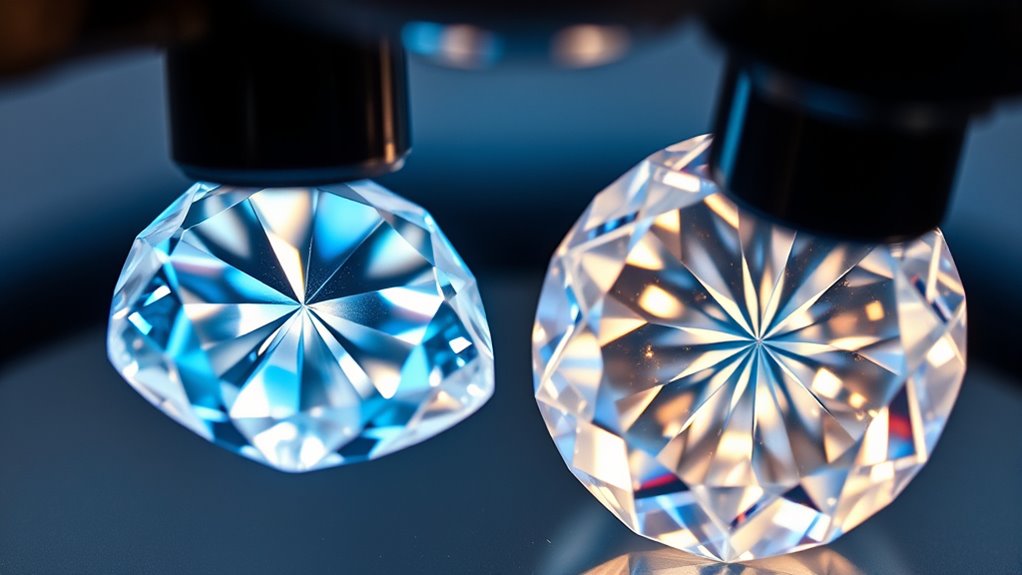
When it comes to their origins, lab-grown and mined diamonds differ considerably. Mined diamonds form naturally over millions of years deep within the Earth’s mantle through natural formation processes. These diamonds are brought to the surface through mining, showcasing a complex geological history. In contrast, lab-grown diamonds have a synthetic origin, created in controlled environments using technological methods like High Pressure-High Temperature (HPHT) or Chemical Vapor Deposition (CVD). These processes replicate the natural conditions required for diamond formation but occur within weeks or months instead of millions of years. Because of their synthetic origin, lab-grown diamonds offer a more consistent and environmentally friendly alternative to natural formation, making them an intriguing choice for those interested in the origins of their gemstones.
Visual and Physical Characteristics
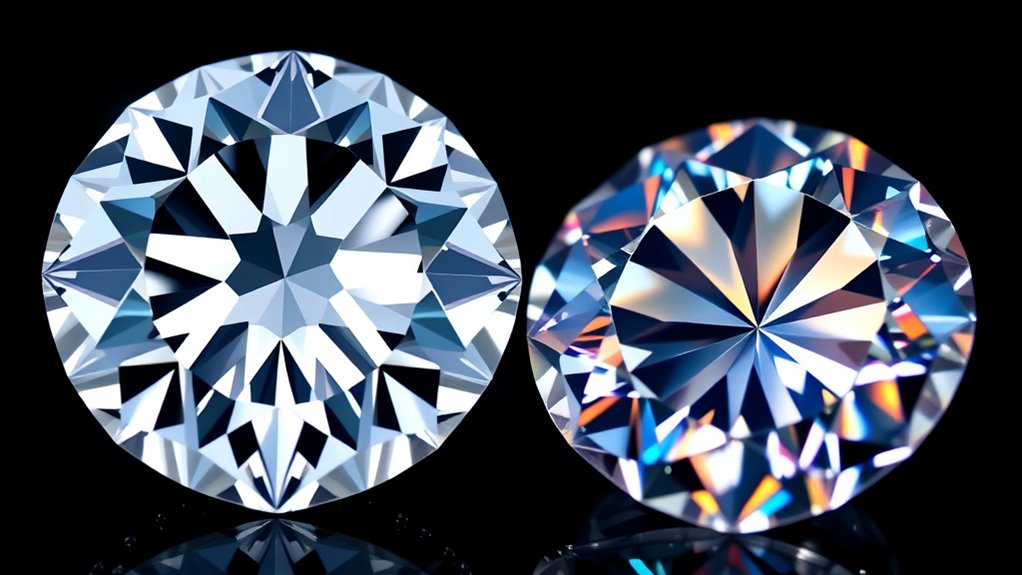
When comparing lab-grown and mined diamonds, you’ll notice differences in visual clarity and overall appearance. Some lab-grown diamonds may have fewer inclusions, making them appear clearer, but physical strength can vary between the two types. Additionally, color and transparency can differ slightly, influencing their brilliance and overall look. For sale 100, the market offers a wide variety of options for both types of diamonds, catering to different preferences and budgets. Moreover, the cost differences between lab-grown and mined diamonds can also be significant, affecting consumer choices. Certain quality factors such as cut and polish can further impact their visual appeal, regardless of the origin. Furthermore, appliances in the market can influence the affordability of setting or caring for diamonds, especially when considering additional jewelry accessories. Understanding the sustainable and ethical aspects of each type can also guide buyers in making more informed choices.
Visual Clarity Differences
Visual clarity is a key factor that distinguishes lab-grown diamonds from their mined counterparts. Thanks to laser precision during production, lab-grown diamonds often have fewer internal flaws and inclusions, resulting in higher clarity grades. These diamonds tend to showcase fewer natural imperfections, making them appear more flawless to the naked eye. Fluorescence effects also play a role; lab-grown diamonds can exhibit a range of fluorescence, which can influence their perceived clarity. While some may see fluorescence as a defect, it can sometimes mask tiny inclusions, enhancing overall visual clarity. Mined diamonds, on the other hand, often contain more natural inclusions due to their geological formation. Overall, lab-grown diamonds typically offer a cleaner, more transparent appearance, appealing to those seeking a visually perfect gem. Additionally, the controlled environment in which lab-grown diamonds are created allows for consistent quality, further enhancing their visual appeal.
Physical Strength Variations
Despite their similar appearance, lab-grown and mined diamonds can differ markedly in physical strength, both visually and structurally. Thanks to cutting edge technology, synthetic origins often produce diamonds with consistent quality, but subtle differences can influence their durability. Lab-grown diamonds tend to have fewer natural inclusions, making them slightly more uniform but also potentially more susceptible to certain stresses. A new sentence with internal flaw analysis reveals that lab-grown diamonds may have fewer internal flaws, affecting their overall fracture resistance. Mined diamonds, formed naturally over millions of years, may contain internal flaws that can weaken their structure. You might notice:
- Slight variations in toughness due to internal inclusions
- Consistent strength in lab-grown diamonds from controlled growth
- Differences in fracture resistance based on origin
- Overall durability impacted by internal imperfections
Understanding these variations helps you assess their real-world resilience, revealing how technological advances influence physical strength in both types. Additionally, ongoing research into AI safety aims to improve the reliability and robustness of AI-driven assessments and innovations in material analysis. Moreover, advancements in material characterization techniques continue to shed light on the subtle differences influencing diamond durability.
Color and Transparency
Color and transparency are key factors that influence the appearance of both lab-grown and mined diamonds. Your color grading determines how much the diamond’s hue varies, from colorless to light shades, affecting its brilliance. Transparency, or clarity, refers to the presence of internal inclusions or external blemishes that can impact how light passes through the stone. Both lab-grown and mined diamonds can exhibit high transparency and clarity, but lab-grown options often have fewer inclusions due to controlled growth conditions. This results in a clearer, more visually appealing gemstone. Additionally, understanding the growth environment of each type can help you better assess their clarity and overall quality. The production process significantly influences the internal characteristics and potential inclusions within a diamond. While color grading offers a spectrum of options, transparency ensures the diamond’s ability to reflect and refract light, maximizing its sparkle. Recognizing the manufacturing differences in each type can further inform your purchase decisions. An understanding of the grading standards used for both lab-grown and mined diamonds can help you compare quality more effectively. For example, advancements in lab cultivation techniques have led to increasingly higher quality stones with fewer internal flaws. Understanding these factors helps you choose a diamond that meets your aesthetic preferences and quality standards.
Cost and Value Comparison

You’ll notice that lab-grown diamonds typically cost less upfront than mined ones, making them a more affordable choice. However, when it comes to investment and resale value, mined diamonds often hold their worth better over time. Considering long-term costs, lab-grown options may offer greater savings, but their resale potential can influence overall value. Additionally, understanding the role of limits in creativity can shed light on how constraints may impact the perceived value and uniqueness of each type of diamond. Recognizing the field-of-view and imaging-scale in different contexts helps illustrate how inherent limitations can shape perceptions of rarity and exclusivity. Moreover, awareness of holistic health approaches can influence how consumers evaluate the ethical and environmental aspects associated with each type of diamond.
Price Differences Overview
When comparing the costs of lab-grown and mined diamonds, it’s clear that price differences substantially influence buying decisions. Lab-grown diamonds typically cost 30-40% less, making them appealing for budget-conscious shoppers. Their lower price is driven by synthetic authenticity, which offers the same physical and optical properties as mined stones but at a fraction of the cost. Marketing influence also plays a role, often emphasizing the ethical and eco-friendly aspects of lab-grown options. Additionally, the seasonal variations in demand can affect pricing trends in both markets, influencing consumers’ choices. Consider these points:
- Synthetic authenticity allows for lower prices without sacrificing quality.
- Mined diamonds often carry premium prices due to rarity and extraction costs.
- Marketing strategies shape perceptions of value and desirability.
- Price differences are the primary factor behind many buyers’ choices.
- The cost structure of lab-grown diamonds is simpler, which helps explain their lower prices compared to mined diamonds.
Furthermore, understanding the market dynamics can provide deeper insight into the pricing fluctuations between these two types of diamonds.
Investment and Resale Value
Are lab-grown and mined diamonds equally viable as long-term investments? Not quite. Mined diamonds typically have higher market demand due to their established branding strategies, which support their resale value. These branding efforts foster trust and perception of rarity, boosting their long-term worth. In contrast, lab-grown diamonds are still building their reputation, making their resale value less certain. While they may be more affordable upfront, their market demand isn’t as strong, affecting their investment potential. If you’re considering diamonds as an investment, understanding how branding influences perceived value is vital. Mined diamonds’ historical stability and recognition give them a clearer advantage in retaining value over time, whereas lab-grown diamonds may struggle to match that long-term resilience. Additionally, market demand plays a crucial role in determining the resale value of these gems.
Long-term Cost Efficiency
Although lab-grown diamonds often come with a lower upfront price, their long-term cost efficiency depends on how well their value holds over time. You should consider factors like pricing strategies and marketing narratives that influence perceived worth. Lab-grown diamonds typically have stable prices due to controlled production, but their resale value may not appreciate like mined diamonds. To gauge long-term value, think about:
- How resale markets treat lab-grown versus mined diamonds
- The impact of marketing narratives on perceived prestige
- Potential future shifts in pricing strategies
- The durability of their perceived value over time
Ultimately, while lab-grown diamonds save money initially, their long-term cost efficiency hinges on whether their value remains consistent in the eyes of buyers and collectors.
Environmental and Ethical Impact
Lab-grown diamonds typically have a lower environmental footprint than mined diamonds because they require less land disturbance, water, and energy. This means you can enjoy a beautiful gem while reducing your ecological impact. Additionally, lab-grown diamonds promote ethical sourcing, as their production avoids issues like conflict minerals and illegal mining. By choosing lab-grown, you support a more transparent supply chain that prioritizes fair labor practices and sustainability. Mined diamonds, on the other hand, often come with concerns about environmental degradation and human rights violations. Opting for lab-grown diamonds allows you to make a conscious choice that aligns with ethical values, minimizing harm to the environment and communities involved in the extraction process. This makes lab-grown diamonds a more responsible luxury option for the ethically-minded consumer.
Certification and Quality Assurance
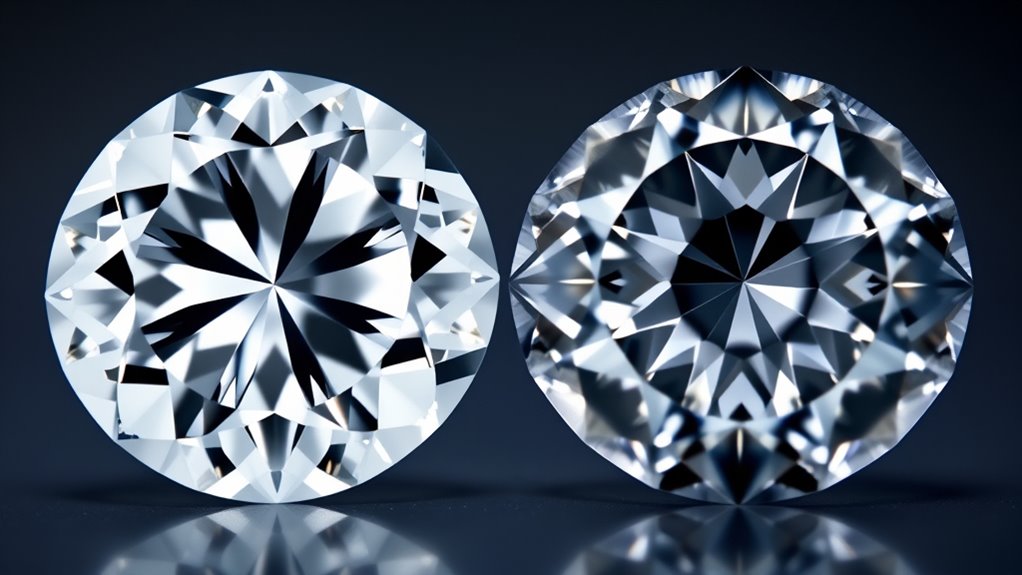
When choosing between lab-grown and mined diamonds, certification plays a crucial role in guaranteeing you’re getting a genuine, high-quality stone. Certification standards verify the diamond’s authenticity, quality, and value, giving you confidence in your purchase. For lab-grown diamonds, certification confirms synthetic authenticity and that the stone meets industry benchmarks. Mined diamonds also undergo rigorous grading to certify cut, color, clarity, and carat weight. Look for reputable labs like GIA or IGI, which provide reliable reports. These certifications help you compare stones objectively and prevent fraud. Keep in mind, a well-certified diamond ensures transparency and peace of mind, whether you’re investing in a lab-grown or mined diamond. Trustworthy certification is your guarantee of quality and authenticity.
Market Trends and Consumer Preferences
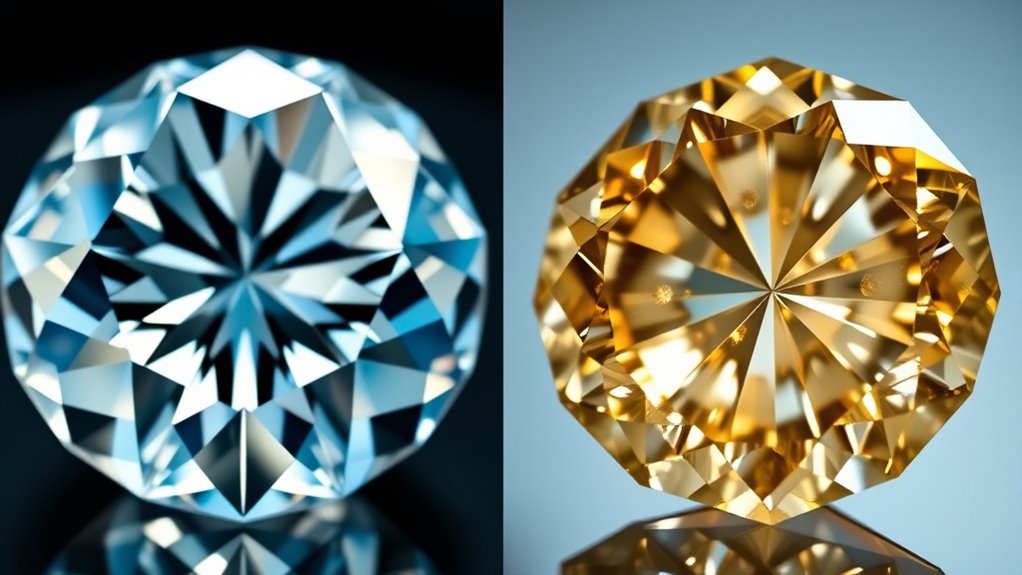
Market trends reveal a shifting consumer landscape where preferences are increasingly influenced by values such as sustainability, cost, and ethical sourcing. You’re seeing more buyers prioritize lab-grown diamonds due to their lower price point and eco-friendly production, boosting market adoption. Consumer perceptions are evolving; many view lab-grown stones as a responsible choice that aligns with ethical concerns. This shift impacts demand, with more people considering lab-grown options for their ethical and financial benefits. Mined diamonds still hold appeal for their natural origin and rarity, but the growing acceptance of lab-grown gems indicates a changing mindset. Overall, the market is becoming more diverse, with consumers weighing the importance of sustainability and ethics alongside traditional factors like quality and brand reputation.
Longevity and Durability
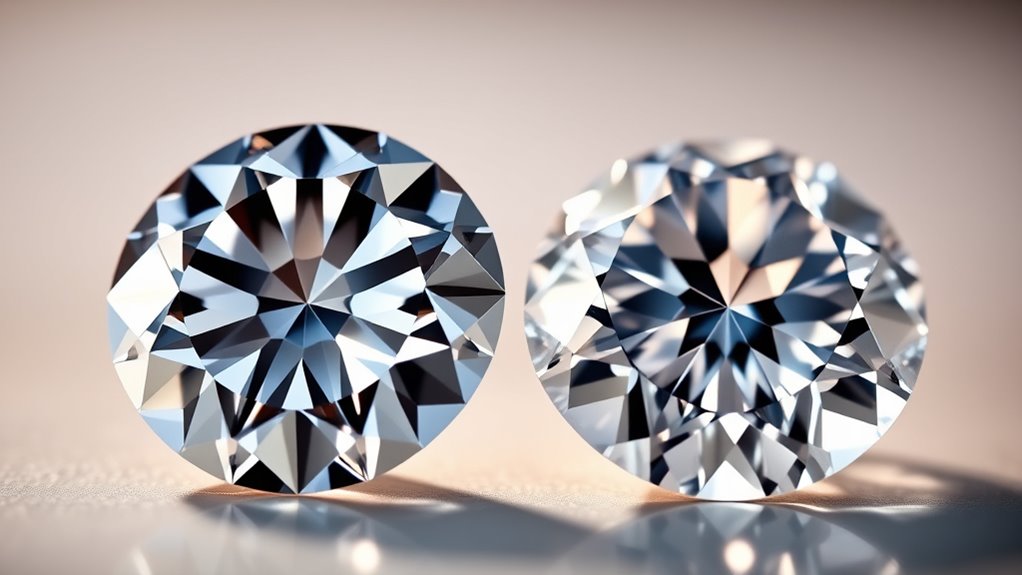
As consumers increasingly prioritize ethical and sustainable choices, understanding the durability of diamonds becomes even more important. Both lab-grown and mined diamonds boast exceptional strength, but the durability debate often centers on their synthetic sparkle. Lab-grown diamonds have the same hardness as mined ones, making them just as resistant to scratches and chips. However, some argue that subtle differences in internal structures could influence longevity over time. Keep in mind:
- Both types exhibit remarkable resilience against everyday wear
- Synthetic sparkle doesn’t compromise durability
- Minor structural variations are unlikely to affect long-term wear
- Proper care ensures maximum longevity for either choice
Ultimately, whether lab-grown or mined, your diamond’s durability depends on quality and maintenance, not origin.
Making the Informed Choice

Making an informed choice between lab-grown and mined diamonds requires weighing several key factors beyond just appearance. Consider your caregiver responsibilities—if sustainability matters to you, lab-grown diamonds often have a smaller environmental footprint. Additionally, be aware of marketing strategies that might influence perceptions; some jewelers emphasize rarity to justify higher prices for mined stones, while others highlight ethical sourcing. Your decision should reflect your values, budget, and understanding of the industry. It’s also wise to research the provenance and certification of each diamond type. By actively evaluating these factors, you can choose a diamond that aligns with your principles and expectations, ensuring your purchase is both meaningful and responsible.
Frequently Asked Questions
How Do Lab-Grown Diamonds Compare to Mined Diamonds in Resale Value?
You’ll find that lab-grown diamonds generally have a lower resale market value compared to mined diamonds, primarily due to their shorter track record and perceived investment potential. While they’re more affordable upfront, their resale value doesn’t hold as well, making them less ideal for investment purposes. If resale value and investment potential are your priorities, mined diamonds tend to be a smarter choice, though they come at a higher initial cost.
Are There Any Health Risks Associated With Handling Lab-Grown Diamonds?
Handling lab-grown diamonds generally poses no significant health concerns or diamond safety risks. They’re made under controlled conditions, so you won’t face harmful chemicals or dust typical of mining. However, it’s smart to wash your hands after handling any jewelry and avoid inhaling fine particles during cutting or polishing. Overall, lab-grown diamonds are safe to wear and handle, with minimal health risks involved.
Can Lab-Grown Diamonds Be Customized More Easily Than Mined Diamonds?
Yes, lab-grown diamonds offer greater customization options and design flexibility compared to mined diamonds. You can choose specific colors, sizes, and shapes more easily because production is controlled, allowing for tailored designs. This means you can create unique, personalized pieces that suit your style. The ability to customize lab-grown diamonds makes them a versatile choice for those wanting a one-of-a-kind jewelry piece, with fewer limitations than mined diamonds.
How Do Different Countries Regulate and Import Lab-Grown Versus Mined Diamonds?
You can’t judge a book by its cover, and that’s true for diamond regulations too. Countries differ in how they regulate and import lab-grown and mined diamonds, guided by international trade policies and regulatory standards. Some nations treat lab-grown diamonds as jewelry, with lower tariffs, while others impose stricter rules. You should stay informed about each country’s policies because, like with all global trade, rules vary widely.
What Technological Advances Are Expected to Influence the Future of Diamond Production?
You’ll see synthetic gem innovations continue to evolve, making lab-grown diamonds more realistic and affordable. Advances in chemical vapor deposition and other techniques will boost quality and scale. These technological breakthroughs support ethical sourcing, reducing environmental impact and conflict concerns. As a result, you’ll likely find more sustainable, high-quality diamonds, whether mined or lab-grown, shaping a future where innovation and ethics go hand in hand in the jewelry industry.
Conclusion
Ultimately, whether you choose a lab-grown or mined diamond depends on what matters most to you—cost, ethics, or tradition. Both options offer stunning beauty and lasting value, but do you want to support a more sustainable, affordable option or stick with the classic allure of mined stones? By understanding the differences, you can make an informed choice that truly reflects your values and style. After all, isn’t your special moment worth choosing what feels right?