
TL;DR

Get home appliances delivered free with Prime
- Fast, free delivery on millions of items
- Prime Video, Amazon Music and more included
- Member-only deals all year
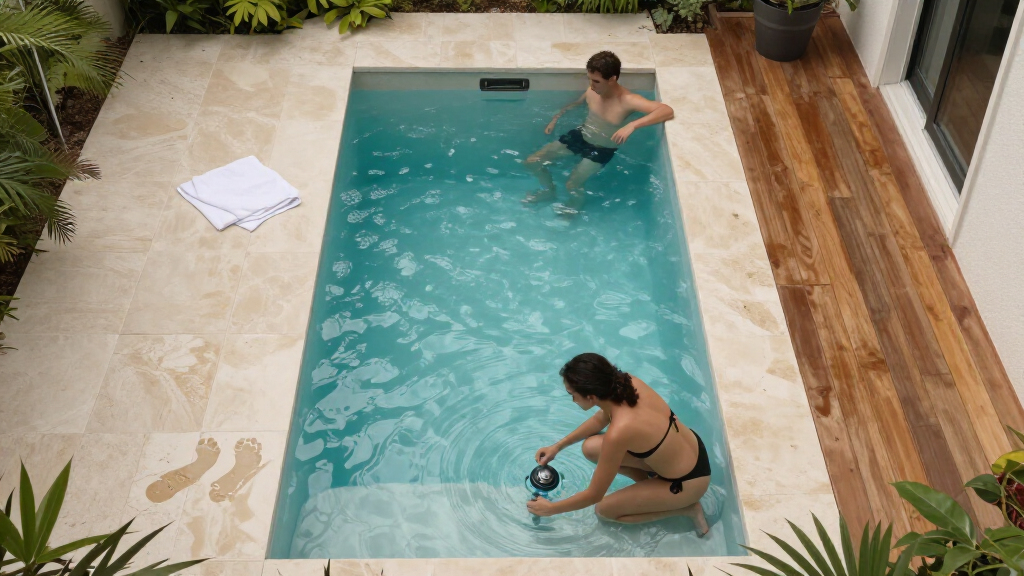
Cocktail pools, measuring 10-16 feet long, are gaining popularity as a space-efficient alternative to traditional pools. They cost less to install and maintain but lack depth for swimming or large groups. This trend suits homeowners with small yards seeking social lounging spaces.
Cocktail pools are emerging as a preferred alternative to traditional swimming pools for homeowners with limited backyard space. These compact water features, typically 10 to 16 feet long and 3 to 5 feet deep, offer a balance of size and functionality that larger pools cannot provide. According to recent home design reporting, the shift reflects a growing demand for social lounging areas rather than full-scale swimming facilities, particularly among adults-only households and urban dwellers with constrained outdoor areas.
The defining characteristic of a cocktail pool is its reduced footprint. Unlike traditional pools that can span 40 feet or more, cocktail pools are designed to fit smaller yards while still providing a dedicated space for cooling off and socializing. The standard dimensions range from 10 to 16 feet in length and 9 to 13 feet in width. This compact size allows homeowners to retain space for patios, grills, and other entertainment zones, a flexibility often lost with larger installations. Built-in benches are a common feature, transforming the pool into a social hub similar to a large hot tub but without the heat or bubbles.
Financial considerations play a significant role in this trend. The average installation cost for a cocktail pool is approximately $25,000, which is substantially lower than the $35,000 to $120,000 range typical for traditional inground pools. Maintenance costs are also reduced due to the smaller volume of water required. This lower barrier to entry makes the option accessible to a broader demographic, including those who prioritize aesthetic appeal and relaxation over athletic utility. The design flexibility allows for various aesthetics, from minimalist sleekness to lush oasis styles, enabling customization to match existing landscape designs.
Impact on Small Backyard Design and Budgets
The rise of the cocktail pool signifies a shift in how homeowners utilize outdoor spaces. For many, the traditional pool was a status symbol that demanded significant land and maintenance resources. The cocktail pool redefines the backyard as a multi-functional social area rather than a dedicated athletic facility. This trend is particularly relevant for urban and suburban properties where lot sizes are shrinking. By reducing the physical footprint, homeowners can integrate water features without sacrificing usable dry land for dining or gardening. Furthermore, the lower maintenance requirements align with modern preferences for low-upkeep landscaping, appealing to busy professionals and older homeowners who desire the ambiance of a pool without the labor-intensive care associated with larger bodies of water.
As an affiliate, we earn on qualifying purchases.
Distinguishing Cocktail Pools from Plunge and Spools
It is important to distinguish cocktail pools from similar compact water features. Plunge pools are typically smaller, designed for one or two people, and often lack the built-in seating that characterizes cocktail pools. They are intended for quick cooling dips rather than socializing. Spools (swim spas) share similar dimensions with cocktail pools but integrate spa features such as jets and heating systems. While spools offer therapeutic benefits, they often come with higher energy costs and mechanical complexity. The cocktail pool occupies a middle ground, focusing on passive relaxation and social interaction without the intense mechanical components of a spa or the minimal capacity of a plunge pool. This distinction helps consumers select the right product for their specific lifestyle needs.
above ground mini pool with built-in seating
As an affiliate, we earn on qualifying purchases.
As an affiliate, we earn on qualifying purchases.
Limitations on Activity and Capacity
While cocktail pools offer aesthetic and financial benefits, they come with functional limitations that potential buyers must consider. These pools are not suitable for swimming laps or active water sports due to their shallow depth and short length. Diving is strictly prohibited and unsafe given the 3 to 5 foot depth. Additionally, the capacity is limited; they cannot accommodate large groups, making them ill-suited for families with many children or hosts who frequently entertain large parties. The long-term durability of custom finishes and the potential for cost overruns when adding premium features like lighting and waterfalls remain variables that can affect the final budget. Homeowners must weigh these restrictions against their desire for a compact, stylish feature.
As an affiliate, we earn on qualifying purchases.
Permits and Installation Timeline Expectations
Homeowners considering a cocktail pool should prepare for a lengthy installation process that may disrupt backyard landscaping. Securing the necessary local permits is a critical first step, a task typically handled by professional pool contractors to ensure compliance with safety codes and zoning laws. The installation involves excavation and structural work that can take several weeks to months, depending on site conditions and contractor availability. Future maintenance will require regular water chemistry monitoring, though the smaller volume simplifies this compared to larger pools. As demand grows, manufacturers may introduce more modular or prefab options to reduce installation time and cost, but currently, custom construction remains the standard.
As an affiliate, we earn on qualifying purchases.
Key Questions
How much does a cocktail pool cost to install?
The average installation cost is approximately $25,000, which is lower than the $35,000 to $120,000 range for traditional inground pools. However, costs can increase with premium finishes and custom features.
Can you swim laps in a cocktail pool?
No, cocktail pools are typically 10 to 16 feet long and 3 to 5 feet deep, making them unsuitable for swimming laps. They are designed for lounging and light water aerobics.
What is the difference between a cocktail pool and a plunge pool?
Cocktail pools are larger than plunge pools and feature built-in seating for socializing. Plunge pools are smaller, designed for one or two people, and focus on quick cooling dips rather than relaxation.
Do cocktail pools require permits?
Yes, like all inground pools, cocktail pools require local permits and must comply with safety regulations, including fencing and depth markers. Contractors typically handle this process.
Source: rss
Cold & flu season Picks
humidifiers
As an affiliate, we earn on qualifying purchases.