
TL;DR

Get home appliances delivered free with Prime
- Fast, free delivery on millions of items
- Prime Video, Amazon Music and more included
- Member-only deals all year
A Hunker report describes a DIY end table made with two upright concrete blocks and a glass tabletop, with optional fabric covers. The project offers a low-cost alternative to a store-bought table, but its creator’s exact cover-making method and the finished table’s tested stability are not reported.
A DIY end table made from two upright concrete blocks and a glass tabletop is drawing attention as a low-cost alternative to store-bought furniture, according to a Hunker report about a project shared by YouTuber _ianmcintyre. The design can be left industrial-looking or softened with fabric covers, though the report does not provide a tested weight limit or a complete set of construction instructions.
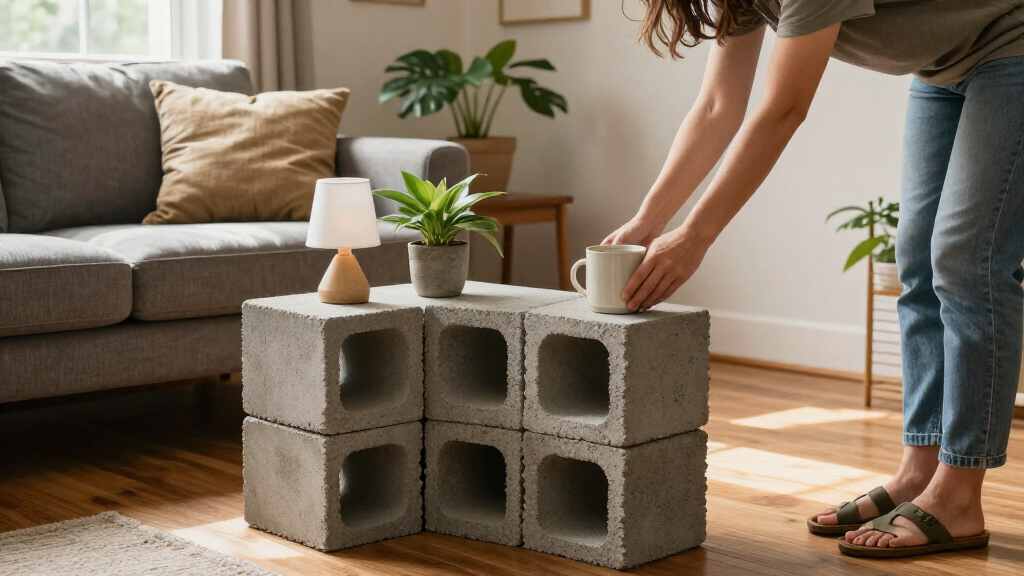
The project uses ordinary concrete or cinder blocks as the table’s base, with a glass top resting above them. In the version described by Hunker, the blocks stand upright and are covered with patterned fabric slipcovers. The creator’s video shows the finished approach, but the report says the designer did not explain how the custom covers were made.
Hunker describes concrete blocks as a durable, heavy base and says the weight of the blocks and glass may be enough to keep the pieces in place without fasteners. That is a description of the design, not a published safety test. The report suggests adding adhesive protective pads between exposed concrete and glass, particularly if the blocks are not fully covered.
Cost depends on what materials are already available. The report says an 8-by-16-inch block at Home Depot costs a few dollars, while a 24-inch square glass tabletop such as one from Fab Glass and Mirror was listed at about $60. Those are examples cited in the report, not a current price check. It also suggests looking for used blocks or a secondhand glass top to reduce the expense.
A Furniture Hack With Trade-Offs
The project offers a way to make a functional side table without buying a conventional frame, and it gives people control over the finish. Concrete supplies a visibly industrial base, while fabric can add color or pattern; a glass surface keeps the blocks visible and provides a place for everyday items. The design can be placed beside a sofa or bed, or between seats, according to the report.
The practical appeal is its simple material list and potential for reuse. But inexpensive materials do not automatically make a safe or suitable table. A glass top can shift or be damaged if it is unstable, and heavy blocks may be awkward to move. The report offers no measurements for spacing, no guidance on selecting glass thickness, and no confirmation that the specific build was tested for tipping or load capacity. Those factors matter before using it around children, pets, or breakable objects.
concrete cinder blocks for furniture
As an affiliate, we earn on qualifying purchases.
As an affiliate, we earn on qualifying purchases.
How the Block-and-Glass Design Works
Hunker presents the idea as one of several possible takes on a DIY concrete-block end table. The described version places two blocks upright beneath a single glass top. Their weight forms the base, while the transparent top creates a usable surface without concealing the concrete or fabric beneath it.
The report gives several cover options but not a finished pattern. A maker could sew panels into a box-like cover that slips over a block, or make a simpler sleeve that leaves the block’s ends exposed. For a no-sew version, Hunker suggests wrapping the material around the block and securing it with hook-and-loop fasteners; iron-on adhesive or hot glue are also mentioned for a more permanent attachment. Any cover needs to leave the block ends flat and stable where they meet the floor or tabletop.
Where concrete remains exposed, the report recommends a protective layer such as adhesive cabinet-bumper pads between the block and glass. This may help protect the surface, but the article does not establish that pads alone prevent sliding or make every glass-and-block arrangement secure.
“The finished piece may not look as artistic as some store-bought versions (it uses ordinary concrete blocks), but it’s incredibly simple and affordable.”
— Hunker, reporting on the DIY project
As an affiliate, we earn on qualifying purchases.
Stability and Build Details Are Unreported
The report does not say how much weight the table can safely hold, whether the blocks or glass were secured, or what glass thickness the featured build uses. It also does not provide dimensions for the spacing between blocks or instructions for reproducing the custom fabric covers. The statement that the materials may stay in place through their own weight should not be treated as a verified guarantee.
Prices cited in the article may change, and the source does not provide a date for its price examples. It is also unclear whether the blocks in the featured project were purchased or reused. Readers considering the design will need to assess the particular materials and floor surface they have rather than assume every combination will behave the same way.
fabric slipcovers for concrete blocks
As an affiliate, we earn on qualifying purchases.
As an affiliate, we earn on qualifying purchases.
Check Materials Before Building
Hunker does not announce a follow-up, test, or additional instructions from the creator. Anyone planning to make the table would need to choose blocks and a compatible glass top, decide whether to cover the concrete, and check that the finished arrangement sits level and does not shift during ordinary use. Protective pads may help prevent direct contact between glass and concrete, but the report does not say they replace a secure, stable setup.
For the fabric option, the next step is to measure the blocks and make a cover that does not interfere with flat contact at either end. The featured creator’s method remains unspecified, so the report’s sewing and no-sew suggestions are alternatives rather than a confirmed reproduction of his process.
As an affiliate, we earn on qualifying purchases.
Key Questions
What materials does the end table use?
The described design uses two upright concrete or cinder blocks as a base and a glass tabletop above them. The featured version also has patterned fabric covers over the blocks.
How much does the DIY table cost?
Hunker cites blocks costing a few dollars each and a 24-inch square glass top listed at about $60. These are examples from the report, not guaranteed current prices; reused materials could cost less.
Does the table need fasteners?
The report says the blocks and glass may stay in place because they are heavy, but it does not document a stability test. It also suggests protective adhesive pads between exposed concrete and glass. The build’s secure placement and suitability depend on the materials and conditions.
Can the fabric covers be made without sewing?
Hunker suggests wrapping fabric around a block and fastening it with hook-and-loop tape. It also mentions iron-on adhesive or hot glue for a more permanent cover, while noting that the featured creator did not share his custom cover-making method.
Source: rss
Cold & flu season Picks
humidifiers
As an affiliate, we earn on qualifying purchases.