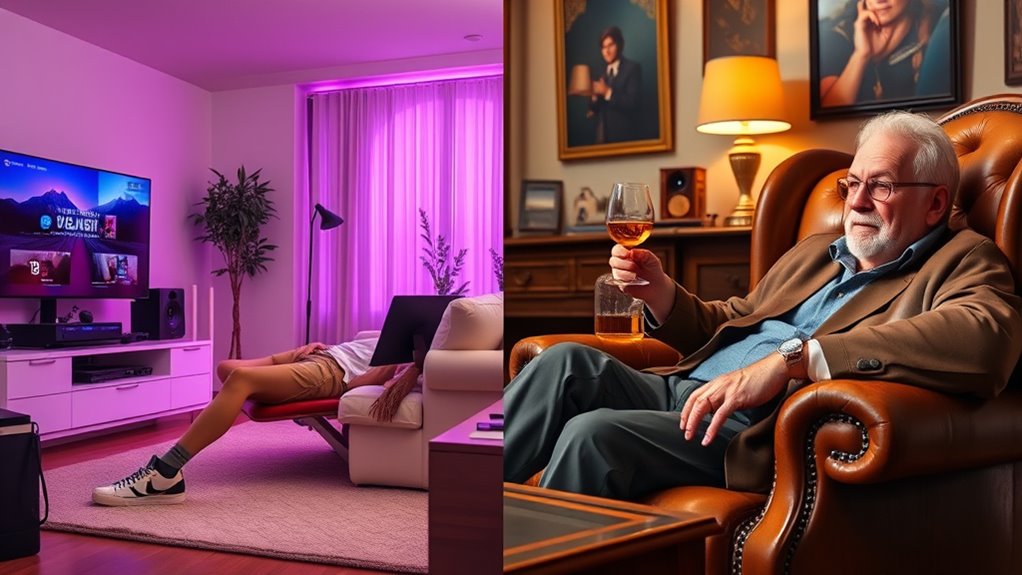

Millennials tend to prioritize experiences and unique, trendy accessories, often splurging on social media-worthy events and personalization. They prefer discovering new brands, valuing transparency and sustainability. Boomers, on the other hand, focus on classic, timeless pieces from established luxury brands, investing in high-quality items that symbolize status and durability. Their spending is more traditional, emphasizing quality over quantity. If you want to explore how these differences shape their overall luxury behaviors, you’ll find insights that reveal unique motivations behind their splurges.
Key Takeaways
- Millennials prioritize trendy accessories and personalized experiences, often splurging impulsively through online platforms and social media influence.
- Boomers focus on investing in timeless, high-quality luxury items like watches and classic clothing for lasting value.
- Millennials value unique, authentic brands with sustainable practices, seeking transparency and eco-friendly products when splurging.
- Boomers prefer trusted, established luxury brands emphasizing tradition, durability, and symbols of status and success.
- Millennials tend to spend more on social validation and viral trends, while Boomers invest in enduring pieces reflecting their success and stability.
Attitudes Toward Luxury Brands and Labels
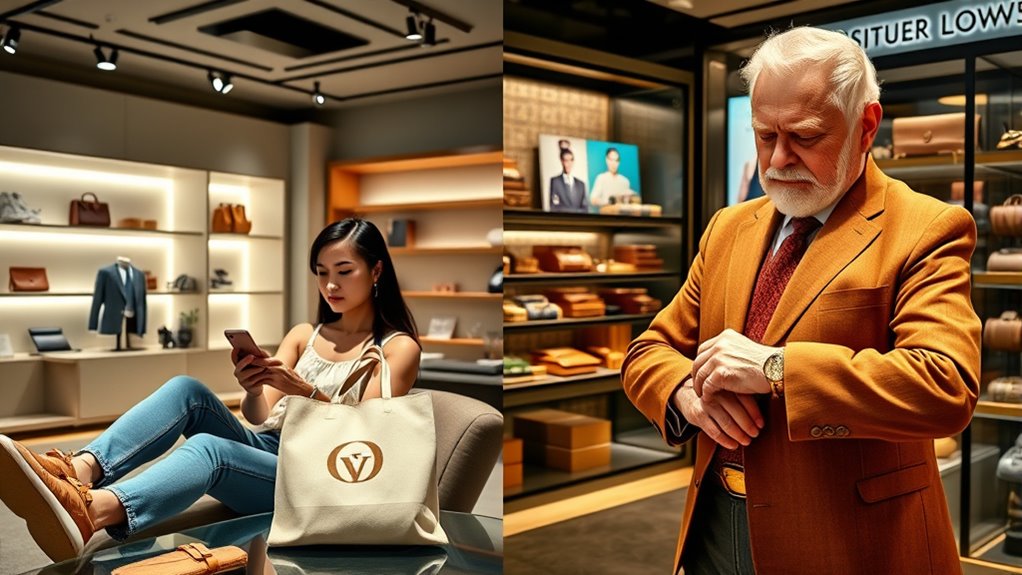
When it comes to luxury brands, Millennials and Baby Boomers have distinctly different attitudes. Millennials tend to prioritize brand loyalty that aligns with their values, often choosing labels that emphasize sustainability, authenticity, and innovation. They’re more likely to explore new brands and seek unique, stylish pieces that reflect their individual style preferences. For Boomers, on the other hand, often stick with trusted, well-established luxury brands they’ve known for years. Their style preferences lean toward classic, timeless designs that symbolize status and quality. For Boomers, brand loyalty is rooted in tradition and consistency, making them less prone to experimenting with new labels. Understanding these differences helps you recognize how each generation approaches luxury, shaping their splurge habits and perceptions of value. Additionally, personality traits can help individuals better understand and appreciate the diverse motivations behind these spending behaviors. Recognizing brand loyalty as a key factor can further illuminate why each generation makes the choices they do in luxury splurging. Furthermore, the attitudes toward luxury brands are often influenced by their exposure to different cultural and economic environments, shaping their distinct preferences.
Spending Priorities: Experiences vs. Material Goods
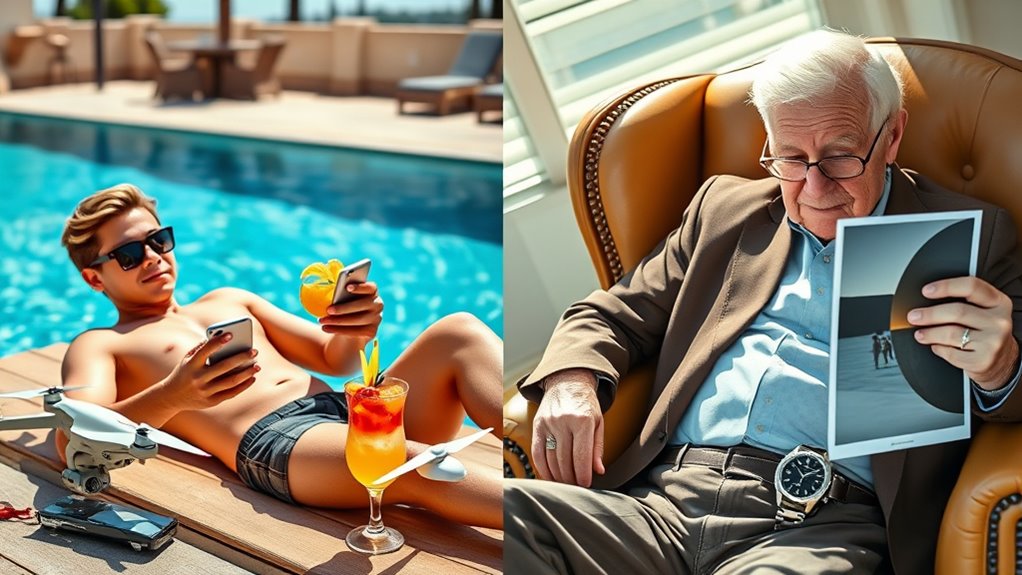
Millennials and Baby Boomers approach their luxury spending differently, especially when it comes to valuing experiences versus material goods. Millennials tend to prioritize personalized experiences, such as exclusive trips or private events, over acquiring material possessions. They see these moments as meaningful investments in memories and personal growth. In contrast, Boomers often place greater emphasis on acquiring high-quality material possessions, like luxury watches or designer clothing, as symbols of status and success. For them, tangible items provide long-lasting value and serve as a testament to their achievements. While Millennials seek experiences that create lasting impressions, Boomers often derive satisfaction from owning and displaying material goods. This difference reflects broader generational attitudes toward consumption and what constitutes true luxury. Additionally, AI security solutions are increasingly being adopted by luxury brands to protect sensitive customer data and enhance brand integrity, highlighting the importance of tableware materials and technology in modern luxury consumer behavior. Understanding these consumer preferences and the unique purchasing motivations of each group can help brands tailor their offerings to meet the distinct desires of each generation.
The Role of Technology in Shaping Spending Habits

Technology has transformed how you make purchases, with digital payments making transactions faster and more convenient. Social media influences your spending decisions by exposing you to new products and experiences instantly. Additionally, online shopping trends shape your habits, encouraging more spontaneous and frequent purchases. Furthermore, AI-powered predictive analytics enable brands to tailor marketing efforts to individual preferences, subtly influencing your buying choices. As a result, these technological tools are reshaping consumer behavior, leading to distinct spending patterns across different generations. For example, the rise of digital wallets has further streamlined the checkout process, making impulse buys even easier. The integration of personalized marketing techniques enhances targeted advertising, increasing the likelihood of impulsive spending. The development of data-driven insights allows companies to better understand and anticipate consumer preferences, further fueling these spending habits.
Digital Payment Adoption
Digital payment adoption has revolutionized the way people make transactions, making spending quicker and more convenient. With contactless payments and mobile wallets, you can complete purchases without fumbling for cash or cards. Millennials, in particular, embrace these technologies, valuing their speed and ease of use. You simply tap your device or card, and the transaction is done—no PIN required for small amounts. This shift encourages spontaneous spending, as it removes traditional barriers like cash withdrawal or card swipes. Boomers, on the other hand, tend to be more cautious, often sticking to familiar payment methods. Still, both generations are increasingly adopting digital payments, reshaping how, when, and where you spend your money, fueling a more seamless, tech-driven shopping experience. However, this rapid adoption also introduces new security vulnerabilities, prompting both generations to become more aware of cybersecurity threats in digital transactions. As digital payment platforms evolve, they incorporate advanced encryption and security measures to protect consumers, which helps build trust in this increasingly common way of paying. Additionally, the importance of understanding digital security practices grows as more users engage with these platforms.
Social Media Influence
Social media platforms have become powerful tools that influence how you spend money by shaping your perceptions of brands, products, and trends. Viral campaigns create buzz quickly, making certain items appear essential. Influencer collaborations showcase products in authentic settings, driving desire and urgency. These strategies amplify a sense of FOMO, prompting impulsive purchases. Whether you’re scrolling through Instagram or TikTok, you’re exposed to curated content that nudges your spending habits. Here’s how different generations respond:
| Millennials | Boomers |
|---|---|
| Follow influencer trends | Rely on traditional advertising |
| Engage with viral campaigns | Less influenced by social media |
| Prioritize experiences shared online | Focus on personal recommendations |
This dynamic shapes your buying choices, making social media a key driver in modern luxury splurging. Additionally, the visual nature of social media content often influences consumer behavior, making it easier for brands to connect emotionally and encourage spending. Understanding how self watering plant pots work can also inspire environmentally conscious purchasing decisions, as many online campaigns highlight sustainable products and practices.
Online Shopping Trends
As online shopping continues to evolve, it profoundly influences your spending habits by making luxury products more accessible and convenient than ever before. You’re now able to explore luxury resale platforms, giving you access to high-end items at a fraction of the original price, which appeals especially to Millennials seeking value. Personalized shopping experiences, driven by advanced algorithms, help you discover products tailored to your tastes, making splurging more targeted and satisfying. Technology also enables effortless browsing, quick checkout options, and seamless returns, encouraging spontaneous purchases. The rise of online marketplaces and resale sites has transformed how you indulge in luxury, blending affordability with exclusivity. Additionally, understanding the expiration of luxury items can help you make smarter purchase decisions and avoid unnecessary spending on spoiled or outdated products. Recognizing the emotional aspects of online shopping can further enhance your ability to make balanced spending choices, especially when considering the trust erosion that digital transactions might present. Ultimately, these online shopping trends empower you to splurge smarter, more personalized, and with greater confidence.
Investment in Timeless vs. Trendy Items

When deciding whether to invest in timeless or trendy items, Millennials and Boomers often approach their purchases differently. Millennials tend to prioritize trendy accessories that reflect current styles, valuing flexibility and freshness. They see these as ways to express individuality and stay relevant. In contrast, Boomers often focus on timeless investments—pieces that hold value over time and can be worn across generations. They prefer classic staples over fleeting trends, believing in quality and longevity. Millennials might splurge on trendy accessories to refresh their wardrobe without long-term commitment, while Boomers invest in enduring items that serve as reliable wardrobe anchors. Recognizing these preferences helps you understand each generation’s approach to building a versatile, stylish collection. Additionally, understanding brewing techniques can inform how different generations appreciate craftsmanship and quality in their accessories and clothing choices.
Financial Approaches and Budgeting Strategies

Millennials and Boomers approach their fashion budgets with distinct strategies shaped by their financial priorities and life stages. Millennials often focus on wealth management, balancing splurges with saving for future goals like homeownership or retirement. They tend to use budgeting apps, set spending limits, and prioritize experiences over material possessions. Debt management is also essential for them, as many manage student loans or credit card debt, influencing their spending habits. Boomers, on the other hand, generally have more established financial stability. They might allocate a fixed percentage of their income to fashion, emphasizing quality over quantity. Their approach often involves traditional budgeting methods, with less emphasis on debt management, thanks to paid-off mortgages and savings accumulated over decades. Both generations adapt their strategies to support their financial well-being while indulging in luxury.
Influence of Social Media and Peer Validation
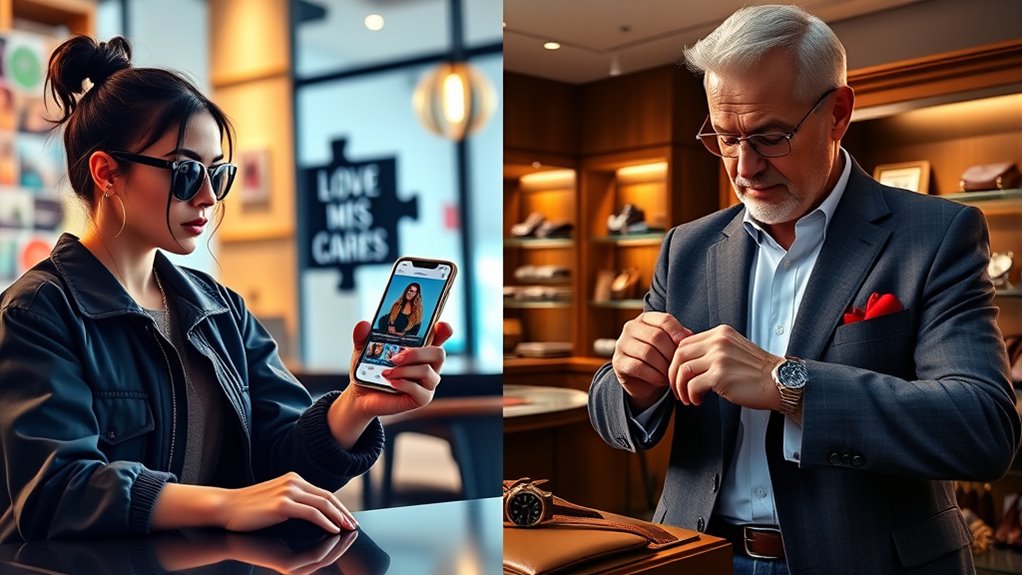
You’re likely aware that social media trends influence what people buy, pushing you to keep up with the latest styles. Peer approval often guides your choices, making luxury items feel more essential. As a result, social validation plays a big role in shaping spending habits across generations.
Social Media Trends Drive Spending
Social media platforms have become powerful tools that shape spending habits by amplifying peer validation and trend-driven content. You’re influenced by luxury branding and celebrity endorsements that showcase the latest must-haves. These trends often create a sense of urgency, prompting you to follow suit quickly. The content you see is curated to appeal to your desire for status and belonging.
- Influencers showcasing luxury products boost brand desirability
- Viral challenges promote limited-edition splurges
- Peer posts validate luxury purchases as social proof
- Celebrity endorsements make luxury items seem essential
This environment fuels your impulse to keep up with trends, especially when social validation is at stake. You’re encouraged to spend more to align with what’s fashionable and admired online.
Peer Approval Shapes Choices
Peer approval plays a crucial role in shaping your choices on social media, where likes, comments, and shares serve as instant validation. You often seek peer validation to feel connected and recognized, influencing what you buy and display. This desire for approval turns certain items into status symbols, signaling your social standing. Millennials, in particular, are driven by this need to showcase their lifestyle through luxury purchases that garner admiration. Boomers, while less influenced by social media, still value peer validation through social circles and community recognition. Ultimately, social media amplifies the importance of peer approval, making it a powerful force behind splurges on trendy, high-status items. Your spending habits are increasingly shaped by the need for social validation and the desire to project a certain image.
Sustainability and Ethical Considerations in Luxury Purchases
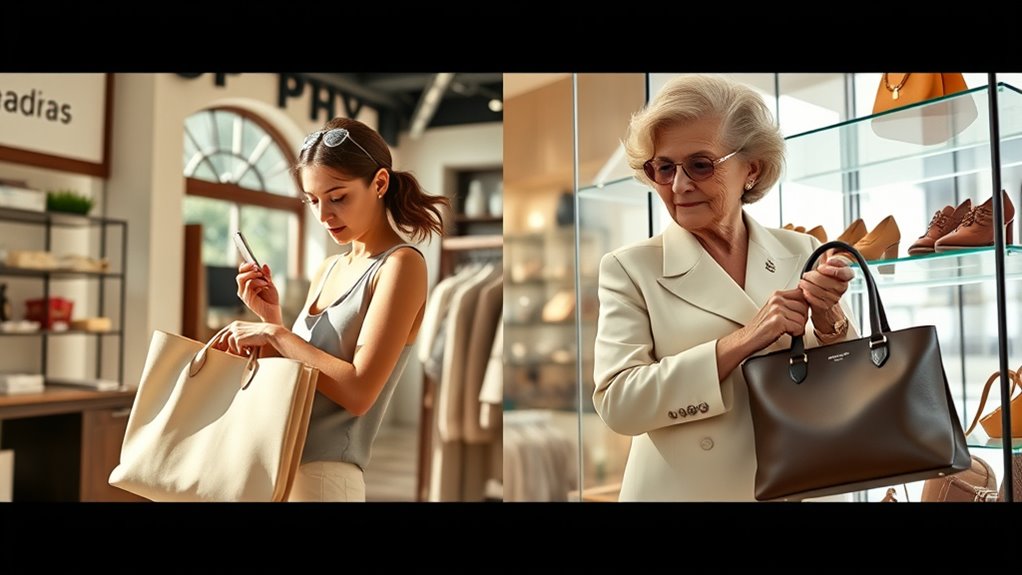
As awareness of environmental and ethical issues grows, both Millennials and Boomers are increasingly scrutinizing the sustainability of their luxury purchases. You now prioritize brands committed to ethical sourcing and eco friendly materials. Millennials often seek transparency about supply chains and prefer labels that emphasize sustainability. Boomers, meanwhile, value timeless quality over fast trends, favoring brands with strong ethical commitments. To make informed choices, consider these factors:
- Ethical sourcing of materials
- Use of eco friendly materials
- Transparency in supply chain practices
- Brands’ commitment to sustainability initiatives
Future Trends in Generational Luxury Consumption
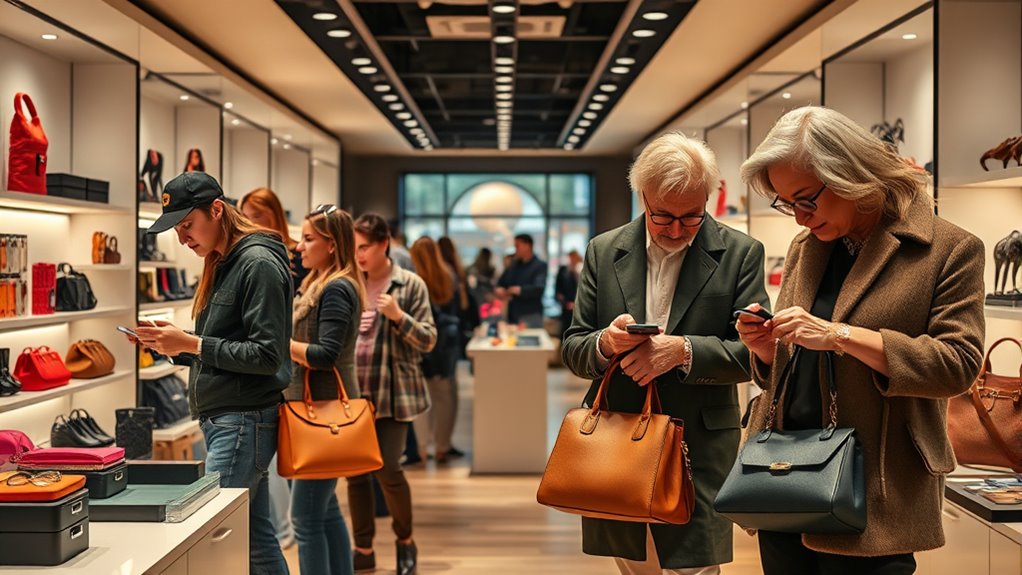
Emerging technological advancements and shifting values are shaping the future of luxury consumption across generations. You’ll see a stronger emphasis on luxury branding that highlights authenticity and personalization. Exclusive collaborations will become more prevalent, appealing to both Millennials and Boomers seeking unique, limited-edition items. Technology like virtual try-ons and blockchain authenticity will redefine the shopping experience.
| Trend | Impact |
|---|---|
| Personalized Experiences | Increased demand for tailored luxury services |
| Digital-First Luxury Brands | More brands adopting online and AR platforms |
| Limited-Edition Collabs | Boosts exclusivity and desirability |
Frequently Asked Questions
How Do Cultural Backgrounds Influence Luxury Spending Differences Between Millennials and Boomers?
Cultural influences and heritage significance shape your luxury spending habits across generations. Millennials often prioritize experiences rooted in their cultural backgrounds, valuing authenticity and social impact. In contrast, boomers may focus on heritage symbols and traditional luxury items that reflect their cultural pride. These cultural nuances guide how each generation perceives and invests in luxury, influencing their preferences and spending patterns based on their cultural identity and the importance they assign to heritage.
What Role Do Peer Groups Play in Shaping Luxury Purchase Decisions Across Generations?
Did you know 70% of Millennials say peer influence impacts their luxury purchases? Peer groups shape your choices by emphasizing social status and belonging. You’re more likely to splurge if your friends value luxury brands or showcase lavish lifestyles. Social status becomes a symbol of success, influencing your desire to keep up. Peer influence drives luxury spending across generations, making social circles powerful motivators for your purchasing decisions.
How Do Economic Uncertainties Impact Millennials’ and Boomers’ Luxury Consumption Patterns?
Economic uncertainties, driven by wealth disparity and financial insecurity, make you more cautious with luxury spending. Millennials tend to cut back more, prioritizing savings and experiences over material possessions. Boomers, however, might still indulge in luxury items as a way to maintain status, despite economic worries. These uncertainties influence your purchasing decisions, prompting you to balance desire and security, often leading to more selective and intentional luxury consumption across both generations.
Are There Generational Differences in Valuing Craftsmanship Versus Brand Prestige?
You’ll notice that millennials often value artisan appeal more, seeking authentic craftsmanship and unique stories behind products. They prioritize quality and individuality over brand recognition, which is more important to boomers. Boomers tend to favor brand prestige, trusting well-known labels for status and familiarity. This difference influences their luxury choices, with millennials drawn to artisanal, handcrafted items, while boomers prefer recognizable brands that symbolize tradition and social standing.
How Do Generational Attitudes Toward Luxury Ownership Change Over Time?
Your luxury perception evolves as you age, influencing your spending habits over time. As a younger person, you might prioritize trendy brands and experiences, while later, you value timeless craftsmanship and quality. This shift reflects changing priorities, financial stability, and life goals. Over time, you tend to spend more thoughtfully, appreciating the lasting value of luxury items rather than fleeting trends, shaping your overall approach to luxury ownership.
Conclusion
As you navigate the shimmering crossroads of luxury, remember that each generation writes its own story in gold and glass. Millennials chase fleeting trends like shooting stars, while boomers treasure the steady glow of timeless elegance. Your spending habits are your personal palette—paint your masterpiece with mindful choices and values that resonate. In this dance of dollars and dreams, let authenticity be your guiding star, illuminating a path uniquely yours in the world of lavish living.