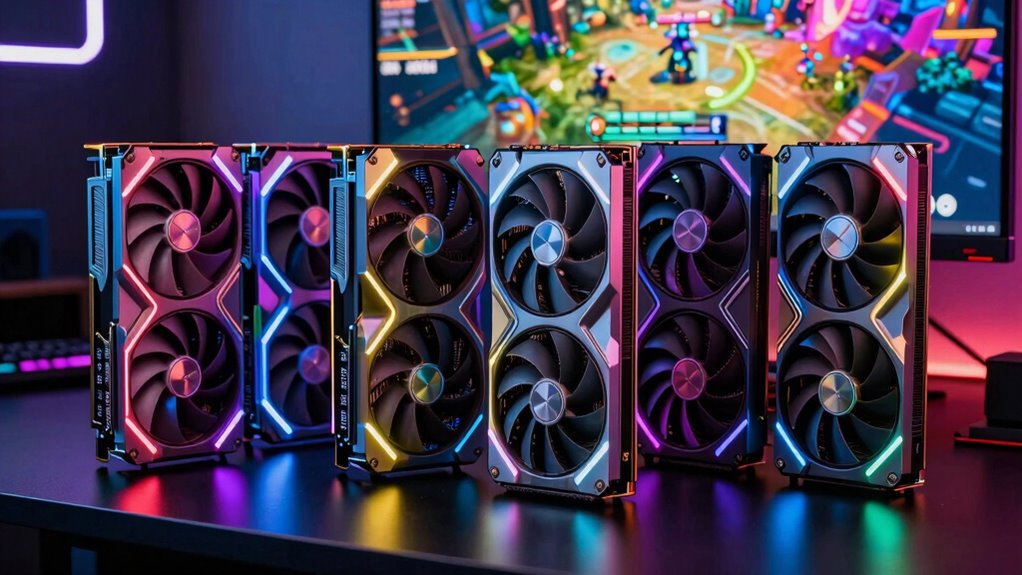

Choosing the right hardware for ultra-high-resolution gaming is less about raw power and more about balancing thermal efficiency, memory bandwidth, and case compatibility. For my analysis of the current market, I have identified the ASUS TUF Gaming GeForce RTX 5080 as the Best Overall choice due to its robust Blackwell architecture and superior DLSS 4 implementation, which makes 4k gaming smoother and more sustainable. If you prioritize value without sacrificing too much performance, the GIGABYTE Radeon RX 9070 XT stands out as the Best Value pick, offering substantial VRAM at a more accessible tier than the flagship NVIDIA options.

Get home appliances delivered free with Prime
- Fast, free delivery on millions of items
- Prime Video, Amazon Music and more included
- Member-only deals all year
The primary tradeoff in this segment is between the longevity of newer architectures like NVIDIA’s Blackwell and the cost-effectiveness of AMD’s RDNA 4 equivalents. While the RTX 5080 leads in ray tracing and AI-driven upscaling, the Radeon RX 9070 XT provides a compelling alternative for rasterization-heavy titles. I have also included options for those with specific chassis constraints, ensuring that even compact builds can handle the thermal load of 4k rendering. This guide breaks down these differences to help you select the component that aligns with your specific gaming library and system build.
Complete the kit


Key Takeaways
- The ASUS TUF RTX 5080 offers the best balance of durability and next-gen AI upscaling for high-end 4k gaming.
- The GIGABYTE RX 9070 XT provides significant VRAM and cooling efficiency, making it a strong contender for high-resolution rasterization.
- The ASUS Prime RX 9070 XT is ideal for users who prioritize silent operation and compact case compatibility over maximum fan speed.
- The ASUS Dual RX 9060 XT serves as a budget-friendly entry point for 4k gaming, though it may require lower settings in the most demanding titles.
- The GIGABYTE RTX 5080 Gaming OC delivers top-tier ray tracing performance but demands a large case and a high-wattage power supply.
| ASUS TUF Gaming GeForce RTX 5080 16GB GDDR7 OC Edition Graphics Card |  | Best Overall for Durability and Performance | GPU Model: NVIDIA GeForce RTX 5080 | Memory: 16 GB GDDR7 | Boost Clock (OC Mode): 2730 MHz | VIEW ON AMAZON | See Our Full Breakdown |
| GIGABYTE Radeon RX 9070 XT Gaming OC 16G Graphics Card |  | Best Value for High-Resolution Rasterization | GPU: AMD Radeon RX 9070 XT | Memory: 16 GB GDDR6 | Interface: PCIe 5.0 x16 | VIEW ON AMAZON | See Our Full Breakdown |
| ASUS Prime Radeon RX 9070 XT 16GB GDDR6 OC Edition Gaming Graphics Card |  | Best for Silence and Compact Builds | Model: ASUS Prime Radeon RX 9070 XT | Memory: 16GB GDDR6 | Boost Clock (OC Mode): Up to 3030 MHz | VIEW ON AMAZON | See Our Full Breakdown |
| ASUS Dual Radeon RX 9060 XT 16GB GDDR6 Gaming Graphics Card |  | Best Entry-Level 4K Option | GPU: AMD Radeon RX 9060 XT | Memory: 16GB GDDR6 | Design: 2.5-slot | VIEW ON AMAZON | See Our Full Breakdown |
| GIGABYTE GeForce RTX 5080 Gaming OC 16GB Graphics Card with WINDFORCE Cooling |  | Best Premium Ray Tracing Performance | Graphics Coprocessor: NVIDIA GeForce RTX 5080 | Memory Capacity: 16 GB | Graphics RAM Type: GDDR7 | VIEW ON AMAZON | See Our Full Breakdown |
| graphics cards for 4k gaming | Memory | Interface |
|---|---|---|
| ASUS TUF Gaming GeForce RTX 50 | 16 GB GDDR7 | PCI-Express x16 |
| GIGABYTE Radeon RX 9070 XT Gam | 16 GB GDDR6 | PCIe 5.0 x16 |
| ASUS Prime Radeon RX 9070 XT 1 | 16GB GDDR6 | — |
| ASUS Dual Radeon RX 9060 XT 16 | 16GB GDDR6 | — |
| GIGABYTE GeForce RTX 5080 Gami | — | PCI‑Express x16 (PCIe 5.0) |
More Details on Our Top Picks
ASUS TUF Gaming GeForce RTX 5080 16GB GDDR7 OC Edition Graphics Card
This card represents the pinnacle of current high-end gaming hardware, leveraging the NVIDIA Blackwell architecture to deliver exceptional frame rates at 4k resolution. Compared to the GIGABYTE RX 9070 XT, the RTX 5080 benefits from DLSS 4, which uses AI to upscale images with minimal artifacts, allowing for higher visual fidelity without the same computational cost. The inclusion of 16GB of GDDR7 memory ensures that texture streaming remains smooth, even in titles with massive open worlds.
What sets this model apart is its construction. The military-grade components and protective PCB coating suggest a lifespan that exceeds many competitors. However, this durability comes at a physical cost. The 3.6-slot design is imposing, requiring a spacious case to ensure proper airflow. While the three Axial-tech fans and phase-change thermal pad keep temperatures managed, the sheer size means it will dominate your build. For those who want the best possible 4k experience and have the chassis to support it, this is the definitive choice.
Pros:- Top-tier performance with NVIDIA Blackwell architecture
- Robust cooling with phase-change thermal pads
- Durable build with military-grade components
Cons:- Extremely large 3.6-slot footprint
- Requires a high-wattage 850W PSU
Best for: Enthusiasts with full-tower cases who want the best 4k ray tracing performance.
Not ideal for: Builders with compact mid-tower cases or limited power supply capacity.
- GPU Model:NVIDIA GeForce RTX 5080
- Memory:16 GB GDDR7
- Boost Clock (OC Mode):2730 MHz
- Interface:PCI-Express x16
- Max Resolution:7680 x 4320
- Slot Width:3.6 Slots
Our verdict“The definitive choice for high-end 4k gaming, provided you have the case space and power infrastructure to support its massive frame.”
GIGABYTE Radeon RX 9070 XT Gaming OC 16G Graphics Card
If you are looking for a balance between performance and price, this card is the strongest contender. It utilizes the AMD Radeon RX 9070 XT GPU, which excels in traditional rasterization tasks often found in competitive shooters and open-world games. While it lacks the dedicated AI hardware of the RTX 5080, its 16GB of GDDR6 memory is sufficient for most 4k textures, preventing the stuttering that can occur with lower VRAM cards.
The WINDFORCE cooling system with Hawk Fans and server-grade thermal conductive gel is highly effective, keeping the card cool even under sustained loads. Compared to the ASUS Prime RX 9070 XT, this GIGABYTE model tends to run slightly louder but offers more aggressive fan curves for maximum performance. Its 11.34-inch length is substantial but generally manageable in most mid-to-large tower cases. This is the ideal card for gamers who want high frame rates at 4k without paying the premium for NVIDIA’s ray tracing capabilities.
Pros:- Strong value proposition for 4k gaming
- Effective WINDFORCE cooling with thermal gel
- Supports PCIe 5.0 for future-proofing
Cons:- Large 11.34-inch length limits case options
- Lacks dedicated ray tracing hardware of RTX series
Best for: Value-conscious gamers focused on rasterization and high frame rates.
Not ideal for: Users who prioritize ray tracing or compact case compatibility.
- GPU:AMD Radeon RX 9070 XT
- Memory:16 GB GDDR6
- Interface:PCIe 5.0 x16
- GPU Clock Speed:3060 MHz
- Max Resolution:7680 x 4320
- Cooling:WINDFORCE System
Our verdict“A powerful and cost-effective option for 4k gaming that delivers excellent rasterization performance and efficient cooling.”
ASUS Prime Radeon RX 9070 XT 16GB GDDR6 OC Edition Gaming Graphics Card
This model is designed for users who value a quiet gaming experience and broad case compatibility. With a 2.5-slot design, it fits into cases where the bulkier GIGABYTE RX 9070 XT or the massive ASUS TUF RTX 5080 would not. The Axial-tech fans with a smaller hub and barrier ring generate higher air pressure, which is more efficient for cooling in tighter spaces. Additionally, the 0dB technology ensures the fans stop spinning entirely during light gaming, eliminating noise when you are not pushing the GPU hard.
Performance-wise, it matches the GIGABYTE RX 9070 XT closely in rasterization tasks, thanks to the same underlying GPU architecture. The dual-ball fan bearings extend the lifespan of the cooling system, a critical factor for long-term reliability. While it may run slightly hotter than the larger GIGABYTE model under extreme loads, the tradeoff for silence and size is often worth it for desktop users who sit close to their systems. This is the smart choice for those who want high-end performance without the physical and acoustic bulk.
Pros:- Compact 2.5-slot design for better compatibility
- 0dB technology for silent light usage
- Long-lasting dual-ball fan bearings
Cons:- Requires GPU Tweak III for advanced tweaks
- May run warmer than larger 3-slot competitors
Best for: Users with mid-sized cases who prioritize silent operation and reliability.
Not ideal for: Overclockers seeking maximum thermal headroom for extreme tuning.
- Model:ASUS Prime Radeon RX 9070 XT
- Memory:16GB GDDR6
- Boost Clock (OC Mode):Up to 3030 MHz
- Slot Design:2.5-slot
- Fan Bearings:Dual-ball
- Software:GPU Tweak III
Our verdict“A refined, quiet, and compact version of the RX 9070 XT that delivers high-end 4k performance without dominating your case.”
ASUS Dual Radeon RX 9060 XT 16GB GDDR6 Gaming Graphics Card
For those entering the 4k gaming space without breaking the bank, this card offers a viable entry point. While the RX 9060 XT GPU is a step down from the 9070 XT, the 16GB of GDDR6 memory ensures it can still handle high-resolution textures. In many titles, it will deliver playable frame rates at 4k, though you may need to adjust settings from Ultra to High to maintain a steady 60 FPS. Compared to the ASUS Prime RX 9070 XT, this card is slightly slower in raw compute power but retains the same efficient 2.5-slot design and 0dB technology.
The Axial-tech fans with longer blades provide adequate cooling for this mid-range GPU. The Dual BIOS switch allows you to toggle between Quiet and Performance modes, giving you flexibility depending on the game. This card is not for enthusiasts who want maximum settings in every title, but it is an excellent choice for gamers who want to experience 4k resolution on a budget, particularly in esports titles or well-optimized AAA games.
Pros:- Affordable entry into 4k gaming
- Compact 2.5-slot design
- Dual BIOS for flexible cooling profiles
Cons:- Lower raw performance than RX 9070 XT models
- May require setting adjustments for 60 FPS in new AAA titles
Best for: Budget-conscious gamers wanting to try 4k gaming in optimized titles.
Not ideal for: Users who demand maximum settings in the most demanding AAA releases.
- GPU:AMD Radeon RX 9060 XT
- Memory:16GB GDDR6
- Design:2.5-slot
- Cooling:Axial-tech fans
- BIOS profiles:Quiet and Performance
- OC mode boost clock:Up to 3250 MHz
Our verdict“A solid, budget-friendly option for 4k gaming that balances performance with compact size and quiet operation.”
GIGABYTE GeForce RTX 5080 Gaming OC 16GB Graphics Card with WINDFORCE Cooling
This card is for the gamer who wants the absolute best ray tracing performance available. Like the ASUS TUF RTX 5080, it uses the NVIDIA Blackwell architecture, but GIGABYTE’s implementation focuses on aggressive out-of-the-box speeds. The WINDFORCE cooling system with three fans is highly effective, though it contributes to the card’s large 13.46-inch length. This makes it a challenging fit for many standard mid-tower cases, similar to its ASUS counterpart.
The 16GB of GDDR7 memory on a 256-bit interface provides the bandwidth needed for 4k ray tracing, where pixel shading and lighting calculations are incredibly demanding. If you compare it to the GIGABYTE RX 9070 XT, the RTX 5080 will crush it in titles with heavy ray tracing, such as Cyberpunk 2077 or Alan Wake 2, thanks to dedicated RT cores and DLSS 4. However, this performance comes with high power consumption. You need a robust power supply and a case with excellent airflow to keep this beast running cool. It is the premium choice for those who refuse to compromise on visual fidelity.
Pros:- Exceptional ray tracing performance
- Fast 16 GB GDDR7 memory
- Effective triple-fan WINDFORCE cooling
Cons:- Large 13.46-inch length requires spacious case
- High power draw demands robust PSU
Best for: Hardcore enthusiasts demanding maximum ray tracing performance at 4k.
Not ideal for: Builders with limited case space or lower-wattage power supplies.
- Graphics Coprocessor:NVIDIA GeForce RTX 5080
- Memory Capacity:16 GB
- Graphics RAM Type:GDDR7
- GPU Clock Speed:2.73 GHz
- Interface:PCI‑Express x16 (PCIe 5.0)
- Item Dimensions:13.46″ L x 5.59″ W
Our verdict“A top-tier ray tracing powerhouse that delivers unmatched visual fidelity at 4k, provided you have the infrastructure to support it.”

How We Picked
I selected these five graphics cards by evaluating their architectural advantages, thermal management solutions, and suitability for 4k resolutions specifically. My primary criterion was memory bandwidth and capacity, as 4k gaming demands substantial VRAM to maintain high frame rates in modern titles. I compared the NVIDIA Blackwell architecture of the RTX 5080 models against the AMD RDNA 4 architecture of the RX 9000 series to determine which offered better performance-per-dollar in rasterization and ray tracing scenarios.
I also prioritized physical form factors, noting that many high-end GPUs exceed three slots, which limits compatibility with mid-tower cases. Models like the ASUS Prime RX 9070 XT were included for their 2.5-slot design, offering a compromise between cooling and size. Finally, I assessed the cooling solutions, favoring cards with phase-change thermal pads and robust fan bearing designs to ensure long-term reliability under heavy load. This holistic approach ensures that every recommendation addresses not just raw speed, but the practical realities of building a high-end PC.
| graphics cards for 4k gaming | Interface |
|---|---|
| ASUS TUF Gaming GeForce RTX 50 | PCI-Express x16 |
| GIGABYTE Radeon RX 9070 XT Gam | PCIe 5.0 x16 |
| ASUS Prime Radeon RX 9070 XT 1 | — |
| ASUS Dual Radeon RX 9060 XT 16 | — |
| GIGABYTE GeForce RTX 5080 Gami | PCI‑Express x16 (PCIe 5.0) |
Factors to Consider When Choosing Graphics Cards For 4k Gaming
Selecting a graphics card for 4k gaming requires a different mindset than buying for 1080p or 1440p. At this resolution, the bottleneck is rarely the CPU; it is almost entirely dependent on the GPU’s raw compute power, memory bandwidth, and thermal capacity. My goal here is to help you navigate these technical constraints to find a card that fits your specific use case, whether that is competitive esports, cinematic single-player experiences, or a balance of both.
Memory Bandwidth and Capacity
At 4k, every frame requires four times the data processing of a 1080p frame. This places immense pressure on VRAM. 16GB of memory has become the baseline for modern 4k gaming, as seen in both the RTX 5080 and RX 9070 XT models. While 8GB cards may still run some titles, they will struggle with high-resolution texture packs. GDDR7 memory, found in the NVIDIA options, offers higher bandwidth than GDDR6, which helps maintain frame consistency in scenes with complex geometry and large textures.
Architecture: NVIDIA vs. AMD
The choice between NVIDIA Blackwell and AMD RDNA 4 architectures often comes down to feature priority. NVIDIA cards, like the RTX 5080, excel in ray tracing and offer DLSS 4, which uses AI to generate frames, significantly boosting performance in supported titles. AMD cards, such as the RX 9070 XT, typically offer better raw rasterization performance per dollar and are often more power-efficient in traditional rendering tasks. If you play games with heavy ray tracing, NVIDIA is the superior choice. If you prefer competitive shooters or games without ray tracing, AMD provides excellent value.
Case Compatibility and Cooling
High-performance 4k GPUs generate substantial heat, necessitating large coolers. The ASUS TUF RTX 5080 and GIGABYTE RTX 5080 both require over 13 inches of case length and occupy multiple slots. Before purchasing, measure your case’s GPU clearance. If you have a smaller build, the ASUS Prime RX 9070 XT or ASUS Dual RX 9060 XT offer 2.5-slot designs that fit more easily. Efficient cooling is not just about temperature; it affects noise levels and long-term component lifespan. Look for cards with phase-change thermal pads and dual-ball bearings for durability.
Frequently Asked Questions
Is 16GB of VRAM enough for 4k gaming in 2027?
Yes, 16GB of VRAM is currently the recommended baseline for high-quality 4k gaming. Modern titles with high-resolution texture packs and complex environments can easily exceed 12GB of VRAM usage, leading to stuttering and texture pop-in on cards with less memory. While some older or less demanding games may run well on 8GB or 12GB cards, new AAA releases are increasingly designed with 16GB in mind to ensure smooth performance. For future-proofing your build, 16GB ensures you can maximize texture settings without encountering memory bottlenecks.
Do I need an 850W power supply for the RTX 5080?
Yes, NVIDIA recommends a minimum of an 850W power supply for the RTX 5080. This GPU draws significant power, especially during intense ray tracing sessions, and power spikes can occur that require headroom to prevent system shutdowns. While some users might attempt to run it on a lower-wattage PSU, it is risky and can lead to instability. It is also important to ensure your PSU has the correct 12VHPWR connector or includes a reliable adapter to handle the card’s power demands safely.
What is the benefit of DLSS 4 over FSR?
DLSS 4 is NVIDIA’s proprietary AI upscaling technology that uses dedicated Tensor cores to generate high-quality images at lower internal resolutions. It typically offers superior image quality and stability compared to AMD’s FSR, which is a software-based solution that works on both AMD and NVIDIA cards. DLSS 4 also includes frame generation features that can significantly boost frame rates in supported games. If you prioritize the sharpest possible image and highest frame rates in ray-traced titles, DLSS 4 is the more effective technology.
Can the RX 9060 XT handle 4k gaming?
The RX 9060 XT can handle 4k gaming, but it is an entry-level option for this resolution. It will perform well in esports titles, older AAA games, and well-optimized indie titles at 4k. However, for the latest graphically intensive AAA releases, you will likely need to lower settings from Ultra to High or Medium and utilize upscaling technologies like FSR to maintain a playable 60 FPS. It is a good choice for budget-conscious gamers who are willing to compromise on maximum visual settings.
How important is the number of fans on a graphics card?
The number of fans is directly related to the card’s thermal capacity and noise levels. A triple-fan design, found on the RTX 5080 and high-end RX 9070 XT models, allows for larger heatsinks and more efficient heat dissipation. This means the fans can spin at lower RPMs to achieve the same cooling performance as a dual-fan card, resulting in a quieter system. While a dual-fan card like the ASUS Dual RX 9060 XT is adequate for mid-range GPUs, triple-fan designs are preferred for high-end cards to keep temperatures low and ensure longevity.
Conclusion
Selecting the right graphics card for 4k gaming depends on your specific priorities, whether they are raw power, value, or build compatibility. If you want the absolute best performance and have the space and budget, the ASUS TUF Gaming GeForce RTX 5080 is my top recommendation. It offers the durability and AI-driven features that define the current generation of high-end gaming.
For those seeking a balance of performance and price, the GIGABYTE Radeon RX 9070 XT provides excellent rasterization power and cooling efficiency. If you have a smaller case or value silence, the ASUS Prime RX 9070 XT is the smarter choice, offering similar performance in a more compact and quiet package. Ultimately, ensure your power supply and case dimensions match your chosen card to avoid any compatibility issues.