TL;DR

Get home appliances delivered free with Prime
- Fast, free delivery on millions of items
- Prime Video, Amazon Music and more included
- Member-only deals all year
PIR sensors are inexpensive, battery-friendly and suited to places where people pass through. mmWave sensors can detect someone sitting still, making them a better fit for rooms where people stay, but they cost more, use more power and may need tuning.
A comparison published by The Ambient sets out when homeowners may want a traditional PIR motion sensor and when an mmWave presence sensor is a better fit: PIR for detecting people moving through an area, and mmWave for keeping track of people who stay still. The choice affects whether automations respond reliably, how often lights may switch off unexpectedly, and how much power and setup a sensor requires.
PIR sensors detect changes in infrared energy, such as the heat pattern of a person moving across their field of view. The source describes them as inexpensive, quick to set up and low-power; battery-powered models can run for a year or longer. But PIR detects movement, not still presence. If someone sits quietly until the sensor’s timeout expires, an automated light may turn off. Movement toward the sensor can also be harder to detect than movement across its view.
mmWave sensors transmit millimetre-wave radio signals, commonly at 24GHz or 60GHz, and detect their reflections. Their sensitivity can pick up small movements, including breathing, so they can register that someone remains in a room even when seated or lying still. Some models also provide distance limits and detection zones; more advanced devices can track a person’s location to trigger different routines in different parts of a room.
That sensitivity brings trade-offs. The report says mmWave devices generally need more power, often relying on mains or USB, and can react to fans, curtains, pets or movement beyond a thin wall. They may need their sensitivity or zones adjusted. The report gives a typical price range of $25 to $60 or more for mmWave sensors, compared with PIR models that are often under $20; actual prices vary by model and market.
Match Sensor to Room Use
The practical decision is less about which technology is universally better and more about what the room needs the sensor to detect. A sensor in a hallway usually needs to notice someone passing through. In a living room or home office, it may need to recognize that someone is still there while reading or working. Picking the wrong type can make an automation unreliable: a PIR sensor may switch off a light while the room is occupied, while an overly sensitive mmWave sensor may trigger routines when no one is in the intended area.
The differences also affect ongoing costs and installation choices. PIR’s low power use suits battery placement in areas where movement is brief and predictable. mmWave’s presence detection can support more responsive lighting or room-based routines, but may require a powered outlet, careful positioning and adjustments to avoid unwanted detections. The source’s room-by-room guidance is a starting point, not a guarantee: layout, pets, furnishings and sensor placement can all affect results.
Products Worth Considering

Coway Airmega AP-1512HHS Smart Air Purifier, Black
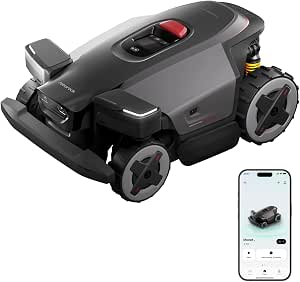
Roborock RockMow X130H Wire-Free 4WD Robot Lawn Mower

Shark NV752 Rotator Powered Lift-Away TruePet Upright Vacuum, Bordeaux
As an affiliate, we earn on qualifying purchases.
How Motion Detection Differs
PIR, short for passive infrared, is a longstanding approach used in motion detection. It registers changes in infrared energy across its field of view rather than identifying a person directly. That helps explain both its simplicity and its limitation: if the heat pattern does not change enough, a person who remains still may no longer register as moving.
mmWave uses radio reflections rather than heat changes. According to The Ambient, some sensors can detect very small movements and may work through thin, non-metallic materials, including materials such as plasterboard, fabric or plastic. That can help cover an area, but it also means a sensor may pick up activity outside the intended room. Brick, concrete and other obstructions may affect detection differently; the source does not provide a universal performance guarantee for specific walls or installations.
The report recommends PIR for hallways, stairs, entrances, utility rooms and garages, where people tend to move through. It points to mmWave for living rooms, offices, bathrooms and bedrooms, where a person may remain in one place. Some devices combine PIR and mmWave, using the former to detect larger movements and the latter to check for continued presence.
Performance Depends on Placement
The comparison is guidance, not a controlled test of every product. Detection range, accuracy, power consumption and price can vary by model, settings and room layout. The source does not provide a standardized head-to-head test or measurements that establish how often either sensor type produces false triggers in typical homes.
It is also not possible to say from the comparison that every mmWave sensor will detect through a particular wall or ignore a specific pet. Thin materials may allow radio signals to pass, but the extent of detection through walls is not specified and can depend on the construction and sensor. Users should check the product’s specifications and test the intended placement. The report notes that some mmWave models offer setup routines, but that does not establish that all devices can automatically resolve unwanted detections.
Test Before Automating
Before buying, identify whether the routine needs to detect movement or continued occupancy. For a passageway or entrance, a PIR model is the simpler starting point. For a room where people sit or lie still, consider an mmWave model and check its power source, zone controls, sensitivity settings and compatibility with the home’s automation system.
After installation, test the sensor in ordinary conditions: walk across and toward it, sit still in the intended area, and check whether pets, fans or activity in nearby rooms trigger it. Adjust placement, detection zones and timeout settings where the device permits. The source offers no new product launch or follow-up test; its practical recommendation is to match sensor type to the room and tune mmWave devices where needed.
Key Questions
Which sensor is better for a hallway?
PIR is generally the better fit for hallways, stairs and entrances, where people usually pass through rather than remain still. It is typically inexpensive and low-power. Placement still matters, especially if movement is mostly toward the sensor.
Will an mmWave sensor keep lights on while I sit still?
That is a key use for mmWave presence sensing. It can detect small movements, including breathing, while PIR generally needs a change in movement to register activity. Results depend on the sensor, its settings and placement.
Can mmWave sensors detect through walls?
Radio signals can pass through some thin, non-metallic materials, so a sensor may detect activity beyond the room. The source does not promise detection through every wall; material and construction matter. Test the sensor in its intended position and use zones or range limits if available.
Why might an mmWave sensor trigger when nobody is in the room?
The report lists fans, moving curtains, plants, pets and activity in a neighboring room as possible false triggers. Adjusting sensitivity, position or detection zones may help, depending on the model.
Are mmWave sensors worth the higher price?
They may be useful where automations need to detect someone who is present but not moving much, such as in a living room or office. For a passageway, a less expensive PIR sensor may be sufficient. The better value depends on the room, required features and device price.
Source: the-ambient.com