
TL;DR

Get home appliances delivered free with Prime
- Fast, free delivery on millions of items
- Prime Video, Amazon Music and more included
- Member-only deals all year
The Open Home Foundation’s Sendspin protocol has entered Release Candidate 1, finalizing its spec and SDK. It aims to unify multi-room audio across proprietary systems like AirPlay and Sonos with open hardware. This development allows existing speakers to join synchronized groups without replacement.
Sendspin, the open multi-room audio protocol developed by the Open Home Foundation (OHF), has entered Release Candidate 1, marking a significant step toward its version 1.0 launch. The finalization of its official specification and Software Development Kit (SDK) positions the protocol to bridge the gap between proprietary audio ecosystems like AirPlay and Sonos and open-source hardware. This development matters because it offers a standardized method for synchronizing audio across devices that previously could not communicate effectively, potentially ending the fragmentation that has long plagued smart home audio setups.
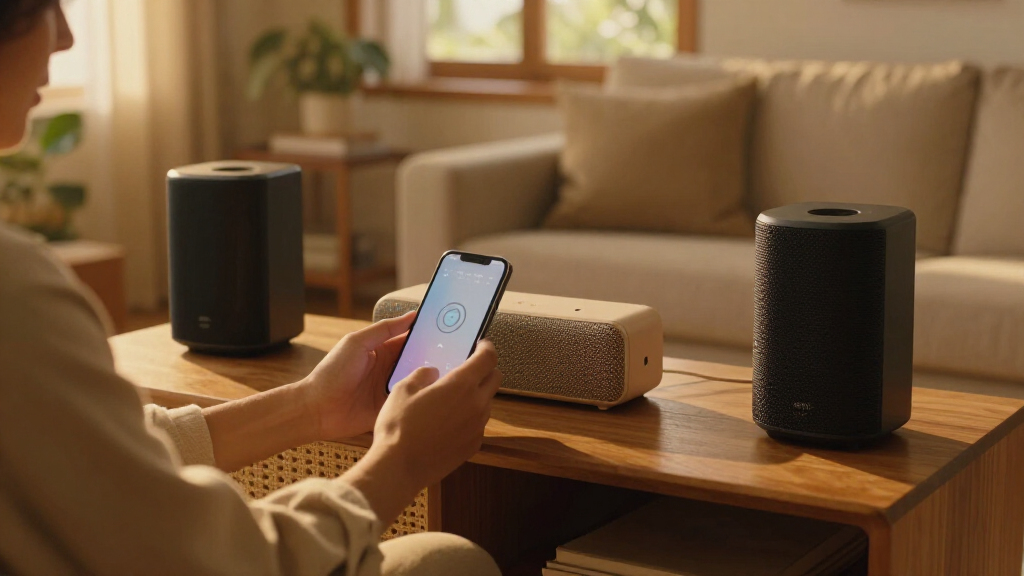
The core function of Sendspin is to create a common orchestration layer for multi-room audio. While systems like Apple AirPlay and Google Cast handle streaming well within their own walls, they struggle to synchronize with devices outside their ecosystem. Sendspin addresses this by managing group timing across diverse hardware. Through integration with Music Assistant, the protocol can wrap compatible devices as Sendspin players. This allows an AirPlay-capable Sonos speaker to play in perfect sync with a DIY ESP32 audio player or a Chromecast device. The bridge continues to use the device’s existing transport protocol underneath, meaning users do not need to replace their current hardware to participate in a synchronized group.
Beyond simple audio streaming, the protocol defines distinct roles for players, sources, controllers, and visualizers. A single server can coordinate playback timing while simultaneously distributing metadata, artwork, and visualization data. For instance, a speaker plays the audio, a wall panel displays album art, and a separate device drives ambient lighting based on audio spectrum data. The spec requires servers to support PCM and FLAC formats, with Opus as an optional codec. Clients can negotiate their preferred audio format, allowing the server to adapt output to specific hardware capabilities rather than forcing a single stream format on all devices.
Security and local control are central to the design. Connections remain local to the network and utilize end-to-end encryption based on the Noise Protocol Framework. This approach ensures that audio data and control signals do not leave the user’s home network. The protocol also supports audio capture, allowing a device to take input from a turntable or CD player and distribute it to other rooms, effectively turning legacy analog sources into part of the digital multi-room system.
Breaking Proprietary Audio Silos
The significance of Sendspin reaching Release Candidate status lies in its potential to democratize multi-room audio. Currently, the market is divided by platform-specific gatekeepers. Users are often forced to choose between Apple, Google, or Sonos ecosystems, limiting their hardware choices. Paulus Schoutsen, President of the Open Home Foundation, stated that the goal was to allow experimentation outside these boundaries. He noted that creating custom programs to receive multi-room audio was previously impossible without the approval of ecosystem creators. Sendspin removes this barrier, enabling developers and enthusiasts to build custom audio experiences that span different brands.
This shift challenges the vendor lock-in model prevalent in smart home audio. By supporting bridging for existing devices, Sendspin lowers the barrier to entry for users who already own high-quality speakers. It validates the idea that open standards can coexist with proprietary tech, offering a path forward for interoperability. The recent removal of Cast Audio bridging support in Music Assistant, following Google’s firmware changes, underscores the fragility of closed systems. Sendspin’s open nature provides a more resilient alternative, ensuring that hardware investments are not rendered obsolete by unilateral vendor decisions.
Products Worth Considering

LG 77-Inch OLED evo C6 4K Smart TV

eufy Security E30 4K Indoor Pan and Tilt Camera, 2-Pack

Dyson Airsmooth Styling Brush
As an affiliate, we earn on qualifying purchases.
Origins in Open Home Foundation
Sendspin originated from the Open Home Foundation, the nonprofit behind Home Assistant and ESPHome. The foundation manages over 250 open-source projects and generally prefers adopting existing standards. However, the team identified a gap in multi-room audio interoperability that existing solutions like Snapcast did not fully address. The concept solidified during a Connectivity Standards Alliance (CSA) meeting in Chicago, where team members discussed the limitations of current proprietary protocols. After more than a year of development by full-time contributors, including a mathematics professor, the protocol evolved into Sendspin.
The timing of this release coincides with the maturation of the Home Assistant ecosystem. Music Assistant, a key component for media management in Home Assistant, now uses Sendspin as its native synchronized playback protocol. This integration provides an immediate user base and a practical testbed for the protocol. The foundation’s strategy is not to replace existing audio systems but to provide a unified control layer that respects existing hardware investments while enabling new capabilities.
“If you want to play with this, if you want to experiment with this, if you want to make your own program that receives this multi-room audio and maybe visualize it, offer controls, or play it in a way that is not envisioned by the creators or the gatekeepers of Cast and AirPlay or Sonos, you couldn’t do it.”
— Paulus Schoutsen, President of the Open Home Foundation
Hardware Compatibility and Limitations
While the protocol promises broad compatibility, hardware and firmware limitations remain a challenge. The source material notes that bridging does not guarantee compatibility with every device, particularly some Chromecast implementations. The recent decision by Google to slim down firmware led to the removal of Cast Audio bridging support in Music Assistant, highlighting the unpredictability of relying on proprietary backends. It is not yet clear how many of the thousands of existing speaker models will work seamlessly with Sendspin bridges. Additionally, the performance impact of bridging on lower-end hardware has not been fully detailed, leaving questions about latency and stability in large, mixed-device networks.
Path to Final 1.0 Release
The next major milestone is the official 1.0 release of the Sendspin specification and SDK. This will likely involve finalizing documentation and stabilizing the API for third-party developers. The Open Home Foundation is expected to continue expanding the list of supported bridges and native devices. As the ecosystem grows, more hardware manufacturers may adopt Sendspin natively, reducing the need for bridging. Developers are expected to begin building custom controllers and visualizers, testing the protocol’s extensibility. The community will likely focus on resolving remaining compatibility issues with specific proprietary devices to ensure a smoother user experience.
Key Questions
Do I need to replace my current speakers to use Sendspin?
No. Sendspin uses bridging technology to integrate existing devices, such as Sonos or AirPlay speakers, into a synchronized group without requiring hardware replacement.
Is Sendspin compatible with Home Assistant?
Yes. Sendspin is developed by the Open Home Foundation, which also maintains Home Assistant. Music Assistant uses Sendspin as its native synchronized playback protocol.
Does Sendspin require an internet connection?
No. The protocol is designed for local network use with end-to-end encryption, ensuring that audio and control data remain within the home network.
Can Sendspin control lighting based on music?
Yes. The protocol supports visualization data, allowing devices to drive ambient lighting based on audio spectrum, beat, and loudness information.
Source: rss