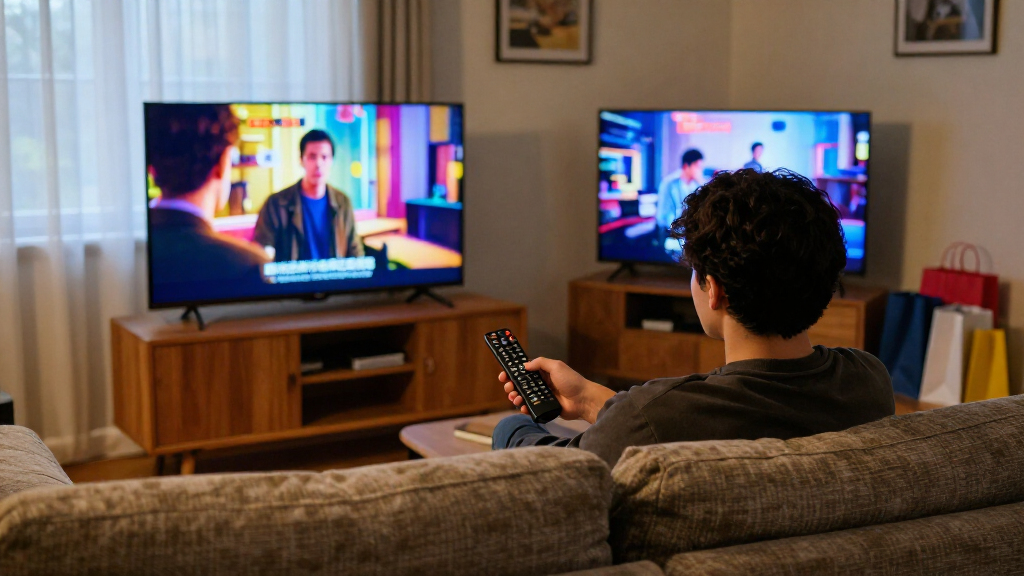
For the best Black Friday TVs, I’d start with the TCL QM7L for its Mini LED picture and 144Hz gaming support, then compare it with the LG OLED evo C5 for darker-room movie viewing and the Roku 65-Inch Select QLED for a simpler big-screen setup. The lineup spans OLED, Mini LED, QLED, and basic Full HD models, so the right choice depends on room brightness, screen size, and what you watch. A brighter living room can favor Mini LED, while OLED suits viewers who value deep blacks and contrast. Smaller secondary rooms may not benefit from paying for premium picture technology. Read on for my full comparison and picks by buyer type.

Get home appliances delivered free with Prime
- Fast, free delivery on millions of items
- Prime Video, Amazon Music and more included
- Member-only deals all year
Complete the kit


Key Takeaways
- The TCL QM7L is the strongest all-round fit for mixed viewing and gaming in this group, combining Mini LED with a 144Hz refresh rate; buyers who prioritize OLED contrast should compare it with the LG C5.
- The LG OLED evo C5 and Samsung S90H are the premium screen choices, but their strengths make most sense when picture quality matters more than getting the largest screen for the room.
- Large-screen Mini LED models from Hisense and Toshiba suit spacious, brighter rooms; measure the viewing distance first because a 75-inch screen can overwhelm a small space.
- The TCL T7 and Hisense E6SR offer more approachable QLED routes than the QM7L, while giving up some of its higher-end display and gaming advantages.
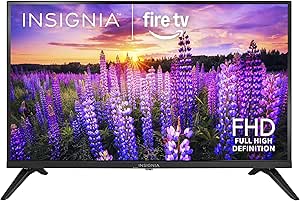
- The Insignia 40-inch F40 and Roku 32-inch Select serve secondary-room needs; their Full HD resolution is a clear step down from the 4K models, but may be adequate at compact screen sizes and ordinary viewing distances.




| Black Friday TV | Screen size | Resolution | Refresh rate | HDR formats |
|---|---|---|---|---|
| TCL 55-Inch F7D Series QLED 4K | 55 inches | 4K UHD | 60 Hz | Dolby Vision, HDR10+, HDR10, HLG |
| TCL 55-Inch T7 Series 4K QLED | 55 inches | — | — | Dolby Vision, HDR10, HDR10+, HLG, Open HDR |
| LG 55-Inch QNED73B Mini LED 4K | 55 inches | 4K | 60 Hz | HDR10, HLG |
| Samsung 65-Inch S90H OLED 4K S | 65 inches | 4K | Up to 165 Hz | HDR10+, HLG, HDR10 |
| Samsung 65-Inch Class M70H Ser | 65 inches | 4K | — | — |
| Samsung 55-Inch M80H Series Mi | 55 inches | 4K | 120Hz; up to 144Hz for compatible PC games | — |
| Hisense 75-inch U6 Pro Mini-LE | 75 inches | 4K UHD | 144Hz native | Dolby Vision, Dolby Vision IQ, HDR10+, HDR10, HDR10+ Adaptive, HLG |
| LG 55-Inch OLED evo C5 Series | 55 inches | 4K | 120Hz | Dolby Vision, HDR10, HLG |
| Hisense 55-inch E6SR Series Hi | 55 inches | 4K | 60Hz | Dolby Vision, HDR10, HLG |
| Insignia 40-Inch F40 Series Fu | 40 inches | 1080p | 60Hz | — |
| Roku 65-Inch Select Series 4K | 65 inches | 4K UHD | 60 Hz | HDR10, HDR10+, HLG |
| TCL 55-Inch QM7L Series SQD-Mi | 55 inches | 4K | 144 Hz | — |
| Insignia 55-Inch QF Series 4K | 55 inches | 4K UHD | 60 Hz | Dolby Vision, HDR10 |
| Roku Select Series 32-Inch 108 | 32 inches | 1080p Full HD | 60 Hz | — |
| Toshiba Z670R 75-Inch Mini-LED | 75 inches | 4K UHD | 144 Hz | Dolby Vision, Dolby Vision IQ, HDR10, HDR10+, HDR10+ Adaptive, HLG |
More Details on Our Top Picks
TCL 55-Inch F7D Series QLED 4K UHD HDR Smart Fire TV
The TCL F7D suits viewers who want a 55-inch QLED screen with Fire TV and broad HDR format support in one straightforward setup. Dolby Vision, HDR10+, HDR10, and HLG give compatible movies and shows more ways to use their HDR picture, while Alexa, AirPlay 2, and HomeKit make it easier to fit into mixed smart-home households. Compared with the TCL T7 Series, the F7D has a listed 60 Hz refresh rate rather than native 120 Hz, so the T7 is the clearer pick for fast gaming and sports. Auto Game Mode and a Game Bar still give the F7D useful gaming tools, but its refresh-rate listing and three HDMI ports limit flexibility. I’d choose it for streaming convenience over high-refresh gaming.
Pros:- QLED 4K display supports Dolby Vision, HDR10+, HDR10, and HLG.
- Fire TV and Alexa voice control provide a familiar streaming setup.
- Supports Apple AirPlay 2 and HomeKit alongside Alexa.
- Auto Game Mode and a Game Bar offer gaming conveniences.
Cons:- Listed 60 Hz refresh rate is less suited to fast motion than the T7’s native 120 Hz panel.
- Three HDMI ports can constrain multi-device setups.
- MEMC motion enhancement does not change the listed 60 Hz refresh rate.
Best for: Households already using Fire TV or Alexa that want a 55-inch QLED for streaming and casual gaming.
Not ideal for: Competitive gamers or homes connecting several consoles and sound devices, because the listed refresh rate is 60 Hz and there are three HDMI ports.
- Screen size:55 inches
- Display:QLED
- Resolution:4K UHD
- Refresh rate:60 Hz
- HDR formats:Dolby Vision, HDR10+, HDR10, HLG
- Smart platform:Fire TV
- HDMI ports:3
- Audio formats:Dolby Atmos, DTS:X, DTS Virtual:X
Our verdict“Choose the F7D if Fire TV and broad smart-home support matter more to you than a native high-refresh screen.”
TCL 55-Inch T7 Series 4K QLED Smart Google TV
The TCL T7 is the stronger fit for viewers who watch sports or play games and want a native 120 Hz refresh rate in a 55-inch 4K QLED. That panel gives fast motion a clearer foundation than the 60 Hz TCL F7D and LG QNED73B listings; MEMC is an added motion feature, not a substitute for the T7’s native rate. Dolby Vision and other HDR formats broaden compatibility, while Google TV, Chromecast, and AirPlay 2 cover different streaming and screen-sharing habits. Four HDMI ports also make room for more connected gear than the F7D’s three. The tradeoffs are a glossy screen that can reflect windows or lamps and Wi-Fi 5 rather than a newer wireless standard. I’d put this ahead of the F7D for motion, but not for glare-prone rooms.
Pros:- Native 120 Hz refresh rate supports smoother fast-moving content.
- 4K QLED panel supports Dolby Vision and several other HDR formats.
- Google TV, Chromecast, and AirPlay 2 support varied streaming and sharing needs.
- Four HDMI ports provide more connection flexibility than the F7D.
Cons:- Glossy screen finish may reflect room lighting.
- Wi-Fi 5 is the listed wireless standard.
- At 55 inches, it offers less screen area than the 65-inch Samsung S90H.
Best for: Sports viewers and console gamers seeking a 55-inch QLED with native 120 Hz and broad device sharing.
Not ideal for: People placing a TV opposite bright windows or lamps, since the glossy finish may reflect ambient light.
- Screen size:55 inches
- Display:4K QLED
- Native refresh rate:120 Hz
- HDR formats:Dolby Vision, HDR10, HDR10+, HLG, Open HDR
- Smart platform:Google TV
- Screen mirroring:AirPlay 2, Google Cast
- HDMI ports:4
- Wireless connectivity:Wi-Fi 5, Bluetooth
Our verdict“Pick the T7 if smooth motion and flexible streaming matter more than a glare-resistant screen.”
LG 55-Inch QNED73B Mini LED 4K Smart TV
The LG QNED73B is aimed at viewers who want Mini LED backlighting and a film-oriented picture mode in a 55-inch set. Its Filmmaker Mode preserves a movie’s intended colors, settings, and frame rates, while the a7 AI Processor Gen9 handles picture and sound processing. Against the TCL T7, this LG’s listed 60 Hz refresh rate makes it a less compelling match for fast gaming or sports; the T7’s native 120 Hz is the more direct choice for those uses. The QNED73B counters with Mini LED, LG’s webOS platform, Game Optimizer, ALLM, and cloud gaming features. Its stated HDR formats are HDR10 and HLG, a shorter list than the TCL sets’ Dolby Vision support. I’d favor it for film settings and LG’s platform, while keeping its refresh and HDR limits in view.
Pros:- Mini LED backlighting is designed to support bright images and deeper contrast.
- Filmmaker Mode preserves a film’s original colors, settings, and frame rates.
- a7 AI Processor Gen9 processes picture and sound.
- Game Optimizer, ALLM, and cloud gaming features support gaming options.
Cons:- Listed 60 Hz refresh rate trails the TCL T7’s native 120 Hz for fast motion.
- HDR format listing includes HDR10 and HLG, but not Dolby Vision.
- Some smart services and cloud gaming features depend on internet access, subscriptions, or compatible equipment.
Best for: Movie-focused viewers who value Filmmaker Mode, LG webOS, and Mini LED in a 55-inch TV.
Not ideal for: Competitive gamers or HDR viewers seeking Dolby Vision, since the listed refresh rate is 60 Hz and supported HDR formats are HDR10 and HLG.
- Screen size:55 inches
- Display:Mini LED
- Resolution:4K
- Refresh rate:60 Hz
- HDR formats:HDR10, HLG
- Processor:a7 AI Processor 4K Gen9
- Dimensions without stand:48.3 x 28.1 x 2.8 inches (W x H x D)
- Weight without stand:20.9 pounds
Our verdict“Choose the QNED73B for its film-focused mode and LG smart platform if 60 Hz and its narrower listed HDR support suit your viewing.”
Samsung 65-Inch S90H OLED 4K Smart TV (2026)
The Samsung S90H is the premium screen-size and gaming choice in this group: a 65-inch OLED with a matte Glare Free finish and refresh rates up to 165 Hz for compatible PC games. Its self-illuminating pixels distinguish it from the Mini LED Samsung M70H, while the matte finish is designed to help manage reflections. The NQ4 AI Gen3 processor supports upscaling and motion enhancement, making lower-resolution material a better fit for the 4K screen. HDR support is listed as HDR10+, HLG, and HDR10; Dolby Vision is not listed, unlike on the TCL T7. The main caveat is that 165 Hz applies to compatible PC games and hardware, so console or streaming viewers may not use its headline refresh capability. I’d choose it for OLED viewing and PC gaming, not simply for a higher number on a spec sheet.
Pros:- 65-inch OLED panel uses self-illuminating pixels.
- Matte Glare Free finish is designed to reduce distracting reflections.
- Up to 165 Hz support with NVIDIA G-SYNC or AMD FreeSync Premium Pro suits compatible PC gaming.
- NQ4 AI Gen3 processor supports 4K upscaling and motion enhancement.
Cons:- 165 Hz gaming requires compatible PC games and graphics hardware.
- Dolby Vision is not among the listed HDR formats.
- At 65 inches, it is larger than the 55-inch TCL and LG options and needs more viewing space.
Best for: PC gamers and movie viewers who want a larger OLED with a matte screen and can use compatible high-refresh hardware.
Not ideal for: Buyers who specifically need Dolby Vision or will not use compatible PC gaming hardware to take advantage of refresh rates above standard TV content.
- Screen size:65 inches
- Display:OLED
- Resolution:4K
- Refresh rate:Up to 165 Hz
- Screen finish:Matte
- Maximum brightness:2000 nits
- HDR formats:HDR10+, HLG, HDR10
- Audio output:40 watts, 2.1-channel
Our verdict“Choose the S90H if you want a 65-inch OLED and have compatible PC gaming hardware to use its high refresh rate.”
Samsung 65-Inch Class M70H Series, Mini LED, 4K, Smart TV, 2026 Model
The Samsung M70H combines a 65-inch Mini LED screen with Samsung TV Plus, Gaming Hub, and a soccer picture mode, giving sports fans and streamers several built-in ways to find content. Its listed display refresh rate is 60 Hz, while DLG can raise it up to 120 Hz for fast-paced gaming with reduced image sharpness. That distinction matters beside the Samsung S90H: the S90H is the more direct option for OLED and high-refresh PC gaming, while the M70H offers Mini LED and a free channel lineup. Samsung describes its Supreme Mini LED Dimming as software-based rather than full-array hardware dimming, so I would not treat it as equivalent to hardware-based local dimming. The M70H also has a glossy screen and three HDMI ports. I’d choose it for its mix of built-in streaming and sports features, with expectations set by those display tradeoffs.
Pros:- 65-inch Mini LED display pairs 4K resolution with HDR10+ support.
- Samsung TV Plus provides free streaming channels, with internet and account requirements for network-based smart services.
- Soccer Mode and Motion Xcelerator with DLG target sports and gaming motion.
- Gaming Hub brings console, cloud service, and gaming app options into one interface.
Cons:- Listed display refresh rate is 60 Hz; DLG up to 120 Hz reduces image sharpness.
- Supreme Mini LED Dimming is described as software-based rather than full-array hardware dimming.
- Glossy screen may reflect ambient light, and three HDMI ports limit connected-device capacity.
Best for: Sports fans and streaming-focused households who want a 65-inch Mini LED set with Samsung TV Plus and Gaming Hub.
Not ideal for: Viewers who want high-refresh gaming without image-sharpness compromises or need hardware-based full-array dimming.
- Screen size:65 inches
- Display:Mini LED
- Resolution:4K
- Listed display refresh rate:60 Hz
- DLG refresh rate:Up to 120 Hz; reduces image sharpness
- HDR format:HDR10+
- Screen finish:Glossy
- HDMI ports:3
- Smart platform:Tizen
Our verdict“Pick the M70H for its 65-inch Mini LED screen and built-in streaming and sports features if you accept the DLG and dimming limitations.”
Samsung 55-Inch M80H Series Mini LED 4K Smart TV (2026)
For a 55-inch Black Friday TV that can serve both as a living-room screen and a PC gaming display, the Samsung M80H has a useful mix: Mini LED backlighting for brighter, more controlled contrast, plus a 144Hz mode for compatible PC games. That high refresh ceiling is more relevant to PC players with suitable graphics hardware than to console owners, who should weigh the standard 120Hz rate instead. Its NQ4 AI Gen2 processor also upscales lower-resolution video and gives SDR a more HDR-like treatment, which can help when streaming older shows. Compared with the 75-inch Hisense U6 Pro, this Samsung takes less space and focuses more clearly on PC use, while giving up screen size and the Hisense’s stated anti-reflection finish. Tizen features need internet access and a Samsung Account.
Pros:- Mini LED backlighting supports bright images and richer contrast
- 144Hz support can smooth compatible PC games
- AI processing upscales content and remasters SDR for an HDR-like appearance
- Tizen provides streaming apps and free channels
Cons:- 144Hz requires a compatible PC game and graphics hardware
- Network-based smart features require internet access and a Samsung Account
Best for: PC gamers who want a 55-inch 4K screen with a high refresh option and also watch streaming video
Not ideal for: Buyers seeking a large screen for a bright room, or PC gamers without hardware that supports 144Hz
- Screen size:55 inches
- Display technology:Mini LED
- Resolution:4K
- Refresh rate:120Hz; up to 144Hz for compatible PC games
- HDR format:HDR10+
- Processor:NQ4 AI Gen2
- Operating system:Tizen
- Audio:20W, 2-channel
Our verdict“Choose the M80H if you want a versatile 55-inch Mini LED TV with a 144Hz option for a capable gaming PC.”
Hisense 75-inch U6 Pro Mini-LED 4K UHD Smart Fire TV
The 75-inch Hisense U6 Pro is the pick here when screen size and room conditions matter more than keeping the set compact. Its anti-reflection screen is intended to reduce distracting glare, while Mini LED local dimming and quantum dot color give it a more ambitious picture setup than the 55-inch Hisense E6SR’s direct LED display. Native 144Hz refresh and a built-in subwoofer add appeal for sports, games, and films, though the supplied information doesn’t specify port selection or the subwoofer’s power. Fire TV and Alexa+ put streaming and voice control in the same interface. Compared with the Samsung M80H, this Hisense offers a much larger canvas and a stated glare-reducing finish, but takes up more room and its connectivity details are less clear.
Pros:- 75-inch 4K screen suits large rooms and group viewing
- Mini LED local dimming and quantum dot color support contrast and vivid color
- Anti-reflection finish is designed for brighter rooms
- Native 144Hz refresh and a built-in subwoofer support gaming and entertainment
Cons:- Product information does not specify ports, connectivity, or mounting dimensions
- Subwoofer power and audio configuration are not provided
- Its 75-inch size may be difficult to place in smaller rooms
Best for: Households with a large, bright viewing room who want a 75-inch screen for sports, films, and gaming
Not ideal for: Small-room viewers or buyers who need confirmed port details and a fully specified audio setup before choosing
- Screen size:75 inches
- Resolution:4K UHD
- Display technology:Mini LED, Hi-QLED quantum dot
- Refresh rate:144Hz native
- Screen finish:Flat, anti-reflection and glare-free
- Local dimming:Full-array local dimming
- HDR formats:Dolby Vision, Dolby Vision IQ, HDR10+, HDR10, HDR10+ Adaptive, HLG
- Smart platform:Fire TV
- Audio features:Built-in subwoofer, Dolby Atmos, DTS-powered audio
Our verdict“Choose the U6 Pro if a large, glare-conscious screen matters more to you than compact placement or fully documented connectivity.”
LG 55-Inch OLED evo C5 Series 4K Smart TV (2025)
For film fans who put dark-scene detail and cinematic formats ahead of screen size, the LG C5 OLED is the most movie-focused 55-inch option in this batch. Its self-lit pixels can switch off individually, supporting Perfect Black without the backlight approach used by the Samsung M80H Mini LED. Dolby Vision and Filmmaker Mode also suit viewers who want compatible films presented with a cinema-minded picture. The 120Hz panel, FreeSync, and G-SYNC support make it a capable gaming choice as well, while α9 AI processing handles upscaling. Compared with the 75-inch Hisense U6 Pro, the C5 gives up considerable screen area and the Hisense’s stated anti-reflection finish. Its 35.3-pound listed weight with stand is another practical factor for setup.
Pros:- Self-lit OLED pixels support deep black levels and detailed dark scenes
- Dolby Vision and Filmmaker Mode suit compatible movie viewing
- 120Hz refresh rate with AMD FreeSync and NVIDIA G-SYNC support
- α9 AI Processor Gen8 supports picture upscaling
Cons:- The 55-inch screen is much smaller than the 75-inch Hisense U6 Pro
- Listed weight with stand is 35.3 pounds, which may affect setup
- Remote requires two AAA batteries
Best for: Movie watchers who prefer OLED black levels, Dolby Vision, and a 55-inch screen that can also handle gaming
Not ideal for: Buyers whose priority is a very large screen or a glare-focused setup for a bright room
- Screen size:55 inches
- Display technology:OLED
- Resolution:4K
- Refresh rate:120Hz
- HDR formats:Dolby Vision, HDR10, HLG
- Processor:α9 AI Processor Gen8
- Audio:2.2-channel with Dolby Atmos, AI Sound Pro, and WOW Orchestra
- Operating system:webOS
Our verdict“Pick the LG C5 if you value OLED contrast and movie formats more than a larger screen.”
Hisense 55-inch E6SR Series Hi-QLED 4K UHD Smart Roku TV (55E6SR, 2026 Model)
The Hisense E6SR is the straightforward streaming pick: a 55-inch 4K set with Roku OS, AirPlay, and a familiar grid-based interface for reaching apps and live content. Hi-QLED color and Dolby Vision add picture features that the 40-inch Insignia F40 lacks, while AI 4K upscaling can sharpen lower-resolution sources. The tradeoff is that this is a 60Hz direct LED television, so its Game Mode Plus, VRR, and ALLM support should not be mistaken for the faster motion performance offered by the 144Hz Samsung M80H or Hisense U6 Pro. DTS Virtual:X is included, but it’s virtual surround processing rather than a listed multi-speaker configuration. This makes most sense for everyday streaming, not high-refresh gaming.
Pros:- Roku OS offers a simple interface for streaming and live content
- Hi-QLED color and Dolby Vision support a richer picture than the 1080p Insignia F40
- AI 4K upscaling can improve lower-resolution content
- AirPlay, VRR, and ALLM are supported
Cons:- 60Hz refresh rate is below the 120Hz and 144Hz options in this lineup
- Direct LED backlighting does not provide the Mini LED local dimming of the Samsung M80H
- DTS Virtual:X does not specify a physical surround speaker setup
Best for: Stream-focused households that want a 55-inch 4K Roku TV with AirPlay and Dolby Vision
Not ideal for: Gamers seeking native high refresh rates or buyers who want Mini LED local dimming
- Screen size:55 inches
- Display technology:Hi-QLED, LCD with direct LED backlight
- Resolution:4K
- Refresh rate:60Hz
- HDR formats:Dolby Vision, HDR10, HLG
- Smart platform:Roku OS
- HDMI ports:3
- Wireless connectivity:Wi-Fi
Our verdict“Choose the E6SR for uncomplicated Roku streaming and 4K viewing, but look to the faster Mini LED models for demanding gaming.”
Insignia 40-Inch F40 Series Full HD Smart Fire TV with Alexa Voice Remote
The Insignia F40 fills a different role from the 4K models: a compact 40-inch screen for a bedroom, office, or other space where Full HD is enough and simple access to streaming matters more than a cinema-sized picture. Fire TV and the Alexa voice remote make searching for shows and switching inputs easy, while its mix of HDMI, USB, Bluetooth, and older AV connections can suit varied equipment. DTS Virtual:X and HDMI ARC offer some flexibility for audio, though they don’t change the basic 60Hz, 1080p resolution. Compared with the Hisense E6SR, this set is smaller and lower resolution, but its compact size may fit where a 55-inch TV won’t. It is a poor match for buyers prioritizing 4K detail or fast gaming.
Pros:- 40-inch size fits secondary rooms with limited space
- Fire TV and Alexa voice remote simplify app and input control
- HDMI ARC and DTS Virtual:X support compatible audio setups
- Broad connections include HDMI, USB, Bluetooth, composite AV, optical, and coaxial
Cons:- 1080p resolution lacks the 4K detail of the Hisense E6SR
- 60Hz refresh rate is a basic fit for gaming and fast motion
- Listed weight is 16kg, which may complicate mounting or repositioning
Best for: People furnishing a bedroom, office, or guest room who want a compact smart TV for streaming and basic viewing
Not ideal for: Main-room viewers who want 4K detail, a large screen, or refresh rates above 60Hz
- Screen size:40 inches
- Display technology:LED
- Resolution:1080p
- Refresh rate:60Hz
- Smart platform:Fire TV
- HDMI ports:2
- USB ports:1
- VESA mount standard:200 x 200mm
Our verdict“Choose the Insignia F40 for a compact secondary-room screen when 1080p streaming is enough.”
Roku 65-Inch Select Series 4K QLED Smart TV
The 65-inch screen and Roku streaming platform make this a straightforward pick for a living room where easy access to shows matters more than advanced gaming. Its QLED panel adds color to 4K content, while the voice remote’s lost-remote finder and Bluetooth headphone mode address everyday annoyances. Compared with the Toshiba Z670R, it gives up Mini-LED contrast, 144Hz motion, and more extensive gaming features, but its simpler setup may suit viewers who mostly stream films and TV. The tradeoff is a 60Hz refresh rate with no motion enhancement, so fast sports and games won’t look as smooth as on the Toshiba or TCL QM7L. I’d choose it for convenient, large-screen viewing, not for a high-performance home theater.
Pros:- 65-inch 4K QLED display for a large, colorful viewing area
- Roku interface with voice control and a remote finder
- AirPlay 2 and Miracast screen mirroring
- Bluetooth headphone mode and speech clarity features
Cons:- 60Hz refresh rate lacks the smoother motion of the TCL QM7L and Toshiba Z670R
- No motion enhancement technology
- 250-nit maximum brightness is modest for bright-room HDR viewing
Best for: Households that want a large 4K screen with simple Roku streaming, voice search, and flexible private listening
Not ideal for: Competitive gamers and sports fans who want a high refresh rate or motion enhancement
- Screen size:65 inches
- Resolution:4K UHD
- Display technology:QLED, LED
- Refresh rate:60 Hz
- HDR formats:HDR10, HDR10+, HLG
- Maximum brightness:250 nits
- HDMI ports:4
- Wireless connectivity:Wi-Fi, Bluetooth 5.2
Our verdict“Choose this Roku for simple big-screen streaming and easy listening options; choose the Toshiba Z670R or TCL QM7L for faster gaming and stronger HDR hardware.”
TCL 55-Inch QM7L Series SQD-Mini LED QLED 4K Smart Google TV, 55QM7L, 144Hz
The 144Hz refresh rate, Mini LED backlighting, and local dimming give the 55-inch TCL QM7L a clear role for buyers who game and watch HDR in a bright room. Its stated peak brightness of up to 3,000 nits and anti-reflective panel are designed to keep highlights and detail visible when glare or daylight is a concern. Compared with the Roku 65-Inch Select Series, this TCL is smaller but far better equipped for fast gameplay; the Roku’s larger screen and simpler streaming setup suit a different kind of buyer. The Toshiba Z670R also offers 144Hz gaming and Mini LED, while stretching to 75 inches. The QM7L’s tradeoffs include its glossy finish and optional subwoofer and satellite speakers for expanded audio, so buyers seeking an all-in-one sound setup may prefer the Toshiba’s built-in bass woofer.
Pros:- Native 144Hz refresh rate with AMD FreeSync Premium Pro
- Mini LED local dimming for higher-contrast HDR scenes
- Up to 3,000-nit peak brightness and an anti-reflective panel
- Google TV with Bang & Olufsen speakers and Dolby Atmos
Cons:- 55-inch screen is smaller than the Toshiba Z670R’s 75-inch display
- Subwoofer and satellite speakers for expanded audio are optional
- Glossy screen finish can still reflect some light
Best for: Gamers and daytime viewers who want a 55-inch screen with fast refresh, local dimming, and an anti-reflective panel
Not ideal for: Buyers seeking a large screen or expanded bass without adding optional speakers
- Screen size:55 inches
- Resolution:4K
- Display technology:Mini LED, QLED
- Refresh rate:144 Hz
- Peak brightness:Up to 3,000 nits
- Local dimming zones:Up to 2,100+
- Panel:HVA 2.0 Pro, anti-reflective
- Audio:Bang & Olufsen speakers, Dolby Atmos
Our verdict“Pick the TCL QM7L for fast gaming and bright-room viewing in a 55-inch size, while the Toshiba Z670R is the better fit if you want a much larger screen and built-in bass woofer.”
Insignia 55-Inch QF Series 4K UHD QLED Smart Fire TV with Alexa Voice Remote (NS55-UQFL26)
The 55-inch QLED panel, Dolby Vision support, and Fire TV interface give this Insignia a practical role for viewers who want a familiar streaming hub and broad HDR format support. Three HDMI inputs, including eARC, leave room for a console, set-top box, and compatible sound system. Against the TCL QM7L, the Insignia trades Mini LED local dimming, higher brightness, and 144Hz gaming for a simpler 60Hz setup. It also lacks the TCL’s stated anti-reflective panel, so the QM7L is better suited to bright rooms and fast games. The Insignia’s Dolby Vision support is a useful differentiator in this group, but direct LED backlighting and a single USB port make it a more basic choice. I’d shortlist it for streaming and everyday viewing rather than motion-heavy play.
Pros:- 4K QLED display with Quantum Dot color
- Supports Dolby Vision and HDR10
- Fire TV with Alexa voice remote
- Three HDMI inputs, including one with eARC
Cons:- 60Hz refresh rate is less suited to fast gaming than the TCL QM7L
- Direct LED backlighting does not offer the TCL QM7L’s local dimming
- Only one USB port is listed
Best for: Fire TV households that want a 55-inch 4K QLED screen, Dolby Vision, and eARC for a soundbar
Not ideal for: Gamers seeking 120Hz or faster play, or viewers wanting Mini LED local dimming
- Screen size:55 inches
- Resolution:4K UHD
- Display technology:QLED
- Refresh rate:60 Hz
- Backlight:Direct LED
- HDR formats:Dolby Vision, HDR10
- HDMI inputs:3, including one with eARC
- Operating system:Fire TV
Our verdict“Choose the Insignia for Dolby Vision streaming and a useful eARC connection; choose the TCL QM7L for faster gaming and Mini LED contrast.”
Roku Select Series 32-Inch 1080p Full HD Smart TV
This 32-inch Full HD Roku TV fills a useful small-screen niche for bedrooms, kitchens, or secondary rooms where a 4K set would be unnecessary. Roku’s simple home screen and voice search make it easy to get to streaming apps, while AirPlay 2 and Bluetooth headphone mode add convenient ways to share or listen privately. Compared with the Insignia 40-Inch F40, this Roku has a smaller screen but adds AirPlay and Bluetooth headphone support; the Insignia is a better fit when screen size takes priority. Its 1080p resolution is appropriate at this size, though it cannot match the 4K detail of the 55-inch Insignia QF or the 65-inch Roku Select. The 60Hz refresh rate and lack of motion enhancement also make it a basic choice for sports and games.
Pros:- Compact 32-inch size with 1080p Full HD resolution
- Roku home screen with voice search
- AirPlay 2 and Miracast screen mirroring
- Bluetooth headphone mode and speech clarity features
Cons:- Smaller and lower resolution than the 55-inch Insignia QF and 65-inch Roku Select
- 60Hz refresh rate with no motion enhancement technology
- 250-nit maximum brightness limits HDR impact
Best for: People furnishing a bedroom, dorm, or kitchen who want a compact screen with Roku streaming and AirPlay
Not ideal for: Main-room viewers who want 4K detail, a larger picture, or smoother fast-action viewing
- Screen size:32 inches
- Resolution:1080p Full HD
- Display technology:LED
- Refresh rate:60 Hz
- Contrast ratio:3000:1
- Maximum brightness:250 nits
- HDMI ports:3
- VESA mount standard:200 x 200 mm
Our verdict“Pick this Roku for a compact secondary room with easy streaming and private listening; choose a larger 4K model for a main viewing space.”
Toshiba Z670R 75-Inch Mini-LED 4K UHD QLED Smart Fire TV
The 75-inch Mini LED and QLED combination makes the Toshiba Z670R the biggest, most gaming-ready option in this batch. Full Array Local Dimming and support for multiple HDR formats are designed to bring more contrast and detail to films, while the 144Hz refresh rate, VRR, ALLM, and AMD FreeSync Premium target smooth console and PC play. Its Fire TV platform and built-in bass woofer also reduce the number of add-ons a living room may need. Compared with the TCL QM7L, the Toshiba brings a much larger screen and built-in bass, while the TCL’s anti-reflective panel may be a better fit for some bright rooms. Size is the main tradeoff: at 75 inches and 63.9 pounds, it demands wall or furniture space and a careful installation. I’d pick it when scale and gaming features lead the decision.
Pros:- 75-inch 4K display with Mini LED, QLED, and full-array local dimming
- 144Hz refresh rate with VRR, ALLM, and AMD FreeSync Premium
- Broad HDR support including Dolby Vision IQ and HDR10+ Adaptive
- Fire TV, Alexa, and built-in bass woofer
Cons:- Large dimensions require substantial room and furniture or wall space
- Listed weight of 63.9 pounds makes installation more demanding
- The TCL QM7L has an anti-reflective panel that may suit bright rooms better
Best for: Living-room gamers and movie fans with space for a 75-inch set who want 144Hz play and built-in bass
Not ideal for: Small rooms, lightweight wall-mount setups, or buyers seeking a compact, easy-to-place TV
- Screen size:75 inches
- Resolution:4K UHD
- Display technology:Mini-LED, QLED
- Refresh rate:144 Hz
- HDR formats:Dolby Vision, Dolby Vision IQ, HDR10, HDR10+, HDR10+ Adaptive, HLG
- Local dimming:Full Array Local Dimming
- HDMI ports:4
- Audio:REGZA Power Audio Pro with bass woofer, Dolby Atmos
Our verdict“Choose the Toshiba for a spacious room where a 75-inch screen, 144Hz gaming, and built-in bass matter more than easy placement.”
How We Picked
I compared these 15 TVs by the things that change a buying decision: screen technology, resolution, size, smart platform, and listed gaming features. I gave more weight to picture and motion capabilities when a model is positioned for premium viewing or gaming, while compact and simpler sets were judged by how well their size and platform suit secondary rooms. The lineup’s distinct OLED and Mini LED options stand apart from standard QLED models, and the Full HD sets occupy a separate role for smaller spaces.
The order reflects those differences rather than treating every large screen as an upgrade. The TCL QM7L ranks as the most versatile because it pairs Mini LED with 144Hz support; OLED models follow for buyers who put contrast first. Midrange QLED choices and large-screen models are useful alternatives when platform preference, room size, or screen area matters more. I placed the Full HD compact models last because their resolution and scale make them specialized choices rather than broad living-room picks. Model names and features can vary by market, so I’d check the exact listing before buying.
Factors to Consider When Choosing Best Black Friday TVs
Black Friday TV shopping can make screen size and headline features feel like the whole decision. I’d start with the room and viewing habits, then decide which upgrades will actually improve what you watch. These factors help separate a good fit from a TV that is simply larger or more feature-heavy.
Match Screen Size to Viewing Distance
Measure the space between the screen and your usual seat before choosing a size. A 75-inch TV can make films and sports feel more absorbing in a larger room, but it may dominate a short viewing distance. A 55-inch model is often easier to place in a typical living room or bedroom. Also check the stand width and depth if the TV will sit on existing furniture. Wall mounting changes the furniture constraint, but you still need to account for doors, windows, and glare. Don’t choose the largest screen simply because it appears to be the strongest deal.
Choose Display Technology for Your Room
OLED and Mini LED solve different picture problems. OLED’s ability to show very dark scenes with strong contrast makes it a natural match for evening films and controlled lighting. Mini LED is a useful direction for rooms with more ambient light, where brightness can help keep the image visible. QLED models offer a separate middle ground, though the label alone does not tell you how a specific TV handles dark scenes or reflections. Think about your room at the hours you watch most. Paying for a display advantage that your lighting or content rarely reveals may not improve day-to-day viewing.
Pay for Gaming Features Only If You’ll Use Them
Console and PC players should check refresh rate, variable refresh rate support, and automatic low-latency features on the exact model. A 144Hz panel, such as the one listed for the TCL QM7L, can be relevant for compatible gaming setups, while many viewers will rarely notice refresh rates beyond standard video playback. Don’t assume every HDMI port supports every advanced feature. Check how many devices you plan to connect and which ports carry the capabilities you need. If you mainly stream films and television, spending more for gaming specifications may bring little benefit. Competitive players should weigh those features alongside picture quality and screen size.
Treat the Smart Platform as Part of the TV
The built-in platform shapes how quickly you can reach the services and settings you use each day. This roundup includes Fire TV, Google TV, and Roku, so interface preference can reasonably break a tie between otherwise similar sets. Check whether the apps you rely on are supported in your region and whether voice controls matter to you. A familiar interface can make a TV easier for someone who does not want to learn a new menu system. You can add an external streaming device later, but that adds another remote or input to manage. Choose based on everyday use, not just the platform name on the box.
Decide Whether 4K Matters at This Size
Most of this selection is 4K, while the 40-inch Insignia F40 and 32-inch Roku Select are Full HD. At compact sizes and ordinary seating distances, Full HD can be adequate for casual shows or a guest room. On a large screen, 4K gives more detail, especially with high-resolution sources and closer seating. The resolution label does not guarantee every stream will look sharp; source quality and internet connection also affect the picture. Think about what you actually watch and how close you sit before treating 4K as a must-have. A compact TV used occasionally may be a better fit than a larger set whose features go unused.
Check Connections and Placement Before Buying
Count the devices you need to connect, including a console, soundbar, streaming box, and cable receiver. Then compare that number with the TV’s available ports and confirm any features you need, such as eARC or a gaming-capable HDMI input. A thin display can still have a stand that needs more width than your furniture provides. If you plan to wall mount, check the mounting pattern and leave room for cables to bend behind the set. Built-in speakers may be sufficient for casual viewing, but a soundbar can improve dialogue and impact in a larger room. These practical checks can matter more than a small difference in headline specifications.
Frequently Asked Questions
Should I choose OLED or Mini LED for a bright living room?
I’d lean toward Mini LED when the room gets substantial daylight or you often watch with lights on, since brightness is a key part of its appeal. OLED is a strong option for viewers who watch films in a dimmer room and value dark-scene contrast. Window placement and reflections still matter, regardless of display type. If you watch at different times of day, consider which lighting condition is most common. The Samsung and LG OLED models suit contrast-focused buyers, while the Mini LED choices offer alternatives for brighter spaces.
Is a 75-inch TV too large for a normal living room?
It depends on how far you sit and how much wall or furniture space you have, rather than the room label. Measure from your seat to the screen location and check the TV’s full width, including its stand. A 75-inch set can suit a spacious room, but may feel overpowering when viewed from close range. A 55- or 65-inch model can be easier to accommodate without losing the benefit of 4K detail. If possible, mark the screen dimensions on the wall before deciding.
Does a 144Hz TV make sense if I mostly watch films and shows?
Usually, the 144Hz specification matters more to compatible gaming setups than to ordinary film and television viewing. Movies and most streamed programs do not use that refresh rate as their central feature. The TCL QM7L can make sense if you also game and want its listed high refresh rate alongside Mini LED. For streaming-focused buyers, compare picture technology, screen size, platform, and connections first. That can help avoid paying attention to a specification that has little bearing on your routine.
Should I buy a Full HD TV for a bedroom or guest room?
A compact Full HD model can be a sensible fit for occasional viewing in a smaller room, especially if you sit at a typical distance and mostly watch standard television or streaming. The Insignia 40-inch F40 and Roku 32-inch Select are the Full HD options in this roundup. A 4K set offers more detail and may be a better choice if you sit close, want a larger screen, or expect the TV to serve as a main display. Check that your preferred streaming apps are available on the platform. The choice comes down to how often and how closely you watch.
How do I choose between Fire TV, Google TV, and Roku?
Start with the interface you already know and the services you use most often. This selection has models using all three platforms, so you can compare smart-TV preferences without limiting yourself to one display type. Check app availability in your country and whether you want built-in voice controls. If several household members use the TV, a familiar, straightforward menu can reduce setup friction. You can add a separate streaming device later, but that means another input and possibly another remote.
Conclusion
I’d choose the TCL QM7L as my best overall for its combination of Mini LED and 144Hz gaming support. For best premium picture, compare the LG OLED evo C5 and Samsung S90H based on room lighting and preferred platform. The TCL T7 is my best value direction for a 4K QLED set without stepping up to the QM7L’s Mini LED tier. For beginners, the Roku Select QLED offers a straightforward smart-TV route, while the 32-inch Roku or 40-inch Insignia fits a compact secondary room. Choose the Hisense U6 Pro or Toshiba Z670R when a 75-inch Mini LED screen is the priority, and consider the Insignia F40 when Full HD is enough for a smaller space. Match the screen to your room first, then select the features you’ll use.