
The best HomeKit smart home devices make everyday controls easier while fitting the Apple Home setup you already use. I’d put the Kasa Smart Plug Mini with Energy Monitoring first for its mix of HomeKit support, power tracking, and straightforward use; the Aqara Thermostat W200 stands out for temperature control, while the Meross Garage Door Opener adds remote access to a high-impact part of the home. The choice depends on whether you need broad compatibility, a focused upgrade, or a device that solves a specific problem. Matter support can widen compatibility, but it doesn’t replace checking each product’s HomeKit features and setup requirements. Read on for the full breakdown and advice on matching a device to your home.

Get home appliances delivered free with Prime
- Fast, free delivery on millions of items
- Prime Video, Amazon Music and more included
- Member-only deals all year
Complete the kit



Key Takeaways
- Kasa Smart Plug Mini with Energy Monitoring is the most balanced starting point in this lineup, pairing HomeKit control with energy tracking in one compact device.
- Aqara Thermostat W200 targets a more involved upgrade: it focuses on temperature management, while most other picks add control to existing lights or appliances.
- Matter support appears across several plug options, including Tapo and Linkind models, but buyers should still check which features work in Apple Home.
- Switches and scene buttons solve different control problems: switches replace wall controls, while Onvis and Airversa buttons trigger scenes without changing wiring.
- Specialized devices have the clearest fit: the Kasa outdoor plug is for exterior power, Meross handles garage access, and Aqara Camera E1 adds indoor monitoring.
| Kasa Smart Plug Mini 15A with Energy Monitoring, Apple HomeKit Support |  | Best Smart Plug for Energy Tracking | Model: EP25P4 | Maximum load: 15 A / 1800 W | Operating voltage: 120 V AC | VIEW LATEST PRICE | See Our Full Breakdown |
| Aqara Smart Thermostat W200 with Apple Adaptive Temperature |  | Best Premium HomeKit Climate Controller | Display: 4-inch full-color touchscreen | HVAC compatibility: About 85% of systems, including furnaces, air conditioners, heat pumps, boilers, and PTAC units | Presence detection: Built-in mmWave radar | VIEW LATEST PRICE | See Our Full Breakdown |
| Onvis 5-Key Smart Button Scene Controller for Apple HomeKit |  | Best for Physical Scene Control | Model: HS2 | Keys: 5 | Press actions: Single, double, and long press | VIEW LATEST PRICE | See Our Full Breakdown |
| Kasa KS200P3 Apple HomeKit Smart Light Switch, Single Pole |  | Best for Replacing a Standard Switch | Model: KS200P3 | Operation: On/off | Switch type: One-way, SPST | VIEW LATEST PRICE | See Our Full Breakdown |
| Philips Hue Smart Plug, White, 2-Pack |  | Best Two-Pack for Hue Households | Model: 552349-2 | Quantity: 2 smart plugs | Connectivity: Bluetooth and Zigbee | VIEW LATEST PRICE | See Our Full Breakdown |
| Kasa KS220P3 Apple HomeKit Smart Dimmer Switch, 3-Pack |  | Best HomeKit Dimmer Switch Bundle | Model: KS220P3 | Pack size: 3 switches | Switch type: Single-pole dimmer | VIEW LATEST PRICE | See Our Full Breakdown |
| TP-Link Tapo Matter Smart Plug Mini, 15A/1800W, 3-Pack |  | Best Value Matter Plug Set | Pack size: 3 | Maximum current: 15 A | Maximum wattage: 1800 W | VIEW LATEST PRICE | See Our Full Breakdown |
| Kasa EP40A Outdoor Smart Plug with Apple HomeKit, 2 Outlets |  | Best Outdoor HomeKit Plug | Model: EP40A | Outlets: 2 independently controlled AC outlets | Maximum load: 15 A / 1875 W per outlet | VIEW LATEST PRICE | See Our Full Breakdown |
| Meross MSG100HK Smart Garage Door Opener with HomeKit, Alexa, and Google Assistant |  | Best Garage Door HomeKit Upgrade | Model: MSG100HK | Connectivity: 2.4 GHz Wi-Fi | Compatible platforms: Apple HomeKit, Siri, CarPlay, Amazon Alexa, Google Assistant, SmartThings | VIEW LATEST PRICE | See Our Full Breakdown |
| Tapo P316M Matter Smart Wi-Fi Power Strip with Energy Monitoring |  | Best HomeKit Power Strip | Model: P316M | AC outlets: 6 individually controlled | USB ports: 3 always-on, 5V 2.4A | VIEW LATEST PRICE | See Our Full Breakdown |
| Linkind Matter Smart Plug, 4-Pack | 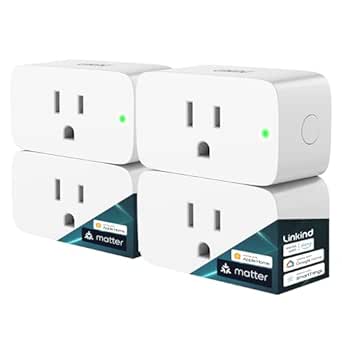 | Best for Multi-Platform Flexibility | Pack count: 4 | Model: LC09003256 | Connectivity: 2.4 GHz Wi-Fi; IPv6 | VIEW LATEST PRICE | See Our Full Breakdown |
| meross Smart Light Switch, Single Pole, 4-Pack |  | Best for Replacing Multiple Switches | Model: MSS510 | Pack size: 4 switches | Switch type: Single-pole, 1-way | VIEW LATEST PRICE | See Our Full Breakdown |
| Airversa QliQ AC1 HomeKit Button Controller, White |  | Best for Physical Scene Control | Model: AC1 | Buttons: 3 | Supported actions: Up to 9 | VIEW LATEST PRICE | See Our Full Breakdown |
| Aqara Camera E1 2K Indoor Security Camera |  | Best for HomeKit Indoor Monitoring | Resolution: 2304 × 1296 pixels (2K) | Viewing: 360° pan and tilt | Night vision: 940 nm infrared | VIEW LATEST PRICE | See Our Full Breakdown |
| Tapo P125 Smart Mini Wi-Fi Plug, 15A, 2-Pack |  | Best Compact HomeKit Plug | Model: P125 | Quantity: 2 | Maximum power: 1800 W | VIEW LATEST PRICE | See Our Full Breakdown |
| HomeKit smart home device | Connectivity | Model |
|---|---|---|
| Kasa Smart Plug Mini 15A with | 2.4 GHz Wi-Fi | EP25P4 |
| Aqara Smart Thermostat W200 wi | Dual-band Wi-Fi, 2.4 GHz and 5 GHz | — |
| Onvis 5-Key Smart Button Scene | Thread and Bluetooth | HS2 |
| Kasa KS200P3 Apple HomeKit Sma | 2.4 GHz Wi-Fi | KS200P3 |
| Philips Hue Smart Plug | Bluetooth and Zigbee | 552349-2 |
| Kasa KS220P3 Apple HomeKit Sma | 2.4 GHz Wi-Fi | KS220P3 |
| TP-Link Tapo Matter Smart Plug | 2.4 GHz Wi-Fi, Bluetooth, Matter | — |
| Kasa EP40A Outdoor Smart Plug | — | EP40A |
| Meross MSG100HK Smart Garage D | 2.4 GHz Wi-Fi | MSG100HK |
| Tapo P316M Matter Smart Wi-Fi | 2.4 GHz Wi-Fi; Matter-certified | P316M |
| Linkind Matter Smart Plug | 2.4 GHz Wi-Fi; IPv6 | LC09003256 |
| meross Smart Light Switch | — | MSS510 |
| Airversa QliQ AC1 HomeKit Butt | Thread; Apple Home (HomeKit) | AC1 |
| Aqara Camera E1 2K Indoor Secu | Wi-Fi 6, 2.4 GHz only; WPA3 | — |
| Tapo P125 Smart Mini Wi-Fi Plu | 2.4 GHz Wi-Fi, Bluetooth | P125 |
More Details on Our Top Picks
Kasa Smart Plug Mini 15A with Energy Monitoring, Apple HomeKit Support
The Kasa Smart Plug Mini suits HomeKit users who want to see what an appliance consumes, not just turn it on remotely. Its energy monitoring adds useful context to schedules and timers, while support for loads up to 15A or 1800W covers many everyday plug-in devices. Compared with the Philips Hue Smart Plug, this Kasa model reports energy use and does not require a Hue Bridge for its Wi-Fi features. Its compact shape can leave the neighboring outlet usable. The tradeoff is a reliance on 2.4 GHz Wi-Fi, and remote HomeKit control requires a networked Apple device at home. Pick it for appliance insights and flexible platform support; skip it if you want a bridge-free Thread plug or have no suitable Apple home hub for remote access.
Pros:- Energy monitoring shows real-time and historical consumption
- Supports HomeKit, Siri, Alexa, Google Assistant, and SmartThings
- Compact design helps preserve access to a second outlet
- Scheduling, timers, and app control support everyday automation
Cons:- Requires a 2.4 GHz Wi-Fi connection
- Remote HomeKit control requires a networked Apple device at home
Best for: HomeKit households that want to track energy use on lamps or compatible appliances while keeping the neighboring outlet available
Not ideal for: Buyers who need Thread connectivity, use only 5 GHz Wi-Fi, or want remote HomeKit control without a networked Apple device at home
- Model:EP25P4
- Maximum load:15 A / 1800 W
- Operating voltage:120 V AC
- Connectivity:2.4 GHz Wi-Fi
- Energy monitoring:Yes
- Compatible assistants:Apple HomeKit and Siri, Amazon Alexa, Google Assistant, SmartThings
- Warranty:2-year limited warranty
Our verdict“Choose this Kasa plug if energy tracking matters as much as straightforward HomeKit control.”
Aqara Smart Thermostat W200 with Apple Adaptive Temperature
The Aqara W200 is the most ambitious HomeKit device in this group: it combines thermostat control with a 4-inch touchscreen, mmWave presence sensing, and a hub for Zigbee and Matter. That makes it a better fit for someone building a connected climate and device setup than the Kasa KS200P3, which simply switches one lighting circuit. Its broad HVAC compatibility covers many common systems, while presence detection can help tailor comfort to room occupancy. There are setup dependencies to check: homes without a C-wire need Aqara’s adapter, sold separately, and Apple Adaptive Temperature requires a compatible home hub and devices running version 26 or later. Clean Energy Guidance is limited to the contiguous U.S. Choose it for an integrated control point; pass if you only need a basic thermostat replacement.
Pros:- Works with about 85% of HVAC systems, including heat pumps and boilers
- Built-in mmWave presence detection can inform comfort automations
- Matter support connects Apple Home with several other smart home platforms
- Touchscreen also provides smart home and doorbell controls
Cons:- C-wire adapter is sold separately when the home lacks a C-wire
- Apple Adaptive Temperature needs compatible home hub and devices running version 26 or later
- Clean Energy Guidance is available only in the contiguous U.S.
Best for: Homeowners with a compatible HVAC system who want a touchscreen thermostat, room presence automations, and a Matter-capable smart home hub
Not ideal for: Renters or buyers seeking a simple thermostat swap, especially if their system needs the separately sold C-wire adapter or they cannot meet Apple Adaptive Temperature requirements
- Display:4-inch full-color touchscreen
- HVAC compatibility:About 85% of systems, including furnaces, air conditioners, heat pumps, boilers, and PTAC units
- Presence detection:Built-in mmWave radar
- Connectivity:Dual-band Wi-Fi, 2.4 GHz and 5 GHz
- Protocols:Matter 1.4, Zigbee, and Thread
- Compatible platforms:Apple Home, Google Home, Amazon Alexa, Samsung SmartThings, Home Assistant
- C-wire:Aqara C-Wire Adapter required if no C-wire is available; sold separately
- Included accessory:Trim kit
Our verdict“Choose the W200 if you want a feature-rich HomeKit climate center and have verified your HVAC and Apple setup.”
Onvis 5-Key Smart Button Scene Controller for Apple HomeKit
The Onvis HS2 gives a HomeKit household a physical way to trigger scenes without reaching for a phone or speaking to Siri. Five keys with single, double, and long presses provide up to 15 actions, so one small controller can handle routines for lighting, comfort, or other compatible devices. Compared with the Aqara W200, it has no display or thermostat role; its strength is quick, tactile control that can be mounted where a routine is useful. Local data storage may appeal to buyers who prefer not to route button activity through a cloud service. Connectivity is more flexible over Bluetooth, while Thread requires a compatible Apple Home hub. The tradeoff is that setup depends on Apple Home and iOS 17.4 or later, so this is not a cross-platform scene remote.
Pros:- Five keys and three press types support up to 15 scenes
- Works over Thread or Bluetooth
- Local data storage avoids cloud tracking
- Adhesive tape and magnetic strips offer flexible mounting
Cons:- Thread connectivity requires a Thread-enabled Apple Home hub
- Requires iOS 17.4 or later
- Controls Apple HomeKit devices only
Best for: Apple Home households that want a wall-mounted or bedside physical controller for several scenes and accessories
Not ideal for: Shoppers who need a screen, broad smart home platform compatibility, or Thread operation without a compatible Apple Home hub
- Model:HS2
- Keys:5
- Press actions:Single, double, and long press
- Maximum scenes:15
- Connectivity:Thread and Bluetooth
- Compatibility:Apple HomeKit
- Dimensions:2.17 × 0.79 × 2.17 inches
- Power:3 volts
- Mounting:Surface mount; adhesive tape and magnetic strips included
Our verdict“Choose the Onvis HS2 if you want reliable-feeling physical access to multiple HomeKit scenes in one compact controller.”
Kasa KS200P3 Apple HomeKit Smart Light Switch, Single Pole
The Kasa KS200P3 is a practical choice when the goal is to make a hardwired light part of a HomeKit routine. Unlike the Kasa Smart Plug Mini, it controls a wall switch rather than occupying an outlet, which suits ceiling lights that are awkward to automate with a plug. Schedules, timers, and Away Mode add hands-off control, and no hub is required. Its main limitation is compatibility at the wall: installation requires a neutral wire, and this is a one-way, single-pole switch rather than a solution for every multi-way circuit. It also relies on 2.4 GHz Wi-Fi, with remote HomeKit control requiring a networked Apple device at home. Choose it for a compatible single-circuit installation; renters and homes without a neutral wire should look elsewhere.
Pros:- Adds HomeKit and voice control to a hardwired light circuit
- Schedules, timers, and Away Mode support automated lighting
- No smart home hub is required
- Kasa app provides installation guidance
Cons:- Requires a neutral wire and 2.4 GHz Wi-Fi
- Single-pole on/off switch does not offer dimming
- Remote HomeKit control requires a networked Apple device at home
Best for: Homeowners with a neutral wire who want Siri and HomeKit control of a single-pole ceiling light or wall fixture
Not ideal for: Renters, homes without a neutral wire, or buyers needing a multi-way switch or dimming control
- Model:KS200P3
- Operation:On/off
- Switch type:One-way, SPST
- Input voltage:100–120 VAC, 50/60 Hz
- Maximum wattage:600 W
- Connectivity:2.4 GHz Wi-Fi
- Installation:Neutral wire required; no hub required
- Certification:UL
Our verdict“Choose the KS200P3 if you own a compatible single-pole circuit and want to automate its lighting at the switch.”
Philips Hue Smart Plug, White, 2-Pack
This Philips Hue two-pack makes sense for buyers who want to automate lamps in more than one room and already use, or plan to use, Hue lighting. Bluetooth control enables basic use without a Bridge, and the compact plugs are designed to leave nearby sockets accessible. Compared with the Kasa Smart Plug Mini, this bundle gives you two plugs but does not list energy monitoring. The larger distinction is how you use them: a Hue Bridge is sold separately for automations and additional features, so Bluetooth alone is a more limited setup. HomeKit and voice assistant compatibility are listed, but buyers wanting advanced automations should account for the Bridge requirement before choosing. Pick these for lamp control that fits a Hue-centered setup; skip them if you want energy data or full features without a bridge.
Pros:- Includes two smart plugs for controlling lamps in separate locations
- Bluetooth enables basic control without a Hue Bridge
- Compact form helps keep adjacent sockets accessible
- Supports Apple HomeKit, Alexa, and Google Assistant
Cons:- Hue Bridge is sold separately for automations and additional features
- Energy monitoring is not listed in the supplied product data
Best for: Philips Hue households that want to add simple plug-in lamp control in two locations
Not ideal for: Buyers seeking energy monitoring, advanced automations without a Hue Bridge, or a single plug with broader standalone Wi-Fi features
- Model:552349-2
- Quantity:2 smart plugs
- Connectivity:Bluetooth and Zigbee
- Voice assistants:Amazon Alexa, Google Assistant, Apple HomeKit
- Listed wattage:10 watts
- Dimensions:2.7 × 1.5 × 2.1 inches
- Material:Synthetic polymer (PMMA)
- Warranty:2 years
Our verdict“Choose the Hue two-pack for basic lamp control across two rooms, especially if a Hue Bridge is already part of your setup.”
Kasa KS220P3 Apple HomeKit Smart Dimmer Switch, 3-Pack
The Kasa KS220P3 brings dimming, scheduling, and voice control to three single-pole circuits, making it a practical pick for someone replacing several switches at once. Unlike the Kasa KS200P3, which is an on/off switch, this model lets you adjust brightness and use a gentle fade-off at bedtime. It also works across HomeKit, Alexa, and Google Assistant without a separate hub, so it suits a mixed-platform home. The tradeoff is the wiring: each location needs a neutral wire, and setup depends on 2.4 GHz Wi-Fi. HomeKit remote access also requires a networked Apple device at home. I’d skip this bundle if your lights use multi-way wiring or the wall boxes lack neutrals.
Pros:- Three dimmers cover multiple rooms in one purchase
- Supports Apple HomeKit, Siri, Alexa, and Google Assistant
- Schedules, timers, Away Mode, and fade-off add useful automation
- Connects over Wi-Fi without a separate hub
Cons:- Requires a neutral wire and 2.4 GHz Wi-Fi
- HomeKit remote control requires a networked Apple device at home
- Single-pole design does not suit multi-way switch circuits
Best for: Homeowners updating several single-pole light circuits who want dimming and Siri control without adding a hub
Not ideal for: Renters or owners with multi-way switches or no neutral wire at the switch locations
- Model:KS220P3
- Pack size:3 switches
- Switch type:Single-pole dimmer
- Connectivity:2.4 GHz Wi-Fi
- Compatible assistants:Apple HomeKit, Siri, Amazon Alexa, Google Assistant
- Input voltage:100–120 VAC, 50/60 Hz
- Maximum wattage:150 W
- Installation:Neutral wire required
Our verdict“Choose this three-switch set if your wiring is compatible and you want HomeKit dimming across several rooms.”
TP-Link Tapo Matter Smart Plug Mini, 15A/1800W, 3-Pack
For adding several ordinary lamps or small appliances to Apple Home, the Tapo Matter Smart Plug Mini offers a straightforward three-plug route. Matter support lets it join Apple Home and other compatible platforms, while local network control can keep automations working when internet access is down. Bluetooth onboarding also helps simplify setup. Compared with the Kasa Smart Plug Mini with Energy Monitoring in this roundup, the Tapo’s standout advantage is its broad Matter-platform compatibility; the supplied details do not list energy monitoring. Its compact shape is useful when a second outlet needs to stay accessible, though plug spacing can still vary by outlet. The 15 A, 1800 W ceiling and 2.4 GHz Wi-Fi requirement mean it is for suitable household loads, not higher-demand equipment.
Pros:- Matter works with Apple Home and other major smart home platforms
- Local network control is supported when the internet is offline
- Compact design helps preserve access to nearby outlets
- Three plugs support schedules, timers, app control, and voice commands
Cons:- Requires a 2.4 GHz Wi-Fi network
- Maximum load is 15 A and 1800 W
- Energy monitoring is not listed among the supplied features
Best for: Apple Home users adding multiple lamps or compatible appliances who may also use Alexa, Google Home, or SmartThings
Not ideal for: Buyers who need energy-use readings or want to control loads above 15 A or 1800 W
- Pack size:3
- Maximum current:15 A
- Maximum wattage:1800 W
- Operating voltage:120 V AC
- Connectivity:2.4 GHz Wi-Fi, Bluetooth, Matter
- Compatible platforms:Apple Home, Amazon Alexa, Google Home, Samsung SmartThings
- Control methods:App, voice, scheduling
- Warranty:2-year limited
Our verdict“Pick this set for flexible Matter control of several standard household devices across Apple Home and other platforms.”
Kasa EP40A Outdoor Smart Plug with Apple HomeKit, 2 Outlets
The Kasa EP40A is the outdoor pick for controlling two separate devices, such as patio lights and a seasonal decoration, from one plug. Its outlets operate independently, giving it more useful control than a basic single-outlet indoor plug such as the Philips Hue Smart Plug. IP64 protection helps it handle dust and water splashes, and HomeKit, Siri, Alexa, and Google Assistant support make it flexible in a multi-platform home. It connects directly over Wi-Fi without a hub and can run schedules or grouped controls. Placement still depends on a reachable 2.4 GHz Wi-Fi signal, and HomeKit remote control requires a networked Apple device at home. Its splash resistance does not make it suitable for immersion or unprotected exposure beyond its rating.
Pros:- Two outlets can be controlled independently
- IP64 protection suits outdoor locations exposed to dust and splashes
- Supports Apple HomeKit, Siri, Alexa, and Google Assistant
- Schedules, app control, and grouping are supported without a hub
Cons:- Requires a 2.4 GHz Wi-Fi connection within range
- HomeKit remote control requires a networked Apple device at home
- IP64 protection does not cover immersion in water
Best for: Homeowners automating two outdoor lighting or appliance loads while keeping each outlet on its own schedule
Not ideal for: Buyers with weak 2.4 GHz coverage outdoors or equipment exposed to conditions beyond IP64 protection
- Model:EP40A
- Outlets:2 independently controlled AC outlets
- Maximum load:15 A / 1875 W per outlet
- Weather resistance:IP64
- Wi-Fi:2.4 GHz, 802.11 b/g/n; range up to 300 ft
- Voltage:125 V AC
- Compatible assistants:Apple HomeKit, Siri, Alexa, Google Assistant
- Certification:ETL
Our verdict“Choose the EP40A when you need independent HomeKit control of two outdoor devices from one weather-resistant plug.”
Meross MSG100HK Smart Garage Door Opener with HomeKit, Alexa, and Google Assistant
The Meross MSG100HK adds app and voice control to a compatible garage opener, so you can check door status and schedule or automate closing without replacing the opener itself. Its wired sensor reports whether the door is open or closed and keeps a history, a more specific safety benefit than the general on/off control offered by the Kasa EP40A outdoor plug. It also supports HomeKit, Siri, CarPlay, Alexa, Google Assistant, and SmartThings, with no subscription fee listed. Compatibility is broad across older opener models, but it is not universal: some units need an adapter, and Security+ 3.0 is excluded. Before choosing it, verify your opener model and confirm that a dependable 2.4 GHz Wi-Fi signal reaches the garage.
Pros:- Adds control to many existing garage door opener models
- Wired sensor provides door status and opening history
- Supports HomeKit, Siri, CarPlay, Alexa, Google Assistant, and SmartThings
- Automatic and scheduled closing are supported with no subscription fees
Cons:- Some opener models require a separate adapter
- Not compatible with Security+ 3.0
- Requires 2.4 GHz Wi-Fi at the garage
Best for: Homeowners with a compatible existing garage opener who want door status, remote control, and automatic closing
Not ideal for: Owners of Security+ 3.0 openers or anyone unable to confirm compatibility and Wi-Fi coverage in the garage
- Model:MSG100HK
- Connectivity:2.4 GHz Wi-Fi
- Compatible platforms:Apple HomeKit, Siri, CarPlay, Amazon Alexa, Google Assistant, SmartThings
- Compatibility:200+ brands and 1,600+ models; Security+ 1.0 and 2.0; not Security+ 3.0
- Sensor:Wired
- Maximum supported devices:1
- Dimensions:3 × 2 × 1 in
- Subscription fees:None
Our verdict“Choose the MSG100HK if your opener is on its compatibility list and you want HomeKit access to door status and closing controls.”
Tapo P316M Matter Smart Wi-Fi Power Strip with Energy Monitoring
The Tapo P316M suits a desk or media setup where several devices need separate schedules or energy tracking. Its six individually controlled AC outlets give it finer control than the Tapo Matter Smart Plug Mini, which handles one load per plug, while Matter support brings the strip into Apple Home and other compatible platforms. Energy monitoring can help identify which connected equipment draws power, and surge protection adds a layer of protection for the connected setup. Three USB ports provide extra charging, but they are always on, so they cannot follow outlet schedules or be switched off individually. The 37-inch cord may also limit placement, and the strip still needs 2.4 GHz Wi-Fi. It makes more sense for a concentrated equipment area than for widely spaced devices.
Pros:- Six AC outlets are individually controlled and monitored for energy use
- Matter support works with major smart home platforms
- Three always-on USB ports add charging capacity
- Supports schedules, timers, surge protection, and local app control
Cons:- USB ports are always on and cannot be controlled individually
- Requires a 2.4 GHz Wi-Fi network
- 37-inch cord can constrain placement
Best for: Apple Home users with a desk or media center who want separate outlet control and energy monitoring for several devices
Not ideal for: Buyers who need individually switched USB ports, a longer cord, or outlets spread across a room
- Model:P316M
- AC outlets:6 individually controlled
- USB ports:3 always-on, 5V 2.4A
- Maximum current:15 A
- Voltage:120 V
- Connectivity:2.4 GHz Wi-Fi; Matter-certified
- Power cord:37 inches (3 feet)
- Features:Energy monitoring, surge protection, schedules, timers, remote and local app control, voice control
Our verdict“Pick the P316M for a concentrated desk or media setup where separate HomeKit outlet control and energy readings matter.”
Linkind Matter Smart Plug, 4-Pack
The Linkind Matter Smart Plug makes the most sense when you want four outlets to work across different smart home systems. Matter support gives it an advantage over the Tapo P125, which is a straightforward HomeKit plug but does not list Matter; Linkind also supports Alexa, Google Home, and SmartThings with a compatible hub. Its 15 A rating and overload protection suit many everyday lamps and small appliances, while schedules and local LAN control can keep routines useful during an internet outage. The tradeoff is setup: Apple Home and the other listed platforms require a compatible Matter hub, and the plug also needs 2.4 GHz Wi-Fi and IPv6. Choose it for a mixed-platform home; skip it if you want the simplest HomeKit-only setup.
Pros:- Matter support spans Apple Home, Alexa, Google Home, and SmartThings with a compatible hub
- Four plugs make it practical to automate several outlets at once
- Scheduling, timers, and remote app control are supported
- Local LAN control can keep Matter device commands working when internet access is down
Cons:- A compatible Matter hub is required to use Apple Home and the other listed platforms
- Requires both 2.4 GHz Wi-Fi and IPv6
- Does not list energy monitoring
Best for: Households using multiple smart home platforms that want to automate several standard outlets with one four-pack
Not ideal for: HomeKit users without a compatible Matter hub, or anyone whose network lacks IPv6 or 2.4 GHz Wi-Fi
- Pack count:4
- Model:LC09003256
- Connectivity:2.4 GHz Wi-Fi; IPv6
- Smart home compatibility:Apple Home, Alexa, Google Home, SmartThings, AiDot
- Maximum power:1800 W
- Amperage:15 A
- Plug type:Type A
- Certifications:FCC, ETL
Our verdict“Choose the Linkind four-pack if you need Matter flexibility across platforms and already have a compatible hub.”
meross Smart Light Switch, Single Pole, 4-Pack
For rooms where wall switches are more convenient than adding smart plugs, the meross MSS510 four-pack lets you bring several single-pole lights into Apple Home at once. Unlike the Linkind Matter Smart Plug, it controls a hardwired lighting circuit, so family members can still use the wall switch while schedules and Siri provide remote control. Sunrise and sunset routines add a useful layer for exterior-facing or regularly used rooms, and saved schedules can continue without internet access. The main fit check is the wiring: every installation needs a neutral wire, and this is a single-pole switch rather than a three-way solution. Its 2.4 GHz Wi-Fi requirement also narrows network compatibility. Choose this set for straightforward one-location lighting circuits; skip it if the wiring or switch layout does not match.
Pros:- Four switches can update multiple single-pole lighting circuits
- Works with Apple HomeKit, Siri, Alexa, Google Assistant, and SmartThings
- Supports schedules, timers, and sunrise or sunset routines
- Saved schedules continue when the internet is unavailable
Cons:- Requires a neutral wire at each switch location
- Supports only 2.4 GHz Wi-Fi
- Single-pole design does not fit every multi-location lighting circuit
Best for: Homeowners updating several single-location light circuits who have neutral wires and want Siri or scheduled control
Not ideal for: Renters or households with no neutral wire, three-way switch circuits, or only 5 GHz Wi-Fi
- Model:MSS510
- Pack size:4 switches
- Switch type:Single-pole, 1-way
- Neutral wire:Required
- Wi-Fi:2.4 GHz
- Operating voltage:110 V
- Wattage:400 W
- Dimensions:4.7 x 2.8 x 1.5 inches
Our verdict“Pick the meross four-pack for several compatible single-pole lights when wired wall control matters more than plug-in simplicity.”
Airversa QliQ AC1 HomeKit Button Controller, White
The Airversa QliQ AC1 gives Apple Home users a physical way to trigger scenes without reaching for a phone or asking Siri. Its three buttons support single, double, and long presses, allowing up to nine assigned actions in a compact wall-mounted or magnetic controller. That makes it more flexible per control surface than the Onvis 5-Key Smart Button Scene Controller in click combinations, though the Onvis offers more separate keys. The rechargeable battery lasts up to two months per charge, and vibration and audible feedback help confirm a press. Its main limitation is ecosystem and placement: it works exclusively with Apple Home and needs a Thread-enabled Apple Home hub within 30 feet. Choose it for a carefully placed bedside or entryway scene control; skip it if you need broad platform support or cannot meet the hub range.
Pros:- Three buttons and three press types can trigger up to nine actions
- Includes wall plate and magnetic attachment options
- Rechargeable battery lasts up to two months per charge
- Vibration and audible feedback confirm button presses
Cons:- Requires a Thread-enabled Apple Home hub within 30 feet
- Works exclusively with Apple Home
- Requires periodic recharging
Best for: Apple Home households wanting a compact physical controller for scenes near a bed, entryway, or shared room
Not ideal for: Homes without a nearby Thread-enabled Apple Home hub, or users who need Alexa or Google Home support
- Model:AC1
- Buttons:3
- Supported actions:Up to 9
- Connectivity:Thread; Apple Home (HomeKit)
- Hub requirement:Thread-enabled Apple Home hub within 30 feet
- Battery:Rechargeable lithium-ion; up to 2 months per charge
- Dimensions:2.99 x 1.26 x 0.57 inches
- Mounting:Surface mount; magnetic attachment
Our verdict“Choose the QliQ AC1 if you want a rechargeable, multi-action physical scene controller built specifically for Apple Home.”
Aqara Camera E1 2K Indoor Security Camera
The Aqara Camera E1 is the most surveillance-focused pick in this batch, pairing HomeKit Secure Video with 2K capture and pan-and-tilt coverage. Its 360° movement can help cover a larger room than a fixed-view device, while local motion and person detection and a privacy mode that turns the lens away give buyers more control over monitoring. Compared with the Airversa QliQ AC1, this is a dedicated camera rather than a scene controller, so it suits security and room checks instead of manual automation. Storage options include microSD and SMB3-compatible NAS backup, but cloud storage and advanced recognition require an Aqara subscription. The camera also needs 2.4 GHz Wi-Fi, and its USB-A power supply is not included. Choose it for flexible indoor coverage; skip it if you want a self-contained, subscription-free setup.
Pros:- 2K video and 360° pan-and-tilt provide broad room coverage
- Supports HomeKit Secure Video and local motion and person detection
- Privacy mode can pivot the lens and deactivate the camera
- Supports microSD storage and SMB3-compatible NAS backup
Cons:- USB-A 5V 2A power supply is not included
- Connects only to 2.4 GHz Wi-Fi
- Cloud storage and advanced recognition require an Aqara subscription
Best for: Apple Home households wanting pan-and-tilt indoor coverage with local storage choices and a physical privacy mode
Not ideal for: Buyers who need 5 GHz Wi-Fi, an included power supply, or cloud recognition without a subscription
- Resolution:2304 × 1296 pixels (2K)
- Viewing:360° pan and tilt
- Night vision:940 nm infrared
- Connectivity:Wi-Fi 6, 2.4 GHz only; WPA3
- Power:USB-C; requires 5V 2A USB-A power supply (not included)
- Local storage:microSD up to 512 GB; SMB3-compatible NAS backup
- Smart home compatibility:HomeKit Secure Video, Alexa, IFTTT
- Detection:Local motion and person detection; AI sound detection
Our verdict“Pick the Aqara E1 for flexible HomeKit indoor monitoring if its 2.4 GHz connection and separate power supply fit your setup.”
Tapo P125 Smart Mini Wi-Fi Plug, 15A, 2-Pack
The Tapo P125 is the simpler fit for Apple Home users who want two plug-in controls without adding a hub. Its compact shape is designed to preserve neighboring outlets, and schedules, timers, and Away Mode cover everyday lamp or small appliance routines. Compared with the four-unit Linkind Matter Smart Plug, the Tapo is a more direct HomeKit choice with Bluetooth alongside Wi-Fi, but it does not offer Linkind’s stated Matter-based local LAN control. The 15 A, 1800 W rating covers many standard household loads, though buyers should check appliance requirements before connecting higher-demand equipment. It needs 2.4 GHz Wi-Fi, and HomeKit remote control requires an Apple device at home. Pick it for compact, hub-free local setup; skip it if you need four outlets, Matter flexibility, or remote access without a home Apple device.
Pros:- Compact design helps preserve adjacent outlets
- Supports Apple HomeKit, Siri, Alexa, Google Home, and SmartThings
- Scheduling, timers, and Away Mode are included
- No separate hub is required
Cons:- Requires 2.4 GHz Wi-Fi
- HomeKit remote control requires an Apple device at home
- Two plugs provide fewer controlled outlets than the Linkind four-pack
Best for: Apple Home users who need compact plug-in control for two outlets and want to keep adjacent sockets available
Not ideal for: Buyers seeking Matter interoperability, a four-plug set, or HomeKit remote control without an Apple device at home
- Model:P125
- Quantity:2
- Maximum power:1800 W
- Operating voltage:120 V AC
- Connectivity:2.4 GHz Wi-Fi, Bluetooth
- Compatible platforms:Apple HomeKit, Siri, Amazon Alexa, Google Home, Samsung SmartThings
- Operating temperature:32–104 °F
- Certifications:UL, FCC, RoHS
Our verdict“Choose the Tapo P125 for compact, hub-free control of two outlets in an Apple Home setup.”

How We Picked
I ranked these devices by how well they serve a real HomeKit need: dependable integration with Apple Home, useful everyday control, ease of setup, and flexibility across rooms or routines. I also weighed practical constraints such as wiring, indoor or outdoor placement, number of outlets, and whether energy monitoring or scene control adds meaningful value.
The order favors products that combine broad usefulness with a clear HomeKit role. A compact plug with energy tracking ranks ahead of a single-purpose accessory because it can improve more routines for more households. Specialized picks remain in the list when they address a distinct job, but their narrower use cases place them lower for a general roundup. Matter support is a plus for compatibility, though it does not automatically mean every feature behaves identically across platforms.
Factors to Consider When Choosing Best HomeKit Smart Home Devices
Before choosing a device, start with the task you want Apple Home to handle and the conditions in your home. A plug, wall switch, thermostat, camera, and garage controller each involve different setup limits, so compatibility alone will not tell you which is the right fit.
Match the device to the control you want
Decide whether you want to automate an appliance, replace a wall control, or trigger several actions at once. A smart plug is usually the simplest way to add scheduling to a lamp or other compatible appliance, while a wall switch keeps familiar control available to everyone in the room. Buttons suit scenes such as “movie time” when you want one press to affect multiple accessories. Avoid buying a button when you actually need to replace a wired switch; they solve different problems. Write down the action you want and who needs to activate it before comparing models. That small step can prevent a device from adding another app or control method without improving the routine.
Check wiring, load, and placement first
Physical fit can rule out a device before its smart features matter. Wall switches may require compatible wiring and a suitable circuit, while plugs can block neighboring outlets or sit awkwardly behind furniture. Outdoor accessories need a placement and weather rating suited to the location, and garage controls depend on the opener setup. Check appliance wattage and the device’s supported load instead of assuming any plug can control any appliance. For cameras, consider the available power source, viewing angle, and whether the intended area is indoors. These checks are especially useful when outfitting older homes or spaces with limited outlets.
Treat Matter as a compatibility clue, not a feature guarantee
Matter can make it easier to use compatible devices across smart home platforms, which is useful if a household mixes Apple devices with other ecosystems. Still, a Matter label does not tell you which advanced controls, energy data, or automations are exposed in Apple Home. Check the device’s current feature list and whether it needs a separate hub or manufacturer app for setup. A product may connect successfully while some settings remain outside Apple Home. If you expect to change platforms later, broader interoperability may matter more than a specialized feature. If your home is Apple-only, prioritize the HomeKit functions you will actually use.
Decide whether monitoring data will change your habits
Energy monitoring is useful when you plan to identify high-use appliances or check whether a device is drawing power while idle. It adds less value if you only need a scheduled on/off routine and will rarely inspect consumption. Think about which appliances you want to track and whether the readings are available where you expect to see them. A power strip can monitor several connected devices from one location, but that may not answer which individual appliance uses the most energy unless the strip reports outlets separately. Choose monitoring for a specific question you want to answer, rather than treating it as an automatic benefit. This keeps the setup focused and makes the data easier to act on.
Plan for household routines and fallback control
Smart home routines work best when they fit how people already move through the home. A wall switch should remain intuitive for guests, children, or anyone who does not use Siri, and a button can provide a quick physical trigger for a scene. Consider what happens if a phone is unavailable or the network is down, and favor devices with usable local controls. For shared homes, check how accessories and automations are managed for other household members. Garage and security devices deserve particular attention because they affect access and monitoring, not just convenience. A routine that everyone can understand is more likely to become part of daily life.
Frequently Asked Questions
Should I choose a Matter plug or one made specifically for HomeKit?
Choose based on the features you want in Apple Home, not the label alone. Matter can help a plug work across supported platforms, which is useful if your household may change ecosystems or already uses more than one. A HomeKit-focused model may offer the controls you need with a simpler decision, especially if you only use Apple Home. Check whether energy readings, schedules, and accessory status are available in the app where you plan to manage them. Also confirm whether setup requires a hub or a manufacturer account.
Can I install a smart switch without changing my home’s wiring?
A wall switch usually connects to existing electrical wiring, so installation depends on the circuit and the product’s requirements. Check the manufacturer’s wiring diagram and whether your switch box has the conductors the device needs before buying. If you are unsure, ask a qualified electrician to inspect the setup. A smart plug or wireless scene button may add convenient control without replacing the wall switch. Those options serve different needs, but can be easier when wiring is unsuitable.
When is energy monitoring worth choosing over a basic smart plug?
Energy monitoring makes sense when you have a clear use for the information, such as comparing an appliance’s consumption over time or checking standby draw. If your goal is only to turn a lamp on and off on a schedule, a basic plug may cover the job with less complexity. Consider whether you can see readings in your preferred app and whether the monitoring applies to the outlet or device you care about. For a power strip, find out whether readings are per outlet or grouped together. The data is most useful when it can change a practical decision.
Do I need a hub to use all of these devices with Apple Home?
Hub requirements vary by product and by the features you want, so there is no single answer for this lineup. Some Wi-Fi devices connect directly, while other accessories may rely on a separate hub or bridge for setup, automation, or remote access. Check the product’s current HomeKit and Matter instructions before purchasing, including any requirements for controlling devices when you are away. A hub can also affect how accessories communicate in a larger setup. If you already own a compatible hub, verify that it supports the device and its specific functions.
Which type of HomeKit device should I add first?
Start with the routine that causes the most friction in your home. A plug is a straightforward choice for automating a compatible lamp or appliance, while a switch suits a frequently used light that people still control at the wall. If the household already has smart lights and needs faster scene access, a button may fill the gap. Pick one room and one routine, then check that every person who uses the room can control it. This approach makes it easier to learn what your home needs before adding more devices.
Conclusion
For a broad first upgrade, I recommend the Kasa Smart Plug Mini with Energy Monitoring as the best overall pick in this lineup. The best value direction is a multipack plug such as the Linkind Matter Smart Plug when you want to automate several compatible devices at once. For a more ambitious comfort upgrade, the Aqara Thermostat W200 is the premium choice; beginners who want a simple first automation can start with a compact plug and add complexity later. Choose the Kasa EP40A for outdoor outlets, the Meross MSG100HK for garage access, or the Aqara Camera E1 for indoor monitoring. Match the device to the routine you want to improve, then check its installation and Apple Home requirements before buying.
Fall yard work Picks
leaf blowers
As an affiliate, we earn on qualifying purchases.