Smart home energy monitors show how much electricity your home or individual appliances use, helping you spot heavy loads and track changes. My best overall pick is the Emporia Vue 3 with 16 circuit sensors for its broad circuit coverage; the Meross 18-Circuit monitor stands out for Home Assistant support, while the Kasa KP125M Matter plug four-pack offers a simpler route for monitoring individual devices. The main tradeoff is between whole-home visibility, circuit-level detail, and the ease of plug-in monitoring. Panel-based systems can reveal more, but they require compatible electrical panels and careful installation planning. Read on for the full breakdown of how these 15 options differ and which type of monitor fits your needs.

Get home appliances delivered free with Prime
- Fast, free delivery on millions of items
- Prime Video, Amazon Music and more included
- Member-only deals all year
Complete the kit


Key Takeaways
- Emporia Vue 3 with 16 sensors offers more circuit coverage than the listed eight-sensor Vue 3, making it a better fit for homes where tracking multiple large loads matters.
- Meross 18-Circuit with Home Assistant support pairs high circuit coverage with an open smart-home path; the 16-sensor Meross model is a more limited alternative in this lineup.
- Plug-in monitors such as the Kasa KP125M four-pack and KP115 avoid electrical panel work, but they track only devices connected through the plugs.
- Eyedro’s Wi-Fi and Ethernet options give buyers a connectivity choice that many app-focused monitors do not foreground.
- Single-channel meters and dual-channel monitors serve narrower jobs than whole-panel kits: they can suit a targeted appliance or measurement point, but do not provide the same circuit-by-circuit view.
- Open API, Home Assistant, and Matter support separate integration-focused picks from monitors built around their own apps, so smart-home compatibility deserves a place in the buying decision.
| Meross Smart Home Energy Monitor with 16 Circuit Sensors |  | Best Overall for Circuit-Level Detail | Model: EM16 | Main circuit support: 2 circuits, up to 200A | Branch circuit support: Up to 16 circuits, 60A each | VIEW LATEST PRICE | See Our Full Breakdown |
| Emporia Vue 3 Whole-Home Energy Monitor with 8 Circuit Sensors |  | Best for Solar and App-Based Tracking | Model: EMV3A-2P-8 | Circuit sensors: 8 | Accuracy: ±2% | VIEW LATEST PRICE | See Our Full Breakdown |
| Meross Smart Home Energy Monitor, 18-Circuit, with Home Assistant Support | | Best for Home Assistant Automation | Model: EM16 | Main circuit support: 2 circuits, up to 200A | Branch circuit support: Up to 16 circuits, 60A each | VIEW LATEST PRICE | See Our Full Breakdown |
| Square D Wiser Energy Monitor System |  | Best for Mainstream Smart-Home Alerts | Model: WISEREMPV | Panel compatibility: Most single-phase 120/240V panels up to 200A | Voltage: 240V | VIEW LATEST PRICE | See Our Full Breakdown |
| Refoss Smart Home Energy Monitor with 16 Circuit Sensors |  | Best for Local Data and Open Integrations | Model: EM16P | Main sensors: 2, up to 200A | Branch sensors: 16, up to 60A each | VIEW LATEST PRICE | See Our Full Breakdown |
| Eyedro Smart Home Energy Monitor, 200A, Wi-Fi and Ethernet |  | Best for Flexible Whole-Home or Solar Tracking | Current sensor capacity: Two 200A directional sensors | Connectivity: 2.4 GHz Wi-Fi or Ethernet | Cloud access: MyEyedro cloud; no subscription | VIEW LATEST PRICE | See Our Full Breakdown |
| Kasa KP125M Matter Smart Plug with Energy Monitoring, 4-Pack |  | Best for Monitoring Plug-In Appliances | Pack size: 4 plugs | Maximum load: 15A, 1800W | Operating voltage: 120V | VIEW LATEST PRICE | See Our Full Breakdown |
| Shelly EM Mini Gen4 Smart Energy Meter (1-Channel, 16A) |  | Best Compact Hub-Free Meter | Channels: 1 | Maximum wattage: 3840W | Connectivity: Wi-Fi, Bluetooth, Zigbee, and Matter | VIEW LATEST PRICE | See Our Full Breakdown |
| Refoss EM16P Smart Home Energy Monitor with Open API and Home Assistant |  | Best for Home Assistant and Local Data | Main circuit sensors: 2 sensors, 2–200A each | Branch circuit sensors: 16 sensors, 1–60A each | Accuracy: ±1%; ±2% at low current | VIEW LATEST PRICE | See Our Full Breakdown |
| Siemens Inhab Smart Home Energy Monitor with 16‑50 A Circuit Level Sensors and 2‑200 A Main Sensors |  | Best for Built-In Circuit and Load Management | Main sensors: 2 x 200A CTs | Circuit sensors: 16 x 50A CTs | Installation: Existing electrical panel | VIEW LATEST PRICE | See Our Full Breakdown |
| Emporia Vue 3 Home Energy Monitor with 16 Circuit Sensors |  | Best for Circuit-Level Coverage | Model: EMV3A-2P-16 | Circuit sensors: 16 branch sensors, 50A each | Supported systems: Single phase, single-split phase, and 2-wire; certain 3-wire and 3-phase systems require an additional sensor | VIEW LATEST PRICE | See Our Full Breakdown |
| Smart Home Energy Monitor 2×80A Dual-Channel Real-Time Electricity Usage Monitoring for Household Power WiFi Energy Meter with App Control Compatible with Tuya/Smart Life |  | Best for Two-Circuit Monitoring | Channels: 2 | Maximum current: 80A per channel | Connectivity: 2.4 GHz Wi-Fi | VIEW LATEST PRICE | See Our Full Breakdown |
| Kasa KP115 Mini Smart Plug with Energy Monitoring |  | Best for Plug-In Appliance Tracking | Model: KP115 | Connectivity: 2.4 GHz Wi-Fi | Voice assistants: Amazon Alexa and Google Assistant | VIEW LATEST PRICE | See Our Full Breakdown |
| SEM-Meter Smart Home Energy Monitor with 16 Circuit Sensors |  | Best for Local Home Assistant Monitoring | Sensors: 16 clamp-on sensors, 50A each | Supported systems: Single-phase up to 240VAC line-neutral; split-phase 120/240VAC; three-phase up to 415Y/240VAC; no Delta | Connectivity: 2.4 GHz Wi-Fi; local MQTT with Home Assistant | VIEW LATEST PRICE | See Our Full Breakdown |
| LyteSolar 120A Dual-Channel Smart Home Energy Monitor |  | Best for Higher-Capacity Two-Circuit Tracking | Model: LyteSolar | Channels: 2 | Current capacity: 120A per channel | VIEW LATEST PRICE | See Our Full Breakdown |
| smart home energy monitor | Connectivity | Warranty | Model |
|---|---|---|---|
| Meross Smart Home Energy Monit | — | 2 years | EM16 |
| Emporia Vue 3 Whole-Home Energ | 2.4 GHz Wi-Fi and internet required | 1 year | EMV3A-2P-8 |
| Meross Smart Home Energy Monit | — | — | EM16 |
| Square D Wiser Energy Monitor | Wireless | 18 months | WISEREMPV |
| Refoss Smart Home Energy Monit | Wi-Fi, local web UI, Open API, MQTT, and WebSocket | — | EM16P |
| Eyedro Smart Home Energy Monit | 2.4 GHz Wi-Fi or Ethernet | — | — |
| Kasa KP125M Matter Smart Plug | Matter and 2.4 GHz Wi-Fi | 2-year limited | — |
| Shelly EM Mini Gen4 Smart Ener | Wi-Fi, Bluetooth, Zigbee, and Matter | 3 years | — |
| Refoss EM16P Smart Home Energy | — | 2 years | — |
| Siemens Inhab Smart Home Energ | Wi-Fi antenna assembly; cloud-connected app | — | — |
| Emporia Vue 3 Home Energy Moni | 2.4 GHz Wi-Fi and internet connection required | 1 year | EMV3A-2P-16 |
| Smart Home Energy Monitor 2×80 | 2.4 GHz Wi-Fi | — | — |
| Kasa KP115 Mini Smart Plug wit | 2.4 GHz Wi-Fi | 2 years | KP115 |
| SEM-Meter Smart Home Energy Mo | 2.4 GHz Wi-Fi; local MQTT with Home Assistant | 1 year | — |
| LyteSolar 120A Dual-Channel Sm | — | — | LyteSolar |
More Details on Our Top Picks
Meross Smart Home Energy Monitor with 16 Circuit Sensors
The Meross EM16 pairs two 200A main sensors with 16 branch sensors, making it a strong fit when whole-home totals alone leave too many questions unanswered. Its ±1% accuracy, measurements for power, voltage, current, and power factor, and up to five years of stored data give detail-oriented owners a useful record for tracking changes across circuits. Compared with the Emporia Vue 3 with 8 Circuit Sensors, it covers more branch circuits and offers local storage plus Home Assistant integration without a subscription. That breadth comes with a compatibility check: it supports listed single-phase, split-phase, and 3-phase Wye systems, but not Delta. Installation also means working inside a breaker panel, so buyers who want an easier plug-in approach should look at a smart plug monitor instead.
Pros:- Tracks two main circuits and up to 16 branch circuits
- Measures power, voltage, current, and power factor at ±1% accuracy
- Stores up to five years of data and supports hourly report exports
- Home Assistant integration, Open API, and local data storage
Cons:- Does not support Delta electrical systems
- Panel installation may require electrical expertise
- Its 16 branch sensors are more than some households need
Best for: Homeowners who want detailed circuit-by-circuit tracking, long-term records, and Home Assistant automations
Not ideal for: Owners with Delta electrical systems or buyers who want monitoring without installing sensors in a breaker panel
- Model:EM16
- Main circuit support:2 circuits, up to 200A
- Branch circuit support:Up to 16 circuits, 60A each
- Accuracy:±1%
- Data storage:Up to 5 years
- Integration:Home Assistant, Open API, and web control
- Compatible systems:Single-phase 2-wire, split-phase 3-wire, and 3-phase 4-wire Wye; no Delta
- Warranty:2 years
Our verdict“Choose the Meross EM16 if you want broad circuit coverage, precise readings, and local smart-home integration in a supported electrical system.”
Emporia Vue 3 Whole-Home Energy Monitor with 8 Circuit Sensors
The Emporia Vue 3 suits households that want a familiar app view of both whole-home consumption and selected circuits, including solar and net metering. Its eight circuit sensors give it less branch coverage than the 16-sensor Meross and Refoss monitors, but that can be a practical match for buyers who only need to follow a handful of major loads. The app also supports energy automation around time-of-use rates, peak demand, and excess solar, so its appeal centers on guided, connected monitoring. The tradeoff is dependence on 2.4 GHz Wi-Fi and internet access; the listed one-second data is retained for only three hours and is available while the app is open. Some three-wire and three-phase setups need an extra main sensor, adding a compatibility step before purchase.
Pros:- Monitors whole-home use, individual circuits, solar, and net metering
- App supports time-of-use, peak-demand, and excess-solar automation
- Clamp-on sensors are designed for installation in most home panels
- UL and CE listed
Cons:- Requires 2.4 GHz Wi-Fi and an internet connection
- Eight circuit sensors provide less branch coverage than the Meross and Refoss 16-sensor models
- One-second data is retained for only three hours and requires the app to be open
Best for: Solar households that want app-based whole-home and selected-circuit tracking with net metering support
Not ideal for: Buyers seeking local-first monitoring, long-term detailed sampling, or visibility across more than eight branch circuits
- Model:EMV3A-2P-8
- Circuit sensors:8
- Accuracy:±2%
- Connectivity:2.4 GHz Wi-Fi and internet required
- Supported systems:Single phase, single-split phase, and 2-wire; select 3-wire and 3-phase Wye systems require an additional 200A sensor
- Data retention:1-second data: 3 hours; 1-minute data: 7 days; hourly data: indefinite
- Certifications:UL and CE listed
- Warranty:1 year
Our verdict“Pick the Emporia Vue 3 if solar and net-metering views in an app matter more than maximum circuit coverage or local data control.”
Meross Smart Home Energy Monitor, 18-Circuit, with Home Assistant Support
This Meross listing is aimed at owners who want a wide circuit map to feed into Home Assistant, with solar-surplus detection, custom alerts, Open API, and web control. Like the other Meross EM16 entry in this roundup, it monitors two main circuits and up to 16 branches; its stated ±2% accuracy is less precise than that model’s ±1% listing. It still offers up to five years of local data and hourly exports, which makes it more appealing to automation-minded users than the app-and-internet-dependent Emporia Vue 3. The key tradeoff is electrical fit: Delta is unsupported, and compatible three-wire or Wye configurations need an earthed TN or TT neutral. Buyers should confirm their panel setup and distinguish this listing’s stated specs from the other Meross model before choosing.
Pros:- Monitors two main circuits and up to 16 branch circuits
- Supports Home Assistant, solar-surplus detection, and custom alerts
- Stores data locally for up to five years with hourly report exports
- Includes Open API and web control
Cons:- Does not support Delta electrical systems
- Listed compatible systems require an earthed TN or TT neutral
- Its stated ±2% accuracy is lower than the ±1% specification on the other Meross EM16 listing
Best for: Home Assistant users who want broad circuit monitoring, solar-surplus automations, and long-term local records
Not ideal for: Buyers who need Delta support, lack the specified earthed neutral, or prioritize the higher stated accuracy of the other Meross EM16 listing
- Model:EM16
- Main circuit support:2 circuits, up to 200A
- Branch circuit support:Up to 16 circuits, 60A each
- Accuracy:±2%
- Data storage:Up to 5 years
- Integration:Home Assistant, Open API, and web control
- Compatible systems:Single-phase 2-wire, split-phase 3-wire, and 3-phase 4-wire Wye with earthed TN or TT neutral; no Delta
- Certification:ETL-certified; compliant with UL 61010 testing standard
Our verdict“Choose this Meross listing for Home Assistant and local solar automations if its electrical requirements fit your panel.”
Square D Wiser Energy Monitor System
The Square D Wiser Energy Monitor takes a different route from the circuit-clamp systems in this roundup: it focuses on real-time use and appliance activity through the Sense app, with alerts and links to familiar smart-home platforms. Alexa, Google Home, Philips Hue, TP-Link, and WeMo compatibility give it broader household reach than a monitor centered on local APIs, such as the Refoss EM16P. That convenience comes with less specified circuit-level coverage: the product data describes appliance usage monitoring, but does not list a set of branch sensors like the Meross or Emporia systems. It is also limited to most single-phase 120/240V panels up to 200A, and its app features rely on wireless connectivity and a compatible device. Consider it when alerts and platform links matter more than detailed panel-level records.
Pros:- Tracks home energy use in real time and can identify appliance activity
- Customizable alerts can flag devices left on or off
- Works with Alexa, Google Home, Philips Hue, TP-Link, and WeMo
- Remote monitoring is available through the Sense mobile app
Cons:- Designed for most single-phase 120/240V panels up to 200A
- Product data does not specify branch-sensor count or long-term data retention
- App features depend on wireless connectivity and a compatible smart device
Best for: Owners of compatible single-phase panels who want app alerts and links to common voice assistants and smart-home devices
Not ideal for: Buyers who need a specified count of circuit sensors, local data exports, or compatibility with electrical systems beyond single-phase panels up to 200A
- Model:WISEREMPV
- Panel compatibility:Most single-phase 120/240V panels up to 200A
- Voltage:240V
- Connectivity:Wireless
- Compatible platforms:Amazon Alexa, Google Home, Philips Hue, TP-Link, and WeMo
- Dimensions:1.3 x 5.4 x 2.6 inches
- Power source:Corded electric
- Warranty:18 months
Our verdict“Choose Wiser if app alerts and familiar smart-home integrations are your priority on a compatible single-phase panel.”
Refoss Smart Home Energy Monitor with 16 Circuit Sensors
The Refoss EM16P is the local-control pick for buyers who want full-panel visibility without routing their energy history through a cloud-first app. It covers two main circuits and 16 branches, with ±1% precision, five years of daily data, CSV export, and interfaces for MQTT, WebSocket, and Home Assistant through Refoss_RPC. That makes it more flexible for custom dashboards than the Square D Wiser, whose appeal leans toward app alerts and mainstream device links. Refoss supports listed single-phase, split-phase, and 3-phase 4-wire Wye systems, but buyers still need a compatible panel and must install the clamps in the breaker box. Branch sensors are rated for up to 60A, so unusually high-capacity circuits need a different monitoring plan.
Pros:- Tracks two main circuits and up to 16 branch circuits
- Supports local web control, Open API, MQTT, WebSocket, and Home Assistant
- Stores daily data for five years and supports CSV export
- Provides ±1% measurement precision
Cons:- Requires installation inside a breaker box
- Branch sensors support circuits only up to 60A
- Home Assistant integration uses Refoss_RPC
Best for: Home automation enthusiasts who want local access, exportable records, and extensive circuit coverage
Not ideal for: Buyers who want a plug-in monitor, have unsupported electrical systems, or need branch sensors rated above 60A
- Model:EM16P
- Main sensors:2, up to 200A
- Branch sensors:16, up to 60A each
- Measurement precision:±1%
- Data storage:Daily data stored for 5 years
- Connectivity:Wi-Fi, local web UI, Open API, MQTT, and WebSocket
- Supported systems:Single-phase, split-phase, and 3-phase 4-wire Wye
- Certification and warranty:ETL; 2 years
Our verdict“Pick the Refoss EM16P if local integrations and exportable five-year records matter as much as broad circuit coverage.”
Eyedro Smart Home Energy Monitor, 200A, Wi-Fi and Ethernet
Eyedro’s 200A sensors and live readings make this a practical choice for homeowners who want to see whole-home electricity use, solar generation, or net metering in the MyEyedro cloud. Readings in watts, amps, volts, and dollars give a clearer picture than a monitor limited to a single type of measurement. Compared with the circuit-by-circuit Refoss EM16P, Eyedro is simpler to position around one energy source, but it cannot show individual branch circuits. Its choice of 2.4 GHz Wi-Fi or Ethernet also helps when a wired connection is more reliable near the electrical equipment. The main limitation is the one-monitor, one-use setup: tracking both grid use and solar generation at the same time calls for a second unit. I’d choose it for focused whole-home or solar visibility, not detailed circuit audits.
Pros:- Reports real-time usage in watts, amps, volts, and dollars
- Offers both 2.4 GHz Wi-Fi and Ethernet connectivity
- Includes two 200A directional current sensors
- MyEyedro cloud access has no subscription
Cons:- A single monitor can track only grid energy, solar, or net metering at a time
- Tracking grid use and solar generation separately requires a second monitor
Best for: Homeowners who want live whole-home readings for either grid use, solar generation, or net metering, with the option of wired Ethernet
Not ideal for: Solar households that need one device to track both grid consumption and generation, or buyers who want branch-circuit breakdowns
- Current sensor capacity:Two 200A directional sensors
- Connectivity:2.4 GHz Wi-Fi or Ethernet
- Cloud access:MyEyedro cloud; no subscription
- Measurements:Watts, amps, volts, and dollars
- Power source:AC
- Usage:Indoor electricity monitoring
- Dimensions:8 x 8 x 3 inches
- Weight:1.54 pounds
Our verdict“Choose Eyedro if you want straightforward live tracking of one whole-home energy source and value Ethernet as a connection option.”
Kasa KP125M Matter Smart Plug with Energy Monitoring, 4-Pack
For buyers focused on a few energy-hungry plug-in devices, this four-pack of energy-monitoring plugs offers a more targeted view than panel monitors such as the Emporia Vue 3. Each plug can track an appliance’s energy use while also adding app and voice control. Matter compatibility across Apple Home, Alexa, Google Home, and SmartThings gives it room to fit into an existing setup, and local Matter communication can keep compatible device control working when internet access drops. That makes the KP125M useful for checking a dehumidifier, entertainment setup, or other plug-in load without opening an electrical panel. Its scope is the tradeoff: it measures devices connected through the plugs, not hardwired circuits or total home usage. The 15A, 1800W limit also rules out appliances that draw more power, and Wi-Fi is limited to 2.4 GHz.
Pros:- Four plugs let buyers monitor multiple appliances
- Supports Apple Home, Alexa, Google Home, and SmartThings through Matter
- Tracks energy use while providing app and voice control
- Local Matter communication can work without internet access
Cons:- Monitors only appliances connected to the plugs, not whole-home or hardwired loads
- Maximum load is 15A and 1800W
- Wi-Fi support is limited to 2.4 GHz
Best for: Smart-home owners who want to track and control several standard plug-in appliances across Matter-compatible platforms
Not ideal for: Households seeking whole-home or panel-level circuit monitoring, or anyone needing to monitor a device above 1800 W
- Pack size:4 plugs
- Maximum load:15A, 1800W
- Operating voltage:120V
- Connectivity:Matter and 2.4 GHz Wi-Fi
- Compatible platforms:Apple Home, Amazon Alexa, Google Home, Samsung SmartThings
- Energy monitoring:Yes
- Safety design:UL-certified flame-retardant
- Warranty:2-year limited
Our verdict“Pick the KP125M four-pack if appliance-level tracking and broad smart-home compatibility matter more than panel-wide energy data.”
Shelly EM Mini Gen4 Smart Energy Meter (1-Channel, 16A)
The Shelly EM Mini Gen4 is a compact, one-channel meter for buyers who want to add energy data in a tight installation space. Its support for Wi-Fi, Bluetooth, Zigbee, and Matter gives it more connection options than the plug-in Kasa KP125M, while hub-free operation may suit a home where adding another hub is unwelcome. At up to 3840W, it can monitor a suitable appliance load, and its small wall-mount format fits where a larger panel monitor would be excessive. The limitation is equally clear: one channel gives a narrow view, unlike the multi-circuit Refoss EM16P. It also has no relay, so the meter itself cannot switch off a load. Buyers who want automated shutoff will need another compatible device or a smart-home scene, and installation requires a screw connection.
Pros:- Supports Wi-Fi, Bluetooth, Zigbee, and Matter
- Compact wall-mount design suits limited installation space
- Single-channel capacity reaches 3840W
- Three-year warranty
Cons:- One channel cannot provide a whole-home or multi-circuit view
- No relay means it cannot directly switch off an appliance
- Automated power management depends on other smart devices or scenes
Best for: Smart-home hobbyists who need a compact single-channel meter with several protocol options and no added hub
Not ideal for: Homeowners who want whole-home or multi-circuit monitoring, or direct appliance switching from the meter
- Channels:1
- Maximum wattage:3840W
- Connectivity:Wi-Fi, Bluetooth, Zigbee, and Matter
- Memory:8 MB
- Connector type:Screw
- Mounting:Wall mount
- Certifications:CE, RoHS
- Warranty:3 years
Our verdict“Choose the Shelly EM Mini Gen4 for compact, protocol-flexible monitoring of one suitable load when switching control is handled elsewhere.”
Refoss EM16P Smart Home Energy Monitor with Open API and Home Assistant
The Refoss EM16P suits technically minded homeowners who want circuit-level detail and local access to their energy data. Its built-in web UI, Open API, and MQTT make it easier to connect readings to custom dashboards or automation without relying on cloud services. It can monitor two main circuits and up to 16 branch circuits, giving it a broader diagnostic role than the single-source Eyedro. That detail can help identify which circuits drive consumption and support alerts or solar-related automations. The clamp-on sensors avoid replacing the panel, but installation still requires access to a compatible electrical panel, so this is not a plug-in starter device like the Kasa KP125M. Accuracy is listed at ±1%, with ±2% at low current; buyers tracking small standby loads should account for that reduced precision. Its local controls and exportable history reward setup effort.
Pros:- Local access through built-in web UI, Open API, and MQTT
- Native Home Assistant integration
- Monitors two main circuits and up to 16 branch circuits
- Stores up to five years of daily data for export
Cons:- Installation requires access to a compatible electrical panel
- Accuracy is ±2% at low current
- Circuit-level setup is less straightforward than plug-in monitors
Best for: Home Assistant users who want local circuit-level readings, automation access, and exportable historical data
Not ideal for: Renters or beginners without access to a compatible electrical panel, and buyers who mainly want plug-in appliance monitoring
- Main circuit sensors:2 sensors, 2–200A each
- Branch circuit sensors:16 sensors, 1–60A each
- Accuracy:±1%; ±2% at low current
- Local access:Built-in web UI, Open API, MQTT
- Integration:Home Assistant
- Data history:Daily data stored up to 5 years; exportable
- Installation:Clamp-on sensors
- Certifications:ETL certified; compliant with UL 61010
- Warranty:2 years
Our verdict“Pick the EM16P if local data, Home Assistant automations, and branch-circuit visibility are worth a panel-based installation.”
Siemens Inhab Smart Home Energy Monitor with 16‑50 A Circuit Level Sensors and 2‑200 A Main Sensors
The Siemens Inhab is the most panel-focused option in this group: its included sensors cover two main feeds and 16 individual circuits, giving households a detailed map of where electricity goes. Unlike the Eyedro, which focuses on one energy source per monitor, Inhab is designed to pair whole-home readings with circuit-level usage. Its app adds customizable alerts, time-of-use management, solar excess handling, and load shedding for compatible devices, so the data can inform household energy routines. The package includes the CT sensors and wiring accessories, while its UL listing supports buyers prioritizing a recognized safety mark. This depth comes with a more involved installation: it fits into an existing panel, professional installation is recommended, and cloud syncing depends on stable Wi-Fi. Compared with the locally accessible Refoss EM16P, Inhab emphasizes app-based management over open local interfaces.
Pros:- Tracks whole-home usage and up to 16 circuits
- Includes two 200A main sensors and 16 circuit sensors
- App supports alerts, time-of-use management, solar excess handling, and load shedding for compatible devices
- UL listed and CE marked
Cons:- Panel integration makes professional installation advisable
- Cloud syncing requires a stable Wi-Fi connection
- Market availability is limited to the United States and Canada
Best for: Homeowners in the United States or Canada who want panel-level circuit readings plus app-based alerts and load management
Not ideal for: Renters, buyers outside the US and Canada, or anyone who cannot arrange panel installation and stable Wi-Fi
- Main sensors:2 x 200A CTs
- Circuit sensors:16 x 50A CTs
- Installation:Existing electrical panel
- Connectivity:Wi-Fi antenna assembly; cloud-connected app
- Dimensions:1.1 x 5.71 x 2.76 inches
- Weight:4.8 pounds
- Included components:Energy monitor, wire harness, CTs, Wi-Fi antenna, wire nuts, splicing wires
- Safety marks:CE marked; UL listed
Our verdict“Choose Siemens Inhab if you want a detailed panel-based energy view with app tools for alerts and load management.”
Emporia Vue 3 Home Energy Monitor with 16 Circuit Sensors
Sixteen branch sensors make this Emporia a strong fit for households that want to identify which circuits drive their electricity use, rather than just watch the whole-home total. It also supports solar and net metering, giving solar owners a fuller view than a circuit-only setup. Compared with the 8-sensor Emporia Vue 3, this version can cover more of a panel at once; the SEM-Meter offers local MQTT and higher stated accuracy, while this model lists ±2% accuracy and a one-year warranty. The tradeoff is that setup depends on 2.4 GHz Wi-Fi and internet access, and some 3-wire or 3-phase configurations need an additional sensor. It makes the most sense when broad circuit coverage and app-based monitoring matter more than local-only operation.
Pros:- Includes 16 sensors for tracking individual circuits
- Supports solar and net-metering monitoring
- Provides real-time data and app-based automation
- UL and CE listed
Cons:- Requires 2.4 GHz Wi-Fi and an internet connection
- Some 3-wire and 3-phase setups require an additional 200A sensor
Best for: Homeowners who want to track many individual circuits and monitor solar or net-metering flows in the Emporia app
Not ideal for: Buyers seeking cloud-free Home Assistant operation or owners of certain 3-wire and 3-phase systems who want a complete sensor set out of the box
- Model:EMV3A-2P-16
- Circuit sensors:16 branch sensors, 50A each
- Supported systems:Single phase, single-split phase, and 2-wire; certain 3-wire and 3-phase systems require an additional sensor
- Sensor accuracy:±2%
- Connectivity:2.4 GHz Wi-Fi and internet connection required
- Certifications:UL and CE listed
- Warranty:1 year
Our verdict“Choose the 16-sensor Emporia when broad circuit coverage and solar monitoring are priorities and internet-dependent app access suits your setup.”
Smart Home Energy Monitor 2×80A Dual-Channel Real-Time Electricity Usage Monitoring for Household Power WiFi Energy Meter with App Control Compatible with Tuya/Smart Life
This dual-channel monitor suits a household that needs readings from two high-current circuits without wiring in a panel-wide sensor array. Its clamp sensors attach externally, and bidirectional flow tracking can help solar or backup-power owners follow energy moving both ways. Compared with the 16-sensor Emporia Vue 3, it covers far fewer circuits, but its two 80A channels may be enough for a targeted setup such as a major appliance and a solar circuit. Voltage, current, power, and power factor readings add useful detail beyond a simple usage total. The compromises are a Tuya or Smart Life app dependency, 2.4 GHz Wi-Fi requirement, and no built-in display. Panel access is still needed, so the clamp-style installation does not remove the need to work near electrical equipment.
Pros:- Two independent channels rated up to 80A each
- Bidirectional monitoring supports solar and backup power
- Reports power, voltage, current, and power factor
- Clamp-on sensors do not require wire cutting
Cons:- Requires 2.4 GHz Wi-Fi and the Tuya or Smart Life app
- Only covers two channels, far fewer than the 16-sensor Emporia Vue 3
- No built-in display; readings are app-based
Best for: Solar or backup-system owners who want app-based readings from two selected circuits without monitoring every branch
Not ideal for: Households wanting whole-panel circuit coverage, a local display, or an app-independent monitoring setup
- Channels:2
- Maximum current:80A per channel
- Connectivity:2.4 GHz Wi-Fi
- App compatibility:Tuya and Smart Life
- Measurements:Power, voltage, current, power factor, and bidirectional energy flow
- Sensor type:External clamp-on
- Installation:No wire cutting; access to the electrical panel is required
Our verdict“Pick this monitor for two targeted circuits and bidirectional flow tracking when a Tuya or Smart Life app workflow works for you.”
Kasa KP115 Mini Smart Plug with Energy Monitoring
The KP115 takes a more focused approach to energy monitoring: it measures a single plug-in appliance and adds remote on-off control, schedules, and voice commands. That makes it useful for finding the consumption of a specific lamp, fan, or other compatible 120V device without opening an electrical panel. Compared with the Kasa KP125M Matter Smart Plug four-pack, this is a single-plug option with listed overheating protection, a fire-resistant shell, and a sliding outlet cover; the KP125M bundle may suit buyers who want several monitored outlets. Its limit is scope: it cannot reveal whole-home or branch-circuit use like the Emporia Vue 3. It also offers only on-off control, so it is not a fit for devices needing variable-speed or other nuanced control.
Pros:- Tracks energy use for a connected appliance
- Supports remote control, schedules, Alexa, and Google Assistant
- Includes overheating protection, a fire-resistant shell, and a sliding safety cover
- UL certified with a two-year warranty
Cons:- Monitors only the device connected to this single plug
- Control is limited to on-off operation
- Requires 2.4 GHz Wi-Fi
Best for: Kasa users who want to measure and schedule one compatible 120V plug-in appliance
Not ideal for: Buyers who need whole-home or circuit-panel data, multiple outlets monitored at once, or variable device control
- Model:KP115
- Connectivity:2.4 GHz Wi-Fi
- Voice assistants:Amazon Alexa and Google Assistant
- Other compatibility:IFTTT and Vera
- Operating voltage:120 V AC
- Maximum wattage:1800 W
- Control:Remote and voice; on-off operation
- Safety and certification:Overheating protection, fire-resistant shell, sliding safety cover; UL
- Warranty:2 years
Our verdict“Choose the KP115 to monitor and schedule one plug-in appliance, but look to a panel monitor such as the Emporia Vue 3 for broader household data.”
SEM-Meter Smart Home Energy Monitor with 16 Circuit Sensors
The SEM-Meter combines 16 clamp-on sensors with a route for local MQTT data, making it the clearest choice here for Home Assistant users who want to keep monitoring on their own network. Its stated 1% measurement accuracy and long retention for daily, monthly, and yearly data also set it apart from the Emporia Vue 3, which offers the same sensor count but lists ±2% accuracy and centers app access on an internet connection. The SEM-Meter can calculate costs using time-of-use pricing and supports solar monitoring, adding context for households with changing rates or generation. Those capabilities come with setup demands: cloud-free operation requires a local MQTT server and Home Assistant, and Delta three-phase systems are unsupported. Some panels also need separate flexible sensors.
Pros:- Monitors up to 16 circuits with 50A clamp-on sensors
- Supports local MQTT with Home Assistant
- Tracks solar and calculates costs using time-of-use pricing
- Lists 1% measurement accuracy and 90 days of hourly data retention
Cons:- Cloud-free operation requires a local MQTT server and Home Assistant
- Does not support Delta three-phase systems
- Some panels with busbar-only access need separate flexible sensors
Best for: Home Assistant users who want local MQTT access, detailed circuit coverage, and configurable electricity-cost tracking
Not ideal for: Buyers seeking a simple app-only setup or owners of Delta three-phase systems
- Sensors:16 clamp-on sensors, 50A each
- Supported systems:Single-phase up to 240VAC line-neutral; split-phase 120/240VAC; three-phase up to 415Y/240VAC; no Delta
- Connectivity:2.4 GHz Wi-Fi; local MQTT with Home Assistant
- Measurement accuracy:1%
- Hourly data retention:90 days
- Daily, monthly, and yearly data retention:Permanent
- Dimensions:3.1 x 1.2 x 4.18 inches
- Warranty:1 year
Our verdict“Choose the SEM-Meter for local Home Assistant monitoring and detailed circuit data if you can handle its integration setup and your electrical system is supported.”
LyteSolar 120A Dual-Channel Smart Home Energy Monitor
For two monitored circuits with more current capacity per channel, the LyteSolar lists 120A per channel, compared with the 80A channels on the Tuya/Smart Life dual-channel monitor in this roundup. It tracks bidirectional power flow and reports readings through the Tuya or Smart Life app, so solar and backup-system owners can follow more than a one-way usage total. Clamp-style transformers attach without cutting wires, although installation still involves connecting sensors to the monitored circuits. Its focused two-channel design is simpler in scope than the 16-circuit SEM-Meter, but it cannot map a whole panel circuit by circuit. The product data also gives less detail about supported electrical systems and measurement accuracy than some alternatives. This is a targeted monitor for buyers who need higher per-channel capacity, not broad circuit coverage.
Pros:- Monitors two circuits independently at up to 120A per channel
- Tracks bidirectional power flow
- Clamp-style sensors do not require wire cutting
- Shows real-time readings and historical records through Tuya or Smart Life
Cons:- Covers only two circuits, unlike the 16-circuit SEM-Meter
- Requires 2.4 GHz Wi-Fi and a compatible app
- Installation requires connecting sensors to the monitored circuits
Best for: Households monitoring two selected circuits that need the listed 120A capacity per channel and bidirectional readings
Not ideal for: Buyers who want to monitor many branch circuits or need detailed published system compatibility and accuracy information
- Model:LyteSolar
- Channels:2
- Current capacity:120A per channel
- Power source:Corded electric
- Minimum operating voltage:110 volts
- Compatible apps:Tuya and Smart Life
- Wi-Fi:2.4 GHz
- Included components:2 transformers
- Certification:UL 61010-1 and FCC
Our verdict“Choose LyteSolar for two circuits that need up to 120A per channel, and choose a 16-sensor monitor if you need a panel-wide view.”
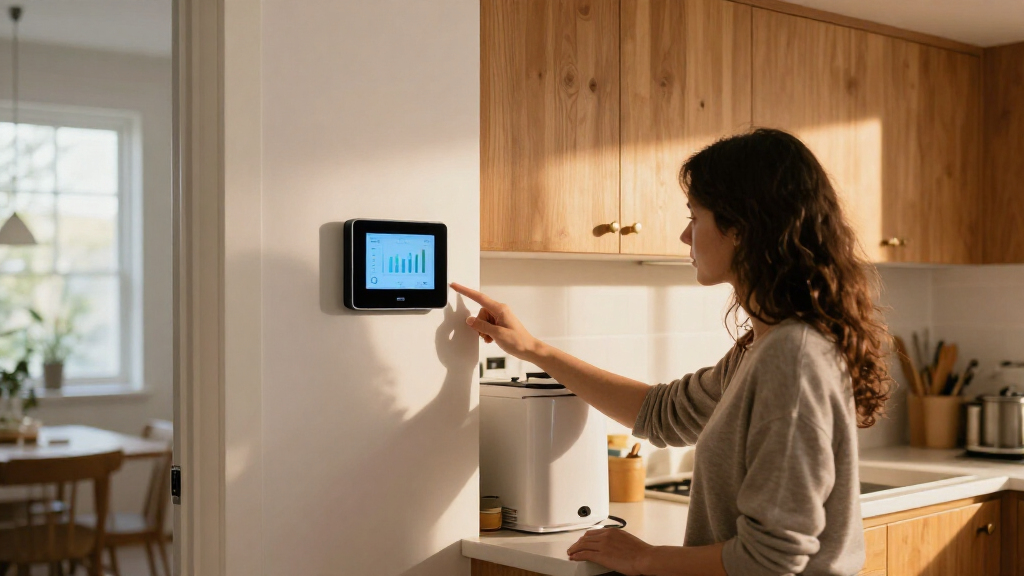
How We Picked
I ranked these smart home energy monitors by how much useful household visibility they offer, how practical their setup is, and how well their features match distinct buyer needs. Circuit count matters because more sensors can track more individual loads, but it is only useful when the panel has room and the buyer can identify which circuits matter. I also weighed integration options, connectivity, and form factor: panel monitors, dual-channel meters, single-channel devices, and plug-in monitors solve different jobs.
The order favors products that combine broad monitoring with a clear use case, while still accounting for setup burden and limits. That puts the Emporia Vue 3 with 16 sensors ahead for whole-home circuit visibility, while the Meross 18-circuit model earns a distinct place for Home Assistant users. Plug-in Kasa options rank for simplicity rather than panel coverage. Where product names alone do not establish details such as app functions, installation requirements, or included hardware, buyers should confirm those points in the current product documentation before choosing.
Factors to Consider When Choosing Smart Home Energy Monitors
Choosing a monitor starts with the question you want it to answer: which appliances draw power, what is the whole home using, or how does a particular circuit behave? These broader checks can help avoid buying a system that reports plenty of data but misses the loads or integrations you care about.
Decide Whether You Need Whole-Home or Device-Level Data
A whole-home monitor measures incoming power, while circuit sensors break usage into selected parts of the panel. Plug-in monitors measure only the device connected to each plug, so they work well for movable appliances but cannot account for hardwired equipment. A common mistake is expecting a smart plug to explain the entire bill or a main sensor to identify every appliance. Start by listing the loads you want to track, including fixed equipment such as HVAC, water heating, or an EV charger. If your main goal is finding standby draw on lamps and electronics, plug-in monitoring may be enough. If you want to compare heating, cooling, and other major circuits, look for a panel-based system with enough sensors for those loads.
Match Sensor Count to Your Electrical Panel
Sensor count is a capacity limit, not a guarantee that every branch circuit will be individually monitored. Panels vary in layout, available space, and the way circuits are paired, so a kit with many sensors may still not match your panel neatly. Check the monitor’s supported circuit and main sensor configuration against your panel before purchase. Leave room in your plan for future loads if you expect an EV charger, heat pump, or workshop equipment. Buying the largest sensor bundle by default can waste sensors if you have only a few priority circuits. Buying too few can leave the most interesting loads lumped together in whole-home totals.
Plan for Installation and Electrical Safety
Panel monitors require access to electrical equipment, and the installation steps differ by product and household setup. Confirm whether the manufacturer calls for a licensed electrician, whether the panel has physical room, and whether the sensors fit the conductors you need to monitor. Do not assume an included sensor count means the kit is a simple DIY project. A plug-in monitor avoids panel access, but it has its own limits around outlet access, device placement, and supported load. If you are unsure about panel work, factor professional installation into the choice before comparing software features. Ease of installation can matter more than a small increase in circuit coverage.
Check Smart-Home Compatibility Before You Buy
Integration labels describe different levels of control and data access. Matter support can help a compatible plug join a broader smart-home setup, while Home Assistant support or an open API may suit buyers who want custom dashboards and automations. An app-only monitor can still be useful, but it may keep energy history and alerts inside the manufacturer’s service. Verify the exact functions supported, since a product’s presence in a smart-home ecosystem does not always mean all readings or controls are exposed. Also check whether useful features depend on cloud access or a stable internet connection. Choose around the automations and data access you actually plan to use.
Think About Connectivity and Data Continuity
Energy monitoring is more useful when readings remain consistent and accessible. Wi-Fi is convenient where the panel has a reliable signal, while Ethernet can provide a wired option for equipment near a network connection. Metal enclosures and utility-room placement can weaken wireless coverage, so consider signal strength at the intended location rather than elsewhere in the home. Ask how the monitor behaves during an internet outage and whether it stores readings locally or resumes tracking after a disconnect. A gap in data can make it harder to compare usage patterns over time. Connectivity deserves attention before you rely on the monitor for alerts or long-term records.
Choose Features That Support a Real Decision
More charts do not automatically lead to lower energy use. Decide whether you need live readings, historical comparisons, circuit alerts, exportable data, or automation triggers, then check which of those the product actually provides. A buyer trying to shift laundry or charging to different hours may value timely circuit data more than a complicated appliance breakdown. Someone comparing seasonal HVAC use may care more about reliable long-term history. Keep your first goal narrow and measurable, such as tracking one high-use circuit or finding overnight standby loads. Paying for capabilities you will not use can add setup and app complexity without improving the decision you are trying to make.
Frequently Asked Questions
Can a smart energy monitor tell me which appliance is using electricity?
It depends on the monitor type. A circuit sensor can show usage on a branch circuit, but that circuit may serve several outlets or appliances at once. A smart plug measures the device connected through it, giving a clearer reading for that individual plug-in load. Whole-home monitors may estimate appliance activity from aggregate patterns, but buyers should not assume every system identifies each device automatically. For a hardwired appliance, check whether it has a dedicated circuit that the monitor can track.
Should I choose more circuit sensors or a monitor with smart-home integrations?
Choose more sensors if your priority is separating household loads and comparing circuits such as HVAC, cooking, or water heating. Choose integrations if you plan to bring readings into a platform, build automations, or keep data alongside other smart-home information. These benefits are not interchangeable: an open API does not add circuit coverage, and extra sensors do not guarantee better data access. Write down the two or three decisions you want the monitor to support, then prioritize the feature that enables them. If both matter, compare models that combine broad sensing with the integration you use.
Are smart plugs enough to monitor a whole home?
No. Smart plugs cover only the devices connected to them, so they cannot capture hardwired loads or provide a complete household total by themselves. They can still be a sensible starting point for a few appliances, especially if you want per-device readings without opening an electrical panel. To understand total usage, you need a main meter or another whole-home measurement source. Some households use both approaches: a whole-home monitor for the total and plugs for selected devices. Check whether their readings can be viewed together if you want one dashboard.
Will a panel-based monitor work with my electrical panel?
Compatibility depends on the panel layout, available space, the monitor’s sensor design, and the supported current range. Before ordering, compare the product’s installation documentation with your panel and the specific circuits you want to measure. Pay attention to whether the kit includes main sensors as well as branch-circuit sensors, since those serve different measurement points. If the panel is crowded or its wiring is unfamiliar, ask a qualified electrician to assess the fit. A larger sensor bundle cannot solve a physical compatibility problem.
Can an energy monitor lower my electricity bill by itself?
A monitor reports usage; savings depend on what you change after seeing the data. Readings can help identify unusually high loads, standby consumption, or times when shifting a flexible task may make sense. Results depend on your utility rates, household routines, and which equipment you can control. Alerts and automations may help turn information into action, but only if they fit your home’s devices and schedule. Treat the monitor as a decision aid and look for a clear baseline before judging whether a change helped.
Conclusion
For broad circuit-by-circuit tracking, I recommend the Emporia Vue 3 with 16 sensors as the best overall fit in this lineup; the eight-sensor Vue 3 is a better match if you have fewer priority circuits. The Kasa KP125M Matter four-pack is my beginner-friendly choice for monitoring selected plug-in devices, while the Meross 18-circuit model suits buyers who want extensive coverage with Home Assistant support. For connectivity flexibility, consider the Eyedro Wi-Fi and Ethernet monitor; for a focused measurement point, compare the Shelly single-channel meter and the dual-channel options against your wiring needs. The premium choice depends on what you value most: wider circuit coverage, an integration path, or wired connectivity. Before choosing any panel monitor, confirm sensor fit, installation requirements, and compatibility with your electrical panel.