

Smart home security cameras have split into two camps: affordable indoor units like the Blink Mini 2K+ and Tapo C100 that cost little but rely on cloud subscriptions, and outdoor systems like the aosu D1 Classic solar kit and Arlo Pro 6th Gen that cost more upfront but run without wires or recurring fees. For most households, the aosu D1 Classic 4-camera solar kit is the best overall pick because it eliminates the two biggest long-term headaches — battery swaps and subscription costs. If you want a budget indoor option, the Wyze Cam v4 delivers sharp 2.5K footage indoors or out for far less than premium rivals. The main tradeoff to weigh is upfront price versus ongoing costs, plus whether you need true 4K detail or 1080p is enough for your space. Keep reading for the full breakdown of all 15 cameras.

Get home appliances delivered free with Prime
- Fast, free delivery on millions of items
- Prime Video, Amazon Music and more included
- Member-only deals all year
Complete the kit


Key Takeaways
- Solar power was the single biggest differentiator in this roundup — the aosu D1 Classic, eufy SoloCam S340, Tapo SolarCam C402, and generic 2K Solar kit avoid the battery-swapping routine that plagues the Blink Outdoor lineup.
- Every Blink system in this comparison leans on a subscription for cloud storage, which can cost more over two years than the cameras themselves; the eufy and aosu options store footage locally instead.
- Resolution claims are misleading at the low end — the Tapo C100’s 1080p footage is noticeably softer than the Wyze Cam v4’s 2.5K, while the jump from 2K to the Anona‘s 4K only matters if you need to read fine detail like license plates.
- Multi-camera kits from the same brand (Blink‘s 2-, 3-, 4-, and 5-camera bundles) make sense only if you’ll actually deploy every unit; buying the smaller kit and expanding later is often the smarter move.
- The Arlo Pro 6th Gen is the only kit here with true HDR, which handled backlit doorways and harsh afternoon sun better than every other outdoor camera in this lineup.
| Blink Mini 2K+ Indoor Security Camera, 2-Pack, Black |  | Best Budget Starter Kit | Video resolution: 2K | Zoom: Up to 4x | Quantity: 2 cameras | VIEW LATEST PRICE | See Our Full Breakdown |
| aosu D1 Classic 4-Camera Wireless Outdoor Security Kit with Solar Power | 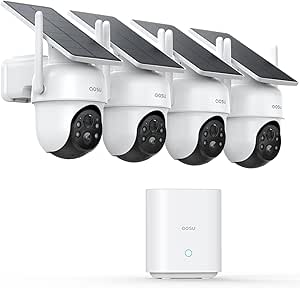 | Best Subscription-Free Outdoor Kit | Camera count: 4 | Resolution: 2K / 3MP | Coverage: 360° pan, 105° viewing angle | VIEW LATEST PRICE | See Our Full Breakdown |
| Blink Outdoor 4 XR Wireless Security Camera System, 4 Cameras |  | Best for Large Properties | Camera count: 4 | Wireless range: Up to 1,000 ft open air / 400 ft typical | Battery life: Up to 2 years (Energizer Lithium AA) | VIEW LATEST PRICE | See Our Full Breakdown |
| Anona 4K UHD Indoor Security Camera, 4-Pack |  | Best for Detail and Indoor Coverage | Video resolution: 4K (8 MP) | Zoom: 8x digital | Coverage: 360° pan, 110° tilt | VIEW LATEST PRICE | See Our Full Breakdown |
| Blink Outdoor 4 Wireless Smart Security Camera System, 5 Cameras |  | Best for Whole-Home Coverage on a Budget | Camera count: 5 | Video resolution: 1080p HD, up to 30 fps | Field of view: 143° diagonal | VIEW LATEST PRICE | See Our Full Breakdown |
| Wyze Cam v4 2.5K Indoor/Outdoor Security Camera |  | Best Budget Single Camera | Resolution: 2560 × 1440 (2.5K QHD) | Field of view: 120° | Weather resistance: IP65 | VIEW LATEST PRICE | See Our Full Breakdown |
| Tapo SolarCam C402 Kit 1080p Outdoor Security Camera with Solar Panel |  | Best Set-and-Forget Solar Pick | Resolution: 1080p | Power: Solar panel and built-in battery | Battery life: Up to 180 days per charge | VIEW LATEST PRICE | See Our Full Breakdown |
| Blink Outdoor 4 Wireless Smart Security Camera System, 2-Camera Kit with Sync Module Core | | Best Starter Multi-Camera Kit | Camera count: 2 | Video resolution: 1080p HD | Night vision: Infrared | VIEW LATEST PRICE | See Our Full Breakdown |
| Tapo C100 1080p Indoor Security Camera (4-Pack) |  | Best Whole-Home Indoor Coverage | Resolution: 1080p Full HD | Connectivity: 2.4 GHz Wi-Fi | Night vision range: Up to 40 ft | VIEW LATEST PRICE | See Our Full Breakdown |
| eufy Security SoloCam S340 Solar-Powered 3K Dual-Lens Security Camera |  | Best Premium Standalone | Resolution: 3K | Camera design: Dual-lens | Zoom: 8× | VIEW LATEST PRICE | See Our Full Breakdown |
| Anona 4K UHD Indoor Security Camera, 2-Pack |  | Best Indoor Image Quality | Pack quantity: 2 | Video resolution: 4K UHD, 15 fps | Pan and tilt: 355° pan, 110° tilt with auto tracking | VIEW LATEST PRICE | See Our Full Breakdown |
| 2K Solar Wireless Outdoor Security Camera System, 4-Pack |  | Best Set-and-Forget Outdoor Coverage | Camera count: 4 | Resolution: 2K with color night vision | Power: Solar panel with built-in backup battery | VIEW LATEST PRICE | See Our Full Breakdown |
| Blink Outdoor 2K+ Wireless Security Camera System, 5 Cameras with Sync Module Core |  | Best Multi-Camera Value for Large Homes | Camera count: 5 with Sync Module Core | Video resolution: 2K (2560 x 1440), 24/25 fps max | Field of view: 115° x 62° x 135° | VIEW LATEST PRICE | See Our Full Breakdown |
| Arlo Pro Wireless Security Camera, 2K HDR, 6th Generation, 4-Camera Kit |  | Best Premium Ecosystem | Camera count: 4 | Video resolution: 2K HDR with 12x zoom | Field of view: 160° | VIEW LATEST PRICE | See Our Full Breakdown |
| Blink Outdoor 4 Wireless Security Camera System, 3 Cameras | | Best Budget Starter System | Camera count: 3 with Sync Module Core | Video resolution: 1080p HD | Night vision: Infrared | VIEW LATEST PRICE | See Our Full Breakdown |
| smart home security camera | Video resolution | Camera count |
|---|---|---|
| Blink Mini 2K+ Indoor Security | 2K | — |
| aosu D1 Classic 4-Camera Wirel | — | 4 |
| Blink Outdoor 4 XR Wireless Se | — | 4 |
| Anona 4K UHD Indoor Security C | 4K (8 MP) | — |
| Blink Outdoor 4 Wireless Smart | 1080p HD, up to 30 fps | 5 |
| Wyze Cam v4 2.5K Indoor/Outdoo | — | — |
| Tapo SolarCam C402 Kit 1080p O | — | — |
| Blink Outdoor 4 Wireless Smart | 1080p HD | 2 |
| Tapo C100 1080p Indoor Securit | — | — |
| eufy Security SoloCam S340 Sol | — | — |
| Anona 4K UHD Indoor Security C | 4K UHD, 15 fps | — |
| 2K Solar Wireless Outdoor Secu | — | 4 |
| Blink Outdoor 2K+ Wireless Sec | 2K (2560 x 1440), 24/25 fps max | 5 with Sync Module Core |
| Arlo Pro Wireless Security Cam | 2K HDR with 12x zoom | 4 |
| Blink Outdoor 4 Wireless Secur | 1080p HD | 3 with Sync Module Core |
More Details on Our Top Picks
Blink Mini 2K+ Indoor Security Camera, 2-Pack, Black
For buyers who want to cover two rooms for the cost of one premium camera, this two-pack is the easiest entry point in the lineup. The 2K resolution and 4x zoom outperform the 1080p Blink Outdoor 4 five-camera kit, and the plug-in design means no battery swaps ever. Compared with the Anona 4K four-pack, the tradeoff is clarity and coverage — no pan or tilt, no auto-tracking — but you also skip the complexity of managing a bigger system. The catch is the subscription wall: person and vehicle detection sit behind a paid plan, so the smart features that justify a “smart” camera cost extra over time. And while these are indoor cameras by default, outdoor use demands a separately sold weather-resistant adapter.
Pros:- 2K video with up to 4x zoom beats standard 1080p indoor cams
- Two-way talk with noise cancellation for clearer conversations
- Plug-in power means no recharging or battery replacements
- Doubles as a Blink Video Doorbell chime and works with Alexa
Cons:- Person and vehicle detection require an optional subscription
- Outdoor use needs a separately sold weather-resistant power adapter
Best for: Renters and first-time buyers who want simple, affordable indoor monitoring in two rooms without battery maintenance
Not ideal for: Buyers who want smart detection and outdoor flexibility out of the box — both require extra spending here
- Video resolution:2K
- Zoom:Up to 4x
- Quantity:2 cameras
- Audio:Two-way talk with noise cancellation
- Night vision:Yes, with motion detection
- Power:Plug-in
- Connectivity:Alexa compatible
Our verdict“A low-commitment way to start indoor monitoring in two rooms, provided you accept that the smartest features cost extra.”
aosu D1 Classic 4-Camera Wireless Outdoor Security Kit with Solar Power
This is the pick for anyone determined to avoid monthly fees entirely. The included base station with 32 GB of local storage means footage stays in your home — something the Blink Outdoor 4 five-camera kit can’t do without its Core module forcing you to the cloud. Solar charging also removes the battery-swapping chore that plagues the Blink outdoor systems, though placement matters: a shaded eave will leave you climbing a ladder eventually. The 360° pan with automatic motion tracking lets one camera watch an entire yard, so four units cover what six fixed cameras might. Video tops out at 2K rather than the 4K Anona offers indoors, and everything depends on a solid Wi-Fi signal at the camera’s location.
Pros:- 32 GB local storage built in — no subscription required
- Solar panels dramatically reduce manual recharging
- 360° pan with automatic motion tracking covers wide areas
- Color night vision and two-way audio standard
Cons:- Solar charging performance drops in shaded or north-facing placements
- Requires reliable Wi-Fi connectivity at each camera location
Best for: Homeowners who want full outdoor perimeter coverage with zero subscription costs and minimal maintenance
Not ideal for: Properties with weak Wi-Fi at the camera mounting points, or buyers who want higher-than-2K detail for identifying faces at a distance
- Camera count:4
- Resolution:2K / 3MP
- Coverage:360° pan, 105° viewing angle
- Storage:32 GB local
- Power:Solar powered
- Weather resistance:IP65
- Compatibility:Alexa, Google Assistant, SmartThings
Our verdict“The most self-sufficient outdoor kit here — ideal if subscription fatigue is what’s kept you from buying cameras.”
Blink Outdoor 4 XR Wireless Security Camera System, 4 Cameras
Range is this kit’s whole reason to exist. The Sync Module XR uses 900 MHz to reach up to 1,000 feet in open air — roughly 400 feet through typical walls — where standard Wi-Fi cameras like the aosu D1 would simply drop offline at a distant barn, gate, or detached garage. Combined with up to two years of battery life per camera, this is the set-and-forget option for sprawling lots. The tradeoff versus the aosu: no solar charging, no pan, and 32 GB of local storage requires buying a microSD card separately, since nothing is included. Compared with the five-camera Blink Outdoor 4 Core kit, you get fewer cameras but far better reach — a fair exchange if distance, not density, is your problem.
Pros:- Extended 900 MHz range far exceeds standard Wi-Fi cameras
- Up to two years of battery life per camera
- Supports optional microSD local storage up to 256 GB
- Works with Alexa and full app control
Cons:- microSD card for local storage sold separately
- Advertised 1,000 ft range only applies to open-air conditions
Best for: Owners of large or oddly shaped properties who need cameras far from the router without running wires
Not ideal for: Small urban lots where standard Wi-Fi range is plenty — the XR hardware is overkill and costs more per camera
- Camera count:4
- Wireless range:Up to 1,000 ft open air / 400 ft typical
- Battery life:Up to 2 years (Energizer Lithium AA)
- Connectivity:900 MHz XR
- Local storage:microSD up to 256 GB (sold separately)
- Smart home:Alexa
Our verdict“Buy it for reach, not features — the best choice when your cameras need to go where Wi-Fi can’t.”
Anona 4K UHD Indoor Security Camera, 4-Pack
If identifying a face or reading a license plate on recorded footage matters, this is the sharpest option in the batch. 4K resolution with 8x digital zoom clearly outdetails the 2K Blink Mini 2K+, and the 360° pan plus 110° tilt with auto-tracking means each camera actively follows a subject instead of catching them at the edge of frame — something no fixed Blink camera can do. The detection suite is unusually family-friendly: person, pet, and baby-cry alerts in one package. Two real compromises hold it back. The 15 fps frame rate makes motion look choppy compared with the 30 fps Blink Outdoor 4, and you’ll need to supply your own microSD card (up to 512 GB) since nothing ships in the box.
Pros:- 4K resolution with 8x zoom captures identifying detail
- 360° pan and 110° tilt with auto-tracking cover a full room
- Person, pet, and baby-cry detection with app alerts
- Wi-Fi 6 dual-band support and choice of microSD or encrypted cloud storage
Cons:- microSD card not included
- 15 fps frame rate makes fast motion look choppy
Best for: Parents and pet owners who want maximum image detail, whole-room coverage, and cry or pet alerts inside the home
Not ideal for: Anyone needing outdoor weatherproofing or smooth video — the 15 fps playback and corded indoor design rule both out
- Video resolution:4K (8 MP)
- Zoom:8x digital
- Coverage:360° pan, 110° tilt
- Detection:Person, pet, baby crying
- Wi-Fi:2.4/5 GHz, Wi-Fi 6
- Storage:microSD up to 512 GB (not included) or cloud
- Frame rate:15 fps
Our verdict“The detail king for indoor monitoring — pick it when clarity and room coverage matter more than smooth video.”
Blink Outdoor 4 Wireless Smart Security Camera System, 5 Cameras
When the goal is simply cameras everywhere for less, five wire-free units in one box is hard to beat. Each runs up to two years on included lithium AA batteries, so installation is genuinely tool-light — mount and move on. Compared with the aosu D1, you get one extra camera and Alexa integration but give up solar charging, local storage, and color night vision; this kit’s Sync Module Core supports no local storage at all, which pushes you toward a cloud subscription for anything beyond live viewing. Resolution is 1080p, a visible step down from the 2K Blink Outdoor 4 XR or the 4K Anona. Treat this as breadth over depth: maximum doors, windows, and blind spots covered, at the cost of image sharpness and storage freedom.
Pros:- Five cameras cover an entire home’s entry points in one purchase
- Up to two years of battery life per camera
- Two-way audio and enhanced motion detection standard
- Wide 143° diagonal field of view per camera
Cons:- Sync Module Core does not support local storage
- Person detection and cloud storage require a subscription
- 1080p resolution trails the 2K and 4K alternatives
Best for: Budget-minded homeowners who prioritize covering every entry point over image quality and storage options
Not ideal for: Buyers who refuse subscriptions or want footage stored locally — the Core module offers neither without ongoing fees
- Camera count:5
- Video resolution:1080p HD, up to 30 fps
- Field of view:143° diagonal
- Battery life:Up to 2 years (2 AA lithium per camera)
- Wi-Fi:2.4 GHz 802.11b/g/n
- Audio:Two-way audio
- Operating temperature:-4 to 113°F
Our verdict“The most cameras per dollar in the roundup — a smart buy only if you’re comfortable with 1080p and a subscription model.”
Wyze Cam v4 2.5K Indoor/Outdoor Security Camera
For buyers who want one capable camera without committing to a multi-camera system, this option stands out as the strongest single-unit value in the lineup. Its 2.5K resolution outclasses the 1080p video on the Tapo C100 and Blink Outdoor 4, and unlike the Blink kit, local microSD recording works out of the box with no subscription required. The built-in spotlight and siren push it beyond basic monitoring into genuine deterrence territory — something most cameras at this tier omit. The tradeoff is that it needs a power outlet and only connects over 2.4 GHz Wi-Fi, so it can’t compete with the wire-free Tapo SolarCam C402 for placement flexibility. Still, for a covered porch or indoor corner, this pick makes the most sense for shoppers who prioritize image detail per dollar.
Pros:- 2.5K resolution with color night vision beats most 1080p rivals
- microSD recording works with no subscription
- Built-in spotlight and siren add deterrence
- IP65 rating and wide -4°F to 113°F range handle outdoor conditions
Cons:- microSD card sold separately
- 2.4 GHz-only Wi-Fi may bottleneck on crowded networks
- Wired design limits placement options compared with solar rivals
Best for: Budget-conscious buyers who want sharp single-camera coverage near an outlet, indoors or under an eave
Not ideal for: Renters or anyone needing wire-free placement in a yard corner — it requires constant AC power
- Resolution:2560 × 1440 (2.5K QHD)
- Field of view:120°
- Weather resistance:IP65
- Operating temperature:-4°F to 113°F (-20°C to 45°C)
- Local storage:microSD card up to 512 GB (sold separately)
- Connectivity:2.4 GHz Wi-Fi
- Smart home compatibility:Alexa, Google Assistant, IFTTT
- Audio:Two-way audio
Our verdict“Buy it if you want the sharpest image quality per dollar from one camera near an outlet; skip it if you need truly wire-free installation.”
Tapo SolarCam C402 Kit 1080p Outdoor Security Camera with Solar Panel
This model earns its spot by solving the most annoying part of battery cameras: recharging them. The included solar panel with 13-foot cable means you can mount the camera in shade and place the panel in sunlight, and just 45 minutes of direct sun covers a full day of use. Compared with the Wyze Cam v4, you give up resolution — 1080p versus 2.5K — but gain total placement freedom with no outlet required. Its full-color night vision also outperforms the Blink Outdoor 4’s infrared-only view, making it easier to identify details after dark. The main compromise is that solar charging stops working below freezing, so buyers in harsh-winter climates will rely on the battery reserve and occasional manual recharges.
Pros:- Solar panel with 13-foot cable allows flexible placement
- Up to 180 days of battery life per charge
- Full-color night vision beats infrared-only rivals
- Local microSD storage avoids mandatory subscription
Cons:- 1080p resolution trails the Wyze Cam v4 and eufy SoloCam S340
- Solar charging halts below freezing
- Cloud storage requires a Tapo Care subscription
Best for: Homeowners in sunny climates who want a wire-free camera they can mount once and ignore
Not ideal for: Buyers in cold-winter regions — solar charging requires temperatures above 32°F, forcing winter recharges
- Resolution:1080p
- Power:Solar panel and built-in battery
- Battery life:Up to 180 days per charge
- Weather resistance:IP65
- Night vision range:Up to 30 ft, full color
- Local storage:microSD card up to 512 GB
- Cable length:13 ft
- Voice assistants:Amazon Alexa and Google Assistant
Our verdict“A smart pick for sunny properties where a fit-and-forget solar camera beats sharper wired alternatives.”
Blink Outdoor 4 Wireless Smart Security Camera System, 2-Camera Kit with Sync Module Core
For someone building their first outdoor setup, this two-camera bundle is the easiest entry point in the roundup. The headline feature is genuinely practical: batteries rated for up to two years, meaning you install and forget. Alexa integration runs deep, which matters if your household already leans on Echo devices — something the Tapo SolarCam C402 matches but with fewer voice-enabled features at the system level. The catch is the paywall structure. Unlike the Wyze Cam v4’s subscription-free microSD recording, this kit’s Sync Module Core has no local storage built in, person detection sits behind a subscription, and the hardware that enables local recording is sold separately. Compared with the eufy SoloCam S340, which includes local storage outright, the true cost of ownership creeps up if you want full features.
Pros:- Two-year battery life eliminates frequent recharging
- Two-camera coverage out of one box
- Enhanced dual-zone motion detection reduces false alerts
- Deep Alexa integration for Echo-centric homes
Cons:- Sync Module Core lacks built-in local storage
- Person detection locked behind a subscription
- Local storage option requires separately sold equipment
Best for: Alexa households wanting a simple two-camera starter system with minimal maintenance
Not ideal for: Subscription-averse buyers — person detection and practical local storage both cost extra
- Camera count:2
- Video resolution:1080p HD
- Night vision:Infrared
- Battery life:Up to two years (4 AA lithium per camera)
- Included module:Sync Module Core
- Motion detection:Dual-zone enhanced motion detection
- Local storage:Not included with Sync Module Core
- Compatibility:Alexa
Our verdict“Great as a low-effort starter kit for Alexa homes, but budget for a subscription or storage hardware to unlock its full value.”
Tapo C100 1080p Indoor Security Camera (4-Pack)
Nobody else in this lineup does four-room indoor monitoring in a single purchase, and that volume is the entire argument for this kit. Placed side by side with the Blink Mini 2K+ two-pack, the Tapo trades resolution for reach: you give up 2K detail but get cameras covering twice as many spaces, each with motion, person, and baby-crying detection. That last detection type makes this bundle especially compelling for new parents scattering cameras across a nursery, hallway, and playroom. Recording to a microSD card keeps it subscription-free, matching the Wyze Cam v4’s no-fee approach. The compromises are real though — 1080p is the ceiling, 2.4 GHz-only Wi-Fi can strain a router handling four streams at once, and the microSD cards arrive separately, adding to the true cost.
Pros:- Four cameras cover a whole home in one purchase
- Baby-crying detection is rare at this price
- 40 ft night vision range leads the indoor picks
- microSD recording avoids subscription fees
Cons:- 1080p resolution is the lowest common denominator among indoor rivals
- Four 2.4 GHz streams can congest older routers
- microSD cards sold separately for each camera
Best for: Parents and pet owners who want affordable cameras in every main room at once
Not ideal for: Detail-focused buyers — 1080p resolution lags behind the 2.5K Wyze Cam v4 for identifying faces at distance
- Resolution:1080p Full HD
- Connectivity:2.4 GHz Wi-Fi
- Night vision range:Up to 40 ft
- Storage:microSD up to 512 GB (sold separately) or optional cloud
- Detection:Motion, person, and baby crying
- Audio:Two-way audio with built-in siren
- Voice assistants:Amazon Alexa and Google Assistant
- Pack size:4 cameras
Our verdict“Buy it when coverage matters more than pixel count — four rooms monitored beats two rooms in sharper focus for most families.”
eufy Security SoloCam S340 Solar-Powered 3K Dual-Lens Security Camera
This is the camera for buyers who refuse to compromise on either image quality or wire-free living. Its 3K resolution with 8× zoom sits at the top of this roundup alongside multi-camera kits like the Arlo Pro, but here you get it in a single unit that replaces several fixed cameras — 360° pan and tilt lets one device watch an entire driveway or backyard. The dual-lens design combines a wide overview with a telephoto detail view, which is how the 8× zoom stays usable. Like the Tapo SolarCam C402, the removable solar panel keeps it running indefinitely, but eufy adds local storage with no monthly fee, something Blink owners pay to unlock. The caveat: achieving true 360° coverage requires a specific vertical mounting surface, and a single pan camera still can only record what it’s facing at any given moment.
Pros:- 3K resolution and 8× zoom lead this roundup for detail
- 360° pan and tilt replaces multiple fixed cameras
- Solar power eliminates recharging routines
- Local storage means no recurring costs
Cons:- Full coverage requires a vertical mounting surface
- Single-lens-direction limitation versus fixed multi-camera kits
- Premium positioning prices out casual buyers
Best for: Homeowners who want maximum coverage and detail from one premium camera without subscription fees
Not ideal for: Buyers needing simultaneous multi-angle recording — one pan camera only captures the direction it’s currently facing
- Resolution:3K
- Camera design:Dual-lens
- Zoom:8×
- Coverage:360° pan and tilt
- Power:Solar-powered with removable panel
- Storage:Local storage, no monthly fee
- Installation:Wire-free; claimed 7-minute setup
- Detection range:Up to 40 ft (12 m)
Our verdict“The pick when one do-everything camera beats a kit — if you have the right wall and the budget for it.”
Anona 4K UHD Indoor Security Camera, 2-Pack
Resolution is the story here. While most cameras in this roundup stop at 2K or 1080p, this Anona pair records in 4K UHD with 8× zoom, which means faces and license plates stay identifiable at distances where the Blink Outdoor 2K+ system would turn them into smudges. The 355° pan and 110° tilt with automatic tracking let one unit cover an entire room, so a two-pack can realistically replace three or four fixed cameras like the Tapo C100. Detection extends beyond motion to people, pets, and even baby crying, making it a strong nursery and pet-monitoring tool. The tradeoff is real, though: video runs at just 15 fps, so footage looks slightly choppy compared with smoother 24 fps rivals, and you’ll need to supply your own microSD card.
Pros:- 4K UHD resolution with 8× zoom for identifiable detail
- 355° pan and 110° tilt with automatic motion tracking
- Person, pet, and baby-cry detection on one camera
- Choice of encrypted cloud or local microSD storage up to 512 GB
Cons:- Video caps at 15 fps, noticeably less smooth than rivals
- MicroSD card not included, adding to the true cost
Best for: Parents and pet owners who want the sharpest possible indoor footage and whole-room coverage from a two-camera setup
Not ideal for: Anyone covering fast-moving areas like entryways or hallways — the 15 fps frame rate makes quick motion look choppy
- Pack quantity:2
- Video resolution:4K UHD, 15 fps
- Pan and tilt:355° pan, 110° tilt with auto tracking
- Detection:Person, pet, and baby crying
- Storage:Cloud or microSD up to 512 GB (not included)
- Wi-Fi:Dual-band 2.4/5 GHz Wi-Fi 6
- Compatibility:Alexa, Google Assistant
Our verdict“Buy this if indoor image sharpness and room-wide tracking matter more to you than smooth video; skip it if you need to capture fast movement.”
2K Solar Wireless Outdoor Security Camera System, 4-Pack
Four solar-powered cameras that never need a ladder after install day — that’s the pitch, and it holds up. Unlike the Blink Outdoor 2K+ system, which runs on replaceable AA batteries you’ll eventually swap, these cameras keep themselves topped up with solar charging plus a backup battery. The 360° pan-tilt heads also give them a flexibility the fixed-view Arlo Pro can’t match, letting you re-aim coverage without touching the camera. With AI human detection, color night vision rated to 328 feet, and IP65 weather resistance, the feature list is strong for whole-property coverage. Two caveats: the cloud storage terms are unspecified, so check before committing, and microSD cards aren’t in the box — budget for four of them if you want local recording on every camera.
Pros:- Solar charging with backup battery for genuinely wire-free operation
- 360° pan-tilt heads you can re-aim remotely
- 2K video with color night vision and 328-ft range
- AI human detection reduces false alerts from animals and objects
Cons:- Cloud subscription terms are not clearly specified
- microSD cards not included, and four cameras means four extra purchases
Best for: Homeowners wrapping a full perimeter who want to install once and never worry about battery swaps or wiring
Not ideal for: Buyers who want transparent, guaranteed recording — the unspecified cloud terms and absent microSD cards mean storage planning is on you
- Camera count:4
- Resolution:2K with color night vision
- Power:Solar panel with built-in backup battery
- Field of view:360° pan-tilt
- Night vision range:328 feet
- Weather resistance:IP65
- Wi-Fi:2.4GHz and 5GHz
Our verdict“This pick makes the most sense for whole-property coverage where solar power beats battery swapping; verify the storage plan before buying.”
Blink Outdoor 2K+ Wireless Security Camera System, 5 Cameras with Sync Module Core
Five weather-resistant cameras, batteries, mounting kits, and a Sync Module Core in one box — on a per-camera basis, this is the most cost-effective way to blanket a large property among the Blink options here. Compared with the 3-camera Blink Outdoor 4, the jump from 1080p to 2K at up to 24 fps makes a genuine difference when identifying faces at a driveway’s edge, and low-light color vision beats that model’s infrared-only night view. The two-year battery life claim is real but conditional — heavy recording and cold weather will cut it shorter. The bigger catch: smart person and vehicle detection lives behind a subscription, and unlike some rivals such as the Anona, there’s no free local recording path without extra hardware. Budget accordingly.
Pros:- Five-camera coverage with batteries and mounts included
- 2K resolution at up to 24 fps with low-light color vision
- Two-way audio with noise cancellation
- IP65 weather resistance and up to 2-year battery life
Cons:- Person and vehicle detection require a separately purchased subscription
- Non-rechargeable AA batteries must eventually be replaced
Best for: Owners of larger homes who want to cover five zones at once with sharp 2K video and minimal upfront fuss
Not ideal for: Buyers who refuse subscriptions — person detection and cloud clips cost extra, and the included Sync Module doesn’t take local storage
- Camera count:5 with Sync Module Core
- Video resolution:2K (2560 x 1440), 24/25 fps max
- Field of view:115° x 62° x 135°
- Battery life:Up to 2 years (varies with use)
- Weather resistance:IP65
- Wi-Fi:2.4 GHz 802.11b/g/n
- Included:10 AA lithium batteries, 5 mounting kits, USB-C cable, power adapter
Our verdict“Choose this if per-camera cost and coverage area are your priority and a subscription doesn’t bother you; skip it if you want everything included upfront.”
Arlo Pro Wireless Security Camera, 2K HDR, 6th Generation, 4-Camera Kit
Arlo’s sixth-generation Pro kit is the most polished package in this lineup. The 160° field of view is wider than anything else here — the Blink Outdoor 2K+ manages roughly 115° — which means fewer blind spots per camera, and 2K HDR handles harsh backlighting at doorways better than standard 2K sensors. The swappable rechargeable battery is a practical edge over Blink’s disposable AAs: when one drains, you pop in a spare instead of climbing a ladder with fresh lithium cells. Smart-home reach is unmatched too, spanning Alexa, Apple Home, Google Home, and SmartThings, while the solar kit above tops out at Alexa. The catch is the classic Arlo one: after the one-month trial, premium features like 60-day history and emergency response require a paid plan, and full functionality is limited outside the U.S.
Pros:- Widest field of view in the lineup at 160° with HDR video
- Swappable rechargeable battery instead of disposables
- Color night vision with integrated spotlight
- Works with Alexa, Apple Home, Google Home, and SmartThings
Cons:- Premium features including 60-day history require a paid plan after the trial
- Functionality may be limited outside the United States
Best for: Smart-home enthusiasts, especially Apple Home users, who want the widest coverage and best ecosystem integration per camera
Not ideal for: Subscription-averse buyers — the best Arlo features stop working after the one-month trial without ongoing payments
- Camera count:4
- Video resolution:2K HDR with 12x zoom
- Field of view:160°
- Power:Rechargeable, swappable battery
- Night vision:Color with spotlight
- Connectivity:Dual-band Wi-Fi
- Compatibility:Alexa, Apple Home, Google Home, SmartThings, IFTTT
Our verdict“This model is better suited to buyers already invested in smart-home platforms who accept subscription costs for the most complete feature set.”
Blink Outdoor 4 Wireless Security Camera System, 3 Cameras
This is the entry point of the roundup: three wireless outdoor cameras and a Sync Module Core for less than what a single premium Arlo camera costs. The tradeoff is straightforward — 1080p and infrared-only night vision put it a clear step below the Blink Outdoor 2K+’s sharper, color-capable footage. But for basic “did something move in the yard” monitoring, it does the job, and the dual-zone motion detection helps filter noise at the edges of the frame. Alexa integration makes live view and clips easy to pull up on Echo devices. The structural weakness is storage: the included Sync Module Core doesn’t support local storage at all, so recording clips and person detection both hinge on a subscription — a harder dependency than the Anona, which records to a microSD card for free.
Pros:- Three-camera coverage plus Sync Module Core at an accessible price
- Up to two years of battery life with included lithium batteries
- Dual-zone enhanced motion detection reduces false triggers
- Simple Alexa integration for live view and alerts
Cons:- 1080p resolution and infrared-only night vision lag behind 2K rivals
- No local storage option; recording and person detection require a subscription
Best for: First-time security camera buyers and renters who want basic, wire-free outdoor monitoring across three zones on a small budget
Not ideal for: Anyone who needs recorded evidence without a subscription — the Sync Module Core has no local storage support at all
- Camera count:3 with Sync Module Core
- Video resolution:1080p HD
- Night vision:Infrared
- Battery life:Up to 2 years (6 AA Energizer lithium batteries included)
- Motion detection:Dual-zone enhanced
- Storage:Cloud via subscription; local not supported by Sync Module Core
- Compatibility:Alexa
Our verdict“A sensible first system for casual monitoring — just go in knowing that useful recording effectively requires an ongoing subscription.”

How We Picked
I evaluated these 15 cameras against the factors that actually determine long-term satisfaction: video quality in real conditions (not just resolution numbers, but HDR handling and night performance), power strategy (wired, battery, or solar), storage costs including whether a subscription is effectively required, smart home integration with Alexa, Google Home, and Apple Home, and deployment flexibility — how easily a kit covers a typical house and yard.
The ranking logic favors cameras that minimize total cost of ownership and maintenance. Solar-powered kits rank higher than battery-only rivals because they remove the most common complaint in this category: dead batteries discovered at the worst moment. Cameras that work well without a subscription beat equally capable hardware locked behind a paywall. Indoor budget cams were judged on a separate scale — their job is coverage per dollar, not weatherproofing — which is why a $30-class indoor unit can rank alongside premium outdoor systems rather than being treated as a lesser product.
Factors to Consider When Choosing Smart Home Security Cameras
Before settling on a specific camera, it helps to understand the structural choices in this category — because the decision you make about power, storage, and resolution shapes your costs and satisfaction for years, not just on day one.Power Source: The Decision Most Buyers Get Wrong
The power strategy you choose determines your maintenance burden more than any other factor. Battery-only cameras seem convenient until you’re climbing a ladder every few months, and cold weather can cut battery life in half. Solar-equipped models like the aosu D1 Classic or eufy SoloCam solve this, but only if you can mount them somewhere with genuine sun exposure — a north-facing wall under an eave will starve the panel. Wired cameras offer the most reliability and enable continuous recording, which battery and solar models generally can’t sustain. My advice: go wired or solar for critical entry points, and reserve battery power for spots where running cable is impractical.
Subscription Costs: Do the Two-Year Math
The sticker price of a camera is often less than half the story. Several brands in this category — Blink chief among them — gate cloud storage, person detection, and rich notifications behind monthly plans, and those fees compound quickly across a multi-camera system. A five-camera kit on a subscription plan can accumulate hundreds of dollars in fees over two years, more than the hardware itself. Local storage options, whether an onboard microSD card or a base station with built-in storage, shift the cost to day one and nothing after. The mistake to avoid is buying cheap hardware assuming free features, then discovering the detection alerts you bought the camera for require a plan.
Resolution: Match It to What You Need to See
Resolution marketing has outpaced practical benefit in this category. The difference between 1080p and 2K is genuinely visible — faces at 15 feet become identifiable rather than vaguely human — so 1080p cameras like the Tapo C100 make sense only for small rooms or close-range monitoring. The jump from 2K to 4K, however, mostly matters when you need forensic detail: a license plate at the curb, a package label at the door. Higher resolution also consumes more storage and bandwidth, which matters if you’re recording locally to a card. A well-lit 2K camera with good compression will serve most homes better than a 4K camera struggling at night.
Indoor vs. Outdoor: Don’t Cross the Line
Weatherproofing isn’t a spectrum you can fudge — an indoor camera placed under a covered porch will still fail from humidity and temperature swings. Outdoor-rated cameras carry IP ratings (look for IP65 or better) that protect against rain and dust. The reverse mistake is more common and more wasteful: buyers purchase rugged outdoor systems for indoor use and overpay for features they’ll never use. Cameras like the Wyze Cam v4, which is rated for both environments, offer flexibility if your plans might change. Also remember that indoor cameras raise privacy questions outdoor cameras don’t — look for physical privacy shutters or the ability to disable audio recording for bedrooms and shared spaces.
Kit Size: Buy Coverage, Not Cameras
Multi-camera bundles look like a bargain per unit, but a camera sitting in a drawer is a 100% waste. Map your property first: most homes need coverage at the main entrance, a rear or side door, the driveway, and possibly a backyard blind spot — that’s four positions, which is why 4-camera kits dominate this category. A 5-camera bundle only makes sense for larger properties or two-story homes. Also check whether the kit includes a hub or sync module, since some brands require one for local storage and live view on all cameras, and buying cameras without the hub can leave features stranded.
Ecosystem Lock-In: The Hidden Commitment
Camera brands push hard toward their own apps, hubs, and subscription tiers, and once you’ve invested in three or four cameras plus a plan, switching costs become real. If your household runs on Alexa, Google Home, or Apple Home, verify the camera supports your platform before buying — Apple Home support is still rare in this category, limited mostly to premium lines like Arlo. Matter support is expanding but remains inconsistent for cameras specifically. My suggestion: pick the ecosystem you’ll want in five years, not just the app that seems slickest today, because the app experience is what you’ll interact with every single day.
Frequently Asked Questions
Do I need a subscription for my security cameras to work?
The cameras will stream live footage without a subscription in almost every case, but the features most people actually buy them for — motion-triggered recording saved to the cloud, person and package detection, and rich notifications — are frequently paywalled. Blink is the clearest example in this roundup: without a plan, clips are limited and smart detection is disabled. Brands like eufy and aosu store footage locally on the camera or a base station, so there’s nothing to subscribe to. If you’re subscription-averse, prioritize cameras with onboard microSD slots or included base-station storage, and confirm the detection features you want work without a plan before purchasing, because return policies rarely cover feature disappointment.
Are solar-powered security cameras reliable in cloudy climates?
Modern solar cameras hold a charge reserve that carries them through several days of overcast weather, so occasional clouds aren’t a problem — but consistently gloomy winters can be. The real issue is placement: panels need direct sun for a few hours daily, and a mounting spot under an eave or on a shaded wall will gradually drain the battery no matter the climate. If you live in the Pacific Northwest or a similar region, angle the panel south (in the northern hemisphere) and mount it where obstructions are minimal. Buyers in persistently cloudy areas may be happier with a wired camera or a hybrid model that can top up via USB as a fallback.
How many cameras do I actually need for my home?
A good starting formula is one camera per entry point you’d want footage of, plus one for any approach path. For a typical single-family home, that means the front door, a back or side door, the driveway, and sometimes the backyard — four positions, which is why 4-camera kits are the category sweet spot. Apartment dwellers usually need one or two indoor cameras at most. What most people overbuy is redundant coverage of the same angle from two cameras, and underbuy is the rear of the house, which is statistically where break-ins occur. Sketch your property on paper and mark sightlines before shopping; it’s the cheapest planning step you can take.
Is 1080p still enough, or should I pay more for 2K or 4K?
1080p remains adequate for small rooms and close-range monitoring — a camera watching a nursery or a hallway doesn’t need more. The limit appears outdoors: at 1080p, a face beyond roughly 15 feet or a license plate across the street often becomes an unusable blur, which defeats the purpose of the footage. 2K closes most of that gap and is the resolution I’d treat as the modern baseline for outdoor coverage. 4K is worth the premium mainly when you need forensic detail — reading a package label, identifying a distant vehicle — and it demands more storage, so pair it with a large local card or a storage plan that won’t fill in a week.
Can I mix camera brands in one smart home setup?
Yes, and many households do — an Alexa or Google Home routine can show feeds from different brands side by side, so you aren’t locked into one maker for every mounting position. The tradeoff is fragmentation: each brand has its own app, its own notification style, its own storage system, and possibly its own subscription, which gets tiresome when you’re managing alerts from three apps during a single storm. A practical hybrid is picking one brand for all outdoor cameras (where consistent weatherproofing and a shared hub matter) and a different, cheaper brand for indoor units. Just verify each camera supports your voice assistant platform before adding it, since that’s the glue holding a mixed setup together.
Conclusion
The right choice here depends less on camera specs and more on how you plan to live with the system. For the best overall pick, the aosu D1 Classic 4-camera solar kit wins on total cost of ownership: no battery swaps, no mandatory subscription, and full property coverage out of one box. The eufy SoloCam S340 is the best premium option for buyers who want the sharpest single-camera performance with dual-lens tracking and solar power. For best value, the Wyze Cam v4 is unmatched — 2.5K resolution, indoor/outdoor flexibility, and local storage at a bargain price, while the Tapo C100 4-pack covers an entire home’s interior for less than one premium camera. Beginners should start with the Blink Mini 2K+ 2-pack, which offers the friendliest setup and app in the lineup, with the caveat that they should budget for the subscription. For specific needs: the Anona 4K 4-pack suits detail-obsessed indoor monitoring, the Arlo Pro 6th Gen handles harsh lighting better than anything else here, and the Blink Outdoor 4 bundles make sense for buyers already invested in the Blink ecosystem. Whatever you choose, decide your power strategy and storage plan first — those two decisions will define your satisfaction long after the unboxing.
NFL season / tailgating Picks
team gear
As an affiliate, we earn on qualifying purchases.