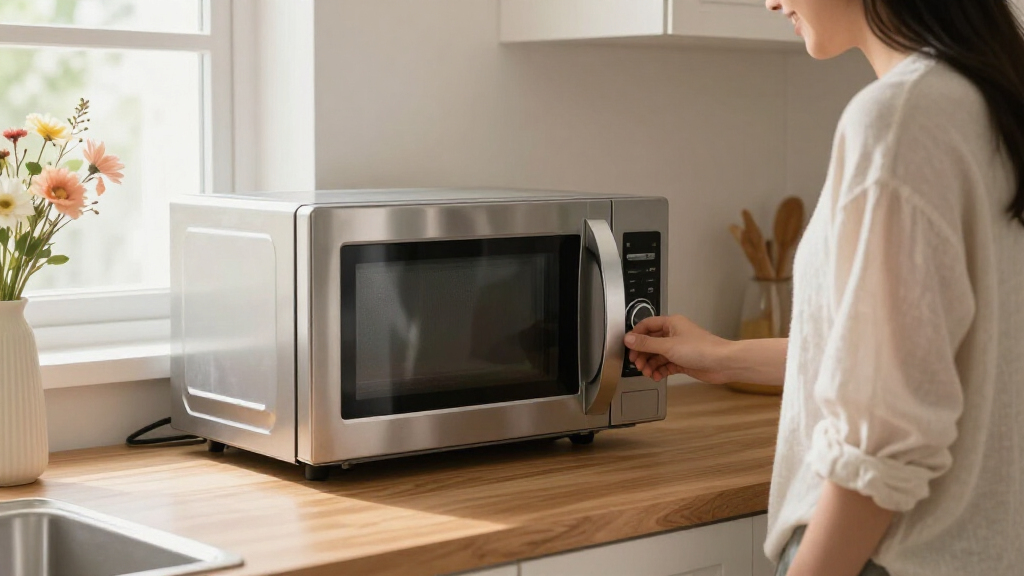
Compact microwave ovens trade capacity for counter space, and the best ones do it without sacrificing cooking power. The Toshiba 0.9 Cu.Ft 900W in stainless steel stands out as my best overall pick because it pairs near-full-size 900-watt output with a footprint that still fits tight counters. For smaller budgets or smaller spaces, the Chefman 0.7 Cu Ft 700W and the BLACK+DECKER 0.9 Cu.Ft 900W offer strong alternatives at different price and size points. The core tradeoff in this category is between the faster, more even heating of 900-watt models and the tighter fit and lower price of 700-watt units. Retro styling, like the Frigidaire Black Gold, adds another wrinkle: design appeal sometimes costs you interior space. Keep reading for the full breakdown of all nine models and which one suits your kitchen best.

Get home appliances delivered free with Prime
- Fast, free delivery on millions of items
- Prime Video, Amazon Music and more included
- Member-only deals all year
Complete the kit


Key Takeaways
- The 0.9 cu ft / 900W models (Toshiba, BLACK+DECKER) consistently outperformed the 0.7 cu ft / 700W units for reheating speed and evenness, while adding only about 2 inches of counter depth.
- Two of the three budget picks — the Chefman and COMFEE’ 700W models — carry nearly identical specs, so the decision between them comes down to presets, ECO mode, and finish rather than performance.
- The Toshiba stainless and black stainless models are functionally identical; the black stainless finish commands a small premium purely for aesthetics, which only makes sense if it matches your other appliances.
- Child safety locks appear on the Chefman and BLACK+DECKER 0.7 cu ft models but not every budget unit — a deciding factor for households with young kids that no spec sheet makes obvious.
- The Frigidaire Retro is the weakest pure performer per dollar, but its distinctive Black Gold design fills a niche none of the other eight address: buyers who prioritize looks over maximum interior capacity.


| compact microwave oven | Capacity | Power | Safety | Color |
|---|---|---|---|---|
| TOSHIBA Microwave Oven | 0.9 Cu.Ft | 900W | Two-step child lock | — |
| Chefman Compact Countertop Mic | 0.7 Cu Ft | 700W | Child safety lock | Stainless Steel |
| TOSHIBA Microwave Oven | 0.9 Cu.Ft | 900W | — | — |
| BLACK+DECKER Countertop Microw | 0.9 Cu.Ft | 900W | Child safety lock | Stainless Steel door frame, black enclosure |
| Chefman Countertop Microwave O | 0.7 Cu. Ft. | 700 Watts | Child Safety Lock | Black |
| COMFEE’ Countertop Microwave O | 0.7 Cu.Ft | 700W | Child Lock | Black |
| BLACK+DECKER Countertop Microw | 0.7 Cu.Ft | 700W | Child Safety Lock | — |
| BLACK+DECKER Countertop Microw | 0.7 Cu Ft | 700W | Child Safety Lock | Black (fingerprint-resistant) |
| Frigidaire 0.7 Cu. Ft. Retro C | 0.7 Cu. Ft. | 700W | — | Black Gold |
More Details on Our Top Picks
TOSHIBA Microwave Oven, 0.9 Cu.Ft, 900W, Stainless Steel
This Toshiba earns the top spot because it hits the sweet spot between footprint and power. At 0.9 cubic feet with 900 watts, it heats noticeably faster than the 700W Chefman models, which matters when you’re reheating leftovers or defrosting dinner on a tight schedule. The two-step child lock is a smarter design than the single-press locks on the BLACK+DECKER units — a toddler can’t accidentally disable it. Compared with the identically powered BLACK+DECKER 0.9 Cu.Ft model, this Toshiba’s one-touch start and eleven power levels give finer control for things like softening butter without melting it. The tradeoff: it’s one of the wider options here at 18.7 inches, so studio-apartment counters get tight, and Toshiba doesn’t publish noise specs, so expect the usual hum.
Pros:- 900W of power heats and defrosts noticeably faster than 700W rivals
- Two-step child lock is harder for kids to defeat
- Eleven power levels allow precise control for delicate tasks
- One-touch start saves steps for everyday reheating
Cons:- 0.9 Cu.Ft interior still struggles with large casserole dishes
- Footprint is wider than true micro-compact options
- No published noise data
Best for: Small households and families who want full-size heating speed in a countertop-friendly body
Not ideal for: Dorm rooms and office nooks where every inch matters — the 18.7-inch width rivals mid-size models
- Capacity:0.9 Cu.Ft
- Power:900W
- Input Power:1400W
- Dimensions:18.7 x 13.3 x 10.7 inches
- Turntable Diameter:10.6 inches
- Power Levels:11
- Presets:6
- Safety:Two-step child lock
Our verdict“If you want one microwave that balances speed, safety, and counter space without paying premium prices, this is the pick.”
Chefman Compact Countertop Microwave, 0.7 Cu Ft, 700W, Stainless Steel
When counter space is measured in inches, this Chefman’s 0.7 cubic foot body is the whole argument. It trims roughly an inch of width off the Toshiba 0.9 models while keeping digital controls and ten power levels, so you’re not sacrificing usability for the smaller frame. The mute option is a genuinely thoughtful touch the BLACK+DECKER units lack — anyone in a shared apartment or a night-shift household will appreciate silent operation. Compared with the 700W COMFEE’ model elsewhere in this roundup, this Chefman adds the child safety lock and a stainless finish that reads less dorm-room. The honest cost is power: 700 watts means longer cook times than the 900W options, and reheating a full plate of food can feel slow.
Pros:- Genuinely small footprint fits crowded counters
- Mute function eliminates the end-of-cycle beep
- Digital controls with ten power levels
- Child safety lock included
Cons:- 700W is noticeably slower than 900W rivals
- Only three presets — fewer shortcuts than the six-preset Chefman black model
Best for: Apartment dwellers, RV owners, and office break rooms where a mute function and small footprint matter more than speed
Not ideal for: Anyone who reheats large meals regularly — 700W and 0.7 Cu.Ft will test your patience
- Capacity:0.7 Cu Ft
- Power:700W
- Color:Stainless Steel
- Power Levels:10
- Presets:3
- Safety:Child safety lock
- Mute Function:Yes
Our verdict“The right choice when space and silence outrank raw heating speed on your priority list.”
TOSHIBA Microwave Oven, 0.9 Cu.Ft, 900W, Black Stainless Steel
This is functionally the same machine as the stainless Toshiba that takes Best Overall — same 900 watts, same 0.9 cubic foot interior, same two-step child lock — so the decision between them comes down to aesthetics and kitchen design. The black stainless finish hides fingerprints far better than standard stainless, which matters in a busy kitchen where the microwave door gets touched constantly. Next to the black Frigidaire Retro model in this lineup, this Toshiba trades quirky vintage charm for a cleaner, modern look that matches black appliances. The defrost function is easy to dial in, and the eleven power levels match its sibling exactly. The honest caveat: you’re paying a small premium for the finish, and the interior capacity limitations are identical — don’t expect a roasting dish to fit.
Pros:- Black stainless finish resists fingerprints and smudges
- Full 900W power matches the top pick’s performance
- Two-step child lock for households with kids
- Eleven power levels and easy defrost controls
Cons:- Commands a price premium over the identical stainless version
- Same 0.9 Cu.Ft capacity limits larger dishes
Best for: Buyers with black or dark-toned appliances who want a fingerprint-resistant finish that ties the kitchen together
Not ideal for: Budget-focused shoppers — the standard stainless version delivers identical performance for less
- Capacity:0.9 Cu.Ft
- Power:900W
- Input Power:1400W
- Dimensions:18.7 x 13.3 x 10.7 inches
- Turntable Diameter:10.6 inches
- Power Levels:11
- Presets:6
- Finish:Black Stainless Steel
Our verdict“Choose this over the stainless Toshiba purely for the darker, fingerprint-hiding finish — the performance is identical.”
BLACK+DECKER Countertop Microwave Oven, 0.9 Cu.Ft, 900W, Stainless Steel
BLACK+DECKER’s 0.9 Cu.Ft model wins on usability for eyes that aren’t what they used to be. The large LED display is brighter and easier to read at a glance than the Toshiba 0.9 models’ readouts, and the pre-programmed buttons for common foods remove guesswork entirely — press the potato button, walk away. The interior light and glass turntable round out a design built around simple, visible operation. Against the smaller BLACK+DECKER 0.7 Cu.Ft version elsewhere in this roundup, this one justifies its larger footprint with 900 watts and a roomier interior that handles dinner plates without crowding. What you give up is refinement: the control panel feels dated compared with Chefman’s digital interface, and there’s no mute option for the beeping, which light sleepers will notice.
Pros:- Large LED display is the most readable in this lineup
- Dedicated food preset buttons eliminate guesswork
- 900W power heats quickly for its class
- Interior light and removable glass turntable simplify monitoring and cleanup
Cons:- No mute option for end-of-cycle beeps
- Control panel design feels dated next to digital rivals
- Interior still can’t accommodate larger dishes
Best for: Older adults and anyone who values a big, legible display and simple one-button presets over modern touches
Not ideal for: Quiet households and shared spaces — no mute function means the beeping is here to stay
- Capacity:0.9 Cu.Ft
- Power:900W
- Dimensions:18.7 x 13.4 x 10.7 inches
- Interior Dimensions:12.36 x 13.66 x 8.70 inches
- Display:Large LED digital
- Safety:Child safety lock
- Color:Stainless Steel door frame, black enclosure
Our verdict“A sensible pick for buyers who prioritize legible controls and dead-simple presets over sleek interfaces.”
Chefman Countertop Microwave Oven 0.7 Cu. Ft., 700 Watts, Black
This black Chefman makes the list because it packs more features per dollar than anything else in the compact class. For a 0.7 cubic foot price point, you get six presets — double the three on the stainless Chefman — plus the mute function and child safety lock, covering everything a small kitchen actually needs. The ten power levels give it the same flexibility as models costing meaningfully more, and the black exterior wipes clean without showing streaks. Compared with the COMFEE’ 0.7 Cu.Ft model, this Chefman’s extra presets and silencing option make it the better everyday tool rather than just a bare-bones heater. The tradeoff is fundamental to the size class: 700 watts means adding time to most package instructions, and the 0.7 cubic foot interior tops out at dinner-plate-and-mug capacity.
Pros:- Six presets including popcorn and pizza cover daily routines
- Mute function and child safety lock at a budget price
- Ten power levels match more expensive rivals
- Easy-to-clean black finish hides everyday smudges
Cons:- 700W output requires longer cook times than 900W models
- Basic design lacks advanced features like sensor cooking
- 0.7 Cu.Ft capacity limits meal sizes
Best for: First-time buyers, students, and budget-conscious shoppers who want full features without paying for capacity they don’t need
Not ideal for: Families cooking for three or more — the interior and power output will bottleneck every meal
- Capacity:0.7 Cu. Ft.
- Power:700 Watts
- Power Levels:10
- Presets:6
- Color:Black
- Voltage:120V
- Safety:Child Safety Lock
- Mute Function:Yes
- Control Type:Digital
Our verdict“The smartest spend in this roundup if you want the most convenience features for the least money and can live with slower heating.”
COMFEE’ Countertop Microwave Oven, 0.7 Cu.Ft, 700W, Black, ECO Mode
Among all the 700W compacts in this roundup, the COMFEE’ stands out for one thing nobody else offers: an ECO mode that cuts standby power by 50%. For a dorm room or office nook where the microwave hums along all day, that translates into a real reduction in phantom draw. The one-touch cooking and defrost shortcuts keep daily operation simple, and the mute function is a thoughtful touch for open-plan spaces or late-night snacks. Compared with the BLACK+DECKER 0.7 Cu.Ft Stainless model, the controls are similarly straightforward, but COMFEE’ adds the quiet-operation angle the BLACK+DECKER lacks. The tradeoff is power: at 700W, everything cooks slower than the TOSHIBA 0.9 Cu.Ft 900W, and there are no advanced cooking modes here. This pick makes the most sense for buyers who prioritize low running cost and quiet use over speed.
Pros:- ECO mode cuts standby power consumption by 50%
- Mute function silences the beeping for shared or quiet spaces
- One-touch cooking and defrost keep operation simple
- Child lock adds safety for households with kids
Cons:- 700W power means longer cooking times than 900W alternatives
- No advanced cooking options like sensor or multi-stage programs
- Interior capacity details are vague, making dish-size planning harder
Best for: Dorm residents, office kitchens, and eco-conscious buyers who want the lowest standby power draw and silent operation
Not ideal for: Anyone who reheats large meals regularly — 700W and 0.7 Cu.Ft mean noticeably longer cook times than 900W models
- Capacity:0.7 Cu.Ft
- Power:700W
- Color:Black
- Special Features:ECO Mode, Mute Function
- Safety:Child Lock
- Cooking Functions:One-Touch Cooking, Auto Defrost
Our verdict“Buy this if quiet operation and energy savings matter more to you than raw cooking speed.”
BLACK+DECKER Countertop Microwave Oven, 0.7 Cu.Ft, 700W, Stainless Steel
Where most compact microwaves squint back at you with dim little panels, this BLACK+DECKER’s large LED display is genuinely easy to read from across the counter — a small thing that matters every single day. The 10 adjustable power settings give it finer control than the Frigidaire Retro’s 5 levels, which matters if you melt butter or soften chocolate without ruining it. Pre-programmed buttons for common foods make it approachable for anyone who doesn’t want to guess at cook times, and the stainless finish blends into kitchens better than the glossy black of the COMFEE’ ECO model. The compromises are familiar for this class: 700W is slower than the 900W options, there’s no sensor cooking, and the interior light is dim enough that checking food mid-cycle is a guessing game. Compared with similar compacts, this model earns its place through control granularity and legibility rather than raw features.
Pros:- Large, easy-to-read LED digital display
- 10 power settings offer finer control than most 700W compacts
- Pre-programmed buttons for common foods simplify operation
- Child safety lock included
Cons:- 700W output means slower cooking than 900W models
- No sensor cooking for automatic doneness
- Basic interior lighting makes it hard to see food while cooking
Best for: Buyers who want precise power control and a legible display for everyday reheating in a stainless-steel kitchen
Not ideal for: Cooks who want set-and-forget convenience — the lack of sensor cooking means you still have to judge doneness yourself
- Capacity:0.7 Cu.Ft
- Power:700W
- Power Settings:10
- Dimensions:17.3 x 13 x 10.2 inches
- Turntable Diameter:10 inches
- Display:LED Digital
- Safety:Child Safety Lock
- Certification:UL Listed
Our verdict“A sensible middle-of-the-road pick if display legibility and power control matter more than speed or smart features.”
BLACK+DECKER Countertop Microwave Oven 0.7 Cu.Ft, 700W, Child Safety, Black
At 17.1 x 12.3 x 9.5 inches, this is the tightest-fitting model in the entire lineup — a few fractions of a cubic footprint smaller than its stainless BLACK+DECKER sibling, and that matters when your counter is a strip beside a sink. The fingerprint-resistant black finish is more than cosmetic; glossy black microwaves like the Chefman 700W show every smudge, and this one quietly doesn’t. Feature-wise, multi-stage cooking sets it apart from the COMFEE’ — you can program a defrost followed by a cook cycle in one go, which is genuinely useful for frozen meals. The express cooking buttons handle the 30-second-add tasks most people actually use. The honest tradeoffs: 0.7 Cu.Ft rules out dinner plates with any bulk, and 700W means patience. This model is better suited to space-constrained singles and couples than anyone feeding a household.
Pros:- Smallest footprint in the lineup, ideal for tight counters
- Fingerprint-resistant finish stays looking clean
- Multi-stage cooking chains defrost and cook cycles automatically
- Express cooking buttons speed up routine reheats
Cons:- Limited 0.7 Cu.Ft capacity struggles with larger dishes
- 700W power is slower than 900W competitors
- Feature set is basic compared to models with sensor cooking
Best for: Apartment dwellers and office users with minimal counter space who want set-and-forget presets
Not ideal for: Households that reheat family-sized dishes — the compact cavity and 700W output will feel limiting fast
- Capacity:0.7 Cu Ft
- Power:700W
- Dimensions:17.1 x 12.3 x 9.5 inches
- Color:Black (fingerprint-resistant)
- Preset Menus:6
- Cooking Functions:Express Cooking, Multi-Stage Cooking
- Safety:Child Safety Lock
Our verdict“The pick when counter inches are your scarcest resource and presets cover your cooking style.”
Frigidaire 0.7 Cu. Ft. Retro Countertop Microwave Oven, 700W, Black Gold
Sometimes the microwave has to earn its counter space by looking good, and the Frigidaire Retro in Black Gold is the only model in this roundup that doubles as décor. Every other compact here is a black or stainless box; this one brings vintage styling with gold accents that suits a retro or eclectic kitchen far better than anything from BLACK+DECKER or COMFEE’. Under the looks, it’s a competent performer: 8 auto cook menus edge out the 6 presets on the BLACK+DECKER black compact, and auto defrost plus digital controls keep it practical. The catch is only 5 power levels — half what the BLACK+DECKER stainless model offers — which limits finesse for delicate tasks like melting chocolate. There’s also no inverter technology, so power cycles on and off rather than running at a true low setting. This pick makes the most sense for buyers whose first filter is aesthetics, with everyday performance a solid second.
Pros:- Distinctive retro design with gold accents doubles as kitchen décor
- 8 auto cook menus — more presets than most compacts in this class
- Auto defrost and digital controls keep daily use simple
- Even heating delivers consistent reheating results
Cons:- Only 5 power levels, limiting fine control over delicate cooking
- No inverter technology, so low-power settings pulse rather than run steady
- 0.7 Cu.Ft capacity won’t handle family-sized dishes
Best for: Design-conscious buyers furnishing a retro, mid-century, or styled kitchen who want form first
Not ideal for: Precision cooks — 5 power levels and no inverter technology make low-power tasks like melting or softening hit-or-miss
- Capacity:0.7 Cu. Ft.
- Power:700W
- Power Levels:5
- Auto Cook Menus:8
- Defrost:Auto Defrost
- Display:LED
- Turntable:Glass
- Color:Black Gold
Our verdict“Choose this if how your microwave looks matters as much as how it cooks — just accept coarser power control in exchange.”
How We Picked
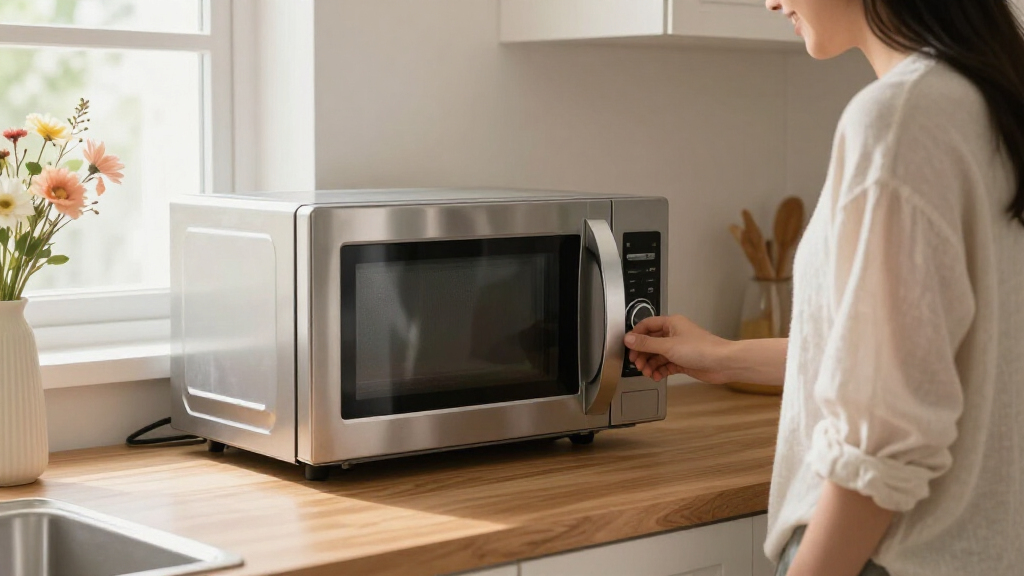
I evaluated each model through the lens that matters most for compact microwave buyers: how much performance you get for the counter space you give up. Cooking power and capacity were weighted heaviest — 900-watt models reheat noticeably faster and handle full dinner plates, while 700-watt units struggle with dense foods. I also compared footprint dimensions, since the whole point of a compact unit is fitting under cabinets or in dorms, offices, and apartments. Usability features — sensor presets, power levels, express cooking, child locks, and ECO modes — separated models that were merely small from models that were genuinely convenient.
Build quality and finish consistency factored in too, because stainless and black stainless options need to match surrounding appliances to feel like a deliberate choice rather than a compromise. Finally, I weighed price against the realistic performance gap: a 700-watt model at a steep discount can be smarter than a 900-watt model you overpay for. That logic is why the 900-watt Toshiba and BLACK+DECKER units top the list, the value-priced 700-watt models cluster in the middle, and the style-first Frigidaire closes it out.
| compact microwave oven | Safety | Color |
|---|---|---|
| TOSHIBA Microwave Oven | Two-step child lock | — |
| Chefman Compact Countertop Mic | Child safety lock | Stainless Steel |
| TOSHIBA Microwave Oven | — | — |
| BLACK+DECKER Countertop Microw | Child safety lock | Stainless Steel door frame, black enclosure |
| Chefman Countertop Microwave O | Child Safety Lock | Black |
| COMFEE’ Countertop Microwave O | Child Lock | Black |
| BLACK+DECKER Countertop Microw | Child Safety Lock | — |
| BLACK+DECKER Countertop Microw | Child Safety Lock | Black (fingerprint-resistant) |
| Frigidaire 0.7 Cu. Ft. Retro C | — | Black Gold |
Factors to Consider When Choosing Compact Microwave Ovens
Choosing a compact microwave involves more than picking the smallest box on the shelf. Below are the factors that actually change day-to-day satisfaction — and the mistakes buyers make when they skip them.
700W vs. 900W: The Power Gap Actually Matters
Wattage is the single biggest performance divider in this category. A 700-watt microwave can take 40–60% longer to reheat a plate of food than a 900-watt model, and frozen meals often come out unevenly cooked at the edges. If you mostly reheat coffee or make popcorn, 700 watts is fine. If you cook real meals, defrost meat, or feed more than one person, the extra 200 watts pays for itself in daily convenience. A common mistake is assuming all compact microwaves heat the same — they don’t, and the time difference compounds over years of use. Also note that recipes and frozen-food instructions typically assume 1,000–1,100 watts, so a compact unit will always need adjusted cook times, but 900-watt models get far closer.
Measure Your Space Before Anything Else
Compact microwaves vary more in external dimensions than their capacity numbers suggest. A 0.9 cu ft model can be 2–3 inches deeper than a 0.7 cu ft unit, which matters enormously under low cabinets or on narrow apartment counters. Measure width, depth, and height, then add at least 3 inches of clearance behind and 1 inch on each side for ventilation — crowding a microwave shortens its lifespan and can trip thermal cutoffs. Also check the door swing radius if the unit sits in a corner. Buyers frequently return compact models not because of performance but because the door hits a wall or the unit overhangs the counter edge. The interior matters too: a recessed turntable and square-ish cavity fit round dinner plates better than the raw cubic-foot number implies.
Presets and Controls: Convenience vs. Simplicity
Compact models split between minimalist dial-and-button units and preset-loaded options with sensor cooking. Presets for popcorn, pizza, and beverages are genuinely useful if you cook those often, but badly designed preset menus buried under multiple button presses become friction rather than help. Express-cooking keys — one-touch buttons for 1–6 minutes — are the most-used feature on any microwave and should be non-negotiable. Ten power levels sound impressive on a spec sheet, but most people use only high, medium (for defrosting), and low (for softening butter). Child safety locks are worth prioritizing if toddlers are in the house; they’re not standard on every budget model in this size class, so verify before buying rather than assuming.
Finish and Design: Matching Your Kitchen
Stainless steel is the default and matches most modern kitchens, but it shows fingerprints and smudges constantly. Black stainless resists smudges better and hides wear, usually at a $10–30 premium — worth it only if your other appliances share the finish. Basic black is the most forgiving and often the cheapest option, making it a smart pick for dorms, offices, and rentals. Retro-styled models occupy their own niche: they sacrifice some interior efficiency to the rounded aesthetic and typically cost more per watt, so treat them as design purchases first and appliances second. A frequent regret among buyers is choosing a statement finish that clashes after a kitchen refresh — neutral finishes hold value better.
Energy Use and the ECO Mode Question
Microwaves draw standby power for their clocks and control boards, and some compact models include an ECO or energy-saving mode that cuts phantom drain by dimming or disabling the display when idle. The actual dollar savings are modest — usually a few dollars a year — but ECO mode also reduces the annoying glow of a bright clock in a bedroom or studio apartment, which many buyers value more than the electricity savings. If the microwave lives in an open-plan space, a dimmable display improves quality of life. Don’t pay a meaningful premium for ECO mode alone; treat it as a tiebreaker between otherwise similar models. What matters more for energy use is simply using the microwave instead of the oven for small reheating tasks, where it wins on efficiency by a wide margin.
When to Pay More — and When Not To
Spending more in this category buys real things: more watts, more capacity, better presets, and nicer finishes. But it doesn’t buy durability the way it does in full-size premium microwaves — most compact units in the $80–150 range share similar construction and similar lifespans of 5–10 years with light use. Pay up when you’ll notice the difference daily: faster reheating for a family, a child lock for safety, or a finish that matches a renovated kitchen. Skip the upgrade when the microwave is a secondary appliance in an office, garage, or guest room where 700 watts and basic buttons do the job. The most expensive mistake isn’t buying cheap — it’s buying a stylish, feature-rich model for a location where none of those features get used.
Frequently Asked Questions
Is a 0.7 cu ft microwave big enough for dinner plates?
A standard 10.5-inch dinner plate will fit in most 0.7 cu ft cavities, but it’s a tight fit on the turntable and can rub against the walls, causing uneven rotation. Plates larger than 11 inches, casserole dishes, and wide bowls generally won’t work, which limits you to single servings and mugs. If you regularly reheat full meals or cook for two, a 0.9 cu ft model solves this for only a modest increase in footprint. My suggestion: measure your most-used plates and bowls before deciding, because interior dimensions vary between models with identical capacity ratings. The capacity number is a guideline, not a guarantee of what fits.
Do I really need 900 watts, or is 700 enough?
It depends on what you cook. For beverages, oatmeal, popcorn, and small leftovers, 700 watts handles everything adequately, just 30–60 seconds slower per task. For frozen entrees, defrosting meat, raw vegetables, and anything dense, the 700-watt models in this lineup produce noticeably uneven results — cold centers with overcooked edges — because lower power penetrates food less effectively. If your microwave is your primary cooking tool rather than a reheating accessory, the 900-watt models justify their price the first week. One workaround: 700-watt owners can stir food midway through cooking to compensate, but that requires habits most people don’t keep up long-term.
What’s the actual difference between stainless steel and black stainless?
Functionally, nothing — the Toshiba stainless and black stainless models in this roundup are the same machine with different exterior finishes. The real differences are practical and aesthetic. Traditional stainless steel shows fingerprints and water spots prominently and needs regular wiping; black stainless has a darker coating that hides smudges far better and pairs with modern appliance suites. Black stainless typically costs $10–30 more, which is a fair premium only if it matches your refrigerator, range, or dishwasher. If your other appliances are mixed finishes or basic black, the standard stainless or plain black versions deliver identical performance for less money. Choose the finish for your kitchen, not the spec sheet.
Are cheap compact microwaves reliable, or will I be replacing it in two years?
Reputation-wise, the budget names in this lineup — Chefman, COMFEE’, and BLACK+DECKER — have track records of 4–7 years of typical use, which is only modestly shorter than mid-range brands. Failures usually stem from two causes: door latch mechanisms wearing out from slamming, and magnetron issues from running the unit nearly empty or blocking ventilation. Both are preventable with basic care, which means a $70–90 compact model is a lower-risk purchase than its price suggests. Where cheap models genuinely cut corners is noise and turntable smoothness, not lifespan — expect louder operation and a choppier rotating plate compared to the Toshiba units. For dorms, offices, and rentals, that tradeoff is usually acceptable.
Is the retro-styled Frigidaire worth it if I like the look?
If the design genuinely appeals to you, yes — because no other model in this roundup offers anything comparable, and kitchen aesthetics have real value. Just go in with clear expectations: you’re paying a design premium on a 700-watt, 0.7 cu ft machine that costs as much as or more than the 900-watt Toshiba models. Performance-wise it behaves like the other 700-watt units, meaning slower reheating and tighter interior space. It makes the most sense as a secondary microwave or in a kitchen where the appliance is deliberately a visual centerpiece — a vintage-themed space, a studio apartment, a bar area. If performance-per-dollar is your yardstick, skip it; if your kitchen is a style statement, it’s the only option here that delivers.
Conclusion
After comparing all nine models, the right choice depends less on specs and more on how you actually use a microwave. For best overall, the Toshiba 0.9 Cu.Ft 900W in stainless steel wins on the balance of power, capacity, and price — it’s the compact model that least feels like a compromise. The BLACK+DECKER 0.9 Cu.Ft 900W is the strongest alternative if you find it cheaper or prefer its control layout. For best value, the COMFEE’ 0.7 Cu Ft with ECO mode and the Chefman 700W models deliver dependable performance at the lowest prices in the lineup, with the Chefman black version edging ahead for families thanks to its child safety lock. For a style-first pick, the Frigidaire Retro in Black Gold is the only model that treats the microwave as decor. Beginners and minimalists — dorm residents, office buyers, anyone who just presses one button — should simply take whichever 700-watt unit is cheapest on the day they buy, because the differences between them are small in practice. Whatever you choose, measure your counter first, match the wattage to your cooking habits, and the rest of this decision is easy.
Fall yard work Picks
leaf blowers
As an affiliate, we earn on qualifying purchases.