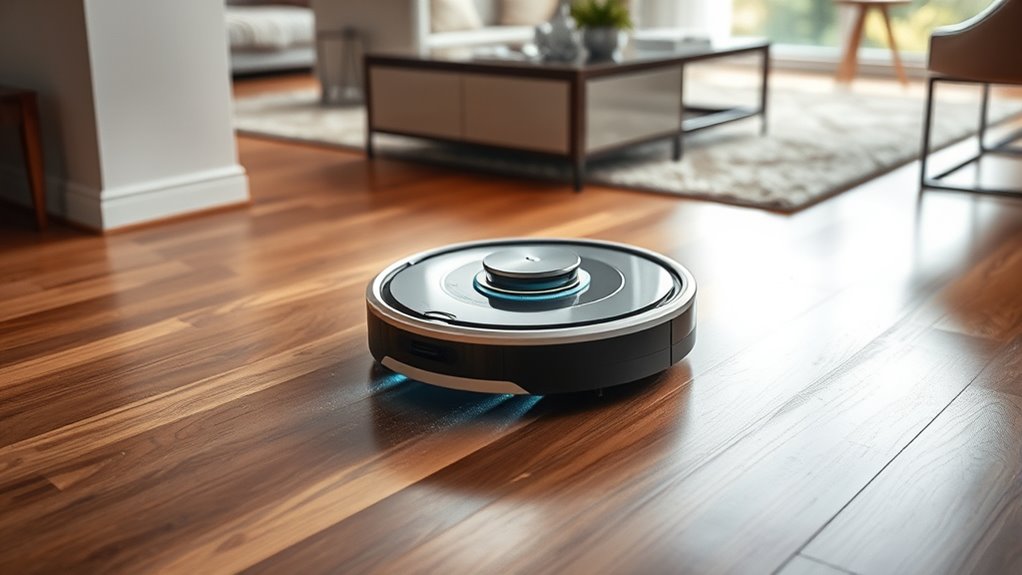

Among luxury robot vacuums with LiDAR, I’d put the Roborock Qrevo 2 Pro first for its stated 20,000 Pa suction and combined vacuuming and mopping. The Dreame Aqua10 Ultra Roller is a standout for buyers prioritizing an advanced mop system, while the Tapo RV50 Pro Omni offers an all-in-one dock approach. The main tradeoff is how much convenience you want from the dock versus the cost and upkeep of a more elaborate system. LiDAR mapping can help a robot plan room-by-room routes, but it doesn’t remove the need to check thresholds, clutter, and mop-care demands. Read on for my full comparison and picks by buyer type.

Get home appliances delivered free with Prime
- Fast, free delivery on millions of items
- Prime Video, Amazon Music and more included
- Member-only deals all year
Complete the kit


Key Takeaways
- The Roborock Qrevo 2 Pro leads this lineup on stated suction at 20,000 Pa, making it the strongest fit for buyers who prioritize vacuum pickup alongside mopping.
- Dock features matter as much as navigation: models with self-emptying or more capable all-in-one docks can reduce routine chores, but add station bulk and maintenance.
- LiDAR is the shared starting point, not a complete measure of intelligence; obstacle handling and room setup still shape day-to-day results.
- Several products provide limited detail in their names, so the 6,000 Pa and 8,000 Pa listings are easier to compare on stated suction than on broader cleaning capability.
- The lineup spans focused vacuuming and mop-heavy combos, from the Roomba Max 705 with AutoEmpty Dock to the Aqua10 Ultra Roller, so buyers should choose around floor mix and desired upkeep.
| Roborock Qrevo 2 Pro Robot Vacuum and Mop, 20,000 Pa |  | Best for Maximum Suction | Suction power: 20,000 Pa | Noise level: 54 dB | Mop lift: Up to 15 mm | VIEW ON AMAZON | See Our Full Breakdown |
| Bissell FlexClean Robot Vacuum and Mop with LiDAR Navigation and HEPA Filtration |  | Best for Allergy-Conscious Homes | Suction power: 6,000 Pa | Navigation: 360React LiDAR | Filtration: HEPA; captures 99.97% of particles at 0.3 microns | VIEW ON AMAZON | See Our Full Breakdown |
| Roborock Robot Vacuum and Mop with LiDAR Navigation and Self-Empty Dock |  | Best for Long Cleaning Runs | Suction power: 10,000 Pa | Dust bag capacity: 2.7 L | Battery life: 150 minutes | VIEW ON AMAZON | See Our Full Breakdown |
| Shark PowerDetect Self-Empty Robot Vacuum, Black (AV2820S) |  | Best for Carpet-Focused Vacuuming | Model: AV2820S | Color: Black | Surface recommendation: Carpet | VIEW ON AMAZON | See Our Full Breakdown |
| Robot Vacuum and Mop with Self-Emptying Station, 6000 Pa Suction, and LiDAR Mapping |  | Best for Multi-Floor Homes | Maximum suction: 6,000 Pa | Dust bag capacity: 4 L | Self-emptying duration: Up to 120 days | VIEW ON AMAZON | See Our Full Breakdown |
| SHELIKI D60S MAX Robot Vacuum and Mop Combo with Self-Emptying Base |  | Best for Large, Mostly Hard-Floor Homes | Navigation: LiDAR | Functions: Sweeping, vacuuming, and mopping | Maximum runtime: 220 minutes | VIEW ON AMAZON | See Our Full Breakdown |
| D13S MAX Robot Vacuum and Mop with Self-Emptying Base |  | Best for Carpet Boost | Suction power: 11,500 Pa | Navigation: LiDAR | Functions: Vacuuming, sweeping, and mopping | VIEW ON AMAZON | See Our Full Breakdown |
| VONKO Robot Vacuum and Mop with Self-Emptying Station, 8000 Pa Suction, and LiDAR Navigation |  | Best for Multi-Floor App Control | Suction power: Up to 8,000 Pa | Cleaning modes: Vacuuming and mopping | Navigation: LiDAR | VIEW ON AMAZON | See Our Full Breakdown |
| iRobot Roomba Max 775X Combo Robot Vacuum and Mop with AutoWash Dock |  | Best Premium Mop Dock | Cleaning type: Robot vacuum and mop | Mop: PowerSpin roller mop with heated spot mopping and 200 RPM scrubbing | Mop wash temperature: 167°F | VIEW ON AMAZON | See Our Full Breakdown |
| Shark PowerDetect Robot Vacuum and Mop Combo with 60-Day Self-Emptying Base |  | Best for Automated Floor-Type Detection | Model: AV2800ZE | Cleaning functions: Vacuuming and sonic mopping | Self-emptying capacity: Up to 60 days | VIEW ON AMAZON | See Our Full Breakdown |
| Tapo RV50 Pro Omni Robot Vacuum and Mop with Self-Emptying Dock |  | Best for Hands-Free Floor Care | Maximum suction: 15,000 Pa | Mop-pad speed: 180 RPM | Navigation: LiDAR with dual-laser obstacle avoidance | VIEW ON AMAZON | See Our Full Breakdown |
| Dreame Aqua10 Ultra Roller Robot Vacuum and Mop |  | Best for Roller Mopping | Suction power: 30,000 Pa | Navigation: Auto-retracting LDS sensor and binocular navigation | Obstacle recognition: 240+ objects | VIEW ON AMAZON | See Our Full Breakdown |
| iRobot Roomba Max 705 Robot Vacuum with AutoEmpty Dock |  | Best for Pet Hair and Vacuum-First Homes | Navigation: ClearView Pro LiDAR | Obstacle detection: PrecisionVision AI object recognition | Brushes: Dual rubber brushes and edge-sweeping brush | VIEW ON AMAZON | See Our Full Breakdown |
| H6 Pro Self-Emptying Robot Vacuum and Mop with LiDAR Navigation |  | Best for Buyers Seeking a Simple Self-Emptying Combo | Suction power: 6,000 Pa | Navigation: 360° LiDAR with multi-level mapping | Functions: Sweeping, vacuuming, and mopping | VIEW ON AMAZON | See Our Full Breakdown |
| luxury robot vacuums with lidar | Navigation | Suction power |
|---|---|---|
| Roborock Qrevo 2 Pro Robot Vac | — | 20,000 Pa |
| Bissell FlexClean Robot Vacuum | 360React LiDAR | 6,000 Pa |
| Roborock Robot Vacuum and Mop | PreciSense LiDAR | 10,000 Pa |
| Shark PowerDetect Self-Empty R | — | — |
| Robot Vacuum and Mop with Self | — | — |
| SHELIKI D60S MAX Robot Vacuum | LiDAR | — |
| D13S MAX Robot Vacuum and Mop | LiDAR | 11,500 Pa |
| VONKO Robot Vacuum and Mop wit | LiDAR | Up to 8,000 Pa |
| iRobot Roomba Max 775X Combo R | ClearView Pro LiDAR mapping and PrecisionVision AI obstacle avoidance | — |
| Shark PowerDetect Robot Vacuum | 360° LiDAR and 3D sensors | — |
| Tapo RV50 Pro Omni Robot Vacuu | LiDAR with dual-laser obstacle avoidance | — |
| Dreame Aqua10 Ultra Roller Rob | Auto-retracting LDS sensor and binocular navigation | 30,000 Pa |
| iRobot Roomba Max 705 Robot Va | ClearView Pro LiDAR | — |
| H6 Pro Self-Emptying Robot Vac | 360° LiDAR with multi-level mapping | 6,000 Pa |
More Details on Our Top Picks
Roborock Qrevo 2 Pro Robot Vacuum and Mop, 20,000 Pa
The Qrevo 2 Pro earns its place for buyers who want a premium vacuum-and-mop setup with unusually high listed suction. Its 20,000 Pa suction and automatic carpet boost give it more cleaning headroom than the Bissell FlexClean’s 6,000 Pa, especially for homes that mix rugs with hard floors. The dock also takes on dust emptying, water refilling, mop washing, and warm-air drying, so routine mop care is less hands-on. Anti-tangle brushes and obstacle avoidance suit homes with pets and clutter, while close wall cleaning helps with edges. The tradeoff is a 2.4 GHz-only Wi-Fi connection, which may not fit every home network, and this much automation may be more than buyers who mainly vacuum need.
Pros:- 20,000 Pa suction with automatic carpet boost
- Dock empties dust, refills water, washes and dries the mop
- Anti-tangle brush system is designed for pet hair
- Obstacle avoidance and customizable 3D mapping
Cons:- Wi-Fi supports 2.4 GHz only
- Its automated mop setup adds complexity for buyers who only need vacuuming
Best for: Pet owners with carpets and hard floors who want strong suction and an automated mop-care dock.
Not ideal for: Households whose Wi-Fi depends on 5 GHz connectivity, or buyers who do not need an automated mopping system.
- Suction power:20,000 Pa
- Noise level:54 dB
- Mop lift:Up to 15 mm
- Edge cleaning distance:As close as 1.85 mm along walls
- Dock features:Automatic dust emptying, water refilling, mop washing, and warm-air drying
- Mop washing temperature:149°F
- Mop drying temperature:113°F
- Wi-Fi:2.4 GHz only
Our verdict“Choose the Qrevo 2 Pro if high suction and hands-off mop care matter more than broad Wi-Fi compatibility.”
Bissell FlexClean Robot Vacuum and Mop with LiDAR Navigation and HEPA Filtration
The Bissell FlexClean is the lineup’s clearer fit for buyers who put filtration alongside everyday vacuuming and mopping. Its HEPA filtration is specified to capture 99.97% of particles as small as 0.3 microns, a concrete distinction from the Roborock Qrevo 2 Pro, whose listed strengths center on suction and dock automation. LiDAR navigation and a self-empty base that holds up to eight weeks of debris reduce routine attention, while the floating NeverTangle brush is aimed at hair pickup. Its 6,000 Pa suction is well below the Qrevo 2 Pro’s 20,000 Pa, so buyers with thick rugs or heavier debris may prefer the Roborock. The listing also gives no runtime, and its scented cleaning feature requires a specific formula.
Pros:- HEPA filtration captures 99.97% of particles at 0.3 microns
- LiDAR navigation detects and avoids obstacles
- Self-empty base holds up to eight weeks of debris
- NeverTangle floating brush roll is designed for hair
Cons:- 6,000 Pa suction is substantially lower than the Roborock Qrevo 2 Pro
- No battery runtime information is provided
- Scented cleaning feature requires MultiSurface cleaning formula
Best for: Allergy-conscious households seeking combined vacuuming and mopping with specified fine-particle filtration.
Not ideal for: Homes with thick carpets or buyers who need stated battery runtime and do not want a required scented cleaning formula.
- Suction power:6,000 Pa
- Navigation:360React LiDAR
- Filtration:HEPA; captures 99.97% of particles at 0.3 microns
- Cleaning functions:Vacuuming and mopping
- Brush roll:NeverTangle floating brush roll
- Self-empty base capacity:Up to 8 weeks of debris
- Surface compatibility:Hard floors and carpets
Our verdict“Pick the FlexClean if fine-particle filtration is a priority and its lower stated suction suits your floors.”
Roborock Robot Vacuum and Mop with LiDAR Navigation and Self-Empty Dock
This Roborock is a practical middle ground for buyers who want LiDAR mapping, a mop, and a self-empty dock without stepping up to the Qrevo 2 Pro’s extensive mop washing and drying system. Its 150-minute battery life supports longer scheduled sessions, while the 2.7 L dust bag and dual anti-tangle brushes reduce routine bin and hair maintenance. PreciSense LiDAR, no-go zones, and app scheduling make room-by-room control part of the package. Compared with the Bissell FlexClean, it lists stronger 10,000 Pa suction and a longer specified runtime, but the Bissell provides HEPA filtration details that this model does not. This Roborock’s 2.4 GHz-only Wi-Fi and unspecified water tank capacity limit what buyers can confirm about setup and mopping range.
Pros:- 150-minute battery life
- 10,000 Pa suction with vacuuming and mopping
- 2.7 L self-empty dust bag
- LiDAR mapping supports schedules and no-go zones
Cons:- Wi-Fi connectivity is limited to 2.4 GHz
- Water tank capacity is not specified
- Dock description does not include automatic mop washing or drying
Best for: Buyers with several rooms who want a specified long runtime, mapped cleaning, and a self-empty dock.
Not ideal for: People who need 5 GHz Wi-Fi support, known water tank capacity, or a fully automated mop-washing dock.
- Suction power:10,000 Pa
- Dust bag capacity:2.7 L
- Battery life:150 minutes
- Cleaning path width:12.8 inches
- Navigation:PreciSense LiDAR
- Water flow settings:3
- Connectivity:2.4 GHz Wi-Fi
- Noise level:65 dB
- Surfaces:Wood, tile, marble, and carpet
Our verdict“Choose this Roborock for mapped, longer cleaning sessions with a self-empty dock and a simpler mop setup.”
Shark PowerDetect Self-Empty Robot Vacuum, Black (AV2820S)
The Shark PowerDetect AV2820S is the carpet-focused vacuum pick here: its DirtDetect and FloorDetect systems adjust cleaning around detected debris and floor type, while EdgeDetect targets edges. NeverStuck technology is designed to handle obstacles and thresholds, a useful distinction for homes where a robot’s route can be as important as its suction. Its bagless base automatically empties the vacuum, and a HEPA-sealed system is intended to trap dust and allergens. Compared with the Roborock Qrevo 2 Pro, this Shark is a more focused vacuum choice: the supplied product details do not describe mopping or give suction figures. Buyers also have no listed runtime or battery capacity to use when planning coverage, so it is harder to judge fit for larger floor plans.
Pros:- DirtDetect and FloorDetect adjust cleaning to debris and floor type
- EdgeDetect is designed to improve edge cleaning
- NeverStuck technology helps handle obstacles and thresholds
- Bagless base and HEPA seal support dust containment
Cons:- Product details do not describe mopping
- No runtime or battery capacity is provided
- Suction power is not specified
Best for: Carpet-heavy homes seeking automatic debris adjustment, threshold handling, and a bagless emptying base.
Not ideal for: Buyers who want mopping, stated suction or runtime figures, or a clear estimate of coverage per charge.
- Model:AV2820S
- Color:Black
- Surface recommendation:Carpet
- Special features:Anti-fall, auto-docking, bagless, edge cleaning, and LiDAR navigation
- Controller type:App control and button control
- Filter type:HEPA
Our verdict“Choose the AV2820S if carpet adjustment and a bagless base matter more to you than mopping or published runtime details.”
Robot Vacuum and Mop with Self-Emptying Station, 6000 Pa Suction, and LiDAR Mapping
For homes with several mapped floors, this model’s LiDAR storage for up to four floor maps gives it a distinct role. It pairs that navigation with a 4 L dust bag advertised for up to 120 days, which could mean fewer trips to the station for households whose cleaning volume fits that claim. The 6,000 Pa suction and three suction levels offer a more modest spec profile than either Roborock in this group; the Qrevo 2 Pro, in particular, lists much higher suction and a dock that washes and dries its mop. Here, mopping requires attaching a cloth and is described as better suited to minor stains, so it is an add-on for hard-floor upkeep rather than the main reason to choose it. The claimed emptying interval can vary with use.
Pros:- LiDAR mapping saves up to four floor maps
- 4 L dust bag is listed for up to 120 days of use
- Three suction levels and three water flow settings
- App and Alexa or Google Assistant controls support scheduling
Cons:- Mopping requires attaching a cloth and may only suit minor stains
- 6,000 Pa suction is lower than both Roborock models in this group
- The listed 120-day dust bag duration varies with usage
Best for: Owners of multi-level homes who want saved maps, no-go zones, and infrequent dust bag changes.
Not ideal for: Buyers seeking a hands-off mop-washing dock or stronger stated suction for heavy carpet cleaning.
- Maximum suction:6,000 Pa
- Dust bag capacity:4 L
- Self-emptying duration:Up to 120 days
- Mapping:LiDAR; saves up to 4 floor maps
- Cleaning modes:Vacuuming and mopping
- Suction levels:3
- Water flow settings:3
- Brush design:Dual anti-tangle
- Floor compatibility:Carpets, tile, and hardwood
Our verdict“This is the best fit for multi-floor households that value saved maps and low-frequency dust disposal over advanced mop care.”
SHELIKI D60S MAX Robot Vacuum and Mop Combo with Self-Emptying Base
The D60S MAX suits buyers who want LiDAR-guided vacuuming and mopping across a large, mostly hard-floor home without frequent bin emptying. Its 220-minute runtime, recharge-and-resume feature, and coverage of up to 2,500 sq. ft. make it a better fit for longer cleaning runs than the D13S MAX, which lists 160 minutes. Mapping for up to five floors and 14 no-go zones gives room to set boundaries around clutter or delicate areas. The tradeoff is its stated carpet support: low-pile carpets only, so homes with thicker rugs should look to a more carpet-focused option such as the D13S MAX with automatic carpet boost. It also requires a 2.4 GHz Wi-Fi network, which may rule it out in homes configured for other bands.
Pros:- LiDAR mapping supports up to five floor plans and 14 no-go zones
- Up to 220 minutes of runtime with automatic recharge and resume
- Sweeps, vacuums, and mops in one robot
- Self-emptying base is listed for up to 2–3 months of debris storage
Cons:- Carpet compatibility is limited to low-pile carpets
- Requires a 2.4 GHz Wi-Fi network
- The advertised self-emptying interval depends on use
Best for: Owners of larger homes with mostly hard floors who want long cleaning runs, multiple maps, and less frequent dustbin maintenance.
Not ideal for: Households with thick or high-pile carpets, or homes without a 2.4 GHz Wi-Fi network.
- Navigation:LiDAR
- Functions:Sweeping, vacuuming, and mopping
- Maximum runtime:220 minutes
- Coverage:Up to 2,500 sq. ft.
- Suction modes:800 Pa, 1,600 Pa, 2,700 Pa, and 6,000 Pa
- Mapping:Up to 5 maps
- No-go zones:Up to 14
- Floor compatibility:Hard floors and low-pile carpets
- Wi-Fi requirement:2.4 GHz
Our verdict“Choose the D60S MAX for long, mapped cleaning runs in a large hard-floor home; skip it if thick carpet is a major part of your cleaning routine.”
D13S MAX Robot Vacuum and Mop with Self-Emptying Base
The D13S MAX is the more carpet-minded pick among these combo robots: automatic carpet boost raises suction when the robot reaches carpet, and its listed 11,500 Pa suction is higher than the D60S MAX’s 6,000 Pa maximum mode. LiDAR mapping, multi-floor maps, and customizable no-go zones add useful control for homes with mixed rooms. The self-emptying base is listed for up to 90 days, though actual time between changes depends on debris and cleaning frequency. The compact onboard capacities create a clear tradeoff: its 240 ml dustbin and 230 ml water tank are relatively small, so the dock and refill routine matter during frequent or larger-area cleaning. Compared with the VONKO, it offers carpet boost, while VONKO lists a longer runtime of up to 180 minutes.
Pros:- Automatic carpet boost adjusts suction for carpeted areas
- LiDAR navigation supports multi-floor maps and no-go zones
- Combines vacuuming, sweeping, and mopping
- Self-emptying base has a listed capacity of up to 90 days
Cons:- The 240 ml dustbin and 230 ml water tank are relatively small
- The 90-day dust bag interval depends on cleaning frequency and debris
- At up to 160 minutes, listed runtime is shorter than the D60S MAX and VONKO
Best for: Households with a mix of hard floors and carpets that want automatic suction adjustment and mapped room boundaries.
Not ideal for: Buyers who prioritize long uninterrupted runs or larger onboard dust and water capacity.
- Suction power:11,500 Pa
- Navigation:LiDAR
- Functions:Vacuuming, sweeping, and mopping
- Dustbin capacity:240 ml
- Water tank capacity:230 ml
- Self-emptying dust bag:Up to 90 days
- Runtime:Up to 160 minutes
- Mapping:Multi-floor maps
- Included accessories:5 dust bags, 1 rolling brush, 2 side brushes, 2 mop pads, and 2 filters
Our verdict“Pick the D13S MAX if carpet boost matters more than longer runtime or larger onboard tanks.”
VONKO Robot Vacuum and Mop with Self-Emptying Station, 8000 Pa Suction, and LiDAR Navigation
VONKO makes sense for a home where room selection and stored floor plans are more useful than a highly involved mop system. Its LiDAR mapping stores up to five floors, while app scheduling and Alexa controls let owners target rooms and set no-go zones. The listed 180-minute runtime also gives it a longer cleaning window than the D13S MAX’s 160 minutes. Its 8,000 Pa suction sits between the D13S MAX’s 11,500 Pa and the D60S MAX’s 6,000 Pa, so those drawn to the strongest listed suction should compare the D13S MAX. VONKO’s mopping is described for hard floors only, and the station’s up to 60-day emptying interval is an advertised maximum, not a guaranteed schedule. It is a practical mapped-cleaning choice, but not the pick for carpet-heavy homes seeking detailed mop automation.
Pros:- LiDAR map storage supports up to five floors
- App and Alexa controls support schedules and setting changes
- Up to 180 minutes of runtime
- Self-emptying station reduces routine bin handling
Cons:- Mopping is described for hard floors only
- The up to 60-day bag interval is an advertised maximum
- Does not list the mop washing and drying functions offered by the Shark PowerDetect Combo
Best for: People in multi-floor homes who want app-based room selection, Alexa control, and a longer listed runtime.
Not ideal for: Buyers who need mopping on carpet or want a dock that washes and dries the mop.
- Suction power:Up to 8,000 Pa
- Cleaning modes:Vacuuming and mopping
- Navigation:LiDAR
- Map storage:Up to 5 floors
- Self-emptying interval:Up to 60 days
- Runtime:Up to 180 minutes
- Controls:App and Alexa
- Mopping surface:Hard floors
Our verdict“Choose VONKO for multi-floor mapping and app or Alexa control, provided hard-floor mopping and a basic self-emptying station meet your needs.”
iRobot Roomba Max 775X Combo Robot Vacuum and Mop with AutoWash Dock
The Roomba Max 775X Combo is the dock-focused choice for buyers who want more than dust collection handled automatically. Its AutoWash Dock empties debris, washes and dries the mop, and dispenses cleaning solution; the heated roller mop adds 200 RPM scrubbing and heated spot mopping for hard floors. ClearView Pro LiDAR maps the home, while PrecisionVision AI obstacle avoidance helps route around common objects. That combination gives it a more involved floor-care setup than the VONKO, which lists self-emptying but not mop washing or drying. The tradeoff is a larger dock commitment and ongoing supplies such as debris bags and cleaning solution. Its advertised up to three months of hands-free operation depends on use, so households with frequent cleaning should expect to service it sooner.
Pros:- AutoWash Dock empties debris, washes and dries the mop, and dispenses solution
- Heated roller mop offers 200 RPM scrubbing and heated spot mopping
- ClearView Pro LiDAR mapping pairs with PrecisionVision AI obstacle avoidance
- Dual anti-tangle rubber brushes are designed to reduce hair wrap
Cons:- Dock requires space and uses consumables such as debris bags and cleaning solution
- The up to three-month hands-free interval depends on use
- A more involved dock system may be unnecessary for buyers who only need self-emptying
Best for: Buyers who want a premium dock to manage debris and routine mop washing, drying, and solution dispensing.
Not ideal for: People with limited dock space or those who prefer a simpler setup with fewer ongoing consumables.
- Cleaning type:Robot vacuum and mop
- Mop:PowerSpin roller mop with heated spot mopping and 200 RPM scrubbing
- Mop wash temperature:167°F
- Mop drying temperature:122°F
- Brushes:Dual anti-tangle rubber brushes and dual edge brushes
- Navigation:ClearView Pro LiDAR mapping and PrecisionVision AI obstacle avoidance
- Dock functions:Empties debris, washes and dries mop, and dispenses cleaning solution
- Hands-free operation:Up to 3 months
Our verdict“Choose the Roomba Max 775X Combo if automated mop care is worth the dock space and recurring supplies.”
Shark PowerDetect Robot Vacuum and Mop Combo with 60-Day Self-Emptying Base
The Shark PowerDetect Combo earns its place for buyers who want the robot to adapt its cleaning across sealed hard floors and carpets. Its five PowerDetect technologies use sensors to identify debris, stains, edges, and floor types, while 360° LiDAR and 3D sensors support mapping and obstacle avoidance. The NeverTouch Pro base handles debris emptying, water refills, and mop-pad washing and drying, making it a more complete maintenance setup than VONKO’s self-emptying station. The listed refill interval is up to 30 days, and the 60-day debris capacity is also a maximum dependent on use. Mopping is intended for sealed hard floors, so carpet owners should expect vacuuming there rather than mopping. Compared with the Roomba Max 775X Combo, Shark highlights floor detection and water refills, while Roomba specifies heated roller mopping.
Pros:- Detects debris, stains, edges, and floor types to adjust cleaning
- Base empties debris, refills water, and washes and dries the mop pad
- 360° LiDAR and 3D sensors support mapping and obstacle avoidance
- App supports schedules, no-go zones, and targeted cleaning
Cons:- Water refills are listed for up to 30 days, depending on use
- Mopping is intended for sealed hard floors
- Debris emptying and water refill intervals are stated as maximums
Best for: Homes with sealed hard floors and carpets where owners want sensor-guided cleaning and an automatic mop care station.
Not ideal for: Buyers who need mopping across unsealed surfaces or want a specifically described heated roller mop.
- Model:AV2800ZE
- Cleaning functions:Vacuuming and sonic mopping
- Self-emptying capacity:Up to 60 days
- Water refill capacity:Up to 30 days
- Navigation:360° LiDAR and 3D sensors
- Cleaning technologies:5 PowerDetect technologies
- App:SharkClean
- Included items:Robot, NeverTouch Pro base, 2 odor neutralizer cartridges, 3 mopping pads, 2 side brushes, and 12 oz. multi-surface cleaner
Our verdict“Pick the Shark PowerDetect Combo for sensor-led cleaning across mixed flooring and automated mop maintenance, if your mopping surfaces are sealed hard floors.”
Tapo RV50 Pro Omni Robot Vacuum and Mop with Self-Emptying Dock
The RV50 Pro Omni makes sense for households that want regular vacuuming and mop-pad care handled by one dock. LiDAR navigation maps the home, while dual-laser obstacle avoidance helps it route around objects; its dock empties debris, washes and dries the pads, and dispenses detergent. With 15,000 Pa suction and carpet detection that detaches the mop pads, it is better equipped for mixed flooring than the more basic H6 Pro, whose listed suction is 6,000 Pa. The Tapo’s 250-minute maximum runtime and large water tanks also suit bigger cleaning routines. The tradeoff is space: its dock is nearly 19 inches tall and wide, and the supplied performance description cautions that results vary by home. Choose it for automated pad maintenance; skip it if the dock footprint is a problem.
Pros:- Combines 15,000 Pa suction with dual spinning mop pads
- Dock empties debris, washes and dries pads, and dispenses detergent
- Detects carpets and detaches the mop pads
- Built-in cutting brush is designed to reduce hair tangles
Cons:- Large dock needs dedicated space
- Actual cleaning performance may vary by home environment
Best for: Households with a mix of hard floors and carpet that want the dock to handle mop-pad washing, drying, and detergent dispensing.
Not ideal for: People with limited floor space for a large dock or buyers who need cleaning performance backed by detailed independent results.
- Maximum suction:15,000 Pa
- Mop-pad speed:180 RPM
- Navigation:LiDAR with dual-laser obstacle avoidance
- Clean water tank:5 L
- Dirty water tank:4 L
- Dust bag:3 L
- Maximum runtime:250 minutes
- Robot dimensions:13.8 × 13.8 × 3.95 inches
- Smart home compatibility:Alexa, Google Assistant, and Matter
Our verdict“Pick the RV50 Pro Omni if you want strong listed suction and a dock that automates mop-pad care across mixed flooring.”
Dreame Aqua10 Ultra Roller Robot Vacuum and Mop
The Aqua10 Ultra is the most specialized mopping option in this group: its roller uses continuously refreshed water, and the dock washes and dries it with water listed at 212°F. That approach may appeal to homes where floor seams and frequent mop rinsing are a priority. Its 30,000 Pa suction is the highest stated figure among these four products, while carpet protection and obstacle recognition for 240-plus objects broaden its use across mixed floors. Compared with the Tapo RV50 Pro Omni’s spinning pads, the Dreame bets on a roller system and a more elaborate wash cycle; the Tapo, in turn, lists a longer maximum runtime. Buyers should also note the Dreame’s 2.4 GHz-only Wi-Fi and USA-only use restriction. That makes it a poor fit for some networks and locations.
Pros:- Roller mops with continuously refreshed water
- Dock empties dust, washes and dries the roller, and refills water and cleaning solution
- Carpet protection and obstacle recognition support mixed-floor homes
- Offers app, voice, button, and remote controls
Cons:- Supports 2.4 GHz Wi-Fi only
- Listing specifies use in the USA only
- Maximum listed battery life is shorter than the Tapo RV50 Pro Omni’s
Best for: US households with mixed flooring that prioritize refreshed-water roller mopping and a dock that cleans the roller automatically.
Not ideal for: Buyers outside the USA or households whose Wi-Fi setup requires 5 GHz connectivity.
- Suction power:30,000 Pa
- Navigation:Auto-retracting LDS sensor and binocular navigation
- Obstacle recognition:240+ objects
- Maximum battery life:180 minutes
- Obstacle clearance:Up to 3.15 inches
- Carpet chassis lift:0.55 inches
- Dock roller wash temperature:212°F
- Wi-Fi:2.4 GHz only
Our verdict“Choose the Aqua10 Ultra if roller mopping and automated roller care matter more to you than broader network compatibility or longer listed runtime.”
iRobot Roomba Max 705 Robot Vacuum with AutoEmpty Dock
The Roomba Max 705 is the clearest vacuum-first choice here. Dual rubber brushes are designed to handle pet hair with fewer tangles, and a side brush reaches along edges; its ClearView Pro LiDAR maps cleaning routes while PrecisionVision AI recognizes objects. The AutoEmpty Dock stores debris for up to 75 days, and the app supports room and zone selection, suction adjustments, schedules, and repeat passes. Unlike the Tapo RV50 Pro Omni and Dreame Aqua10 Ultra, the Roomba listing describes no mopping system, so it suits buyers who would rather focus on carpet and hard-floor vacuuming than add wet-floor care. Its headline suction comparison is narrowly defined: it refers to Spot Clean mode, a full battery, and Roomba 600 series robots. That caveat limits how much the figure says about everyday use.
Pros:- Dual rubber brushes are designed to reduce tangles and handle pet hair
- ClearView Pro LiDAR mapping and AI object recognition guide cleaning
- AutoEmpty Dock is listed for up to 75 days of debris storage
- App supports room and zone selection, suction adjustments, and repeat passes
Cons:- No mopping function is specified, unlike the Tapo RV50 Pro Omni and Dreame Aqua10 Ultra
- The 180x suction claim applies to a specific Spot Clean comparison with Roomba 600 series robots
- The listing does not give a suction value in Pa for direct comparison with the Tapo or Dreame
Best for: Pet owners who want mapped vacuuming, tangle-resistant brush design, and long intervals between dust-bag changes.
Not ideal for: Buyers who want a robot that mops or who need a straightforward suction figure comparable across brands.
- Navigation:ClearView Pro LiDAR
- Obstacle detection:PrecisionVision AI object recognition
- Brushes:Dual rubber brushes and edge-sweeping brush
- Suction claim:Up to 180x more power-lifting suction than Roomba 600 series robots in Spot Clean mode with a full battery
- Auto-empty capacity:Up to 75 days of debris storage
- Filtration:Dock bag traps debris as small as 0.7 microns
- Floor types:Carpets and hard floors
- Smart home compatibility:Alexa, Siri, and Google Assistant
Our verdict“Pick the Roomba Max 705 if pet-hair vacuuming and mapped room control matter more than built-in mopping.”
H6 Pro Self-Emptying Robot Vacuum and Mop with LiDAR Navigation
The H6 Pro combines sweeping, vacuuming, and mopping with 360° LiDAR mapping and a self-emptying station, making it the straightforward combo pick in this set. Multi-level mapping and recharge-and-resume support larger or multi-floor routines, while app and voice controls offer room selection and no-go zones. Its listed 6,000 Pa suction sits well below the Tapo RV50 Pro Omni’s 15,000 Pa and the Dreame Aqua10 Ultra’s 30,000 Pa, so buyers who prioritize stated suction or more elaborate mop maintenance have stronger alternatives here. The H6 Pro’s dock is advertised to hold up to 90 days of debris, but that interval may depend on household conditions. The product data also gives little detail about performance beyond its feature list, which makes it harder to judge how it will handle demanding homes.
Pros:- Combines sweeping, vacuuming, and mopping
- 360° LiDAR mapping supports multi-level navigation
- Self-emptying station is advertised for up to 90 days of debris
- Automatically recharges and resumes cleaning
Cons:- Listed 6,000 Pa suction is substantially below the Tapo RV50 Pro Omni and Dreame Aqua10 Ultra
- The 90-day debris interval may vary with household conditions
- Product description provides limited performance detail
Best for: Buyers who want a LiDAR-mapped vacuum-and-mop combo with self-emptying, multi-level mapping, and app or voice scheduling.
Not ideal for: Homes with heavy cleaning demands or buyers seeking the strongest listed suction and detailed performance evidence.
- Suction power:6,000 Pa
- Navigation:360° LiDAR with multi-level mapping
- Functions:Sweeping, vacuuming, and mopping
- Dust collection station capacity:3 L
- Robot dustbin capacity:250 ml
- Water tank capacity:310 ml
- Maximum runtime:150 minutes
- Controls:App, Alexa, and Google Assistant
- Warranty:2 years
Our verdict“Choose the H6 Pro for a mapped, self-emptying vacuum-and-mop routine if its modest listed suction and limited performance detail suit your needs.”

How We Picked
I evaluated these 14 models around the needs implied by luxury robot vacuums with LiDAR: mapped navigation, cleaning capability, dock automation, usability, and the maintenance each system may add. I gave weight to clearly stated details such as suction figures, self-emptying or AutoWash docks, and whether a model combines vacuuming with mopping. I also considered how useful those features are to different households, since an elaborate mop dock may suit mixed hard floors better than a home that mainly needs dependable vacuuming.
The ranking favors products with a clearer combination of navigation, cleaning features, and hands-off support, while allowing for drawbacks such as limited listing detail or a narrower cleaning role. The Qrevo 2 Pro takes the overall spot because its stated suction and vacuum-and-mop format make its purpose comparatively clear. Specialized models follow when their named features suit a narrower need; products with less distinguishing information rank lower because buyers have less basis for comparison. I treat the listed specifications as claims, not as proof of performance in every home.
Factors to Consider When Choosing Luxury Robot Vacuums With Lidar
LiDAR gives buyers a useful way to compare navigation, but the better choice depends on the home and the chores you want to hand off. I’d weigh the layout, floor types, dock footprint, and upkeep before treating a high suction figure or long list of features as decisive.
Match the map to your floor plan
LiDAR mapping is most useful when a robot can build a room layout and follow repeatable routes around it. Homes with several rooms, open transitions, or recurring no-go areas can benefit more than a single unobstructed space. Check whether the app supports room selection and virtual boundaries before assuming mapping alone provides that control. A map also needs sensible placement of the dock and clear access to rooms. One common mistake is overlooking thresholds and tight furniture gaps, where a mapped robot can still get stuck. If your floor plan changes often, consider how much map editing the setup requires.
Choose vacuum and mop features around your floors
A vacuum-and-mop combo can simplify daily care on hard floors, but it adds water handling and pad or roller upkeep. Homes with mostly carpet may get more value from a vacuum-focused model, such as the Roomba Max 705, than from a mop-heavy setup. For mixed flooring, check how the robot handles rugs while mopping and whether the dock manages wet components. Don’t infer mop quality from suction strength; they address different cleaning jobs. Think about where the robot will store wet accessories and how often you are willing to clean them. The right balance depends on your floor mix and cleaning routine.
Compare what the dock actually automates
Self-emptying docks reduce how often you need to handle collected debris, while combo docks may add tasks such as washing mop components. Those conveniences can save attention, but a dock still needs clearance, power, and periodic care. Before choosing a larger station, measure its footprint and the space needed to remove bags or tanks. Look for clarity on which chores are automated and which remain manual. Buyers sometimes assume that an all-in-one dock makes the robot maintenance-free. In practice, more automation can mean more components to inspect and clean.
Treat suction figures as one part of the comparison
Published suction numbers help distinguish models on paper, as the Qrevo 2 Pro’s 20,000 Pa claim illustrates, but they do not describe every aspect of cleaning. Brush design, floor type, edge coverage, and navigation also affect what gets picked up. Compare suction figures only when the products specify them in a comparable way. If a listing leaves out details, avoid filling the gap with assumptions based on a premium label. Consider the debris you encounter most, such as fine dust, pet hair, or crumbs. For carpets and embedded dirt, seek clearer evidence about brush design and carpet behavior alongside the suction claim.
Pay for convenience you will use
Premium features make sense when they remove chores that recur in your home, rather than simply adding options to an app. A self-emptying base may be useful in a busy household, while a more involved mop system fits someone who regularly cleans hard floors. If you prefer a simple schedule and limited upkeep, a complex dock may bring little practical benefit. Check consumables and maintenance instructions before committing to a system. Consider who will empty tanks, replace bags, and clean mop parts after the initial setup. Paying for capabilities that match your routine can be more useful than selecting the longest feature list.
Frequently Asked Questions
Does LiDAR make a robot vacuum a good choice for a cluttered home?
LiDAR helps a robot map rooms and plan routes, but it does not by itself identify or avoid every small object on the floor. Loose cables, toys, and lightweight items can still interrupt a cleaning run. If you cannot clear floors before scheduled cleaning, check the model’s obstacle-handling details rather than relying on its navigation label. Room maps and no-go zones can keep a robot away from known problem areas, but they need setup. LiDAR is most useful when paired with a floor plan the robot can travel through safely.
Should I prioritize a self-emptying dock or a mop-washing dock?
Choose based on the chore you want to reduce most. Self-emptying is useful when frequent bin handling is the main inconvenience, while mop-care automation matters more if you run wet cleaning often. A dock that supports several tasks may take more space and still require you to refill or empty tanks and clean components. Consider your floor mix: carpet-heavy homes may not benefit as much from elaborate mop care. Check which dock tasks are actually automated on the specific model before comparing station names.
Is a 20,000 Pa model automatically better for my home?
No single suction figure settles the choice. The Qrevo 2 Pro’s stated 20,000 Pa makes it a notable option for buyers focused on suction, but brushes, floor surfaces, route planning, and carpet behavior also influence cleaning. A model with a lower published number may still suit a home with mostly hard flooring and modest debris. Compare figures only when listings use the same measurement basis, and look for useful detail on brushes and rug handling. Treat the number as one clue, not a guarantee of results in your rooms.
Are robot vacuum and mop combos a good fit for homes with rugs?
They can be, but rug handling deserves a close check before you buy. Find out whether the robot can avoid rugs while mopping or manage its mop hardware in a way that protects carpeted areas. A map can help you create no-go zones, though that requires setup and may need adjustment if rugs move. Homes with extensive carpeting may be better served by a vacuum-first model such as the Roomba Max 705. For mixed flooring, prioritize clear information about rug detection and mop behavior over the mere presence of a mop attachment.
How can I compare models when a product listing leaves out key details?
Separate stated facts from unknowns: navigation type, dock function, vacuum-and-mop support, and any published suction figure are easier to compare than vague claims about intelligence. For example, the lineup includes some listings with a named suction value and others that emphasize a dock or a brand feature. Missing information is a reason to check the manufacturer’s documentation for app controls, consumables, and maintenance steps. Avoid assuming that similarly named features work the same way across brands. If a detail affects your home, such as carpet handling or obstacle avoidance, favor a listing that explains it plainly.
Conclusion
For the best overall fit, I’d choose the Roborock Qrevo 2 Pro if its stated suction and vacuum-and-mop format match your floors. The best value direction is a simpler LiDAR model with a self-emptying base, such as the Roborock LiDAR Self-Empty Dock option, for buyers who want mapped cleaning without prioritizing a more involved mop station. For best premium mop focus, look at the Dreame Aqua10 Ultra Roller; for beginners, the Roomba Max 705 offers a more focused vacuum-and-auto-empty setup. If you want an all-in-one dock approach, compare the Tapo RV50 Pro Omni and Roomba Max 775X Combo, then choose based on floor mix and maintenance preferences.
Cold & flu season Picks
humidifiers
As an affiliate, we earn on qualifying purchases.