
TL;DR
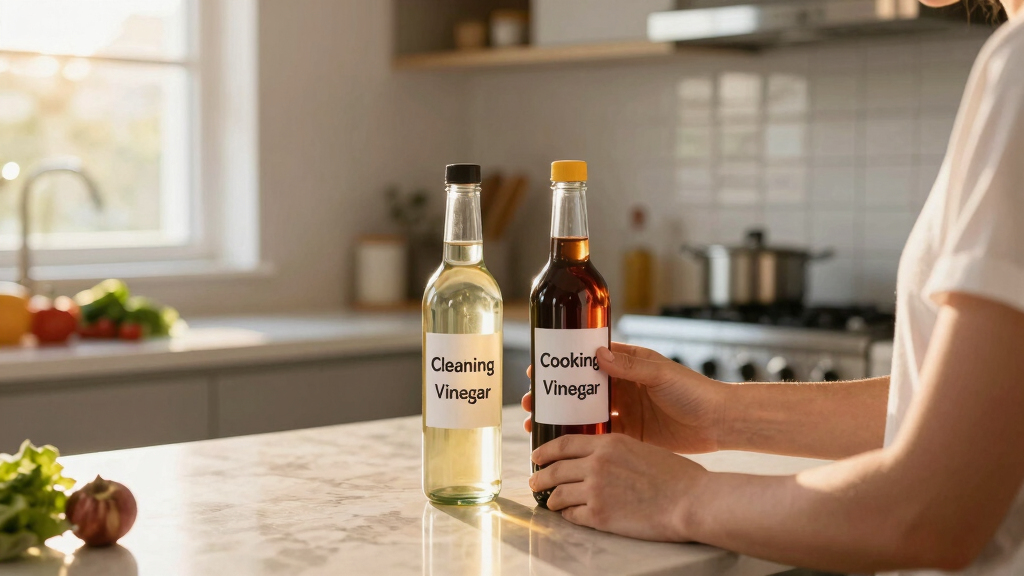
Cleaning vinegar and cooking vinegar are often confused, but they differ significantly in acidity and intended use. This article explains the key differences and what consumers need to know.
Cleaning vinegar and cooking vinegar are not interchangeable, with notable differences in acidity and purpose. Experts confirm that cleaning vinegar typically has a higher acetic acid concentration than cooking vinegar, which impacts safety and effectiveness for different uses.
Cleaning vinegar generally contains about 6-8% acetic acid, making it more potent for disinfecting and heavy-duty cleaning tasks. In contrast, cooking vinegar usually has a lower acidity level, around 4-5%, suitable for culinary purposes such as salad dressings and marinades. The higher acidity in cleaning vinegar can cause skin irritation or damage if ingested, and it is not approved for food use.
Many consumers are unaware of these differences, leading to potential safety risks if cleaning vinegar is used in cooking or if cooking vinegar is used for cleaning. Manufacturers and safety agencies emphasize reading labels carefully and using products only as intended.
Why Understanding Vinegar Types Is Important for Safety and Effectiveness
Knowing the difference between cleaning and cooking vinegar is essential to avoid health risks and ensure proper use. Using cleaning vinegar in recipes can cause health issues due to its higher acidity, while using cooking vinegar for cleaning may result in ineffective sanitation. Clear labeling and consumer education are vital to prevent accidents and misuse.

Tillbrook Cleaning Vinegar – Extra Strength 6% Acidity Vinegar for Cleaning Purpose – 32 oz Fresh Lemon Concentrated Cleaning Vinegar for Home, Kitchen, Floors & More – Safe, All-Natural & Non-Toxic
- Powerful Natural Cleaning: 6% all-natural vinegar with citrus scent
- Concentrated and Versatile: Use directly or dilute for extended use
- Effective on Grime and Deposits: Lifts grime, dissolves grease and lime scale
As an affiliate, we earn on qualifying purchases.
As an affiliate, we earn on qualifying purchases.
Historical and Market Differences in Vinegar Products
Vinegar has been used both as a food ingredient and household cleaner for centuries. Over time, manufacturers have produced specific types for different uses, with cleaning vinegar developed to have a higher acetic acid concentration for disinfecting surfaces. Despite this, consumer confusion persists, partly due to similar packaging and labeling practices.
Recent reports and consumer inquiries have increased awareness of these differences, prompting safety advisories from health authorities and consumer groups.
“The key difference lies in the acetic acid concentration; cleaning vinegar is more potent and should never be used in food preparation.”
— Dr. Emily Carter, Food Safety Expert

Amazon Saver, Distilled White Vinegar, Great for Cooking and Cleaning, 16 Fl Oz
- Size: 16 Fl Oz bottle
- Acidity: 5% acidity
- Uses: Cooking and cleaning
As an affiliate, we earn on qualifying purchases.
As an affiliate, we earn on qualifying purchases.
Uncertainties About Consumer Awareness and Labeling Clarity
It remains unclear how widespread consumer knowledge is regarding the differences between cleaning and cooking vinegar. Additionally, the effectiveness of current labeling practices in preventing misuse is still under review. There are ongoing discussions about whether regulations should mandate clearer distinctions on packaging.

Iberia All Natural Distilled White Vinegar, 1 Gallon – 5% Acidity
- Versatile Use: Cooking, pickling, marinating, and more
- All-Natural & Pure: Made from 100% distilled white vinegar
- Multi-Purpose Cleaner: Disinfects, deodorizes, and cleans
As an affiliate, we earn on qualifying purchases.
As an affiliate, we earn on qualifying purchases.
Next Steps in Consumer Education and Regulatory Measures
Authorities and industry groups are expected to enhance labeling standards and launch public awareness campaigns to clarify vinegar uses. Further research may also determine if stricter regulations are needed to prevent accidental misuse, especially in households.
Iberia All Natural Distilled White Vinegar, 1 Gallon – 5% Acidity
- Versatile Use: Cooking, pickling, marinating, and more
- All-Natural & Pure: Made from 100% distilled white vinegar
- Multi-Purpose Cleaner: Disinfects, deodorizes, and cleans
As an affiliate, we earn on qualifying purchases.
As an affiliate, we earn on qualifying purchases.
Key Questions
Can I use cleaning vinegar for cooking?
No, cleaning vinegar has a higher acetic acid concentration and is not approved for food use. It can cause health issues if ingested.
Is all vinegar labeled as ‘white vinegar’ suitable for cooking?
Most white vinegar used in cooking has an acidity of about 4-5%. Always check the label to confirm its intended use and acidity level.
What should I do if I accidentally used cleaning vinegar in a recipe?
If ingested, seek medical advice, especially if symptoms occur. For household cleaning, avoid mixing cleaning vinegar with other chemicals to prevent dangerous reactions.
Are there regulations requiring clearer labeling of vinegar products?
Currently, regulations vary by region. Some authorities are considering stricter labeling requirements to distinguish cleaning and culinary vinegars more clearly.
How can I tell the difference between cleaning and cooking vinegar at the store?
Check the label carefully for intended use, acidity level, and any safety warnings. Cleaning vinegar is often labeled as such and has a higher percentage of acetic acid.
Source: rss