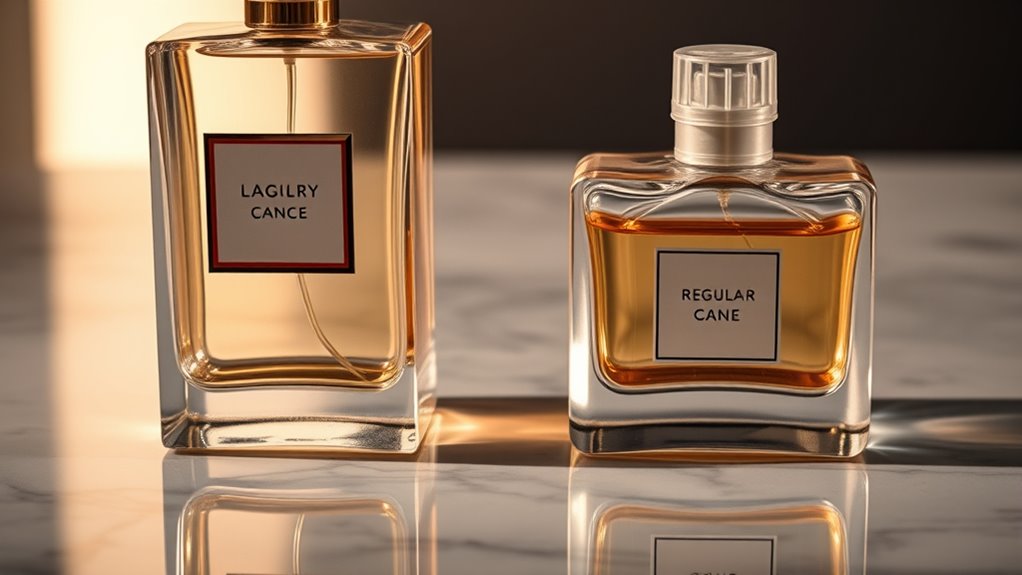

You can often smell the difference between luxury fragrances and regular perfumes through their richer, more complex scents, higher-quality ingredients, and better craftsmanship. Luxury scents tend to last longer, have stronger sillage, and reveal nuanced layers over time. Their refined presentation and unique branding also set them apart. If you’re curious about how these subtle distinctions work and want to learn more about what makes a scent truly luxurious, keep exploring the details behind each fragrance.
Key Takeaways
- Luxury fragrances use higher-quality, natural ingredients that create richer, more complex scents than regular perfumes.
- They often have longer-lasting formulas and more pronounced sillage, making the scent more noticeable over time.
- Premium packaging and presentation enhance the perceived value and influence your sensory experience.
- Higher concentration of essential oils in luxury scents results in more intense and nuanced fragrances.
- The craftsmanship and brand reputation behind luxury perfumes contribute to a more refined and distinctive aroma.
Understanding Fragrance Composition and Ingredients
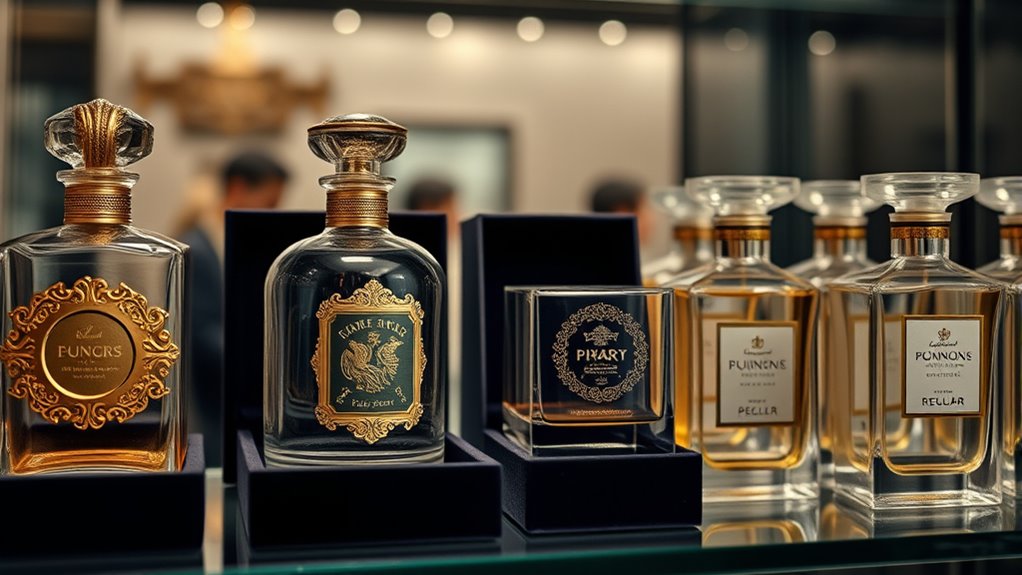
Understanding fragrance composition and ingredients is essential to recognizing what makes luxury fragrances stand out from regular perfumes. When you explore scent layering, you begin to see how different notes blend seamlessly, creating a complex aroma that evolves over time. Luxury brands often prioritize ingredient transparency, revealing the high-quality components used, such as rare essential oils and natural extracts. This openness allows you to appreciate the craftsmanship behind each scent. Unlike mass-market perfumes, luxury fragrances focus on precise ingredient selection and sophisticated composition. By paying attention to these details, you gain insight into what elevates a fragrance from simple to extraordinary. Recognizing the importance of carefully curated ingredients helps you distinguish genuine luxury scents from more common, less refined options. Understanding fragrance composition can deepen your appreciation for the artistry involved, especially considering the high-quality ingredients typically employed in luxury formulations. Additionally, authenticity often hinges on the transparency of ingredient sourcing and formulation practices.
The Role of Branding and Packaging

Branding and packaging play an essential role in differentiating luxury fragrances from regular perfumes, as they create an immediate visual and emotional impact. Luxury packaging often features high-quality materials, intricate designs, and elegant details that convey exclusivity. Effective branding strategies include unique logos, sophisticated color schemes, and storytelling that evoke aspiration. This visual presentation influences your perception before you even smell the fragrance. Here’s how packaging strategies compare:
| Aspect | Luxury Packaging | Regular Perfume Packaging |
|---|---|---|
| Material | Premium, tactile finishes | Basic, lightweight materials |
| Design Complexity | Intricate, artistic elements | Simple, functional design |
| Branding Approach | Exclusive, aspirational messaging | Practical, straightforward branding |
| Emotional Impact | Evokes luxury, status, and desire | Minimal emotional connection |
Your perception starts here—packaging shapes your expectations and experience. Additionally, the branding strategy used by luxury fragrance brands often involves storytelling that enhances perceived value and desirability. Well-designed packaging can also serve as a sign of authenticity, reassuring consumers of quality and exclusivity. Moreover, the visual appeal of luxury packaging often incorporates innovative techniques such as embossing or metallic finishes that further elevate its status. Furthermore, attention to color harmony in packaging design can significantly influence consumer appeal, aligning with the overall brand image. Incorporating attention to detail in packaging design can also elevate the perceived craftsmanship and exclusivity associated with luxury fragrances.
Sensory Perception and Personal Preferences

Your sensory perception and personal preferences play an essential role in choosing between luxury fragrances and regular perfumes. Your sense of smell creates powerful scent memories that influence your choices. When you encounter a fragrance, it can trigger an emotional connection, reminding you of special moments or feelings. This emotional response shapes your preference for certain scents, making some perfumes more appealing than others. Personal taste varies widely—what smells divine to you might not appeal to someone else. Your unique scent memory and emotional associations guide you toward fragrances that resonate deeply, whether they’re luxurious or more affordable. Understanding scents and emotional responses can help you make more mindful choices. Trusting your instincts and understanding how fragrances make you feel will help you select a scent that truly suits your personality and mood. Additionally, spiritual symbolism in scents can influence how fragrances affect your mental and emotional state, enhancing your overall experience with a chosen perfume. Recognizing the quality and craftsmanship behind luxury fragrances can also deepen your appreciation and influence your perception of their difference from regular perfumes. Appreciating the artistry and tradition involved in creating luxury scents can further deepen your connection to these fragrances and their emotional significance. Moreover, becoming aware of sensory perception can enhance your ability to distinguish subtle nuances between perfumes, enriching your olfactory experience.
Longevity and Sillage: What Makes a Perfume Last?
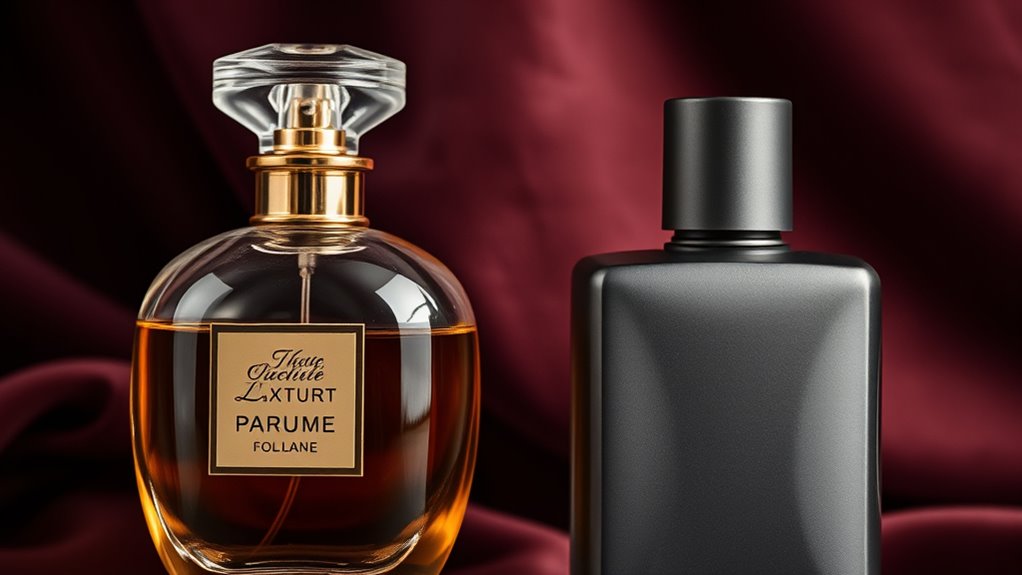
The longevity and sillage of a perfume determine how long it stays noticeable and how far its scent projects into the air. A higher price point often correlates with better-lasting formulas and more refined sillage, especially in luxury fragrances. To maximize longevity, consider these factors:
- Composition: Perfumes with base notes like amber or musk last longer than lighter top notes. These heavier notes provide a longer-lasting scent that lingers on the skin. Selecting fragrances with higher concentration levels can also contribute to increased staying power.
- Application: Applying to pulse points or moisturized skin enhances scent projection.
- Exclusivity: Luxury fragrances often use rare ingredients, giving them an edge in staying power and scent diffusion.
- Dog Training Tips: Proper storage of perfumes in a cool, dark place can also help preserve their integrity and longevity over time.
In general, luxury scents tend to last longer and have a more *engaging* sillage, justifying their higher price point and exclusivity. Regular perfumes may fade quickly, but knowing what to look for helps you choose a lasting signature scent.
Recognizing Quality: Tips to Differentiate Luxury From Regular

Identifying luxury fragrances involves more than just recognizing a high price tag; it requires a keen eye for quality ingredients and craftsmanship. One key indicator is the scent memory—luxury perfumes often leave a lasting impression due to complex, well-balanced notes. Additionally, examine the bottle design: luxury brands invest in elegant, intricate packaging that reflects their craftsmanship. The table below highlights differences:
| Aspect | Luxury Fragrance | Regular Perfume |
|---|---|---|
| Scent Memory | Long-lasting, memorable | Fades quickly, less distinctive |
| Bottle Design | Elegant, detailed craftsmanship | Simple, functional |
| Ingredients | Premium, natural components | Cheaper, synthetic alternatives |
Furthermore, luxury fragrances often incorporate high-quality ingredients, which contribute to their superior scent and longevity.
Frequently Asked Questions
Do Luxury Fragrances Contain Rare or Exclusive Ingredients?
Yes, luxury fragrances often contain rare botanicals and exclusive accords that set them apart. You’ll notice these unique ingredients, like rare flowers or exotic spices, create a richer, more sophisticated scent. When you wear a luxury perfume, it’s crafted with these special components, giving you a distinctive aroma that’s hard to find in regular perfumes. This use of rare ingredients is part of what makes luxury fragrances so special and memorable.
How Does the Price Affect Perfume Quality Perception?
You might think a higher price means better quality, but it often influences your perception more. Luxury fragrances tend to have longer fragrance longevity and come in elegant bottle designs, which enhance their appeal. When you pay more, you’re also paying for the brand and presentation, making you more likely to perceive the scent as superior. Ultimately, your experience is shaped by both the scent’s lasting power and the bottle’s luxurious look.
Can Personal Chemistry Alter How a Scent Smells?
Yes, your personal chemistry can change how a scent smells on you. Skin chemistry, including oils and pH levels, interacts with perfume ingredients, affecting scent longevity and overall aroma. This means a fragrance might smell different on you compared to someone else, even if you wear the same perfume. To find your perfect match, try scents on your skin and consider how they evolve throughout the day.
Are There Specific Notes Unique to Luxury Perfumes?
Luxury perfumes often feature unique notes like rare florals, exotic spices, and sophisticated woods that you won’t find in regular scents. These notes enhance scent layering and improve fragrance projection, making your aroma more noticeable and long-lasting. When you choose a luxury perfume, you’re selecting a crafted blend designed to leave a memorable impression, with notes that evolve beautifully on your skin and stand out in a crowd.
How Does Aging or Maturation Impact Fragrance Complexity?
Fragrance aging and scent maturation profoundly impact a perfume’s complexity. As the fragrance ages, its notes blend and evolve, revealing new layers over time. You’ll notice that mature scents often become richer, smoother, and more nuanced, enhancing their depth. By allowing your perfume to mature, you enable the scent to develop fully, creating a more sophisticated and enthralling aroma that reflects the art of fragrance aging and maturation.
Conclusion
Think of selecting a perfume like choosing a signature song—you’ll know it when it resonates. I once bought a luxury scent on a whim, and it transformed my day, just like a favorite tune lifting your mood. Studies show that higher-quality fragrances often have richer ingredients, making them more memorable. So, trust your nose and instincts—sometimes, the best perfume isn’t the priciest, but the one that leaves a lasting impression, just like a timeless melody.