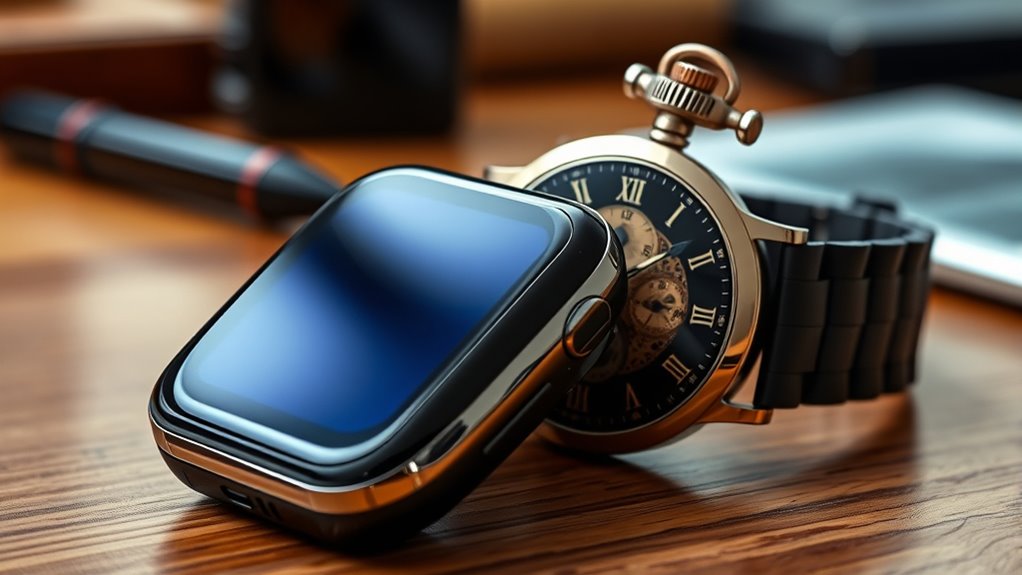

Choosing between a smartwatch and a Swiss watch depends on whether you value modern technology or traditional craftsmanship. Smartwatches offer connectivity, health tracking, and versatile styles, perfect for a tech-savvy lifestyle. Swiss watches showcase timeless design, precision, and heritage, ideal for classic elegance. Both reflect different personalities and priorities. If you’re curious about balancing these aspects and finding the best fit for your style, there’s more to discover below.
Key Takeaways
- Swiss watches emphasize craftsmanship, tradition, and timeless style, appealing to those valuing heritage and artisanal quality.
- Smartwatches prioritize connectivity, health tracking, and modern functionalities for tech-savvy users.
- Durability and maintenance vary: Swiss watches often last decades with proper care, while smartwatches may require frequent replacements.
- Investment considerations include long-term value and repair costs; Swiss watches typically offer higher durability and resale potential.
- Personal style and lifestyle influence choice: classic elegance versus versatile, feature-rich modern design.
The Evolution of Timekeeping: From Mechanical Masterpieces to Digital Devices
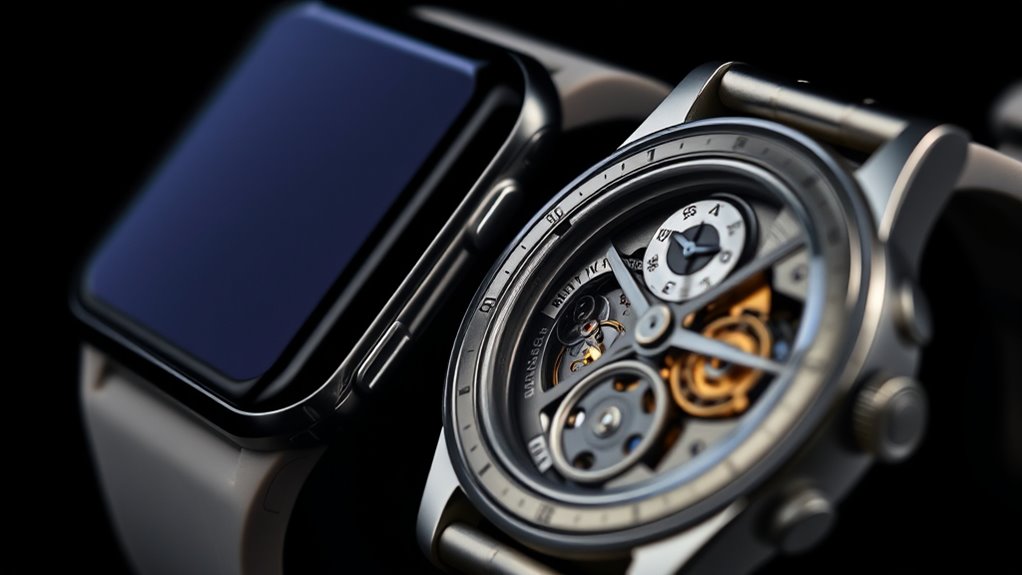
The journey of timekeeping has transformed dramatically over centuries, shifting from intricate mechanical devices to sleek digital gadgets. Early watches served as symbols of status and craftsmanship, with historical accuracy playing a key role in their design. Swiss watches, in particular, became renowned for precision and reliability, embodying cultural symbolism that signified sophistication and tradition. These mechanical masterpieces reflected societal values and technological innovation of their eras. As technology advanced, digital devices emerged, emphasizing functionality over aesthetic symbolism. Despite the shift, traditional watches still carry cultural significance, representing heritage and craftsmanship. The durability and reliability of watches also play a significant role in their enduring popularity and trustworthiness. Innovations such as quartz technology revolutionized watchmaking, making accurate timekeeping more accessible and affordable for the masses. Additionally, the craftsmanship involved in creating mechanical movements exemplifies a dedication to artisanal skill that many collectors cherish. This evolution highlights how timekeeping has balanced the pursuit of precise historical accuracy with evolving cultural meanings, shaping our perception of watches from artful objects to modern tools. Moreover, the cultural significance of Swiss watches continues to influence contemporary designs and brand prestige. Furthermore, the market for vintage watches demonstrates a sustained appreciation for traditional craftsmanship amidst modern innovation.
Key Features and Functionalities of Smartwatches

Smartwatches offer a range of features that keep you connected and informed throughout the day. You can track your health and fitness goals while receiving notifications right on your wrist. These functionalities make smartwatches versatile tools that go beyond just telling time. For enthusiasts, Kia Tuning options can further customize your vehicle’s performance, similar to how smartwatch features can be tailored to individual preferences. Additionally, many smartwatches support third-party apps, expanding their capabilities and allowing users to personalize their experience even further. As the technology advances, software updates ensure that smartwatches remain up-to-date with the latest features and security enhancements. Moreover, understanding divorce statistics can help consumers make informed decisions when choosing between traditional and digital devices, emphasizing the importance of reliable technology in daily life. Staying informed about market trends can also guide consumers toward the most innovative and reliable smartwatch options available today.
Health and Fitness Tracking
Because of their advanced sensors and software, smartwatches enable you to monitor your health and fitness in real time. They provide valuable insights that keep you motivated and help you reach your goals. Here are three key features:
- Fitness motivation – Receive personalized goals, reminders, and encouragement to stay active.
- Sleep analysis – Track your sleep patterns, quality, and duration to improve rest and recovery.
- Heart rate monitoring – Keep an eye on your heart health during workouts and daily activities.
These functionalities allow you to stay aware of your physical condition, making it easier to maintain a healthy lifestyle. With real-time data, you can adjust your routines, improve sleep quality, and stay motivated on your fitness journey.
Connectivity and Notifications
With their ability to connect seamlessly to your smartphone and other devices, smartwatches keep you constantly in the loop. You receive instant notifications for calls, messages, emails, and app alerts, so you stay informed without reaching for your phone. Connectivity features also include music control and quick replies, making your digital interactions smoother. For fitness enthusiasts, smartwatches offer fitness tracking and sleep monitoring, providing real-time data on your activity levels and sleep quality. This helps you stay motivated and make healthier choices. The convenience of staying connected on your wrist means fewer missed updates and more control over your digital life. Additionally, anti-aging effects from certain watch-related skincare routines can help maintain your appearance over time. Incorporating smart health features can further enhance your wellness journey by offering personalized insights.
The Timeless Appeal of Swiss Watches and Their Craftsmanship

Swiss watches have long epitomized precision and artistry, earning their reputation through centuries of meticulous craftsmanship. When you wear one, you’re embracing a tradition rooted in luxury craftsmanship and timeless elegance. Their appeal lies in more than just telling time; it’s about owning a piece of history. Consider these highlights:
- Hand-assembled movements guarantee unmatched accuracy and quality.
- Intricate detailing reflects centuries of mastery passed down through generations.
- Premium materials like gold and platinum enhance both durability and sophistication.
Durability and Maintenance: Comparing Long-Term Investment

When choosing between a smartwatch and a Swiss watch, you need to think about how well each one holds up over time. Think about the materials used, how often you’ll need repairs, and the overall costs to keep it running smoothly. These factors will help you determine which option is a smarter long-term investment. Additionally, consider the impact of durability and maintenance on the device’s lifespan and how AI-enhanced features in smartwatches may influence long-term performance. For instance, the family background of a device’s brand or maker can sometimes influence its reputation for durability and customer support. Furthermore, materials used in construction play a crucial role in determining how durable the watch will be over years of use. Regular maintenance and understanding the long-term costs associated with each type can significantly influence your decision, ensuring you select a watch that remains reliable and functional for years to come. Moreover, understanding warranty coverage can be essential in managing repair expenses over time.
Material Resilience Over Time
While both smartwatches and Swiss watches can withstand daily wear, their ability to resist damage over time varies considerably. You’ll notice that Swiss watches often feature durable materials like stainless steel or gold, which resist scratches and corrosion. Smartwatches, however, rely heavily on water resistance ratings and screen durability. Here are three key points:
- Leather straps on Swiss watches may age beautifully but require care to prevent cracking.
- Water resistance varies; many Swiss watches are rated for deep water, while smartwatches often have limited water exposure capabilities.
- Material resilience depends on usage; frequent impacts or moisture can degrade smartwatches faster than traditional Swiss models.
Choosing wisely depends on your lifestyle and how well you maintain your watch’s materials over time.
Servicing and Repair Needs
Over time, the need for servicing and repairs can considerably influence the long-term value of your watch. Swiss watches often have extensive warranty coverage, which can reduce repair costs and provide peace of mind. Their repair complexity varies; some models require specialized skills, making servicing more expensive and time-consuming. Smartwatches generally need less complex repairs but may have limited warranty coverage, especially after the initial period. Additionally, understanding maintenance requirements can help you better assess the durability and ongoing costs associated with each type. Recognizing serviceability factors is crucial for planning long-term maintenance and ensuring your watch remains in optimal condition over the years.
Cost of Upkeep
Choosing a watch involves contemplating how durable it is and what maintenance costs you’ll face over time. With smartwatches, you’ll need to budget for frequent watch strap replacements and monitor battery life expectancy, which varies between devices. Smartwatches typically need strap replacement every 1-2 years due to wear. Battery life expectancy for smartwatches ranges from 1 to 3 days, requiring regular charging. Advanced technology in smartwatches can sometimes lead to increased repair costs compared to traditional watches. Swiss watches, on the other hand, often require less frequent servicing but can incur higher initial costs. Sound vibrations are believed to enhance cellular regeneration and overall health, making some consider their potential benefits for longevity. Additionally, cybersecurity measures are essential to protect your personal data stored on digital devices like smartwatches. Occasional servicing can be pricey, but Swiss watches often last decades with minimal maintenance. Your choice affects long-term investment—consider durability and ongoing costs carefully.
Style and Aesthetics: How Each Type Complements Different Personalities

Your personal style and aesthetic preferences play a significant role in determining whether a smartwatch or a Swiss watch better suits you. If you value a sleek, minimalist look that makes a subtle fashion statement, a Swiss watch with its timeless design and craftsmanship might be your ideal choice. It allows you to express sophistication and appreciation for tradition, aligning with a refined personality. On the other hand, if your style leans toward modernity and versatility, a smartwatch offers a dynamic platform for personal expression. Its customizable watch faces and band options let you adapt your look to different moods and outfits, making it a versatile accessory. Ultimately, each type complements different personalities by serving as a reflection of your unique fashion statements.
Technological Integration: Connectivity and Smart Features
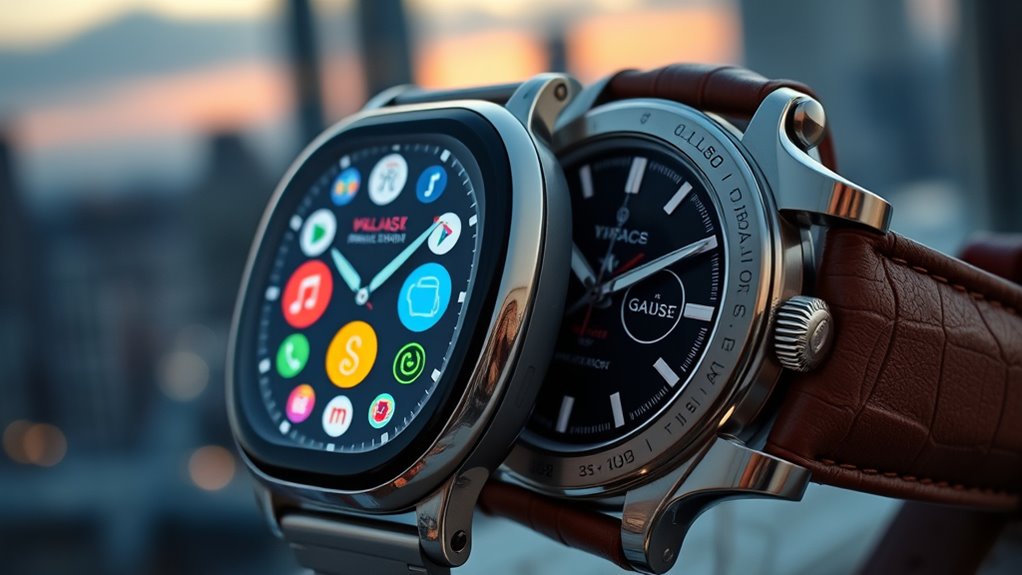
Smartwatches excel in technological integration by seamlessly connecting to your smartphone and other devices, providing instant access to notifications, calls, messages, and apps right on your wrist. Their user interface is designed for quick, intuitive interaction, making it easy to stay connected without pulling out your phone. However, consider their battery life, which can drain faster due to constant syncing and screen usage. To maximize your experience, focus on these key features:
- Connectivity options like Bluetooth, Wi-Fi, and LTE for versatile communication
- Smart features including fitness tracking, weather updates, and voice assistants
- Battery management to extend usage between charges without sacrificing essential functions
These aspects help you leverage the full potential of a smartwatch while balancing practicality and convenience.
Heritage and Symbolism: What Your Watch Says About You

While smartwatches emphasize cutting-edge features and connectivity, traditional Swiss watches carry a rich heritage and symbolic significance that go far beyond technology. Your choice reflects more than just style; it signals a connection to centuries of craftsmanship and luxury branding. A Swiss watch often embodies cultural significance, representing tradition, precision, and status. Wearing one can communicate your appreciation for artistry and history, positioning you within a legacy of sophistication. It’s not just about telling time—it’s about making a statement. Your watch becomes a reflection of your values, taste, and identity. Whether passed down through generations or chosen for its symbolic weight, a Swiss watch conveys a deeper story about who you are and what you value.
Price Considerations and Value Over Time
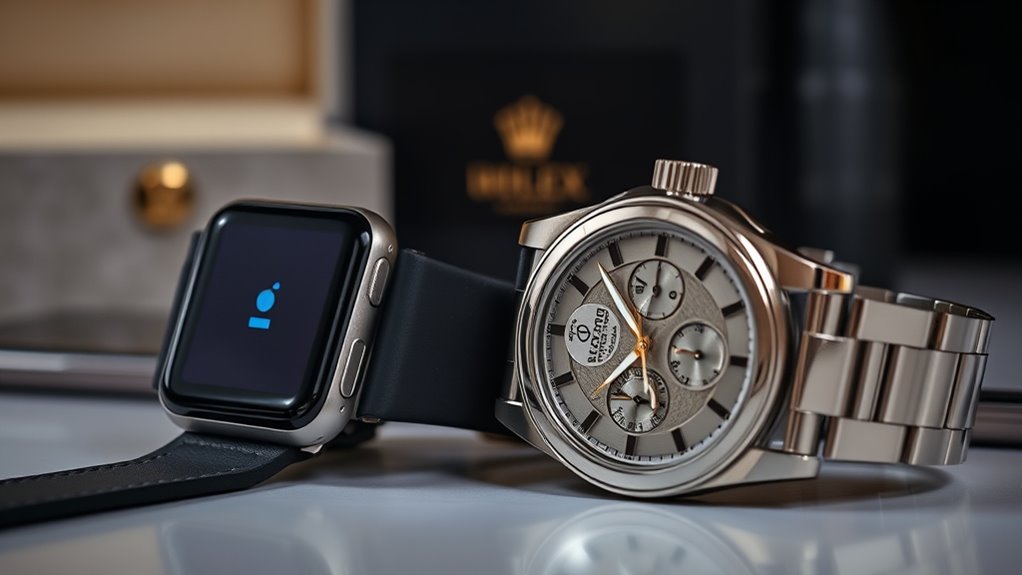
When considering the long-term value of a watch, price plays a vital role in your decision. Your choice impacts both initial investment and how well the watch retains its worth. Here are key points to contemplate:
- Luxury branding often means higher prices but can also preserve value over time, especially with collectible Swiss watches.
- Affordability choices vary; smartwatches usually cost less upfront but may depreciate faster and lack long-term investment potential.
- The durability and craftsmanship of traditional watches can justify higher prices, making them a better value over years.
Ultimately, balancing initial cost with potential appreciation helps you decide whether to prioritize luxury branding or affordability choices for lasting value.
Making the Choice: Factors to Consider When Selecting Your Wristwear

Choosing the right wristwear depends on your lifestyle, priorities, and budget. Start by considering whether you value luxury branding or emotional attachment. If your focus is on prestige, a Swiss watch with a storied heritage may hold more significance, fostering a deep emotional connection. On the other hand, if you want convenience and tech features, a smartwatch might better suit your needs. Think about how often you’ll wear it and for what occasions. Also, determine if you prefer traditional craftsmanship or modern innovation. Your decision should reflect what matters most to you—whether it’s status, functionality, or sentimental value. Balancing these factors helps guarantee your wristwear aligns with your personality and daily routine, making your choice both meaningful and practical.
Frequently Asked Questions
How Do Smartwatches Impact Traditional Watchmaking Industries?
Smartwatches impact traditional watchmaking industries by causing market disruption, challenging luxury branding, and shifting consumer preferences. You might notice a decline in demand for classic Swiss watches as tech-savvy buyers opt for the convenience and features of smartwatches. This pressure pushes traditional brands to innovate, blending craftsmanship with modern technology, ensuring they stay relevant while maintaining their heritage and prestige amid evolving market dynamics.
Can Smartwatches Replace the Craftsmanship of Swiss Watches?
Smartwatches can’t replace the craftsmanship of Swiss watches because they lack the mechanical artistry and digital aesthetics that define traditional timepieces. While smartwatches excel in functionality and modern design, they don’t offer the intricate craftsmanship and timeless appeal you get from Swiss watches. You’ll find that the artistry, precision, and heritage behind Swiss watches provide a unique experience that digital devices can’t replicate, making them irreplaceable in their own right.
Are There Hybrid Watches Combining Smart Features With Swiss Craftsmanship?
Yes, hybrid watches combining smart features with Swiss craftsmanship are emerging. About 25% of luxury watch brands now explore hybrid innovations, aiming to preserve craftsmanship while integrating modern tech. These watches offer the elegance of traditional Swiss design with smart functionalities like notifications and fitness tracking. You get the best of both worlds—timeless craftsmanship preserved, yet enhanced with innovative features that meet today’s tech-savvy demands.
How Do Environmental Factors Affect the Longevity of Each Watch Type?
Environmental factors critically impact both watch types. Smartwatches are more vulnerable to environmental durability issues like water, dust, and extreme temperatures, which can affect their climate resilience and internal components. Swiss watches, built with traditional craftsmanship, often feature durable materials that enhance climate resilience, helping them withstand environmental challenges over time. Proper care and choosing the right model ensure both watches maintain their longevity despite environmental stresses.
What Are the Future Trends in Watch Technology and Design?
Future innovations will focus on seamless integration of advanced technology with minimalist aesthetics, giving you sleek, functional watches. You’ll see more customizable features, improved battery life, and smarter health monitoring. Design-wise, watches will continue embracing simplicity, appealing to your modern taste while maintaining elegance. These trends aim to enhance your experience, blending tech and tradition effortlessly, so you stay connected without sacrificing style or craftsmanship.
Conclusion
When choosing between a smartwatch and a Swiss watch, consider what matters most to you—tech innovation or timeless craftsmanship. Did you know that Swiss watches retain over 70% of their value after ten years? Whether you prioritize modern connectivity or classic elegance, your choice reflects your personality and lifestyle. Ultimately, balancing tradition with technology helps you find a watch that truly suits you and stands the test of time.