TL;DR

Get home appliances delivered free with Prime
- Fast, free delivery on millions of items
- Prime Video, Amazon Music and more included
- Member-only deals all year
Design Milk published a Govee-backed guide to adjusting home lighting for fall, with different layered approaches for living rooms, bedrooms and home offices. The recommendations combine ambient, task and accent lighting; the guide also promotes Govee products and reflects the company’s design perspective, not independent testing.
Design Milk has published a fall lighting guide from smart-lighting brand Govee, recommending separate combinations of ambient, task and accent light for living rooms, bedrooms and home offices as daylight hours shorten. The advice offers homeowners ways to change a room’s feel without a major redesign, while the featured product suggestions come from Govee, a company that sells smart lighting.
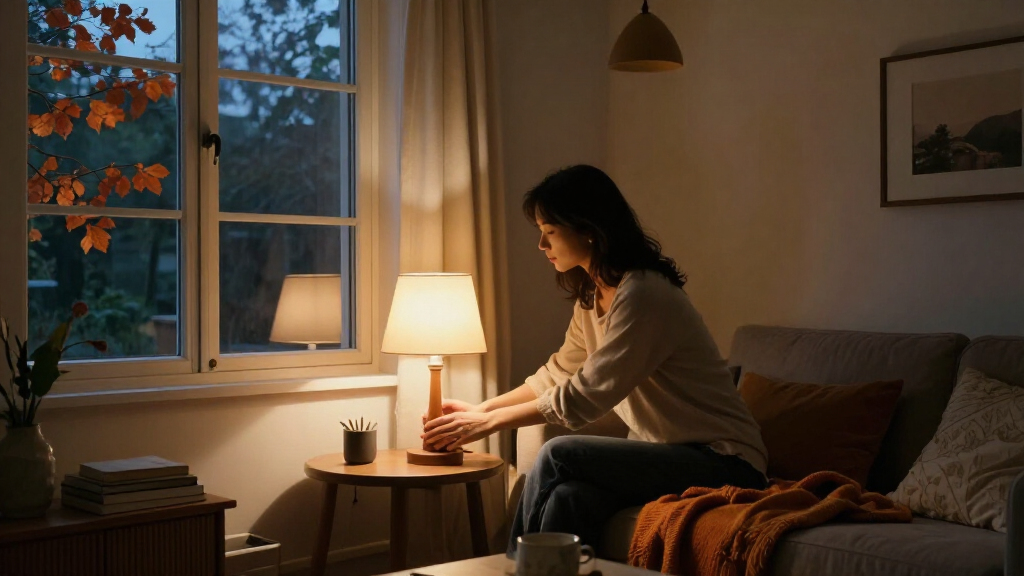
For the living room, the guide suggests placing lights at different heights to create a warm setting around seating. Its examples include a floor lamp to cast light across a corner and wall, a table lamp for another layer, and a TV backlight to reduce the contrast between a bright screen and a dark wall. The featured fixtures are Govee products, and the report says they can be adjusted together in one app.
For the bedroom, the emphasis shifts to low-intensity, indirect light. The guide pairs a floor lamp and table lamp with a strip light placed along a headboard or another surface. It lists 2500K–2700K warm light and desaturated blue and purple accents as options in that setup. These are product and design recommendations; the source does not report independent tests of their effect on sleep.
For a home office, the report recommends balancing task lighting with softer accents: a ceiling fixture set to 4000K–6000K white light for visibility, alongside warm floor and table lamps. Govee chief marketing officer Sherry Ye says this contrast can keep a workspace from feeling clinical. The article also points to brightness, color temperature, gradients and fixture placement as ways to adjust a room’s atmosphere.
Lighting Changes Without Renovation
The guide addresses a practical seasonal change: when shorter days reduce natural light, artificial lighting does more of the work of making rooms usable and comfortable. Layering gives residents options beyond turning on a single overhead fixture, including directing brighter light toward work and softer light toward walls or seating.
These adjustments can be made with portable lamps or flexible light strips, rather than rewiring or replacing furniture. That may make them appealing to renters and homeowners seeking reversible changes. However, the source is a brand-associated guide, not a comparative study; it does not establish that the recommended products are necessary or that a particular color temperature will produce the same response for every person.
Products Worth Considering

Philips Hue Bridge Pro Smart Lighting Hub

TCL QM64L 85-Inch QD-Mini LED 4K Smart Fire TV

Sony BRAVIA 5 85-Inch Mini LED 4K HDR Smart TV (K-85XR50)
As an affiliate, we earn on qualifying purchases.
Three Rooms, Different Lighting Goals
The Design Milk report frames fall as a period when homes rely more on artificial light as daylight fades. Its central recommendation is to decide how each room should function and feel, then use multiple sources of light rather than treating brightness as the only design choice.
That leads to three distinct aims in the guide: social warmth in the living room, lower-intensity light for the bedroom, and clear task lighting softened by warm accents in the office. Ye describes warm, low-Kelvin light as associated with rest and cooler white light with alertness. Those statements are her explanation of the design approach, not findings attributed in the report to a cited research study.
“Layering warm light fills the visual void left by early dusk, softening cold architectural surfaces and mimicking the natural amber warmth of sunset.”
— Sherry Ye, chief marketing officer at Govee
Advice, Not Product Testing
The source does not say when the guide was published, compare Govee products with alternatives, or provide independent measurements of brightness, energy use or performance. It also does not establish that the suggested bedroom lighting improves sleep or that the office setup prevents eye fatigue. Those effects are presented as design claims from Govee’s representative, rather than as independently verified outcomes.
Specific results will depend on room size, existing fixtures, surface colors and individual preference. The guide offers example color-temperature ranges and placements, but it does not give a universal setup or report how much light each room needs.
Adjust the Setup to Each Room
The report gives readers a starting point, not a prescribed installation plan: add or reposition lights, test brightness and color, and assess the result for the room’s intended use. In practice, homeowners can begin with one added layer—such as a table lamp or indirect strip—before deciding whether more fixtures are needed.
No follow-up study or product launch is announced in the source. The next step for readers is to compare the guide’s suggestions with their own rooms and needs, while treating the named products and claimed benefits as Govee’s recommendations.
Key Questions
What is the main idea of the fall lighting guide?
It recommends using multiple light sources at different heights and for different functions, rather than relying on one fixture, as daylight declines in fall.
How does the guide suggest lighting a living room?
It proposes combining a floor lamp, a table lamp and optional TV backlighting to create warm, layered light around seating. The specific fixtures named are Govee products.
What lighting does it recommend for a bedroom?
The guide favors soft, indirect, low-intensity light, including warm light in the 2500K–2700K range and optional muted blue or purple accents. It does not provide independent evidence that this setup improves sleep.
What is the office lighting recommendation?
Use brighter, cooler task lighting for visibility and focus, then add warm floor or table lamps to soften the room. The guide gives 4000K–6000K as the suggested range for its example ceiling light.
Is the guide an independent product review?
No. The report features Govee products and comments from a Govee executive. It does not report comparative testing or independently verify the claimed effects.
Source: design-milk.com