
TL;DR

Get home appliances delivered free with Prime
- Fast, free delivery on millions of items
- Prime Video, Amazon Music and more included
- Member-only deals all year
Homeowner Alexis Moore refreshed a dining room that had not been updated since her 1980s home was built. The eight-week project paired forest-pattern wallpaper and painted-over existing wallpaper with secondhand furniture and decor; costs were not reported.
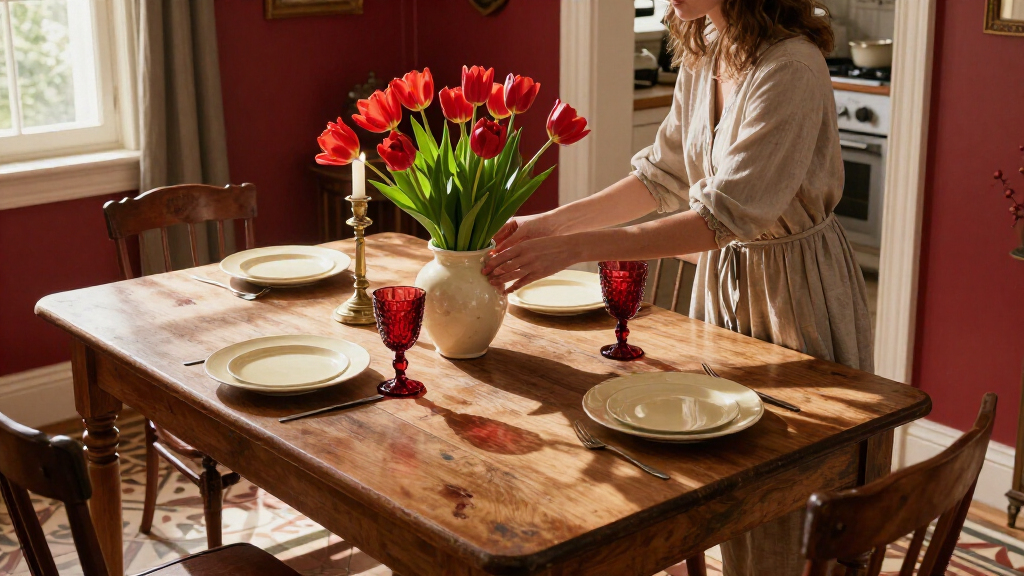
Homeowner Alexis Moore has redone a dining room that had not been updated since her 1980s home was built, using forest-pattern wallpaper, a muted paint color and mostly secondhand furnishings. Apartment Therapy reported that the project took eight weeks as part of the One Room Challenge, turning a room Moore described as drab into a vintage-inspired space that she says feels like an antique oil painting.
Moore said the room had useful features, including hardwood floors, natural light and an open layout, but its dark red wallpaper felt dated and did not reflect her style. Removing the old covering proved difficult because, according to the report, it appeared to have been pasted directly onto the drywall. Moore chose to paint over it instead.
She painted the lower portion of the walls in Sherwin-Williams’ Hardware, a shade the report describes as between tan and gray. Preparation included filling holes, skim coating the walls and applying primer. Above the chair rail, Moore installed Wall Blush’s Wedded Woodlands, a forest-pattern wallpaper with a vintage-inspired look. A friend experienced with wallpaper helped her hang the first few panels; Moore completed the remaining work herself.
Most of the furniture was new to Moore but secondhand. She found the table and chairs on Facebook Marketplace and bought the buffet at a Habitat for Humanity ReStore. She also sold her previous table, chairs and buffet through Facebook Marketplace to offset expenses. The report says much of the decor was secondhand, too; a lamp from HomeGoods cost $30. No total project budget was provided.
Secondhand Finds Shape the Room
The makeover shows how a homeowner can change the feel of an older room by working with some of its existing features and choosing where to spend on new materials. Moore kept the hardwood floors and made the difficult-to-remove wallpaper a surface for paint, while adding a patterned covering above the chair rail. That approach was specific to this room: the report does not establish that painting over wallpaper will suit every wall or condition.
Her furniture choices also connected the finished look to the project’s vintage-inspired style without relying entirely on newly purchased pieces. Moore said vintage items bring character and a lived-in feel, and she resold the old furniture to help offset the cost of replacements. The account offers a practical example of combining reuse, resale and selective purchases, though it gives no overall spending figure or comparison with a full renovation.
The story may be useful to readers considering their own dining rooms because it describes both the design decisions and some of the work behind them: extensive wall preparation, help with the first wallpaper panels, and patience while searching for furnishings. Moore’s result reflects her taste and experience. It is a homeowner’s account, not an independent assessment of the project’s durability or the materials’ performance over time.
An Eight-Week One Room Challenge
Apartment Therapy presented the room as a before-and-after makeover and identified the project as part of the One Room Challenge. Moore completed the work over eight weeks. The report says the dining room had remained unchanged since the home was built in the 1980s, although it does not give the home’s location or a more precise renovation timeline.
The original room’s dark red wallpaper was the main feature Moore wanted to change. Its apparent direct application to drywall made removal difficult, prompting her to paint over it after preparing the surface. She then used a separate forest-pattern wallpaper above the chair rail, combining a muted painted lower wall with a decorative upper section.
The final room also draws on Moore’s existing collection of antique oil paintings and secondhand decor. She described the finished effect as feeling immersed in one of those paintings. Her comments explain the personal intention behind the design; the report does not provide a professional design review or an independent evaluation of the renovation.
“It felt super outdated and lacked my personal style.”
— Alexis Moore, homeowner
Budget and Long-Term Results
The report does not state the total cost of the makeover, how much the wallpaper or other materials cost, or how much Moore recouped by selling her previous furniture. The $30 HomeGoods lamp is one reported price, not a full project budget. The article also does not give measurements for the room or the amount of wallpaper used.
It is not clear how the painted-over wallpaper has held up, whether the walls required repairs beyond the preparation described, or whether Moore would recommend the same method for other homes. The report records her experience and satisfaction at the time of publication; it does not include a follow-up or an independent inspection.
No Further Work Reported
Apartment Therapy’s account presents the room as a completed eight-week project. It does not announce a next renovation phase, a follow-up visit or a planned update from Moore. Any later changes to the room, the performance of the wallpaper and paint, and the final project spending have not been reported in the source material.
Key Questions
Who completed the dining room makeover?
Homeowner Alexis Moore completed the project as part of the One Room Challenge, with a friend helping her start the wallpaper installation.
How long did the makeover take?
The project took eight weeks, according to Apartment Therapy’s report.
What did Moore do with the old wallpaper?
Because removing it was difficult, Moore painted over the existing wallpaper after filling holes, skim coating the walls and priming. The report describes her experience with this room and does not establish whether the method suits other walls.
Where did the furniture come from?
Moore found the table and chairs on Facebook Marketplace and bought the buffet at a Habitat for Humanity ReStore. She sold her old dining furniture through Facebook Marketplace to offset expenses.
How much did the whole project cost?
The total budget was not reported. Apartment Therapy gives one item price: Moore bought a HomeGoods lamp for $30.
Source: rss
Halloween Picks
halloween
As an affiliate, we earn on qualifying purchases.