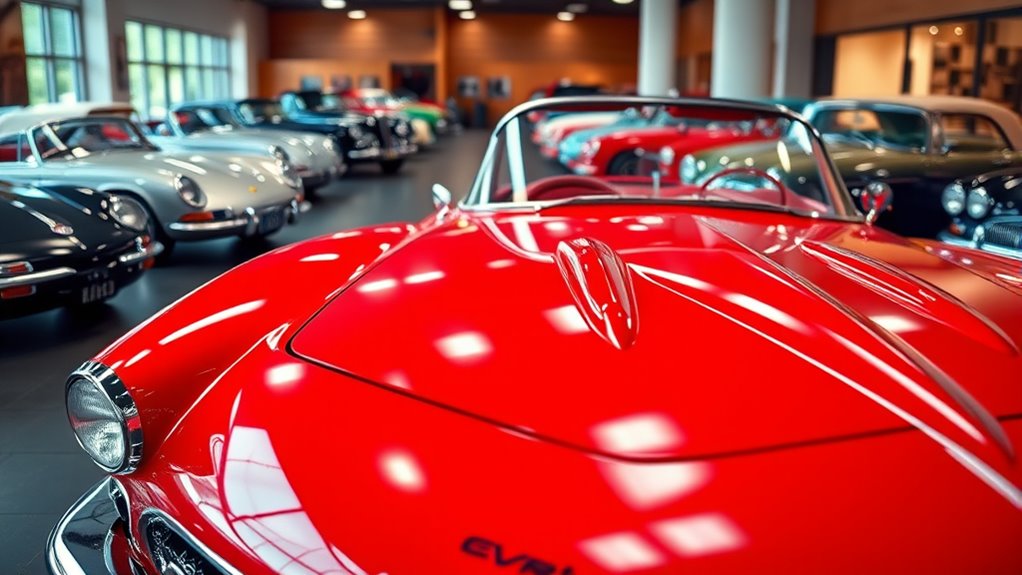

The collectible car market has surged as classic cars become sought-after luxury investments. Rarity, historical significance, provenance, and craftsmanship drive their value higher, especially at auctions or private sales. Reinforcing their worth requires proper maintenance, authentic restorations, and secure storage. Market fluctuations and economic factors influence prices, but knowing how to assess these elements helps you make smarter choices. If you want to discover how to navigate this exciting and evolving market, continue exploring.
Listen free for 30 days with Audible
Thousands of audiobooks and originals — cancel anytime.
As an affiliate, we earn on qualifying purchases.
Key Takeaways
- Classic cars are valued as luxury investments due to their rarity, historical significance, and craftsmanship.
- Market demand, auction results, and international interest influence collectible car prices and investment potential.
- Preservation, provenance, and authenticity are crucial for maximizing the vehicle’s value and long-term return.
- Economic cycles and market volatility can cause price fluctuations, requiring strategic timing and market awareness.
- Proper maintenance, documentation, and risk management enhance the investment stability and resale value of classic cars.
As an affiliate, we earn on qualifying purchases.
The Rising Popularity of Vintage Cars

Vintage cars are experiencing a surge in popularity, driven by collectors and enthusiasts who appreciate their timeless design and historical significance. As more people get involved, you’ll notice the emphasis on restoration techniques that preserve originality while enhancing durability. Enthusiasts often showcase their restored classics at vintage car shows, where authenticity and craftsmanship are celebrated. These events serve as platforms to share restoration tips, connect with fellow enthusiasts, and highlight the unique charm of each vehicle. The growing interest in vintage cars isn’t just about ownership; it’s about appreciating the artistry and engineering of a bygone era. Implementing security measures during restoration and display helps protect valuable vehicles from theft and damage. Additionally, understanding restoration techniques can significantly increase a vehicle’s value and longevity. Proper restoration practices ensure that classic cars retain their appeal and investment potential over time. Moreover, adopting secure storage solutions is essential to safeguarding these prized assets. Maintaining proper documentation of a vehicle’s history and restoration work further enhances its provenance and value. Whether you’re restoring a classic or attending a vintage car show, this renewed passion underscores why vintage cars remain a cherished part of automotive history.
As an affiliate, we earn on qualifying purchases.
Factors Influencing Classic Car Values
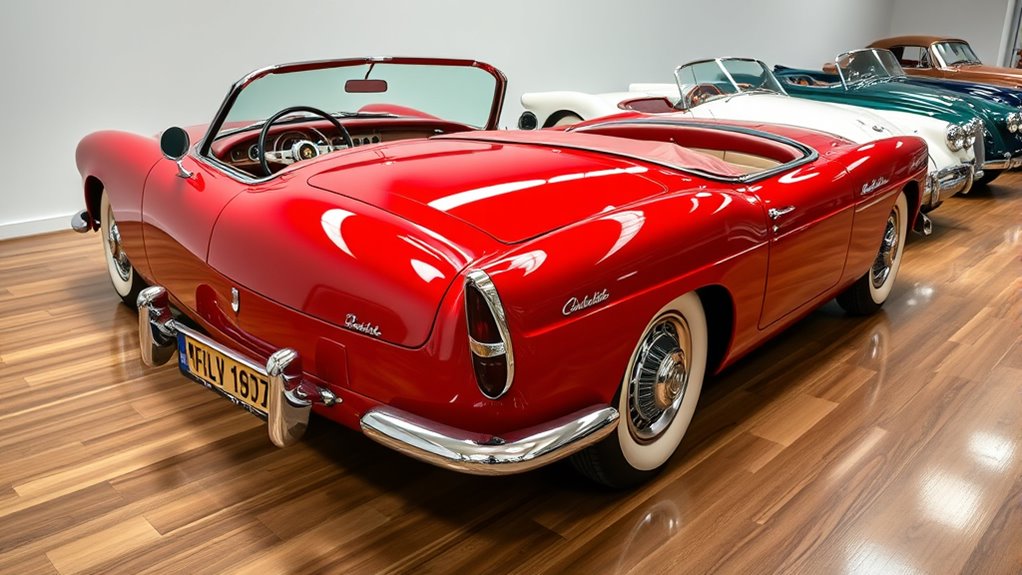
Your classic car’s value depends heavily on its rarity and production numbers, which can make it more desirable to collectors. Its historical significance and provenance also play a key role in boosting worth, especially if it has an interesting story. Additionally, market trends and economic conditions influence how much collectors are willing to pay today.
Rarity and Production Numbers
Have you ever wondered why some classic cars fetch astronomical prices while others remain relatively affordable? Rarity and production numbers play a huge role. Limited editions or low production runs create scarcity, driving up value. Cars with fewer units made often attract collectors, partly because restoration challenges are less common, making preservation easier and more appealing. Additionally, rarity influences insurance considerations, as insuring a scarce model can be more complex and costly, but it also boosts its desirability. The fewer the cars produced, the more exclusive and sought after the model becomes. This scarcity can lead to significant appreciation over time, especially when combined with good condition and authenticity. Furthermore, the collectibility of a car often hinges on its rarity, making it a coveted asset among enthusiasts. In addition, production numbers can impact a car’s historical significance, further enhancing its desirability among collectors. For example, models with documented production figures are often more transparent for valuation purposes, helping investors make informed decisions. So, understanding production numbers helps you gauge a car’s potential investment value and long-term desirability.
Historical Significance and Provenance
Why does some classic car suddenly skyrocket in value? It often boils down to its historical significance and provenance. Cars linked to famous events, racing victories, or notable owners gain prestige, boosting their worth. Provenance verifies a car’s history, ensuring authenticity and enhancing confidence for buyers. Restoration authenticity is crucial; a well-documented restoration maintains the car’s original features, preserving value. Document authentication confirms the car’s origins and ownership history, preventing fraud. When a classic has a compelling backstory, it becomes more desirable. Additionally, certification processes help verify the authenticity and condition of the vehicle, further influencing its valuation. Proper oil maintenance and regular inspections can also play a role in preserving a car’s condition over time. Staying informed about market trends can also help collectors identify when to buy or sell for maximum profit. Recognizing the importance of authentic documentation can significantly impact a car’s desirability and resale value.
Market Trends and Economic Factors
Market trends and economic factors play a crucial role in shaping the value of classic cars. Market volatility can cause sudden price swings, making it essential to stay informed about broader economic conditions and collector demand. When the economy is strong, classic car values tend to rise; during downturns, prices may dip as buyers become more cautious. Insurance considerations also influence market stability. High-value vehicles often require specialized insurance, which can impact ownership costs and resale desirability. Fluctuations in insurance premiums and coverage options can affect your investment’s attractiveness. Staying aware of these economic factors helps you gauge market health and anticipate shifts. Additionally, understanding financial terms and jargon can help you better interpret market signals and assess your investment risks. By understanding both market trends and insurance considerations, you can make smarter decisions that protect and potentially enhance your classic car investment. Furthermore, the arts community demonstrates how innovative use of materials can influence market perception and value, which parallels trends in luxury collectibles like classic cars. Staying informed about market fluctuations and how they relate to broader economic indicators can help investors better navigate the complex landscape of collectible cars. Recognizing the influence of economic cycles is also vital in timing your investments effectively. Moreover, being aware of collector behavior trends can provide insights into future market movements and buyer preferences.
secure car storage for collectibles
As an affiliate, we earn on qualifying purchases.
As an affiliate, we earn on qualifying purchases.
Notable Trends in the Collector Vehicle Market

You’ll notice auction prices for collectible cars are reaching new heights, reflecting growing interest and competition. International buyers are becoming more active, expanding the market beyond traditional regions. Additionally, modern classics are gaining popularity, shifting focus from vintage models to newer vehicles with nostalgic appeal. The rise of renewable energy technologies exemplifies how innovative approaches can transform traditional hobbies and markets. The rise of outdoor cooking and smart gardening technologies exemplifies how innovative approaches can transform traditional hobbies and markets. Preppy dog names are also increasingly popular among enthusiasts seeking stylish and trendy options, mirroring the current trends in the collector vehicle market.
Rising Auction Prices
In recent years, auction prices for collectible cars have surged, reflecting a growing demand among enthusiasts and investors alike. This trend pushes values upward, making classic cars prime luxury investments. You’ll notice several factors driving this increase:
- Rare models fetch record-breaking prices at high-profile auctions.
- Skilled restorations using advanced techniques boost car value and appeal.
- Collectors prioritize vehicles with documented history, elevating their worth.
- Insurance considerations become more complex as car values rise, requiring tailored coverage.
- Reliable backup power systems are essential for protecting valuable collections during outages, ensuring preservation and security.
As prices climb, it’s crucial to understand how restoration techniques impact a vehicle’s authenticity and value. Also, higher auction prices influence insurance premiums, so you’ll want to ensure proper coverage. These trends highlight a competitive market where rarity, condition, and provenance drive prices skyward.
Increasing International Demand
Have you noticed how international buyers are fueling the surge in collectible car prices? Their growing demand drives up not only auction prices but also impacts related costs. As more buyers from around the world pursue rare classics, restoration costs can escalate due to higher labor and parts expenses, making upkeep more expensive. Additionally, insurance premiums for these vehicles increase with heightened demand and perceived value, adding to owners’ overall expenses. This international interest broadens the market, creating a global competition that pushes prices higher. You’ll find that collectors outside your country are willing to pay premium prices, fueling appreciation. The increased demand from abroad makes owning and maintaining classic cars more costly but also more rewarding as investments grow in value.
Shift Toward Modern Classics
One notable trend shaping the collector vehicle market is the shift toward modern classics, as enthusiasts seek cars that blend vintage appeal with contemporary reliability. Modern aesthetics appeal to collectors who want sleek designs that still feel timeless. Technological integration plays a key role, offering features like advanced infotainment, safety systems, and improved driving dynamics. This trend makes modern classics more practical for daily use and investment.
You’ll notice:
- Increased demand for vehicles with updated tech
- Focus on design that balances retro charm and modern appeal
- Rising value of well-maintained, technologically integrated models
- Preference for cars that combine classic aesthetics with modern reliability
This shift reflects a desire for the best of both worlds—nostalgic design and cutting-edge features—driving the market toward contemporary classics.
automotive provenance documentation kit
As an affiliate, we earn on qualifying purchases.
As an affiliate, we earn on qualifying purchases.
The Impact of Provenance and Rarity
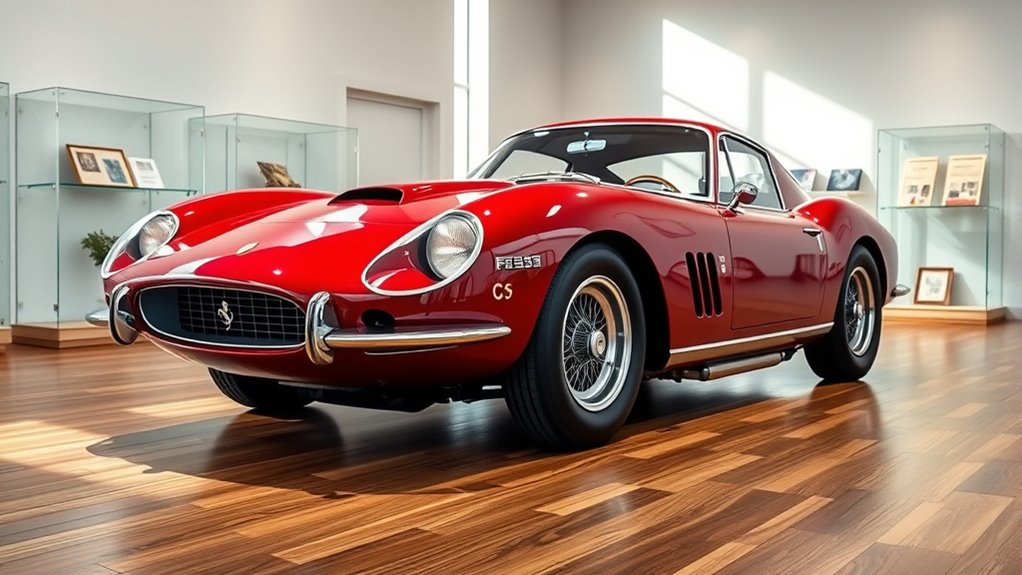
Ever wonder why some collectible cars fetch astronomical prices while others struggle to find buyers? It all comes down to provenance and rarity. A well-documented history, like ownership by a famous figure or participation in significant events, boosts a car’s value. Rarity also plays a pivotal role—limited editions or models with unique features stand out. When evaluating a car, collectors consider restoration techniques and how original it remains; excessive car customization or poor restoration can diminish value. Authenticity matters, so a car with a clear backstory and minimal alterations commands higher prices. Provenance adds emotional appeal and trust, making the car not just a vehicle but a piece of history. This combination of rarity and documented heritage elevates a car’s status as a luxury investment.
How Historical Significance Boosts Worth
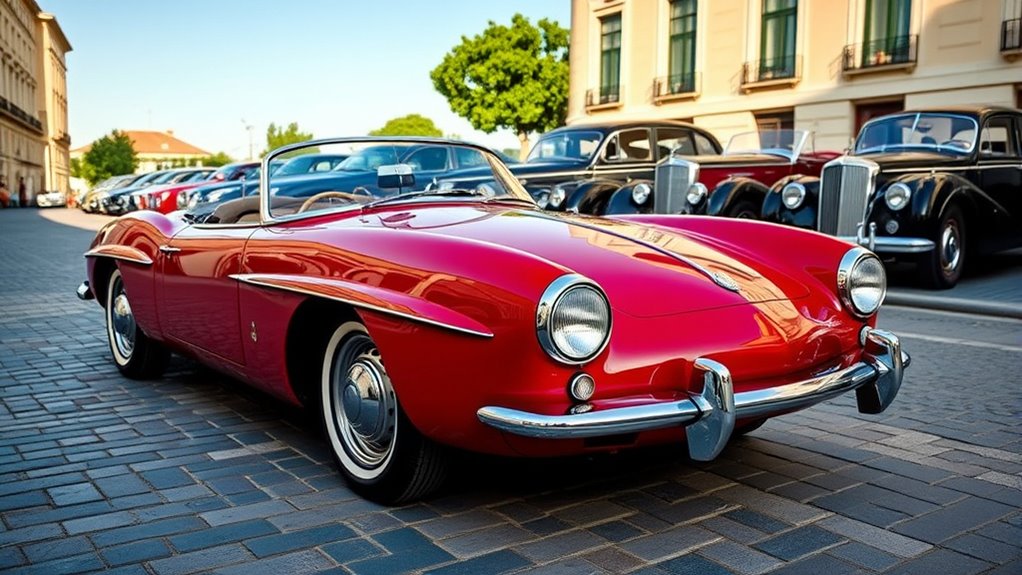
Historical significance can dramatically increase a collectible car’s value because it connects the vehicle to pivotal moments or influential figures in history. When a car is linked to a famous race, celebrity, or historic event, its desirability skyrockets. This connection often justifies higher restoration costs to preserve its authenticity and raises insurance premiums, reflecting its increased worth. You’ll find that:
A car linked to historic events or celebrities gains value and desirability.
- Authentic historical details boost resale value
- Provenance can attract passionate collectors
- Restoring such cars may be more expensive but worthwhile
- Their rarity makes them prime investment pieces
Understanding these factors helps you recognize that a car’s story adds to its value, making it more than just a mode of transportation. Instead, it becomes a tangible piece of history worth a premium.
Top Classic Cars as Investment Opportunities
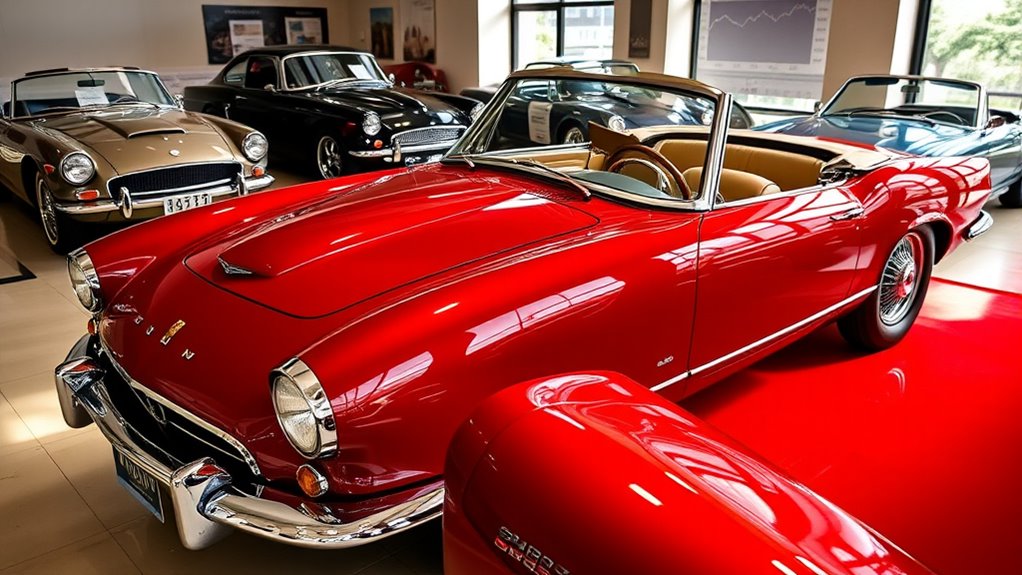
If you’re looking to invest in classic cars, certain rare models show strong appreciation potential. Proven investment classics and iconic brands tend to hold or increase their value over time. By focusing on these key points, you can identify the best opportunities to grow your collection and your wealth.
Rare Models Appreciation Potential
Rare models often see significant appreciation over time, making them prime investment opportunities for collectors and enthusiasts alike. Their limited production runs, unique features, and historical significance drive value growth. However, owning these cars involves challenges, such as restoration hurdles that can be costly and complex. You must also consider insurance considerations, as rare models often require specialized coverage to protect their value. To maximize appreciation potential, focus on:
- Authenticity and original parts
- Documented provenance
- Limited production numbers
- Maintaining pristine condition
Proven Investment Classics
Proven investment classics offer some of the most reliable opportunities for building wealth through collectibles. These cars have demonstrated steady appreciation over time and are often easier to restore with established techniques, maintaining their value. When investing, consider insurance considerations to protect your asset from risks like theft or damage. Proper restoration techniques ensure your classic stays authentic and retains its value, making it a sound investment. Here’s a quick overview of top options:
| Classic Car Model | Year | Notable Investment Factor |
|---|---|---|
| Ferrari 250 GTO | 1962 | Record-breaking appreciation |
| Porsche 911 | 1964 | Durable, iconic design |
| Ford Mustang | 1965 | Popularity, restoration ease |
| Mercedes-Benz 300SL | 1954 | Rarity, historical significance |
| Jaguar E-Type | 1961 | Timeless appeal, restoration potential |
Iconic Brands Value
Iconic brands hold immense value in the classic car market because their name recognition and reputation often drive demand and appreciation. When evaluating investment opportunities, consider brands with a strong legacy that have consistently produced vehicles known for exceptional manufacturing quality. These brands often command higher prices and retain value better over time. Look for:
- Long-standing brand heritage that adds prestige
- Consistent manufacturing quality ensuring durability
- Limited production runs increasing rarity
- Historical significance boosting collector interest
Such qualities make these brands more desirable and likely to appreciate in value. Your investment benefits from the brand’s reputation, which sustains demand even during market fluctuations. Recognizing the power of an iconic brand’s legacy can lead to smarter, more profitable classic car investments.
The Role of Auctions and Private Sales
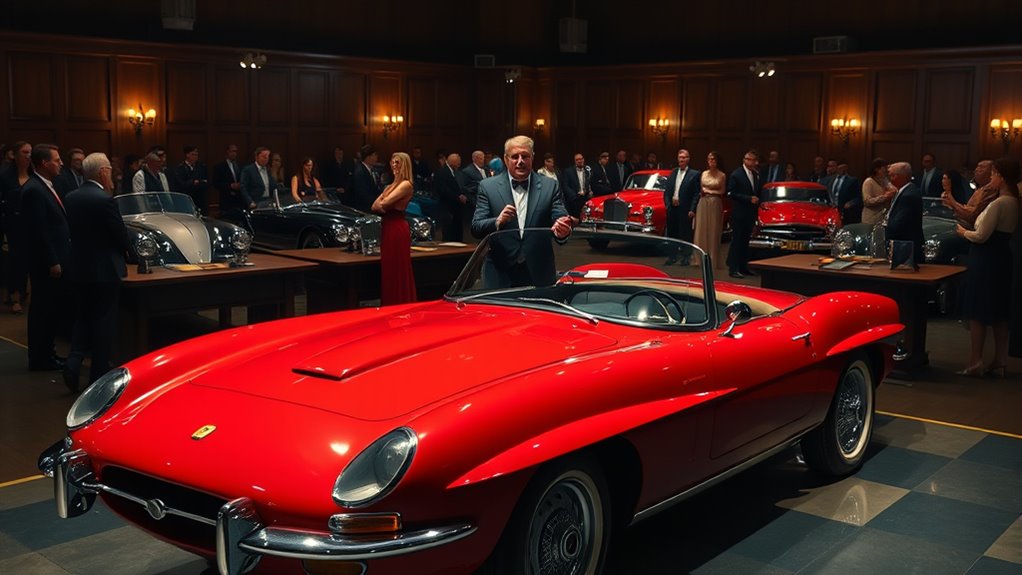
Auctions and private sales play a essential role in shaping the collectible car market by determining how high-value vehicles change hands. At auctions, bidding strategies are critical; knowing when to bid aggressively or hold back can notably influence final prices. These events attract collectors and investors enthusiastic to secure rare finds, often leading to record-breaking sales. Private sales, on the other hand, rely on subtle negotiation and understanding private sale dynamics, such as timing and exclusivity, which can result in discreet yet lucrative transactions. Both channels serve to establish market value, with auctions often setting new benchmarks and private sales providing privacy and flexibility. Your ability to navigate these avenues can directly impact your investment’s success and the overall valuation of collectible cars.
Maintenance and Preservation as Investment Strategies
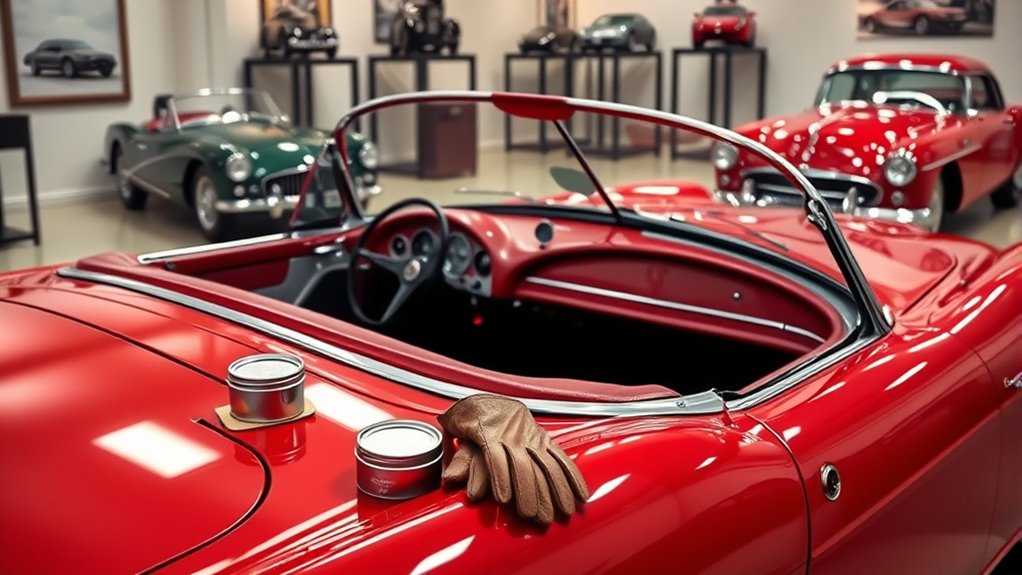
Maintaining and preserving a collectible car is vital to protecting and increasing its value over time. Proper care minimizes restoration costs and keeps the vehicle in prime condition. Effective storage solutions are essential; consider climate-controlled garages to prevent corrosion and deterioration. Regular maintenance, including oil changes and fluid checks, safeguards mechanical integrity. You should also invest in professional inspections to catch issues early. Keeping detailed records of restorations and upkeep adds value and credibility. Additionally, preserving original parts enhances authenticity, which collectors highly prize. For long-term preservation, avoid harsh environments and ensure secure storage. By focusing on these strategies, you maximize your car’s investment potential, maintaining its allure and market value over the years. Proper care truly pays off in the world of collectible cars.
Risks and Challenges in Classic Car Investing

Investing in classic cars comes with significant risks that can impact your returns if you’re not cautious. Market volatility can cause sudden value swings, making it hard to predict long-term profits. Fluctuations in collector demand, economic downturns, or shifts in trends can quickly devalue a prized vehicle. Additionally, legal risks pose serious challenges; improper documentation or undisclosed provenance issues can lead to costly disputes or loss of ownership rights. You must stay informed about regulations related to import/export laws, emissions standards, and ownership transfers, which vary by region. Failing to adhere to legal requirements can result in fines, confiscation, or legal battles, undermining your investment. Being aware of these risks helps you make more informed decisions and develop strategies to mitigate potential losses.
Future Outlook for the Collectible Car Sector
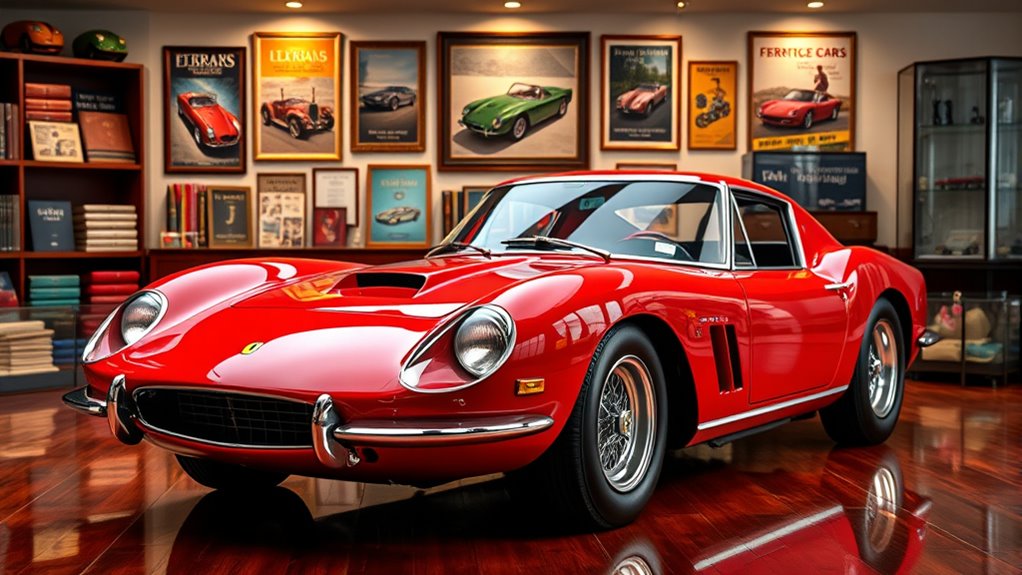
As the collectible car market continues to evolve, technological advancements and shifting consumer preferences are shaping a promising future. You’ll see digital valuation tools becoming more accurate, helping you assess your car’s worth in real-time. This improves transparency and confidence in investments. Additionally, insurance considerations are evolving, with specialized policies tailored for classic cars, reflecting their unique value and rarity. You might also notice increased use of online platforms for buying, selling, and appraising cars, making transactions more accessible and efficient. Moreover, growing interest in sustainability could influence future collector preferences, emphasizing restored or well-maintained classic models. These trends suggest a dynamic, adaptable market where innovation enhances your ability to invest confidently and protect your assets.
Frequently Asked Questions
How Do Economic Downturns Affect Classic Car Investment Returns?
During economic downturns, your classic car investment returns can decline due to reduced market liquidity, making it harder to sell vehicles quickly or at desirable prices. Insurance considerations become vital, as you may face higher premiums or stricter policies. You might also see decreased demand, leading to lower resale values. To protect your investment, stay informed about market trends and guarantee your insurance coverage aligns with your car’s value and liquidity status.
What Are the Tax Implications of Investing in Collectible Cars?
When you invest in collectible cars, tax implications include potential tax deductions for expenses like storage and maintenance. You can also use depreciation strategies to reduce taxable income, but be aware of IRS rules on depreciation recapture when selling. Consulting a tax professional helps optimize your tax benefits and guarantees compliance, maximizing your investment returns while minimizing liabilities.
Which Brands Historically Outperform Others in the Collector Car Market?
You’ll find that brands like Ferrari, Porsche, and Lamborghini generally outperform others in the collector car market. Their strong brand reputation and limited model rarity drive demand and value appreciation. Classic Ferraris, especially vintage models, often see significant investment returns. Porsches and Lamborghinis also perform well, thanks to their iconic status and exclusivity. Focusing on these brands can increase your chances of making a profitable collectible car investment.
How Does Global Demand Influence Vintage Car Prices?
Global demand drives vintage car prices up, especially when vintage auction trends show increased activity and high sales. As more collectors worldwide seek heritage brand significance, prices surge for iconic models. You’ll notice that in-demand vintage cars often fetch record-breaking prices at auctions, reflecting their global appeal. This demand boosts value, making these cars a smart investment if you stay attuned to international trends and the heritage brand’s prestige.
Are There Emerging Markets for Classic Car Investments Worldwide?
Yes, emerging markets for classic car investments are expanding worldwide, especially in Asia and the Middle East, where the luxury market grows rapidly. You can capitalize on antique valuation trends by exploring these regions, as local collectors seek rare vintage vehicles. By understanding regional demand and investing early, you position yourself to benefit from rising prices and increased appreciation in these growing markets.
Conclusion
If you invest in classic cars, know that the market has surged by over 350% since 2000, making it a lucrative luxury asset. With vintage cars increasingly fetching record-breaking prices at auctions, your passion could turn into a smart investment. Just remember, factors like rarity, provenance, and proper maintenance are key. Stay informed about market trends and risks, and you might enjoy both the thrill of the ride and impressive returns down the line.
NFL season / tailgating Picks
team gear
As an affiliate, we earn on qualifying purchases.