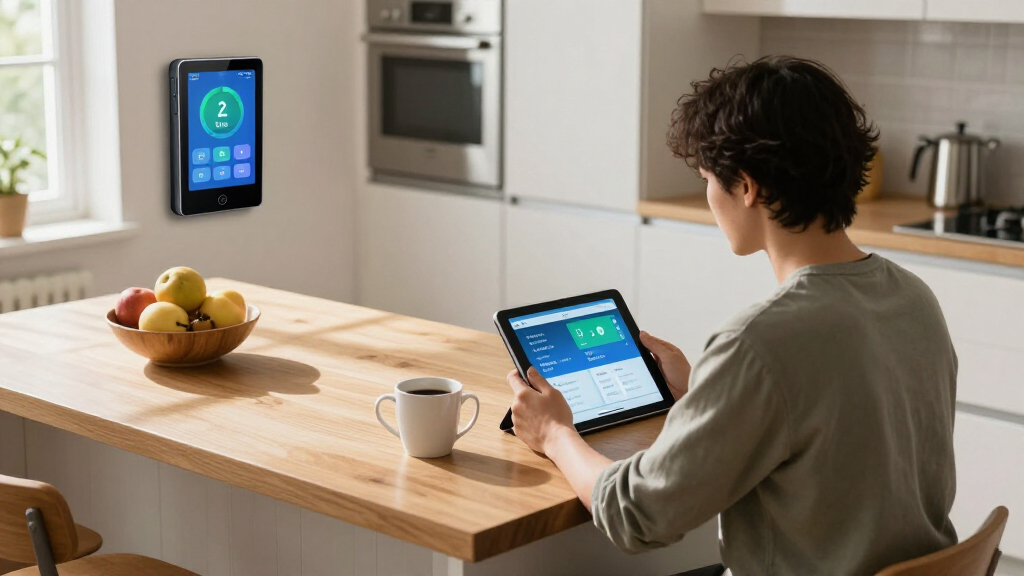

Smart home energy monitors track how much electricity your home uses in real time, and the right one can pay for itself by surfacing wasteful appliances, phantom loads, and off-peak opportunities. For most buyers, the Emporia Vue 3 is the best overall choice thanks to its reliable app, whole-home plus circuit-level monitoring, and strong smart home automation support. Budget-conscious shoppers should look at the Meross Smart Home Energy Monitor, which delivers real-time power and cost tracking at a lower price, while privacy-focused users will prefer the Refoss monitor with open API and no cloud dependency. The main tradeoffs in this category come down to installation complexity (most require working inside your electrical panel), sensor count versus price, and whether you want cloud convenience or local control. Keep reading for the full breakdown of all ten monitors and which one fits your setup.

Get home appliances delivered free with Prime
- Fast, free delivery on millions of items
- Prime Video, Amazon Music and more included
- Member-only deals all year
Complete the kit



Key Takeaways
- The Emporia Vue 3 appears three times in this lineup under different configurations, which tells you its platform is the most mature — but the listings vary, so check exactly which sensors and features each bundle includes before buying.
- Circuit-level monitoring is the biggest differentiator: 16-sensor models like the Smart Home Energy Monitor with 16 50A sensors and the Refoss 16×60A unit cost more upfront but pinpoint exactly which circuit drives your bill, while whole-home-only monitors leave you guessing.
- Local-control options are no longer niche — the Refoss open API model works fully offline with Home Assistant, making it the clear pick over cloud-dependent rivals for anyone who values privacy or wants automations that survive internet outages.
- Sensor amperage ratings matter more than most buyers realize: 50A sensors can’t safely monitor large loads like EV chargers or electric dryers, while 60A and 80A models can cover nearly every household circuit.
- The SIEMENS Inhab sits at the premium end with brand-name build quality and professional-grade sensors, but its price premium only makes sense for new construction or panel upgrades — retrofit buyers get more value elsewhere.


| smart home energy monitor | Connectivity |
|---|---|
| Smart Home Energy Monitor 2×80 | WiFi 2.4GHz |
| Emporia Vue 3 Home Energy Moni | 2.4 GHz Wi-Fi, internet required |
| Smart Home Energy Monitor with | WiFi 2.4GHz, MQTT |
| Refoss Smart Home Energy Monit | Wi-Fi, Open API, MQTT, WebSocket |
| Emporia Vue 3 Home Energy Moni | 2.4 GHz Wi-Fi |
| SIEMENS Inhab Smart Home Energ | — |
| WiFi Home Energy Monitor with | — |
| Emporia Vue 3 Home Energy Moni | — |
| Refoss Smart Home Energy Monit | — |
| Meross Smart Home Energy Monit | — |
More Details on Our Top Picks
Smart Home Energy Monitor 2×80A, Dual-Channel WiFi Electricity Usage Tracker with App Control
This dual-channel monitor earns its spot as the simplest path to whole-home and solar tracking. With two 80A channels and bi-directional power measurement, it can watch grid consumption and solar export simultaneously — something the Emporia Vue 3 also handles, but at a higher total cost once you add branch sensors. The clamp-on sensors attach externally to circuits, so there’s no wiring modification, making it far less intimidating than the Refoss unit, which expects panel-level installation by someone comfortable with electrical work.
The tradeoff is granularity. You get two channels of data, not sixteen like the Refoss or the 16-sensor Home Assistant model, so appliance-level breakdowns are off the table. The Tuya/Smart Life app is functional but basic compared with Emporia’s polished dashboard and automation features. For homeowners who mainly want to answer “how much is my solar producing and what am I drawing,” this covers the essentials at a fraction of the complexity.
Pros:- Bi-directional tracking handles solar export and grid draw
- Clamp-on sensors install without wiring changes
- 80A per channel covers high-power household loads
- Works with widely used Tuya and Smart Life apps
Cons:- Only two channels — no appliance-level breakdown
- Limited to 2.4GHz WiFi and the Tuya ecosystem with no Home Assistant or MQTT path
Best for: Solar homeowners who want production and consumption tracking without a complicated panel install
Not ideal for: Data-hungry users who want per-appliance circuit monitoring — two channels can’t isolate individual devices
- Channels:2
- Current Capacity:80A per channel
- Power Tracking:Bi-directional (solar compatible)
- Connectivity:WiFi 2.4GHz
- App Compatibility:Tuya / Smart Life
- Installation:External clamp-style sensors, no wiring changes
Our verdict“A straightforward, affordable pick for solar households that need two big numbers tracked well rather than sixteen circuits tracked in detail.”
Emporia Vue 3 Home Energy Monitor – Smart Home Automation Module and Real-Time Electricity Usage Monitor
The Emporia Vue 3 is the pick I’d point most homeowners toward because it balances safety certification, app quality, and expandability better than anything else here. It’s UL Listed, which matters when a device lives inside your circuit panel — the Refoss monitor makes no equivalent claim. Its app-driven automation lets you act on the data, not just view it, and second-by-second active data retention outclasses the minute-level granularity most rivals offer.
The expandability is the real story: up to 16 branch sensors can be added later, so you can start with whole-home tracking and graduate to circuit-level detail, unlike the dual-channel tracker, which is capped at two measurement points. The catches are real, though — those sensors cost extra, the base unit only covers the mains, and installation inside the panel is genuinely more involved than clamping a sensor to a cable. Budget for an electrician if you’re not confident opening the panel.
Pros:- UL and CE certified for panel safety
- Expandable to 16 branch sensors for per-appliance data
- Second-level active data resolution
- Broad system support including solar and net metering
Cons:- Branch sensors sold separately, adding meaningful cost
- Panel installation may require a professional electrician
Best for: Homeowners who want a certified, expandable system that grows from whole-home monitoring into circuit-level detail
Not ideal for: Renters or anyone unwilling to open their circuit panel — this installs inside the electrical box
- Certification:UL Listed, CE Listed
- Installation:Circuit panel (single-phase, split-phase, 2/3-wire, 3-phase with added sensor)
- Connectivity:2.4 GHz Wi-Fi, internet required
- Data Retention:1-second (active), 3-hour, 1-minute (7 days), 1-hour (indefinite)
- Expandability:Up to 16 branch sensors (sold separately)
- Dimensions:10 x 5 x 5 inches
- Warranty:1 year
Our verdict“The most complete and safest long-term platform here, provided you accept the higher total cost and a panel-level install.”
Smart Home Energy Monitor with 16 50A Circuit Sensors, Real-Time Power Usage & Cost Tracking, Compatible with Home Assistant
Where the Emporia Vue 3 leans on a cloud-connected app, this monitor’s LAN-only privacy mode sets it apart: it can run entirely without cloud services, pushing data over MQTT straight into Home Assistant. For anyone who treats their energy data as personal, that’s a decisive advantage — no account required, no third-party servers holding your household’s usage patterns.
The 16 clamp-on 50A sensors deliver circuit-level cost tracking comparable to the Refoss unit, and the multi-room/appliance focus makes it a natural fit for rental properties and shared apartments where you need to split bills by room or tenant — a use case none of the other picks address directly. The price of that openness is setup effort: MQTT and Home Assistant integration demand technical comfort that a Tuya-app user of the dual-channel monitor would never need. The 50A sensor rating is also lower than Refoss’s 60A, which matters on heavy circuits like EV chargers.
Pros:- LAN-only mode keeps energy data fully private
- Native MQTT and Home Assistant support
- 16 sensors enable room-by-room and tenant-level cost tracking
- Clamp-on sensors up to 415Y/240VAC fit most panels
Cons:- MQTT and Home Assistant setup requires real technical skill
- 50A sensor limit is too low for high-draw circuits
Best for: Home Assistant users and landlords who want local, private, circuit-level monitoring without cloud dependency
Not ideal for: Non-technical buyers who want a plug-in app experience — MQTT setup is genuinely involved
- Number of Sensors:16
- Sensor Current Rating:50A
- Supported Voltages:up to 415Y/240VAC
- Connectivity:WiFi 2.4GHz, MQTT
- Privacy Mode:LAN only, no cloud or app required
- Monitoring:Real-time power, cost, appliance and multi-room tracking
- Warranty:1 year
Our verdict“The clear choice for tinkerers and landlords who value local control and per-room data over turnkey simplicity.”
Refoss Smart Home Energy Monitor with 16 60A Circuit Sensors
The Refoss is the most ambitious package here: 16 sensors rated at 60A each, ±1% measurement precision, and five years of stored data. That retention period dwarfs the Emporia Vue 3’s seven days of minute-level history, which matters if you want to compare this winter’s heating costs against last year’s. Fault alerts and solar optimization features push it toward a full energy-management tool rather than a passive meter.
Like the Home Assistant-focused monitor, it offers local control via Web UI, Open API, and MQTT, but it layers a friendlier analytics layer on top — the closest thing here to a professional-grade system. The downsides keep it from the top spot: installation still demands electrical competence, the setup curve is steep for beginners, and some users report WiFi connectivity dropouts, which is frustrating on a device whose whole job is continuous monitoring. The two-year warranty is the longest in this lineup, a signal of confidence that partially offsets those risks.
Pros:- ±1% accuracy across 16 circuits rated to 60A
- 5 years of local data storage for long-term analysis
- Local Web UI, Open API, MQTT and WebSocket control
- Longest warranty in the lineup at 2 years
Cons:- Reported WiFi connectivity issues from some users
- Setup and installation demand electrical and technical know-how
Best for: Data-driven homeowners who want long-term historical analytics and pro-level precision across every circuit
Not ideal for: First-time buyers or anyone wanting a hands-off app experience — setup is technical and support can be hit-or-miss
- Number of Sensors:16
- Sensor Capacity:60A per sensor
- Supported Systems:Single-phase, split-phase, 3-phase 4-wire Wye
- Accuracy:±1%
- Data Storage:5 years
- Connectivity:Wi-Fi, Open API, MQTT, WebSocket
- Dimensions:4.5 x 3.5 x 1.1 inches
- Warranty:2 years
Our verdict“The most capable monitor in this batch for serious analytics, best suited to buyers comfortable with a technical install.”
Emporia Vue 3 Home Energy Monitor – Real-Time Electricity Usage and Power Consumption Meter
This version of the Vue 3 is the easiest entry point into serious energy monitoring. It keeps the UL certification, real-time tracking, and solar/net-metering support of its sibling, but ships as a more streamlined starter package aimed at first-time users rather than automation builders. Compared with the dual-channel Tuya tracker, you get Emporia’s noticeably better app and dashboard, minute-level history, and a clear upgrade path within the same ecosystem.
It’s worth being honest about the differences from the expanded Vue 3 bundle: data retention is tighter here (minute data for 7 days, hour data indefinite), and some three-phase systems need an extra sensor. The Refoss monitor offers vastly deeper history and local control, but also a much steeper learning curve — this model trades that depth for accessibility. If your goal is simply seeing what your house consumes today and trimming the obvious waste, that trade lands in your favor.
Pros:- UL certified for safe panel installation
- Polished app with real-time usage and solar/net metering views
- Supports nearly every residential system configuration
- Easiest setup in the Vue family
Cons:- Short data retention compared with Refoss’s 5-year storage
- Three-phase systems require an additional sensor
Best for: First-time buyers who want a certified, app-based whole-home monitor with the simplest setup path
Not ideal for: Users needing long data history or 3-phase support out of the box — retention is limited and extra sensors may be required
- Certification:UL Listed
- System Support:Single-phase, single-split phase, 2-wire, 3-wire, 3-phase, 4-wire Wye
- Connectivity:2.4 GHz Wi-Fi
- Data Retention:Minute data 7 days, hour data indefinite
- Solar Support:Yes, with net metering
- Installation:Circuit panel
- Warranty:1 year
Our verdict“The right first energy monitor for homeowners who want trustworthy numbers from a certified device without a technical project.”
SIEMENS Inhab Smart Home Energy Monitor with Circuit Sensors
The SIEMENS Inhab stands out for its professional-grade panel-level coverage, reading both the mains (up to 200A) and individual circuits (16–50A) so you can see exactly where every kilowatt goes. Compared with the WiFi Home Energy Monitor with 3 CT Clamps, which caps out at three circuits, the Inhab gives you a far fuller picture of household consumption — that difference is the whole point of paying for an established industrial brand. Its personalized alerts for abnormal activity also go beyond passive dashboards, flagging things like a furnace running at odd hours. The tradeoffs are real, though: it needs professional installation inside the electrical panel, and app support is limited to the US and Canada, so international buyers should look elsewhere. Pricing transparency is also thin at retail.
Pros:- Tracks both mains and individual circuits for full-home visibility
- Personalized alerts for abnormal energy activity and savings opportunities
- Backed by Siemens with CE marking and UL listing
- Scales from 16A branch circuits up to 200A mains
Cons:- Requires installation inside the electrical panel, ideally by an electrician
- App support limited to USA and Canada
- No clear pricing information available
Best for: North American homeowners who want brand-backed, circuit-by-circuit insight and are comfortable hiring an electrician
Not ideal for: Renters or anyone outside the US and Canada, since the app and support are region-locked
- Main Sensors:2-200 Amp
- Circuit Level Sensors:16-50 Amp
- Compatibility:USA and Canada
- Installation:Electrical panel
- Standards:CE marked, UL Listed
- App:Mobile app with real-time tracking and alerts
Our verdict“Buy this if you want the most complete, brand-supported picture of your home’s energy — skip it if you’re outside North America or unwilling to open your panel.”
WiFi Home Energy Monitor with 3 80A CT Clamps, Circuit-Level Monitoring, Smart App Control
This three-clamp monitor makes the most sense for buyers who want to watch a few big loads — HVAC, a water heater, a solar circuit — without paying for a sixteen-sensor system like the Refoss EM16P. At roughly a fifth of the monitoring scope, it covers the circuits that actually move your bill, and the Smart Life/Tuya app adds remote control and temperature alerts at 50°C, a nice safety net the Emporia Vue 3 doesn’t offer. The compromises are straightforward: you’re hard-capped at three circuits, wiring still demands comfort around a live panel or an electrician’s visit, and everything depends on a stable 2.4GHz Wi-Fi connection. Compared with the SIEMENS Inhab, it trades whole-home depth for a much lower barrier to entry.
Pros:- Monitors three circuits simultaneously with included CT clamps
- Temperature alerts help catch overheating equipment
- Works with solar circuits and major appliances
- Familiar Smart Life/Tuya app with historical analysis
Cons:- Hard limit of three circuits
- Requires electrical wiring knowledge or professional installation
- No functionality without a 2.4GHz Wi-Fi connection
Best for: Budget-conscious homeowners who mainly want to track two or three high-consumption appliances like HVAC or a water heater
Not ideal for: Whole-home auditors — three circuits can’t show you where the rest of your electricity is going
Our verdict“Best Budget Starter Pick — Monitors three circuits simultaneously with included CT clamps”
Emporia Vue 3 Home Energy Monitor
The Emporia Vue 3 earns its spot as the solar household’s default choice. Unlike the Meross monitor, which leans on Home Assistant for its smarts, the Vue 3 ships with a polished app and web dashboard plus native solar and net-metering support, so you can watch production and consumption side by side without building any automation yourself. Its flexibility across single-split, 3-wire, and 4-wire Wye systems also beats the region-locked SIEMENS Inhab for electrical compatibility. The honest downside is data retention: only 7 days of minute-level history (hourly data is kept indefinitely), which frustrates anyone doing month-over-month load analysis. Some 3-phase setups also need an extra sensor. If you want a turnkey, UL-certified system with the least setup friction, this is it.
Pros:- Native solar and net-metering monitoring
- UL-certified with broad electrical system support
- Mature app and web interface with real-time data
- Includes sensors for critical load monitoring
Cons:- Minute-level data kept for only 7 days
- Additional sensor required for some 3-phase systems
- Dependent on Wi-Fi for real-time monitoring
Best for: Solar owners who want production-versus-consumption tracking out of the box, with no coding or Home Assistant setup
Not ideal for: Data hoarders and analysts who need long-term minute-level history — the 7-day retention limit will bite
Our verdict“Best for Solar and Net Metering — Native solar and net-metering monitoring”
Refoss Smart Home Energy Monitor with Open API, Home Assistant, No Cloud
The Refoss EM16P is built for people who treat their home like a project. With 16 branch sensors plus 2 main sensors, it matches the SIEMENS Inhab’s monitoring depth while adding what Siemens won’t: local control via Web UI, MQTT, and Open API, plus up to 5 years of stored data — dwarfing the Emporia Vue 3’s 7-day minute-level retention. That ±1% accuracy and Home Assistant/OpenClaw AI integration make it the strongest pick here for automating solar self-consumption, because your data never leaves your network. The flip side: without cloud service, remote monitoring away from home requires setting up your own remote access, and getting the most from the API assumes technical fluency that casual users just don’t have. Panel compatibility also needs verifying before purchase.
Pros:- Full local control via Web UI, MQTT, and Open API — no cloud dependency
- 5 years of data storage and ±1% accuracy
- 16 branch plus 2 main sensors for deep circuit-level insight
- ETL/UL 61010 certified with non-invasive clamp-on installation
Cons:- No cloud means remote monitoring requires your own network setup
- Advanced configuration demands technical knowledge
- Requires a compatible circuit panel layout
Best for: Home Assistant users and privacy-minded tinkerers who want deep circuit data, 5-year history, and full local automation
Not ideal for: Casual users who just want a phone app — the local-first design and API-focused features will feel like homework
Our verdict“Best for Smart Home Power Users — Full local control via Web UI, MQTT, and Open API — no cloud dependency”
Meross Smart Home Energy Monitor, Real-Time Power & Cost Tracking
The Meross monitor sits in a sensible middle ground: like the Refoss EM16P, it offers local data storage for up to 5 years with no cloud fees, but its emphasis on real-time cost tracking — translating watts into dollars — makes bill reduction the headline rather than automation plumbing. Solar integration and 200A main / 60A branch coverage put it in the same capability class as the Emporia Vue 3, and clamp-on installation keeps the electrician visit short. Where it falls behind is connectivity: control runs through Home Assistant, Open API, and web, with no dedicated mobile app or push alerts mentioned — a step down from Emporia’s polished app experience. It’s also limited to US-style electrical systems, so verify your wiring before committing.
Pros:- Real-time power, voltage, current, and cost tracking in one view
- Solar integration with circuit-level monitoring
- 5 years of local data storage with no subscription fees
- Simple clamp-on installation, ETL and UL 61010 certified
Cons:- No dedicated mobile app or remote alerts outside Home Assistant
- Limited to compatible US electrical systems
- Wiring system compatibility must be verified before purchase
Best for: Cost-focused homeowners who want dollar-denominated usage tracking, solar monitoring, and 5 years of local history with zero subscriptions
Not ideal for: App-first users — without a dedicated mobile app or native remote alerts, it’s clunkier day to day than the Emporia Vue 3
Our verdict“Best for Subscription-Free Cost Tracking — Solar integration with circuit-level monitoring”
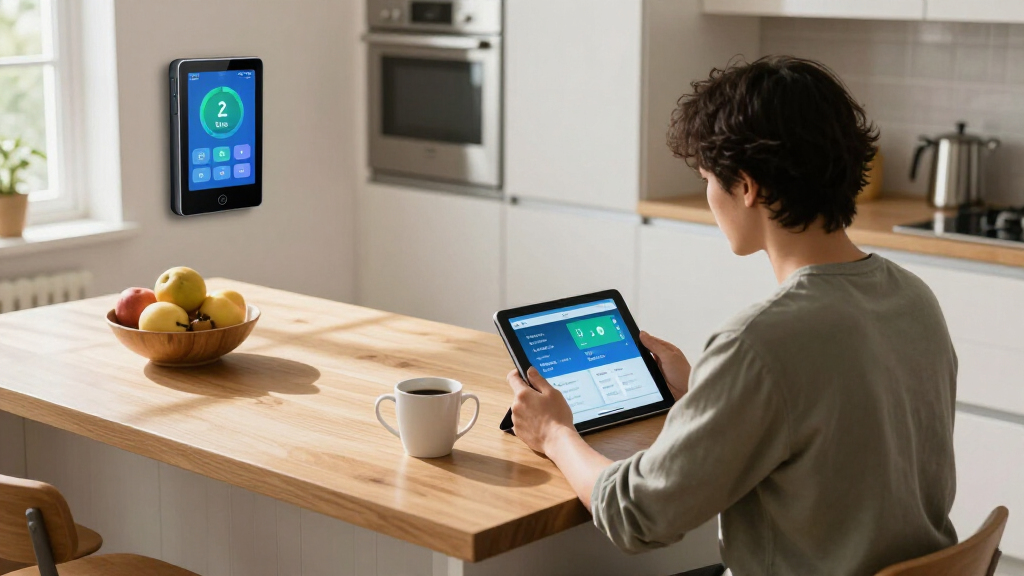
How We Picked
I ranked these smart home energy monitors around four factors that actually change the ownership experience. Monitoring granularity came first: whole-home monitors tell you how much you’re spending, but circuit-level models tell you why, so systems with 16 sensors ranked higher for serious energy savers. Platform openness was next — models offering Home Assistant compatibility, open APIs, or local control scored above cloud-only systems, because buyers increasingly want their energy data feeding automations rather than sitting in a vendor app. Installation realism also shaped the ranking: clamp-on designs with flexible amperage ratings (60A–80A) accommodate more panel configurations than restrictive 50A kits.
Finally, I weighed value per sensor and long-term cost. A monitor that requires a subscription or locks historical data behind a paywall costs more over five years than its sticker price suggests, so no-cloud options earned a durability bonus. Products with strong app polish, responsive support, and proven accuracy claims ranked above spec-sheet-heavy options with thin software ecosystems. The ordering reflects who each monitor serves best, not just raw feature counts.
Factors to Consider When Choosing Smart Home Energy Monitors
Choosing an energy monitor is less about specs and more about matching the system to your electrical panel, your technical comfort, and how you plan to use the data. These are the factors that separate a satisfying purchase from a returned box.Whole-Home vs. Circuit-Level Monitoring
The most common mistake buyers make is underbuying granularity. A whole-home monitor with two main clamps tells you total consumption, which is useful for verifying your utility bill but almost useless for finding waste — a basement freezer and a gaming PC look identical in aggregate data. Circuit-level systems add small sensors to individual breakers, letting you see that your HVAC costs $180 a month while your lighting costs $12. That said, most 16-sensor kits don’t cover every breaker in a typical home, so you’ll still rely on the main clamps for the full picture. If your goal is lowering your bill, circuit-level pays for itself; if you just want general awareness or solar production tracking, whole-home is enough.
Sensor Amperage and Panel Compatibility
Before buying anything, open your electrical panel (or look at your breaker labels) and note the amperage of your largest circuits. A 50A sensor physically cannot and safely should not clamp a 60A EV charger or range circuit, while 80A sensors handle nearly any residential load. Physical clearance matters too: some panels are too cramped for chunky CT clamps on adjacent breakers, and some condos have subpanels where access requires building management approval. Buyers with 400A service — two 200A panels — need dual-channel main monitoring, which not every base kit includes. Matching hardware to your panel first eliminates the most common return reason in this category.
Cloud, Local Control, and Home Assistant
Every monitor here has an app, but what happens behind the app varies enormously. Cloud-dependent systems offer slick remote access and easy setup, but they stop logging during internet outages and can be crippled if the manufacturer changes its API or shuts down — a real risk in a market with young brands. Local-control monitors like the no-cloud Refoss stream data over your own network, integrate deeply with Home Assistant, and keep working regardless of any company’s fortunes. The tradeoff is setup complexity: local systems typically demand more technical comfort and lack polished mobile experiences. If you already run a smart home hub, prioritize local control; if your smart home is a phone app and a few bulbs, cloud convenience wins.
Installation: DIY or Electrician
Nearly every monitor in this category installs inside the electrical panel, which means either comfort working near live bus bars or a $100–$250 electrician visit. Clamping sensors around main lugs is the riskiest step, and even with the breaker off, the incoming service lines remain energized. Buyers consistently underestimate this: factor the electrician cost into your budget comparison, because a cheap monitor plus professional install can exceed a premium self-installable unit. If you rent, have an older panel, or simply don’t want the liability, confirm your electrician will install customer-supplied equipment before ordering — some won’t. Panel-mounted units like the SIEMENS Inhab are easiest to integrate during a panel upgrade rather than as a retrofit.
Data Accuracy and Utility Bill Reconciliation
CT-based monitors are typically accurate to within 1–2% for consumption, but accuracy degrades with cheap clamps, poor placement, or uncalibrated setups. More important for most buyers is whether the software lets you enter your actual utility rate — including tiered or time-of-use pricing — because a monitor showing generic cents-per-kWh will mislead you every month. Solar owners need bidirectional measurement, since standard CTs can’t distinguish production from consumption and will show net-zero homes as using nothing. Check whether historical data is retained indefinitely or throttled after a period; some platforms summarize to hourly data after a week, which matters if you want year-over-year comparisons.
Realistic Payback Expectations
Energy monitors get marketed with promises of 10–20% savings, and the honest answer is that savings depend entirely on what you find and fix. Most households discover one or two surprises — a failing appliance, a heated garage using far more than expected, or a well pump running constantly — that deliver the bulk of the payback within months. Beyond those wins, ongoing savings come from behavioral changes the monitor makes visible, like shifting laundry into off-peak windows on time-of-use plans. If your electricity bill is under $100 a month, a 16-sensor premium system may never pay back; a basic whole-home monitor or even a smart plug approach might be the smarter spend. Buy the level of visibility that matches your bill size.
Frequently Asked Questions
Do I need an electrician to install a smart home energy monitor?
For any monitor that clamps onto your main service lines or individual breakers, yes — either a licensed electrician or genuine confidence working inside a live electrical panel. The danger isn’t the sensors themselves but the exposed bus bars and incoming service feeds, which remain energized even with your main breaker off. A professional installation typically runs $100–$250 and takes under an hour, so budget for it when comparing prices. Some buyers split the difference: they have an electrician install everything during another scheduled visit, like a panel inspection or EV charger installation, which often costs little extra. If you’re not comfortable even opening the panel door, plug-level monitors on specific outlets are the safe alternative, though you lose whole-home visibility.
Why does the Emporia Vue 3 appear multiple times, and which one should I buy?
The Vue 3 listings in this roundup represent different retail bundles — some include only the base whole-home unit, while others add circuit-level sensor packs or smart home automation modules. The hardware core is the same, so the real question is how many circuits you want to monitor, and you should compare what each listing explicitly includes rather than assuming identical kits. If you’re starting from scratch, the bundle with circuit sensors usually costs less than buying the base unit and add-on sensors separately. One practical tip: Emporia also sells extra sensor packs, so you can start with whole-home monitoring and expand later without replacing anything. That upgrade path is one reason the platform ranks so well for most buyers.
Are cloud-free monitors like the Refoss actually better for privacy?
A no-cloud monitor keeps your energy data on your local network by default, which means no third-party company sees when you’re home, when you’re asleep, or how much electricity you use — patterns that are surprisingly revealing. That said, local control shifts responsibility to you: if your home server or hub fails, logging gaps can occur unless you’ve set up reliable storage, and remote access while away requires configuring a VPN or similar workaround. Cloud systems, by contrast, handle all of that automatically but depend on the manufacturer staying in business and keeping its servers running. For Home Assistant users or anyone already self-hosting, the Refoss approach is genuinely superior. For buyers who want zero maintenance, the privacy tradeoff of a reputable cloud platform is reasonable.
Can a home energy monitor actually lower my electricity bill?
It can, but indirectly — the monitor finds waste, and you eliminate it. The typical discovery pattern goes like this: within the first month, circuit-level data reveals one or two expensive surprises, like an aging refrigerator drawing double its rated power, a heat tape running all summer, or a pool pump cycling too often. Fixing those often recovers 5–15% of the bill immediately. The longer-term benefit is behavioral: seeing real-time costs nudges households toward off-peak usage on time-of-use rates and faster elimination of phantom loads. If your bill is small or you already know exactly where your power goes, a monitor mostly confirms what you know — in that case, skip the purchase or start with a cheap smart plug approach.
What’s the difference between 50A, 60A, and 80A circuit sensors?
The amperage rating is the maximum load each sensor can safely and accurately measure, and it determines which circuits you can monitor. Standard lighting and outlet circuits run 15–20A, so any sensor handles those, but large appliances are the issue: electric dryers and water heaters often need 30A coverage, ranges and HVAC units 40–50A, and EV chargers 48–60A continuous. A 50A sensor kit can’t monitor an EV charging circuit properly, while 60A and 80A sensors cover essentially every residential load. Since large loads are usually where the money is, higher-rated sensor kits deliver more useful data even if you never use their full capacity. When comparing kits, check both the per-sensor rating and whether the kit includes sensors large enough for your two or three biggest circuits.
Conclusion
The right smart home energy monitor depends less on price and more on what you want the data for. For best overall, the Emporia Vue 3 bundles win on the strength of their mature app, accurate tracking, and flexible expansion from whole-home to circuit-level monitoring. The Meross Smart Home Energy Monitor takes best value, delivering real-time power and cost tracking for buyers who want awareness without a large investment. On the premium end, the SIEMENS Inhab suits homeowners doing panel upgrades or new construction who want professional-grade hardware from an established brand.
For beginners and casual users, the dual-channel 80A whole-home monitor or a basic Vue 3 listing keeps installation simple and answers the question most people actually have: how much does my home cost to run? Specific needs split into three camps: privacy-focused and Home Assistant users should choose the Refoss no-cloud model; detail-oriented energy savers chasing down every wasted kilowatt will get the most from the 16-sensor kits from Refoss or the Smart Home Energy Monitor with 16 50A sensors (as long as their biggest circuits stay under 50A); and owners of high-amperage loads like EV chargers should stick with the 60A–80A sensor options. Match the monitor to your panel, your budget, and your willingness to act on the data — that combination, not the sticker price, determines whether this purchase pays off.
Fall Picks
fall essentials
As an affiliate, we earn on qualifying purchases.