For most small homes with a 240 V connection and modest hot-water demand, I’d start with the Rheem RTEX-13 as the best overall balance of capacity and residential fit. The EcoSmart ECO 8 suits a lower-demand setup, while the ThermoMate 4.5 kW under-sink model makes more sense for one nearby sink than whole-home use. The main tradeoff is between the electrical capacity and flow needed for multiple fixtures and the compact, lower-demand needs common in smaller homes. A heater’s advertised flow rate does not tell you how much hot water it can deliver in your climate or wiring setup. Read on for the full comparison, selection criteria, and guidance on matching a unit to your home.

Get home appliances delivered free with Prime
- Fast, free delivery on millions of items
- Prime Video, Amazon Music and more included
- Member-only deals all year
Complete the kit



Key Takeaways
- Rheem RTEX-13 leads the middle-capacity group: It offers a more residentially oriented option for buyers who need more than a point-of-use heater but do not want to jump straight to the 18 kW APUS.
- Small-home needs vary more by use than by floor area: The 4.5 kW ThermoMate and CAMPLUX models are better fits for a nearby sink, while they are poor substitutes for a whole-home unit.
- 240 V models dominate the practical whole-home choices: The 13–18 kW heaters need compatible circuits and electrical service, so an advertised compact size does not mean a simple installation.
- Lower-power models trade simultaneous use for lighter demand: The EcoSmart ECO 8 and Rheem RTEX-08 may suit a single low-flow use, but buyers should not assume they can serve several fixtures at once.
- Wi-Fi and digital displays do not solve sizing: The Westinghouse adds connected controls, while display-equipped compact models add visibility; neither feature replaces checking incoming water temperature, flow, and electrical capacity.




| tankless water heaters for small home | Power | Voltage | Dimensions |
|---|---|---|---|
| Senville 13 kW Electric Tankle | 13,000 watts | 240 volts | — |
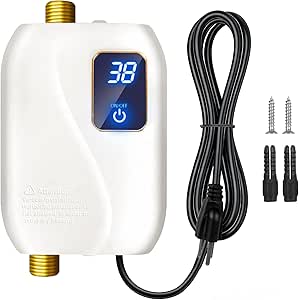
| 3000W Electric Tankless Water | 3000 watts | 110 volts | 4.32 in W × 7.86 in H × 1 in depth |
| ThermoMate 14 kW Electric Tank | 14 kW | 240 V | — |
| ThermoMate 4.5 kW Electric Tan | 4.5 kW | 110–120 V | 10.95 × 7.4 × 2.52 in. |
| APUS 18 kW Electric Tankless W | 18,000 watts (18 kW) | 240 volts | 11.42 × 17.72 × 3.54 inches |
| EcoSmart ECO 8 Tankless Water | 8 kW | 240 V | 8 in W × 11.5 in H × 4 in D |
| Westinghouse 14 kW Electric Ta | 14 kW | 240 V | 12.59 in H × 9.56 in W × 3.28 in D |
| Rheem RTEX-13 240V Residential | 13 kW | 240 V | — |
| 110V 3000W Tankless Electric W | 3,000 W | 110 V | 4.32 in W × 7.86 in H |
| V7B-140B 14 kW Electric Tankle | 14 kW | 240 V | 12.2 in W × 17.25 in H |
| CAMPLUX 4.5kW Electric Tankles | 4.5 kW | 120 V | 7.4 × 10.9 × 2.52 in |
| ORBEK 14 kW Electric Tankless | 14 kW | 240 V | — |
| CAMPLUX 6 kW Electric Tankless | 6 kW | 240 V | 10.95 × 7.4 × 2.52 in |
| Rheem RTEX-08 8 kW Multi-Fixtu | 8 kW | 240 V, single-phase | 8.25 × 12.63 × 12.625 in |
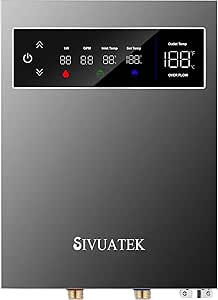
| SIVUATEK 14 kW Electric Tankle | 14 kW | 240 V | 15.87 × 11.14 × 2.87 in |
More Details on Our Top Picks
Senville 13 kW Electric Tankless Water Heater, 240 V
For a small home with a suitable 240 V circuit, I’d put the Senville 13 kW near the top for its balance of compact size and useful household capacity. Its self-modulating heating adjusts to demand, which can help keep output steadier as water use changes. Compared with the 3000W Electric Tankless Water Heater, it is a more plausible choice for broader household hot-water needs; that smaller unit is described for sink use and is not suitable for showers. The tradeoff is electrical work: Senville recommends professional installation, and wiring is not included. Its listed specs do not state a flow rate, so I would confirm expected output against incoming water temperature and intended fixtures before choosing it.
Pros:- Compact indoor format suits homes with limited utility space
- Self-modulating technology adjusts heating to demand
- Provides on-demand hot water without a storage tank
- Five-year manufacturer replacement warranty is listed
Cons:- Professional installation is recommended
- Electrical wiring is not included
- No flow-rate figure is provided in the supplied specifications
Best for: Owners of small homes with a compatible 240 V supply who want a compact heater for more than a single sink.
Not ideal for: Renters or buyers seeking a simple plug-in sink heater, since this model calls for professional installation and does not include wiring.
- Power:13,000 watts
- Voltage:240 volts
- Heat output:44,357.78 BTU
- Installation:Indoor
- Special feature:Self-modulating technology
- Weight:4.61 kg
- Warranty:5-year manufacturer replacement warranty
Our verdict“Choose the Senville if you want a compact, higher-capacity household option and can support its professional 240 V installation.”
3000W Electric Tankless Water Heater with Digital Display
The 3000W Electric Tankless Water Heater fits the smallest hot-water job in this group: a low-flow sink where space and simple temperature feedback matter more than whole-home reach. Its 4.32-inch width and wall-mounted format can tuck into a tight cabinet, while the display shows temperature in Fahrenheit or Celsius. Its stated temperature rise depends on flow, and the product data explicitly rules it out for showers. That makes it a sharper fit than the Senville 13 kW for a remote hand-washing sink, but a poor substitute for a household unit serving bathing fixtures. Buyers also need to plan for vertical mounting and appropriately rated wiring and circuit protection.
Pros:- Very slim wall-mounted body fits tight spaces
- Digital display supports Fahrenheit and Celsius
- Listed safety protections include leakage and over-temperature protection
- Low-flow sink use is its stated application
Cons:- Not suitable for showers
- Requires vertical installation
- Needs appropriately rated wiring and at least a 32 A circuit breaker
Best for: Small-home owners adding hot water to a low-flow utility, bar, or bathroom sink without space for a tank.
Not ideal for: Households expecting shower hot water or a single heater to serve several fixtures.
- Power:3000 watts
- Voltage:110 volts
- Maximum temperature:131°F
- Temperature rise:82°F at 0.3 GPM; 131°F at 0.5 GPM
- Efficiency:98%
- Dimensions:4.32 in W × 7.86 in H × 1 in depth
- Mounting:Wall-mounted; vertical installation only
- Connections:1/2-inch NPT
- Protection:IPX4, leakage, dry-burning, over-temperature, and inactivity protection
Our verdict“Pick this unit for one low-flow sink when compact mounting matters and shower service is not required.”
ThermoMate 14 kW Electric Tankless Water Heater, Up to 3.4 GPM
The ThermoMate 14 kW offers a useful middle ground for a small home that needs more than a sink-only unit but has modest simultaneous demand. Its listed 2.66 GPM at a 35°F temperature rise gives buyers a more practical point of reference than the Senville 13 kW, whose supplied specs omit flow. The maximum of 3.4 GPM is conditional, though, so I would not treat it as a promise of strong output at colder inlet temperatures or across several fixtures. Self-modulating heating and no-water and overheating protections add operating safeguards, while its wall-mounted design saves floor space. The main cost in planning is the dedicated 240 V circuit: it specifies a double-pole 60 A breaker and 6 AWG wire.
Pros:- Lists flow at a defined 35°F temperature rise
- Self-modulating heating adjusts to water flow and temperature
- Wall-mounted design frees floor space
- Includes overheating and no-water protections
Cons:- Requires a dedicated double-pole 60 A breaker and 6 AWG wire
- Maximum flow may not support several fixtures at once
- Listed temperature range tops out at 131°F
Best for: Owners of compact homes with a dedicated electrical circuit who want point-of-use or modest low-flow service with a stated flow benchmark.
Not ideal for: Buyers without room in the electrical panel for a 60 A circuit or households expecting reliable high-flow, simultaneous fixture use.
- Power:14 kW
- Voltage:240 V
- Maximum flow rate:3.4 GPM
- Flow at 35°F rise:2.66 GPM
- Temperature range:86–131°F
- Electrical requirement:Double-pole 60 A breaker; 6 AWG wire
- Water connections:1/2-inch NPT male ports
- Heating efficiency:99%
- Certification:ETL Listed to UL-499 and CAN/CSA-C22.2 No. 64
Our verdict“Choose the ThermoMate if its stated low-flow capacity matches your needs and your home can support the specified circuit.”
ThermoMate 4.5 kW Electric Tankless Under-Sink Water Heater
When the goal is to get hot water quickly at one tap, the ThermoMate 4.5 kW has a clearer role than the larger wall-mounted heaters: it is built for under-sink point-of-use service. Its compact dimensions and included mounting kit suit cramped cabinetry, while self-modulating power and a digital touch panel give more control than the basic sink-focused 3000W Electric Tankless Water Heater. The capacity remains narrow, with a listed flow range of 0.26–1.0 GPM, so this is not a small-home whole-house solution. It also needs hardwiring, a 40 A double-pole breaker, and minimum 8 AWG wire, which can make installation disproportionate if the home only needs occasional hot water at one fixture.
Pros:- Compact dimensions suit under-sink installation
- Self-modulating power heats water as needed
- Digital touch panel provides temperature control
- Stainless steel water tube and separated heating element are designed to reduce scale and corrosion
Cons:- Flow is limited to 0.26–1.0 GPM
- Requires hardwiring and a 40 A double-pole circuit breaker
- Minimum 8 AWG wiring adds electrical installation requirements
Best for: Small-home owners who want on-demand hot water at a remote bathroom, prep, or utility sink and have capacity for a dedicated circuit.
Not ideal for: Anyone seeking shower service, multiple-fixture coverage, or a plug-in installation.
- Power:4.5 kW
- Voltage:110–120 V
- Installation:Hardwired; under-sink
- Electrical requirement:40 A double-pole breaker; minimum 8 AWG wire
- Water connections:1/2 in. NPT
- Temperature range:85°F–131°F
- Flow rate:0.26–1.0 GPM
- Dimensions:10.95 × 7.4 × 2.52 in.
- Materials:Cast aluminum heating element; 304 stainless steel water tube
Our verdict“Choose this ThermoMate for one sink where a compact under-counter unit is more useful than broader household capacity.”
APUS 18 kW Electric Tankless Water Heater, 240 V, Up to 4.4 GPM
Among these five, the APUS 18 kW has the highest stated maximum flow, making it the strongest candidate for a small home with several hot-water demands—provided the electrical service and inlet conditions can support it. Its up to 4.4 GPM figure gives it a capacity advantage over the ThermoMate 14 kW’s stated 3.4 GPM maximum, but flow and fixture support vary with inlet temperature and demand. The unit’s 11.42 × 17.72-inch wall-mounted body keeps it off the floor, and the display offers temperature adjustment up to 140°F. That added reach comes with a substantial installation burden: three 40 A double-pole breakers, hardwiring, and qualified installation are specified. It is excessive for a single sink, where the 4.5 kW ThermoMate is more purpose-built.
Pros:- Highest stated maximum flow among these five products
- Temperature adjusts from 86°F to 140°F
- Wall-mounted design avoids taking floor space
- Self-modulating heating and listed electrical and temperature protections
Cons:- Requires three 40 A double-pole breakers and hardwiring
- Qualified professional installation is specified
- Actual flow and supported fixtures depend on inlet-water temperature and demand
Best for: Owners of small homes with substantial electrical capacity who need a wall-mounted option for multiple modest hot-water demands.
Not ideal for: Single-sink users or homes that cannot accommodate its three dedicated 40 A circuits and professional hardwired installation.
- Power:18,000 watts (18 kW)
- Voltage:240 volts
- Maximum flow rate:Up to 4.4 GPM
- Temperature range:86–140°F
- Thermal efficiency:Up to 99.8%
- Dimensions:11.42 × 17.72 × 3.54 inches
- Water connections:3/4-inch NPT
- Electrical requirements:Three 40 A double-pole breakers; six 10 AWG copper conductors; hardwired
- Capacity:16.6 liters
Our verdict“Choose the APUS when you need the greatest listed flow in this group and your electrical service can meet its demanding installation requirements.”
EcoSmart ECO 8 Tankless Water Heater, Electric, 8 kW
The EcoSmart ECO 8 suits a small home where the goal is to serve a bathroom sink or breakroom, rather than supply several fixtures. At 8 × 11.5 inches and 4.8 pounds, its wall-mounted body takes little room, while digital temperature control makes adjustment more direct than on the basic 110V 3000W Tankless Electric Water Heater. Its stated 2 GPM flow and 8 kW output still place it below the 13–14 kW options, including the Rheem RTEX-13, for handling simultaneous hot-water demand. The 240V supply also calls for a dedicated circuit, so installation may take more planning than the low-power 110V unit. I’d choose this model for one nearby fixture and skip it if the heater needs to serve a shower or multiple taps.
Pros:- Compact wall-mounted dimensions fit tight utility areas
- Digital LED display allows precise temperature adjustment
- Stated 99.8% efficiency
- On-demand design avoids keeping a tank of water hot
Cons:- 2 GPM listed flow limits simultaneous fixture use
- Requires a dedicated 240V circuit that may need professional installation
Best for: Small-home owners who want a compact 240V heater for a bathroom sink or breakroom faucet
Not ideal for: Households expecting one heater to supply a shower or multiple fixtures at the same time
- Power:8 kW
- Voltage:240 V
- Flow rate:Up to 2 GPM
- Efficiency:99.8%
- Temperature control:Digital LED display
- Mounting:Wall-mounted
- Dimensions:8 in W × 11.5 in H × 4 in D
- Weight:4.8 lb
Our verdict“Choose the ECO 8 for a space-saving sink heater; choose a higher-output model if you need to serve more than one fixture.”
Westinghouse 14 kW Electric Tankless Water Heater with Wi-Fi, 240 V
The Westinghouse 14 kW stands out for homeowners who want remote temperature adjustments and voice control alongside a compact wall-mounted unit. Its stated 3.4 GPM flow is higher than the EcoSmart ECO 8’s 2 GPM, giving it more headroom for small-home demand, though actual output depends on incoming water temperature and use. Wi-Fi, Alexa and Google Home compatibility, plus temperature memory after a power outage, make controls its clearest distinction from the straightforward Rheem RTEX-13. That convenience comes with an installation commitment: it is hardwired and calls for a dedicated 60A double-pole breaker and 6 AWG wire. I’d put it on the shortlist for a connected home with suitable electrical service, but skip it if you want a simple plug-in setup or need more flow than its listed maximum.
Pros:- Wi-Fi and Alexa and Google Home compatibility
- Remembers the last temperature setting after a power outage
- Listed 3.4 GPM flow exceeds the EcoSmart ECO 8
- ETL certification and multiple listed safety protections
Cons:- Requires hardwiring, a dedicated 60A double-pole breaker, and 6 AWG wire
- 3.4 GPM maximum may limit simultaneous high-demand use
Best for: Small-home owners who want app or voice temperature control and already have suitable 240V electrical service
Not ideal for: Buyers who cannot accommodate its dedicated 60A circuit or need hot water beyond its listed 3.4 GPM
- Power:14 kW
- Voltage:240 V
- Flow rate:Up to 3.4 GPM
- Minimum startup flow:0.53 GPM
- Maximum temperature:140°F
- Thermal efficiency:98%
- Electrical requirements:Hardwired; dedicated 60A double-pole breaker and 6 AWG wire
- Smart home compatibility:Wi-Fi, Alexa, and Google Home
- Dimensions:12.59 in H × 9.56 in W × 3.28 in D
Our verdict“Pick the Westinghouse if smart controls matter and your electrical system can support its dedicated circuit.”
Rheem RTEX-13 240V Residential Tankless Water Heater
The Rheem RTEX-13 is a practical middle ground for a small home that needs more capacity than an 8 kW point-of-use unit but does not need to step up to 14 kW. Its listed up to 3.17 GPM flow sits below the Westinghouse 14 kW’s 3.4 GPM, while its 99.8% stated efficiency and external control with 1°F adjustments offer a useful combination for fine temperature setting. The distinctive advantage is its field-serviceable copper immersion elements, which can make element replacement more straightforward than treating the heating assembly as a sealed unit. It still draws 54A on 240V, so electrical capacity deserves attention before purchase. This is a stronger fit for buyers who value serviceability than for those prioritizing Wi-Fi or the highest listed flow.
Pros:- Field-serviceable copper immersion heating elements
- External LED control adjusts temperature in 1°F increments
- Listed 99.8% energy efficiency
- Includes 1/2-inch NPT adapters
Cons:- Up to 3.17 GPM may constrain simultaneous fixture use
- Requires 240V supply and draws 54A
Best for: Small-home owners who want a mid-output 240V heater with field-serviceable heating elements
Not ideal for: Buyers who need Wi-Fi controls, a flow rate above 3.17 GPM, or lack capacity for a 54A appliance
- Power:13 kW
- Voltage:240 V
- Current:54 A
- Maximum flow rate:Up to 3.17 GPM
- Energy efficiency:99.8%
- Temperature control:External LED control; 1°F increments
- Heating elements:Two field-serviceable copper immersion elements
- Water connections:1/2-inch compression connections; 1/2-inch NPT adapters included
Our verdict“Choose the RTEX-13 if serviceable heating elements and fine temperature control matter more than smart features or maximum flow.”
110V 3000W Tankless Electric Water Heater with Digital Display
This 110V 3000W heater is the lowest-power choice in this batch, intended for a narrow job such as a low-flow sink where a full-size 240V unit would be more capacity than needed. Its data lists a temperature rise of 82°F at 0.3 GPM and 131°F at 0.5 GPM, which makes the relationship between flow and usable warmth especially clear. It cannot serve a shower: the listed flow is far below the stated 1.8 GPM typical minimum. The digital display and protections add useful controls, but its vertical-only mounting and specific wiring and breaker requirements still matter. Compared with the EcoSmart ECO 8, it needs less power but gives up substantial flow capacity. I’d reserve it for one modest tap, not as a whole-home heater.
Pros:- Compact wall-mounted format for tight spaces
- Digital display supports Fahrenheit and Celsius
- Lists waterproofing, leakage, dry-boil, overheating, and inactivity protections
- Provides on-demand hot water for a single low-flow tap
Cons:- Not suitable for showers
- Vertical-only installation limits placement options
- Requires appropriate wiring and a circuit breaker over 32A
Best for: Owners of a small home or outbuilding who need low-flow hot water at one sink and have compatible 110V wiring
Not ideal for: Anyone expecting shower service or hot water at multiple fixtures; its listed flow is too low
- Voltage:110 V
- Power:3,000 W
- Maximum temperature:131°F
- Temperature rise:82°F at 0.3 GPM; 131°F at 0.5 GPM
- Thermal efficiency:Up to 98%
- Installation:Wall-mounted; vertical installation only
- Connections:1/2-inch NPT
- Dimensions:4.32 in W × 7.86 in H
- Shower suitability:Not suitable; showers typically require at least 1.8 GPM
Our verdict“Choose this unit only for a single low-flow sink; the EcoSmart ECO 8 is a better fit when you need more flow.”
V7B-140B 14 kW Electric Tankless Water Heater, 240 V
The V7B-140B pairs a 14 kW rating with a more restrained listed flow of 2.3 GPM, so its power rating alone should not lead buyers to expect the Westinghouse 14 kW’s 3.4 GPM capacity. Its appeal is a compact point-of-use setup with touch controls, a digital display, and self-modulation that adjusts power to flow and temperature settings. For a small home, that can suit one sink or a limited-demand installation where control and wall mounting matter more than serving several fixtures. The tradeoff is clear: the maximum listed temperature is 110°F, and the flow figure is lower than the Rheem RTEX-13’s 3.17 GPM. I’d shortlist it for modest demand, but skip it if your household needs hotter output or more simultaneous flow.
Pros:- Self-modulates based on flow and temperature settings
- Digital display and touch controls
- Wall-mounted design suits point-of-use installation
- Includes leakage, overheating, and automatic-stop protections
Cons:- Listed 2.3 GPM flow is lower than the Rheem RTEX-13 and Westinghouse 14 kW
- Maximum listed temperature is 110°F
- Requires a 240V electrical supply
Best for: Small-home owners seeking a wall-mounted point-of-use heater with touch controls for modest hot-water demand
Not ideal for: Households needing a maximum temperature above 110°F or more than 2.3 GPM of listed flow
- Power:14 kW
- Voltage:240 V
- Flow rate:2.3 GPM
- Maximum temperature:110°F
- Efficiency:98%
- Mounting:Wall-mounted
- Dimensions:12.2 in W × 17.25 in H
- Certifications:ETL certified; qualifies for UL
- Safety features:Leakage protection, overheat protection, and automatic stop
Our verdict“Choose the V7B-140B for touch controls and modest point-of-use demand, not for higher-flow or hotter-water needs.”
CAMPLUX 4.5kW Electric Tankless Water Heater with LED Digital Display, Wall-Mounted, CSA Certified
For a small home where the main problem is waiting for hot water at one sink, this 4.5 kW CAMPLUX keeps the solution physically small: it measures just 7.4 × 10.9 × 2.52 inches and weighs 4.5 pounds. Its LED readout and touch controls make temperature adjustments straightforward, while self-modulating power responds to demand. Compared with the 6 kW CAMPLUX, this model takes less electrical capacity but also has a lower ceiling for heating flow; its stated 0.26 GPM minimum flow rate further points to a single-sink role. The tradeoff is installation: it needs hardwiring and a dedicated 40 A breaker, with no plug-in option. I’d choose it for a tight under-sink spot, not as a whole-home heater.
Pros:- Small, lightweight wall-mounted body fits tight under-sink spaces.
- LED temperature display and touch controls make settings easy to read and adjust.
- Self-modulating power adjusts to water flow.
- Provides on-demand hot water without a storage tank.
Cons:- Requires hardwiring to a dedicated 40 A circuit and 10 AWG wire.
- The 0.26 GPM minimum flow rate limits it to single-sink use.
- Maximum temperature is 131°F.
Best for: Owners of a small home or accessory unit who want on-demand hot water at one low-flow sink and have room for a dedicated 40 A circuit.
Not ideal for: Households hoping to serve a shower or multiple fixtures, or anyone seeking a plug-in installation; the listed minimum flow rate and hardwiring requirement narrow its fit.
- Power:4.5 kW
- Voltage:120 V
- Maximum temperature:131°F
- Dimensions:7.4 × 10.9 × 2.52 in
- Weight:4.5 lb
- Electrical requirements:Hardwired; 40 A circuit breaker; 10 AWG wire
- Water connection:1/2 in NPT
- Warranty:2-year limited
Our verdict“Choose this CAMPLUX for one sink in a space-constrained home if the required electrical circuit is available.”
ORBEK 14 kW Electric Tankless Water Heater, 240V, 3.38 GPM
The ORBEK suits a small home that needs more than a single-sink unit: it is described for two to three points of use, with a stated maximum flow of 3.38 GPM and a temperature range of 86°F to 140°F. That gives it a broader stated role than the 4.5 kW CAMPLUX, which is aimed at one sink. The LED display and temperature stability within 1°F support precise settings, and listed protections cover leakage, overheating, and dry heating. The capacity comes with a substantial electrical requirement: a dedicated 240 V, 60 A two-pole breaker, 6 AWG wiring, and at least 150 A total panel capacity. I’d consider it for a compact home with multiple nearby fixtures only after confirming the panel can support it.
Pros:- Designed to supply two to three points of use.
- Temperature settings span 86°F to 140°F with stated stability within 1°F.
- Includes leakage, over-temperature, and dry-heating protections.
- Compact body measures 14.2 × 9.5 × 3.1 inches.
Cons:- Requires a dedicated 240 V, 60 A two-pole breaker and 6 AWG wiring.
- Requires a household electrical panel with at least 150 A total capacity.
- The stated maximum flow rate does not establish how much flow it can deliver at a particular temperature rise.
Best for: Small-home owners who want one electric unit for two or three nearby points of use and have sufficient service-panel capacity.
Not ideal for: Owners with limited electrical service or only one sink to supply; its 60 A circuit requirement may be excessive for a single-fixture need.
- Power:14 kW
- Voltage:240 V
- Maximum flow rate:3.38 GPM
- Recommended points of use:2–3
- Temperature range:86°F–140°F
- Electrical requirements:60 A two-pole breaker; 6 AWG wire; 150 A minimum panel capacity
- Water connections:1/2 in NPT
- Certification:ETL
Our verdict“Pick the ORBEK when a small home needs several points of use and its electrical panel can support the installation.”
CAMPLUX 6 kW Electric Tankless Water Heater, 240 V
This 6 kW CAMPLUX is a middle ground for a small household that has outgrown a one-sink heater but does not need a 14 kW unit. Its stated 1.5 GPM flow rate and 50°F temperature rise at 1.0 GPM give buyers a clearer sense of its limits than the 4.5 kW CAMPLUX, while its compact wall-mounted body remains only 2.52 inches deep. Self-modulation adjusts power with flow, and the display shows temperature and inlet flow. Compared with the ORBEK 14 kW, it asks for a smaller dedicated circuit, but its lower capacity is less suited to simultaneous demand. The 131°F maximum and hardwiring requirement also matter: this is a point-of-use compromise, not a replacement for a high-capacity whole-home system.
Pros:- Compact wall-mounted design is 2.52 inches deep and weighs 3.9 pounds.
- Self-modulating power responds to water flow.
- Display shows water temperature and inlet flow.
- Includes overheat protection.
Cons:- Needs hardwiring to a dedicated 30 A circuit with 10 AWG wire.
- Stated flow rate of 1.5 GPM limits simultaneous fixture use.
- Maximum temperature is 131°F.
Best for: Small households seeking a compact point-of-use heater for a sink or modest hot-water demand, with access to a dedicated 30 A circuit.
Not ideal for: Families expecting multiple simultaneous showers or several high-flow fixtures; the 1.5 GPM stated flow rate limits its reach.
- Power:6 kW
- Voltage:240 V
- Flow rate:1.5 GPM
- Temperature rise:50°F at 1.0 GPM
- Maximum temperature:131°F
- Dimensions:10.95 × 7.4 × 2.52 in
- Electrical requirements:Hardwired; 30 A circuit breaker; 10 AWG wire
- Warranty:2-year limited
Our verdict“Choose the 6 kW CAMPLUX for a small home needing more than a single-sink unit but not the ORBEK’s larger electrical commitment.”
Rheem RTEX-08 8 kW Multi-Fixture Tankless Electric Water Heater, 240V
The Rheem RTEX-08 stands out for buyers who want careful temperature adjustment in a compact home system. Its digital controls move in 1-degree increments across an 80°F–140°F range, making it easier to set a target than the CAMPLUX 6 kW, which tops out at 131°F. The RTEX-08 is rated up to 1.95 GPM, so it offers a modest step up in stated flow, though that ceiling still limits simultaneous hot-water use. Its stainless steel construction and five-year leak warranty distinguish it from the shorter-warranty CAMPLUX options. Installation takes a 240 V circuit, a 40 A double-pole breaker, #8 AWG copper conductors, and a recommended 100 A service panel. I’d shortlist it for one or two modest demands, not a busy household.
Pros:- Digital controls adjust temperature in 1-degree increments.
- Temperature range extends from 80°F to 140°F.
- Stainless steel construction and a five-year leak warranty.
- Wall-mounted design saves floor space.
Cons:- Requires a 240 V circuit, 40 A double-pole breaker, and #8 AWG copper conductors.
- Recommended minimum household service panel is 100 A.
- Maximum flow rate may limit simultaneous hot-water use.
Best for: Small-home owners who value fine temperature adjustment and want a compact heater for point-of-use or modest multi-fixture demand.
Not ideal for: Households that regularly use multiple high-flow fixtures at once; the maximum stated 1.95 GPM may not keep up.
- Model:RTEX-08
- Power:8 kW
- Voltage:240 V, single-phase
- Maximum flow rate:Up to 1.95 GPM
- Temperature range:80°F–140°F
- Electrical requirements:40 A double-pole breaker; #8 AWG copper conductors with ground
- Dimensions:8.25 × 12.63 × 12.625 in
- Warranty:5 years against leaks; 1 year for parts
Our verdict“Choose the RTEX-08 if precise temperature setting and its longer leak warranty matter more than supporting several high-flow fixtures.”
SIVUATEK 14 kW Electric Tankless Water Heater, 240 V
SIVUATEK pairs a 14 kW rating with an adjustable 86°F–131°F range, 1°F increments, and listed leakage, overheating, and automatic shut-off protections. For a small home needing one or two usage points, those controls and protections are more useful than a broad feature list: they help set a target and add safeguards around operation. Its stated flow rate reaches 3.3 GPM, close to the ORBEK 14 kW at 3.38 GPM, though both figures need to be read alongside actual incoming-water temperature and demand. SIVUATEK is slightly taller and wider than the ORBEK based on the supplied dimensions, and it requires the same substantial 60 A circuit. I’d favor it when precise adjustment matters; skip it if the panel cannot support that load.
Pros:- Temperature adjusts in 1°F increments across an 86°F–131°F range.
- Includes leakage, overheating, and automatic shut-off protections.
- ETL certified.
- Wall-mountable design and 1/2-inch NPT water connection.
Cons:- Requires a dedicated 60 A circuit breaker.
- Designed for only one or two simultaneous usage points.
- Stated dimensions are larger than the ORBEK’s listed width and height.
Best for: Small-home owners who want a 14 kW unit for one or two usage points, precise temperature setting, and multiple listed safety protections.
Not ideal for: Owners with limited electrical service or those expecting several high-demand fixtures at once; it needs a 60 A circuit and is specified for only one or two usage points.
- Power:14 kW
- Voltage:240 V
- Flow rate:Up to 3.3 GPM
- Temperature range:86°F–131°F
- Temperature adjustment:1°F increments
- Dimensions:15.87 × 11.14 × 2.87 in
- Electrical requirement:60 A circuit breaker
- Certification:ETL
Our verdict“Choose SIVUATEK for precise temperature control and safety features in a small home with a suitable 60 A circuit.”

How We Picked
I judged these heaters by how well their stated electrical input and intended capacity fit common small-home jobs: supplying one or more fixtures, serving a compact household, or providing hot water at a single remote sink. I gave more weight to clear residential positioning and a plausible balance of capacity and installation demands than to convenience features alone. I also considered whether a model’s published voltage, kW rating, and flow claims give a buyer enough information to begin checking fit, while recognizing that actual output depends on incoming water temperature and installation.
The ranking favors the Rheem RTEX-13 for its middle-ground role, then separates lower-demand and point-of-use choices from higher-capacity options such as the APUS 18 kW. The Westinghouse 14 kW earns a distinct place for buyers who want Wi-Fi controls, but connectivity does not outrank capacity fit. Models with limited stated details, including several 14 kW units with similar listings, rank lower because buyers have less basis for comparing their suitability. Every option carries a meaningful limitation, whether that is electrical demand, restricted flow, or a narrower use case.
Factors to Consider When Choosing Tankless Water Heaters For Small Homes
Choosing for a small home starts with the actual hot-water jobs, then works backward to the unit and the installation. A compact footprint can be appealing, but it says little about whether the heater can support a shower, sink, or two fixtures at once. These checks help prevent a mismatch between the home’s electrical system and the hot-water demand.
Count Fixtures Used at the Same Time
List the fixtures that are likely to run together, rather than counting every fixture in the home. A shower plus a kitchen tap creates a different demand from a single bathroom sink, even in a compact house. Look up the flow rate of the actual showerhead and faucets, since older or high-flow fixtures can use more hot water than expected. Then compare the combined demand with the heater’s output under the incoming-water conditions in your region. Published maximum flow figures may assume a modest temperature rise and may not describe winter performance. If household routines rarely overlap, a smaller unit can be a sensible fit; if they do, size for the overlap you need.
Check Incoming Water Temperature and Seasonal Output
Tankless heaters raise water temperature by a set amount as water passes through them, so colder incoming water leaves less capacity for high flow. A unit that handles a shower comfortably in a mild climate may struggle to do the same job in a colder region. Ask the manufacturer or installer for output at the temperature rise your home needs, not only the maximum gallons-per-minute figure. Account for the coldest season, since sizing around summer conditions can lead to disappointing winter use. This check matters especially when comparing modest 8 kW units with 13–18 kW models. A regional plumbing professional can help translate local groundwater temperatures into a realistic flow estimate.
Verify Electrical Service Before Choosing a kW Rating
Electric tankless heaters can draw substantial current, and the larger models may need dedicated circuits, suitable wire, and enough capacity in the service panel. Confirm the voltage, breaker requirements, and conductor specifications in the installation manual before buying. A 240 V label alone does not show whether your panel has room or reserve capacity for the heater. Have a qualified electrician assess the service and the route to the installation location, especially in an older home. The cost and complexity of electrical work can change which unit is the sensible choice. A lower-kW model may simplify the project, but only if its hot-water output matches the household’s needs.
Choose Whole-Home or Point-of-Use Placement
A point-of-use heater can shorten the wait for hot water at a distant sink and avoid heating water for a small, isolated task. It usually has a limited output, so it should not be treated as a whole-home replacement unless its specifications support that use. A centrally installed unit may serve several areas, but long pipe runs can still create delays and heat loss. Consider where the heater can be mounted, how close it is to the fixtures, and whether the plumbing layout allows service access. Under-sink units are convenient only when the sink’s demand fits their rated capacity. For a small home with one troublesome tap, local placement may solve the problem with less system change than replacing the main heater.
Plan for Maintenance and Water Quality
Mineral buildup can reduce performance in tankless heaters, with the risk shaped by local water hardness and use. Check the manual for flushing intervals, service clearances, and any required isolation valves before installation. If the water is hard, ask whether treatment or more frequent descaling is recommended and include that upkeep in the ownership decision. A heater installed in a tight closet may be harder to service than one with clear access, even if both fit physically. Review warranty terms alongside maintenance requirements, since missed service can affect coverage. A simpler installation with accessible service points can matter more over time than a display or app feature.
Pay for Capacity or Convenience Only When It Solves a Need
Higher electrical input can support greater flow, but it can also bring a larger installation burden and may be unnecessary for a one-person household or a single fixture. Wi-Fi and digital displays can make settings easier to monitor, yet they do not increase heating capacity. Spend more on capability when the household regularly uses multiple fixtures or needs stronger cold-weather output. Favor a modest unit when demand is predictable and the electrical system is a limiting factor, provided the resulting flow is adequate. Compare the full project, including any panel or wiring work, rather than judging the heater alone. This approach keeps a small-home choice tied to real use instead of headline specifications.
Frequently Asked Questions
Can a small-home tankless heater run a shower and a kitchen sink at once?
It depends on the combined fixture flow, the heater’s output at the required temperature rise, and the incoming water temperature. A shower and sink may exceed the practical capacity of a lower-kW model, even if the unit is marketed for a small home. Check the flow rate of both fixtures and compare it with manufacturer data for your climate. If simultaneous use is important, size around that routine rather than assuming occupants will stagger tasks. An installer can confirm whether the home’s electrical service supports a unit with enough output.
Will a 110 V or 120 V 3000 W heater replace my home’s water heater?
These lower-power units are generally suited to limited point-of-use tasks, not the full hot-water demand of a home. Their lower electrical draw can be convenient, but it also limits how quickly they can raise water temperature at a useful flow. Before treating one as a replacement, check its rated flow at your required temperature rise and the manufacturer’s intended applications. A sink or handwashing station may fit; a typical shower often demands more capacity. Confirm suitability with the product documentation and a qualified installer.
Do I need to upgrade my electrical panel for a 14 kW or 18 kW heater?
Possibly, but the heater’s kW rating alone cannot answer that. The required circuit count, amperage, wire size, and available service capacity depend on the model and the home’s existing electrical setup. Ask an electrician to review the installation manual and calculate the available load before ordering. The panel may have room for the breaker but not enough overall capacity for the added demand. Include possible wiring or service work when comparing a larger heater with a lower-power alternative.
Is an 8 kW model enough for a small house in a cold climate?
It may work for a single low-flow fixture or a carefully limited use pattern, but cold incoming water reduces the flow it can heat comfortably. The home’s floor area does not establish whether an 8 kW heater is sufficient. Check manufacturer output at the temperature rise required during the coldest part of the year and compare it with your fixture demand. If you need a shower plus another fixture, the available flow may be too limited. A local installer can estimate the seasonal temperature rise and help identify a suitable capacity.
Should I choose one whole-home unit or separate point-of-use heaters?
One central heater is often a better match when several fixtures need hot water and the plumbing runs are reasonably short. Separate point-of-use units can help with a distant sink or an occasional low-demand fixture, but each unit adds installation and maintenance needs. Compare the electrical requirements and available mounting space at each location before deciding. A point-of-use heater’s limited capacity can make it unsuitable for a shower or several fixtures. The best layout depends on where hot water is needed, how often fixtures overlap, and what your electrical system can support.
Conclusion
For a balanced residential choice, I’d begin with the Rheem RTEX-13 as best overall, subject to a local check of flow and electrical capacity. Buyers focused on modest demand can compare the EcoSmart ECO 8 or Rheem RTEX-08 as value-oriented lower-power options, while recognizing their limits on simultaneous use. For beginners, the clearest first step is to have an electrician or plumber confirm the needed capacity before choosing among the better-documented residential models. The APUS 18 kW is the higher-capacity pick for households that need more flow and can support its electrical demands; the Westinghouse 14 kW is the premium feature choice for buyers who specifically want Wi-Fi controls. For one sink, choose a 4.5 kW point-of-use model; for whole-home service, compare 240 V options against your actual fixtures and seasonal water temperature before making the final call.