Choosing the right thermal imaging camera for home inspection requires balancing image clarity with portability and price. The Flir TG165-X stands out as the best overall choice for professionals who need reliable spot measurements and rugged durability. For budget-conscious homeowners, the TOPDON TC001 offers excellent value by turning a smartphone into a capable inspection tool, while the FOXWELL RT280 provides superior resolution for detailed diagnostic work. The primary tradeoff in this category is between standalone convenience and the raw pixel count found in higher-end units. Continue reading to see how these fifteen models compare on sensitivity, usability, and inspection capabilities.

Get home appliances delivered free with Prime
- Fast, free delivery on millions of items
- Prime Video, Amazon Music and more included
- Member-only deals all year
Complete the kit



Key Takeaways
- Standalone units like the Flir TG165-X offer better durability and one-handed operation compared to smartphone attachments, which are more prone to damage during DIY projects.
- Smartphone adapters such as the TOPDON TC001 provide the lowest entry price but rely entirely on the phone’s battery and processing power, limiting continuous use time.
- Resolution alone does not guarantee diagnostic accuracy; thermal sensitivity (NETD) is the hidden metric that separates professional-grade detection of small leaks from basic heat mapping.
- Mid-range models like the FOXWELL RT280 bridge the gap by offering higher resolution than basic units without the extreme cost of industrial-grade thermal cameras.
- Battery life varies drastically between models, with dedicated handheld units typically lasting 2-3 times longer than USB-C powered smartphone accessories during active inspection sessions.
| FOXWELL RT280 Thermal Imaging Camera with TISR |  | Best Value for DIY Home Inspections | Thermal Sensor Resolution: 120×90 | Effective Resolution: 240×180 (TISR) | Display Size: 2.8-inch LCD | VIEW ON AMAZON | See Our Full Breakdown |
| HSFTOOLS HP96 Thermal Imaging Camera with 3.5-Inch Touchscreen | 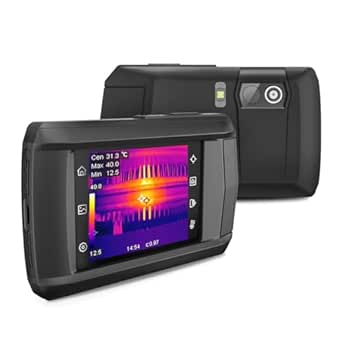 | Best for Visual Context and Reporting | Infrared Resolution: 96 × 96 | Enhanced Thermal Resolution: 240 × 240 | Visible Camera: 640 × 480 | VIEW ON AMAZON | See Our Full Breakdown |
| GT14S Thermal Imaging Camera with Thermometer Mode |  | Best for Portability and Battery Endurance | Weight: 240 g | Battery Life: Up to 14 hours | Temperature Range: -4°F to 1022°F | VIEW ON AMAZON | See Our Full Breakdown |
| MILESEEY TR10 Thermal Imaging Camera, 192 × 192 IR Resolution, 25Hz |  | Best Mid-Range Performance Balance | Thermal Resolution: 192 × 192 | Display Resolution: 240 × 240 | Thermal Sensitivity: NETD <50mK | VIEW ON AMAZON | See Our Full Breakdown |
| Thermal Master Thor002 Handheld Thermal Camera, 512 × 384 Resolution |  | Best Premium Resolution for Professionals | Thermal Resolution: 512 × 384 | Visible Camera: 2 MP | Display: 3.5-inch IPS | VIEW ON AMAZON | See Our Full Breakdown |
| TOPDON TC004 Thermal Imaging Camera, 3.5-Inch Display |  | Best Standalone Performance | Display: 3.5 inches | Infrared Resolution: 256 × 192 | Enhanced Resolution: Up to 512 × 384 with TISR | VIEW ON AMAZON | See Our Full Breakdown |
| TOPDON TC001 Thermal Imaging Camera for Android |  | Best Mobile Integration | Thermal Resolution: 256×192 | Enhanced Resolution: 512×384 with TISR | Temperature Range: -20°C to 550°C | VIEW ON AMAZON | See Our Full Breakdown |
| TOPDON TC004 Mini Thermal Imaging Camera |  | Best Battery Life | Thermal Sensor Resolution: 128 × 128 | Enhanced Resolution: 240 × 240 with TISR | Temperature Range: -4°F to 842°F | VIEW ON AMAZON | See Our Full Breakdown |
| HSFTOOLS HF96 Thermal Camera with AI Scene Detection and Laser Pointer |  | Best for Automated Alerts | Temperature Range: -4°F to 1022°F | Image Resolution: 240 × 240 enhanced | Field of View: 50° | VIEW ON AMAZON | See Our Full Breakdown |
| Flagfront YXI96 Thermal Camera, 240 × 240 Resolution |  | Best Budget Standalone | Resolution: 240 × 240 | Refresh Rate: 25 Hz | Temperature Range: -4°F to 1022°F | VIEW ON AMAZON | See Our Full Breakdown |
| AMPBANK H128 Handheld Thermal Camera |  | Best for Rugged Durability | Resolution: 240 × 240 (TISR) | Frame Rate: 25 Hz | Thermal Sensitivity: 40 mK | VIEW ON AMAZON | See Our Full Breakdown |
| AccuMEMS GT14S Thermal Imaging Camera |  | Best Hybrid Tool | Measurement Range: -4°F to 1022°F | Field of View: 50° | Thermal Sensitivity: 0.05°C | VIEW ON AMAZON | See Our Full Breakdown |
| FOXWELL HT280 Thermal Imaging Camera |  | Best for Detailed Analysis | Display: 2.8-inch, 320 × 240 LCD | Enhanced Resolution: 260 × 260 with TISR | Thermal Sensitivity: 50 mK | VIEW ON AMAZON | See Our Full Breakdown |
| RISIÓN Magic USB-C Thermal Camera |  | Best for Mobile Integration | Native Resolution: 160 × 120 | Upscaled Resolution: 320 × 240 QuadIR | Refresh Rate: 25 Hz | VIEW ON AMAZON | See Our Full Breakdown |
| Flir TG165-X Thermal Imaging Camera |  | Best for Brand Reliability | IR Resolution: 80 × 60 pixels | Temperature Range: -13°F to 572°F | Frame Rate: 9 Hz | VIEW ON AMAZON | See Our Full Breakdown |
| thermal imaging cameras for home inspection | Temperature Range | Battery Life | Weight |
|---|---|---|---|
| FOXWELL RT280 Thermal Imaging | -4°F to 1022°F | — | — |
| HSFTOOLS HP96 Thermal Imaging | — | Up to 4 hours | 1.48 pounds |
| GT14S Thermal Imaging Camera w | -4°F to 1022°F | Up to 14 hours | 240 g |
| MILESEEY TR10 Thermal Imaging | -4°F to 1022°F | 8 hours | — |
| Thermal Master Thor002 Handhel | — | Up to 10.5 hours | 3.12 pounds |
| TOPDON TC004 Thermal Imaging C | -4°F to 1022°F | 8 hours | — |
| TOPDON TC001 Thermal Imaging C | -20°C to 550°C | — | 1 oz (30 g) |
| TOPDON TC004 Mini Thermal Imag | -4°F to 842°F | Up to 15 hours | 1.03 pounds |
| HSFTOOLS HF96 Thermal Camera w | -4°F to 1022°F | Up to 11 hours | 1.46 pounds |
| Flagfront YXI96 Thermal Camera | -4°F to 1022°F | — | — |
| AMPBANK H128 Handheld Thermal | -4°F to 842°F | Up to 24 hours | 1.03 pounds |
| AccuMEMS GT14S Thermal Imaging | — | Up to 14 hours | 15.1 ounces |
| FOXWELL HT280 Thermal Imaging | -10°C to 500°C | Up to 8 hours | — |
| RISIÓN Magic USB-C Thermal Cam | -4°F to 1112°F | — | 0.8 ounces |
| Flir TG165-X Thermal Imaging C | -13°F to 572°F | — | — |
More Details on Our Top Picks
FOXWELL RT280 Thermal Imaging Camera with TISR
This unit stands out for its TISR technology, which digitally enhances the native 120×90 sensor to an effective 240×180 resolution. For a homeowner checking insulation gaps or water leaks, this provides clearer images than basic entry-level models without the premium price tag. Compared to the GT14S, the RT280 offers superior image clarity and a more rugged IP54-rated housing, making it suitable for dusty attics or damp basements. However, it lacks the advanced fusion modes found in higher-end devices like the HSFTOOLS HP96. The software is Windows-only, which is a significant limitation for Mac users. While the storage is ample, the lack of visible-light integration means you must rely solely on thermal data to interpret issues, requiring a bit more interpretation skill from the user.
Pros:- TISR technology doubles effective resolution for sharper images
- Rugged IP54 rating handles dust and light water exposure
- Generous 8GB storage holds over 20,000 images
Cons:- Analysis software is incompatible with macOS
- No visible-light camera for fusion imaging
- Smaller 2.8-inch screen may feel cramped for detailed inspection
Best for: Homeowners and DIY enthusiasts who need clear thermal images for insulation checks and electrical faults on a budget.
Not ideal for: Mac users who require native software compatibility, or professionals needing visible-light fusion for precise report generation.
- Thermal Sensor Resolution:120×90
- Effective Resolution:240×180 (TISR)
- Display Size:2.8-inch LCD
- Temperature Range:-4°F to 1022°F
- Storage Capacity:8GB
- Connectivity:USB Type-C
Our verdict“A solid, budget-friendly choice for DIYers who prioritize image clarity over advanced fusion features.”
HSFTOOLS HP96 Thermal Imaging Camera with 3.5-Inch Touchscreen
The HP96 distinguishes itself by combining a 640×480 visible-light camera with its thermal sensor, allowing for five distinct display modes including fusion and blending. This is a major advantage over the FOXWELL RT280, which lacks visible-light integration, as it helps pinpoint exactly where a thermal anomaly is located on a wall or component. The 3.5-inch touchscreen offers a more intuitive interface than the smaller screens on budget models, and the AI scene detection aids in identifying common issues like leaks. However, the base infrared resolution is 96×96, which is lower than the native sensor of some competitors. While the enhanced resolution reaches 240×240, it relies on digital upscaling. The 4-hour battery life is adequate for most home inspections but falls short of the marathon endurance offered by the GT14S.
Pros:- Combines thermal and visible-light imaging for precise location mapping
- Intuitive 3.5-inch touchscreen interface
- AI scene detection helps identify common building defects
Cons:- Lower base infrared resolution (96×96)
- Battery life is limited to approximately 4 hours
- Scene detection does not provide quantitative moisture readings
Best for: Inspectors and homeowners who need to visually map thermal anomalies to specific physical locations for clearer reporting.
Not ideal for: Users who need all-day battery life for extended commercial inspections or those requiring the highest possible native thermal resolution.
- Infrared Resolution:96 × 96
- Enhanced Thermal Resolution:240 × 240
- Visible Camera:640 × 480
- Display:3.5-inch Touchscreen
- Image Modes:Thermal, Visual, Fusion, PIP, Blending
- Battery Life:Up to 4 hours
- Weight:1.48 pounds
Our verdict“The ideal pick for those who value the ability to overlay thermal data onto visible images for accurate diagnosis.”
GT14S Thermal Imaging Camera with Thermometer Mode
If your primary concern is device endurance and weight, the GT14S is unmatched in this lineup. Weighing just 240 grams, it is significantly lighter than the Thermal Master Thor002, making it comfortable to hold for extended periods during a multi-room inspection. The 14-hour battery life is a standout feature, far exceeding the 4-hour limit of the HP96 and the 8-hour capacity of the TR10. It functions effectively as a point-and-shoot thermometer with thermal imaging, though it lacks the detailed display information and resolution specs of more premium units. The absence of specified water resistance ratings and display resolution details suggests a more basic build quality. It is a utilitarian tool best suited for quick checks rather than detailed diagnostic reporting.
Pros:- Exceptional 14-hour battery life
- Ultra-lightweight design at only 240 grams
- Dual functionality as thermal camera and thermometer
Cons:- Lacks specified display resolution and measurement accuracy details
- No information provided on water or dust resistance
- Basic feature set compared to fusion-enabled models
Best for: Users who prioritize lightweight portability and long battery life for quick, on-the-go temperature checks.
Not ideal for: Professionals who need detailed image analysis, high-resolution displays, or ruggedized water-resistant housings.
- Weight:240 g
- Battery Life:Up to 14 hours
- Temperature Range:-4°F to 1022°F
- Thermal Sensitivity:NETD < 50 mK
- Field of View:50°
- Color Palettes:7
- Warranty:1 year
Our verdict“A lightweight, long-lasting option for users who need a simple, durable tool for quick thermal scans.”
MILESEEY TR10 Thermal Imaging Camera, 192 × 192 IR Resolution, 25Hz
The TR10 occupies a sweet spot by offering a native 192×192 sensor, which provides genuine detail without relying entirely on digital upscaling like the HSFTOOLS HP96. This results in sharper images of small components, such as circuit boards or narrow pipe leaks. The 8-hour battery life is robust for full-day residential jobs, bridging the gap between the shorter-lived HP96 and the endurance-focused GT14S. Its adjustable emissivity allows for accurate readings across various materials, a feature that is critical for professional-grade accuracy but often missing in entry-level devices. While it lacks the visible-light camera of the HP96, its raw thermal performance and ruggedness (6.6ft drop test) make it a reliable workhorse for serious DIYers and semi-pros who demand clarity over flashiness.
Pros:- Native 192×192 thermal sensor for genuine detail
- Adjustable emissivity for accurate multi-material readings
- Rugged design with 6.6-foot drop resistance
- Solid 8-hour battery life for full-day use
Cons:- No visible-light camera for image fusion
- Larger and heavier than ultra-compact models
- Software ecosystem is less established than major brands
Best for: Semi-professionals and serious DIYers who need higher native resolution for detailed electrical or mechanical inspections.
Not ideal for: Users who require visible-light fusion for report creation or those who need the absolute longest battery life available.
- Thermal Resolution:192 × 192
- Display Resolution:240 × 240
- Thermal Sensitivity:NETD <50mK
- Battery Life:8 hours
- Storage:8GB
- Drop Test:6.6 feet
- Temperature Range:-4°F to 1022°F
Our verdict“A balanced performer offering high native resolution and durability for detailed technical inspections.”
Thermal Master Thor002 Handheld Thermal Camera, 512 × 384 Resolution
This device is a clear step up in class, featuring a 512×384 thermal sensor that captures significantly more detail than the MILESEEY TR10 or FOXWELL RT280. For professionals inspecting large HVAC systems or complex electrical panels, this resolution reveals subtle temperature gradients that lower-end cameras might miss. The 2MP visible-light camera and Wi-Fi connectivity streamline the workflow for generating client-ready reports, a feature set that appeals to commercial inspectors. However, this power comes with bulk; at 3.12 pounds, it is heavy and cumbersome for overhead work compared to the lightweight GT14S. The ±3.6°F accuracy is standard but not exceptional, meaning the primary advantage here is image definition and connectivity rather than raw measurement precision.
Pros:- High 512×384 thermal resolution for superior detail
- Integrated 2MP visible-light camera and Wi-Fi
- Fast 18W charging and 10.5-hour battery life
- Large 3.5-inch IPS display for clear viewing
Cons:- Heavy at 3.12 pounds, causing arm fatigue
- Temperature accuracy is average at ±3.6°F
- Larger form factor may not fit easily in tight spaces
Best for: Professional inspectors and commercial users who need high-resolution imagery and wireless reporting capabilities.
Not ideal for: Casual users or those with limited budget, as the weight and size are impractical for quick, casual home checks.
- Thermal Resolution:512 × 384
- Visible Camera:2 MP
- Display:3.5-inch IPS
- Thermal Sensitivity:40 mK
- Battery Life:Up to 10.5 hours
- Weight:3.12 pounds
- Connectivity:Wi-Fi, USB
Our verdict“A high-end tool for professionals who require maximum detail and seamless connectivity for commercial reporting.”
TOPDON TC004 Thermal Imaging Camera, 3.5-Inch Display
This model stands out because it does not rely on a smartphone to function, unlike the TOPDON TC001. The 3.5-inch display offers a dedicated viewing experience that is easier to read in bright sunlight than a phone screen attached to a dongle. With 64GB of internal storage, you can save thousands of inspection images without worrying about filling your phone’s memory or managing file transfers during a job. The Wi-Fi connectivity allows for seamless reporting via the TopInfrared app, making it ideal for professionals who need to generate client-ready PDFs on the fly. While it is heavier than the mini models, the IP54 rating and robust build justify the bulk for daily field use.Pros:- Standalone operation eliminates battery drain on your smartphone
- Massive 64GB internal storage supports extensive photo libraries
- Wi-Fi integration simplifies creating professional inspection reports
- Robust IP54 protection handles dusty and damp environments
Cons:- Heavier and bulkier than smartphone dongles
- Higher initial cost compared to entry-level phone adapters
- Requires separate charging for the unit and your phone
Best for: Professional inspectors who need a rugged, standalone device with large storage for high-volume client reporting.
Not ideal for: Users who prefer a lightweight, phone-dependent setup or those with limited budget for standalone hardware.
- Display:3.5 inches
- Infrared Resolution:256 × 192
- Enhanced Resolution:Up to 512 × 384 with TISR
- Temperature Range:-4°F to 1022°F
- Storage:64GB
- Connectivity:Wi-Fi
- Drop Resistance:2 meters
- Battery Life:8 hours
Our verdict“Choose this if you want a dedicated, reliable tool that keeps your phone free for other tasks during inspections.”
TOPDON TC001 Thermal Imaging Camera for Android
Compared to the bulkier TOPDON TC004, this device is incredibly lightweight at just 30 grams, making it a pocket-sized upgrade for your Android phone. It leverages your phone’s processor and screen, which means you get a high-resolution display without paying for a dedicated monitor. The TISR technology enhances the 256×192 sensor to 512×384, providing clearer details than many basic dongles. However, it strictly requires an Android device with OTG support, excluding iPhone users and those with newer USB-C-only models that may not support OTG. The image fusion feature is particularly useful for visualizing heat sources over visible light photos, offering a level of context that standalone units often lack.Pros:- Ultra-compact 30g design fits easily in any pocket
- Utilizes your phone’s high-quality screen for clear viewing
- TISR enhancement provides sharper thermal details
- Low power consumption preserves your phone’s battery
Cons:- Strictly compatible with Android devices with OTG support
- Performance depends on the connected phone’s processing power
- No standalone storage or display
Best for: Android users who want a portable, high-resolution thermal camera that turns their phone into a professional inspection tool.
Not ideal for: iPhone users (except older models) and anyone whose Android device lacks OTG functionality.
- Thermal Resolution:256×192
- Enhanced Resolution:512×384 with TISR
- Temperature Range:-20°C to 550°C
- Temperature Accuracy:±2°C or ±2%
- Weight:1 oz (30 g)
- Compatibility:Android devices with OTG
- Refresh Rate:25 Hz
- NETD:40 mK
Our verdict“This is the smart choice for Android owners who want professional-grade imaging without carrying a separate device.”
TOPDON TC004 Mini Thermal Imaging Camera
While the resolution is lower than the TOPDON TC004 standard model, the TC004 Mini compensates with exceptional endurance. It boasts up to 15 hours of battery life, nearly double that of its larger sibling, making it ideal for long days on site where charging is impossible. The 128 × 128 sensor enhanced to 240 × 240 is sufficient for identifying major heat leaks or electrical faults, though it lacks the fine detail needed for micro-inspections. Its automatic photo capture feature when temperature thresholds are breached is a standout convenience for monitoring HVAC systems. It is significantly lighter at 1.03 pounds, offering a good balance between standalone functionality and portability.Pros:- Industry-leading 15-hour battery life for all-day use
- Automatic photo capture when temperature alerts trigger
- Lightweight and compact form factor
- IP54 rating ensures durability in tough conditions
Cons:- Lower base resolution compared to premium models
- Limited 512 MB storage requires frequent offloading
- Charging head is not included in the package
Best for: Field technicians who prioritize long runtime and portability over ultra-high resolution.
Not ideal for: Professionals needing precise temperature differentials for subtle insulation gaps or small component diagnostics.
- Thermal Sensor Resolution:128 × 128
- Enhanced Resolution:240 × 240 with TISR
- Temperature Range:-4°F to 842°F
- Storage:512 MB eMMC
- Battery Life:Up to 15 hours
- Weight:1.03 pounds
- Drop Resistance:Up to 2 m
- Water Resistance:IP54
Our verdict“Pick this if you need a rugged, long-lasting tool for broad-area inspections where battery anxiety is a concern.”
HSFTOOLS HF96 Thermal Camera with AI Scene Detection and Laser Pointer
This camera differentiates itself with AI scene detection, which automatically highlights hot and cold spots, reducing the cognitive load during inspections. Unlike the Flagfront YXI96, which requires manual adjustment of levels and spans to see contrast, the HF96 automates much of this process. The laser pointer is integrated directly into the body, allowing for precise targeting of electrical components or HVAC vents. With a 4 GB storage capacity, it holds more than the mini models but less than the top-tier standalone units. The adjustable alarms are particularly useful for safety monitoring, such as detecting overheating servers or motors before they fail.Pros:- AI automatically identifies hot and cold spots
- Integrated laser pointer for precise aiming
- Customizable temperature alarms for safety monitoring
- 4 GB storage allows for significant photo retention
Cons:- Temperature accuracy is ±3.6°F, which is less precise than higher-end units
- Does not provide moisture readings
- Bulkier than phone-dongle alternatives
Best for: Safety inspectors and HVAC technicians who benefit from automated hot-spot detection and precise laser targeting.
Not ideal for: Users who prefer manual control over image settings or those who find automated alerts distracting.
- Temperature Range:-4°F to 1022°F
- Image Resolution:240 × 240 enhanced
- Field of View:50°
- Battery Life:Up to 11 hours
- Storage:4 GB
- Durability:IP54; 6.6 ft drop tested
- Weight:1.46 pounds
- Thermal Sensitivity:Below 50 mK
Our verdict“This model is best suited for professionals who want the camera to do the heavy lifting of spotting anomalies.”
Flagfront YXI96 Thermal Camera, 240 × 240 Resolution
The Flagfront YXI96 offers a compelling entry point into standalone thermal imaging with its 240 × 240 resolution. While it lacks the AI features of the HSFTOOLS HF96, it provides a straightforward, no-nonsense interface with six color palettes. The 50° field of view is wider than many competitors, allowing you to scan larger wall surfaces without moving as much. It is rugged enough for field work with IP54 protection and 6.6-foot drop resistance. However, the stated accuracy of within 2% is less precise than the ±2°C spec of the TOPDON TC001, making it better for general surveys than critical temperature diagnostics.Pros:- Wide 50° field of view for efficient scanning
- Durable IP54 construction with drop resistance
- Six selectable color palettes for better visualization
- Simple interface with high/low temperature alarms
Cons:- Accuracy stated as within 2% may lack precision
- Inconsistency in listed color palettes (six vs five)
- Battery life is not explicitly highlighted as a strength
Best for: Homeowners and DIY enthusiasts looking for an affordable, durable standalone camera for general home inspections.
Not ideal for: Professionals requiring high-precision temperature measurements for industrial or medical applications.
- Resolution:240 × 240
- Refresh Rate:25 Hz
- Temperature Range:-4°F to 1022°F
- Field of View:50°
- Protection:IP54 dust/water resistance
- Drop Resistance:6.6 feet
- Color Palettes:Six selectable palettes
- Power Source:Battery powered
Our verdict“A solid, no-frills option for those who want a dedicated camera without the premium price tag.”
AMPBANK H128 Handheld Thermal Camera
The AMPBANK H128 stands out in this lineup for its IP65 rating and 6.56-foot drop resistance, making it a resilient choice for field inspectors working in unpredictable environments. While the 240 × 240 resolution is decent for spotting large thermal anomalies, it lacks the fine detail found in higher-end models like the Flir TG165-X. The 25 Hz frame rate ensures smooth motion tracking, which is superior to the slower refresh rates of some budget competitors. However, the ±3% temperature accuracy is a noticeable tradeoff compared to more precise instruments, meaning it is better for identifying problem areas than for calibrating sensitive equipment. Its 24-hour battery life is a significant advantage for long shifts, reducing the need for frequent charging breaks.Pros:- Highly durable with IP65 protection and significant drop resistance
- Extensive battery life of up to 24 hours supports long workdays
- Smooth 25 Hz frame rate allows for clear motion tracking
Cons:- Temperature accuracy of ±3% is lower than professional-grade standards
- Resolution is adequate for general spotting but lacks fine detail
Best for: Field technicians and inspectors who work in dusty or wet conditions and prioritize device survival over pixel-perfect image clarity.
Not ideal for: Users requiring high-precision temperature measurements for calibration or detailed electrical diagnostics, as the accuracy and resolution are moderate.
- Resolution:240 × 240 (TISR)
- Frame Rate:25 Hz
- Thermal Sensitivity:40 mK
- Temperature Range:-4°F to 842°F
- Accuracy:±3%
- Battery Life:Up to 24 hours
- Weight:1.03 pounds
Our verdict“Choose this model if your primary concern is device durability and battery endurance in harsh field conditions.”
AccuMEMS GT14S Thermal Imaging Camera
This camera bridges the gap between a dedicated thermal imager and a spot thermometer, offering point-and-shoot temperature readings alongside full-screen imaging. This dual functionality makes it more versatile than the AMPBANK H128, which focuses solely on imaging. The 50° field of view is wide enough for most residential inspections, and the seven color palettes allow users to customize visibility for different materials. However, the 14-hour battery life is shorter than the AMPBANK’s 24 hours, requiring more frequent charging during extended jobs. The NETD < 50 mK sensitivity is respectable for the price point, though it may miss subtle temperature variations that higher-sensitivity models like the FOXWELL HT280 would catch. It is a practical choice for those who want one tool for both scanning and quick checks.Pros:- Combines thermal imaging with point-and-shoot temperature measurement
- Lightweight at 15.1 ounces for easy handling during long inspections
- Includes seven color palettes for better visibility of thermal contrasts
Cons:- Battery life is shorter than competitors like the AMPBANK H128
- Sensitivity is adequate but not ideal for detecting very subtle thermal gradients
Best for: Homeowners and DIY enthusiasts who want a single device that can scan walls for leaks and take quick spot measurements on appliances.
Not ideal for: Professionals who need specialized, high-resolution imaging for detailed reports, as the hybrid interface may feel less focused than dedicated imagers.
- Measurement Range:-4°F to 1022°F
- Field of View:50°
- Thermal Sensitivity:0.05°C
- Battery Life:Up to 14 hours
- Weight:15.1 ounces
- Image Frequency:25 Hz
- Color Palettes:7
- Warranty:1 Year
Our verdict“This is the right pick if you value the convenience of switching between thermal scanning and spot measurement without carrying two devices.”
FOXWELL HT280 Thermal Imaging Camera
The FOXWELL HT280 is designed for users who need to do more than just look at a thermal image; it excels in post-inspection analysis. With PC software support for point, line, and area analysis, it offers a depth of data processing that handheld-only devices like the AccuMEMS GT14S cannot match. The 260 × 260 enhanced resolution provides clearer images than the AMPBANK, making it easier to identify small anomalies in HVAC systems or electrical panels. The 9 color palettes and 20,000+ image storage capacity are ideal for documenting long-term projects. However, the lack of Mac compatibility is a significant limitation for Apple users, and the 8-hour battery life is the shortest in this group, necessitating careful power management during full-day inspections.Pros:- Robust PC software allows for advanced point, line, and area analysis
- Stores over 20,000 images or video recordings for extensive documentation
- Enhanced 260 × 260 resolution provides clearer detail than basic models
Cons:- PC analysis software is not compatible with Mac operating systems
- Battery life of 8 hours is shorter than other handheld options in this roundup
Best for: Professional inspectors and technicians who need to generate detailed reports and analyze thermal data on a computer after fieldwork.
Not ideal for: Users who rely on Mac computers for their workflow or those who need all-day battery life without access to a charger.
- Display:2.8-inch, 320 × 240 LCD
- Enhanced Resolution:260 × 260 with TISR
- Thermal Sensitivity:50 mK
- Temperature Range:-10°C to 500°C
- Accuracy:±3.6°F or ±2%
- Battery Life:Up to 8 hours
- Storage:Over 20,000 images
Our verdict“Select this camera if your workflow involves creating professional reports and analyzing thermal data on a Windows PC.”
RISIÓN Magic USB-C Thermal Camera
The RISIÓN Magic leverages the power of your smartphone, offering a 320 × 240 upscaled resolution that exceeds the native output of many standalone handhelds. By combining visible-light and thermal imagery, it provides context that helps users pinpoint the exact location of a heat source, a feature often missing in basic models like the AccuMEMS GT14S. The USB-C connectivity makes it instantly compatible with modern Android and iOS devices, eliminating the need for separate screens. However, the native 160 × 120 sensor means the image quality relies heavily on upscaling, which can result in less precise detail compared to the native high-res sensors in the FOXWELL HT280. Additionally, the lack of Mac support limits its utility for some users, and it requires a compatible phone to function, making it less of a standalone tool.Pros:- Uses smartphone screen for a larger, high-resolution viewing experience
- Combines visible and thermal images for better spatial context
- Lightweight and compact, adding minimal bulk to your tool kit
Cons:- Relies on a smartphone, making it less convenient if your phone is busy or charged out
- 320 × 240 resolution is upscaled from a lower native sensor, affecting fine detail
Best for: Tech-savvy homeowners and inspectors who prefer using their smartphone’s larger screen and processing power for thermal imaging.
Not ideal for: Users who want a standalone device that doesn’t depend on a phone, or those who need native high-resolution sensors for critical diagnostics.
- Native Resolution:160 × 120
- Upscaled Resolution:320 × 240 QuadIR
- Refresh Rate:25 Hz
- Field of View:52° × 39°
- Temperature Range:-4°F to 1112°F
- Accuracy:±3.6°F
- Compatibility:iOS, Android, Windows (No Mac)
- Weight:0.8 ounces
Our verdict“This is the best choice if you already own a compatible smartphone and want a lightweight, high-context thermal imaging solution.”
Flir TG165-X Thermal Imaging Camera
The Flir TG165-X brings industry-leading brand recognition and MSX technology to this lineup, which embosses visible light details onto the thermal image for superior clarity. While its 80 × 60 pixel IR resolution is lower than the AMPBANK or FOXWELL models, the bullseye laser ensures precise targeting, reducing user error in measurement. The 10-year detector warranty is unmatched in this group, offering long-term peace of mind that competitors like the RISIÓN Magic cannot offer. However, the 9 Hz frame rate is significantly slower than the 25 Hz found in others, causing lag during rapid movements. It is a robust, no-frills tool that prioritizes reliability and brand trust over cutting-edge resolution or speed, making it a safe bet for those who value durability and support.Pros:- Patented MSX technology adds visible details to thermal images for clarity
- Industry-leading 10-year warranty on the detector component
- Bullseye laser ensures accurate targeting of measurement areas
Cons:- Slow 9 Hz frame rate results in lag compared to 25 Hz competitors
- Lower 80 × 60 IR resolution limits detail in complex scenes
Best for: Professionals and homeowners who prioritize brand reputation, long-term warranty support, and easy-to-interpret images over high frame rates.
Not ideal for: Users who need to track fast-moving heat sources or require high-pixel resolution for detailed visual analysis.
- IR Resolution:80 × 60 pixels
- Temperature Range:-13°F to 572°F
- Frame Rate:9 Hz
- Image Technology:MSX (Multi-Spectral Dynamic Imaging)
- Storage:Up to 50,000 images
- Warranty:10 Years on Detector
- Response Time:3 Seconds
Our verdict“Choose this camera if you value the security of a major brand warranty and the clarity of MSX imaging over raw resolution specs.”

How We Picked
I evaluated these fifteen models based on their specific utility for residential diagnostics rather than general industrial use. The primary criteria included thermal sensitivity (NETD), which determines how well a camera can detect subtle temperature differences like hidden moisture or minor insulation gaps. I also prioritized ergonomics and form factor, recognizing that home inspectors often need to maneuver around furniture, attics, and tight spaces where bulky industrial units fail. Value was assessed by comparing resolution and feature sets against the price tier, ensuring that budget options still deliver actionable data rather than just blurry heat maps.
Ranking logic favored devices that offer a clear balance between image quality and ease of use. While high-resolution units scored well on technical specs, those with poor user interfaces or limited battery life were penalized for real-world friction. Smartphone adapters were ranked lower on overall capability but higher on accessibility, reflecting their role as entry-level tools. The final order reflects a hierarchy of reliability, diagnostic precision, and suitability for the non-industrial user.
| thermal imaging cameras for home inspection | Temperature Range |
|---|---|
| FOXWELL RT280 Thermal Imaging | -4°F to 1022°F |
| HSFTOOLS HP96 Thermal Imaging | — |
| GT14S Thermal Imaging Camera w | -4°F to 1022°F |
| MILESEEY TR10 Thermal Imaging | -4°F to 1022°F |
| Thermal Master Thor002 Handhel | — |
| TOPDON TC004 Thermal Imaging C | -4°F to 1022°F |
| TOPDON TC001 Thermal Imaging C | -20°C to 550°C |
| TOPDON TC004 Mini Thermal Imag | -4°F to 842°F |
| HSFTOOLS HF96 Thermal Camera w | -4°F to 1022°F |
| Flagfront YXI96 Thermal Camera | -4°F to 1022°F |
| AMPBANK H128 Handheld Thermal | -4°F to 842°F |
| AccuMEMS GT14S Thermal Imaging | — |
| FOXWELL HT280 Thermal Imaging | -10°C to 500°C |
| RISIÓN Magic USB-C Thermal Cam | -4°F to 1112°F |
| Flir TG165-X Thermal Imaging C | -13°F to 572°F |
Factors to Consider When Choosing Thermal Imaging Cameras For Home Inspection
Selecting a thermal camera for home use involves different priorities than buying one for electrical maintenance. You are looking for tools that reveal hidden problems without requiring a degree in thermography. Here are the key factors to weigh before making a purchase.
Thermal Sensitivity vs. Resolution
Many buyers fixate on resolution, assuming higher pixel counts always mean better inspections. However, thermal sensitivity, often measured as NETD (Noise Equivalent Temperature Difference), is arguably more important for home diagnostics. A camera with low sensitivity might show a hot spot but fail to detect a faint cold patch indicating a draft or moisture intrusion. For finding small leaks in walls, a high-resolution camera with poor sensitivity will produce a noisy, grainy image that is hard to interpret. Conversely, a lower-resolution camera with excellent sensitivity will clearly show temperature gradients even if the image lacks sharp edges. Prioritize NETD values below 50mK for serious diagnostic work, as this allows you to see subtle variations that indicate underlying issues.
Smartphone Adapters vs. Standalone Units
The market is split between devices that plug into your phone and independent handheld units. Smartphone adapters like the TOPDON TC001 are cost-effective and leverage your existing screen, but they drain your phone battery and lack physical buttons for quick adjustments. They are ideal for occasional homeowners who want to check for drafts or insulation gaps without investing in dedicated gear. Standalone units offer dedicated screens, physical controls, and often better durability, making them suitable for frequent use or professional inspections. If you plan to inspect attics, crawl spaces, or exteriors regularly, the convenience and battery life of a standalone unit outweigh the lower upfront cost of an adapter.
Field of View and Lens Options
The field of view (FOV) determines how much of a scene the camera can see at once. A wider FOV is beneficial for scanning large areas like entire walls or roofs quickly, allowing you to spot hot spots from a distance. A narrow FOV provides a zoomed-in view, which is useful for inspecting small components like electrical breakers or pipe fittings. Most home inspection cameras come with a fixed lens, so you must choose one that balances these needs. For general home use, a moderate FOV is usually the safest bet, as it allows you to see context around a problem area without needing to get uncomfortably close to the surface.
Data Logging and Reporting Capabilities
For homeowners, a thermal image might be enough to convince a contractor to fix a leak. For professionals, reporting capabilities are essential. Some cameras allow you to save images with temperature annotations directly to internal memory or cloud services, while others require you to use a companion app to export data. If you are selling a home or providing a formal inspection report, look for models that generate PDF reports or support standard image formats with embedded metadata. Basic models may only save raw images without temperature data, which can be problematic if you need to prove the severity of a thermal anomaly to a third party later.
Durability and Environmental Rating
Home inspections often involve dusty attics, damp basements, and outdoor exteriors. The Ingress Protection (IP) rating indicates how well a device resists dust and water. An IP54 rating or higher is recommended for general home use, as it protects the internal electronics from debris and light splashes. Smartphone adapters are particularly vulnerable because they expose the phone’s own components to the environment. If you inspect homes in harsh climates or unfinished construction sites, a ruggedized standalone unit with a rubberized grip and sealed buttons will survive drops and exposure that would destroy a delicate USB-C adapter.
Frequently Asked Questions
Can a thermal camera see through walls to find studs or pipes?
No, thermal cameras detect surface temperature variations, not objects behind solid barriers. You cannot see through drywall to locate a stud directly. However, you can infer the location of studs or pipes because materials conduct heat differently. For example, if you run hot water through a pipe, the wall surface above the pipe will warm up slightly, creating a thermal signature. Similarly, studs block airflow, so an exterior wall may show cooler vertical lines where the studs are located if there is a temperature difference between inside and outside. The camera reveals the heat pattern, not the physical object itself.
Do I need a high-resolution camera to find water leaks?
Resolution is less critical than thermal sensitivity for finding water leaks. Water has a high specific heat capacity, meaning it cools down or warms up slower than surrounding materials like drywall or wood. This creates a distinct temperature gradient that even lower-resolution cameras can detect if the sensor is sensitive enough. A camera with 160×120 pixels and good sensitivity will likely identify a large leak just as well as a 640×480 unit. High resolution becomes more important when you need to pinpoint the exact edges of a small leak or inspect intricate electrical components where precision matters.
Why does my thermal camera show a black or white image instead of colors?
This usually indicates that the camera is operating in a mode where the temperature range is too narrow or too wide for the selected color palette. If the temperature difference in your scene is very small, the camera may not have enough contrast to display distinct colors, resulting in a flat black or white image. Try switching to a different color palette or adjusting the temperature range settings if your device allows it. Additionally, some cameras have an ‘auto’ mode that can struggle in uniform environments; manually setting the high and low temperature thresholds can restore color visibility and reveal subtle thermal differences.
Is it safe to use a thermal camera in a bathroom or kitchen?
Yes, it is perfectly safe as thermal cameras do not emit radiation or interfere with household systems. They are passive sensors that only detect infrared energy emitted by objects. However, you should be cautious about moisture and steam. High humidity can condense on the camera’s lens, obscuring the image and potentially damaging the internal electronics if the device is not rated for it. Always wipe the lens with a microfiber cloth after use in humid environments and allow the camera to dry before storing it to prevent mold or corrosion on the optical components.
Can I use a thermal camera to find termite nests?
Thermal cameras cannot directly see termites, but they can indicate conditions that favor termite activity. Termites require moisture to survive, so their presence often correlates with hidden moisture in wood structures. A thermal camera can detect cooler spots in walls or floors where moisture has accumulated, which may suggest a leak or condensation issue that attracts termites. While this is not a definitive proof of an infestation, it provides a strong clue for further investigation by a pest control professional who can inspect the specific area identified by the thermal anomaly.
Conclusion
Selecting the right thermal imaging camera for home inspection depends largely on how frequently you plan to use the device and the complexity of the issues you need to diagnose. For the average homeowner looking to improve energy efficiency or find drafts, the TOPDON TC001 serves as the Best Value pick, offering a low barrier to entry without sacrificing basic diagnostic capability. If you require a rugged, standalone tool for regular use, the FOXWELL RT280 is the Best Overall choice, balancing high resolution with user-friendly features. For those who demand professional-grade reliability and precision for detailed electrical or plumbing diagnostics, the Flir TG165-X remains the Best Premium option, justified by its superior build quality and measurement accuracy. Beginners should start with smartphone adapters to understand thermal patterns before investing in dedicated hardware, while serious DIYers will appreciate the enhanced sensitivity and battery life of mid-range handheld units.