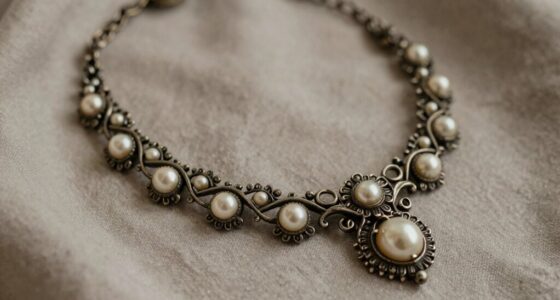
When you hold platinum, you’ll notice it feels much heavier and more solid than white gold because it’s a dense, natural metal. Platinum’s weight and substantial feel come from its high density, making it feel sturdy and luxurious in your hand. White gold, being lighter and more malleable due to its alloy composition, feels less heavy and flexible. To understand more about their distinct sensations and why they differ, keep exploring these material differences.
Key Takeaways
- Platinum has a dense, solid weight that gives it a substantial, velvet-like feel, unlike the lighter white gold.
- The material’s density and composition make platinum feel heavier and more durable in hand.
- White gold is lighter and more malleable due to its alloyed metals, resulting in a different tactile sensation.
- The dense structure of platinum provides a solid, substantial feeling compared to the softer, more flexible white gold.
- Differences in weight and material properties directly influence how each metal feels when held or worn.

When you hold platinum and white gold side by side, you’ll immediately notice they don’t feel the same. Platinum has a dense, solid weight that gives it a substantial, almost velvet-like feel. White gold, on the other hand, is lighter and more malleable, which makes it feel less heavy and more flexible in your hand. This difference in heft isn’t just a matter of sensation; it reflects their underlying properties. Platinum is a naturally dense metal, which contributes to its durability and longevity, while white gold is an alloy of gold mixed with other metals like nickel or palladium to achieve its color and strength. The color fidelity of white gold can also be affected over time if the rhodium plating wears off, exposing the underlying alloy. Additionally, platinum’s metal composition inherently makes it more resistant to tarnishing and corrosion than white gold. When comparing durability, platinum generally outperforms white gold. It’s highly resistant to scratching and tarnishing because it’s a pure metal, so it doesn’t need rhodium plating to maintain its appearance. White gold, although tough, is more prone to scratches and can develop a duller look over time. It often requires re-plating with rhodium to keep its bright, white finish, especially after years of wear. If you want jewelry that maintains its appearance with minimal upkeep, platinum is the more durable choice. Also, the maintenance of white gold involves periodic re-plating to preserve its bright appearance, which can add to long-term costs. However, white gold’s softer nature means it’s easier to reshape or resize, which can be an advantage if you think you’ll need adjustments down the line. Understanding the metal properties of these materials can help you choose the best option for your jewelry needs.
As an affiliate, we earn on qualifying purchases.
Frequently Asked Questions
How Does the Weight of Platinum Compare to White Gold?
You’ll notice platinum feels considerably heavier than white gold because of its higher material density. When comparing weight, platinum is about 60% denser than white gold, making jewelry crafted from it feel more substantial and solid in your hand. This density difference directly impacts how heavy your piece feels, giving platinum a luxurious, weighty feel that’s distinct from the lighter sensation of white gold jewelry.
Is Platinum More Prone to Scratches Than White Gold?
Platinum proves particularly prone to superficial scratches, but these tiny marks tend to blend into its natural patina, preserving its pristine appearance. Its durability surpasses white gold’s, which often requires regular maintenance to combat scratches and tarnish. While platinum’s surface may show minor scratches more readily, its strength keeps it resilient over time. With proper care, platinum’s enduring elegance outshines white gold’s need for frequent polishing and upkeep.
Can Platinum Be Resized More Easily Than White Gold?
Platinum can be resized more easily than white gold because of its metal malleability. Its dense and durable nature allows jewelers to manipulate it during jewelry resizing without risking damage. White gold, being alloyed with other metals, is also workable but may require more care. If you’re considering resizing, platinum’s malleability generally makes the process smoother, especially for larger adjustments or complex designs.
How Does the Allergy Potential Differ Between Platinum and White Gold?
When it comes to allergy risks, platinum is a clear winner. You’re less likely to have metal sensitivities because it’s hypoallergenic and contains no nickel, unlike white gold, which often has nickel that can trigger reactions. Think of platinum as a gentle giant—less likely to cause irritation. So, if you have sensitive skin, choosing platinum minimizes your allergy potential, making it a safer, more comfortable option for jewelry wearers.
What Is the Environmental Impact of Mining Platinum Versus White Gold?
You’ll find that platinum’s mining process tends to have a lower environmental impact than white gold because eco-friendly mining practices are more common for platinum. Additionally, platinum’s durability makes recycling easier, reducing the need for new mining. In contrast, white gold often involves more mining and refining, which can harm ecosystems. Recycling practices for white gold are improving, but overall, platinum tends to be a more environmentally conscious choice.
As an affiliate, we earn on qualifying purchases.
Conclusion
You might find it funny how, just when you’re about to settle on white gold, a chance encounter with a platinum piece catches your eye. Suddenly, it feels more like a reflection of your own unique style—solid, rare, and undeniably special. Sometimes, it’s the smallest coincidence that leads us to something truly meaningful. Trust that your instinct will guide you to the metal that feels just right, because that’s where your true connection begins.
As an affiliate, we earn on qualifying purchases.
As an affiliate, we earn on qualifying purchases.