High-end floorstanding speakers range from lively horn-loaded designs to more balanced towers built for music and home theater. My best overall pick is the Polk Audio Reserve R700 for its broad appeal, while the Klipsch Cornwall IV stands out for buyers who want a large, distinctive speaker and the SVS Prime Tower for a more approachable all-rounder. The main tradeoffs are room size, listening character, amplifier and placement demands, and whether you need a matched pair or a single speaker. A taller tower does not automatically suit a smaller room, and a high-end label does not guarantee a good system match. Read on for the full breakdown and recommendations by buyer type.

Get home appliances delivered free with Prime
- Fast, free delivery on millions of items
- Prime Video, Amazon Music and more included
- Member-only deals all year
Complete the kit


Key Takeaways
- The Polk Reserve R700 is the broadest-fit pick: it offers a useful alternative to this lineup’s many horn-loaded Klipsch models for listeners seeking a more balanced all-rounder.
- The Cornwall IV is the outlier for scale: its large cabinet makes it the specialist choice for listeners with room to accommodate it, rather than a default upgrade for every setup.
- Klipsch’s Reference Premiere models fill the middle ground: the RP-6000F II, RP-5000F II, and RP-8000F II let buyers weigh tower size and output within the same family.
- The SVS Prime Tower and ELAC Debut 2.0 F6.2 suit different priorities: SVS is the more polished all-round option here, while the ELAC gives budget-conscious system builders a simpler entry point to tower speakers.
- Check the listing format before choosing: this roundup includes pairs, single speakers, and a Dolby Atmos-enabled Klipsch model, so the name alone may not tell you what your system needs.
| Klipsch RF-7 III Floorstanding Speaker Pair (Walnut, 2017) |  | Best for High-Output Stereo | Type: Floorstanding speaker pair | Model: RF-7 III | Horn: 90° x 90° Tractrix | VIEW ON AMAZON | See Our Full Breakdown |
| Klipsch Reference R-610F Floorstanding Speaker (Pair), Black |  | Best for Entry-Level Home Theater | Type: Floorstanding speaker pair | Color: Black | Frequency response: 45Hz–21kHz | VIEW ON AMAZON | See Our Full Breakdown |
| SVS Prime Tower Speakers, Pair, Piano Gloss Black |  | Best for Balanced Stereo Imaging | Type: Floorstanding loudspeakers | Quantity: Pair | Finish: Piano gloss black | VIEW ON AMAZON | See Our Full Breakdown |
| Klipsch RP-6000F II Floorstanding Speaker Pair, Ebony |  | Best for Atmos-Ready Systems | Model: RP-6000F II | System: 2.0 speaker pair | Speaker type: Floorstanding | VIEW ON AMAZON | See Our Full Breakdown |
| Klipsch RP-8000F Reference Premiere Floorstanding Speaker (Ebony) |  | Best for Big-Room Bass | Speaker type: Floorstanding | Tweeter: 1-inch titanium LTS vented with hybrid Tractrix horn | Woofers: Dual 8-inch spun copper Cerametallic | VIEW ON AMAZON | See Our Full Breakdown |
| Klipsch Reference Premiere RP-5000F II Floorstanding Speakers, Ebony, Pair |  | Best for Efficient, Upgradeable Home Theater | Included: 2 floorstanding speakers | Tweeter: 1-inch titanium LTS | Horn: 90° x 90° Tractrix | VIEW ON AMAZON | See Our Full Breakdown |
| Klipsch Reference R-26FA Floorstanding Speakers, Black, Pair |  | Best for Built-In Dolby Atmos | Included: Pair | Dolby Atmos: Integrated elevation speakers | Tweeter: 1-inch aluminum diaphragm compression driver | VIEW ON AMAZON | See Our Full Breakdown |
| Polk Audio Reserve R700 Floorstanding Speaker, Walnut Brown |  | Best for Bass Scale and Hi-Res Playback | Tweeter: 1-inch Pinnacle Ring Radiator | Woofers: Dual 6.5-inch Turbine Cone | Bass drivers: Dual 8-inch long-throw | VIEW ON AMAZON | See Our Full Breakdown |
| Klipsch Cornwall IV Floorstanding Speakers (Pair) – American Walnut |  | Best Premium Heritage Pair | Configuration: Three-way, 15-inch horn-loaded pair | Woofer diameter: 15 inches | Dimensions: 15.5 x 25.5 x 38 inches (D x W x H) | VIEW ON AMAZON | See Our Full Breakdown |
| Klipsch Reference R-800F Horn-Loaded Floorstanding Speaker | 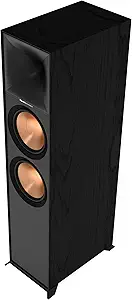 | Best for Big-Cabinet Home Theater | Speaker type: Floorstanding tower | Horn: 90° x 90° Tractrix | Tweeter: 1-inch LTS aluminum with Kapton suspension | VIEW ON AMAZON | See Our Full Breakdown |
| Klipsch Reference R-620F Floorstanding Speakers, Black Textured Wood Grain Vinyl, Pair |  | Best Entry Point for Horn-Loaded Towers | Speaker type: Floorstanding | Quantity: Pair | Frequency response: 38 Hz–21 kHz ±3 dB | VIEW ON AMAZON | See Our Full Breakdown |
| ELAC Debut 2.0 F6.2 Floorstanding Speaker (Each), Black |  | Best for a Broad, Three-Way Presentation | Design: 3-way bass reflex | Tweeter: 1-inch cloth dome with wide-roll surround | Woofers: Triple 6.5-inch woven aramid-fiber | VIEW ON AMAZON | See Our Full Breakdown |
| Klipsch Reference Premiere RP-8000F II Floorstanding Speaker, Walnut |  | Best for High-Output Systems | Model: RP-8000F II | Speaker type: Floorstanding tower | Quantity: One speaker | VIEW ON AMAZON | See Our Full Breakdown |
| Klipsch Reference Premiere RP-8000F II Floorstanding Speaker Pair, Ebony |  | Best Premium Pair | Model: RP-8000F II | Type: Floorstanding speakers | Quantity: 2 speakers | VIEW ON AMAZON | See Our Full Breakdown |
| high end floorstanding speaker | Tweeter | Woofers | Horn |
|---|---|---|---|
| Klipsch RF-7 III Floorstanding | 1.75-inch titanium diaphragm compression driver | Dual 10-inch spun copper Cerametallic | 90° x 90° Tractrix |
| Klipsch Reference R-610F Floor | 1-inch aluminum LTS with 90° x 90° Square Tractrix Horn | — | — |
| SVS Prime Tower Speakers | 1-inch aluminum dome | Dual 6.5-inch | — |
| Klipsch RP-6000F II Floorstand | 1-inch LTS titanium diaphragm | — | 90° x 90° hybrid Tractrix |
| Klipsch RP-8000F Reference Pre | 1-inch titanium LTS vented with hybrid Tractrix horn | Dual 8-inch spun copper Cerametallic | — |
| Klipsch Reference Premiere RP- | 1-inch titanium LTS | — | 90° x 90° Tractrix |
| Klipsch Reference R-26FA Floor | 1-inch aluminum diaphragm compression driver | Dual 6.5-inch copper-spun IMG | 90° x 90° Tractrix |
| Polk Audio Reserve R700 Floors | 1-inch Pinnacle Ring Radiator | Dual 6.5-inch Turbine Cone | — |
| Klipsch Cornwall IV Floorstand | — | — | — |
| Klipsch Reference R-800F Horn- | 1-inch LTS aluminum with Kapton suspension | Dual 8-inch spun-copper TCP | 90° x 90° Tractrix |
| Klipsch Reference R-620F Floor | 1-inch aluminum LTS with 90 × 90 Tractrix Horn | Dual 6.5-inch spun-copper IMG | — |
| ELAC Debut 2.0 F6.2 Floorstand | 1-inch cloth dome with wide-roll surround | Triple 6.5-inch woven aramid-fiber | — |
| Klipsch Reference Premiere RP- | Vented LTS titanium diaphragm | — | 90° × 90° Tractrix |
| Klipsch Reference Premiere RP- | 1-inch LTS titanium diaphragm | — | 90° × 90° silicone composite hybrid Tractrix horn |
More Details on Our Top Picks
Klipsch RF-7 III Floorstanding Speaker Pair (Walnut, 2017)
The RF-7 III is the most imposing choice here for listeners who want high output from a floorstanding pair. Its dual 10-inch Cerametallic woofers and 1.75-inch compression driver in a Tractrix horn point to a system built for dynamic scale, while the dual-chamber cabinet is designed to control unwanted resonance. Compared with the smaller Klipsch RP-6000F II, it offers substantially larger drivers and a more commanding physical presence, but needs more room to suit its scale. The walnut veneer also gives it a more furniture-like finish than the black finishes on several alternatives. Its tradeoff is fit: buyers with compact rooms or a preference for discreet speakers may find the cabinet overwhelming. I’d shortlist it for spacious listening rooms and systems where efficiency and impact matter more than a small footprint.
Pros:- Dual 10-inch woofers are suited to strong bass output and dynamic playback.
- Tractrix horn and compression driver support an efficient, high-output design.
- Dual-chamber enclosure is designed to reduce standing waves and midrange anomalies.
- Furniture-grade walnut veneer gives the pair a more refined finish than basic vinyl.
Cons:- Large cabinets need substantial room and careful placement.
- Horn-loaded presentation may not suit listeners who prefer a softer, less forward treble character.
Best for: Listeners with a spacious room seeking a high-efficiency, large-scale stereo pair with a furniture-grade walnut finish.
Not ideal for: Apartment listeners or buyers with limited floor space who want a smaller, less visually prominent speaker.
- Type:Floorstanding speaker pair
- Model:RF-7 III
- Horn:90° x 90° Tractrix
- Tweeter:1.75-inch titanium diaphragm compression driver
- Woofers:Dual 10-inch spun copper Cerametallic
- Enclosure:Dual chamber with Tractrix ports and cast aluminum woofer frames
- Finish:Walnut furniture-grade wood veneer
- Year:2017
Our verdict“Choose the RF-7 III if your room can accommodate its scale and you want an efficient speaker pair built for dynamic, full-bodied playback.”
Klipsch Reference R-610F Floorstanding Speaker (Pair), Black
The R-610F is the accessible, receiver-friendly option in this group, aimed at buyers who want a matched floorstanding pair for films and everyday listening. Its 94dB sensitivity and 8-ohm impedance make it a straightforward partner for many AV receivers, while the horn-loaded aluminum tweeter is intended to keep dialogue and high-frequency detail clear. Against the larger Klipsch RF-7 III, the R-610F is a more modest choice in driver scale and build description; it gives up the RF-7 III’s dual 10-inch woofers and furniture-grade veneer. Its 45Hz lower frequency figure also leaves less reason to expect deep bass extension than a larger design. The horn character can sound bright to some listeners, so this is a practical fit for buyers prioritizing easy system matching and clear movie dialogue over a restrained tonal balance.
Pros:- 94dB sensitivity allows strong output without demanding a high-powered amplifier.
- 8-ohm impedance suits many common AV receivers.
- Tractrix horn tweeter is designed to make dialogue and treble detail clear.
- Pair format provides a ready left-right foundation for a home theater.
Cons:- Horn-loaded treble may feel bright or fatiguing to some listeners.
- 45Hz stated low-frequency limit offers less extension than larger floorstanding designs.
- Black finish and stated feature set are less premium than the RF-7 III’s walnut veneer and larger drivers.
Best for: First-time home theater builders using a typical AV receiver who want an efficient floorstanding pair for clear dialogue.
Not ideal for: Listeners sensitive to bright treble or buyers seeking the larger-scale bass and premium cabinet finish of the RF-7 III.
- Type:Floorstanding speaker pair
- Color:Black
- Frequency response:45Hz–21kHz
- Sensitivity:94dB
- Power handling:85W continuous / 340W peak
- Impedance:8 ohms
- Tweeter:1-inch aluminum LTS with 90° x 90° Square Tractrix Horn
Our verdict“Pick the R-610F for an efficient, receiver-friendly movie setup if clear dialogue matters more than premium materials or deep bass.”
SVS Prime Tower Speakers, Pair, Piano Gloss Black
The SVS Prime Towers earn their place for buyers who want a multi-driver floorstanding pair built around imaging and a dedicated midrange. Their 3.5-way crossover works with a 4.5-inch midrange driver, dual 6.5-inch woofers, and an aluminum dome tweeter, giving the design a different emphasis from the horn-loaded Klipsch RP-6000F II. That contrast matters if you’re choosing between a dedicated midrange and a horn-led presentation: the Prime’s layout is aimed at smooth handoffs and precise stereo placement, while the Klipsch foregrounds efficient high-frequency delivery. SVS also positions this pair for home theater use, so it can fit a system that serves both music and films. The supplied data does not include sensitivity, power handling, or frequency response, which makes amplifier matching and bass-extension comparisons harder. Its glossy finish may also call for more frequent dusting.
Pros:- Dedicated 4.5-inch midrange driver gives the design a distinct focus on vocal and instrumental clarity.
- 3.5-way crossover is designed for smooth transitions between drivers.
- Dual 6.5-inch woofers support bass output in a floorstanding cabinet.
- Piano gloss black finish gives the pair a polished appearance.
Cons:- The supplied product data omits sensitivity, impedance, and power-handling figures.
- No frequency-response figure is provided for comparing bass extension with the Klipsch options.
- Gloss black surfaces can show dust and fingerprints.
Best for: Stereo-focused listeners who value precise imaging and want floorstanders that can also join a home theater system.
Not ideal for: Buyers who need published sensitivity and frequency-response figures to match speakers to an existing amplifier or compare bass extension.
- Type:Floorstanding loudspeakers
- Quantity:Pair
- Finish:Piano gloss black
- Midrange driver:4.5-inch
- Woofers:Dual 6.5-inch
- Tweeter:1-inch aluminum dome
- Crossover:SVS SoundMatch 3.5-way
Our verdict“Choose the SVS Prime Towers if precise stereo imaging and a dedicated midrange matter more to you than horn efficiency or clearly published matching specifications.”
Klipsch RP-6000F II Floorstanding Speaker Pair, Ebony
The RP-6000F II is a flexible middle ground for buyers who want a contemporary Reference Premiere pair with a clear upgrade path. Its hidden rear connections for Dolby Atmos upgrades help keep wiring discreet while leaving room to expand a compatible system. The hybrid Tractrix horn, titanium LTS tweeter, and updated 6.5-inch Cerametallic woofers give it a horn-led, efficient design, but in a smaller driver class than the dual 8-inch woofers in the Klipsch RP-8000F. That makes the RP-8000F the more natural pick for buyers focused on larger-scale bass output, while the RP-6000F II suits listeners who value system flexibility and a less imposing setup. Product data here does not list sensitivity or frequency response, so buyers comparing amplifier demands or bass reach should seek those figures before deciding.
Pros:- Hidden rear connections support Dolby Atmos upgrades and tidy cable management.
- Hybrid Tractrix horn is designed for clear, efficient high-frequency sound.
- Titanium LTS tweeter is designed to minimize distortion.
- Updated 6.5-inch Cerametallic woofers offer a more compact driver scale than the RP-8000F’s dual 8-inch units.
Cons:- Smaller woofers offer less driver area than the RP-8000F’s dual 8-inch design.
- Provided specifications omit sensitivity and frequency response.
- Atmos upgrade connections add little value to buyers who do not plan to expand their system.
Best for: Home theater buyers planning a Dolby Atmos upgrade who want a Reference Premiere floorstanding pair with concealed upgrade connections.
Not ideal for: Listeners prioritizing larger woofers and maximum bass scale, or buyers who need published response and sensitivity figures for comparison.
- Model:RP-6000F II
- System:2.0 speaker pair
- Speaker type:Floorstanding
- Color:Ebony
- Horn:90° x 90° hybrid Tractrix
- Tweeter:1-inch LTS titanium diaphragm
- Woofer:6.5-inch Cerametallic
- Enclosure material:MDF
- Upgrade connections:Dolby Atmos compatible
Our verdict“Choose the RP-6000F II if discreet Atmos upgrade wiring and a balanced Reference Premiere format matter more than the RP-8000F’s larger woofers.”
Klipsch RP-8000F Reference Premiere Floorstanding Speaker (Ebony)
The RP-8000F is the strongest fit here for listeners who want substantial woofer area in a Reference Premiere tower. Its dual 8-inch Cerametallic woofers and rear-firing Tractrix port are built around bass output, while a vented titanium LTS tweeter and hybrid horn handle high frequencies. Compared with the RP-6000F II, the RP-8000F uses larger woofers, making it the more compelling option when room scale and bass impact lead the decision. There is a practical catch: this listing is for one speaker, so a stereo system requires buying two. Rear port placement also calls for some space behind the cabinet. Bi-wire and bi-amp binding posts offer setup flexibility, but they do not remove the need to plan placement and budget for a matched pair.
Pros:- Dual 8-inch Cerametallic woofers provide more driver area than the RP-6000F II’s 6.5-inch woofer.
- Rear-firing Tractrix port supports bass-reflex operation.
- Hybrid Tractrix horn and vented titanium LTS tweeter handle high frequencies.
- Dual binding posts allow bi-wire or bi-amp connections.
Cons:- Sold individually, so a stereo setup requires purchasing two speakers.
- Large cabinet needs ample floor space.
- Rear-firing port may limit placement close to a wall.
Best for: Listeners building a large-room stereo or theater system who want dual 8-inch woofers and are prepared to buy two individual speakers.
Not ideal for: Buyers seeking a ready-made pair, speakers for tight placement near a wall, or a compact floorstanding option.
- Speaker type:Floorstanding
- Tweeter:1-inch titanium LTS vented with hybrid Tractrix horn
- Woofers:Dual 8-inch spun copper Cerametallic
- Port:Rear-firing Tractrix bass-reflex
- Connectivity:Dual binding posts; bi-wire/bi-amp capable
- Grille:Removable magnetic
- Finish:Ebony
- Sold as:Each (single speaker)
Our verdict“Pick the RP-8000F for a larger room and a bass-forward Reference Premiere setup, provided you account for buying two speakers and leaving space behind them.”
Klipsch Reference Premiere RP-5000F II Floorstanding Speakers, Ebony, Pair
The RP-5000F II suits buyers who want a capable tower pair without giving up room for future expansion. Its 90° x 90° Tractrix horn and titanium LTS tweeter are designed to project clear highs, while the 5.25-inch Cerametallic woofers keep the cabinet more compact than the Polk Audio Reserve R700. That smaller footprint can make placement easier, though it gives up the R700’s dual 8-inch bass drivers for listeners seeking weightier low end. Hidden Dolby Atmos connections simplify wiring when adding compatible height speakers later. This pick favors an upgrade path and space-conscious setup over the larger-scale output of the Klipsch Cornwall IV. Its tradeoffs are modest woofer size and the need for a corded system connection; it is not suited to damp locations.
Pros:- Tractrix horn and titanium LTS tweeter are designed for clear high frequencies
- Cerametallic woofers are designed to reduce distortion
- Hidden Dolby Atmos connections support later system expansion
- Narrower cabinet than the Polk Audio Reserve R700
Cons:- 5.25-inch woofers offer less bass-driver area than the R700’s dual 8-inch drivers
- Requires a corded system connection
- Not waterproof or water resistant
Best for: Home theater buyers who want a compact tower pair with a clean path to a Dolby Atmos setup
Not ideal for: Listeners prioritizing deep, room-filling bass from the towers alone, or anyone needing speakers for damp spaces
- Included:2 floorstanding speakers
- Tweeter:1-inch titanium LTS
- Horn:90° x 90° Tractrix
- Woofer diameter:5.25 inches
- Maximum output power:300 watts
- Dimensions:14.75 x 8.15 x 36.1 inches (D x W x H)
- Dolby Atmos connections:Supported
- Color:Ebony
Our verdict“Choose the RP-5000F II if you want an upgradeable, space-conscious theater pair and can accept less bass-driver area than the Polk R700.”
Klipsch Reference R-26FA Floorstanding Speakers, Black, Pair
The R-26FA is the straightforward pick for buyers who want elevation speakers built into their floorstanding pair. Its integrated Dolby Atmos modules can add height effects without requiring separate upward-firing speakers on top of the cabinets. Dual 6.5-inch woofers also give it more cone area than the RP-5000F II’s 5.25-inch drivers, a useful distinction for movie playback. The RP-5000F II, by comparison, offers hidden connections for later Atmos upgrades but leaves the height speakers to the rest of the system. The R-26FA’s older Reference design and aluminum compression driver make it a different proposition from the more premium RP series, and the provided listing has inconsistent dimensions. Choose it for integrated height effects; skip it if you need verified cabinet measurements before planning a tight installation.
Pros:- Integrated elevation speakers support Dolby Atmos effects
- Dual 6.5-inch woofers provide substantial driver area
- Tractrix horn and compression driver are designed for clear highs
- Dual binding posts support bi-wiring or bi-amping
Cons:- Provided dimensions appear inconsistent with typical floorstanding speakers
- Not waterproof
- Integrated Atmos design offers less flexibility than choosing separate height speakers
Best for: Home theater buyers who want Dolby Atmos elevation speakers integrated into a pair of towers
Not ideal for: Buyers planning a close-fitting installation who need reliable dimensions, or shoppers seeking the RP series’ more premium positioning
- Included:Pair
- Dolby Atmos:Integrated elevation speakers
- Tweeter:1-inch aluminum diaphragm compression driver
- Horn:90° x 90° Tractrix
- Woofers:Dual 6.5-inch copper-spun IMG
- Power handling:100W continuous / 400W peak
- Connectivity:Dual binding posts for bi-wiring or bi-amping
- Enclosure material:MDF and metal
Our verdict“Pick the R-26FA if built-in Atmos elevation matters more than a verified cabinet fit or the RP-5000F II’s newer Premiere positioning.”
Polk Audio Reserve R700 Floorstanding Speaker, Walnut Brown
The Polk Reserve R700 stands apart in this group through its substantial bass array and broad format support. Dual 8-inch long-throw drivers join dual 6.5-inch Turbine Cone woofers, giving it a more bass-focused foundation than the Klipsch RP-5000F II’s pair of 5.25-inch woofers. Its down-firing Power Port 2.0 design is intended to reduce port noise, while adjustable feet help accommodate carpet or hard floors. The R700 also supports hi-res formats including DSD, FLAC, WAV, ALAC, and MQA, which makes it a flexible choice for a music-centered system. Unlike the Klipsch R-26FA, it does not include elevation speakers; a separate R900 height module is sold separately. Its larger driver array suits buyers seeking scale, but needs room and a compatible system around it.
Pros:- Dual 8-inch long-throw bass drivers
- Supports DSD, FLAC, WAV, ALAC, and MQA
- Power Port 2.0 and X-Port Technology are designed to reduce port noise
- Adjustable rubber and spike feet suit hard floors and carpet
Cons:- R900 height module is sold separately
- Other speakers are needed to build a multichannel system
- Larger bass-driver array may be more than compact rooms or setups need
Best for: Music and home theater listeners seeking substantial bass capability, hi-res format support, and flexible floor placement
Not ideal for: Buyers with limited room or anyone expecting Dolby Atmos height speakers to be included
- Tweeter:1-inch Pinnacle Ring Radiator
- Woofers:Dual 6.5-inch Turbine Cone
- Bass drivers:Dual 8-inch long-throw
- Audio formats:DSD, FLAC, WAV, ALAC, and MQA
- Certifications:Hi-Res Audio Certified
- Features:Dolby Atmos, IMAX Enhanced, Power Port 2.0, X-Port Technology
- Placement:Adjustable rubber feet for hard floors; spike feet for carpet
- Color:Walnut Brown
Our verdict“Choose the R700 for its broad format support and larger bass array, provided you have space and will source Atmos height speakers separately.”
Klipsch Cornwall IV Floorstanding Speakers (Pair) – American Walnut
The Cornwall IV is the most imposing, heritage-focused choice here: a three-way horn-loaded pair built around a 15-inch woofer and finished in book-matched American Walnut veneer. That scale and handcrafted construction set it apart from the more compact Klipsch RP-5000F II, whose narrower cabinets are easier to accommodate but use much smaller woofers. A midrange compression driver with Mumps and Tractrix ports give the Cornwall IV a distinct horn-led design, while its aluminum input panel supports bi-wiring or bi-amping. This is a better fit for a dedicated listening space than a tight home theater corner. Each speaker weighs 100 pounds, occupies a broad footprint, and may call for a capable amplifier. Buyers who want an easier-to-place tower should look to the RP-5000F II instead.
Pros:- Three-way horn-loaded design with a 15-inch woofer
- Handcrafted in Hope, Arkansas, with book-matched American Walnut veneer
- Aluminum input panel supports bi-wiring or bi-amping
- Tractrix ports and a mid-horn with Mumps
Cons:- Each speaker weighs 100 pounds, making placement difficult
- Wide cabinet requires considerable floor space
- May need a capable amplifier for best results
Best for: Listeners building a spacious, dedicated music room around large horn-loaded speakers and wood veneer cabinetry
Not ideal for: Apartment dwellers, buyers who move speakers often, or anyone with limited floor space or a modest amplifier
- Configuration:Three-way, 15-inch horn-loaded pair
- Woofer diameter:15 inches
- Dimensions:15.5 x 25.5 x 38 inches (D x W x H)
- Item weight:100 pounds
- Enclosure material:Wood
- Color:American Walnut
- Mounting type:Floor mount
- Made in:Hope, Arkansas, USA
Our verdict“Choose the Cornwall IV for a large, dedicated room where its 15-inch horn-loaded design and walnut finish justify the space and amplification demands.”
Klipsch Reference R-800F Horn-Loaded Floorstanding Speaker
The R-800F is a single tower for home theater buyers who want a large dual-woofer cabinet and Klipsch’s horn-led high-frequency design. Its pair of 8-inch spun-copper TCP woofers gives it more bass-driver area than the RP-5000F II, while the 90° x 90° Tractrix horn is designed to direct high frequencies across a natural soundstage. The tradeoff is that this listing is for one speaker: a stereo or surround system requires additional units. It also lacks the R-26FA’s integrated Dolby Atmos elevation speakers, though buyers can build a system around separate components. Compared with the Cornwall IV, the R-800F has a more conventional MDF enclosure and modern magnetic grilles, with less demanding placement than the 100-pound Heritage pair.
Pros:- Dual 8-inch TCP woofers provide considerable driver area
- Tractrix horn is designed for controlled high-frequency dispersion
- LTS aluminum tweeter uses a Kapton suspension
- Magnetic grilles and hidden fasteners create a clean exterior
Cons:- Sold individually, so stereo and surround setups require multiple units
- No integrated Dolby Atmos elevation speakers
- Not waterproof or water resistant
Best for: Home theater builders who want one large Klipsch tower at a time and plan to add matching speakers as needed
Not ideal for: Buyers expecting a stereo pair in one purchase or wanting integrated Dolby Atmos elevation speakers
- Speaker type:Floorstanding tower
- Horn:90° x 90° Tractrix
- Tweeter:1-inch LTS aluminum with Kapton suspension
- Woofers:Dual 8-inch spun-copper TCP
- Enclosure material:MDF board
- Audio output mode:Surround
- Waterproof:No
- Included:One speaker
Our verdict“Pick the R-800F if you want to assemble a home theater around large Klipsch towers one speaker at a time and do not need built-in Atmos modules.”
Klipsch Reference R-620F Floorstanding Speakers, Black Textured Wood Grain Vinyl, Pair
The R-620F pair is the accessible way into Klipsch’s horn-loaded floorstanding sound in this group. Its 90 × 90 Tractrix Horn and aluminum tweeter are designed to bring detail to high frequencies, while dual 6.5-inch woofers and rear-firing ports support bass without adding a separate subwoofer for every setup. Compared with the RP-8000F II, this model uses smaller woofers and a simpler stated design, so it is a more modest fit for listeners who want a large-scale, high-output system. The tradeoff is that the rear ports need some breathing room from the wall, and the cabinets take up more space than stand-mount speakers. I’d choose these for a first tower-based stereo or home-theater system, rather than a room demanding the bigger scale of the Reference Premiere models.
Pros:- Pair includes two matched floorstanding speakers.
- Horn-loaded aluminum tweeter is designed for detailed highs.
- Dual 6.5-inch woofers and rear ports support bass output.
- Magnetic grilles and gold-plated binding posts are included.
Cons:- Smaller woofers offer less potential scale than the RP-8000F II’s dual 8-inch drivers.
- Rear-firing ports need placement space behind the speakers.
- Tower cabinets require more floor area than compact speakers.
Best for: Listeners building their first floorstanding stereo or home-theater system who want a Klipsch horn tweeter and a matching pair.
Not ideal for: Buyers seeking the largest bass output and scale in the lineup, or those who cannot leave space behind rear-ported speakers.
- Speaker type:Floorstanding
- Quantity:Pair
- Frequency response:38 Hz–21 kHz ±3 dB
- Tweeter:1-inch aluminum LTS with 90 × 90 Tractrix Horn
- Woofers:Dual 6.5-inch spun-copper IMG
- Power handling:100 W / 400 W
- Ports:Rear-firing Tractrix
- Finish and grilles:Black textured wood grain vinyl; magnetic grilles
- Binding posts:Gold-plated
Our verdict“Choose the R-620F pair for an approachable horn-loaded tower setup; step up to the RP-8000F II if room-filling scale is the priority.”
ELAC Debut 2.0 F6.2 Floorstanding Speaker (Each), Black
The F6.2 stands apart from the Klipsch picks with a three-way bass-reflex design and three 6.5-inch woven aramid-fiber woofers. That combination gives it a distinct case for buyers who want a substantial floorstanding speaker for music and multichannel systems, while its cloth dome tweeter provides a different high-frequency approach from the horn-loaded R-620F. ELAC lists response up to 35,000 Hz, though that figure alone does not describe how a speaker will sound in a particular room. The thick, internally braced MDF cabinet is intended to limit vibration, but the full-size enclosure needs generous floor space. One practical catch: this listing is for one speaker, unlike the R-620F pair, so stereo buyers need two. I’d favor the F6.2 when its three-way layout and system flexibility matter more than buying a matched pair in one listing.
Pros:- Three-way bass-reflex design separates its approach from the two-way Klipsch options.
- Triple woven aramid-fiber woofers are designed for stiff, well-damped bass.
- Internally braced MDF cabinet is designed to reduce vibration.
- Suitable for two-channel and multichannel system roles.
Cons:- Sold individually, so stereo use requires two speakers.
- Large cabinet requires substantial floor space.
- The listed high-frequency ceiling does not by itself establish in-room performance.
Best for: Stereo and home-theater builders who want a three-way tower and are comfortable sourcing two individual speakers.
Not ideal for: Buyers who need a pair in one listing or have a small room with limited space for full-size towers.
- Design:3-way bass reflex
- Tweeter:1-inch cloth dome with wide-roll surround
- Woofers:Triple 6.5-inch woven aramid-fiber
- Frequency response:Up to 35,000 Hz
- Cabinet:Thick, internally braced MDF
- Color:Black
- Sold as:Each (single speaker)
- Speaker type:Floorstanding
Our verdict“Pick the F6.2 if you want a substantial three-way tower and can plan around its single-speaker listing.”
Klipsch Reference Premiere RP-8000F II Floorstanding Speaker, Walnut
With dual 8-inch Cerametallic woofers, a vented titanium tweeter, and a 90° × 90° Tractrix horn, the RP-8000F II is the lineup’s more ambitious pick for buyers building around dynamic playback. Those larger drivers give it a stronger case for substantial rooms and listeners who want more scale than the R-620F’s dual 6.5-inch woofers can offer. The tradeoff is that this listing is for one speaker, so a stereo system calls for a second unit; the walnut finish also makes it a specific visual choice. Bi-wiring and bi-amping support can suit systems built around those connection options, but they are not a substitute for suitable amplification or placement. Compared with the ebony RP-8000F II pair, this single walnut model gives buyers less immediate convenience for stereo, while keeping the same core model identity.
Pros:- Dual 8-inch Cerametallic woofers are larger than the R-620F’s drivers.
- Vented titanium tweeter and Tractrix horn are designed for detailed, dynamic sound.
- Tractrix ports support bass output.
- Supports bi-wiring and bi-amping.
Cons:- The listing is for one speaker, so stereo buyers need a second unit.
- Large tower design can be difficult to place in smaller rooms.
- Walnut finish may not suit every room or system.
Best for: Listeners with a substantial room and a system plan that calls for a single high-output tower, such as a center-channel or replacement speaker.
Not ideal for: Stereo buyers who want a complete pair from one listing, or owners of smaller rooms who cannot accommodate a large tower.
- Model:RP-8000F II
- Speaker type:Floorstanding tower
- Quantity:One speaker
- Woofer diameter:8 inches
- Tweeter:Vented LTS titanium diaphragm
- Horn:90° × 90° Tractrix
- Enclosure material:MDF
- Finish:Walnut
- Connections:Bi-wiring and bi-amping supported
Our verdict“Choose this walnut RP-8000F II when you need a single, large-format Klipsch tower and have a plan for its matching partner if using stereo.”
Klipsch Reference Premiere RP-8000F II Floorstanding Speaker Pair, Ebony
This RP-8000F II listing makes the most sense for buyers who want two large Reference Premiere towers ready for stereo or front-channel duty. Its hybrid Tractrix horn, 1-inch LTS titanium tweeter, and updated Cerametallic woofers are designed to combine efficient sound reproduction with detailed highs. Against the R-620F pair, the RP-8000F II takes the more ambitious route, with a larger horn design and Cerametallic woofer construction; that makes it the stronger fit for buyers prioritizing scale and a higher-tier Klipsch system. The cost in practical terms is size and placement commitment: these are full-size towers, and the supplied specs do not include a frequency-response range or power-handling figure for direct numerical comparison. Dual input terminals support bi-wiring or bi-amping, though buyers without those plans may not use that flexibility.
Pros:- Pair listing provides two speakers for stereo or front-channel use.
- Hybrid Tractrix horn and LTS titanium tweeter are designed for detailed, reduced-distortion highs.
- Updated Cerametallic woofers are designed for efficient sound reproduction.
- Dual input terminals support bi-wiring and bi-amping.
Cons:- Large floorstanding cabinets demand room and careful placement.
- Provided product data lacks frequency-response and power-handling figures.
- Bi-wiring and bi-amping support may be unused in a conventional setup.
Best for: Klipsch-focused stereo or home-theater buyers who want a matched pair of large Reference Premiere towers.
Not ideal for: Listeners with limited floor space, or buyers who want published response and power figures to compare before choosing.
- Model:RP-8000F II
- Type:Floorstanding speakers
- Quantity:2 speakers
- Finish:Ebony
- Horn:90° × 90° silicone composite hybrid Tractrix horn
- Tweeter:1-inch LTS titanium diaphragm
- Woofer:Cerametallic
- Connections:Dual input terminals
- Bi-wiring / bi-amping:Supported
Our verdict“Choose the ebony RP-8000F II pair for a substantial, matched Reference Premiere setup; the R-620F pair is a simpler fit for a more modest tower system.”

How We Picked
I compared these speakers on the factors that shape ownership: sound character, likely room fit, system flexibility, cabinet and finish, and how clearly each model serves a distinct buyer. A floorstanding speaker has to work as part of a room and system, so I weighed size and placement needs alongside the appeal of a model’s design. I also treated pair-versus-single listings as a practical buying factor, since confusing the package can leave a stereo setup incomplete.
The ranking favors models that make sense for a wider range of high-end systems, then places more specialized or entry-oriented options according to the buyers they serve. That puts the Polk Reserve R700 and SVS Prime Tower ahead for versatility, while the Cornwall IV earns a premium specialist role rather than a universal recommendation. Klipsch’s Reference and Reference Premiere towers are compared by intended scale and feature set, not treated as interchangeable simply because they share a brand. Exact performance can vary with room acoustics, placement, and amplification, so the order reflects product positioning and buyer fit rather than a claim of direct listening tests.
Factors to Consider When Choosing High End Floorstanding Speakers
Choosing a tower speaker involves more than picking the largest cabinet or the most expensive model. I would start with the room and system you already have, then decide which compromises you are willing to make in placement, tonal character, and upgrade flexibility.
Match speaker scale to the room
A large floorstander can move more air, but it also occupies more visual and physical space and may be harder to place well. Measure the listening area and the available distance from walls before choosing a tall or wide cabinet. A compact tower can be the better fit if furniture, walkways, or close side walls constrain placement. Avoid assuming that a small room always needs small speakers; listening distance and layout matter too. The mistake is choosing for maximum output without checking whether the room can support the speaker’s size and position. If placement options are limited, prioritize a model whose design and guidance allow workable positioning.
Choose a sound character you can live with
Horn-loaded speakers, which feature prominently in this roundup, can appeal to listeners who like an energetic, direct presentation. Other designs may suit buyers who want a more even balance across music, voices, and film sound. Neither character is automatically better; preferences, recordings, and listening levels all affect the match. Think about what you play most and whether you tend to listen for long sessions or short, high-impact ones. A common mistake is treating one review’s adjective as a guarantee of preference in your room. Compare speakers from different design families when possible, and focus on the qualities you want to hear rather than brand loyalty.
Check amplifier and system compatibility
Before buying, compare the speaker’s published sensitivity and impedance with your amplifier’s capabilities. These figures can help estimate how demanding a speaker may be to drive, but they do not alone predict sound quality or real-world loudness. Also check whether your existing electronics provide enough clean power for your room and listening habits. A powerful amplifier cannot fix poor placement, and a speaker that is easy to drive still benefits from a capable, compatible system. If you plan to add a center channel or surrounds, check that matching models are available and fit your setup. This is especially useful for buyers who want one speaker choice to anchor a home theater over time.
Plan placement before committing to a tower
Floorstanders need stable, level support and room to interact with nearby walls. Bass can become uneven when speakers are pushed into corners or placed asymmetrically, even when the speaker itself is well made. Check the manufacturer’s placement guidance and leave room to experiment with distance and toe-in. Rugs, curtains, and furnishings can affect reflections, so a room’s finish may influence the result as much as a small change in equipment. Buyers often spend time comparing specifications but leave no space for the cabinets they choose. Sketch the listening area and mark likely speaker positions before deciding which size to bring home.
Decide what premium construction is worth to you
Paying more can make sense when a speaker’s scale, finish, or intended use solves a real need in your system. The Cornwall IV, for example, represents a distinct large-format direction, while the Reserve R700 and Prime Tower are easier starting points for a broad set of stereo and theater plans. Cabinet finish also matters if the speakers will be visible every day, but a premium exterior does not replace a good room match. Consider how long you plan to keep the speakers and whether you value a distinctive design enough to accept its size and placement demands. A common misstep is spending for prestige while neglecting amplification, stands or isolation needs, and room layout. Put the whole system and room into the decision before moving up a product tier.
Confirm the package and upgrade path
Product titles do not always make clear whether the listing is for one speaker or a pair. This roundup includes both formats, so verify the box contents before ordering or comparing options. The Klipsch R-26FA also has an Atmos-enabled design, which may matter if you want height effects and have compatible electronics. Think ahead about whether you need a matching center speaker, subwoofer, or other channels, even if you are buying only a stereo pair today. Not every buyer needs to build a surround system, but a planned upgrade path can prevent mismatched timbre and appearance later. Read the model name and package details carefully rather than relying on a retailer’s category label.
Frequently Asked Questions
Can I use high-end floorstanding speakers in a small living room?
Yes, but the room layout and speaker placement matter more than the label on the product. A large cabinet can crowd a compact space or produce uneven bass when it sits too close to walls. Measure the distance between the speakers, the listening seat, and nearby boundaries before choosing a model. If you cannot move speakers away from corners or adjust their angle, favor a size and design that fits those limits. You may find that a smaller tower gives you more usable placement options than a larger model.
Do I need a separate subwoofer with these towers?
Not always. Many floorstanders are intended to handle a substantial portion of the bass range on their own, which can be enough for stereo listening in some rooms. A subwoofer can add deeper bass or give you more control over low-frequency response, especially for film effects or a large listening area. It also adds setup work: placement, crossover settings, and level matching affect the result. Decide based on your listening needs and room rather than assuming every tower requires one.
Which model should I choose if I dislike a bright or forward sound?
Start by comparing models with different design approaches instead of choosing by brand reputation alone. This roundup includes many Klipsch horn-loaded speakers, alongside the Polk Reserve R700, SVS Prime Tower, and ELAC Debut 2.0 F6.2 as alternatives to weigh. The room, listening distance, recordings, and amplifier can all influence perceived brightness. If you are sensitive to treble, auditioning at a familiar volume with music you know is more useful than relying on a short feature list. Placement and room reflections can also change how prominent high frequencies seem.
Should I buy a pair or start with one floorstanding speaker?
For conventional stereo music, you need a matched left and right pair. A single speaker can make sense as an added home theater channel, a replacement, or part of a system that already has a matching speaker. Since the listings here use both pair and single-speaker formats, confirm the package contents before placing an order. Also check that a single speaker’s model and finish match the rest of your system. Buying the wrong quantity is an easy way to delay a setup or create an avoidable mismatch.
Is a Dolby Atmos-enabled tower a good choice if I already own a surround system?
It can be, provided your receiver supports the relevant Atmos configuration and you want height effects from the speaker’s built-in upward-firing module. The Klipsch R-26FA is the model in this lineup aimed at that use. Its value depends on the room, ceiling, speaker positions, and the rest of your system; the tower alone does not create a complete Atmos setup. Check your receiver’s channel support and placement instructions before treating the built-in module as a shortcut. If you do not plan to use height channels, a conventional tower may be a better match for your priorities.
Conclusion
For the best overall fit, I would start with the Polk Reserve R700, while the SVS Prime Tower is my best value-minded all-rounder for buyers building a polished stereo or theater system. The Klipsch Cornwall IV is the premium choice for listeners with space who want a large-format speaker with a distinct role. Beginners should compare the ELAC Debut 2.0 F6.2 and Klipsch Reference options, checking amplifier match and whether the listing includes a pair. For a more energetic Klipsch presentation, consider the Reference Premiere towers; for built-in height effects, look at the R-26FA. Choose by room fit, sound preference, and package format first, then narrow the field by finish and upgrade plans.