For a versatile handheld thermal imaging camera, the TOPDON TC005 stands out for its dual-lens design, while the Thermal Master Thor002 is the high-resolution pick for buyers who need more image detail. The FLIR TG165-X suits straightforward inspection work, with a Bullseye laser to help pinpoint a measurement target. The main choice is between resolution and imaging features, a simpler workflow, and the size and complexity of the device. I compare all 15 options by their practical strengths and drawbacks so you can match a camera to your inspection needs.

Get home appliances delivered free with Prime
- Fast, free delivery on millions of items
- Prime Video, Amazon Music and more included
- Member-only deals all year
Complete the kit



Key Takeaways
- Dual-lens models serve a different purpose: the TOPDON TC005 pairs thermal imaging with a visible-light camera, which can help document where a heat pattern appears.
- Resolution spans a wide range: the Thermal Master Thor002 lists 512 × 384 resolution, while the MiLESEEY TR10 lists 192 × 192, so buyers should match detail to inspection distance and task.
- Display resolution and thermal resolution are not interchangeable: the FOXWELL RT280 lists a 320 × 240 LCD and 240 × 180 TISR, making it important to check the sensor specification behind the displayed image.
- Targeting aids can matter more than extra image features: the FLIR TG165-X adds a Bullseye laser for aiming, a practical distinction for users taking spot measurements.
- Several models have similar or overlapping names: the two GT14S listings should be checked against their exact feature sets, while the TOPDON TC004 and TC004 Mini are separate options with different form factors.
| H128 Handheld Thermal Camera with 240 × 240 TISR Resolution |  | Best for Long Shifts | Thermal resolution: 240 × 240 TISR | Frame rate: 25 Hz | Thermal sensitivity: 40 mK | VIEW ON AMAZON | See Our Full Breakdown |
| FLIR TG165-X Thermal Imaging Camera with Bullseye Laser |  | Best for Targeted Troubleshooting | IR resolution: 80 × 60 (4,800 pixels) | Temperature range: -13°F to 572°F | Display: LCD | VIEW ON AMAZON | See Our Full Breakdown |
| TOPDON TC004 Thermal Imaging Camera |  | Best for Field Documentation | Infrared sensor: 256 × 192 | TISR-enhanced resolution: 512 × 384 | Display: 3.5 inches | VIEW ON AMAZON | See Our Full Breakdown |
| MiLESEEY TR10 Thermal Imaging Camera, 192 × 192 IR Resolution, 25 Hz |  | Best for Adjustable Emissivity | Infrared resolution: 192 × 192 | Display resolution: 240 × 240 | Refresh rate: 25 Hz | VIEW ON AMAZON | See Our Full Breakdown |
| FOXWELL RT280 Thermal Imaging Camera, 320 × 240 LCD, 240 × 180 TISR |  | Best for Windows-Based Analysis | Display: 2.8-inch LCD, 320 × 240 listed; product information also lists 4.3 inches | Effective thermal resolution: 240 × 180 with TISR | Frame rate: 25 Hz | VIEW ON AMAZON | See Our Full Breakdown |
| AccuMEMS GT14S Thermal Imaging Camera with Edge Enhancement and Thermometer Mode |  | Best for Long Inspection Shifts | Measurement range: -4°F to 1022°F (supplied title states 1202°F) | Thermal sensitivity: <50 mK | Field of view: 50° | VIEW ON AMAZON | See Our Full Breakdown |
| TOPDON TC005 Dual-Lens Thermal Imaging Camera |  | Best for Documented Field Inspections | Thermal resolution: 512 × 384 TISR | Display: 3.5 inches | Visual camera: 2 MP | VIEW ON AMAZON | See Our Full Breakdown |
| FOXWELL HT280 Thermal Imaging Camera |  | Best for Windows-Based Temperature Analysis | Display: 2.8-inch, 320 × 240 LCD | Enhanced thermal resolution: 260 × 260 with TISR | Thermal sensitivity: 50 mK | VIEW ON AMAZON | See Our Full Breakdown |
| Raythink EX10 Pro Dual-Lens Thermal Camera |  | Best Compact Dual-Lens Pick | Thermal resolution: 320 × 240 | Visible-light camera: 2 MP | Display: 2.8 inches | VIEW ON AMAZON | See Our Full Breakdown |
| HP96 Thermal Imaging Camera, 3.5″ Touch Screen, Intelligent Scene Detection | 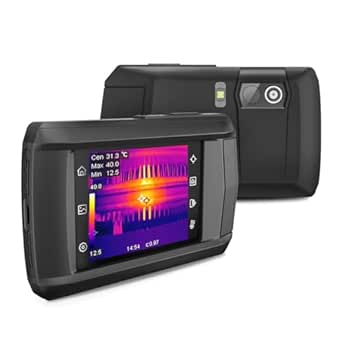 | Best for Guided Basic Inspections | IR resolution: 96 × 96 pixels; enhanced up to 240 × 240 via Live Super Resolution | Visual camera resolution: 640 × 480 pixels | Display: 3.5-inch touchscreen | VIEW ON AMAZON | See Our Full Breakdown |
| TOPDON TC004 Mini Thermal Imaging Camera |  | Best for Long Inspection Sessions | Infrared resolution: 128 × 128 | Enhanced resolution: 240 × 240 with TISR | Temperature range: -4°F to 842°F (-20°C to 450°C) | VIEW ON AMAZON | See Our Full Breakdown |
| BSIDE HX3 Handheld Thermal Imaging Camera |  | Best for Image Logging | IR resolution: 240 × 240 | Display: 2.4-inch TFT LCD, 320 × 240 | Temperature range: -20°C to 550°C (-4°F to 1022°F) | VIEW ON AMAZON | See Our Full Breakdown |
| Flagfront YXI96 Handheld Thermal Camera, 240 × 240 Resolution |  | Best for Rugged Basic Inspections | Resolution: 240 × 240 | Refresh rate: 25 Hz | Temperature range: -4°F to 1022°F | VIEW ON AMAZON | See Our Full Breakdown |
| GT14S Thermal Imaging Camera with Thermometer Mode |  | Best for Flexible Temperature Checks | Weight: 240 g | Temperature range: -4°F to 1022°F | Thermal sensitivity: NETD < 50 mK | VIEW ON AMAZON | See Our Full Breakdown |
| Thermal Master Thor002 Handheld Thermal Camera, 512 × 384 Resolution |  | Best for High-Detail Inspections | Thermal resolution: 512 × 384 | Visible-light camera: 2 MP | Display: 3.5-inch IPS, 640 × 480 | VIEW ON AMAZON | See Our Full Breakdown |
| thermal imaging cameras handheld | Temperature range | Battery life | Display | Thermal sensitivity |
|---|---|---|---|---|
| H128 Handheld Thermal Camera w | -4°F to 842°F | Up to 24 hours | — | 40 mK |
| FLIR TG165-X Thermal Imaging C | -13°F to 572°F | — | LCD | — |
| TOPDON TC004 Thermal Imaging C | -4°F to 1022°F | 8 hours | 3.5 inches | — |
| MiLESEEY TR10 Thermal Imaging | -4°F to 1022°F | Up to 8 hours | — | NETD <50 mK |
| FOXWELL RT280 Thermal Imaging | -4°F to 1022°F | — | 2.8-inch LCD, 320 × 240 listed; product information also lists 4.3 inches | — |
| AccuMEMS GT14S Thermal Imaging | — | Up to 14 hours | — | <50 mK |
| TOPDON TC005 Dual-Lens Thermal | -4°F to 1022°F | — | 3.5 inches | — |
| FOXWELL HT280 Thermal Imaging | -10°C to 500°C (14°F to 932°F) | Up to 8 hours | 2.8-inch, 320 × 240 LCD | 50 mK |
| Raythink EX10 Pro Dual-Lens Th | -4°F to 1022°F | — | 2.8 inches | — |
| HP96 Thermal Imaging Camera | -4°F to 662°F | Up to 4 hours continuous operation | 3.5-inch touchscreen | <50 mK |
| TOPDON TC004 Mini Thermal Imag | -4°F to 842°F (-20°C to 450°C) | Up to 15 hours | — | — |
| BSIDE HX3 Handheld Thermal Ima | -20°C to 550°C (-4°F to 1022°F) | — | 2.4-inch TFT LCD, 320 × 240 | Less than 60 mK |
| Flagfront YXI96 Handheld Therm | -4°F to 1022°F | — | — | — |
| GT14S Thermal Imaging Camera w | -4°F to 1022°F | Up to 14 hours | — | NETD < 50 mK |
| Thermal Master Thor002 Handhel | -4°F to 1022°F | Up to 10.5 hours | 3.5-inch IPS, 640 × 480 | 40 mK |
More Details on Our Top Picks
H128 Handheld Thermal Camera with 240 × 240 TISR Resolution
The H128 makes the most sense for inspectors who need to keep scanning without planning a mid-shift recharge. Its up to 24-hour battery life is a clear advantage over the TOPDON TC004, which is listed for 8 hours, while its 240 × 240 TISR imaging and 25 Hz frame rate provide a more detailed, fluid view than the FLIR TG165-X’s 80 × 60 sensor. Temperature alarms and automatic maximum, minimum, and center readings help flag hot or cold spots quickly. The tradeoff is measurement confidence: the stated ±3% accuracy is less precise than the MiLESEEY TR10’s listed ±2°C, and the H128’s 1.03-pound weight may feel substantial during repeated overhead checks. I’d choose it for long rounds, not for buyers who prioritize a clearly stated accuracy figure.
Pros:- Up to 24 hours of stated battery life
- 240 × 240 TISR resolution and 25 Hz frame rate
- Temperature alarm and automatic maximum, minimum, and center readings
- IP65 protection and stated 6.56-foot drop resistance
Cons:- Measurement accuracy is listed as ±3%
- At 1.03 pounds, it may feel heavy during extended overhead use
Best for: Building and maintenance inspectors who scan multiple locations over a long workday and value extended battery life.
Not ideal for: Technicians who need tighter stated temperature accuracy or a particularly light camera for prolonged overhead inspections.
- Thermal resolution:240 × 240 TISR
- Frame rate:25 Hz
- Thermal sensitivity:40 mK
- Temperature range:-4°F to 842°F
- Measurement accuracy:±3%
- Battery life:Up to 24 hours
- Protection:IP65; stated drop resistance of 6.56 feet
- Weight:1.03 pounds
Our verdict“Choose the H128 for long inspection days where battery endurance matters more than a tighter stated accuracy specification.”
FLIR TG165-X Thermal Imaging Camera with Bullseye Laser
The TG165-X is built around a practical troubleshooting task: finding a temperature anomaly and aiming a measurement at the spot that needs attention. Its bullseye laser helps make that target clear, while MSX enhancement adds visible scene detail to the thermal image. That combination can be more useful for identifying a particular component than the TOPDON TC004’s larger 3.5-inch display and broader documentation setup. The compromise is resolution: its 80 × 60 sensor has far fewer pixels than the 240 × 240 TISR H128, so small or distant hot spots are harder to distinguish. A listed three-second response time also makes readings feel less immediate. I’d favor the FLIR for pinpoint checks and organized image storage, but not for buyers who want finer thermal detail or a fast-moving live view.
Pros:- Bullseye laser helps target the measurement area
- MSX enhancement adds visible detail to thermal images
- Stores up to 50,000 images
- Drop-tested design with IP54 protection
Cons:- 80 × 60 IR resolution is lower than the H128 and TOPDON TC004
- Listed response time is 3 seconds
- Maximum temperature range is lower than several alternatives in this batch
Best for: Electricians and maintenance technicians who need to point readings at specific nearby components and save inspection images.
Not ideal for: Inspectors who need to distinguish small thermal details, scan moving scenes smoothly, or work across a wider temperature range.
- IR resolution:80 × 60 (4,800 pixels)
- Temperature range:-13°F to 572°F
- Display:LCD
- Connectivity:USB
- Response time:3 seconds
- Image storage:Up to 50,000 images
- Battery:Rechargeable lithium-ion; 1 included
- Warranty:2 years on camera parts and labor; 10 years on detector
Our verdict“Pick the TG165-X for laser-guided component checks and image archiving if its lower resolution suits your inspection distance.”
TOPDON TC004 Thermal Imaging Camera
The TC004 is the strongest fit here for inspectors who want to review a scene on the camera and keep substantial documentation with them. Its 3.5-inch display gives thermal images more room than the MiLESEEY TR10’s listed 240 × 240 display resolution, and 64 GB of storage with Wi-Fi supports a fuller field workflow than the wired-only TR10. TISR enhances the 256 × 192 sensor to 512 × 384, but that figure describes an enhanced image, not the sensor’s native resolution; buyers seeking native detail should keep that distinction in mind. The TC004 also includes a laser pointer and LED light, useful when inspecting dim equipment areas. Its 8-hour battery life is shorter than the H128’s, and its 2.11-pound weight makes it less appealing for long handheld rounds.
Pros:- Large 3.5-inch display
- TISR-enhanced image and a 256 × 192 infrared sensor
- 64 GB storage and Wi-Fi connectivity
- Laser pointer, LED light, IP54 protection, and stated 2-meter drop resistance
Cons:- Listed battery life is 8 hours, well below the H128’s stated endurance
- At 2.11 pounds, it is the heaviest of these five listed cameras
- 512 × 384 describes TISR enhancement rather than native sensor resolution
Best for: Field inspectors who need a large viewing screen, onboard image and video storage, and wireless file transfer.
Not ideal for: Technicians who need all-day battery endurance or a lighter camera for frequent one-handed scanning.
- Infrared sensor:256 × 192
- TISR-enhanced resolution:512 × 384
- Display:3.5 inches
- Temperature range:-4°F to 1022°F
- Storage:64 GB
- Connectivity:Wi-Fi
- Battery life:8 hours
- Protection:IP54; stated drop resistance of 2 meters
Our verdict“Choose the TC004 if a large screen and connected documentation matter more to your field workflow than low weight or maximum runtime.”
MiLESEEY TR10 Thermal Imaging Camera, 192 × 192 IR Resolution, 25 Hz
The TR10 gives hands-on users more control over how surfaces are measured, with adjustable emissivity and high/low temperature alarms for spotting anomalies. That makes it a more tunable option than the FLIR TG165-X, whose listed strengths center on laser targeting and MSX image enhancement. Its 25 Hz refresh rate supports fluid scanning, and the stated ±2°C accuracy is tighter than the H128’s listed ±3%—though the two figures use different forms, so they are not directly comparable across every temperature. The TR10’s 8 GB storage holds more than 30,000 images, but it offers wired connectivity rather than the TOPDON TC004’s Wi-Fi and 64 GB. I’d choose the TR10 for configurable spot checks, while buyers who need wireless transfer or extensive onboard storage should look elsewhere.
Pros:- Adjustable emissivity supports readings across different surface types
- 25 Hz refresh rate
- High and low temperature alarms
- 8 GB storage holds more than 30,000 images
Cons:- Wired connectivity lacks the TOPDON TC004’s Wi-Fi
- Listed battery life is up to 8 hours
- 192 × 192 IR resolution is lower than the H128’s 240 × 240 TISR figure
Best for: Technicians who want to adjust emissivity for different surfaces and use temperature alarms during handheld inspections.
Not ideal for: Field teams that need wireless file transfer, very large storage, or a camera designed around a large display.
- Infrared resolution:192 × 192
- Display resolution:240 × 240
- Refresh rate:25 Hz
- Thermal sensitivity:NETD <50 mK
- Temperature range:-4°F to 1022°F
- Temperature accuracy:±2°C
- Battery life:Up to 8 hours
- Storage and connectivity:8 GB; wired
Our verdict“The TR10 suits technicians who value emissivity control and alarms more than wireless sharing or higher-resolution imaging.”
FOXWELL RT280 Thermal Imaging Camera, 320 × 240 LCD, 240 × 180 TISR
The RT280 is aimed at buyers who want to take inspection data back to a Windows PC for closer analysis. Its software supports temperature analysis, 2D and 3D views, and report generation, giving it a documentation angle the MiLESEEY TR10’s wired image storage does not describe. In the field, high and low alerts, automatic hottest, coldest, and central readings, a laser pointer, and an LED light cover common inspection tasks. The 240 × 180 TISR effective resolution sits below the H128’s 240 × 240 figure, and its 2.8-inch display is modest beside the TOPDON TC004’s 3.5-inch screen. The provided information also conflicts on display size, listing both 2.8 and 4.3 inches, so I would verify that detail before buying. Mac users should skip it: the PC tool is Windows-only.
Pros:- Windows software supports analysis, 2D/3D views, and report generation
- High/low alerts and automatic hottest, coldest, and central point detection
- Laser pointer, LED light, and 8 GB internal storage
- IP54 protection and stated 6.6-foot drop resistance
Cons:- PC analysis software is not compatible with Mac
- Product data conflicts on display size, listing 2.8 and 4.3 inches
- 240 × 180 TISR effective resolution is below the H128’s listed 240 × 240
Best for: Building and equipment inspectors who use Windows PCs to analyze thermal files and prepare reports after field visits.
Not ideal for: Mac users, or technicians who want a confirmed large display or higher effective thermal resolution.
- Display:2.8-inch LCD, 320 × 240 listed; product information also lists 4.3 inches
- Effective thermal resolution:240 × 180 with TISR
- Frame rate:25 Hz
- Temperature range:-4°F to 1022°F
- Temperature accuracy:±3.6°F / ±2%
- Storage:8 GB eMMC
- Connectivity and PC compatibility:USB Type-C; Windows compatible, not Mac compatible
- Protection:IP54; stated drop resistance of 6.6 feet
Our verdict“Choose the RT280 for a Windows-centered inspection and reporting workflow, after confirming which display size the listing describes.”
AccuMEMS GT14S Thermal Imaging Camera with Edge Enhancement and Thermometer Mode
The AccuMEMS GT14S pairs a full-screen thermal view with spot temperature readings, so I’d shortlist it for checking multiple surfaces without carrying a separate thermometer. Its claimed up to 14-hour runtime is longer than the Raythink EX10 Pro’s 10 hours and the TOPDON TC005’s 8, a practical advantage on extended rounds away from a charger. Seven palettes, adjustable emissivity, and temperature alarms add flexibility for different materials and quick anomaly checks. The tradeoff is a relatively basic feature set beside the TC005, which adds a visible-light camera, laser distance measurement, and Wi-Fi reporting. There is also an inconsistency in the supplied data: the description and specs cap readings at 1022°F, while the title claims 1202°F. I’d verify the limit before relying on it for high-heat work.
Pros:- Combines thermal imaging with spot temperature readings
- Up to 14 hours of stated battery life
- Temperature alarms can flag readings outside set limits
- Adjustable emissivity and seven palettes support varied inspection conditions
Cons:- Supplied measurement limit conflicts with the title, description, and specs
- No visible-light camera or distance measurement is listed
- Connectivity and image-analysis options are not specified
Best for: Maintenance workers who need a handheld imager with spot readings and long stated battery life for extended inspection rounds
Not ideal for: Inspectors who need a visible-light image overlay, distance measurement, or a confirmed measurement limit above 1022°F
- Measurement range:-4°F to 1022°F (supplied title states 1202°F)
- Thermal sensitivity:<50 mK
- Field of view:50°
- Image frequency:25 Hz
- Color palettes:7
- Battery capacity:2500 mAh
- Battery life:Up to 14 hours
- Weight:240 g
Our verdict“Choose the GT14S for long inspection rounds that benefit from spot readings, after confirming its actual upper temperature limit.”
TOPDON TC005 Dual-Lens Thermal Imaging Camera
The TOPDON TC005 is the strongest fit here when an inspection needs to produce organized evidence as well as a thermal reading. Its 512 × 384 TISR resolution, 2 MP visual camera, and 3.5-inch screen give more image context than the FOXWELL HT280’s 2.8-inch display and TISR-enhanced image. For reporting, the TC005 adds 64 GB storage, Wi-Fi and USB, plus laser distance measurement up to 4 meters to help target a specific surface. Those tools make it better suited to repeatable field documentation than simpler cameras such as the AccuMEMS GT14S. The compromises are its 1.04-pound weight and up to 8-hour runtime, which trail the GT14S’s stated endurance. IP54 protection and 2-meter drop resistance help with job-site handling, but do not make it a lightweight carry.
Pros:- 512 × 384 TISR thermal resolution and 2 MP visual camera
- 64 GB internal storage for extensive image capture
- Wi-Fi and USB connectivity support analysis and reporting
- Laser distance measurement and IP54 housing with 2-meter drop resistance
Cons:- Weighs 1.04 pounds, more than the compact AccuMEMS GT14S
- Up to 8 hours of runtime is shorter than the GT14S’s stated 14 hours
- The supplied data does not specify thermal sensitivity or measurement accuracy
Best for: Building inspectors and maintenance teams who need high-resolution thermal and visible images with room for extensive records and reporting
Not ideal for: Users prioritizing a light camera or a full-day battery over storage, connectivity, and documentation features
- Thermal resolution:512 × 384 TISR
- Display:3.5 inches
- Visual camera:2 MP
- Temperature range:-4°F to 1022°F
- Laser measurement distance:Up to 4 meters
- Storage:64 GB
- Connectivity:Wi-Fi and USB
- Battery runtime:Up to 8 hours
- Ingress and drop protection:IP54; 2-meter drop resistance
Our verdict“Pick the TC005 when inspection records, connectivity, and image detail matter more than carrying less weight or maximizing runtime.”
FOXWELL HT280 Thermal Imaging Camera
The FOXWELL HT280 suits inspectors who want to review temperature patterns on a Windows computer after a handheld scan. Its software supports point, line, and area analysis, while on-screen maximum, center, and minimum readings help locate anomalies at the camera. Compared with the Raythink EX10 Pro, which offers a visible-light camera and mobile app support, the HT280 puts more emphasis on PC analysis and does not list a visible-light sensor. Its 260 × 260 TISR-enhanced image and nine palettes provide useful inspection context, though the 2.8-inch screen is smaller than the TOPDON TC005’s 3.5-inch display. IP54 protection, 6.6-foot drop protection, and up to 8 hours of battery life suit routine field work. The main compatibility catch is clear: the analysis software is for Windows, not Mac.
Pros:- Windows software supports point, line, and area temperature analysis
- On-screen maximum, center, and minimum readings with adjustable alarms
- Storage supports over 20,000 images or video recording
- IP54 rating and 6.6-foot drop protection for field handling
Cons:- PC analysis software is not compatible with Mac
- The 2.8-inch display is smaller than the TOPDON TC005’s 3.5-inch screen
- Tripod is supported but not included
Best for: Building maintenance technicians who use Windows PCs to analyze thermal images after checking temperature alarms on site
Not ideal for: Mac users or inspectors who want a larger display, a listed visible-light camera, or mobile-app analysis
- Display:2.8-inch, 320 × 240 LCD
- Enhanced thermal resolution:260 × 260 with TISR
- Thermal sensitivity:50 mK
- Temperature range:-10°C to 500°C (14°F to 932°F)
- Temperature accuracy:±3.6°F or ±2%
- Storage:Over 20,000 images or video recording
- Battery life:Up to 8 hours
- Durability:IP54; 6.6-foot drop protection
- Computer compatibility:Windows PC; not compatible with Mac
Our verdict“Choose the HT280 if Windows-based temperature analysis matters more than Mac compatibility or a larger camera screen.”
Raythink EX10 Pro Dual-Lens Thermal Camera
The Raythink EX10 Pro combines a 320 × 240 thermal sensor with a 2 MP visible-light camera in a 9.8-ounce body. Four modes—thermal, visible, fusion, and picture-in-picture—let inspectors add visual context when a heat anomaly would otherwise be hard to locate. That gives it a more compact dual-lens approach than the TOPDON TC005, which has a larger 3.5-inch display, more storage, and laser distance measurement but weighs over a pound. The EX10 Pro also supports mobile app and Windows analysis, with up to 10 hours of runtime and 8 GB of internal storage. Its 2.8-inch screen is the price of that compactness in practical terms: fine for a quick scan, less comfortable for reviewing detailed imagery. Accuracy is listed as ±2°C or ±2%, which may not suit work requiring tighter tolerances.
Pros:- 320 × 240 thermal resolution with four imaging modes
- 2 MP visible-light camera adds context to heat patterns
- Weighs 9.8 ounces and runs for up to 10 hours
- Wi-Fi supports image transfer and mobile app or Windows analysis
Cons:- The 2.8-inch display is smaller than the TOPDON TC005’s 3.5-inch screen
- 8 GB storage is far less than the TC005’s 64 GB
- Specified accuracy is ±2°C or ±2%
Best for: HVAC and building inspectors who want visible-light context and app or PC image analysis in a lighter handheld camera
Not ideal for: Users who need a large review screen, extensive onboard storage, laser distance measurement, or tighter stated accuracy
- Thermal resolution:320 × 240
- Visible-light camera:2 MP
- Display:2.8 inches
- Imaging modes:Thermal, Visible, Fusion, Picture-in-Picture
- Temperature range:-4°F to 1022°F
- Measurement accuracy:±2°C or ±2%
- Internal storage:8 GB
- Continuous runtime:Up to 10 hours
- Weight:9.8 ounces
Our verdict“Pick the EX10 Pro for a lighter dual-lens camera with flexible image modes, provided its small screen and stated accuracy fit your work.”
HP96 Thermal Imaging Camera, 3.5″ Touch Screen, Intelligent Scene Detection
The HP96 is geared toward users who want scene prompts and a touch interface to guide basic checks for insulation gaps, leaks, or overheating. Its intelligent scene detection, five imaging modes, and customizable alerts can make scanning more approachable than the more analysis-focused FOXWELL HT280. The 3.5-inch touchscreen is also roomier than the HT280’s 2.8-inch LCD. Its limitation is the 96 × 96 base IR sensor: live super-resolution can enhance images up to 240 × 240, but the starting sensor resolution remains lower than the 320 × 240 Raythink EX10 Pro and 512 × 384 TOPDON TC005. The 662°F upper limit and up to 4-hour runtime further narrow its fit compared with those alternatives. It makes more sense for shorter, guided checks than detailed or all-day inspection routes.
Pros:- Scene detection and customizable alerts support guided inspections
- 3.5-inch touchscreen with five imaging modes
- Live super-resolution enhances displayed images up to 240 × 240
- IP54 rating, 6.6-foot drop test, and tripod mount
Cons:- 96 × 96 base IR resolution is below the Raythink EX10 Pro’s 320 × 240
- Up to 4 hours of runtime is shorter than the other listed cameras
- Temperature range tops out at 662°F
Best for: Home inspectors and facility staff who want a guided touchscreen camera for short checks of insulation, leaks, and overheating
Not ideal for: Thermal professionals who need higher native IR resolution, readings above 662°F, or more than four hours of continuous use
- IR resolution:96 × 96 pixels; enhanced up to 240 × 240 via Live Super Resolution
- Visual camera resolution:640 × 480 pixels
- Display:3.5-inch touchscreen
- Temperature range:-4°F to 662°F
- Thermal sensitivity:<50 mK
- Accuracy:±2% with emissivity adjustment
- Battery life:Up to 4 hours continuous operation
- Storage capacity:Approximately 30,000 thermal images or 20 hours of video
- Durability:IP54; 6.6-foot drop test
Our verdict“Choose the HP96 for guided, shorter inspections where its touchscreen and scene prompts matter more than native resolution or long runtime.”
TOPDON TC004 Mini Thermal Imaging Camera
The TC004 Mini suits inspectors who want a compact camera that can stay on through a full day of spot checks. Its up to 15-hour battery life outlasts the GT14S’s stated 14 hours, while temperature alerts can trigger photo capture so readings are easier to document without stopping to operate the camera. TISR raises the 128 × 128 infrared image to 240 × 240, but that is enhanced resolution rather than native 240 × 240 capture, so buyers focused on fine thermal detail may prefer the Thor002’s native 512 × 384 sensor. The TC004 Mini adds IP54 protection and 2-meter drop resistance in a 1.03-pound body. Its 512 MB storage holds up to 8,000 photos, though the missing charging head and paper manual make setup less convenient.
Pros:- Up to 15 hours of battery life supports extended inspection rounds
- Temperature alerts can automatically capture photos
- Stores up to 8,000 photos with manual capture available
- IP54 rating and 2-meter drop resistance add practical protection
Cons:- 128 × 128 infrared resolution is enhanced to 240 × 240 with TISR, rather than native 240 × 240
- Charging head is not included
- Paper manual is not included
Best for: Home inspectors and maintenance workers who need long battery life, automatic image capture, and a compact camera for repeated checks
Not ideal for: Thermal imaging professionals who need high native sensor resolution or buyers who want a charging head and printed instructions included
- Infrared resolution:128 × 128
- Enhanced resolution:240 × 240 with TISR
- Temperature range:-4°F to 842°F (-20°C to 450°C)
- Field of view:40° × 30°
- Refresh rate:25 Hz
- Storage:512 MB eMMC; up to 8,000 photos
- Battery life:Up to 15 hours
- Durability:IP54 rated; withstands drops up to 2 meters
Our verdict“Choose the TC004 Mini if extended runtime and automatic documentation matter more than native high-resolution imaging.”
BSIDE HX3 Handheld Thermal Imaging Camera
The BSIDE HX3 is the practical choice here for inspectors who expect to save and export large batches of thermal images. Its stated capacity of more than 30,000 images is far above the TC004 Mini’s 8,000-photo limit, and USB data export gives those files a path to a computer for reporting. The HX3 also offers 15 palettes, adjustable emissivity, and a broad measurement range reaching 550°C, making it flexible for varied inspection targets. Its 240 × 240 infrared resolution is native, unlike the TC004 Mini’s TISR-enhanced output, though it remains well below the Thor002’s 512 × 384 sensor. The 2.4-inch display is modest, and the product data gives no real-world performance feedback; buyers should weigh that uncertainty against the useful storage and export features.
Pros:- Stores more than 30,000 images
- USB connection supports computer data export
- Native 240 × 240 infrared resolution and 15 thermal palettes
- Adjustable emissivity and a -20°C to 550°C measurement range
Cons:- 2.4-inch display is smaller than the Thor002’s 3.5-inch screen
- No review feedback is provided to gauge real-world performance
- 240 × 240 sensor resolution is below the Thor002’s 512 × 384
Best for: Building maintenance teams and inspectors who archive many thermal images and transfer them to a computer for reports
Not ideal for: Buyers who need a large display, independently documented field performance, or the finest sensor detail in this group
- IR resolution:240 × 240
- Display:2.4-inch TFT LCD, 320 × 240
- Temperature range:-20°C to 550°C (-4°F to 1022°F)
- Refresh rate:25 Hz
- Thermal palettes:15
- Thermal sensitivity:Less than 60 mK
- Image storage:More than 30,000 images
- Battery:2500 mAh rechargeable lithium-ion, included
Our verdict“Pick the HX3 when image archiving and USB export matter more than a large screen or top-tier sensor resolution.”
Flagfront YXI96 Handheld Thermal Camera, 240 × 240 Resolution
The Flagfront YXI96 puts protection and a broad temperature range ahead of extra imaging or data tools. It measures up to 1022°F, matching the BSIDE HX3’s upper limit, and pairs that reach with temperature alarms and on-screen high, low, and center readings. Those cues can help a user spot a hot or cold area quickly during checks of equipment or building systems. Its IP54 protection and 6.6-foot drop resistance give it a tougher stated handling profile than the TC004 Mini, which is rated for drops up to 2 meters. However, Flagfront lists only five palette names despite claiming six selectable palettes, and the data omits storage, battery life, and display details. I’d favor the HX3 for image archiving; the YXI96 is a simpler fit when alarms and ruggedness lead.
Pros:- Measures across a broad -4°F to 1022°F range
- Temperature alarms and high, low, and center readings aid quick checks
- IP54 dust and water resistance
- Stated drop resistance up to 6.6 feet
Cons:- Only five palette names are provided despite a claim of six selectable palettes
- Storage capacity and battery runtime are not specified
- Display specifications are not provided
Best for: Field technicians who need temperature alarms and stated dust, water, and drop protection for routine equipment checks
Not ideal for: Inspectors who need a clearly documented palette set, image capacity, battery runtime, or detailed display specifications
- Resolution:240 × 240
- Refresh rate:25 Hz
- Temperature range:-4°F to 1022°F
- Temperature accuracy:Within 2%
- Field of view:50°
- Color palettes:Six claimed; five named
- Durability:IP54; withstands drops up to 6.6 feet
- Power:One included lithium-ion battery
Our verdict“Choose the YXI96 for basic inspections where alarms and stated drop protection matter more than documented storage and runtime.”
GT14S Thermal Imaging Camera with Thermometer Mode
The GT14S stands out for combining thermal imaging with a point-and-shoot thermometer mode. That gives home and vehicle inspectors two ways to check temperatures, while adjustable emissivity, distance, level, and span settings let them tune measurements to the target. Its seven palettes and customizable high and low alarms add useful viewing and alert options. At 240 g, it is lighter than the TC004 Mini’s 1.03-pound body, and its stated 14-hour battery life is close to that camera’s 15 hours. The tradeoff is a less complete specification picture: no display resolution or temperature accuracy is listed, so I can’t compare measurement precision with the TC004 Mini’s stated ±3.6°F or ±2%. This is a better fit for flexible spot checks than buyers who need detailed imaging specifications.
Pros:- Offers both thermal imaging and point-and-shoot thermometer modes
- Adjustable emissivity, distance, level, and span settings
- Lightweight 240 g design with up to 14 hours of battery life
- Seven palettes and customizable high and low temperature alarms
Cons:- Display resolution is not specified
- Temperature accuracy is not specified
- No user-reported performance details are provided
Best for: Homeowners and vehicle or machinery technicians who want both thermal views and a direct thermometer mode in a lightweight camera
Not ideal for: Buyers who need published display resolution and measurement accuracy to compare readings before choosing
- Weight:240 g
- Temperature range:-4°F to 1022°F
- Thermal sensitivity:NETD < 50 mK
- Temperature difference detection:Down to 0.05°C
- Field of view:50°
- Color palettes:7
- Battery capacity:2500 mAh
- Battery life:Up to 14 hours
Our verdict“Choose the GT14S for lightweight spot checks that benefit from both thermal imaging and a dedicated thermometer mode.”
Thermal Master Thor002 Handheld Thermal Camera, 512 × 384 Resolution
The Thermal Master Thor002 is the clear choice in this group for buyers who need more thermal detail. Its 512 × 384 infrared sensor has substantially more pixels than the 240 × 240 BSIDE HX3 and the TC004 Mini’s TISR-enhanced 240 × 240 output, which can make temperature patterns easier to distinguish during close inspection. A 2 MP visible-light camera, six measurement points, 4× digital zoom, and 32 GB of storage support documentation, while USB and Wi-Fi transfer make sharing images simpler. The 3.5-inch display is also larger than the HX3’s 2.4-inch screen. That capability comes with a real handling cost: at 3.12 pounds, it is much heavier than the other listed cameras, and its stated temperature accuracy is ±3.6°F. I’d choose it for detail, not for all-day handheld comfort.
Pros:- 512 × 384 thermal resolution provides the most sensor detail in this batch
- 2 MP visible-light camera adds context to thermal images
- USB and Wi-Fi support image transfer, with 32 GB of storage
- 3.5-inch display and six temperature measurement points aid inspection
Cons:- At 3.12 pounds, it is substantially heavier than the other listed cameras
- Temperature accuracy is specified as ±3.6°F
- Up to 10.5 hours of battery life is shorter than the TC004 Mini’s stated 15 hours
Best for: Inspectors who need higher-resolution thermal detail, visible-light context, and wireless image transfer for documented assessments
Not ideal for: Technicians prioritizing a lightweight camera for extended handheld use or those who need tighter stated temperature accuracy
- Thermal resolution:512 × 384
- Visible-light camera:2 MP
- Display:3.5-inch IPS, 640 × 480
- Temperature range:-4°F to 1022°F
- Temperature accuracy:±3.6°F
- Thermal sensitivity:40 mK
- Storage:32 GB
- Battery life:Up to 10.5 hours
Our verdict“Choose the Thor002 when high thermal detail and image documentation outweigh its heavier handheld design.”

How We Picked
I compared these cameras on the features that affect handheld inspection: stated thermal resolution, refresh rate where listed, display and image tools, targeting aids, temperature measurement modes, and portability. Those details shape how easily a buyer can locate a heat pattern, capture useful context, and work across repeated checks. I also considered whether the listed features appear suited to general troubleshooting, detailed inspection, or a more focused task.
The ranking favors useful capability without making the tool harder to choose or operate. The TOPDON TC005 earns the lead for pairing thermal and visible imagery; the Thor002 is a stronger fit when resolution takes priority. More focused models such as the TG165-X have a clear place for users who value aiming help and direct measurements, while compact or lower-resolution choices suit buyers who prioritize portability or simpler jobs. Where product names or listings overlap, I treat the exact model and stated specifications as the deciding factors.
Factors to Consider When Choosing Thermal Imaging Cameras Handheld
Choose a handheld thermal camera around the inspection job, not a headline specification. The factors below help clarify when more image detail, added context, or a simpler workflow will make a real difference.
Match thermal resolution to inspection distance
Thermal resolution describes the number of temperature-sensing points in the image, and more points can reveal smaller patterns or preserve detail when viewing a target from farther away. It does not automatically make every inspection more useful: for nearby checks of large surfaces, a modest sensor may show the problem clearly. Think about the smallest area you need to identify and how far away you must stand. A common mistake is comparing a display’s pixel count with the thermal sensor’s resolution as if they were the same measure. Check the sensor specification first, then treat screen resolution and image enhancement as separate aids.
Consider refresh rate for moving inspections
Refresh rate affects how fluidly the thermal view updates as you move the camera across a surface. A higher rate can make scanning pipes, electrical panels, or machinery feel easier because patterns shift on screen with less lag. For stationary spot checks, refresh rate may matter less than a clear display and dependable temperature readings. Look for a stated rate in the product specifications rather than assuming all handheld models behave alike. If you routinely inspect moving equipment or scan large areas quickly, prioritize a responsive live view. For occasional fixed-target readings, that feature may not justify giving up other capabilities.
Decide whether visible-light context is useful
A thermal image shows temperature differences but may not make it obvious which component produced them. A visible-light camera or image-fusion feature can help connect a hot spot to a recognizable part, especially when reviewing saved images later or sharing findings with someone else. Added imaging features can mean more controls and a different workflow, so they are most useful when documentation is part of the job. For quick checks where you already know the target, a simpler thermal-only camera may be easier to operate. Consider how you will record and communicate findings before paying attention to extra image modes.
Check measurement tools against your task
Handheld thermal cameras vary in how they support temperature checks, from a basic spot reading to tools such as target lasers, thermometer modes, and scene detection. A laser can help indicate where a measurement is aimed, but it does not improve the thermal sensor’s detail or turn a broad image into a precise contact measurement. For comparing several components, consistent settings and a clear way to locate the reading may matter more than a long menu of modes. Read how the manufacturer describes the measurement area and temperature range, then check whether those fit the surfaces you inspect. Do not treat an on-screen temperature as a substitute for the right measurement method when the task calls for contact sensing or specialized calibration.
Balance portability with handling and screen size
A compact camera is easier to carry into tight spaces or keep available for quick checks, while a larger body and screen can be more comfortable during longer inspections. Small devices may require more careful handling to frame a target, and touchscreens or extra lenses can affect how the camera feels in use. Think about whether the camera will live in a toolbox, travel between sites, or stay in a workshop. Check the controls, screen size, and power arrangements as well as overall dimensions. Buyers sometimes choose the smallest option and later find its display or grip awkward for repeated work.
Choose features you can use and document
Image storage, export options, and software support determine whether a camera’s findings can become useful records. If you need to compare inspections over time, plan for a consistent way to save images and label locations; a feature-rich camera is less helpful if its files are difficult to retrieve. For occasional troubleshooting, basic image capture may be enough. Before choosing, check supported file formats, connection methods, and whether any companion software is required for the workflow you want. Paying for advanced analysis makes sense when you will use it regularly, while a simpler device can reduce setup and learning overhead.
Frequently Asked Questions
Is a higher thermal resolution always worth choosing?
Higher thermal resolution can help distinguish small targets and show more detail at a distance, but it is not automatically the best use of your budget or attention. For broad, close-up checks, a lower-resolution camera may already reveal the temperature pattern you need. Consider the target size, viewing distance, and whether you need to compare nearby components. Also confirm that a listed resolution belongs to the thermal sensor rather than only the screen. If the work depends on finding small hot spots, prioritize sensor resolution; for general scans, usability and measurement tools may matter more.
Can I use a handheld thermal camera to diagnose electrical problems?
Thermal cameras can help locate unusual heat patterns around electrical components, which can guide a closer inspection. They do not establish the cause of a temperature difference or replace safe electrical testing and qualified judgment. Surface materials, reflections, load conditions, and viewing angle can affect apparent temperatures. Use the camera as one part of a diagnostic process and follow appropriate safety procedures for the equipment and environment. If you need documented readings, check whether the camera provides the measurement and image-recording tools your work requires.
Do I need a dual-lens camera for home inspections?
A dual-lens model can make it easier to relate a thermal pattern to a visible feature such as a pipe, window frame, or appliance. That context is especially helpful when saving images for follow-up or explaining a finding to someone else. If you only need quick checks and already know where to aim, the extra camera may add little to your routine. Thermal and visible images also answer different questions, so neither one proves the cause of a suspected leak or insulation issue on its own. Choose the added context when it improves your inspection records or helps locate the target.
What should I check before trusting a temperature reading?
Check the target material, distance, viewing angle, and measurement area, since each can affect the reading. Small targets may blend with nearby surfaces if the camera’s measurement area covers more than the object itself. Reflective surfaces can also show temperatures from their surroundings instead of their own. Read the manufacturer’s guidance for emissivity settings and measurement limits, and compare readings under consistent conditions when tracking changes. For measurements where accuracy is critical, use a suitable reference method rather than relying on a thermal image alone.
How do I choose between a compact camera and a larger handheld model?
Start with where and how long you expect to use it. A compact model is easier to carry and may fit tight workspaces, while a larger screen and body can be more comfortable when scanning for extended periods or reviewing images on the device. If possible, compare the control layout and display size against your usual inspection conditions, including whether you wear gloves. Check battery and image-transfer details too, since they affect day-to-day handling. The right size is the one that lets you frame targets and review findings comfortably without adding features you will rarely use.
Conclusion
For most buyers seeking added inspection context, I’d start with the TOPDON TC005 as the best overall pick. The TOPDON TC004 Mini is the value-minded compact choice for quick checks, while the Thermal Master Thor002 is my best premium recommendation for buyers who prioritize higher stated thermal resolution. Beginners who want straightforward targeting can look at the FLIR TG165-X and its Bullseye laser. For jobs where visible context matters, compare the dual-lens Raythink EX10 Pro and TC005; for a more compact option, consider the MiLESEEY TR10, while recognizing its lower listed resolution than the Thor002.