Complete the kit



Get home appliances delivered free with Prime
- Fast, free delivery on millions of items
- Prime Video, Amazon Music and more included
- Member-only deals all year
Key Takeaways
- The Epson LS11000 earns the best overall role through its laser light source, 4K enhancement, and home theater oriented setup flexibility.
- The Sony BRAVIA Projector 8 and Sony VPL-XW5000ES offer native 4K, setting them apart from models that use pixel shifting or 1080p imaging.
- The Epson 5050UB remains a compelling theater-room option for buyers who value lens adjustment and image control over newer laser features.
- Brightness-focused models such as the ViewSonic LS740HD suit rooms with ambient light better than dark-room movie setups, though their 1080p resolution is a clear compromise.
- The Hisense M2 Pro and XGIMI TITAN Noir Pro add smart or portable convenience, while traditional theater models favor fixed installation and dedicated room performance.
| Epson Home Cinema LS11000 4K HDR Laser Projector |  | Best Overall for Flexible Home Theaters | Display technology: 4K, 3-chip 3LCD | Light source: Laser array | Brightness: 2,500 lumens color and white | VIEW ON AMAZON | See Our Full Breakdown |
| Valerion VisionMaster Max 4K Laser Projector |  | Best All-in-One Smart Theater | Resolution: 3840 × 2160 (4K) | Light source: Triple laser | Brightness: 3,500 ISO lumens | VIEW ON AMAZON | See Our Full Breakdown |
| ViewSonic LS740HD 1080p Laser Projector, 5,500 Lumens |  | Best for Bright, Large-Room Viewing | Resolution: 1920 × 1080 (Full HD) | Brightness: 5,500 ANSI lumens | Light source: Laser phosphor | VIEW ON AMAZON | See Our Full Breakdown |
| Epson Home Cinema 3800 4K PRO-UHD 3-Chip 3LCD Projector with HDR |  | Best for Flexible Living-Room Setups | Resolution: 3840 × 2160 | Display technology: 3-chip 3LCD | Brightness: 3,000 lumens | VIEW ON AMAZON | See Our Full Breakdown |
| Sony BRAVIA Projector 8 Native 4K HDR Laser Home Theater Projector (VPL-XW6100ES), Black | 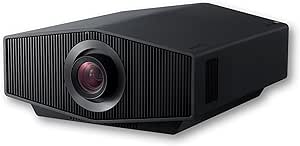 | Best Premium Native 4K Pick | Model: VPL-XW6100ES | Native resolution: 3840 × 2160 | Light source: Laser | VIEW ON AMAZON | See Our Full Breakdown |
| Optoma HD146X 1080p Full HD Home Theater Projector |  | Best for Bright-Room Gaming | Native resolution: 1920 x 1080 | Brightness: 3,600 lumens | Contrast ratio: 25,000:1 | VIEW ON AMAZON | See Our Full Breakdown |
| XGIMI TITAN Noir Pro 4K Laser Projector |  | Best for High-Performance Gaming | Native resolution: 3840 x 2160 | Display type: DLP | Brightness: 6,000 lumens | VIEW ON AMAZON | See Our Full Breakdown |
| Epson Home Cinema 5050UB 4K PRO-UHD 3-Chip 3LCD Projector |  | Best for HDR Movie Nights | Projection technology: 3-chip 3LCD with 4K PRO-UHD pixel shifting | Native resolution: 4096 × 2160 pixels | Maximum display resolution: 1920 × 1080p | VIEW ON AMAZON | See Our Full Breakdown |
| Optoma UHZ36 4K UHD Laser HDR Home Theater Projector |  | Best for Low-Maintenance 4K Viewing | Native resolution: 3840 × 2160 | Display type: DLP | Brightness: 3,500 lumens | VIEW ON AMAZON | See Our Full Breakdown |
| Epson Home Cinema 980 1080p 3LCD Projector | 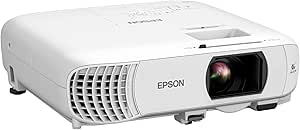 | Best for Bright, Straightforward Setup | Native resolution: 1920 x 1080 | Display type: LCD | Brightness: 4,000 lumens | VIEW ON AMAZON | See Our Full Breakdown |
| Sony VPL-XW5000ES Native 4K HDR Laser Home Theater Projector |  | Best for Native 4K Detail | Native resolution: 3840 × 2160 | Display type: LCoS | Brightness: 2,000 lumens | VIEW ON AMAZON | See Our Full Breakdown |
| Epson Home Cinema 3700 Full HD 1080p 3LCD Home Theater Projector |  | Best for Flexible Placement | Display technology: 3LCD | Native resolution: 2049 × 1080 | Maximum display resolution: 1920 × 1080 | VIEW ON AMAZON | See Our Full Breakdown |
| Epson Pro EX11000 3-Chip 3LCD Full HD 1080p Wireless Laser Projector |  | Best for Bright, Multi-Purpose Rooms | Native resolution: 1920 × 1080 | Display type: 3-chip 3LCD laser | Brightness: 4,600 lumens | VIEW ON AMAZON | See Our Full Breakdown |
| Hisense M2 Pro Triple Laser 4K UHD Smart Portable Projector |  | Best Portable Smart 4K Pick | Resolution: 4K UHD | Brightness: 1,300 ANSI lumens | Light source: Triple laser | VIEW ON AMAZON | See Our Full Breakdown |
| premium home theater projector | Brightness | Native resolution | Connectivity | Contrast ratio |
|---|---|---|---|---|
| Epson Home Cinema LS11000 4K H | 2,500 lumens color and white | — | Dual HDMI, one with eARC | — |
| Valerion VisionMaster Max 4K L | 3,500 ISO lumens | — | — | 50,000:1 |
| ViewSonic LS740HD 1080p Laser | 5,500 ANSI lumens | — | — | — |
| Epson Home Cinema 3800 4K PRO- | 3,000 lumens | — | Bluetooth, HDMI 2.0 | 100,000:1 |
| Sony BRAVIA Projector 8 Native | Up to 2,700 lumens | 3840 × 2160 | HDMI | — |
| Optoma HD146X 1080p Full HD Ho | 3,600 lumens | 1920 x 1080 | HDMI, USB, RCA | 25,000:1 |
| XGIMI TITAN Noir Pro 4K Laser | 6,000 lumens | 3840 x 2160 | — | 8,000:1 |
| Epson Home Cinema 5050UB 4K PR | 2,600 lumens | 4096 × 2160 pixels | HDMI | Up to 1,000,000:1 |
| Optoma UHZ36 4K UHD Laser HDR | 3,500 lumens | 3840 × 2160 | HDMI, USB, RCA | 1,500,000:1 |
| Epson Home Cinema 980 1080p 3L | 4,000 lumens | 1920 x 1080 | — | 16,000:1 |
| Sony VPL-XW5000ES Native 4K HD | 2,000 lumens | 3840 × 2160 | HDMI | — |
| Epson Home Cinema 3700 Full HD | 3,000 lumens (color and white) | 2049 × 1080 | — | — |
| Epson Pro EX11000 3-Chip 3LCD | 4,600 lumens | 1920 × 1080 | Ethernet, HDMI, USB, VGA, Wi-Fi | Up to 100,000:1 |
| Hisense M2 Pro Triple Laser 4K | 1,300 ANSI lumens | — | — | — |
More Details on Our Top Picks
Epson Home Cinema LS11000 4K HDR Laser Projector
The LS11000 earns my top spot for a dedicated theater that also needs to handle gaming. Its 3-chip 3LCD engine delivers equal stated color and white brightness, while motorized focus, zoom, and lens shift make it easier to fit a large image to a fixed screen. Compared with the Epson Home Cinema 3800, it adds a laser light source, HDR10+ support, and 120Hz input, giving movie and game setups more room to grow. Its below-20ms input lag is useful for responsive play, though the VisionMaster Max lists a much lower 4ms figure. The LS11000 is a substantial installation projector, and its description does not specify built-in audio, so buyers should plan for a separate sound system and a suitable mounting position.
Pros:- 3-chip 3LCD system with 2,500 lumens of both color and white brightness
- Motorized lens shift, zoom, focus, and preset memory simplify screen alignment
- HDR10+ support with real-time HDR adjustment
- 120Hz support and below-20ms input lag suit gaming
Cons:- Large-screen projection requires a room and installation that can accommodate the projector
- Built-in audio is not specified, so a separate sound system may be needed
- Its listed gaming lag is higher than the VisionMaster Max’s 4ms
Best for: Home theater owners who want motorized installation controls, HDR flexibility, and smooth 120Hz gaming from one projector.
Not ideal for: Buyers seeking a portable projector or a self-contained setup with specified built-in speakers.
- Display technology:4K, 3-chip 3LCD
- Light source:Laser array
- Brightness:2,500 lumens color and white
- Dynamic contrast ratio:1,200,000:1
- HDR formats:HDR, HDR10, HDR10+, HLG
- Lens shift:±47% horizontal, ±96% vertical
- Screen size support:Up to 300 inches
- Refresh rate and input lag:Up to 120Hz; below 20ms
- Connectivity:Dual HDMI, one with eARC
Our verdict“Choose the LS11000 for a permanent theater that needs adaptable optics, HDR support, and capable gaming performance.”
Valerion VisionMaster Max 4K Laser Projector
The VisionMaster Max suits buyers who want streaming, projection, and supported audio features in one connected setup. Its 3,500 ISO-lumen triple-laser source and 50,000:1 listed contrast ratio make it a bright, color-focused alternative to the Sony BRAVIA Projector 8, whose native 4K image and 95% DCI-P3 coverage target a more traditional theater installation. The Valerion adds Google TV, casting options, and Dolby Atmos and DTS support, reducing the need to build around separate streaming hardware. Its 0.9–1.5:1 throw range and vertical lens shift give placement flexibility, while the stated 4ms lag and 240Hz gaming spec stand out for play. The feature-rich interface may take time to configure, and the projector is better suited to a planned installation than frequent room-to-room moves.
Pros:- 3,500 ISO lumens and a wide stated 110% Rec.2020 color gamut
- Google TV with AirPlay 2, Chromecast, and Miracast support
- 0.9–1.5:1 throw ratio and ±105% vertical lens shift aid placement
- Listed 4ms lag and 240Hz gaming performance
Cons:- Feature-rich smart interface may be more involved than a basic projector setup
- Precise placement or ceiling mounting may be needed for a fixed theater arrangement
- The listed contrast ratio is lower than the Epson LS11000’s stated dynamic contrast ratio
Best for: Buyers building a connected theater who want Google TV, broad casting support, bright triple-laser projection, and gaming features.
Not ideal for: People who want a simple portable projector or prefer a minimal interface and a conventional component-based theater.
- Resolution:3840 × 2160 (4K)
- Light source:Triple laser
- Brightness:3,500 ISO lumens
- Contrast ratio:50,000:1
- Throw ratio:0.9–1.5:1
- Vertical lens shift:±105%
- Maximum image size:300 inches
- Smart platform:Google TV with AirPlay 2, Chromecast, and Miracast
- Gaming performance:4ms lag; 240Hz
Our verdict“Pick the VisionMaster Max if you want a bright 4K smart projector with flexible placement and built-in streaming features.”
ViewSonic LS740HD 1080p Laser Projector, 5,500 Lumens
The LS740HD is the lineup’s brightness-first choice for a large room where ambient light or an oversized screen matters more than 4K detail. Its 5,500 ANSI lumens and support for images up to 300 inches give it a different purpose from the Epson Home Cinema LS11000, which offers 4K HDR and 120Hz gaming but lists substantially lower brightness. That trade means the ViewSonic is better suited to presentations, simulators, or casual viewing in less controlled lighting than a dark-room movie setup. It also provides a 1.3x zoom and image adjustment tools for flexible fixed installation. The main compromise is clear: Full HD resolution cannot match the fine detail of the premium 4K models, and the ceiling-mount design is less convenient for portable use.
Pros:- 5,500 ANSI lumens suit rooms with ambient light
- Projects images from 30 to 300 inches
- Laser phosphor light source avoids routine lamp replacement
- 1.3x optical zoom and multiple image adjustments support installation flexibility
Cons:- Full HD resolution lacks the detail of the 4K Epson LS11000 and Sony BRAVIA Projector 8
- Listed light-source life varies by mode from 20,000 to 30,000 hours
- Ceiling-mount-oriented design is less convenient for portable use
Best for: Owners of large, brighter rooms who prioritize image visibility, big screen size, and a fixed installation over 4K resolution.
Not ideal for: Movie enthusiasts seeking fine 4K detail, HDR-focused image features, or a projector they can easily move between rooms.
- Resolution:1920 × 1080 (Full HD)
- Brightness:5,500 ANSI lumens
- Light source:Laser phosphor
- Throw ratio:1.13–1.47
- Optical zoom:1.3x
- Image size:30–300 inches
- Light-source operating life:20,000 hours; up to 30,000 hours in Dynamic Eco mode
- Built-in speaker:15 W
- Projection adjustments:360-degree projection, portrait mode, H/V keystone, and 4-corner adjustment
Our verdict“Choose the LS740HD when room brightness and a very large image matter more than 4K movie detail.”
Epson Home Cinema 3800 4K PRO-UHD 3-Chip 3LCD Projector with HDR
The Home Cinema 3800 makes sense for buyers who want a bright 4K HDR-capable projector with more built-in convenience than the installation-focused Epson LS11000. Its 3,000-lumen 3LCD system, lens shift, tabletop mounting, Bluetooth, and dual 10 W speakers give a living-room setup a straightforward starting point. Those speakers can handle casual viewing, though a dedicated sound system is still a better fit for theater-style audio. Compared with the LS11000, the 3800 is a simpler choice for buyers who do not need a laser light source, HDR10+, or 120Hz input; it supports 4K HDR up to 60Hz. Its listed 100,000:1 contrast ratio and active 3D support add useful flexibility, but the description does not state lamp life, which makes long-term light-source planning less clear.
Pros:- 3,000 lumens of brightness for a bright 3LCD image
- Supports 4K HDR content up to 60Hz
- Lens shift and tabletop mounting suit flexible room layouts
- Includes Bluetooth, dual 10 W speakers, and active 3D support
Cons:- Built-in speakers are limited for theater-style audio
- No lamp life figure is provided in the product data
- Lacks the LS11000’s stated laser source, HDR10+, and 120Hz support
Best for: Living-room viewers who want 4K HDR projection, tabletop placement, Bluetooth, and built-in speakers in one setup.
Not ideal for: Dedicated theater owners who need a laser source, 120Hz gaming, or advanced motorized lens controls.
- Resolution:3840 × 2160
- Display technology:3-chip 3LCD
- Brightness:3,000 lumens
- Contrast ratio:100,000:1
- Maximum image size:300 inches
- Connectivity:Bluetooth, HDMI 2.0
- Built-in speakers:Dual 10 W
- Mounting type:Tabletop
Our verdict“Pick the Home Cinema 3800 for a versatile living-room projector with useful built-in conveniences and 4K HDR support.”
Sony BRAVIA Projector 8 Native 4K HDR Laser Home Theater Projector (VPL-XW6100ES), Black
The BRAVIA Projector 8 is the most cinema-focused pick here for buyers who prioritize native 4K resolution and wide color coverage in a permanent setup. Sony lists up to 2,700 lumens and 95% DCI-P3 coverage, pairing detailed images with a laser source rated for up to 20,000 hours. Compared with the Epson Home Cinema LS11000, it offers higher stated brightness and native 4K, while the Epson lists HDR10+ support, motorized lens controls, and 120Hz gaming. Sony’s picture position memory stores settings for up to three screen formats, a useful fit for installations that switch between screen shapes. The supplied data leaves out lens shift, throw ratio, and gaming lag, so placement and game responsiveness are harder to judge from these specs alone. This premium theater option also calls for a separate audio plan.
Pros:- Native 3840 × 2160 resolution
- Laser light source rated for up to 20,000 hours
- Up to 2,700 lumens of brightness
- 95% DCI-P3 color coverage and memory for up to three screen formats
Cons:- Product data does not specify lens shift or throw ratio
- Gaming refresh rate and input lag are not provided
- Built-in audio is not specified
Best for: Dedicated theater owners who prioritize native 4K detail, broad DCI-P3 color, and stored settings for multiple screen formats.
Not ideal for: Buyers who need confirmed flexible lens placement, detailed gaming specifications, or built-in audio.
- Model:VPL-XW6100ES
- Native resolution:3840 × 2160
- Light source:Laser
- Brightness:Up to 2,700 lumens
- Light-source operating life:Up to 20,000 hours
- Color gamut:95% DCI-P3
- Picture memory:Stores settings for up to three screen formats
- Connectivity:HDMI
Our verdict“Choose the BRAVIA Projector 8 for a dedicated theater where native 4K and wide color matter more than documented installation flexibility.”
Optoma HD146X 1080p Full HD Home Theater Projector
The Optoma HD146X is the most gaming-focused Full HD pick in this group: its 3,600-lumen output can help keep a large image visible when the room is not fully dark, and its 16 ms response is suited to responsive play. Compared with the 4K Optoma UHZ36, it gives up resolution and the long-life laser source, so it fits buyers who prioritize gaming and straightforward 1080p viewing over film detail and reduced lamp upkeep. Its listed image size reaches 301 inches, though the supplied minimum-size figure conflicts with that maximum, making placement claims harder to rely on. The 15,000-hour lamp-life figure applies in Dynamic mode; buyers should weigh that against the UHZ36’s laser life and this model’s one-year parts-and-labor warranty.
Pros:- 3,600-lumen brightness suits rooms where complete light control is difficult
- 16 ms input response is aimed at responsive gaming
- 1080p resolution matches Full HD content without requiring 4K sources
- Dynamic mode lists lamp life up to 15,000 hours
Cons:- Full HD resolution shows less fine detail than the Optoma UHZ36 and other 4K models
- Lamp-based light source has a shorter rated life than the UHZ36’s laser
- Provided minimum and maximum image-size figures conflict
Best for: Console players seeking a bright 1080p image and low input response for a dedicated or multipurpose media room
Not ideal for: Movie fans seeking native 4K detail or buyers who want a laser light source with a longer rated operating life
- Native resolution:1920 x 1080
- Brightness:3,600 lumens
- Contrast ratio:25,000:1
- Input response time:16 ms
- Lamp life:Up to 15,000 hours in Dynamic mode
- Maximum image size:301 inches
- Connectivity:HDMI, USB, RCA
- Weight:8.2 pounds
Our verdict“Choose the HD146X for bright, responsive 1080p gaming; choose the UHZ36 if 4K and a laser light source matter more.”
XGIMI TITAN Noir Pro 4K Laser Projector
The XGIMI TITAN Noir Pro combines a 4K image with gaming specifications that stand apart from the other picks: up to 240Hz, 1 ms latency, VRR, ALLM, and AMD FreeSync. That makes it the most gaming-oriented premium option here, while its 6,000-lumen RGB triple laser and dual iris system also give it room to serve as a large-screen theater projector. Compared with the more film-focused Epson Home Cinema 5050UB, the TITAN offers much brighter output and more explicit gaming support, but its 360-watt draw and substantial installation range demand a capable room and careful setup. Optical zoom and extensive lens shift help with placement, although they cannot make a long-throw projector fit every space. Its 8,000:1 contrast specification is also less striking than the Epson’s listed figure.
Pros:- 4K resolution and 6,000-lumen RGB triple laser combine detail with high brightness
- Up to 240Hz, 1 ms latency, VRR, ALLM, and FreeSync target responsive gaming
- Optical zoom and broad horizontal and vertical lens shift ease installation
- Dual iris system provides contrast adjustment
Cons:- Long throw range and large image capability call for substantial room space
- 360-watt power consumption is a significant operating requirement
- Listed 8,000:1 contrast ratio is below the Epson Home Cinema 5050UB’s stated ratio
Best for: Enthusiast gamers building a large-screen 4K setup with room for ceiling mounting and flexible lens adjustment
Not ideal for: Small-room viewers or buyers prioritizing low power use and the deepest stated contrast specification
- Native resolution:3840 x 2160
- Display type:DLP
- Brightness:6,000 lumens
- Light source:RGB triple laser
- Contrast ratio:8,000:1
- Throw ratio:0.98–2.0:1
- Lens shift:Vertical ±130%; horizontal ±50%
- Maximum refresh rate and latency:Up to 240Hz; 1 ms
- Light source life:20,000 hours
Our verdict“Pick the TITAN Noir Pro for a bright, flexible 4K theater that doubles as a high-refresh gaming setup, provided your room can accommodate it.”
Epson Home Cinema 5050UB 4K PRO-UHD 3-Chip 3LCD Projector
The Epson Home Cinema 5050UB is the movie-first choice in this set, pairing 3-chip 3LCD projection with pixel shifting and full 10-bit HDR processing for detailed, color-rich viewing. Its 2,600 lumens are more modest than the XGIMI TITAN Noir Pro’s 6,000, so I would favor the Epson for a room where lights can be controlled rather than a bright multipurpose space. The listed contrast ratio of up to 1,000,000:1 also makes it the standout on paper against the TITAN’s 8,000:1 figure. One specification deserves care: the data describes 4096 × 2160 native resolution but lists maximum display resolution as 1920 × 1080p. HDMI is the only listed connection, which limits flexibility for buyers with several source devices.
Pros:- 3-chip 3LCD displays the full RGB color signal for every frame
- Full 10-bit HDR processing supports nuanced color gradations
- Pixel shifting and image processing deliver enhanced 4K visuals
- Listed contrast ratio reaches up to 1,000,000:1
Cons:- 2,600-lumen brightness is lower than the XGIMI TITAN Noir Pro’s 6,000 lumens
- Only HDMI connectivity is listed
- Native and maximum display resolution specifications are inconsistent
Best for: Film-focused home theater owners who can dim the room and want HDR processing with 3-chip color
Not ideal for: Bright-room viewers or households that need several connection types for multiple media devices
- Projection technology:3-chip 3LCD with 4K PRO-UHD pixel shifting
- Native resolution:4096 × 2160 pixels
- Maximum display resolution:1920 × 1080p
- Brightness:2,600 lumens
- Contrast ratio:Up to 1,000,000:1
- HDR:Full 10-bit HDR processing
- Maximum image size:300 inches
- Throw distance:1.35–2.84 meters
- Connectivity:HDMI
Our verdict“Choose the 5050UB for HDR-focused movie viewing in a controllable room, after confirming its resolution details and your connection needs.”
Optoma UHZ36 4K UHD Laser HDR Home Theater Projector
The Optoma UHZ36 makes a practical case for premium home theater with its 4K UHD resolution, 3,500-lumen output, HDR support, and laser light source rated for up to 30,000 hours. Compared with the lamp-based Optoma HD146X, it offers more detail and a longer rated light-source life, making it the stronger fit for regular movie viewing with less lamp replacement concern. Filmmaker Mode caters to viewers who want a cinema-oriented presentation, while MEMC smoothing and a built-in 15W speaker add flexibility for sports or casual viewing. Its brightness falls well short of the XGIMI TITAN Noir Pro, however, and the supplied light-source warranty lasts up to one year or 20,000 hours—shorter than the rated operating life.
Pros:- 4K UHD resolution with HDR support for detailed compatible content
- 3,500-lumen brightness supports large-screen viewing
- Laser light source is rated for up to 30,000 hours
- Filmmaker Mode, MEMC motion smoothing, and a 15W speaker broaden its use
Cons:- Less bright than the XGIMI TITAN Noir Pro’s 6,000-lumen output
- Light-source warranty is listed for up to one year or 20,000 hours, below the rated life
- Supplied specs do not list gaming latency or lens shift
Best for: Frequent movie and sports viewers seeking 4K, HDR, and a long-rated-life laser in a conventional home theater
Not ideal for: Buyers needing exceptionally bright output, extensive installation adjustment, or a warranty matching the full rated laser life
- Native resolution:3840 × 2160
- Display type:DLP
- Brightness:3,500 lumens
- Contrast ratio:1,500,000:1
- Light source life:Up to 30,000 hours
- Maximum image size:300 inches
- Throw distance:3.19–34.6 feet
- Speaker:15W
- Connectivity:HDMI, USB, RCA
Our verdict“Choose the UHZ36 for long-life laser 4K viewing with HDR and useful built-in features, unless maximum brightness is your priority.”
Epson Home Cinema 980 1080p 3LCD Projector
The Epson Home Cinema 980 is the practical big-screen pick for buyers who value brightness and simple connections over 4K resolution. Its 4,000 lumens of color and white brightness and 3-chip 3LCD design suit sports, general TV, and casual gaming when a room is not fully dark. The two HDMI ports also make switching between a console and streaming device easier than on the HDMI-only Epson Home Cinema 5050UB. Still, the 980 is Full HD, and its listed maximum throw distance is just nine feet, so it favors a nearby screen rather than a deep-room installation. Its 6,000-hour light-source life is also shorter than the UHZ36’s laser rating, a tradeoff for buyers who want a bright, uncomplicated 1080p option.
Pros:- 4,000 lumens of color and white brightness suit multipurpose viewing
- 3-chip 3LCD technology delivers Full HD images
- Two HDMI ports support multiple connected devices
- Built-in speaker and USB power port support a simple setup
Cons:- Full HD resolution lacks the detail of the 4K Epson Home Cinema 5050UB
- Maximum throw distance is listed as only nine feet
- 6,000-hour light-source life is shorter than the Optoma UHZ36’s laser rating
Best for: Households wanting a bright Full HD projector for sports, TV, and casual gaming with two HDMI sources connected
Not ideal for: Dedicated cinema buyers seeking 4K detail, a long-life laser, or installation across a large room
- Native resolution:1920 x 1080
- Display type:LCD
- Brightness:4,000 lumens
- Contrast ratio:16,000:1
- Image size:34–337 inches
- Throw distance:1–9 feet
- Light source life:6,000 hours
- Ports:Two HDMI ports, one USB port
- Built-in speaker:Yes
Our verdict“Pick the Home Cinema 980 for bright, easy Full HD viewing near the screen, but choose a 4K laser model for a dedicated theater.”
Sony VPL-XW5000ES Native 4K HDR Laser Home Theater Projector
Native 4K resolution and LCoS imaging make this Sony the detail-first choice in this group. Its 2,000 lumens and 95% DCI-P3 color gamut suit a dedicated theater where accurate, richly colored images matter more than overpowering ambient light. Compared with the Epson Home Cinema 3700, it offers native 4K and a long-life laser source, while the Epson has higher listed brightness and lens shift for more flexible placement. The Sony also supports low-lag 4K/60 Hz and 2K/120 Hz gaming, giving console players a useful option without making this a portable, all-in-one setup. Its 20,000-hour laser life reduces lamp replacement concerns, but the stationary design and HDMI-only connectivity call for a planned installation. Choose it for image fidelity; skip it if room flexibility or built-in streaming is a priority.
Pros:- Native 3840 × 2160 resolution for detailed 4K images
- 95% DCI-P3 color gamut for broad color reproduction
- Laser light source rated for up to 20,000 hours
- Low input lag in supported 4K/60 Hz and 2K/120 Hz modes
Cons:- Stationary design makes room-to-room use impractical
- At 2,000 lumens, it is less suited to rooms with substantial ambient light
- Connectivity is listed as HDMI, with no built-in smart platform specified
Best for: Dedicated theater owners who prioritize native 4K detail, wide-gamut color, and low-lag gaming.
Not ideal for: Buyers who need a portable projector, extensive placement adjustment, built-in streaming, or strong performance in a bright room.
- Native resolution:3840 × 2160
- Display type:LCoS
- Brightness:2,000 lumens
- Color gamut:95% DCI-P3
- Light source life:Up to 20,000 hours
- Input lag:Under 21 ms at 4K/60 Hz; under 13 ms at 2K/120 Hz
- Connectivity:HDMI
- Mounting type:Ceiling mount
Our verdict“Choose the VPL-XW5000ES for native 4K and long-term laser use in a dedicated theater with controlled lighting.”
Epson Home Cinema 3700 Full HD 1080p 3LCD Home Theater Projector
The Home Cinema 3700 earns its place through placement flexibility and bright Full HD output, rather than 4K resolution or a long-life laser. Its 1.6× zoom and vertical and horizontal lens shift give owners more room to position the image around a ceiling mount or tabletop setup. That is a practical advantage over the fixed-install Sony VPL-XW5000ES, though the Sony delivers native 4K and a laser source rated for much longer service. The Epson’s 3,000 lumens of color and white brightness can help in rooms that are not fully dark, and its built-in 10 W speakers cover casual viewing without a separate sound system. The tradeoff is a 3,000-hour lamp life and 1080p maximum display resolution. It suits buyers who value easy installation and a large image more than finer 4K detail.
Pros:- 3,000 lumens of both color and white brightness
- 1.6× zoom and vertical and horizontal lens shift ease placement
- Built-in pair of 10 W speakers supports basic viewing without separate audio
- Maximum image size is listed as 300 inches
Cons:- Maximum display resolution is Full HD 1920 × 1080
- Listed lamp life is 3,000 hours, requiring more upkeep than laser models
- Tabletop format may not suit a permanent ceiling-mounted installation
Best for: Home theater buyers who need lens shift and zoom to fit a projector into an existing room layout.
Not ideal for: Viewers seeking native 4K, a long-life laser light source, or a low-maintenance installation.
- Display technology:3LCD
- Native resolution:2049 × 1080
- Maximum display resolution:1920 × 1080
- Brightness:3,000 lumens (color and white)
- Dynamic contrast ratio:Up to 70,000:1
- Zoom:1.6×
- Lens shift:±60° vertical, ±24° horizontal
- Lamp life:3,000 hours
- Speakers:Two built-in 10 W speakers
Our verdict“Pick the Home Cinema 3700 if flexible placement and bright 1080p viewing matter more than native 4K or laser longevity.”
Epson Pro EX11000 3-Chip 3LCD Full HD 1080p Wireless Laser Projector
With 4,600 lumens of color and white brightness, the Pro EX11000 is the practical pick for rooms where lights cannot always be turned off. Its laser light source and 3-chip 3LCD design pair long operating life with vivid Full HD images, while Wi-Fi, Ethernet, two HDMI ports, and USB suit presentations and shared household use. Compared with the Sony VPL-XW5000ES, the Epson gives up native 4K detail and theater-focused color gamut for much higher brightness and broader listed connections. The 20,000-hour laser life also avoids the lamp replacement cycle of the Home Cinema 3700, though its 1–1.6× optical zoom range leaves less placement latitude than that model’s 1.6× zoom and lens shift. A built-in 16 W speaker helps with casual use, but larger rooms still call for external audio. This is a versatile bright-room projector, not a dedicated 4K cinema choice.
Pros:- 4,600 lumens of color and white brightness for rooms with ambient light
- Laser light source rated for 20,000 hours
- Wi-Fi, Ethernet, two HDMI ports, USB, and VGA provide varied connection options
- True 3-chip 3LCD display technology
Cons:- Native resolution is Full HD 1920 × 1080 rather than 4K
- Limited 1–1.6× optical zoom range can constrain installation placement
- Built-in 16 W speaker may not fill a large room
Best for: Households, educators, and presenters who need a bright Full HD projector for mixed-use rooms and wireless connectivity.
Not ideal for: Dedicated theater buyers who prioritize native 4K detail, extensive placement adjustment, or cinema-grade built-in sound.
- Native resolution:1920 × 1080
- Display type:3-chip 3LCD laser
- Brightness:4,600 lumens
- Contrast ratio:Up to 100,000:1
- Light source life:20,000 hours
- Maximum image size:310 inches
- Connectivity:Ethernet, HDMI, USB, VGA, Wi-Fi
- Built-in speaker:16 W
Our verdict“Choose the Pro EX11000 for bright, flexible Full HD viewing and connectivity when native 4K is not the priority.”
Hisense M2 Pro Triple Laser 4K UHD Smart Portable Projector
The M2 Pro combines 4K UHD, triple-laser color, and built-in VIDAA streaming in a portable design, making it the most self-contained option here. Dolby Vision, AI picture enhancements, optical zoom, and active 3D add flexibility for movie nights and gaming. Compared with the stationary Sony VPL-XW5000ES, it is easier to move and has integrated streaming, while the Sony offers native 4K and a listed 2,000 lumens against the Hisense’s 1,300 ANSI lumens. That brightness makes the M2 Pro a better fit for dim rooms than spaces with daylight or lights on. Its 65–200-inch projection range supports different setups, but the lower brightness may limit the appeal of the largest image sizes. Active 3D also requires separately obtained DLP-Link glasses. Choose this model for adaptable, app-ready viewing; skip it if maximum brightness or a fixed theater installation is your priority.
Pros:- 4K UHD resolution with a triple-laser light source
- VIDAA smart TV platform includes streaming apps
- Optical zoom supports setup flexibility across different spaces
- Dolby Vision and active 3D support broaden viewing options
Cons:- 1,300 ANSI lumens are best suited to low-light environments
- Active 3D requires separately obtained DLP-Link shutter glasses
- Maximum projection size of 200 inches is smaller than the largest listed sizes in this group
Best for: Movie and gaming fans who want portable 4K projection, built-in streaming, and flexible screen sizes for dim rooms.
Not ideal for: Buyers projecting in bright rooms or seeking a fixed theater projector with higher listed brightness.
- Resolution:4K UHD
- Brightness:1,300 ANSI lumens
- Light source:Triple laser
- Projection size:65–200 inches
- Optical zoom ratio:1.0–1.3:1
- Operating system:VIDAA
- HDR format:Dolby Vision
- 3D support:Active 3D; DLP-Link shutter glasses required
Our verdict“Pick the M2 Pro for portable, app-ready 4K viewing in a dim room, with the Sony VPL-XW5000ES better suited to a fixed theater.”

How We Picked
I compared these projectors by how well they serve a premium home theater: image detail, contrast potential, brightness for the intended room, light source, installation flexibility, and day-to-day usability. I also considered whether a model is designed for a fixed theater, a multipurpose room, gaming, or portable viewing, since a projector that excels in one setting may disappoint in another.
The ranking favors models that balance theater image quality with practical setup and a clear reason to choose them over nearby alternatives. Native 4K models stand out for buyers prioritizing fine detail, while 4K-enhanced models can offer a better balance of flexibility and performance. Bright 1080p and portable options rank lower for a dedicated premium theater, but remain useful for buyers whose room or setup calls for their particular strengths.
| premium home theater projector | Connectivity |
|---|---|
| Epson Home Cinema LS11000 4K H | Dual HDMI, one with eARC |
| Valerion VisionMaster Max 4K L | — |
| ViewSonic LS740HD 1080p Laser | — |
| Epson Home Cinema 3800 4K PRO- | Bluetooth, HDMI 2.0 |
| Sony BRAVIA Projector 8 Native | HDMI |
| Optoma HD146X 1080p Full HD Ho | HDMI, USB, RCA |
| XGIMI TITAN Noir Pro 4K Laser | — |
| Epson Home Cinema 5050UB 4K PR | HDMI |
| Optoma UHZ36 4K UHD Laser HDR | HDMI, USB, RCA |
| Epson Home Cinema 980 1080p 3L | — |
| Sony VPL-XW5000ES Native 4K HD | HDMI |
| Epson Home Cinema 3700 Full HD | — |
| Epson Pro EX11000 3-Chip 3LCD | Ethernet, HDMI, USB, VGA, Wi-Fi |
| Hisense M2 Pro Triple Laser 4K | — |
Factors to Consider When Choosing Premium Home Theater Projectors
A projector’s spec sheet only tells part of the story. I would start with the room and screen, then decide which compromises matter least for the way you watch.Match Brightness to Your Room
Brightness matters most when the room has light you cannot control, but it does not automatically make a projector better for a theater room. In a dark room, excess brightness can make a large image tiring and can reduce the perceived depth of dark scenes. A bright model can help in a multipurpose space, though ambient light still washes out contrast regardless of the projector’s rated output. Think about window coverings, wall color, screen size, and whether you watch during the day before choosing. A smaller screen in a controlled room may look more satisfying than a larger, brighter setup with light spilling across the image.
Know What “4K” Means on the Spec Sheet
Native 4K and 4K enhancement are different approaches, and the distinction matters most for fine details at large screen sizes or close seating distances. Native 4K uses a panel with a full 4K pixel grid, while pixel-shifting approaches create a higher-detail image from a lower-resolution imaging device. That does not make enhanced 4K a poor choice; it can be a sensible balance when installation features, brightness, or budget matter more. Before paying extra for native resolution, check how far you sit from the screen and whether your content is actually 4K. A premium projector should fit the whole viewing setup, not just win one specification comparison.
Plan the Installation Before Buying
Throw distance, lens shift, zoom range, mounting position, and cable routes determine whether a projector can fit your room cleanly. A model with generous lens adjustment can simplify placement when the ceiling mount cannot sit exactly where the image needs to land. Digital keystone correction may appear convenient, but relying on it can soften the image or reduce usable resolution. Measure the screen width and projector-to-screen distance, then compare those figures with the manufacturer’s placement guidance. Buyers often focus on image specs first and discover later that the projector cannot fill the screen from their chosen shelf or mount.
Choose a Light Source for Your Habits
Laser and lamp projectors bring different ownership patterns. Laser models avoid routine lamp replacement and often suit frequent viewing, while lamp models can still make sense when purchase cost and a familiar home theater setup matter more than long-term maintenance. Consider how many hours you watch each week and whether you are comfortable keeping a replacement lamp on hand. Light output and color can also change as a lamp ages, so the maintenance question affects the viewing experience over time. A projector that runs rarely in a secondary room may not benefit as much from a laser light source as one used nightly.
Decide Whether Smart Features Help or Add Clutter
Built-in streaming and portable design can make a projector easier to move or use without a full theater system. They can also add setup steps and limitations compared with a dedicated source device and receiver. If the projector will stay mounted, prioritize reliable connections, audio integration, and compatibility with the rest of your system over extra apps. If you plan to move it between rooms, weight, setup automation, and built-in sound become more useful. Be clear about whether flexibility is a real part of your routine, since a portable feature set may come with different compromises than a fixed theater model.
Frequently Asked Questions
Is native 4K worth choosing over 4K enhancement for a large screen?
It can be, especially if you sit relatively close to a large screen and watch detailed 4K content. Native 4K models such as the Sony BRAVIA Projector 8 and VPL-XW5000ES have a direct advantage in pixel count. Enhanced 4K options can still deliver a detailed picture while offering other strengths, including installation flexibility or a different balance of features. Compare the full system rather than assuming resolution alone will produce the biggest improvement. Screen size, seating distance, focus, and source quality all affect how much extra detail you can see.
Can I use a premium projector in a living room with windows?
Yes, but a bright room will limit contrast and make dark scenes look washed out. A high brightness model such as the ViewSonic LS740HD is better suited to ambient light than a dark-room theater projector, though it uses 1080p resolution. Blackout curtains and a screen suited to your room can help, but they cannot remove every lighting compromise. If movies are your priority, plan to watch with the room darker whenever possible. For casual daytime viewing, brightness and convenience may matter more than black level.
Should I choose a laser projector if I watch movies every day?
A laser light source can be a practical fit for frequent use because it avoids the routine lamp replacement associated with lamp-based projectors. That convenience may matter more when the projector runs for many hours each week. Lamp models can still be attractive if your viewing is occasional or their other features better match your room. Compare maintenance, expected usage, and installation before treating the light source as the deciding factor. The right choice depends on the full ownership pattern, not just the technology name.
What should I measure before ordering a projector?
Measure the intended screen width, the distance from the projector lens to the screen, and the available mounting height and depth. Check the model’s throw range and lens shift limits against those measurements before settling on a mount location. Also account for the projector’s body size, ventilation clearance, power, and the path for HDMI or other cables. A placement that requires heavy digital keystone correction may compromise the image. These checks can rule out a poor fit before the projector arrives.
Is a portable smart projector a good choice for a dedicated home theater?
It can work if you want one device for several rooms or occasional outdoor viewing, but portability is less valuable in a fixed theater. Models such as the Hisense M2 Pro prioritize smart and portable use, while fixed home theater projectors typically put more emphasis on permanent installation and room-specific image control. Consider where the projector will spend most of its time and whether you need built-in streaming or sound. A dedicated system may be the better fit when the projector stays mounted and connects to separate sources and audio. Choose portability when you will actually move it.
Conclusion
For most dedicated home theater setups, I recommend the Epson Home Cinema LS11000 as the best overall balance of laser light, 4K enhancement, and theater-focused flexibility. The Epson Home Cinema 5050UB is a strong value-minded pick for buyers who want flexible placement and can accept a lamp-based design, while the Sony BRAVIA Projector 8 is the best premium choice for native 4K detail. Beginners setting up a multipurpose room may prefer the Epson Home Cinema 3800 for its accessible feature mix. For specific needs, the ViewSonic LS740HD suits brighter rooms, and the Hisense M2 Pro suits buyers who want portable smart viewing. Start with your room and installation limits, then choose the projector whose tradeoffs match how you watch.