If your KitchenAid Artisan Series 5 Quart Tilt Head Stand Mixer is making a grinding noise, it can be a sign of underlying issues. Addressing this early can prevent further damage and ensure your mixer continues to perform optimally. This guide provides practical, step-by-step instructions to identify causes and fix common problems safely.

Get home appliances delivered free with Prime
- Fast, free delivery on millions of items
- Prime Video, Amazon Music and more included
- Member-only deals all year
Always disconnect your mixer from power before attempting repairs. Follow each step carefully, and consider professional help if you’re unsure about any procedure.
Key Takeaways
| Identify the noise source | Grinding sounds usually stem from the motor, gears, or attachments. |
| Check for debris or obstructions | Foreign objects can cause grinding and need removal. |
| Inspect gear and transmission | Worn or damaged gears are common causes of grinding noise. |
| Ensure proper attachment installation | Loose or improperly fitted attachments can lead to noise. |
| Regular maintenance helps prevent noise | Cleaning and lubricating parts extend mixer lifespan. |
Unplug and Prepare Your Mixer
- Disconnect the mixer from power to ensure safety.
- Remove the attachment (if any) and the mixing bowl.
- Inspect the area around the motor and gears for debris or foreign objects.
Check and Tighten Attachments
- Ensure the attachment is properly seated and locked into place.
- Loose attachments can cause grinding or unusual noises during operation.
- Securely reattach and test the mixer on a low speed to confirm if noise persists.
Inspect the Gears and Transmission
Accessing internal components may require removing the mixer’s bottom cover. If comfortable, follow your model’s service manual. Look for:
- Worn or chipped gears
- Debris lodged in gear teeth
- Damaged or loose transmission parts
Replace any damaged parts or consult a professional technician if needed.
Lubricate Moving Parts
Apply a small amount of food-grade lubricant to gears and moving parts if accessible. Avoid over-lubricating, which can attract dust and debris. This can reduce friction and noise during operation.
Test and Final Checks
- Reassemble the mixer carefully, ensuring all parts are secured.
- Plug in the mixer and run it on a low speed setting.
- Observe if the grinding noise persists or if the issue is resolved.
The Products in This Guide
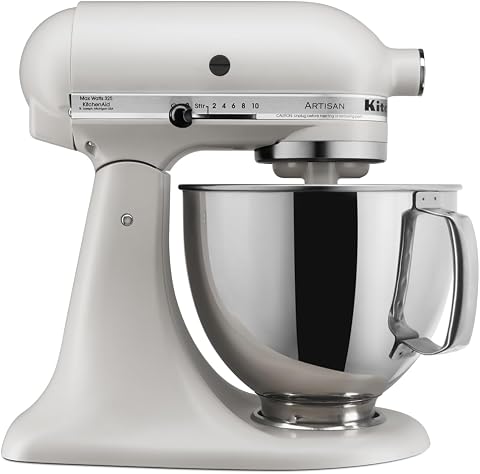
KitchenAid Artisan Series 5 Quart Tilt Head Stand Mixer
- ✔ Weight: 26 pounds
- ✔ Dimensions: 14 x 8 x 14 inches
- ✔ Power: 300 watts

KitchenAid Stand Mixer Attachment
- ✔ Weight: 4.5 pounds
- ✔ Dimensions: 6 x 8 x 12 inches
- ✔ Power: Uses mixer’s motor
KitchenAid Artisan Series 5 Quart Tilt Head Stand Mixer
The KitchenAid Artisan Series 5 Quart Tilt Head Stand Mixer is built to last with a durable metal construction and 59 touchpoints for thorough mixing. While it is generally reliable, grinding noises can occur due to gear or attachment issues. This guide helps you identify and fix common causes safely.
Pros:
- Durable metal construction
- Powerful 10-speed motor
- Tilt-head design for easy access
- Large 5-quart stainless steel bowl
Cons:
- Potential gear wear over time
- Noise issues may require repair
- Attachments need proper fitting
Best for: Home bakers and cooking enthusiasts seeking a reliable stand mixer.
Not ideal for: Users uncomfortable with DIY repairs or internal component inspection.
Bottom line: A reliable mixer with troubleshooting options for grinding noise issues.
KitchenAid Stand Mixer Attachment
Adding the KitchenAid Metal Food Grinder attachment transforms your mixer into a versatile food processing station. It’s ideal if grinding noise indicates gear strain or if you want to prevent future issues by using a dedicated attachment for grinding tasks.
Pros:
- Easy to attach and use
- Includes multiple grinding plates
- Large food tray for efficiency
- Made of durable metal
Cons:
- Additional cost
- Requires storage space
- Needs pre-chilling for optimal performance
Best for: Home cooks wanting fresh ground meats and ingredients.
Not ideal for: Users not interested in grinding or additional attachments.
Bottom line: A useful attachment to prevent grinding issues and expand your mixer’s capabilities.
Frequently Asked Questions
Why is my KitchenAid mixer making a grinding noise?
Grinding noises often result from worn gears, debris lodged in the transmission, loose attachments, or lack of lubrication. Inspecting these components can help identify the cause.
Can I fix the grinding noise myself?
Some fixes, like tightening attachments or cleaning debris, are simple. However, inspecting internal gears or replacing parts may require technical skills or professional assistance.
How often should I lubricate my mixer?
Lubricate gears and moving parts during regular maintenance or if you notice increased noise. Use food-grade lubricant sparingly to avoid attracting dust.
When should I see a professional?
If the grinding noise persists after basic troubleshooting or if internal components are damaged, it’s best to consult a qualified repair technician.
Keep Your KitchenAid Running Smoothly
Addressing grinding noises promptly can extend the life of your KitchenAid Artisan Stand Mixer and ensure it performs at its best. Regular maintenance, proper attachment handling, and timely repairs are key to avoiding disruptions in your baking and cooking routines. Always prioritize safety and consult a professional if you’re unsure about internal repairs.
Affiliate disclosure: As an Amazon Associate we earn from qualifying purchases. Prices and availability are accurate as of the time of publishing.
Cold & flu season Picks
humidifiers
As an affiliate, we earn on qualifying purchases.