TL;DR

Get home appliances delivered free with Prime
- Fast, free delivery on millions of items
- Prime Video, Amazon Music and more included
- Member-only deals all year
A House Beautiful report gathered designers’ views on 13 home features they would not choose for their own homes, including zellige tile, waterfall islands and freestanding tubs. Their concerns focus on upkeep, installation, expense and practical limitations; the recommendations are professional opinions, not universal rules.
House Beautiful has published a list of 13 home features that interviewed interior designers say they would not choose for their own spaces, citing problems such as difficult upkeep, installation challenges, high costs and limited functionality. The recommendations offer homeowners a set of trade-offs to weigh before committing money to renovation choices, but they reflect the designers’ judgments rather than a universal assessment of each feature.
The designers’ concerns span finishes, appliances and furniture. Jamie Chappell of Fireclay Tile said zellige tile varies in size and thickness because it is handmade, which can make installation slow and difficult. Chappell also described it as prone to chipping, crazing and staining, and said it requires regular sealing. She raised similar maintenance concerns about cement tile, which she said is porous, can stain or etch, and is heavy and labor-intensive to install.
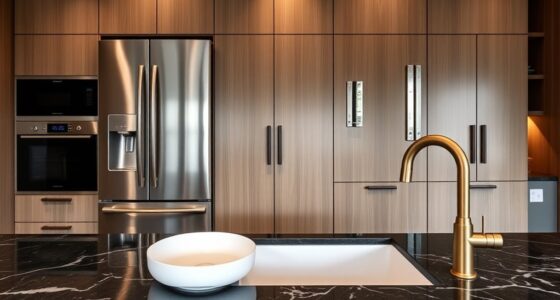
Other features drew criticism for making rooms less useful or more demanding to maintain. Yvonne Harty of Harty Interiors said waterfall islands can limit storage and seating, add cost and leave corners vulnerable to chips. Brieanna Cunningham of C&C Partners also pointed to restricted storage and outlet options. Harty said freestanding tubs can be awkward in smaller bathrooms, where cleaning behind them may be difficult. Jessica Alpert warned that white linen furniture is hard to keep clean in homes where spills and smudges are likely.
The list also includes whole-home smart systems, built-in coffee makers and disposable furniture. Cunningham said smart-home packages can be costly and may malfunction when Wi-Fi or software updates cause problems. Alpert said built-in coffee makers require ongoing cleaning and maintenance. Cara Shahbandi of Stanton Home Design advised buying durable furniture rather than low-quality items that may need replacing quickly. The supplied report excerpt also names limewashing an entire home among the 13 choices, but does not include the designers’ explanation of that item or the full list of remaining entries.
The Trade-Offs Behind Popular Upgrades
The report highlights a practical point for people planning renovations: visual appeal is only one part of a feature’s long-term value. A finish that needs frequent sealing, an appliance that takes regular cleaning or a layout that reduces storage can add work and expense after installation. Those costs may matter more in a busy household or a smaller room than they do in a spacious, lightly used home.
The advice is not a claim that these features never work. Some homeowners may value the distinctive appearance of handmade tile or the convenience of connected devices enough to accept their drawbacks. The article’s usefulness lies in identifying specific maintenance and usability questions to ask before spending, rather than treating a trend as automatically suitable for every home.
Products Worth Considering

eufy Security Video Doorbell E340 Kit with Chime, 2K Resolution and 8GB Local Storage

Coway Mighty AP-1512HH(W) Air Purifier, White

Sony BRAVIA 5 85-Inch Mini LED 4K HDR Smart TV (K-85XR50)
As an affiliate, we earn on qualifying purchases.
Why Designers Weigh Upkeep
The House Beautiful report frames renovation as a series of decisions with consequences beyond the initial purchase. It notes that choices can range from a full gut renovation to a small refresh, and that homeowners may need to account for both appearance and ongoing care. The designers quoted draw on their professional experience, but the source material does not provide project data or cost comparisons for the features.
The report also points to what it calls the “fast fashion-ication” of home trends: the speed at which popular looks circulate can make it harder to judge whether a choice will remain satisfying over time. Its response is to ask designers what they would personally avoid, while emphasizing that the answer depends on a home’s layout, users and tolerance for maintenance.
““Because each piece is handmade, there’s a lot of variation in size and thickness, making installation slow and tricky.””
— Jamie Chappell of Fireclay Tile, on zellige
How Far the Advice Applies
The recommendations are designers’ opinions, not findings from a consumer study, and the source material does not quantify installation costs, maintenance time or how often the cited problems occur. A feature’s suitability can also depend on its design, materials, quality of installation and the household using it.
The supplied report excerpt does not provide all 13 entries: it names limewashing an entire home but ends before explaining that choice, and several other entries are not included in the material provided. The publication date and any response from manufacturers or other industry representatives are also not stated.
Questions to Ask Before Renovating
For homeowners considering one of these features, the report’s concerns point to practical questions to raise before work begins: what care will the material need, how much will installation and repair cost, and will the design preserve storage, seating or access for cleaning? For connected systems and built-in appliances, buyers can also ask about maintenance, software support and what happens if a component or network stops working.
The article does not identify a next reporting milestone or a planned update. Its guidance remains a starting point for comparing design preferences with a room’s layout, household needs and long-term upkeep.
Key Questions
Which home features are covered in the supplied report?
The excerpt discusses zellige and cement tile, waterfall islands, smart-home systems, white linen furniture, built-in coffee makers, disposable furniture and freestanding tubs. It also names limewashing an entire home, but the provided text does not include that item’s explanation or the complete list.
Why did the designers criticize zellige and cement tile?
Jamie Chappell said handmade zellige can vary in size and thickness, making installation difficult, and needs regular sealing. She said cement tile is porous and can stain or etch, while also being heavy and labor-intensive to install.
Are designers saying homeowners should never use these features?
No. The report presents individual designers’ preferences and cautions, not a rule that these features are unsuitable for every home. Their drawbacks may be acceptable to homeowners who value the look or function enough to manage the upkeep.
What should homeowners check before choosing a feature?
Ask about installation, cleaning, sealing, repair costs and practical room use. For smart systems, check how they depend on Wi-Fi and software; for built-in appliances, ask what routine maintenance they require.
Source: housebeautiful.com