For a luxury sound experience, high-res audio and quality DACs make a noticeable difference. High-resolution files capture more detail with higher sampling rates, while DACs convert digital signals into richer analog sound, revealing nuances and clarity. To truly enjoy premium audio, investing in good equipment and formats is helpful, but the benefits depend on your setup. If you’re curious about how to upgrade, you’ll find more insightful tips ahead.
Open a free Amazon Business account
Business pricing, bulk buying and tax-exempt orders.
As an affiliate, we earn on qualifying purchases.
Key Takeaways
- Hi-res audio files offer richer detail, enhancing a luxury listening experience when paired with quality equipment.
- High-quality DACs convert digital files into clearer, more nuanced analog sound, elevating overall audio fidelity.
- Proper equipment setup, calibration, and speaker placement are essential to fully appreciate high-resolution audio benefits.
- Lossless formats like FLAC preserve sound nuances better than compressed files, crucial for premium audio enjoyment.
- Upgrading to high-res audio and advanced DACs can significantly improve sound quality but depends on your existing gear and preferences.
Understanding Hi-Res Audio: What Does It Really Mean?

What exactly does “hi-res audio” mean, and why does it matter to you? Hi-res audio refers to audio files that offer higher quality than standard formats, capturing more detail and nuance. It typically uses advanced file formats like FLAC or WAV that preserve sound fidelity. Sampling rates are pivotal here—they determine how often sound is sampled per second, with hi-res audio often using rates like 96 kHz or 192 kHz compared to the standard 44.1 kHz used in CDs. This higher sampling rate allows for a more accurate reproduction of the original recording, providing a richer, more immersive listening experience. Sampling rates are a crucial technical detail that directly impacts audio quality, helping you appreciate why hi-res audio can elevate your music, making it sound closer to what the artists and producers intended. Additionally, understanding audio fidelity can help you choose the right equipment to fully enjoy the benefits of high-resolution sound. As technology advances, automation plays an increasing role in optimizing audio playback and enhancing listening experiences, ensuring you get the most out of your high-quality audio files. Moreover, the development of digital-to-analog converters (DACs) has been essential in translating these high-resolution digital signals into authentic, high-quality sound.
How DACs Enhance Your Listening Experience

Have you ever wondered how your device turns digital music into the rich, detailed sound you hear? It’s the DAC’s job to convert digital formats into analog signals your ears can interpret. During this process, DACs bypass the limitations of audio compression, revealing more nuance and clarity. Without a quality DAC, your audio might sound flat or muffled, especially with high-quality tracks. By accurately translating digital signals, DACs preserve the original intent of the music, delivering cleaner, more precise sound. They reduce distortions caused by audio compression, making details like subtle instrument textures and vocals stand out. Essentially, a good DAC elevates your listening experience, releasing the full potential of your music collection and ensuring every note sounds as the artist intended.
The Difference Between Standard and Hi-Res Audio Formats

Standard audio formats like MP3 and AAC compress sound data to reduce file size, which can sacrifice some detail and depth. This process, known as file compression, often lowers audio fidelity, making the sound less true to the original recording. Lossless formats like FLAC or DSD preserve more of the original sound’s nuances, offering clearer, more detailed playback. In addition, the choice of audio format can influence how well your equipment reproduces sound. Here’s a quick comparison:
| Format | Compression Level | Audio Fidelity |
|---|---|---|
| MP3 | High | Lower |
| AAC | High | Slightly better |
| FLAC | Lossless | Higher |
| DSD | Lossless | Very high |
| WAV | Uncompressed | Maximum |
Choosing the right format impacts your listening experience and overall audio fidelity. Additionally, using a high-quality Digital-to-Analog Converter (DAC) can further enhance sound clarity, especially when listening to high-resolution audio files. Investing in a DAC can make a noticeable difference in the richness and accuracy of your sound. To fully appreciate high-resolution audio, it’s important to consider both the format and the quality of your playback equipment, such as digital-to-analog converters.
Are High-Resolution Files and Equipment Worth the Cost?

Deciding whether high-resolution files and equipment are worth the investment depends on how much you value audio quality. High-res files typically have less file compression and higher audio bitrate, which preserves more detail and nuance in the sound. However, this also means larger file sizes and more storage needs. If you’re used to streaming compressed files, upgrading might seem unnecessary, but audiophiles often notice a clearer, more natural sound with high-res formats. Consider whether your equipment can truly reproduce these subtle differences. If you listen critically and have the right setup, the enhanced experience can justify the cost. But if your current system already satisfies your listening preferences, you might not find the upgrade worth it. Additionally, listening environment and hardware quality significantly influence whether you’ll perceive a meaningful difference. Investing in a high-quality DAC or high-resolution audio hardware can further enhance your listening experience, making the upgrade more worthwhile. Moreover, understanding the technical specifications of your system ensures that you are maximizing the potential of high-resolution audio formats.
Recognizing the Signs of Quality Audio Equipment

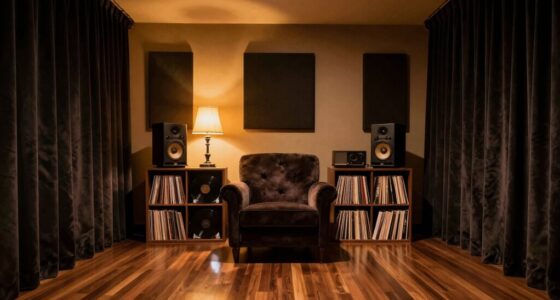
Recognizing quality audio equipment involves paying attention to both build and performance cues. Look for sturdy construction, premium materials, and clear craftsmanship. When it comes to performance, consider how well the system handles audio calibration and speaker placement; precise calibration ensures balanced sound, while ideal speaker placement maximizes clarity and depth. Reliable gear often features transparent connections and minimal distortion. To evoke emotion, reflect on these qualities:
| Quality Indicator | Your Experience | Emotional Impact |
|---|---|---|
| Solid Build | Durability and craftsmanship stand out | Confidence in longevity |
| Accurate Calibration | Balanced sound fills the room | Immersive listening pleasure |
| Precise Speaker Placement | Clear, detailed audio at every seat | Engages all your senses |
| Clean Connections | No interference, pure sound | Trust in quality and performance |
Additionally, understanding audio calibration and its importance can significantly enhance your listening experience. Proper equipment maintenance plays a vital role in preserving sound quality over time. Paying attention to these performance cues helps ensure you’re getting the most from your equipment and truly elevates your sound experience. Recognizing build quality can be a key indicator of long-term durability and consistent performance, especially when considering sound design principles that prioritize high-quality audio reproduction.
Tips for Maximizing Sound Quality Without Breaking the Bank

You don’t need expensive equipment to substantially improve your sound quality. Start by choosing streaming services that offer lossless or high-quality audio options, which reduce audio compression and preserve sound details. Be mindful of audio compression, as heavily compressed files can diminish clarity and depth. Adjust your device settings to prioritize sound quality over data saving; some apps allow you to select higher bit rates. Use quality headphones or speakers within your budget, as they have a significant impact on how you perceive sound. Keep your equipment well-maintained and free from dust or damage. Even simple tweaks like positioning your speakers properly or using a basic, well-made headphone amplifier can make a noticeable difference. Additionally, understanding DACs and Hi-Res Audio technology can help you choose upgrades that elevate your listening experience without breaking the bank. Being aware of AI-driven audio enhancements can also provide insights into the latest innovations improving sound quality. A headphone jack is crucial for wired connections, especially if your device doesn’t support Bluetooth. Investing in a high-quality digital-to-analog converter can further enhance sound clarity and detail, making your setup more enjoyable. Exploring audio source quality options allows you to optimize your setup even further, ensuring you get the most out of your equipment. These steps help maximize your listening experience without a hefty investment.
Making an Informed Choice: Do You Need Hi-Res and DACs?

While optimizing your device settings and choosing quality audio sources can considerably improve sound, understanding whether investing in Hi-Res audio and digital-to-analog converters (DACs) is worthwhile depends on your listening habits and equipment. Consider how much value you place on audio fidelity and whether your current setup handles high-quality file formats effectively. If you primarily listen to compressed audio formats like MP3, upgrading may not yield noticeable benefits. On the other hand, if you prefer lossless or Hi-Res files, a good DAC can gain access to richer detail. Keep in mind that some devices may struggle with audio compression artifacts, making quality upgrades more or less impactful. Evaluate your preferences and equipment to decide if Hi-Res and DACs will truly enhance your listening experience. Additionally, understanding the evolving language of the internet can help you better navigate and identify quality audio content online.
Frequently Asked Questions
Can Smartphones Support High-Resolution Audio Playback Effectively?
Yes, your smartphone can support high-resolution audio playback effectively, especially if it has a good DAC and supports high-quality audio formats. Streaming services like Tidal and Qobuz offer high-res options, so you can enjoy better sound. Just guarantee your phone supports the necessary audio formats and consider using wired headphones or external DACs for maximum quality, making your listening experience truly luxurious.
Are There Specific Genres That Benefit Most From Hi-Res Audio?
You’ll notice the most genre-specific fidelity benefits in classical, jazz, and orchestral music, where intricate details and dynamic range matter most. Audiophile preferences also lean towards these genres, as they reveal subtle nuances and layered textures. If you’re a dedicated listener seeking the highest sound quality, investing in hi-res audio for these genres enhances your experience, making every instrument and nuance crystal clear and more immersive.
How Do Different DAC Types Influence Sound Quality?
Did you know that DACs with higher bit depth and sampling rate can markedly improve sound clarity? Different DAC types, like delta-sigma or ESS Sabre, influence sound quality by processing digital signals differently. You’ll notice that high-end DACs deliver richer detail and dynamic range, making your music feel more lifelike. So, choosing the right DAC type can elevate your listening experience, especially if you value crisp, immersive sound.
Is External DAC Necessary for Portable Listening Devices?
An external DAC isn’t always necessary for portable listening devices, but it can substantially enhance your portable experience. If you want better audio fidelity and clearer sound, a portable DAC offers that extra boost. It reduces noise and distortion, making your music richer and more detailed. So, if you’re serious about sound quality on the go, investing in an external DAC can be a worthwhile upgrade for your portable setup.
What Are the Maintenance Considerations for High-End Audio Equipment?
Think of your high-end audio equipment as a fine sculpture—requires careful maintenance to preserve its beauty. You should regularly check equipment durability, make certain of proper cleaning, and handle components gently. Dust and static can cause damage over time, so use soft cloths and appropriate cleaning products. Avoid extreme temperatures and humidity. Proper care keeps your gear sounding pristine and extends its lifespan, so treat it like a treasured masterpiece.
Conclusion
Ultimately, whether you need hi-res audio and DACs depends on your passion for pristine sound—are you chasing perfection or content with good enough? Remember, technology is a tool, not a magic wand; it amplifies your experience but can’t replace the soul of music. So, ask yourself: will investing elevate your listening journey or just add noise? The choice is yours—make it wisely, for true quality lies in what resonates with you.
NFL season / tailgating Picks
team gear
As an affiliate, we earn on qualifying purchases.