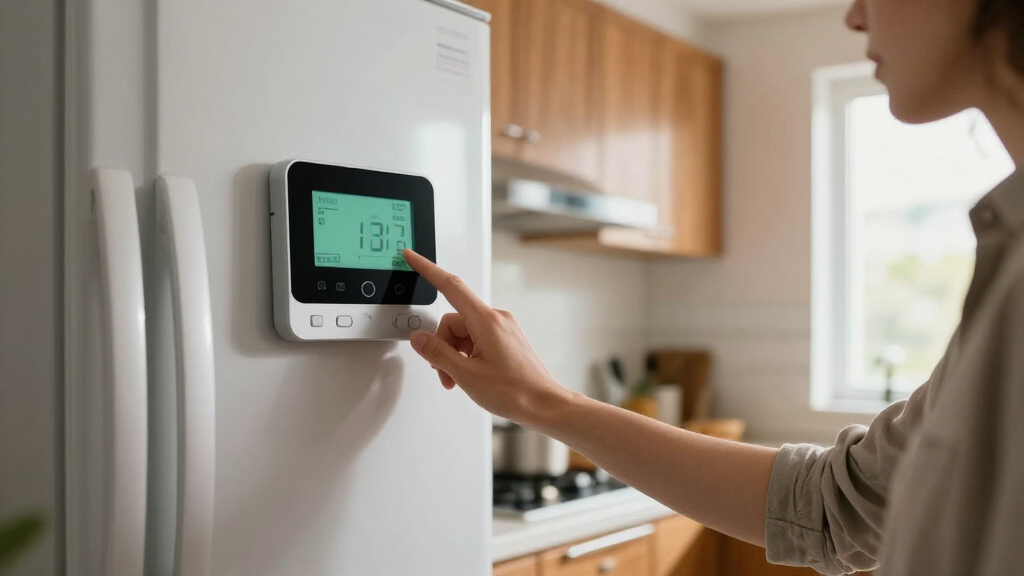

Smart home energy monitors track your home’s electricity use in real time, and the right one can shrink your bill by showing exactly which circuits and appliances drain the most power. The Emporia Vue 3 with 16 circuit sensors stands out as the best overall pick for its per-circuit granularity, polished app, and solar-ready option, while the Refoss with Open API and Home Assistant support is the clear choice for anyone who wants local control with no cloud dependency. The main tradeoff in this category is simple: whole-home simplicity versus circuit-level detail, with cloud convenience versus local privacy as the second dividing line. Monitors also differ in sensor capacity, amperage ratings, and whether they can track solar generation. Keep reading for the full breakdown of all 11 models.

Get home appliances delivered free with Prime
- Fast, free delivery on millions of items
- Prime Video, Amazon Music and more included
- Member-only deals all year
Complete the kit


Key Takeaways
- Circuit-level sensor count was the biggest differentiator: 16-sensor models like the Emporia Vue 3 and Refoss revealed appliance-level waste that 2-CT whole-home units simply cannot show.
- The Refoss Open API model was the only option with true no-cloud, Home Assistant-native operation, making it the top pick for privacy-focused and smart-home-hub users.
- Solar monitoring was rare: only the Emporia Vue 3 Solar edition tracked generation and net usage, which matters if you have or plan to install panels.
- Several budget dual-channel trackers duplicated each other closely; they’re fine for a renter or single-panel setup but poor value for larger homes needing branch-circuit data.
- Higher amperage CTs (120A versus 50A) determined whether a monitor could safely measure a whole home’s main feed versus just individual subpanels or devices.
| Emporia Vue 3 Home Energy Monitor – Real-Time Electricity Usage and Power Consumption Meter |  | Best Overall | Certification: UL Listed | System Support: Single phase, Single-split phase, 2-wire, 3-wire, 3-phase, 4-wire Wye | Sensor Type: Clamp-on sensors | VIEW LATEST PRICE | See Our Full Breakdown |
| Smart Home Energy Monitor 2×80A, Dual-Channel WiFi Electricity Usage Tracker with App Control |  | Best Value Pick | Channels: Dual channel | Minimum Operating Voltage: 110 volts | Measurement Type: Ammeter | VIEW LATEST PRICE | See Our Full Breakdown |
| Smart Home Energy Monitor with 16 50A Circuit Sensors, Real-Time Power & Cost Tracking |  | Best for Rental Property Billing | Sensor Count: 16 x 50A circuit sensors | Supported Voltages: 120VAC, 240VAC, 415Y/240VAC | Connectivity: WiFi 2.4GHz | VIEW LATEST PRICE | See Our Full Breakdown |
| WiFi Home Energy Monitor with 2 x 120A CTs and Power Tracking |  | Best for Solar and Battery Systems | Current Transformers: 2 x 120A CTs | Phase Support: Single-phase 3-wire | Energy Monitoring: Live energy use, bi-directional tracking | VIEW LATEST PRICE | See Our Full Breakdown |
| Refoss Smart Home Energy Monitor with 16 60A Circuit Sensors |  | Best for Privacy and Long-Term Data | Circuit Sensors: 16 x 60A | Supported Systems: Single-phase, Split-phase, 3-phase 4-wire Wye | Data Storage: 5 years local storage | VIEW LATEST PRICE | See Our Full Breakdown |
| Meross Smart Home Energy Monitor, Real-Time Power & Cost Tracking |  | Best for Home Assistant Tinkerers | Certification: ETL, UL 61010 | Supported Systems: Single-phase 2-wire, single-split phase 3-wire, 3-phase 4-wire Wye | Max Current: 200A main circuits, 60A branch circuits | VIEW LATEST PRICE | See Our Full Breakdown |
| Refoss Smart Home Energy Monitor with Open API, Home Assistant, No Cloud |  | Best for Solar Homes | Model: EM16P | Current Sensors: 2 main circuits (200A each), 16 branch circuits (1–60A each) | Accuracy: ±1% | VIEW LATEST PRICE | See Our Full Breakdown |
| Emporia Vue 3 Home Energy Monitor – Real-Time Electricity Usage and Solar Monitoring |  | Best for Beginners | Certification: UL Listed | Installation: Circuit panel | Supported Systems: Single phase, split phase, 2-wire, 3-wire, 3-phase, 4-wire Wye | VIEW LATEST PRICE | See Our Full Breakdown |
| WiFi Home Energy Monitor with 3 CT Clamps |  | Best Budget Pick | Circuits Supported: Up to 3 circuits with 3 CT clamps | Input Voltage: AC 100–240V | Relay Current: Up to 15A | VIEW LATEST PRICE | See Our Full Breakdown |
| SIEMENS Inhab Smart Home Energy Monitor with Circuit Level Sensors |  | Best Premium Pick | Part Number: INHEM1216 | Main Sensors: 2 x 200Amp | Circuit Sensors: 16 sensors, 16–50Amp | VIEW LATEST PRICE | See Our Full Breakdown |
| Emporia Vue 3 Home Energy Monitor – Real-Time Electricity Usage and Power Monitoring Meter |  | Best for Solar Homes | Certification: UL Listed | Connectivity: 2.4 GHz WiFi | Supported Systems: Single phase, split phase, 2-wire, 3-wire, 3-phase, 4-wire Wye | VIEW LATEST PRICE | See Our Full Breakdown |
| smart home energy monitor | Connectivity | Warranty |
|---|---|---|
| Emporia Vue 3 Home Energy Moni | 2.4 GHz WiFi | 1 year |
| Smart Home Energy Monitor 2×80 | WiFi | — |
| Smart Home Energy Monitor with | WiFi 2.4GHz | 1 year |
| WiFi Home Energy Monitor with | 2.4 GHz WiFi | — |
| Refoss Smart Home Energy Monit | Wi-Fi, Open API, MQTT, WebSocket | 2 years |
| Meross Smart Home Energy Monit | WiFi, Open API, Web Control | 2 years |
| Refoss Smart Home Energy Monit | Built-in Web UI, Open API, MQTT | 2 years |
| Emporia Vue 3 Home Energy Moni | 2.4 GHz Wi-Fi | 1 year |
| WiFi Home Energy Monitor with | WiFi 2.4GHz | — |
| SIEMENS Inhab Smart Home Energ | — | — |
| Emporia Vue 3 Home Energy Moni | 2.4 GHz WiFi | 1 year |
More Details on Our Top Picks
Emporia Vue 3 Home Energy Monitor – Real-Time Electricity Usage and Power Consumption Meter
The Emporia Vue 3 earns the top spot because it balances safety certification, broad electrical compatibility, and a polished app experience better than anything else in this lineup. Its UL listing matters more than it might seem: this device lives inside your circuit panel, and most budget alternatives here carry no such certification. Compared with the Refoss Smart Home Energy Monitor with 16 60A Sensors, the Vue 3 supports a wider range of panel configurations, including 3-phase setups, which makes it viable for more homes. The tradeoff is data depth — 1-second data only streams while the app is open, and minute-level history is capped at 7 days, so long-term analysis is thinner than Refoss’s 5-year storage. Still, for a homeowner who wants reliable whole-home monitoring with solar and net metering support straight out of the box, this pick makes the most sense.
Pros:- UL Listed for safety and reliability inside the electrical panel
- Supports single-phase, split-phase, 2/3-wire, and 3-phase 4-wire Wye systems
- Real-time monitoring with solar and net metering support
- App-based automation helps reduce electricity bills
Cons:- Requires a continuous WiFi connection for real-time data
- Minute-level data only kept 7 days; 1-second data stops when the app closes
- 3-phase systems with neutral require an additional sensor
Best for: Homeowners who want a safety-certified, whole-home monitor with solar/net metering support and minimal setup friction
Not ideal for: Data enthusiasts who want years of historical granularity — its 7-day minute-level retention falls short of Refoss’s 5-year storage
- Certification:UL Listed
- System Support:Single phase, Single-split phase, 2-wire, 3-wire, 3-phase, 4-wire Wye
- Sensor Type:Clamp-on sensors
- Connectivity:2.4 GHz WiFi
- Data Retention:Minute data 7 days, hour data indefinite, 1-second data when app is open
- Solar Support:Yes, with net metering
- Warranty:1 year
Our verdict“Buy this if you want the most dependable, safety-certified all-rounder for whole-home energy tracking; skip it if long-term historical data is your priority.”
Smart Home Energy Monitor 2×80A, Dual-Channel WiFi Electricity Usage Tracker with App Control
This dual-channel monitor takes the value slot by doing one job well at a lower complexity and cost than full 16-sensor systems like the Smart Home Energy Monitor with 16 50A Circuit Sensors. Instead of mapping every circuit in the house, its two 80A channels are best aimed at two big targets: a main feed plus an EV charger, heat pump, or solar inverter. It supports bi-directional power tracking, so solar owners can watch production and consumption on the same screen — something the Emporia Vue 3 handles too, but with more hardware and panel work involved. Installation is genuinely simple because the clamp sensors attach without wiring modifications. The catch is granularity: with only two channels you will never know which appliance is your energy vampire, and the Tuya app setup can confuse first-time users. Compared with the WiFi Home Energy Monitor with 2 x 120A CTs, the amperage ceiling is lower too.
Pros:- Bi-directional tracking works for solar and backup systems
- Installation requires no wiring modifications
- Works with Tuya, Amazon Alexa, and Google Home
- Real-time and historical usage data through the app
Cons:- Only two channels, so no circuit-level detail
- App setup via Tuya can be confusing for less technical users
- Capped at 80A per channel, limiting use on very large loads
Best for: Budget-minded owners who want to track a main panel plus one high-draw appliance or solar feed without a full circuit-level install
Not ideal for: Households trying to identify per-appliance energy waste — two channels cannot isolate individual circuits
- Channels:Dual channel
- Minimum Operating Voltage:110 volts
- Measurement Type:Ammeter
- Connectivity:WiFi
- Compatible Platforms:Tuya, Smart Life, Amazon Alexa, Google Home
- Installation:Clamp sensors, no wiring modifications
Our verdict“A smart choice for targeted monitoring of two big loads at low cost; look elsewhere if you need whole-home circuit-by-circuit insight.”
Smart Home Energy Monitor with 16 50A Circuit Sensors, Real-Time Power & Cost Tracking
This option stands out for a use case most monitors ignore: customizable billing for rentals and shared apartments. With 16 circuit sensors and per-circuit cost tracking, a landlord can assign circuits to tenants and generate accurate utility splits — something neither the Emporia Vue 3 nor the dual-channel budget unit can do. Its Home Assistant and MQTT compatibility also makes it a natural fit for tinkerers who want energy data flowing into their own automations, closer in spirit to the open Refoss ecosystem than to Emporia’s closed app. The compromises are real, though. Accuracy is rated at about 1%, which is fine for billing estimates but frustrating if you want your numbers to match the utility meter exactly, and getting MQTT or Home Assistant configured properly demands technical patience. At 4.05 pounds and panel-mounted, it is not a plug-and-play gadget either.
Pros:- 16 circuit-level sensors with real-time cost tracking
- Customizable billing for rentals and shared apartments
- Home Assistant and MQTT integration for custom automation
- Clamp-on installation compatible with 120V, 240V, and 415Y/240VAC systems
Cons:- 1% accuracy may not satisfy precision-focused users
- Full functionality requires technical configuration of smart home systems
- Dependent on stable WiFi for monitoring and alerts
Best for: Landlords and shared-living households who need per-circuit cost allocation and billing, plus smart home hobbyists using Home Assistant
Not ideal for: Owners who want utility-bill-exact precision or a no-setup experience — configuration is technical and accuracy is 1%
- Sensor Count:16 x 50A circuit sensors
- Supported Voltages:120VAC, 240VAC, 415Y/240VAC
- Connectivity:WiFi 2.4GHz
- Compatibility:Home Assistant, MQTT
- Billing Features:Customizable per-circuit cost tracking for rentals
- Dimensions:3.1 x 1.2 x 4.18 inches
- Weight:4.05 pounds
- Warranty:1 year
Our verdict“Pick this if tenant billing or Home Assistant integration drives your purchase; precision-seekers and plug-and-play buyers should look at the Emporia Vue 3 instead.”
WiFi Home Energy Monitor with 2 x 120A CTs and Power Tracking
Where the dual-channel 80A tracker tops out at 80 amps per channel, this unit’s 2 x 120A CTs give it headroom for high-current solar inverters, battery storage, and whole-home feeds — the reason it earns the solar-and-storage role. Its bi-directional measurement tracks energy flowing in both directions, so battery charge/discharge cycles and solar export show up clearly in the app, alongside voltage, current, power, and cumulative energy. Split-core CTs with pluggable terminals keep installation straightforward compared with panel-wide systems like the 16-sensor rental billing monitor. The limitations narrow its audience, though: it is restricted to single-phase 3-wire systems, which excludes many commercial and some residential setups, and with only two channels it offers no circuit-level breakdown. WiFi is required for live data, so a network outage means flying blind until it reconnects.
Pros:- 120A CTs handle high-current solar and battery circuits
- Bi-directional tracking for export, import, and battery cycles
- Split-core CTs with pluggable terminals simplify installation
- Live app data covering voltage, current, power, and total energy
Cons:- Single-phase 3-wire only — no 3-phase or split-phase support
- Only two channels, so no whole-home circuit mapping
- Full functionality depends on a stable WiFi connection
Best for: Solar and battery-storage owners on single-phase service who need high-amperage bi-directional monitoring of two major feeds
Not ideal for: Homes on 3-phase or split-phase configurations, or anyone wanting per-appliance circuit detail
- Current Transformers:2 x 120A CTs
- Phase Support:Single-phase 3-wire
- Energy Monitoring:Live energy use, bi-directional tracking
- Connectivity:2.4 GHz WiFi
- Control Method:Smartphone app
- Installation:Split-core CTs with pluggable terminals
Our verdict“This model makes the most sense for single-phase solar-plus-storage setups with heavy amperage; multi-phase homes should choose the Emporia Vue 3 or Refoss.”
Refoss Smart Home Energy Monitor with 16 60A Circuit Sensors
The Refoss 16-circuit monitor is the pick for buyers who dislike cloud dependence. Unlike the Emporia Vue 3, which routes data through Emporia’s app and servers, this unit offers local control via Web UI, API, MQTT, and WebSocket — your energy history stays on your network, with 5 years of local storage and no subscription fees. That depth of retained data also beats the rental-billing 16-sensor monitor’s cloud-reliant model, making Refoss the better choice for trend analysis and solar optimization over seasons. Sensor coverage is generous: 16 circuits at 60A each, spanning single-phase, split-phase, and 3-phase Wye systems, with fault alerts to flag problems early. The tradeoff is the front-loaded effort. Getting API or home automation integrations running requires genuine technical comfort, and 60A per circuit is tight for very large dedicated loads like some EV chargers, where the 120A solar monitor is the stronger fit.
Pros:- Local control via Web UI, API, MQTT, and WebSocket — no cloud or subscription required
- 5 years of stored data for long-term trend and solar analysis
- 16 circuits at 60A across single-phase, split-phase, and 3-phase Wye systems
- Fault alerts and energy-vampire detection help cut utility bills
Cons:- Technical setup needed for API and home automation integration
- 60A per-circuit limit is too low for some large dedicated loads like EV chargers
- Heavier and bulkier than compact dual-channel alternatives
Best for: Privacy-conscious smart home enthusiasts and Home Assistant users who want circuit-level data stored locally for years
Not ideal for: Non-technical buyers who expect a simple app-only experience — integrations require real setup work
- Circuit Sensors:16 x 60A
- Supported Systems:Single-phase, Split-phase, 3-phase 4-wire Wye
- Data Storage:5 years local storage
- Connectivity:Wi-Fi, Open API, MQTT, WebSocket
- Local Control:Web UI, no cloud dependency
- Dimensions:4.5 x 3.5 x 1.1 inches
- Weight:4.27 pounds
- Warranty:2 years
Our verdict“Choose this if data privacy, local storage, and deep home automation integration top your list; skip it if you want zero-configuration simplicity.”
Meross Smart Home Energy Monitor, Real-Time Power & Cost Tracking
This option stands out for buyers who want circuit-level monitoring with local data control at a midrange price. Compared with the Emporia Vue 3, the Meross leans harder into the smart-home ecosystem: it exposes an Open API and web control so Home Assistant users can build automations without a cloud middleman, and it stores up to five years of history on-device rather than depending on an app account. Electrical compatibility is broad, covering split-phase and 3-phase Wye setups up to 200A mains. The tradeoff is that this is not a plug-and-play experience — integration takes genuine technical effort — and the 4.5-inch housing is bulkier than competing monitors, which matters in a cramped panel. For self-hosters, that effort pays off; for casual users, the Vue 3’s app-first approach is friendlier.
Pros:- Circuit-level monitoring for both 200A mains and 60A branches
- Local data storage of up to 5 years protects privacy
- Open API and web control integrate cleanly with Home Assistant
- Works across single-phase, split-phase, and 3-phase Wye systems
Cons:- Integration and setup require real technical know-how
- Relatively large housing complicates crowded breaker panels
- Limited to US electrical systems
Best for: Smart-home hobbyists running Home Assistant who want local data storage and API access
Not ideal for: Casual users who want app-only simplicity — the API setup and panel wiring demand technical comfort
- Certification:ETL, UL 61010
- Supported Systems:Single-phase 2-wire, single-split phase 3-wire, 3-phase 4-wire Wye
- Max Current:200A main circuits, 60A branch circuits
- Data Storage:Up to 5 years
- Connectivity:WiFi, Open API, Web Control
- Dimensions:4.5 x 3.48 x 1.1 inches
- Warranty:2 years
Our verdict“A strong pick for Home Assistant users who value local control over a polished consumer app experience.”
Refoss Smart Home Energy Monitor with Open API, Home Assistant, No Cloud
The Refoss EM16P makes the most sense for solar owners, because it pairs ±1% measurement accuracy with 16 branch circuits plus two 200A mains — enough granularity to track generation, consumption, and net export simultaneously. Where the Meross monitor offers similar local storage, the Refoss goes further by publishing over MQTT with a built-in web UI and OpenClaw AI hooks, giving automations a direct path to shift loads into solar surplus. Every byte of data stays on the local network, which privacy-minded buyers will appreciate compared with cloud-dependent rivals like the Emporia Vue 3. The catches are real: setup assumes familiarity with local networking, and there is no cloud fallback if your home network goes down, so remote access requires more effort to configure.
Pros:- Fully local control with no cloud dependency
- ±1% accuracy across 16 branch and 2 main circuits
- MQTT, Open API, and web UI for flexible automation
- Stores up to 5 years of historical data
Cons:- Setup demands technical knowledge of local networks
- No cloud connectivity means no out-of-the-box remote access
- Branch sensors capped at 60A
Best for: Solar homeowners who want to maximize self-consumption through automation
Not ideal for: Anyone uncomfortable with network configuration — no cloud service means no turn-away remote access
- Model:EM16P
- Current Sensors:2 main circuits (200A each), 16 branch circuits (1–60A each)
- Accuracy:±1%
- Connectivity:Built-in Web UI, Open API, MQTT
- Certifications:ETL, UL 61010
- Dimensions:4.5 x 3.5 x 1.1 inches
- Warranty:2 years
Our verdict“The most capable choice here for solar households willing to trade convenience for local control and precision.”
Emporia Vue 3 Home Energy Monitor – Real-Time Electricity Usage and Solar Monitoring
For most households, the Vue 3 is the easiest path from zero to meaningful energy insight. Its smartphone app does the heavy lifting that the Meross and Refoss leave to the user, presenting real-time usage, solar production, and net metering in plain language with no configuration fiddling. Sixteen 50A branch sensors come in the box, covering the usual suspects — HVAC, water heater, EV charger — and UL listing backs the safety story. Compared with the fully local Refoss, though, Emporia’s model depends on Wi-Fi and its cloud: minute-level data only survives seven days, and indefinite hourly history requires the app ecosystem to stay active. Buyers who later want deep automation tend to graduate to an API-heavy option, but as a first monitor, this is the least frustrating route.
Pros:- Friendly, full-featured smartphone app with no technical setup
- Solar and net metering support built in
- Sixteen 50A branch sensors included
- UL Listed for safety
Cons:- Requires a constant 2.4 GHz Wi-Fi connection for live data
- Minute-level data retained only 7 days; hourly data depends on app activity
- 3-phase systems with earthed neutral need an extra sensor
Best for: First-time energy monitor buyers who want polished app-based insights out of the box
Not ideal for: Data-privacy-focused users or offline setups — it requires constant Wi-Fi and cloud-dependent data retention
- Certification:UL Listed
- Installation:Circuit panel
- Supported Systems:Single phase, split phase, 2-wire, 3-wire, 3-phase, 4-wire Wye
- Sensors Included:Sixteen 50A branch sensors
- Connectivity:2.4 GHz Wi-Fi
- Data Retention:Minute data 7 days, hourly data indefinite
- Warranty:1 year
Our verdict“The simplest way for a typical homeowner to start understanding their electricity bill — as long as cloud dependence doesn’t bother you.”
WiFi Home Energy Monitor with 3 CT Clamps
Not everyone needs sixteen circuits of granularity, and this three-clamp monitor is built for exactly that buyer. Instead of mapping a whole panel like the Emporia Vue 3 or Refoss EM16P, it watches up to three specific loads — say, a pool pump, water heater, and AC unit — through the familiar Smart Life/Tuya app, and adds extras the bigger names skip, including high-temperature alerts above 50°C and remote relay control up to 15A. That control function lets it act on a circuit, not just observe it, which none of the pricier options here do out of the box. The limitations follow from the price: no whole-home view, a 15A relay ceiling, and installation still demands panel wiring, ideally by an electrician. As a targeted tool, though, it earns its spot.
Pros:- Monitors up to 3 circuits simultaneously
- Remote relay control lets you act on circuits, not just watch them
- Temperature alerts flag overheating above 50°C
- Works with the widely used Smart Life and Tuya apps
Cons:- Only 3 circuits — no whole-home coverage
- Professional installation recommended for panel wiring
- Relay limited to 15A loads
Best for: Budget-conscious owners who want to monitor and control two or three specific high-consumption circuits
Not ideal for: Whole-home analyzers — three circuits cannot give a complete energy picture
- Circuits Supported:Up to 3 circuits with 3 CT clamps
- Input Voltage:AC 100–240V
- Relay Current:Up to 15A
- Temperature Alert:External sensor, alerts above 50°C
- Connectivity:WiFi 2.4GHz
- App Compatibility:Smart Life, Tuya
Our verdict“A smart, low-cost choice for watching a few problem circuits, not for mapping your entire home’s usage.”
SIEMENS Inhab Smart Home Energy Monitor with Circuit Level Sensors
The Siemens Inhab occupies the premium tier, and the difference shows in polish rather than raw specs. Its industrial-grade panel integration and mobile app focus on advanced energy management — peak demand tracking and efficiency optimization — rather than just reporting consumption, which sets it apart from the app-centric Emporia Vue 3. With two 200A main sensors and sixteen 16–50A circuit sensors, coverage matches the Refoss and Vue 3 on paper, and installation slots into existing North American panels with less fuss than API-first rivals. Tradeoffs: it is region-locked to US and Canada electrical systems, it still needs Wi-Fi plus app setup like Emporia rather than offering local MQTT like the Refoss, and an electrician is advisable for the panel work. For buyers who value a trusted electrical brand and demand-oriented features, the premium is justifiable.
Pros:- Circuit-level monitoring with 2 x 200A main and 16 circuit sensors
- Advanced peak demand and efficiency management features
- Straightforward installation in existing US/Canada panels
- Backed by an established electrical manufacturer
Cons:- Restricted to US and Canada electrical systems
- Requires Wi-Fi and app setup with no local API route
- Professional installation may still be needed
Best for: Homeowners who want a name-brand, professionally oriented monitor with peak-demand management tools
Not ideal for: International buyers or DIY smart-home builders — it’s region-locked and lacks open local APIs
- Part Number:INHEM1216
- Main Sensors:2 x 200Amp
- Circuit Sensors:16 sensors, 16–50Amp
- Region Compatibility:US and Canada electrical systems
- Dimensions:1.1 x 5.71 x 2.76 inches
- Weight:4.8 pounds
Our verdict“A premium, brand-backed choice for North American homes that prioritize demand management over open automation.”
Emporia Vue 3 Home Energy Monitor – Real-Time Electricity Usage and Power Monitoring Meter
Solar homeowners get the most from this pick, because the Vue 3 handles net metering natively — showing both production and consumption in one app view. Compared with the Meross Smart Home Energy Monitor, which tracks power and cost but lacks solar integration, the Vue 3 makes far more sense for anyone feeding energy back to the grid. It’s also one of the few options here with UL certification, which matters for insurance and peace of mind when you’re working inside a circuit panel. The tradeoff is cost creep: like the Refoss 16-sensor model, meaningful circuit-level detail requires additional sensors sold separately, and the base unit only shows whole-home totals. The app also only streams live data while actively open, so it’s less useful for passive background logging than cloud-averse alternatives such as the Refoss Open API monitor.
Pros:- Native solar and net metering support in one app
- UL Listed certification for panel-level installation safety
- Broad electrical system compatibility, including 3-phase Wye
- Expandable to 16 branch circuit sensors for appliance-level tracking
Cons:- Branch circuit sensors are sold separately, adding real cost for detailed monitoring
- Live data only displays while the app is actively open
- Requires constant 2.4 GHz WiFi and cloud connectivity
Best for: Solar households that want production and consumption tracked together in a single, safety-certified system
Not ideal for: Offline-first users and Home Assistant enthusiasts — it depends entirely on Emporia’s cloud and a 2.4 GHz WiFi connection
- Certification:UL Listed
- Connectivity:2.4 GHz WiFi
- Supported Systems:Single phase, split phase, 2-wire, 3-wire, 3-phase, 4-wire Wye
- Solar Support:Yes, with net metering
- Sensor Expansion:Up to 16 branch sensors (sold separately)
- Data Retention:Minute data 7 days; hourly data indefinite
- Warranty:1 year
Our verdict“Buy this if you have solar panels and want a certified, app-driven view of both sides of your energy equation — skip it if you want local control or included circuit sensors.”

How We Picked
I ranked these smart home energy monitors on four factors that directly affect what a buyer gets out of the device. Circuit coverage came first: a monitor with 16 sensors tells you which specific appliances are costing you money, while a 2-CT unit only shows total consumption, so sensor capacity drove the top rankings. Software and ecosystem came second — app usability, data history, and support for platforms like Home Assistant separated polished products from frustrating ones. Installation flexibility, including CT amperage ratings and panel compatibility, determined whether each unit suits a whole home, a subpanel, or a single circuit. Finally, I weighed value relative to capability, favoring monitors whose price of admission matches what they actually reveal.
The ranking logic follows those priorities. Multi-circuit monitors with strong software sit at the top, the local-control Refoss earns a high spot for buyers who reject cloud reliance, mid-tier dual-channel units fill the value positions, and single-purpose or duplicative models land lower where a better-equipped alternative covers the same job. No product appears twice without a clear reason, and every pick has a stated weakness so the order stays honest.
Factors to Consider When Choosing Smart Home Energy Monitors
Before choosing a monitor, it helps to understand what actually separates a useful one from an expensive gadget that ends up ignored. These are the factors that shaped my rankings and the mistakes I see buyers make most often.Whole-Home Versus Circuit-Level Monitoring
The single biggest decision is whether you want two CT clamps on your main feeds or individual sensors on branch circuits. Whole-home monitoring tells you total consumption, which is enough to spot billing anomalies and shift usage to off-peak hours, but it cannot tell you whether your HVAC or your water heater is the culprit when usage spikes. Circuit-level monitoring costs more and takes longer to install, but it turns vague kilowatt-hours into actionable answers. A common mistake is buying a 2-CT unit, seeing a high number, and having no way to diagnose it. If your bill is already low, whole-home data may be all you need; if you’re hunting for waste, get circuit sensors or accept you’ll be guessing.
CT Amperage Ratings and Panel Compatibility
Current transformer clamps come in different ratings — commonly 50A, 60A, 80A, and 120A — and the rating must exceed the current on the conductor it wraps. A 50A sensor belongs on a branch circuit, never on a 200A main feed, where saturation produces inaccurate or unusable readings. Check your panel’s main breaker rating before buying anything, and confirm there’s physical space inside the panel for the clamps, since crowded panels can make even a well-rated monitor impractical. Buyers with solar or EV chargers should pay extra attention here, because back-fed breakers and high-load circuits demand higher-rated CTs. This is also where professional installation stops being optional in many jurisdictions.
Cloud Dependence Versus Local Control
Most consumer monitors route data through a manufacturer’s cloud, which enables slick apps and remote access but means your energy data lives on someone else’s servers and dies if the company shuts down or changes its API. Local-control options that expose an open API or integrate natively with Home Assistant keep everything on your network, working indefinitely without internet. The tradeoff is setup effort: cloud products are typically plug-and-play, while local options assume some technical comfort. If you already run a smart home hub, prioritizing local control protects your investment. If you just want a phone app that shows today’s spend, cloud dependency is a reasonable convenience — just know what you’re accepting.
Data Resolution and History
Real-time updates sound similar across products but differ meaningfully in practice — one-second sampling catches short appliance cycles like a refrigerator compressor kicking on, while one-minute sampling can miss them entirely. Equally important is how long data is retained and whether you can export it. Some apps keep only 30 days of history, which undermines seasonal comparisons like summer AC versus winter heating costs. Utility billing reconciliation is a genuine use case: if your monitor’s totals drift from your meter, the insight loses credibility. Look for second-level sampling on the mains and at least a year of stored history if you want to make decisions based on trends rather than snapshots.
Solar and Net Metering Support
If you have solar panels or plan to add them, you need a monitor that measures generation separately from consumption, not just total flow. A standard monitor clamped to your mains will show confused numbers when power flows backward, conflating production with usage. Solar-capable models use dedicated CTs on the inverter output and calculate net usage in software, showing when you’re exporting surplus to the grid. Retrofitting later often means buying a second device or a different model altogether, so this is worth planning for even if panels are a future project. This single feature eliminated several otherwise capable monitors from consideration for solar households.
Installation Reality and Safety
Every monitor in this category installs inside your electrical panel, which means exposed live bus bars unless you shut the main breaker off. Some kits are genuinely DIY-friendly with flexible clamps and clear labeling; others have stiff CT leads that make panel-door closure a puzzle. The honest mistake to avoid is underestimating this step — many buyers receive a monitor and let it sit uninstalled for months. If you’re not comfortable working inside a panel, budget for an electrician, which is a quick job for a pro. Also verify the monitor physically fits your panel type, as some compact panels leave no room for the mounting bracket.
Frequently Asked Questions
Do I need 16 circuit sensors, or is a 2-CT whole-home monitor enough?
It depends on what you plan to do with the data. A 2-CT monitor on your main feeds shows total consumption, which is enough to verify your bill, track daily habits, and catch usage spikes — but it cannot attribute that usage to anything. If your goal is finding a specific energy hog, like an aging refrigerator or a failing well pump, you need circuit-level sensors. A practical middle path is starting with whole-home monitoring and adding a monitor with more sensors only if the total numbers bother you. In my lineup, the 16-sensor models earned the top spots precisely because diagnosis, not just observation, is where savings actually happen.
Are cloud-dependent energy monitors a risk if the company discontinues support?
Yes, and it’s a real risk, not a theoretical one — energy monitoring companies have shut down cloud services before, turning functional hardware into a box of dead sensors. If that concerns you, the Refoss Open API model is the standout choice because it works entirely on your local network with Home Assistant and keeps functioning regardless of the manufacturer’s fate. Cloud-based monitors do offer easier setup and better mobile apps, so the risk comes with genuine convenience. A reasonable hedge is choosing a cloud monitor from an established brand with a large installed base, which makes abrupt shutdown less likely. The most cautious approach is local control, full stop.
Can I install one of these myself, or do I need an electrician?
Most models are designed for DIY installation, but all of them require opening your electrical panel, where exposed terminals carry serious risk even with the main breaker off. If you’re comfortable and careful, a 2-CT installation takes under an hour; adding 16 circuit sensors can take several hours of working in a cramped panel. The difficulty varies by kit — flexible CT clamps and clearly labeled leads make some installs much easier than others. An electrician will typically handle either job quickly for a modest service fee, which is worth it if you have any hesitation. Also check local code, since some jurisdictions require a licensed electrician for panel work.
Will a smart energy monitor actually save me money?
It can, but only if you act on what it shows — the monitor itself saves nothing. The realistic savings come from three places: identifying a wasteful appliance to replace or repair, shifting flexible loads like laundry or EV charging to off-peak rates, and catching problems like a heat pump running continuously on a failed thermostat. Homeowners with time-of-use billing benefit most, since shifting usage is directly rewarded. If your bill is already modest and your rates are flat, expect modest returns. The best-performing buyers treat the monitor as a diagnostic tool for a few weeks, make changes, then use it for ongoing verification.
Can these monitors track solar panel production?
Only the models with dedicated solar monitoring support, and in this lineup that’s the Emporia Vue 3 Solar edition. These units add CT clamps on your inverter’s output so they measure generation and consumption separately, then calculate net flow — showing exactly when you’re exporting surplus power to the grid. A standard monitor clamped to your mains gets confused by reverse power flow and will report misleading numbers. If solar is even a future possibility, choosing a solar-capable monitor now avoids buying twice. For homes without panels, this feature adds nothing, so don’t pay extra for it.
Conclusion
After comparing all 11 monitors, the right choice comes down to how much detail you want and how much control you need. For best overall, the Emporia Vue 3 with 16 circuit sensors delivers the complete package — appliance-level insight, strong software, and straightforward installation. The Emporia Vue 3 Solar edition is the obvious pick for homeowners with panels, since it’s the only model here that tracks generation alongside consumption. For best value, the dual-channel WiFi trackers cover whole-home basics without the multi-sensor price tag, and the Refoss 16-sensor model offers circuit-level detail at a more accessible point than the premium options. For privacy-focused buyers and smart home enthusiasts, the Refoss with Open API and Home Assistant support stands alone with true no-cloud operation. For beginners who want the simplest path from box to insight, the Meross monitor offers the most frictionless setup. Whatever you choose, match the sensor count to your actual curiosity — a monitor that answers your specific questions beats a fancier one that doesn’t.
NFL season / tailgating Picks
team gear
As an affiliate, we earn on qualifying purchases.